Back in 2019, I reviewed Hard Pushed, Leah Hazard’s memoir of being a midwife in a busy Glasgow hospital. Here she widens the view to create a wide-ranging and accessible study of the uterus. As magisterial in its field as Siddhartha Mukherjee’s The Emperor of All Maladies was for cancer, it might have shared that book’s ‘A Biography’ subtitle and casts a feminist eye over history and future alike. Blending medical knowledge and cultural commentary, it cannot fail to have both personal and political significance for readers of any gender.
The thematic structure of the chapters also functions as a roughly chronological tour of how life with a uterus might proceed: menstruation, conception, pregnancy, labour, caesarean section, ongoing health issues, menopause. With much of Hazard’s research taking place at the height of the pandemic, she had to conduct many of her interviews online. She consults mostly female experts and patients, meeting people with surprisingly different opinions. For instance, she encounters opposing views on menstruation from American professors: one who believes it is now optional, a handicap – for teenagers, especially – and that the body was never meant to endure 350–400 periods compared to the historical average of 100 (based on shorter lifespan plus more frequent pregnancy and breastfeeding); versus another who is concerned about the cognitive effects of constant hormonal intervention.
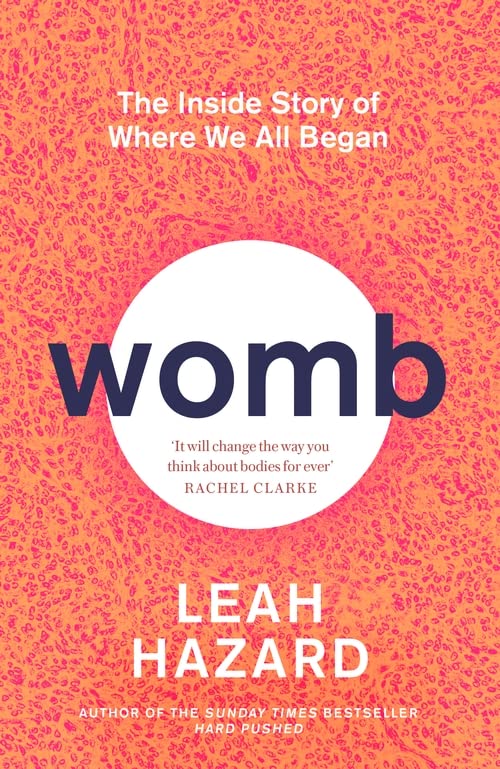
The book forcefully conveys how gynaecological wellness is threatened by a lack of knowledge, sexist stereotypes, and devaluation of certain wombs. Even today, little is known about the placenta, she reports, so research involves creating organoids from stem cells that act like it would. The use of emotionally damaging language like “irritable/hostile uterus,” “incompetent cervix” and “too posh to push” is a major problem. The sobering chapter on “Reprocide” elaborates on enduring threats to reproductive freedom, such as non-consensual sterilization of women in detention centres and the revoking of abortion rights. And even routine problems like endometriosis and fibroids disproportionately affect women of colour.
Hazard has taken pains to adopt an inclusive perspective, referring to “menstruators” or “people with a uterus” as often as to women and mentioning health concerns specific to transgender people. She is also careful to depict the sheer variety of experience: age at first menses, subjective reactions to labour or hysterectomy, severity of menopause symptoms, and so on. Where events have potentially traumatic effects, she presents alternatives, such as a “gentle” or “natural” Caesarean, which is less clinical and more empowering. The prose is pitched at a good level for laypeople: conversational, and never bombarding with information. That I have not had children myself was no obstruction to my enjoyment of the book. It is full of fascinating content that is relevant to all (as in the Harry and Chris solidarity-themed song “Womb with a View,” which has the repeated line “we’ve all been in a womb”). 
Here are just some of the mind-blowing facts I learned:
- Infant girls bleed in what as known as pseudomenses.
- Research is underway to regularly test menstrual effluent for endometriosis, etc. and the uterine microbiome for signs of cancer.
- The cervix can store sperm and release it later for optimal fertilization.
- Caesarean section and induction with oxytocin now occur in one-third of pregnancies, despite the WHO recommendation of no more than 10% for the former and the danger of postpartum haemorrhage with the latter.
- After childbirth, a discharge called lochia continues for 4–6 weeks.
- There have been successful uterine transplants from living donors and cadavers.
- Artificial wombs (“biobags”) have been used for other mammals and are in development; Hazard cautions about possible misogynistic exploitation.
With thanks to Virago Press for the free copy for review.
 Bookish Beck = Rebecca Foster. American transplant to England. Freelance proofreader and book reviewer.
 Bookish Beck
What a pleasure and a relief to see inclusive language on this topic! I continue to be fascinated by artificial wombs—such a potentially transformative technology (with all of the implications of the need for responsible use, of course).
LikeLiked by 1 person
Have you read Helen Sedgwick’s The Growing Season? A brilliant fictional take on all the nuances of artificial wombs.
LikeLiked by 1 person
I haven’t read but I know of it! I was also thinking of Anne Charnock’s Dreams Before the Start of Time, which I did read (although it has evaporated almost completely from memory).
LikeLiked by 1 person
Yeah I’ve read that too and can’t remember much about it – the Sedgwick is quite different though, really gets deeply into the ethical questions.
LikeLike
I don’t know those but would be interested in finding them. I’m following up Womb with Eve: The Disobedient Future of Birth by Claire Horn, which is a Wellcome Collection book specifically about artificial wombs. At the end of the first chapter she contrasts Brave New World with Woman on the Edge of Time by Marge Piercy — a classic of feminist sci-fi I’d recommend to you both. I’d forgotten that in her utopian section all babies are born via external wombs so there is no specific ‘mother’; instead there are three parents of any gender assigned to each child, for an overall more communal childrearing experience.
LikeLiked by 1 person
Ah I need to read Woman on the Edge of Time,!
LikeLiked by 1 person
This sounds balanced, thorough, and compassionate. The wisdom of the womb has long been blocked by devaluing of feminine experience, hopefully this book can be a step toward change.
LikeLiked by 1 person
Yes, it is all of those things! And I do hope many men will pick it up and learn loads; I certainly did.
LikeLiked by 1 person
I can’t remember where I read that they can test for endometriosis by studying menstrual issue but scientists didn’t want to, so they continue doing the invasive method! I would certainly have preferred to know why I was infertile by having a simple test for it rather than having to wait for it to be discovered years later! A very interesting sounding book and I like the inclusive language, too.
LikeLiked by 1 person
She has some shocking statistics about how few studies there have been on menstrual effluent vs. thousands on sperm.
LikeLiked by 1 person
This sounds so interesting. Especially right now with a daughter who is not at all interested in undergoing those 350-500 menstrual cycles in her life. But also does not like the thought of taking hormones. I can’t help but think we’d be farther ahead with this issue (and others) is this was a man thing.
Artificial wombs! That idea is something new for me to think about.
LikeLiked by 1 person
There’s nothing simple about being a woman, it seems! After this I started reading an entire book about artificial wombs: Eve: The Disobedient Future of Birth by Claire Horn.
LikeLiked by 1 person
Can’t wait to hear about it!
LikeLike
[…] Womb by Leah Hazard: A wide-ranging and accessible study of the uterus, this casts a feminist eye over history and future alike. Blending medical knowledge and cultural commentary, it cannot fail to have both personal and political significance for readers of any gender. The thematic structure of the chapters also functions as a roughly chronological tour of how life with a uterus might proceed: menstruation, conception, pregnancy, labour, caesarean section, ongoing health issues, menopause. Inclusive and respectful of diversity. […]
LikeLike
[…] Womb by Leah Hazard: A wide-ranging and accessible study of the uterus, this casts a feminist eye over history and future alike. Blending medical knowledge and cultural commentary, it cannot fail to have both personal and political significance for readers of any gender. The thematic structure of the chapters also functions as a roughly chronological tour of how life with a uterus might proceed: menstruation, conception, pregnancy, labour, caesarean section, ongoing health issues, menopause. Inclusive and respectful of diversity. […]
LikeLike
[…] not always successful, but there is a thrill to seeing Jones experimenting. Like Leah Hazard’s Womb, this is by no means a book that’s just for mothers; it’s for anyone who’s ever had a […]
LikeLike
[…] the problem here was that there was too much material that was familiar to me from having read Womb by Leah Hazard – even the SF-geared stuff about artificial wombs. I read 45 pages. (Profile […]
LikeLike