September Releases by Ilić, Lowe, McCallum, Philyaw & Temple
Dreamlike pandemic-era comics, cold-water swimming in Scottish lochs, poetry about art and a mixed-race heritage, a cheeky novel about beauty queens and Black church politics, and a laugh-out-loud guide to how (not) to traverse a midlife crisis: some great books came my way last month!
Nightmares and Daydreams: A.C. 2020 by Mirko Ilić
 “A.C.” stands for “After Covid.” In 2020, the Bosnian-born, New York City-based artist started drawing comics again after many years. These wordless, one-page, greyscale pieces explore the emotions of the pandemic era, with entrapment, surrealism and startling violence as recurring elements. Ilić plays with scale, scope and time. There are Escher-like optical illusions and mise-en-abîme effects. People meld with each other, metamorphose or disappear. A multi-lane city street splits open to reveal a chasm that swallows the cars and pedestrians and then closes back up as if nothing ever happened. The artist himself seems to appear in a number of scenes, looking out windows, sleeping in a coffin-like box or watching porn on his computer. There are a number of images that verge on the pornographic, in fact, with naked women and a dominatrix. (Shara McCallum (below) voices my reaction to these in “The Nude”: “Don’t offer me a neatly trimmed or, God forbid, / shaved, depilated, waxed, exfoliated c**t.) Disappointingly, Ilić lists his inspirations in a “Visual reference index” at the end, which rather spoils the mystery. I knew without consulting it that spread 29, in which a bedbound old man reaches out his arm and clenches his fist in front of a portrait of Dylan Thomas, was an allusion to “Do not go gentle into that good night.” That was one of my favourites in an inventive and striking but sometimes vulgar work.
With thanks to SelfMadeHero for the free copy for review.
Shiver: The Lessons of the Lochs by Brigid Lowe
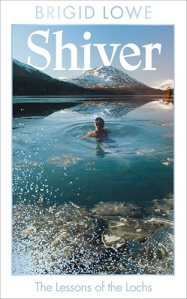 When Brigid Lowe’s marriage broke down, she moved with her three children from northern England to an Edinburgh flat. Feeling simultaneously unmoored and free in her early forties, she undertook an ongoing challenge-to-self to swim in 1,000 of Scotland’s lochs (there are 30,000 in total). “I am a fanatic. I swim outside now most days,” she confesses. For her, cold-water swimming means “taking in, and being taken in, by each loch and each moment on its own terms. There is no template.” Although she argues for the uniqueness of each loch, I found that the story quickly grew repetitive. Lowe is so sparing with personal details that I didn’t feel as engaged as I might have been with the overlaid narrative of her transformation from a traumatised wanderer to a strong, rooted matriarch. A prime example is her rape, which she refuses to name as such and recounts, in vague terms, in two pages. I’ve read a spate of swimming memoirs now, among them Freya Bromley’s The Tidal Year, Ruth Fitzmaurice’s I Found My Tribe and Jessica J. Lee’s superlative Turning, and it takes a lot for a book to hold its head up above that flood. I thought the setting of Scotland – her zeal for which I share (“Sometimes you fall in love with a place, and it’s as mysterious as any falling in love”) – would be that point of difference. While the prose is sumptuous and I enjoyed the glimpses of Scottish landscapes and wildlife across the seasons, they weren’t enough to hold my interest. The frequent references to Celtic legends, with a feminist slant, means that, in addition to swimming enthusiasts, I’d be more likely to recommend this to readers of works such as Sharon Blackie’s If Women Rose Rooted than to memoir junkies or tourists.
With thanks to Elliott & Thompson for the free copy for review.
Behold by Shara McCallum
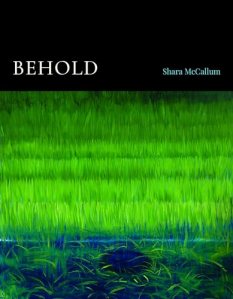 McCallum’s seventh book is a lush collection of ekphrastic poems (responses to artworks) and reflections on Jamaican American ancestry. In “Self-Portrait” – the first in a series with that heading – those major themes blend beautifully with a hefty dollop of assonance and sibilance: “At this point, I don’t know what in me is Jamaican / versus American. … since / we’re on the topic of the singular, about this subject: / she’s awfully tired of being parsed to see if she’s a fraud.” She applies art terms to the self: “Chiaroscuro” for a mixed-race identity and “Craquelure” for the wrinkles that provide “evidence of my ravishment” by time. Passion for art history (especially art by women and people of colour) meets fervour for social justice as McCallum exposes “the casual violence of misseeing” – who would look twice at the photograph of her Jamaican grandmother sweeping in midlife? I was unfamiliar with most of the artists and works featured, but that was fine; I almost didn’t want to look them up lest I spoil the magic of both by comparing the image with the poem.
With thanks to Alice James Books for the advanced e-copy for review.
The True Confessions of First Lady Freeman by Deesha Philyaw
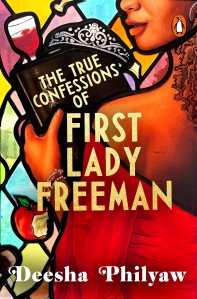 Philyaw’s 2020 short story collection, The Secret Lives of Church Ladies, was a surprise hit and set the bar high for her debut novel. Luckily, this lives up to the promise of her first book, which I called “bold and sexy,” and is all the more provocative for being set in the rarefied world of Southern U.S. Black megachurch pastors and their wives. Scharisse Freeman came from poverty, born to a single teenage mother who died of breast cancer when Scharisse was an adolescent. When she married David, 15 years her senior, it wasn’t unlike ascending to royalty. Together, they’ve raised a daughter, built a thousands-strong congregation, and lent their brand to everything from relationship books to salad dressing. At home they have a personal chef (David’s cousin Marcus) and an ice cream parlor. Schar seems like a shoo-in to win the annual First Lady pageant, but that’s before a scandal breaks linking her to her nemesis Daphne Lancaster’s husband, Jeddah, a mayoral candidate and inveterate adulterer also based in their town of Belleton, Georgia. Deciding how to refute the false allegations opens Schar’s eyes to her husband’s and the church’s priorities and uncovers a shocking secret about her father’s identity and the real cause of her mother’s death. Along the way, she tries to fix her relationship with her estranged bestie Petra, who is Black British and lesbian.
Fun fact you probably didn’t know about me: I grew up attending a Black megachurch in the Washington, D.C. metropolitan area. I recognised so much here: the opulence, the scripture quoting, the high fashion. A few names of public figures are real (Creflo Dollar and his yacht!); most other details are made up but totally believable if you’re at all familiar with this world. The novel is a little overlong (400+ pages) and soapy, but Schar’s voice is so fun and sassy that it carries the whole thing. Her footnotes and comebacks are hilarious, and you’ll want to cheer as she defies convention and blazes a trail for herself. (Read via NetGalley)
A Very British Midlife Crisis: A Survival Guide to the Best Years of Your Life by Rob Temple
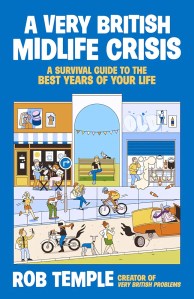 I started reading the Very British Problems series (which arose from a Twitter account of the same name) from the beginning, with the launch of Temple’s first book in 2013. Though I’ve missed some of the sequels, I’m delighted that this one unexpectedly dropped through my letterbox. I laughed and grimaced my way from start to finish; I could recognize pretty much every nonsensical decision, pathetic impulse, odd habit, and crotchety opinion. Not all of them are applicable to me, I hasten to add, but might be quirks I’ve observed in others of my generation or above. Temple proceeds thematically, considering health and work challenges, fashion, exercise, relationship and parenting issues, and so on. He translates dating profile phrases and rates hobbies by their potential regret value. Occasionally, his wife offers a female perspective. I probably guffawed the most at the section where he goes to a student house party as research (“I felt a TREMENDOUS urge to clean the bathroom”) and the glossary at the end (sample entries: “Being Knackered: Your permanent energy level,” “Cancelled Plans: Your favourite thing in the whole wide world”). This is silly, sure, but also warm and relatable. I think any reader of a certain age would get a kick out of it. I plan to pass my copy on to my brother-in-law, who turns 40 next month.
With thanks to Allen & Unwin for the free copy for review.
More to come: A sci-fi pairing as Under Story by Chloe Benjamin goes head to head with Exit Party by Emily St. John Mandel.
Which of these September releases have you read, or will you seek out now? What am I missing out on?
#ShortStorySeptember, Meet #RIPXXI: Fremlin, M.R. James & Navarro
I can hardly believe it’s October; I still have a bunch of short stories to finish and review! I’m taking the opportunity to start on Readers Imbibing Peril with these three collections that crank up the suspense with their scenes of the unexplained.
Don’t Go to Sleep in the Dark by Celia Fremlin (1970)
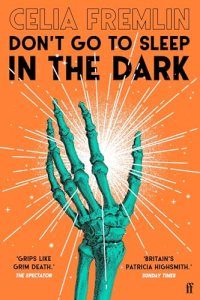
(Faber reprint: 2024)
I wasn’t wild about Fremlin’s Uncle Paul, but these 13 stories were terrific. Nightmares sometimes become reality as children and women of a certain age face up to threats, whether concrete or imaginary. The twist endings can reassure or unsettle, but in either case they call into question the tenor of what’s gone before. Only three tales are in the first person, with the other 10 in an authoritative third person. The need to protect children is a recurring impulse, ageing is a frequent cause of angst, and there are a couple of instances of frightening bird imagery (a nod to du Maurier?). There are also tweaks of horror story tropes – the haunted house in “The Hated House” and “The Locked Room.” Visual and auditory clues ramp up the tension. I’ll highlight a couple of favourites: “The Quiet Game,” in which a mother’s mental illness has dangerous implications for her twins; and “The Baby-Sitter,” about a little girl who’s afraid of The Hen with Great Big Eyes and her child-minder, who’s lived out her own horrors as a European refugee. This one is a fine example of how Fremlin mixes the everyday with suggestions of the supernatural. (Little Free Library) 
Ghost Stories of an Antiquary: A Graphic Collection of Short Stories by M.R. James, Volume I (2016)
(Adapted by Leah Moore and John Reppion)
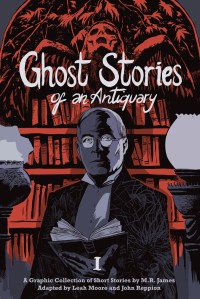 (I reviewed Volume II in 2017.) Though all retold by the same duo, these four stories are each illustrated by a different artist. So although the setup and voice tends to be samey – a dignified man investigating strange happenings at a country house – the art style varies significantly While I didn’t care for the approach in the first two (“Canon Alberic’s Scrap-Book” – Marvel; “Lost Hearts” – Pixar), the others, “The Mezzotint” and “The Ash-tree,” made up for it. I liked the monochrome palette, gentlemen detecting vibe, and Wildean mark of a morphing image of the former. In the latter, a Gothic setting and a history of suppressing witchcraft pave the way for unnatural spectacles. James’s classic ghost stories have been hugely influential on the likes of Susan Hill. (I also wondered if Stephen King borrowed the girl in the bath from “Lost Hearts” for The Shining.) Still, my conclusion about the second volume stands for the whole project: the “problem with using the graphic form for … tales that center around nameless horror is that depicting [what is feared] saps it of its power.”
With thanks to SelfMadeHero for the free copy of The Compendium (Volumes I and II) for review.
Blood Is Dripping onto the Courtyard by Elvira Navarro (2025; 2026)
[Translated from the Spanish by Christina MacSweeney]
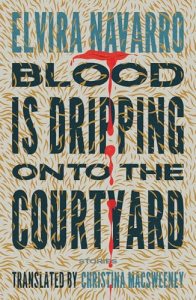 My introduction to Navarro, a Spanish author, reminded me most of Agustina Bazterrica’s 19 Claws and a Black Bird. These nine stories are full of derelict buildings, outsider characters, and traces of the uncanny. Seven are in the third person and two in first. A nice touch: two stories are linked in that they feature Almudena, who is studying in Paris. “The Fear of the City” is, we realize, the story she wrote about femicide, as mentioned, fittingly, in “The City of Fear.” “Idiotic Love” is narrated by a trans woman with an anal fissure and conjures a seedy world of nightclubs and sex shops. This was the longest story and not a pleasant one. There were just three standouts for me. In “The Washing Machine,” which contains the title line, a couple’s appliance keeps filling with blood for no reason. “The Animal Collector” is a tough one for animal lovers because of all the injuries and deaths, but the idea of a highway maintenance man assembling a makeshift zoo for his roadside rescues is alluring. Eventually, he becomes overwhelmed and compassion turns into a burden. In “A Small Bunch of Violets,” Mari chooses a new ornament for her father’s grave during a heat wave, but the flowers keep being displaced. There were too many so-so stories, though.
With thanks to Two Lines Press and publicist Nicolette Praça for the proof copy for review.
Late Summer Novels (Bamford, Ellis, Hornak, King) & Poetry Collections for the Transition into Autumn (Hurst, McNish, Plath)
It’s been feeling autumnal for a few weeks now with the drizzle, chilly mornings and evenings, honking of geese overhead, and harvesting our last garden apples – though it remains warm and summer only officially ended on Monday. I’ve recently finished off a summer-titled trilogy and the second entry in a seasonal quartet. I’m also throwing in a couple fun novels I bought earlier in the year.
Before and after Tuesday’s autumn equinox, a few poetry collections have been my fitting companions for the start of a new season.
Idle Grounds by Krystelle Bamford (2025)
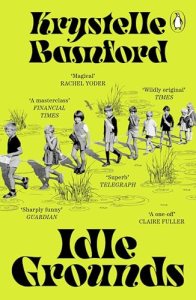 “The following is an account of an afternoon in June in which we sallied forth, and then, for the most part, back.” I was drawn in by the mock-heroic first-person plural voice of a gaggle of cousins at a New England family get-together. It’s 1989 and they’re here for one of the adults’ birthdays, but that’s of no concern to the kids, who are a world unto themselves. In the first chapter, three-year-old Abi goes missing and the rest set out on a quest to rescue her. The shed, the woods, a driveway full of cars, the river: every setting seems to offer adventure, but maybe also danger. And then the oldest boy cousin, Travis, vanishes too. “Intermezzo” chapters offer snippets of family lore – about their grandmother Beezy’s awful novel, The Lilac Swing, and so on – that don’t add much of interest to this meandering novella. To deliver on the promise of the narrative voice, Bamford needed to give her debut a little more: more intrigue, more pivotal scenes, more closeness to a few characters rather than surface descriptions of a bunch, maybe more pages to make something of the not-so-momentous family secrets. As it is, I had to agree with this tongue-in-cheek line on p. 136: “in our depleted state, we thought the very thought you’re thinking now, which is enough already.” (New purchase with voucher – Hungerford Bookshop)
Book 3 of The Summerhouse Trilogy
The Fly in the Ointment by Alice Thomas Ellis (1989)
{BEWARE SPOILERS!}
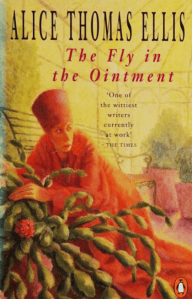 Following The Clothes in the Wardrobe (1987) and The Skeleton in the Cupboard (1988), this novella revisits the run-up to Margaret and Syl’s wedding from Lili’s perspective. It’s the shortest of the three books and adds no new plot details or real character insight, but Lili’s voice is alluring all the same. She’s an incorrigible flirt, or perhaps what we would now call a love (not necessarily sex) addict: “Sometimes I felt I would disappear if I couldn’t see the person opposite falling in love with me. I just wouldn’t be there.” Lili is pivotal to the narrative because of her well-meaning interventions: first, she falsely portrays the coming union as blessed by creating a fake (tissue paper) bloom for the cactus in the summerhouse; then, in agreement with other characters such as Mrs Monro that there shouldn’t be a wedding after all, she decides to sabotage it by ensuring that she and Syl be caught in flagrante in the summerhouse. While this was an interesting project for Ellis to undertake, the first volume was by far my favourite and I didn’t think the second and third wholly necessary. (Secondhand – Regent Books, Wantage)
So Good to See You by Francesca Hornak (2025)
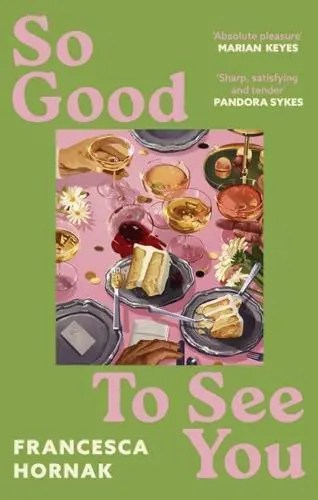 Daniel, Rosie and Serge were good friends at Oxford but since their graduation in 2004 they’ve drifted into indifference and resentment. Daniel is a Hollywood star but still can’t forgive filmmaker Serge for stealing his idea for a biopic of a working-class lad. Serge is on a break from his relationship with Isla, a younger movie makeup artist with whom he has twins. Rosie regrets that her on-again, off-again relationship with Serge meant she wasted prime years. In August 2019, they’re all brought together for Serge’s cousin Caspar’s big gay wedding in Provence. The Campbell cousins come from inherited wealth, but no one knows Serge’s production company is heavily in debt. As best man and “best woman,” Serge and Rosie have to write a joint speech; Daniel has to hide his dependency on alcohol and drugs.
This is a light, Taylor Jenkins Reid-esque soap opera that I swallowed in big gulps. I’d enjoyed Hornak’s Christmas-set debut, Seven Days of Us (2017), but when I looked back at it I realised how identikit the two are: set mostly over a matter of days, with each chapter marked by a precise place and time stamp. I guess she hit on a winning formula and decided to repeat it, but I was disappointed to notice the similarity. In this case, zooming in slows the action and makes the book feel overlong, though it’s perceptive about class, privilege, disappointment, the longing for parenthood, and loyalty among family and friends. (Her previous novel now seems almost prescient with its depiction of a Christmas in quarantine! Perhaps I’ll reread it.) (New purchase with voucher – Hungerford Bookshop) 
Apt Pupil by Stephen King (1982)
(Novella published in Different Seasons under the heading “Summer of Corruption”)
{BEWARE SPOILERS!}
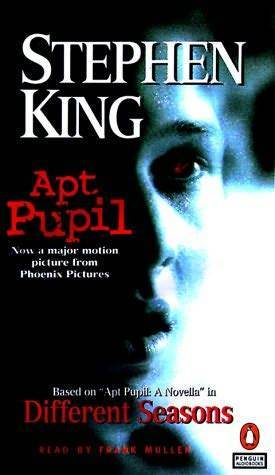 Thirteen-year-old Todd Bowden becomes obsessed with his elderly neighbour, whom he has identified as German concentration camp officer Kurt Dussander, in the summer of 1974. His parents think that he goes over to read to “Mr. Denker,” but in fact he’s extorting sordid war stories out of the old man. When Todd’s grades nosedive, Dussander agrees to impersonate his grandfather at a conference with the school counsellor so his parents remain oblivious. Now each has dirt on the other; blackmail goes both ways. The book suggests Dussander’s ongoing sadism sparks something inexorable in the young man, and both engage in further senseless carnage. I wasn’t sure if it was respectful of King to treat the Holocaust like a contagious sin. As Todd’s (real) grandfather says, “Sometimes the past don’t rest so easy. Why else do people study history?” I don’t think an editor would have let the story stand today. This is not as full-on horror as others I’ve read by King (Misery and Pet Sematary), but still gruesome and – for an animal lover like me – Dussander’s torture of cats and dogs was harder to read about than the murders of unhoused people. A neat connection back to Rita Hayworth and Shawshank Redemption, which I read back in the spring: Dussander mentions that “The banker who bought [the stocks] for me went to jail for murdering his wife a year” later in Maine. (Little Free Library)
Three on a Theme: Autumnal Poetry
Keats described autumn as the season of “mellow fruitfulness,” as I was reminded by Kate Mosse’s Autumn. Fruit and feminism are themes that link these three collections. All:
The Fox’s Wedding by Rebecca Hurst (2022)
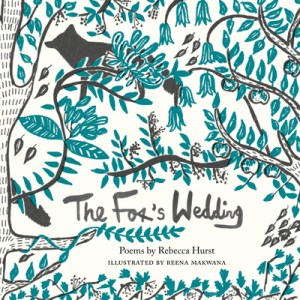 I’ve read Hurst’s debut full-length collection, The Iron Bridge, and jumped at the chance to catch up on her previous chapbook. Its hint of fairy tale menace feels appropriate for early spooky season. A witch turns into a hare and flees in “Familiar.” The girl who will win the hand of “The Frog Prince” spends her evenings “squashing worms and slugs and snails beneath / the crêpe soles of her black school shoes.” Needlecraft recurs: “Once there was a child/ who woke alone in the forest. … S/he took the path of needles / to ask needle-sharp questions.” There are folktale rhythms to “Brothers,” which also mentions gingerbread men. The woods morph with the advance of the year (“let the seasons pleat / folding one year to the next”) and hide creatures real and imagined. “Now it is Michaelmas: the land sun-warm, / fields shorn, blackberries ripe to bursting.” The atmosphere of this pamphlet – defiant, magical, mischievous – casts a spell. (New purchase from The Emma Press)
Plum by Hollie McNish (2017)
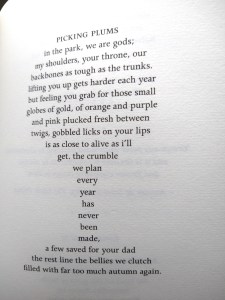
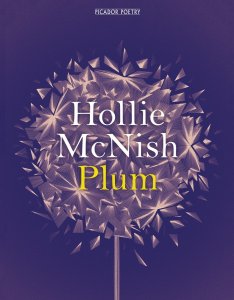 A late tree-shaped poem captures a treasured ritual with her daughter. But if I tell you that “plum” is also the last in a long string of euphemisms for female genitalia in “Voldemort,” that will give a better sense of McNish’s tone, which is often cheeky and snarky. She includes poems she wrote as a child and teenager but also remembers her adolescence from adulthood, pinpointing moments of peer pressure and misogyny that she experienced. She wishes she and her friends had been less obsessed with what boys thought of them and hopes to teach her daughter to stand firm in her own identity. McNish has local roots and is known for her conversational memoirs and her spoken word poetry. Like Harry Baker, Jay Bernard and Kae Tempest’s works, it’s probably not best encountered in print. In performance, fairly simple and repetitive phrasing can come to life. (Secondhand – Library book sale)
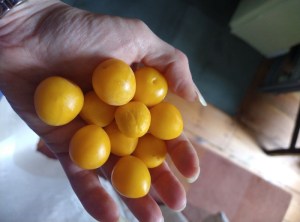
I spend the summer months watching like a hawk for when wild and waste-ground plums ripen and fall so I can scurry around gathering them to eat or freeze for autumn and winter desserts. Our cherry plum tree produced its first fruits this year, too (below).
Crossing the Water by Sylvia Plath (1971)
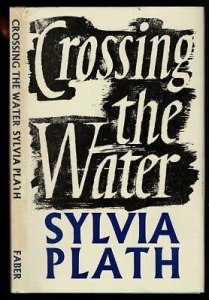 I got less out of this posthumous collection than I did from Ariel and Winter Trees, but there are still striking turns of phrase: “The future is a grey seagull / Tattling in its cat-voice of departure, departure” (from “A Life”) and “At our feet, the weed-moustachioed sea / Exhibits its glaucous silks” (from “Whitsun”). Canada, age, sleep, surgery: the imagery feels a little all over the place. The stand-out poems for me were “Small Hours,” in which marble statues metaphorically watch over the speaker’s troubled insomnia, and “Mirror,” which reflects the unstoppable advance of age and contrasts true self with appearances. Most redolent of autumn were a poem about pheasant hunting and “Blackberrying”:
Nobody in the lane, and nothing, nothing but blackberries,
Blackberries on either side, …
A blackberry alley, going down in hooks, and a sea
Somewhere at the end of it, heaving. Blackberries
Big as the ball of my thumb
The Devon lanes aren’t so empty these days, I can attest! A line from “Last Words” ties in perfectly and is a good resolution for us all: “I should sugar and preserve my days like fruit!” (University library)
I started my preserving late and will not do as much as I have in other years. So far I’ve made apple and tomato chutney and set some rosehip cordial steeping. This afternoon I’m going to attempt rosehip curd – we found a jar of “hagebutten” in a Berlin supermarket this time last year and it was so delicious that we’re going to try to recreate it, though it requires laborious deseeding and mincing plus two boiling stages. More Vitamin C than orange juice, apparently!
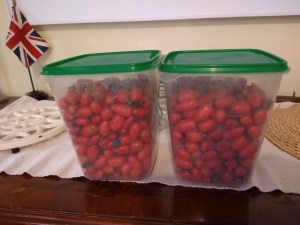
Rosehips ready for preserving!
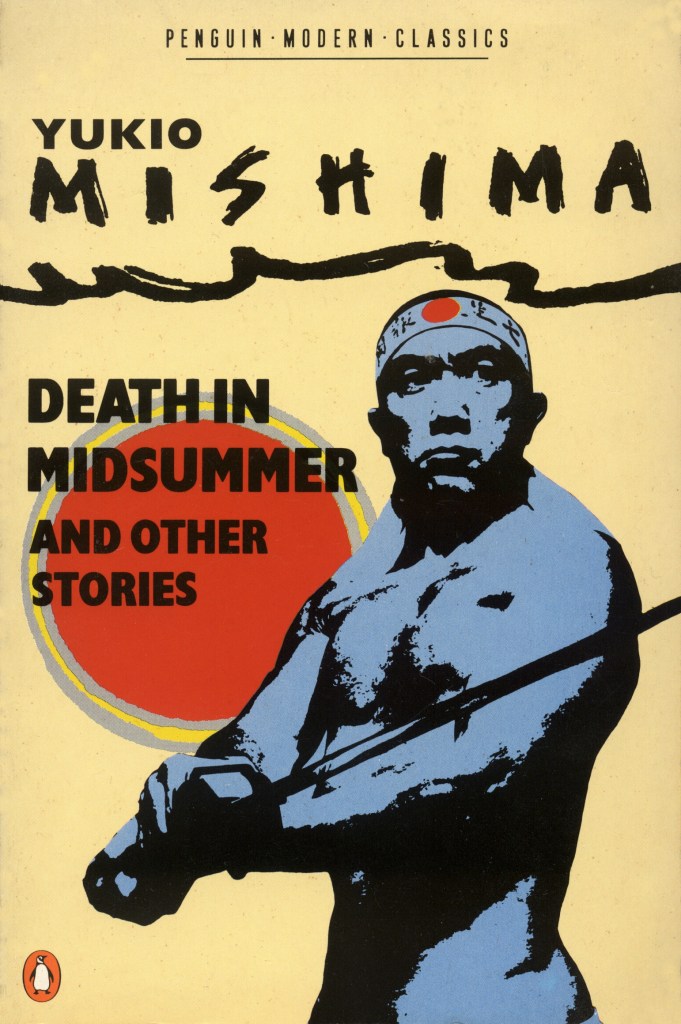
#ShortStorySeptember: “Death in Midsummer” by Yukio Mishima (1952; 1966)
Tomoko Ikuta is on a beach vacation with her three children and sister-in-law, Yasue, who is their de facto nanny and housekeeper. The trip soon turns nightmarish when three family members die in quick succession.
{BEWARE SPOILERS IN THE REMAINDER}
Tomoko is taking a well-deserved nap to escape the punishing sun. Yasue is an attentive babysitter who has already chased after the children and warned them about going any deeper. She’s barely looked away for a second when the six-year-old boy, Kiyoo, and five-year-old girl, Keiko, disappear. Yasue runs into the ocean to find them and is hit by a massive wave that seems to trigger a heart attack. In the ensuing chaos, the missing children are forgotten – even by Tomoko – until it’s far too late.
All of the above happens within the first six pages; the rest is aftermath. The idyllic setting introduced in the story’s first few paragraphs (the beach “unspoiled for sea bathing,” the hotel’s “beautiful” view, the placid image of the mother asleep) feels like mockery when set against the “ridiculous” and “excessive” tragedy that has befallen the family. The husband, Masaru, on the train from Tokyo to join his diminished kin, wishes he could “shout at the other passengers: ‘Listen, everybody. You don’t know it, but I have just lost my sister and two of my three children.” The season itself seems to have betrayed them: “If only summer would end. The very word ‘summer’ carried with it festering thoughts of death.”
Mishima’s vision is of fate as cruel and capricious. As the bereaved parents undertake the necessary funeral preparations, he explores the practicalities and the ironies of the situation:
A death is always a problem in administration. They were frantically busy administering.
Tomoko listened to the subdued humming of the autumn cicadas, and smelled the incense and the cool, shady grass. ‘What a nice place. They’ll have room to play, and they won’t be bored. I can’t help thinking it will be good for them. Strange, isn’t it?’
She’s found a perfect, peaceful spot for her children to spend eternity, since they’ll never get to grow up.
As time passes, the memory of the incident is less painful. What had been unbearable becomes simple reality. But then something curious happens. One family’s losses take on legendary status, transformed into a widespread cautionary tale:
Rather than an injury it became a moral lesson, and it changed from a concrete fact to a metaphor. It was no longer the property of the Ikuta family, it was public. … You have to watch children constantly when you take them to the beach. People drown where you would never think it possible. Not that Masaru and his wife had sacrificed two children and a sister to teach a lesson. The loss of the three had served no other purpose, however; and many a heroic death produces as little.
Yet Mishima also extends an opportunity for redemption when, two years later, the couple returns to the same beach with their remaining son, five-year-old Katsuo, and their new daughter, Momoko. It’s an act of faith and an acceptance that danger is always present and that no parent, however protective, can completely eliminate risk. By inscribing a full circle like that, Mishima emphasizes the severity of the loss but also somehow atones for it.
I found this story so powerful – emotionally charged but understated – that I’m surprised I’d not come across it before in my constant quest to find the best classic grief literature. At 29 pages, it feels just right; a note at the end mentions that it was abridged by translator Edward G. Seidensticker. I’ll be sure to try more by Mishima.
From Death in Midsummer and Other Stories (1966) (Secondhand – Better World Books)

Booker Prize Longlist Reads (Switzy, The End of Everything) & Shortlist Predictions
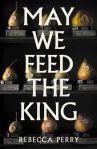
In an hour or so, the Booker Prize shortlist will be announced. I’ve now read four of the longlisted novels; I’m still awaiting a library hold of May We Feed the King by Rebecca Perry, which is the only other I’m particularly keen to read. This is the first time in four years that I’ve made much of an effort to read from the longlist, i.e., besides what I happen to have already read. I think this year’s judging panel may have something to do with it: I have read (almost) everything by Raymond Antrobus and Patricia Lockwood, and I admire Mary Beard even if I don’t know her work so well.
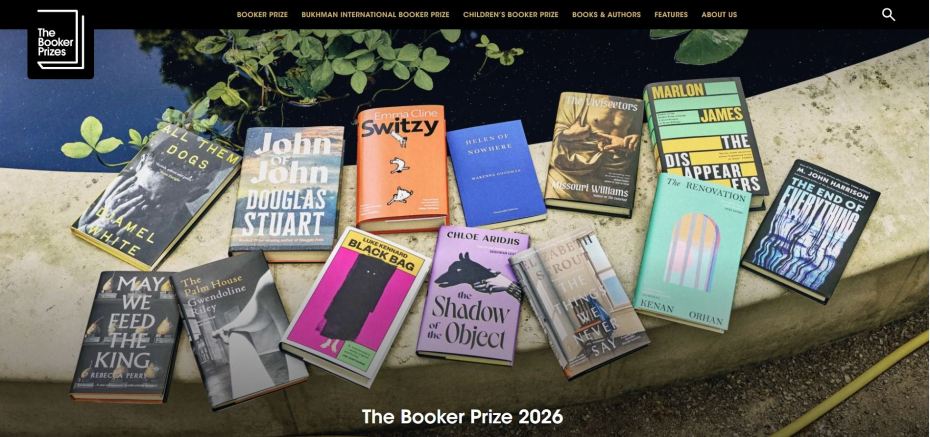
This pair contains unavoidably bleak stuff – dementia and preparing for an assisted death at Dignitas; weird goings-on in postapocalyptic London and Kent – but with some glints of humour. I could see the first being shortlisted but not the second.
Switzy by Emma Cline
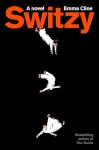
Like many, I read Cline’s debut, The Girls, but lost track of her career afterwards. I was taken aback at the subject matter of her fourth book, which sounded like fodder for a different author – an older male. I also worried that her portrait of a privileged businessman trying to make meagre amends for the wrongs from his past would be too similar to George Saunders’s subpar Vigil. But in the end she won me over with her close-third-person portrait of the last few days of an Everyman defying the inexorable course of dementia.
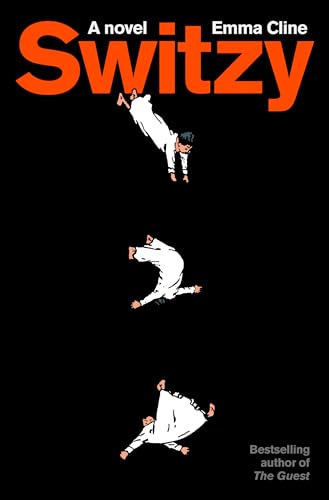 David Hastings, 70, is en route to Zurich, headed to the never-named Dignitas. He’s on a private plane borrowed from a longtime associate, and has with him a personal assistant, Cody. Their first stop is London so he can see his daughter, Rebecca, and his musical prodigy grandson, Rainer, and say a sort of goodbye – although his relatives have no idea it’s the last time they’ll see him. He has one more stop to make, just over the Swiss border, to see Tom, a boarding school chum who endured hazing that David didn’t intervene to stop. Beyond the guilt, we sense that he longs to see Tom because he has always been half in love with him – a recurring homoerotic impulse never consummated. (An interesting parallel is that Rebecca is having clandestine meet-ups with a female friend. Is same-sex attraction inherited?)
Depicting the mental turmoil of a character sinking into dementia is not that ground-breaking; I’ve read a number of novels that do so with aplomb (Still Alice, Elizabeth Is Missing, Turn of Mind, The Night Guest, The Swimmers). However, Cline convincingly traces David’s bewilderment at everyday traveller experiences of hotels, restaurants and taxis. It’s no mawkish tour through disability; instead, his outsider’s view skewers the ridiculousness of modern life. I was most impressed by the way David’s internal monologue skirts lost language and gets stuck on arbitrary phrases: sayings, song lyrics, liturgy. “The quick brown fox jumps over the lazy dog”; “The hills are alive…”; “Now and at the hour of our death…”; his ex-wife’s exhortation to their little girl to “brush away the sugar bugs”; and the story of Little Nemo in Slumberland (which lends the anomalous cover image).
“Unflinching” is a reviewing cliché, but this is what people have in mind when they say it. Cline follows David right up to his last moment, taking us into the room at the clinic with him. There’s nothing special, or even very likable, about this man, but as we follow along on his final physical experiences we get a sense of the weight of any life – which can still have value even if there are no longer any words for what’s happening. I found this much more affecting than I expected to, reaching the final pages with tear-soaked cheeks. (Read via NetGalley)
Also recently reviewed by Cathy and Susan.
I’ve read and thought a lot about the topic of assisted dying, including with In Love by Amy Bloom, Intervals by Marianne Brooker, That One Patient by Ellen de Visser, The Inevitable by Katie Engelhart, and One Last Thing by Wendy Mitchell. Switzy would make a particularly good fictional counterpart to the Bloom, for those who wish to read further.
A bonus review:
A Better Death: The case for assisted dying by Jonathan Romain
 Romain is a rabbi and former chair of Dignity in Dying. In this short work, he gives a valuable history of relevant legislation in the UK and internationally, and a rundown (with rebuttals) of potential ethical objections to assisted dying. The party line of the major religions is to uphold the sanctity of life and thus oppose assisted suicide, but there are notable exceptions. Romain mentions a former archbishop of Canterbury who attends my church. George Carey changed his mind after the high-profile case of Tony Nicklinson, who was paralysed after a stroke and lost his appeal over the right to die. Pious supporters of the Campaign for Dignity in Dying emphasise the duty to be merciful to the suffering. Romain puts it this way: “From a religious perspective[,] it makes much more sense to say that we honour God most by healing someone when we can, comforting them when we cannot do so and helping them let go of life gently when desired.” Most medical bodies, too, have now reversed their official positions, with the majority voting to remain neutral on the matter. Romain characterises the campaign as a sign of humanitarian progress – like universal suffrage or the abolition of slavery – that future generations will look back on as overdue. He hopes that charismatic campaigners will arise from among the dying and their relatives. (The foreword is by TV presenter Esther Rantzen, who appealed after being diagnosed with terminal lung cancer. Just days ago, she announced she’s too fragile to travel to Dignitas.)
For me, this book offered little new because I was familiar with arguments around the issue, pro and con. However, it would be a good primer for those coming to such questions for the first time. What I did find helpful was a discussion of rituals we might develop to accompany an assisted death – a new sort of funeral that may one day be routine. Music, readings, a toast; a candle snuffed out or lit at the moment of death, and so on. Imagine a whole new category of human rite, one that should no longer be clouded in secrecy or available only to the wealthy. Alas, the latest version of the Terminally Ill Adults (End of Life) Bill was voted down by the House of Commons on 11 September, but no doubt it will be back in a new form soon.
With thanks to Reaktion Books for the free copy for review.
The End of Everything by M. John Harrison
 I was willing to give this a try for several reasons: it was readily available from my library (someone donated it), Harrison is lauded yet I’ve never approached his large back catalogue, and it’s novella length. Alas, those were insufficient to overcome my antipathy for vague dystopian scenarios in which characters’ actions have no clear motivations. Years post-crisis and -invasion, some people are still trying to flee Britain, but most seem content muddling along. “What were the iGhetti and where had they come from?” That’s a good question, and one to which we never get a straightforward answer, but the main hint is that they are jelly-like and arrived from elsewhere. Phillip Tennent engages in mudlarking – except some of the artefacts he discovers are amorphously humanoid and evolve human traits.
Initially it seems as if Phillip is the protagonist, but his 70-year-old painter aunt, Marnie, has more enduring importance. When she’s hounded out of her falling-down home, she shelters in an abandoned art gallery. She’s a surprising and almost admirable broad, handy with a weapon whenever she senses her way of life being threatened. There are some darkly comic outrageous happenings, and gruesome set pieces that blur the line between living and dead, human and non-. I had to wonder if there is also a Brexit allegory, given Marnie’s signs reading “HOW CAN YOU MISPLACE A CONTINENT?” Harrison’s prose is smooth and the pages turn quickly, but when I look back at the gnomic dictums I marked out, they don’t seem to mean anything:
Are we watching a film the universe is showing itself?
The world’s over. But that doesn’t matter. Because another one will be along soon enough.
Rather, significance is located in the expressions of uncertainty:
the apocalypse seemed to withhold itself, quickly becoming just another historical continuity.
There was a vigorous ambiguity to everything.
Believe all you like that at some level unavailable to you an organising principle exists. You will never have any evidence of that.
I suspect Harrison’s aim was to show how one can get used to anything, even random violence and purposeless wandering. But this watery postapocalyptic meander sheds no real light on the past, present, or future, and feels as if it should have been published more like a decade ago (at the time of The Wall by John Lanchester et al.). A couple of great scenes, such as children playing with fallen ash as if it were snow, aren’t enough to take the bitter edge off even such a short novel. I’m not tempted to try more by Harrison. (Public library) 
Also recently reviewed by Annabel.
Longlisted novels that I’d already read:
 The Things We Never Say by Elizabeth Strout: Artie Dam is a likeable Everyman with the same sorts of secrets and struggles we all have. Sometimes he thinks his marriage is going well and he’s touching his high school history students’ lives; other times he feels fatalistic about his relationships and the US’s trajectory. Along with Lucy by the Sea, this is the most engaged Strout has been with the present day, and the most specific she’s gotten about political outrages. I liked how the flash-forwards prove Artie right in his predictions (occasionally based on premonitory dreams) or confirm what he couldn’t have known about the difference he made for two particular students. In his small way, Artie is a new Stoner.
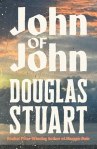 John of John by Douglas Stuart: One of my books of the year for sure. (I reviewed it for Shelf Awareness.) Stuart’s superb third novel is set on the Isle of Harris in the 1990s. Cal seeks to reconcile his sexuality and artistic goals with his family’s expectations and his devout upbringing. An absorbing, deliciously melodramatic story is built around the contrast between modernity and the old ways. The characters’ power plays and acts of desperation are heartrending, but mischief and love of colour and crafts lend lightness. Stuart’s every observation is profound; the simplest phrase is memorable for its beauty.
Here’s my thinking about the shortlist:
Lockwood may be to thank/blame for the weirder and more niche selections (i.e. previously unknown young Americans’ second books), whereas the judges are likely to come to a consensus on more straightforward, reader-friendly material. I imagine we’ll see a shortlist dominated by women and repeat nominees.
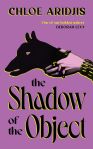
The Shadow of the Object by Chloe Aridjis – Especially with Antrobus and critic Rebecca Liu on the panel, we can expect at least two non-Anglo authors to make it through. Djamel White’s subject matter sounds neither appealing nor fresh. [Kenan Orhan is apparently Turkish American, though he looks white.] Though I’m personally not eager to read Aridjis again (after a DNF of Sea Monsters), I’m taking a gamble on this one being the second.
Switzy by Emma Cline – Edgy and powerful enough to deserve a place.
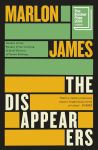
The Disappearers by Marlon James – A previous winner and a writer’s writer, though I’ve never particularly gotten on with his work.
May We Feed the King by Rebecca Perry – I’ve heard almost exclusively good things.
The Things We Never Say by Elizabeth Strout – She’s getting to be a Booker bridesmaid and has been nominated for poorer books, so I hope she’ll get another shot.
John of John by Douglas Stuart – How could you not?! I’ll throw a tantrum if it doesn’t make it through.
But, of course, the judges could surprise me with a wildcard such as Black Bag by Luke Kennard; Gwendoline Riley is inexplicably popular with judging panels, too.
What have you read from the longlist? Which book(s) do you most want to read, or see on the shortlist?
#ShortStorySeptember: Old Romantics by Maggie Armstrong (2024)
Linked short story collections are among my favourites: it’s so satisfying to spot connections between characters and storylines. It took me embarrassingly long to work out that these dozen Dublin-set stories are linked, and that they are likely to be autofiction. The penny finally dropped when I realised that the protagonist of multiple stories in a row had been named Margaret, while the autobiographical nature was clinched for me when I read the acknowledgements. Armstrong highlights various slivers of Margaret’s experience in third- and first-person narratives that initially seem to skip around in time but eventually settle into chronological order as she becomes a wife and mother.
The first seven stories are hilarious and awful at once, depicting a string of her narcissistic boyfriends. (“Number One” makes it clear who these immature, selfish, sometimes mentally ill young men are looking out for.) The title story is probably the best, recalling an ill-fated trip to the USA she took with Walls, who vacillated between pettiness and largesse. The fact that she gets an infected wound from stepping on an American flag cocktail stick [toothpick] is a sly symbol of how the trip reveals what’s gone wrong between them. In the second half of the book, she has an affair with Sergio, an Italian émigré with an ill wife and two daughters. “Trouble” proceeds week by week through her first pregnancy via headings (along with “Those Weeks,” “Any Given Week,” etc.); “Trouble Again” chronicles the second, which is complicated by marital problems and her father’s cancer.
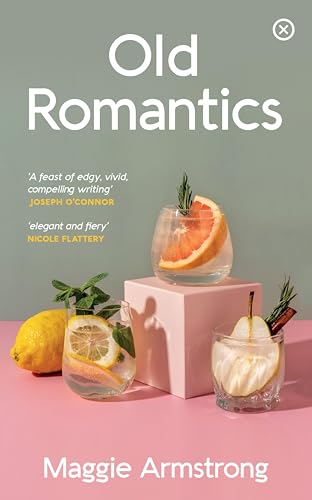
Margaret’s (lack of) vocation is another thread. When she’s a young woman, her father gets her a corporate catering job. The building is overstaffed and she’s clearly superfluous, but she still manages one coup in her time. In “My Mistake,” Sergio gets her a first post-maternity leave job with his company that involves navigating bewildering computer systems and writing reports on information she doesn’t understand. All along, she’s been composing pieces about her life and trying to get them published. These stories are wry and well observed, documenting a woman’s shifting preoccupations and search for meaningful connection. This is Maggie Armstrong’s debut and it’s a promise of great things to come.
With thanks to Biblioasis for the free e-copy for review.
#ShortStorySeptember: Single Stories by Barnes, Bellow, Enright, P. Fitzgerald, Mackay, and Norman
Thanks for all the contributions to Short Story September thus far! I usually review whole collections, but today I’m highlighting individual stories I read either as stand-alones, in an unrelated volume, or as a taster from a book I might finish some other time. A few really surprised me for being so dissimilar to other work by the author. These six seem to illustrate different techniques or situations that short stories are good at exploring, thus my headings. (Beware mild spoilers in most of these brief responses.)
The Pastiche
“Homage to Hemingway” by Julian Barnes (2011)
[from Through the Window]
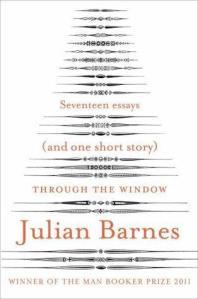 The protagonist is a literature instructor and failed novelist whom we see undertaking three different teaching gigs (in rural Wales, the Alps, and the American Midwest), like the triptych of expatriate Americans waiting for trains in Hemingway’s “Homage to Switzerland,” which is specifically referenced here. He believes fiction is “omnivorous and essentially amoral” and hopes to inspire his students to “reflect on life’s influence on art, and then art’s influence back on life.” This is, of course, a huge theme across Barnes’s oeuvre. Luckily, Barnes doesn’t attempt mimicry of Hemingway’s style, which really wouldn’t suit him at all, but I enjoyed the barbs his students throw. For example, Kate describes Hemingway as “the ultimate dead white male … celebration of machismo. Boys with toys.” This wasn’t very memorable but has me hankering to track down and reread Barnes’s full-length story collections. (Public library)
The Character Study
“Leaving the Yellow House” by Saul Bellow (1958)
[Penguin Modern: 36]
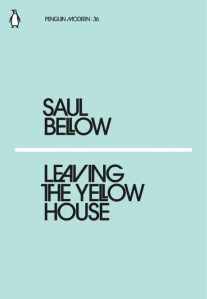 I wouldn’t have recognized this as Bellow’s writing were his name not on the cover. I think of him as a chronicle of Jewish city-dwellers; this is the story of a woman in a tiny town in the American West. Everyone in Sego Desert Lake knows that Hattie is an alcoholic. She’s now in her early seventies and pretty much has bourbon running through her veins. When she gets her car stuck on train tracks while driving drunk and breaks her arm in the ensuing kerfuffle, she and her acquaintances are forced to think seriously about what’s going to happen to her. She looks back on her two marriages and her relationship with India, who used to own her house – I never did work out who India was to her; a friend? an employer? – as she sets to the task of writing her will. Who deserves to have the house in turn? The title has a double meaning and also points to the final leave-taking of death. Hattie is not a very likeable character but has a certain admirable dignity, like Olive Kitteridge or Hagar in The Stone Angel. I liked her fancy that her whole life has been filmed and she’ll soon be able to revisit any moment she chooses. A melancholy slice of mid-century Americana. (Secondhand – Community Furniture Project, Newbury)
The Shock Ending
“Pillow” by Anne Enright (2008)
[from Taking Pictures]
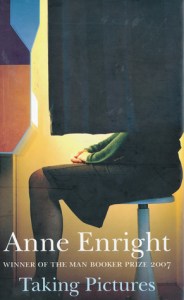 Alison, from Ireland, is part of a set of international roommates at her American college. Li is always asking her questions about what things mean or how they work. The first lines have her querying “What is a homosexual?” With this Enright sets us up to think that Li has a crush on Alison. First, the roommates find out that Li is her surname and really they should call her Ping. And then one morning Alison wakes up struggling to breathe because Ping is trying to smother her with the title object. I gasped aloud! The incident seems to come out of nowhere but I guess illustrates how easy it can be to hide mental illness. I kind of wish it wasn’t the Chinese girl who ended up being unstable, though. I’m not sure short stories are where Enright shines; I read the first two stories in this volume but won’t finish it. (Public library)
The Visual Pun
“The Axe” by Penelope Fitzgerald (1975)
[from The Means of Escape]
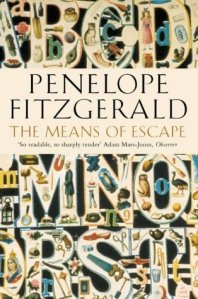 An office worker recalls having to make redundancies, including of his dignified clerical assistant, W. S. Singlebury. He feels even worse about it when the man invites him to visit his home. This faux report to the Company boss chronicles a growing sense of unease as he returns to work and finds the fired man still in the office, gruesomely injured and leaking blood all over. Fitzgerald has playfully imagined Singlebury getting the axe, literally, and then haunting the man responsible. I’ve never experienced such gleeful mischief from Fitzgerald – I only knew her austere historical novellas – but sure enough, this originally appeared in The Times Anthology of Ghost Stories. (Secondhand – Community Furniture Project, Newbury)
The Family Drama in Miniature
“The Worlds Smallest Unicorn” by Shena Mackay (1999)
[from The Worlds Smallest Unicorn and Other Stories]
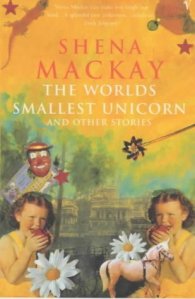 Fan’s brother-in-law, Teddy, has just returned from Hong Kong and she’s not happy about it: “now here was this succubus squatting in her kitchen, expecting to be fed.” She sees in the newspaper that an old flame of his, a singer, has died and he sets out for the funeral, passing a circus billet advertising the title act. (Since it reproduces what was on the tacky poster, I can let Mackay off for the grammatical gaffe, though it doth offend the eyes!) It seems to be a metaphor for anything that’s too good to be true, such as Fan’s affair with Teddy years ago. Her adolescent daughters’ banter and the South London environs are highlights in this one, but so far the book is not living up to the collection I read by Mackay last year, Dreams of Dead Women’s Handbags. (Secondhand – Slightly Foxed, Berwick)
The Relationship Study
“Kiss in the Hotel Joseph Conrad” by Howard Norman (1989)
[from Kiss in the Hotel Joseph Conrad]
 The narrator is dishonourably discharged from Canada’s air force for faking an emergency beach landing during a practice flight in 1943. “We’ve come up with a new, Asshole category,” the colonel declares as he dismisses him. Still, this amiable joker hopes his pluck will endear him to Imogene Linny, who has a kissing booth for would-be soldiers on the Halifax wharf. She recognizes him from his prank and says, “You can kiss something, but it ain’t, I guarantee you, my lips.” In the two decades that follow, he keeps tabs on Imogene as she marries into a hotel empire and he works on the greyhound tracks. After all, he paid his dollar at that booth but never got his kiss. This could have gone creepy but Norman keeps it quirky and sweet instead. His novels, too, often feature Atlantic Canada, oddballs, and hotels. (Secondhand – Hay Cinema Bookshop)
Are any of these authors, and their stories, familiar to you?
Which of these six story types do you prefer?
The Marriage Plot: Family Family by Laurie Frankel (2024)
In case you missed the announcement, “The Marriage Plot” is the new name for the online book club formerly known as “Literary Wives.” Part of our reasoning behind the rebrand was to be more inclusive in our thinking about love and roles in long-term partnerships. But even from that wider perspective, Laurie Frankel’s fifth novel, Family Family, ended up being an outlier, because there’s no central marriage or core partners. Instead, the book makes the point that “families get formed in all sorts of ways” and “look all sorts of ways and are made up of all sorts of people and still count as family.” Specifically, Frankel – and her flamboyant actress protagonist, India Allwood – want to counter traumatic adoption stories by showing that placing for adoption and/or adopting can be a first choice rather than a last resort.

{BEWARE SPOILERS IN THE REST!}
There are two narrative threads, one set across eight days in 2020 and another advancing in fits and starts from 1998 to meet up with it. In the former, India is in trouble with her agent and television studio for badmouthing the last movie she made because she felt it promulgated tired, negative stories about adoptees. One of her adopted Korean American twins, 10-year-old Fig, decides to come to her mother’s defense by locating the two children India gave up for adoption (Rebecca and Lewis), their biological fathers (Robbie and Davis), and the adoptive parents (Camille and the Andrews). En route to a big, messy, unlikely family reunion, alternating chapters fill in India’s career – from high school dramatics to her current superhero hit, Val Halla – and unconventional decisions about motherhood.
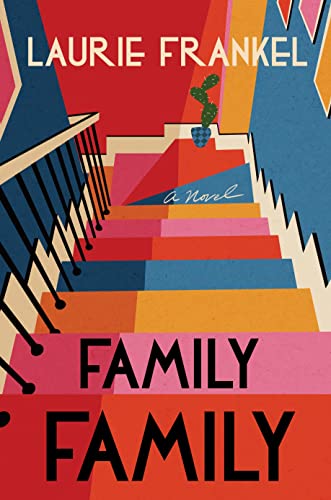 In terms of our club reads, this reminded me most of Lessons in Chemistry for how the protagonists resist marriage and prioritize independent vocations. All of the mothers on display are single parents: Camille and India, yes, but also India’s mother before her, who tells her, when she is first pregnant at 16, “having a baby has nothing to do with having a husband.” When India again falls pregnant unintentionally at age 20 (which does rather strain belief), she reminds herself, “parenting need not have anything to do with partnering.”
Long before I ever read a novel by Frankel, I’d come across a first-person piece she wrote for the Guardian about adopting a child from Korea. The experience of having a transgender child then led to her third novel, This Is How It Always Is (2017). I read that from the library because it had been a hit with my book club before I joined. There’s no denying the agenda behind either, but it was subtler in that earlier case. The characters here are quirky and their interactions amusing, but Frankel seems rather too pleased with her own wit. In addition, India is A Bit Much and Fig is on the verge of annoyingly precocious. Although the story bops along nicely, I would probably cut the page length by a third or more. So this was good-hearted fun, if overlong and moralistic. I’ll read more by Frankel, though, and I fancy appropriating India’s habit of keeping torn-up index cards in her pockets in case she needs confetti for an impromptu celebration. (Secondhand – Better World Books)
(Be sure to check out the reviews by Becky, Kate, Kay, and Marianne, too!)
The club’s next read will be The Eden Test by Adam Sternbergh, in December. I’m skipping this one as a) I couldn’t find an affordable copy and b) I didn’t fancy it. So the next read for me will be Wedded Wife by Rachael E. Lennon (March 2027) – I’m looking forward to it, as it will make a change for being nonfiction, and from a queer author.
My Year in Short Stories (#ShortStorySeptember)
The Short Story September link-up is open (see my pinned post). At the start of the month, I’m inviting you to tell about the short stories you’ve already read this year, especially any that you’ve particularly enjoyed.
I don’t consider myself a great short story reader, so I was surprised to look back and find that I’ve already read 17 collections this year. I include in that four books that I consider to be linked short story collections, even though they were all published as novels rather than stories. (I’m sure Susan is right when she theorizes that this is about marketing – what’s expected to sell.) The best have been Brawler by Lauren Groff and Nightjar by Emily Ruskovich, which are actually quite similar.
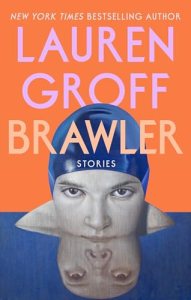
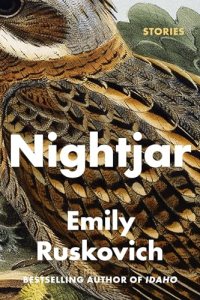
Some other favourites were:
 The Daffodil Days by Helen Bain: A slantwise biographical portrait of Sylvia Plath through her interactions in the last years of her life. The 16 chapters adopt the points-of-view of various secondary characters (e.g., Plath’s housekeeper, riding teacher, and brother), but the kernel of each is an encounter with Plath that illuminates her personality and state of mind. (Reviewed for Shelf Awareness)
Strange Weather in Tokyo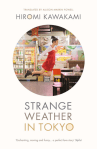 by Hiromi Kawakami: Tsukiko is a lonely barfly in her late thirties when she bumps into a secondary school teacher again. She calls him “Sensei,” and they start meeting up for low-key adventures. Kawakami infuses the book with attention to the seasons’ changes and everyday sensual pleasures like food. A lovely, subtle romance.
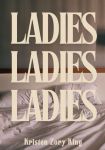 Ladies, Ladies, Ladies by Kristen Zory King: A “chapbook” containing 18 flash stories. It’s remarkable how much is packed into a few pages: a voice, a character, a setting and situation, an incident, a salient backstory, and some kind of epiphany or resolution. Fifteen of the pieces focus on one named character. Each story is distinctive, with no words wasted.
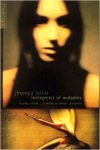 Interpreter of Maladies by Jhumpa Lahiri: Lahiri won the Pulitzer for this debut. Her characters tend to be Indian or Bengali immigrants in New England. Relationship studies trade off with accounts of encounters with strangers across generations and/or cultures. Often, food is a reminder of home. An overall theme is denying or affirming common humanity.
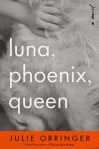 Luna, Phoenix, Queen by Julie Orringer: In Orringer’s wonderful third novel, the secrets between two literature professors and the adoption of a remarkable dog fuel an absorbing story of love, memory, and connection beyond words. Chapters take on different characters’ perspectives. (Review forthcoming for Shelf Awareness)
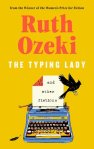 The Typing Lady and Other Fictions by Ruth Ozeki: Ozeki is up to her usual auto/metafiction tricks here, blurring the lines between fact and fiction, life and death. Themes include memory, creativity, language, ageing and cross-generation connections. The stories are playful without being twee, and represent a real return to form.
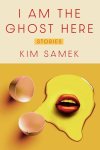 I Am the Ghost Here by Kim Samek: The television producer’s inventive debut recalls Ed Park and George Saunders with its focus on the mixed blessing of technology. Her speculative short stories’ protagonists deal with grief or new motherhood, often while also struggling with their health. Samek sets up unusual situations with knock-out first lines. (Reviewed for BookBrowse)
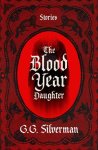 The Blood Year Daughter by G.G. Silverman: A remarkable collection that mixes feminist horror and twisted fairy tales into potent concoctions. Women’s bodies are imperiled by sadistic men and acts of self-sacrifice. Blood is a symbol of desire or power. Motherhood and sisterhood are vital bonds. Among bleak storylines come flashes of morbid humor. (Reviewed for Foreword Reviews)
All by women!
And the rest:
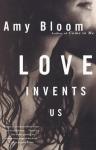
- Love Invents Us by Amy Bloom
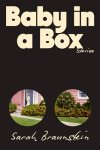
- Baby in a Box by Sarah Braunstein (Reviewed for BookBrowse)
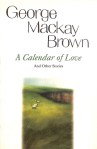
- A Calendar of Love and Other Stories by George Mackay Brown
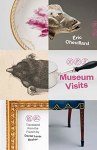
- Museum Visits by Éric Chevillard
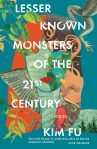
- Lesser Known Monsters of the 21st Century by Kim Fu
- It Will Come Back to You: Collected Stories by Sigrid Nunez
- The Book of Mating by Laksmi Pamuntjak [trans. from Indonesian by Annie Tucker] (Review forthcoming for Foreword Reviews)
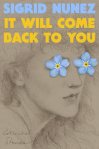
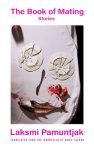
(All but two by women!)
What are some of your recent favorite experiences with short fiction?
20 Books of Summer, 17–20: Jaouad, Kim, Merwin, Piñeiro (#WITMonth)
It’s time to draw a line under 20 Books of Summer so I can focus on hosting Short Story September. I’m technically not quite finished with these first two I’m technically not quite finished with these first two [70 pages to go in the Jaouad and 46 in the Kim], but I’ve read enough to form an opinion and will pop back later to add in final thoughts and ratings. My final four are a memoir of cancer in young adulthood; a page-turning courtroom drama about experimental autism treatment gone wrong; gorgeous nature poems; and a novella in translation that comments on disability, motherhood and mental health issues. Skip to the end for my one DNF of the challenge and a look back at some stats plus my most successful reads.
Between Two Kingdoms: What Almost Dying Taught Me about Living by Suleika Jaouad (2021)
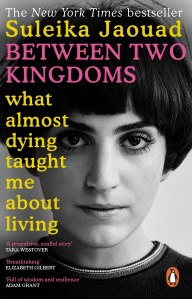
{Updated on 7 September} Jaouad wrote a New York Times column about going through leukaemia treatment in her early twenties and what came next. After months of itching and fatigue, she fell properly ill while working her first postgraduate job in Paris and her blood test results were so bad that she flew home to New York. She would be in and out of hospital for the next five years, enduring multiple rounds of chemo and a bone marrow transplant from her brother. It’s a terrific granular account of the physical and emotional rigours of illness, as well as the strain it put on her relationships – being her primary caregiver was too much for her boyfriend, Will. But she also found a community of young cancer patients, many (like Max Ritvo) now dead. After 60% of the book’s length, as the title – its metaphor taken from Susan Sontag – suggests, the new challenge for Jaouad was resuming life. “I’ve spent the past fifteen hundred days working tirelessly toward a single goal—survival. And now that I’ve survived, I’m realizing I don’t know how to live.” She decides to undertake a cross-country road trip punctuated by visits to people who wrote to her through her column: fellow cancer survivors, a mother who lost a son to suicide, a man on death row in Texas. At first I thought this content felt tacked on and should have been a sequel, but ultimately it illustrates why she wouldn’t edit out her illness if she had it all to do again. I hadn’t heard of Jaouad before I stumbled on this book; from Instagram, I learned she’s now (at age 38) weathered cancer three times. (Little Free Library)
Miracle Creek by Angie Kim (2019)
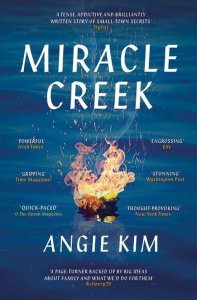
{Updated on 7 September} After enjoying Happiness Falls so much, I wanted to go back to Kim’s debut, for which she won an Edgar Award. (There’s an autistic boy and discussion of therapies in that second book as well.) The bulk of the novel is set during the four days of an August 2009 trial. It’s been a year since a horrific accident at Pak Yoo’s “Miracle Submarine,” a rural Virginia hyperbaric oxygen chamber where regulars came for twice-daily treatment of autism, cerebral palsy, and infertility. Meanwhile, protesters gathered outside to draw attention to what they believed to be a dangerous and unproven technique, the equivalent of child abuse. Someone with Camel cigarettes and matches from a local 7-11 set a small fire under an oxygen tank; the resulting explosion killed two and seriously injured two more. The mother of one of the autistic boys was arrested for suspected arson and attempted murder, but as the trial goes on suspicion seems to shift to members of the Korean American family who ran the HBOT operation. There’s a lot to sink the teeth into here. Each character has secrets, and little revelations are emerging all the time, such that the prosecutor and defence lawyer are always having to adjust their approach. Like I’ve experienced with Kim before, this was intelligent, thought-provoking, and absorbing. It’s just the sort of crime-adjacent fiction I like. An author Q&A at the end reveals a couple of autobiographical inspirations: working in her immigrant parents’ convenience store near Baltimore as a teenager, and taking one of her sons, who had neurological deafness and chronic illnesses, for HBOT. (Gift from my wish list)
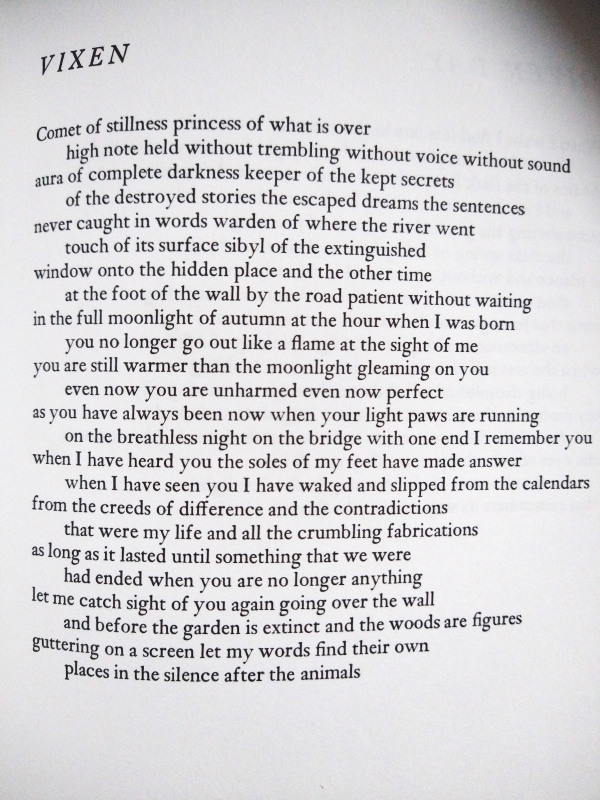
The Vixen by W.S. Merwin (1996)
it seems that the world is made of a single
summer as it always has been (from “Entry”)
 I took this off the shelf because Merwin was one of the POV characters in The Daffodil Days, Helen Bain’s excellent novel about Sylvia Plath’s final years. I had no idea what to expect, and it took me a while to get used to his entirely unpunctuated verse. Only by reading aloud or in my head was I able to split the text blocks into meaning-rich phrases. The fox is a revenant flitting through many of these poems as they pinpoint natural rhythms and human traces across the seasons and centuries. A lot reference summer, in particular, so this was a perfect choice for the challenge. There are a few historical portraits but most of the pieces feel timeless, evoking a countryside locale where the speaker returns to find derelict dwellings given over to birds and trees. Mostly it feels like this could be England, but sometimes a dry aridity suggests the Mediterranean. There is a strong sense of temporality, especially of afterness – the close of a day, the tail end of a season, the still-resonant emptiness after life has left or activity has finished. But there is also the hint of an eternal present:
Seen from afterward the time appears to have been
all of a piece which of course it was but how seldom
it seemed that way when it was still happening (from “Completion”)
In a long book (~65 pieces), there were only a few poems that washed over me without making any impression. The run-on pace, alliteration, and close attention to the natural world made this utterly mesmerizing. I’ll be sure to read more by Merwin. (Secondhand – Bridport Old Books) 
Elena Knows by Claudia Piñeiro (2007; 2021)
[Translated from Spanish by Frances Riddle]
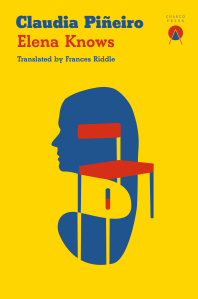 Piñeiro is an Argentinian author known for infusing her detective novels with a political conscience. Elena Knows is a mystery of sorts, in which the title character devotes herself to investigating her daughter’s death (Rita was found hanging in the belfry of a church). But several elements make this atypical for crime fiction: Elena has Parkinson’s disease – “that f—ing whore illness,” she calls it; refuses to accept the police’s conclusion that Rita died by suicide – she would never have gone there in the rain, she insists; and drags her uncooperative body across Buenos Aires to confront an acquaintance she thinks might be able to shed some light. It’s a circadian narrative, divided into sections by Elena’s pill schedule, but expands its timeline through flashbacks to consider the complications of the mother–daughter relationship as Elena became more physically dependent. The eventual encounter with Isabel presents a contrast in the form of a woman who didn’t want to become a mother but had to because of a prohibition on abortion, which was only legalized in Argentina in 2020. While the approach and themes were appealing, I found this repetitive and the long blocks of dialogue in italics were challenging to read. This was shortlisted for the International Booker Prize, though I thought it had a better chance in that year’s Barbellion Prize race (returning this year!). (Gift from my wish list)
And a DNF:
Blonde by Joyce Carol Oates (2000)
Her problem wasn’t she was a dumb blonde, it was she wasn’t a blonde and she wasn’t dumb.
Sigh. Between February and July I read about 200 pages, then skimmed another 100 or so, then finally gave up. (My third Oates DNF. I don’t think she and I are meant to be, though I seem to have better luck with her short stories and own another couple of her books to try.) I engaged most with the early pages about her childhood with a vain, neglectful mother who ends up in a mental hospital; and then with her teenage marriage to Bucky Glazer and involvement in the war effort.
She was a sweet kid but so emotional. Wanting love all the time. She was immature and unreliable and I guess so was I; we were too young. If she’d been a better cook and not so emotional, it might’ve worked out.
Except that people were dying and being injured and the world filling up with smoldering rubble, Norma Jeane liked the War. The War was as steady and reliable as hunger or sleep. Always, the War was there.
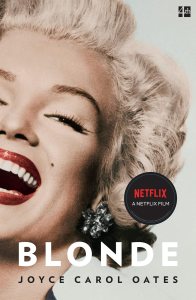 In the part that I skimmed, she is starting to become known in Hollywood, with a nude photo shoot (for which she only earned $50), bit parts in films, and her famous stage name.
In the introductory Author’s Note, Oates writes, “for all its length, synecdoche is the principle of appropriation.” So, for instance, instead of multiple foster families, we just get one. Always, there was unwanted male attention, including molestation. I was surprised to find that the pick-and-choose, fact–fiction hybrid approach became a problem for me. I wanted to know if she really married a man named Bucky and wrote poetry. Yet I didn’t want to have to be verifying every fact either.
Oates’s kitchen-sink style involves imagined scenes and dialogue plus retrospective commentary and knowing asides; long, looping sentences and short ones; direct and indirect speech; lots of exclamation points. Lots of everything. The repetition will be deliberate, for effect, but I kept longing for a streamlined version that cut, say, three of every five sentences.
Anyway, this was certainly a project worth undertaking for Oates; you can see why it was irresistible to unearth the reality behind a legend. Norma Jeane is intriguing for her simultaneous childlike innocence and cultivated sensuality. (Secondhand – Awesomebooks.com)
20 Books Statistics:
14 fiction
4 nonfiction
2 poetry
7 by BIPOC
3 towards WIT Month (for which I reviewed 8 in total, with library reads and Foreword reviews)
3 rereads
I’ve learned this year that it’s important, momentum-wise, to build in a number of shorter books (6 of novella length + 2 poetry collections) and best to avoid doorstoppers. I was wise to pick some addictive, undemanding novels that tread the line between popular and literary fiction (Kim, Mantel, O’Farrell, Reid, Sullivan); anything that feels like hard work (Oates!) is definitely not a summer read.
I only read a risible 4 of the specific books I set out as options in my planning post, plus 1 of my additional ideas. (It’s ironic that I struggled to finish this set of 20 when I could have labelled anything from my shelves part of the challenge – in total, I read 39 of my own books this summer.)
My favourites of the 20 were Strange Weather in Tokyo, Prodigal Summer & The Vanishing Act of Esme Lennox (both rereads), and The Vixen. But What Belongs to You, Miracle Creek, Mitz, The Employees, Commencement, and Flush were also great reads. To be able to single out half of the books equals a huge success!
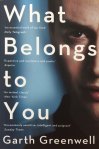
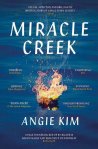
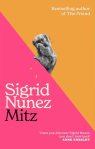

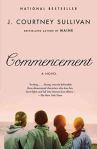
I also completed a 4-book diagonal on the Bingo card!
- Summer in the title (PRODIGAL SUMMER)
- A classic you’ve been meaning to (RE-)read (FLUSH)
- Features a family holiday (MITZ)
- Published in summer (ELENA KNOWS – July 2021)

 Bookish Beck = Rebecca Foster. American transplant to England. Freelance proofreader and book reviewer.
