It Comes Round Once a Year / It Comes for Us All
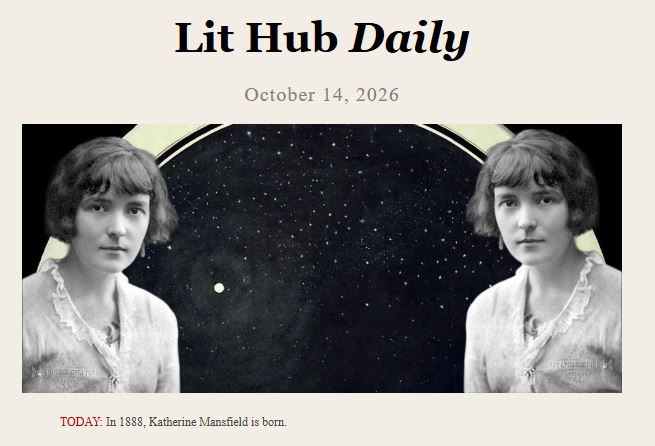
I turned 43 on Wednesday the 14th – I share a birthday with some illustrious folk, including Dwight D. Eisenhower, Katherine Mansfield, Winnie the Pooh, and Susan of A life in books.
I passed a pleasant, low-key day: a roofer was here in the morning to finish replacing our bathroom roof; I took a long walk out to the edge of the countryside; I read from a few books I was enjoying, including a couple birthday-appropriate ones; we went out to dinner at our favourite restaurant, which serves seasonal English tapas; there were some tipples; and back at home I opened my gifts (books plus a book token to buy more, a gin Advent calendar, vermouth, and chocolate marzipan) and had a slice of the chocolate caramel cheesecake my husband made for me from Hummingbird Bakery’s Cake Days cookbook.


I planned to put up an album on Facebook the next day with a wry quote from Nora Ephron’s I Feel Bad about My Neck (“According to my dermatologist, the neck starts to go at forty-three, and that’s that”) and the Munch’s-Scream emoji. I was mildly vexed with my husband for taking a photo of me that shows the silver coming in at my hairline and wasn’t sure if I’d include that one. I had it all planned out, clever me.


Then I woke up to a message from my dad saying my sweet cousin Dawn had died some hours ago – the middle of the night our time, but 8:30 p.m. their time, so still my birthday. I can’t pretend we were close: she was part of my dad’s Georgia clan but relocated to Oklahoma 30 years ago, and I don’t think I’d seen her in the flesh in nearly 35 years. We kept in touch at a Christmas card sort of level over the years.
I can’t say it was a huge shock, either: she came home on hospice, bedbound with incurable lung disease, in late September. But we’d done a video chat with her earlier in the month and she seemed so well and optimistic that we – even my sister, a hospice nurse who’s seen this play out many times – thought we were looking at months, not days. Then she got pneumonia again, on top of her existing issues, and it was just too much for her body to take. She was 54.
This instantly put things into perspective for me. I’m so glad we reconnected, though we should have done more, and sooner. It was beautiful to see photos of her with her mother and brothers, who visited her for several days and left not knowing it was two days before the end. Right to her last she was thinking of others and making connections; she even wrote me birthday wishes, which made her loss seem all the more surreal.
Now, on each birthday, I’ll remember my cousin and the family she left behind. It feels right, something to be philosophical about rather than resent. A reminder that life is fragile and bittersweet, and something I must always strive to be grateful for.
From my current earworm, Denison Witmer’s “Confessions”:
“Nothing seems as random as the gift of life, and I hope I’m not wasting mine.”
Get Ready for Novellas in November! (#NovNov26)
Novellas: “all killer, no filler”
~Joe Hill
Hard to believe it’s nearly that time again. For the SEVENTH year in a row, Cathy of 746 Books and I are co-hosting Novellas in November as a month-long blogging and social media challenge celebrating the art of the short book (we include nonfiction, too). A novella technically contains 20,000 to 40,000 words, but to keep things simple we define it as any work under 200 pages.
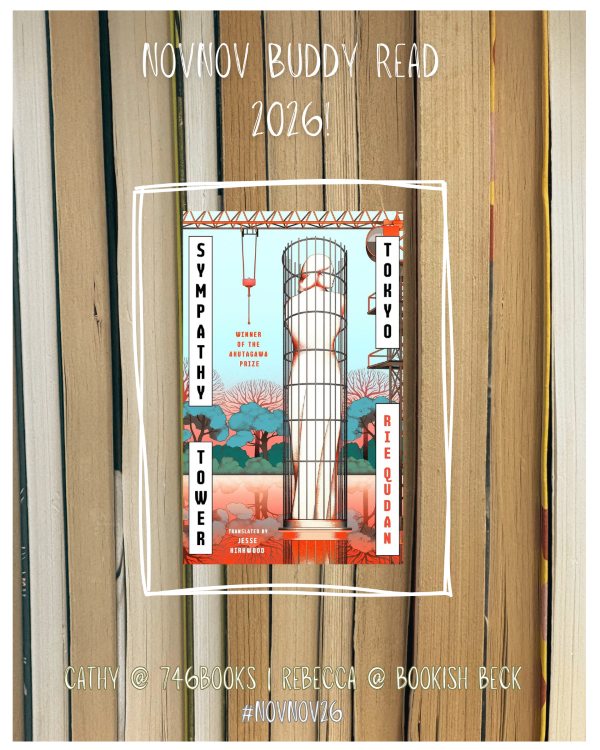
This year’s buddy read is a 2024 novella translated from the Japanese last year:
Sympathy Tower Tokyo by Rie Qudan [translated by Jesse Kirkwood] is the author’s fourth novel and won the Akutagawa Prize. An architect named Sara Machina is assigned to design a city skyscraper meant to house criminals in comfort. While trying to navigate a middle way between compassion and recrimination – complicated by her own past victimhood – she converses with an AI chatbot. This engaging exploration of language, creativity and conformity comes with high praise from writers ranging from Helen Phillips to Bryan Washington. (134 pages)
Please join us in reading this any time between now and the end of November!
You might like to start off the month with a My Year in Novellas retrospective looking at any novellas you have read since last year’s NovNov and finish with a New to My TBR list based on what short books others have tempted you with.
It’s always a busy month in the blogging world with Nonfiction November, German Literature Month, Margaret Atwood Reading Month and SciFi Month. Why not search your shelves and/or local library for novellas that could count towards multiple challenges?
From 19 October a link-up post will be pinned at the top of my site so you can add your planning posts and book lists. Keep in touch via Bluesky (@bookishbeck.bsky.social / @cathybrown746.bsky.social) and Instagram (@bookishbeck / @cathy_746books) and feel free to use the terrific feature images Cathy has made plus our new hashtag, #NovNov26.
#ShortStorySeptember, Meet #RIPXXI: Fremlin, M.R. James & Navarro
I can hardly believe it’s October; I still have a bunch of short stories to finish and review! I’m taking the opportunity to start on Readers Imbibing Peril with these three collections that crank up the suspense with their scenes of the unexplained.
Don’t Go to Sleep in the Dark by Celia Fremlin (1970)
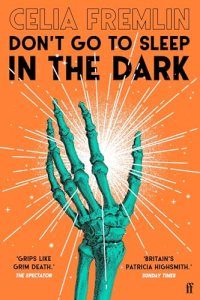
(Faber reprint: 2024)
I wasn’t wild about Fremlin’s Uncle Paul, but these 13 stories were terrific. Nightmares sometimes become reality as children and women of a certain age face up to threats, whether concrete or imaginary. The twist endings can reassure or unsettle, but in either case they call into question the tenor of what’s gone before. Only three tales are in the first person, with the other 10 in an authoritative third person. The need to protect children is a recurring impulse, ageing is a frequent cause of angst, and there are a couple of instances of frightening bird imagery (a nod to du Maurier?). There are also tweaks of horror story tropes – the haunted house in “The Hated House” and “The Locked Room.” Visual and auditory clues ramp up the tension. I’ll highlight a couple of favourites: “The Quiet Game,” in which a mother’s mental illness has dangerous implications for her twins; and “The Baby-Sitter,” about a little girl who’s afraid of The Hen with Great Big Eyes and her child-minder, who’s lived out her own horrors as a European refugee. This one is a fine example of how Fremlin mixes the everyday with suggestions of the supernatural. (Little Free Library) 
Ghost Stories of an Antiquary: A Graphic Collection of Short Stories by M.R. James, Volume I (2016)
(Adapted by Leah Moore and John Reppion)
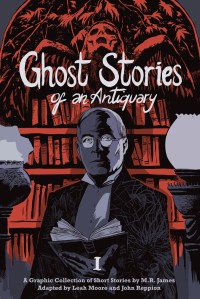 (I reviewed Volume II in 2017.) Though all retold by the same duo, these four stories are each illustrated by a different artist. So although the setup and voice tends to be samey – a dignified man investigating strange happenings at a country house – the art style varies significantly While I didn’t care for the approach in the first two (“Canon Alberic’s Scrap-Book” – Marvel; “Lost Hearts” – Pixar), the others, “The Mezzotint” and “The Ash-tree,” made up for it. I liked the monochrome palette, gentlemen detecting vibe, and Wildean mark of a morphing image of the former. In the latter, a Gothic setting and a history of suppressing witchcraft pave the way for unnatural spectacles. James’s classic ghost stories have been hugely influential on the likes of Susan Hill. (I also wondered if Stephen King borrowed the girl in the bath from “Lost Hearts” for The Shining.) Still, my conclusion about the second volume stands for the whole project: the “problem with using the graphic form for … tales that center around nameless horror is that depicting [what is feared] saps it of its power.”
With thanks to SelfMadeHero for the free copy of The Compendium (Volumes I and II) for review.
Blood Is Dripping onto the Courtyard by Elvira Navarro (2025; 2026)
[Translated from the Spanish by Christina MacSweeney]
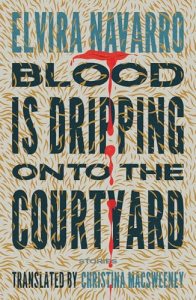 My introduction to Navarro, a Spanish author, reminded me most of Agustina Bazterrica’s 19 Claws and a Black Bird. These nine stories are full of derelict buildings, outsider characters, and traces of the uncanny. Seven are in the third person and two in first. A nice touch: two stories are linked in that they feature Almudena, who is studying in Paris. “The Fear of the City” is, we realize, the story she wrote about femicide, as mentioned, fittingly, in “The City of Fear.” “Idiotic Love” is narrated by a trans woman with an anal fissure and conjures a seedy world of nightclubs and sex shops. This was the longest story and not a pleasant one. There were just three standouts for me. In “The Washing Machine,” which contains the title line, a couple’s appliance keeps filling with blood for no reason. “The Animal Collector” is a tough one for animal lovers because of all the injuries and deaths, but the idea of a highway maintenance man assembling a makeshift zoo for his roadside rescues is alluring. Eventually, he becomes overwhelmed and compassion turns into a burden. In “A Small Bunch of Violets,” Mari chooses a new ornament for her father’s grave during a heat wave, but the flowers keep being displaced. There were too many so-so stories, though.
With thanks to Two Lines Press and publicist Nicolette Praça for the proof copy for review.
#ShortStorySeptember Round-Up with Statistics
Thank you for joining in and making this second year of Short Story September such a success! In total, 25 bloggers contributed 80 posts, including planning posts and book lists plus reviews that together covered 38 individual stories and 60 whole collections (and a bonus biography of a short story writer).
If you want to take a look back at the link parties, they are here and here.

The authors covered more than once this year were Celia Fremlin and W. Somerset Maugham; the only book reviewed more than once (certain stories, at least) was Vampire Tales, a good lead into R.I.P.
As always, I bit off much more than I could chew and I’m still making my way through a number of collections and single stories. For my benefit, if no one else’s, the link party will stay open (and the opening post pinned on my site) through 6 October. I’ll come back and update the final statistics as well.
New to My TBR in #ShortStorySeptember
I’m still frantically trying to finish the multiple short story collections on my stack, but there’s always room for more on the TBR!
This month I discovered (and promptly ordered secondhand):
- Arranged Marriage by Chitra Banerjee Divakaruni (via Lisa of Hopewell’s Public Library of Life), a collection about the South Asian immigrant experience that I thought could be a good follow-up to Interpreter of Maladies
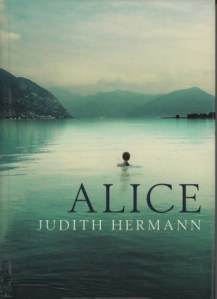
- Alice by Judith Hermann (via Brona of This Reading Life), linked short stories that would also count towards German Literature Month in November
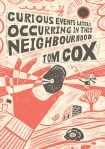 It’s been a while since I’ve read anything of Tom Cox’s, but I loved the description in Jan’s review (at What I Think About When I Think About Reading) of his new collection, Curious Events Lately Occurring in This Neighbourhood, as “a sketch show” with “a certain skewed perception, a certain willingness to embrace the surreal.” I’m also always partial to flash fiction, too, which this is at least in part.
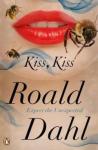 I came across Roald Dahl’s short stories for grown-ups through Cathy’s review of Kiss, Kiss at 746 Books and will borrow his collected stories from the university library for next year’s challenge.
 I am really enjoying a different spooky collection of Celia Fremlin’s at the moment, so I will have to source By Horror Haunted (reviewed by Helen at She Reads Novels).
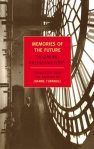 Diana’s review of multiple collections by Sigizmund Krzhizhanovsky at Thoughts on Papyrus piqued my interest and I managed to find one story, “Quadraturin,” with the full text online to read another time.
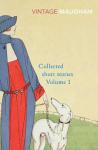 Both Nancy Elin and Rose featured a selection of short stories by W. Somerset Maugham; Rose even said she thinks his stories are better than his novels, so I know I’ve got to read some. I have the volume Creatures of Circumstance, and can access others from the public library.
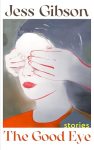 Last month I earned a £70 voucher for doing a Teams call about my reading and book-buying habits with a UX researcher at Awesomebooks.com (she didn’t know what she was in for!) – my favourite place to buy secondhand books online – and spent it at the weekend. I have two new copies on the way as part of that big order, one of which is a collection of uncanny stories that I’ve had in my sights ever since I first heard about it: The Good Eye by Jess Gibson, Margaret Atwood’s daughter. I will plan to read it as part of Margaret Atwood Reading Month in November.
Have you discovered any new stories or collections this month?
Six Degrees of Separation: From H Is for Hawk to Notes from an Exhibition
It’s been several years since I last participated in Kate’s Six Degrees meme. I’m not sure why I fell out of the habit, after posting pretty faithfully from February 2020 until August 2023. This month I was drawn back by the individualized starting point: your book club’s current read. (See Kate’s opening post.)
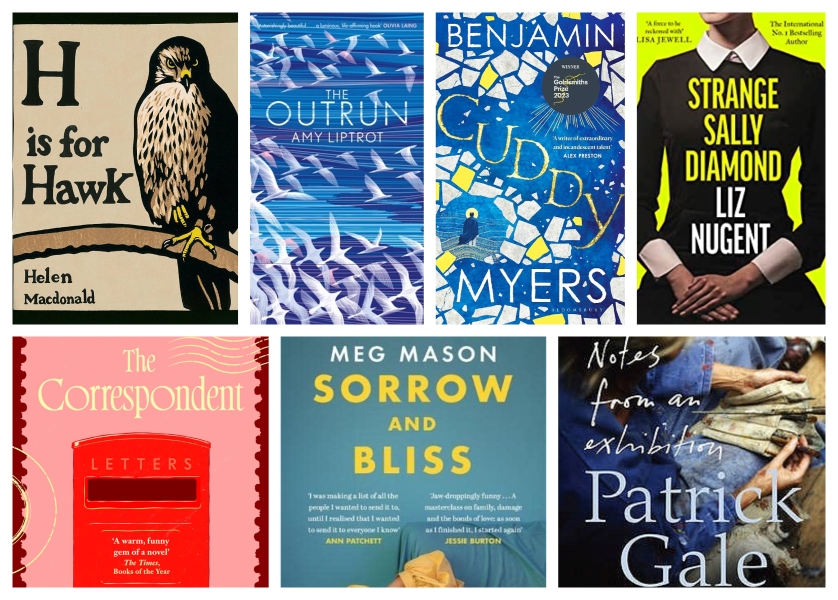
 So I start with Helen Macdonald’s H Is for Hawk, which I look forward to rereading for our next meeting in early October, and every link that follows is (or is connected to) a book we’ve read in book club.
 #1 H Is for Hawk was a vanguard of a new trend in nature writing that came to dominate the Wainwright Prize list in the UK: blending a hard/sad personal story with a quest that involves travel and/or communion with the natural world. In the case of Macdonald (who now uses they/them pronouns), they work through grief for their father by taking up falconry and training a goshawk.
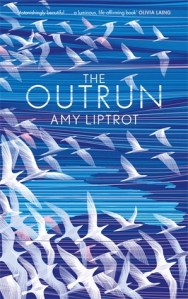
I went with some members of my book club to see the excellent film starring Claire Foy, followed by a Q&A with the author, earlier this year. Another early example of the misery memoir-meets-nature book vogue was The Outrun by Amy Liptrot (a Wainwright winner), which combines her struggle with alcoholism with her return to the Orkney Islands and her work for the RSPB surveying endangered corncrakes. Another link: I saw the film version with Saoirse Ronan, which probably surpassed the book, with a book club friend. We then tried to get the others interested in rereading it with us, but it only got a few votes.
 #2 Liptrot lives in Hebden Bridge, Yorkshire, which is famous for its hippie artists and inclusivity (a Brighton of the North?). Among the other nearby residents (in the village of Mytholmroyd) is Benjamin Myers, whose experimental historical novel about Saint Cuthbert, Cuddy, we discussed in book club a year ago. I had skimmed it when it was first published, and enjoyed it in parts but thought it more pretentious than readable. It was not very well received by most members…
 #3 …unlike the quirky and suspenseful Strange Sally Diamond by Liz Nugent, which we’d read the year before and was a hit with almost everyone. Cuddy is set in Northumberland, and I associate Sally with that county because I read it on holiday there.
 #4 Sally Diamond has some autistic-like traits, in terms of her lack of understanding of social conventions. We questioned whether this was an attempt by the author to reproduce the effects of trauma. The same book club member brought this up in relation to Sybil Van Antwerp, the protagonist of the most recent Women’s Prize winner, The Correspondent by Virginia Evans, which was our September read. I’d picked up on the characterization of her young friend Harry Landy as autistic, but Sybil herself? That hadn’t occurred to me. It just goes to show how discussing books in a group turns up fresh ideas about them.
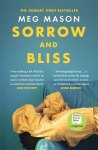 #5 We had also talked diagnoses with one of our previous reads, Sorrow and Bliss by Meg Mason, who scrupulously avoided naming her protagonist’s mental health condition, though it seemed pretty clear to us that it was meant to be bipolar. Another connection: we read that novel as part of our official Women’s Prize shadowing in 2022.
 #6 The Correspondent, Sorrow and Bliss, and Patrick Gale’s Notes from an Exhibition, which shares the theme of mental illness, are all among our top 10 reads of all time, with a score of 18.5/20. We’ve read two Gale novels now and he’s a reliable author for us.
Welcome to Short Story September! (#ShortStorySeptember)
Join me in celebrating the art of the short story this month! Simply read one or more individual stories (or collections) and share your review by adding a blog post or social media post to the InLinkz party below. (Or paste a link in a comment and I can add it for you.)
You can find more information about the challenge here. This post will be pinned to the top of my blog, and at the end of the month I will post a recap of what everyone has reviewed.
Short Story September Is Coming Soon!
Every September I make a special effort to get to more of the short fiction on my shelves, e-readers, and library catalogue. Last year, Lisa of ANZ LitLovers launched Short Story September as a proper blogger challenge and I had great fun taking part. This year her health does not allow her to host*, so I’m stepping in; apologies for the last-minute announcement.
Lisa encouraged people to choose particular short stories that they would recommend. You may want to review individual stories – from anthologies or literary magazines, for instance – instead of or in addition to entire collections.
I’m going to keep it all quite simple so there’s more time for reading and less taken up by blog admin. My plan is as follows; feel free to join in with the prompts in bold, which always serve as handy ways to top and tail a challenge month:
- 24 August: Planning post for Short Story September – Photographs of my potential reads
- 1 September: Opening post with InLinkz link-up (pinned to my site throughout the month)
- 4 September: My Year in Short Stories – Looking back at the collections I’ve already read in 2026, with mini-reviews of some stand-outs.
~Reviews of various collections and individual stories through the month~
- 28 September: New to My TBR – Short stories and authors I’ve discovered through this year’s challenge
- 30 September: Round-up of your links, with statistics on the number of authors and books featured and any stories that were discussed multiple times
- 7 October: The link-up will stay open for another week to mop up any late entries, which I will also add in to the round-up post.
I hope you’ll join me in celebrating the art of the short story next month. The hashtag is #ShortStorySeptember and the badge is above. I’m on Bluesky (@bookishbeck.bsky.social) and Instagram (@bookishbeck) but likely to miss social media posts, so do also add your post to the InLinkz party and/or paste a link in a comment on the opening post.
*Please send Lisa all your warm get-well wishes!
Many thanks to Kim of Reading Matters for the use of her logo design.
Book Serendipity, June to July
Life can have odd confluences. Esme will not say serendipity: she loathes the word. But sometimes she thinks there must be something at work, some impulse, some collision of forces, some kinks in chronology.
~The Vanishing Act of Esme Lennox by Maggie O’Farrell
Unlike Esme Lennox, I love the word serendipity! You probably know by now that I call it “Book Serendipity” when two or more books that I read at the same time or in quick succession have something in common – the more bizarre, the better. This is a regular feature of mine every couple of months. Because I usually have 20–30 books on the go at once, I suppose I’m more prone to such incidents. People frequently ask how I remember all of these coincidences. The answer is: I jot them down on scraps of paper or input them immediately into a file on my PC desktop; otherwise, they would flit away!
Thanks to Kay for posting about her own book serendipity moments here!
The following are in roughly chronological order.
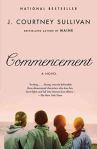
- A woman gets on a flight even though she’s technically too pregnant to do so in one poem of Family Lines (ed. Armitage and Bower) and Commencement by J. Courtney Sullivan.
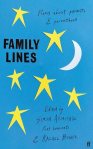
- A mention of a Spanish cat in one poem of Family Lines (ed. Armitage and Bower) and Tsi-Tsa by George Mikes.
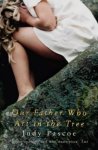
- Rum and coke is mentioned in I Sing to the Greenhearts by Maggie Harris and Our Father Who Art in the Tree by Judy Pascoe.
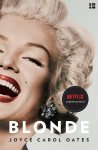
- A character named Gladys in Blonde by Joyce Carol Oates and Our Father Who Art in the Tree by Judy Pascoe.
- A character named Celia in The Seven Husbands of Evelyn Hugo by Taylor Jenkins Reid and Commencement by J. Courtney Sullivan.
- A girl holds her breath until she faints in Lost Lambs by Madeline Cash and Our Father Who Art in the Tree by Judy Pascoe.
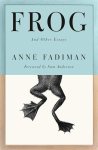 Samuel Taylor Coleridge’s performance as a father appears in one poem of Family Lines (ed. Armitage and Bower) and one essay of Frog by Anne Fadiman.
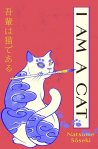
- A cat scratches a tatami mat in Letters of Note: Cats (ed. Shaun Usher) and I Am a Cat by Natsume Sōseki.
- A Freudian explanation of the collector’s obsessive impulse in The Madman’s Guide to Stamp Collecting by Robert Irwin and The Butterfly Season by Lea Korsgaard.
- A book/other arts coincidence, this: I first saw the actress Anya Taylor-Joy in The Menu, which I watched on my sister’s TV streaming system in the US, and then realized she’s pictured on the Netflix tie-in cover of a book I borrowed from the library, The Queen’s Gambit by Walter Tevis.
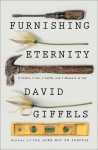
- Manhattans are drunk in Furnishing Eternity by David Giffels and The Seven Husbands of Evelyn Hugo by Taylor Jenkins Reid.
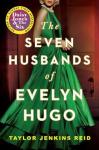
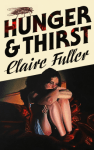
- A main character has a history of living in an orphanage in Blonde by Joyce Carol Oates, Buckeye by Patrick Ryan, and The Queen’s Gambit by Walter Tevis; and in children’s homes in Hunger and Thirst by Claire Fuller.
- An in-law named Fran(cesca) in The Vanishing Act of Esme Lennox by Maggie O’Farrell and The Things We Never Say by Elizabeth Strout.
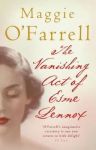
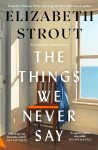
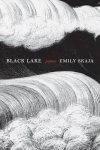
- A scene of visiting one’s grandmother in a dementia ward in The Vanishing Act of Esme Lennox by Maggie O’Farrell and Black Lake by Emily Skaja.
- Eating spoons of sugar straight from the jar/box in Depression Cooking by Sonali Menezes and The Things We Never Say by Elizabeth Strout.
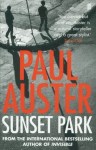
- Young people living in a squat in Sunset Park by Paul Auster and then Hunger and Thirst by Claire Fuller.
- A people-trafficking plot in Lost Lambs by Madeline Cash and The Singer’s Gun by Emily St. John Mandel.
- Someone who doesn’t want to be recognized says “I don’t know what you’re talking about” / “I have no idea what you’re talking about” when someone identifies them in Apt Pupil by Stephen King and The Seven Husbands of Evelyn Hugo by Taylor Jenkins Reid.
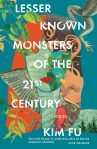
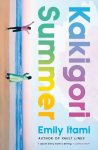
- A woman suffers from insomnia despite having done all the ‘right’ things, sleep hygiene-wise, in one story of Lesser-Known Monsters of the 21st Century by Kim Fu and Kakigori Summer by Emily Itami.
- A future blonde bombshell actress gets married off at age 15 in Blonde by Joyce Carol Oates and The Seven Husbands of Evelyn Hugo by Taylor Jenkins Reid.
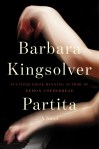
- A homosexual encounter takes place in a public bathroom in What Belongs to You by Garth Greenwell and The Seven Husbands of Evelyn Hugo by Taylor Jenkins Reid. (Plus heterosexual ones in a private shower in Partita by Barbara Kingsolver.)
- A reference to Emerson’s “transparent eyeball” in The Secret to Superhuman Strength by Alison Bechdel and Black Lake by Emily Skaja.
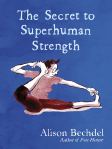
- A character named Manny in Dominion by Addie E. Citchens, Partita by Barbara Kingsolver, and one story of The Typing Lady by Ruth Ozeki.
- A female character named Mick(ie) in The Heart Is a Lonely Hunter by Carson McCullers and Partita by Barbara Kingsolver. (There’s also a male Mick in Few and Far Between by Jan Carson.)
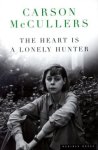
- Shoplifting takes place in Receipts from the Bookshop by Katie Clapham, The Singer’s Gun by Emily St. John Mandel, The Heart Is a Lonely Hunter by Carson McCullers, one story of The Typing Lady by Ruth Ozeki, and The Things We Never Say by Elizabeth Strout.
- The medical necessity of ironing all one’s clothing, especially nappies/underwear, is mentioned in L’Appart by David Lebovitz (a Greek person told him that) and Don’t Let’s Go to the Dogs Tonight by Alexandra Fuller (de rigueur in 1970s Rhodesia).
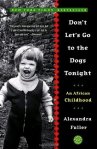
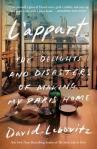 Remarking on how quiet/noisy a French dishwasher is in Paris to the Moon by Adam Gopnik/L’Appart by David Lebovitz and a mention of one’s good fortune in getting a store to accept a returned appliance.
- A mention of Ludwig Bemelmans’ Madeline in Receipts from the Bookshop by Katie Clapham and Brother, I’m Dying by Edwidge Danticat.
- Characters are robbed in a motel room in Dominion by Addie E. Citchens and The New People by Andrea Uptmor.
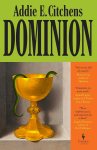

- Living in the space above a garage in one story of The Typing Lady by Ruth Ozeki and The New People by Andrea Uptmor.
- Scenes of a woman/girl reassembling a gun, and a gun amnesty, in one story of Lesser-Known Monsters of the 21st Century by Kim Fu and Don’t Let’s Go to the Dogs Tonight by Alexandra Fuller.
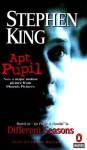
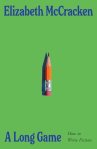
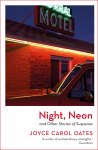
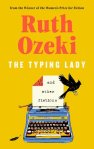
- The use of a typewriter in Brother, I’m Dying by Edwidge Danticat, Apt Pupil by Stephen King, A Long Game by Elizabeth McCracken, one story of Night, Neon by Joyce Carol Oates, and The Typing Lady by Ruth Ozeki.
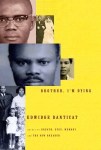
- Thousands of dollars being stored in/under a mattress in Brother, I’m Dying by Edwidge Danticat and The New People by Andrea Uptmor.
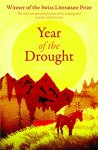 The smell of vetiver: a cologne in Year of the Drought by Roland Buti and fabric softener in Brother, I’m Dying by Edwidge Danticat.
- I encountered sections on the sense of smell at about the same time in Life in Five Senses by Gretchen Rubin and Wearing God by Lauren Winner.
- A person bites someone else’s finger in Don’t Let’s Go to the Dogs Tonight by Alexandra Fuller, one story of The Typing Lady by Ruth Ozeki, and The New People by Andrea Uptmor. (And an ear in The Dud Avocado by Elaine Dundy.)
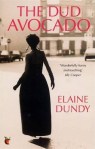
- Eating an omelette in a Paris café in The Dud Avocado by Elaine Dundy, Paris to the Moon by Adam Gopnik, and Moveable Feasts by Chris Newens. (I suppose these things will happen if I read multiple Paris-set books at once!)
- The fact that “Pas mal” (“not bad”) is high praise in French is explained in Pardon Our French by Alex Durand and Tom Carles and L’Appart by David Lebovitz.
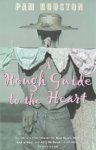 An insistence that the soles of a woman’s feet not be shown in A Rough Guide to the Heart by Pam Houston (etiquette in Bhutan) and Blonde by Joyce Carol Oates (when Norma Jeane Baker, aka Marilyn Monroe, is having early nude photos taken).
- A nude photo shoot takes place in The Singer’s Gun by Emily St. John Mandel and Blonde by Joyce Carol Oates. There are also nude portrait sittings in The Dud Avocado by Elaine Dundy and The Original by Nell Stevens.
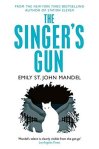
- A man has glass embedded in his face in Few and Far Between by Jan Carson and The Singer’s Gun by Emily St. John Mandel.
- The idea that one will be cursed for touching a stranger’s grave appears in Don’t Let’s Go to the Dogs Tonight by Alexandra Fuller and Kakigori Summer by Emily Itami.
- I find myself rereading two childhood memoirs of wartime life at the same time: Don’t Let’s Go to the Dogs Tonight by Alexandra Fuller and Persepolis by Marjane Satrapi.
What’s the weirdest reading coincidence you’ve had lately?
“The Marriage Plot”: Literary Wives Gets an Update
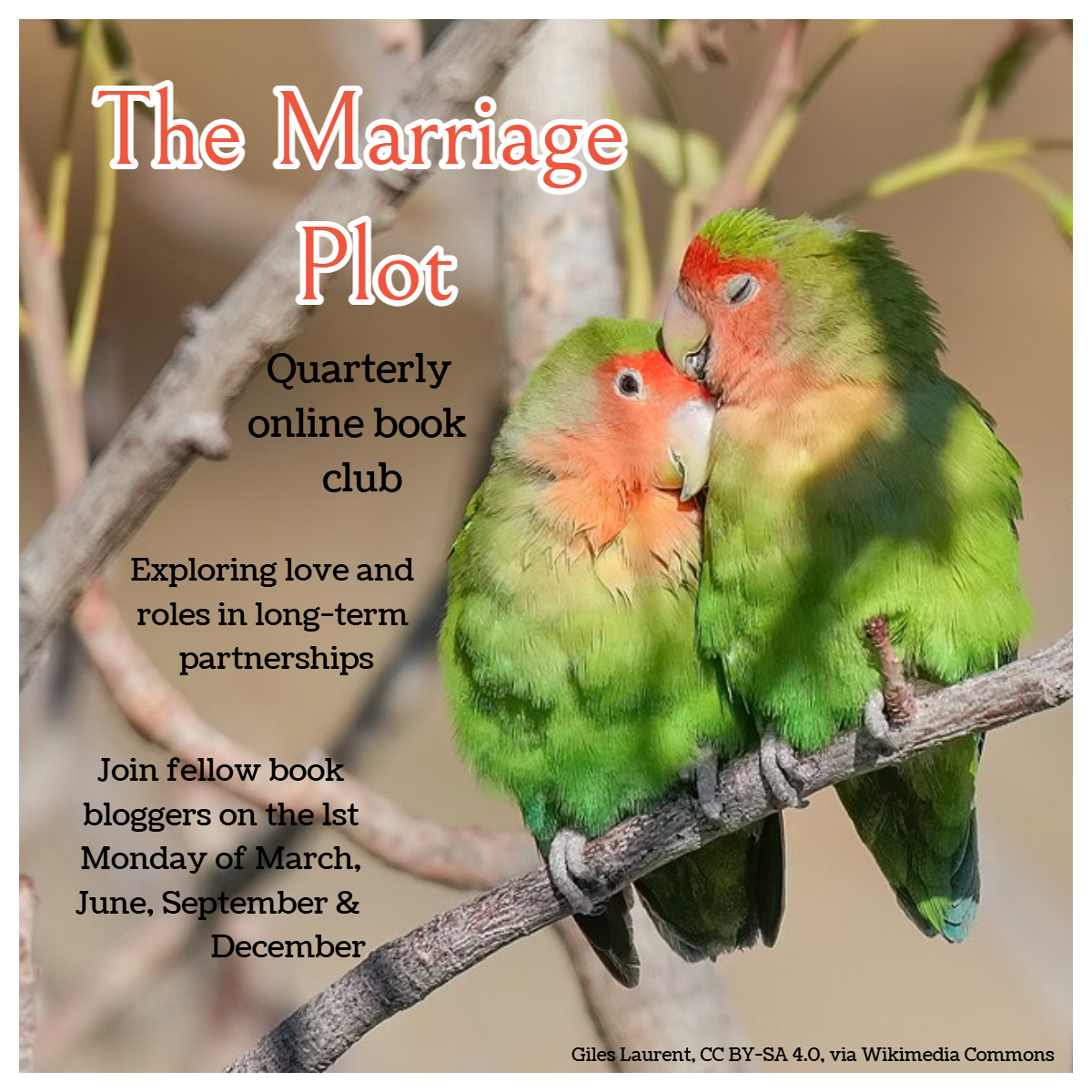
I’ve been part of the Literary Wives online book club for just over four years now. We recently decided to give the group a revamp, including a new name and feature image. The name was Becky’s idea and we all liked it for the literary reference. Part of our reasoning was to make things more inclusive, because future reads will cover same-sex marriages and we also want to think more broadly about love and roles in any long-term partnership. I’ve made a project page for it based on Kay’s.
Our current members are:
Becky of Aidanvale
Kate of Books Are My Favourite and Best
Kay of What? Me Read?
Marianne of Let’s Read!
Rebecca of Bookish Beck
Here’s our schedule for the next couple of years. Anyone is welcome to read along with us! We post reviews quarterly, on the first Monday of the month.
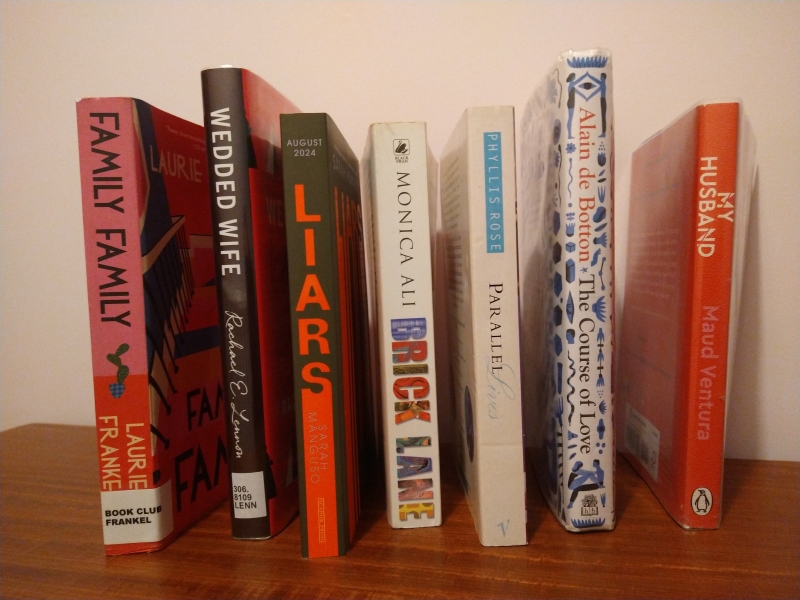
September 2026 – Family Family by Laurie Frankel
December 2026 – The Eden Test by Adam Sternbergh*
March 2027 – Wedded Wife by Rachael E. Lennon
June 2027 – Liars by Sarah Manguso
September 2027 – Brick Lane by Monica Ali
December 2027 – Parallel Lives: Five Victorian Marriages by Phyllis Rose
March 2028 – The Course of Love by Alain de Botton
June 2028 – My Husband by Maud Ventura
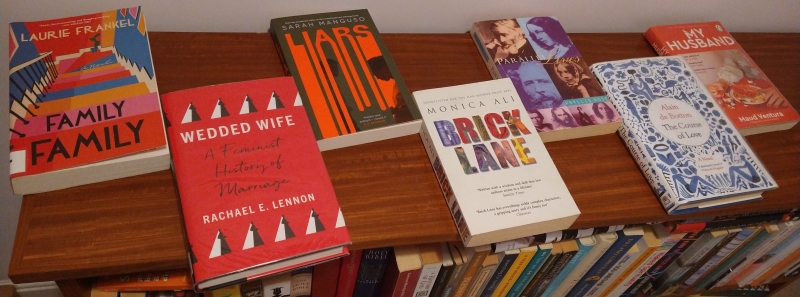
(*I’m going to have to skip December’s read because I couldn’t find a way to acquire it affordably and I don’t think it will be to my taste anyway.)
 Bookish Beck = Rebecca Foster. American transplant to England. Freelance proofreader and book reviewer.
