My second set of contributions to Cathy’s Reading Ireland Month. Emma Donoghue also appeared in my first instalment of reviews. Today I’m featuring her latest novel, published just a couple of weeks ago, and taking a quick look at a few other Irish books I’ve read recently: a light-hearted debut featuring small-town criminals, and two by Maggie O’Farrell: a reread of her only nonfiction work to date (for book club), and her newest children’s book.
Wild Houses by Colin Barrett (2024)
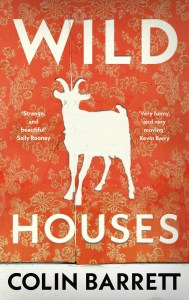 When Doll English is kidnapped by the Ferdia brothers in revenge for a huge loss on a drug deal, his girlfriend, mother and brother must go to unexpected lengths to set him free. There’s plenty of cursing and violence in this small-town crime caper, yet Barrett has a light touch; the dialogue, especially, is funny. The dialect is easy enough to decipher. Nicky, Doll’s girlfriend, lost both parents young and works in a hotel bar. She’s a strong character reminiscent of the protagonist in Trespasses. Overall, I felt that this was nicely written but that Barrett’s talent was somewhat wasted on a thin story. I’ve encountered similar plots in better books by Paul Murray and Donal Ryan. (Free from the publisher)
The Paris Express by Emma Donoghue
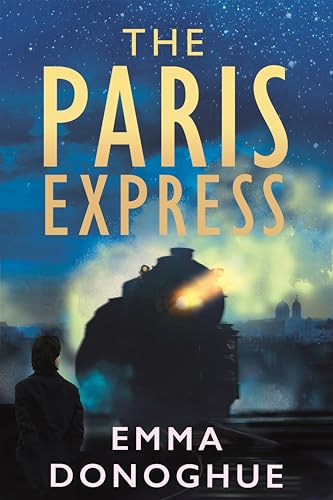 Inspired by a real-life disaster involving a train on the approach to Paris’s Montparnasse station in 1895. The Author’s Note at the end reveals the blend of characters included: people known to have been on that particular train, whether as crew or passengers; those who might have journeyed on it because they spent time in Paris at around that period (such as Irish playwright John Millington Synge); and those made up from scratch. It’s a who’s-who of historical figures, many of whom represent different movements or social issues, such as a woman medical student and an African American painter who can pass as white in certain circumstances. Donoghue clearly intends to encompass the entire social hierarchy, from a maid to a politician with a private carriage. She also crafts a couple of queer encounters.
The premise is appealing: a train hurtling toward catastrophe is in a sense a locked room, seeding much drama and intrigue. A young female radical is on board with a bomb, so all along you speculate about whether she’ll set it off and when. While I found the general thrust engaging, it was harder to develop interest in the large cast of characters. I also found the passages personifying the train (she “carries death in her belly”) hokey and thought that, as has sometimes been the case with Donoghue’s historical work, there’s too much research that’s there just for the sake of it, because she came across a fact she found fascinating and couldn’t bear to leave out (“These days every public building has three rubbish bins—one for the reclaiming of paper and cloth, the next for glass, ceramics, and oyster shells, and the last for perishables, which is where she drops the handkerchief.”). So this was enjoyable enough but not among her best.
With thanks to Picador for the proof copy for review.
I Am, I Am, I Am: Seventeen Brushes with Death by Maggie O’Farrell (2017)
 This was a reread for book club, and oh how brilliant it is. I’m more convinced than ever that the memoir-in-essays is a highly effective form because it focuses on themes or moments of great intensity and doesn’t worry about accounting for all the boring intermediate material. A few of these pieces feel throwaway, but together they form a vibrant picture of a life and also inspire awe at what the human body can withstand. No doubt on Wednesday we will each pick out different essays that resonated the most with us, perhaps because they run very close to our own experience. I imagine our discussion will start there – and with sharing our own NDEs. Stylistically, the book has a lot in common with O’Farrell’s fiction, which often employs the present tense and a complicated chronology. The present tense and a smattering of second person make the work immediate and invite readers to feel their way into her situations. Otherwise, my thoughts are as before – the last two essays are the pinnacle.
My original review from 2018:
We are, all of us, wandering about in a state of oblivion, borrowing our time, seizing our days, escaping our fates, slipping through loopholes, unaware of when the axe may fall.
O’Farrell captures fragments of her life through 17 essays on life-threatening illnesses and other narrow escapes she’s experienced. The pieces aren’t in chronological order and aren’t intended to be comprehensive. Instead, they crystallize the fear and pain of particular moments in time, and are rendered with the detail you’d expect from a scene in one of her novels. (Indeed, you can spot a lot of the real-life influences on her fiction, particularly This Must Be the Place – travels in China and Chile; eczema and stammering.)
She’s been mugged at machete point, has nearly drowned several times, had a risky first labour, and was almost the victim of a serial killer. (My life feels awfully uneventful by comparison!) But the best section of the book is its final quarter: an essay about her childhood encephalitis and its lasting effects, followed by another about her daughter’s extreme allergies. Only now, as a mother, can she understand how terrifying it must have been for her parents to wait at her side during days when she might not have survived. O’Farrell depicts parenthood better than any other author I can think of – letting those of us who haven’t experienced it do so vicariously. (Gift from my wish list)
My original rating (2018): 
My rating now: 
When the Stammer Came to Stay by Maggie O’Farrell (2024)
 This is actually her third children’s book, after Where Snow Angels Go (2020) and The Boy Who Lost His Spark (2022). All are illustrated by Daniela Jaglenka Terrazzini, who has a richly colourful and slightly old-fashioned style; she makes kids look as dignified as adults. The books are intended for slightly older children in that they’re on the longer side, have more words than pictures, and are more serious than average. They all weave in gentle magic as a way of understanding and coping with illness, a mental health challenge, or a disability.
When the Stammer Came to Stay is a perfect follow-on to I Am, I Am, I Am because it, too, draws on O’Farrell’s personal struggles. It’s the fable-like story of two sisters, Bea and Min, who share an attic room. The one is perfectly tidy; the other is a messy tomboy. When the stammer, pictured as a blob of silver ectoplasm above the shoulder, starts stealing Min’s words, they gather advice from their parents and the lodgers about how she can accept her new reality instead of fighting it or closing herself off by not speaking at all. The mycologist’s symbiosis metaphor is perhaps a bit too neat, but it contrasts with the impish connotations of the dibbuk, another useful parallel the girls discover. With this I’ve now read O’Farrell’s complete published works!
 Bookish Beck = Rebecca Foster. American transplant to England. Freelance proofreader and book reviewer.
 Bookish Beck
I think Emma Donoghue is extremely variable.
LikeLiked by 1 person
For sure! At least she’s never written the same book twice.
LikeLiked by 1 person
How true!
LikeLike
Congratulations on reading everything by O’Farrell!
LikeLiked by 1 person
One of my very favourite authors. I’ve reread several of her books, too, which is rare for me.
LikeLiked by 1 person
Nice work on O’Farrell! I’m not enough of a completist to go for her children’s books, but I’ve read everything else. I 100% agree about both the memoir-in-essays and I Am x3. I tend to love the way Donoghue uses her research but this is the second review I’ve seen that points out the overly large cast of characters in The Paris Express, which is a shame.
LikeLiked by 1 person
But they’re short and sweet and then you could have read EVERYthing! 😉
It took me so long to keep everyone straight that I felt like the book was dragging.
LikeLiked by 1 person
The Paris Express does seem like an odd choice for fiction; there doesn’t seem to be much of the space for the imagination that the topics of the best historical fiction have to have. (If we know that J.M. Synge was in Paris around that time, we probably also know, from things like letters and receipts and bills, pretty much where he was when; it’s not like less documented eras when you can put someone reasonably famous into a moment of contemporary-to-them history we don’t associate with them because there’s no proof they weren’t there.)
I Am, I Am, I Am amazed me when I read it. The encephalitis part was brilliant (like so many of these scenes/stories, it made me feel for my own parents struggling with my diabetes diagnosis when I was three). The serial killer part is so memorable, too; she just nails that sense of menace and wrongness and subsequent horrified discovery.
LikeLiked by 1 person
One of the Goodreads reviews is basically just ‘I don’t understand why this book exists’!
So good, particularly on a reread — I find that often: now that I’ve lived more life, I appreciate these kinds of stories more.
LikeLiked by 1 person
Hah!
LikeLike
I’m glad someone else found Wild Houses thin. I was a bit disappointed by it but everyone else seemed to love it!
LikeLiked by 1 person
Especially in the early pages, I kept feeling like I’d read that story before.
LikeLiked by 1 person
[…] Reading Ireland Month: Barrett, Donohue and O’Farrell – Rebecca at Bookish Beck […]
LikeLike
Good to know The Paris Express is really not worth my time
LikeLike
It was very readable but won’t stay in my memory.
LikeLiked by 1 person
When I scrolled down to “I Am, I Am, I Am” I thought “there’s no way Rebecca hasn’t read this already” and turns out I was right 🙂 Too bad about Wild Houses! I had it out from the library when it was new and didn’t get to it. I used to keep up with Donoghue but she is too prolific.
LikeLiked by 1 person
She seems to manage a book every year or two, which is impressive considering how much research goes into many of them.
LikeLike
I’ve been reading some Irish stuff with my Spring reading but haven’t written about it yet. Colin Barrett is one that I can borrow locally, but I haven’t gotten to him yet. Am I misremembering, that you had been thinking of setting aside that one? Perhaps I’ve gotten some covers mixed up. I”m sure some reader out there is loving that detail about sorting their trash in Emma Donoghue’s novel, thinking it makes it seem more real that way. But I feel as you do, they stand out in relief.
LikeLiked by 1 person
Sterling work on the challenges!
LikeLiked by 1 person
I Am I Am is one of the stand out non fiction books I’ve read in recent years. The final chapters are so moving…
LikeLiked by 1 person
[…] I Am, I Am, I Am: Seventeen Brushes with Death by Maggie O’Farrell: (The final book club reread.) The memoir-in-essays is a highly effective form because it focuses on themes or moments of intensity and doesn’t worry about accounting for boring intermediate material. These pieces form a vibrant picture of a life and also inspire awe at what the human body can withstand. The present tense and a smattering of second person make the work immediate and invite readers to feel their way into her situations. The last two essays are the pinnacle. […]
LikeLike