Blog Tour: Foxes Unearthed by Lucy Jones
Cold, delicately as the dark snow
A fox’s nose touches twig, leaf;
[…]
Across clearings, an eye,
A widening deepening greenness,
Brilliantly, concentratedly,
Coming about its own business
~Ted Hughes, “The Thought-Fox” (1957)
Foxes Unearthed, freelance journalist Lucy Jones’s first book, won a Society of Authors’ Roger Deakin Award for nature writing. If you’re familiar with Patrick Barkham’s Badgerlands, you’ll recognize this as a book with a comparable breadth and a similar aim: clearing the reputation of an often unfairly reviled British mammal. Jones ranges from history to science and from mythology to children’s literature in her search for the truth about foxes. Given the media’s obsession with fox attacks, this is a noble and worthwhile undertaking.
 The book proper opens with a visit to Roald Dahl’s house, now a Buckinghamshire museum, where he wrote Fantastic Mr. Fox. Still one of the best-known representations of foxes in British literature, Dahl’s Mr. Fox is a Robin Hood-like hero, outsmarting a trio of mean-spirited farmers to provide a feast for his family. Foxes’ seemingly innate wiliness prompts ambivalent reactions, though; we admire it, but we also view it as a threat or an annoyance. As Jones puts it, the fox of fables and traditional stories is “a villain we cheer for.”
Not everyone cheers, of course. Under Henry VIII, the Vermin Acts of 1532 (not repealed until the 1750s) promised a reward to anyone who killed foxes, then considered a nuisance animal. Fox hunting and the cruel sport of “tossing” have a long history that eventually came up against the movement towards animal welfare, starting with Jeremy Bentham in the 1740s and codified by the 1911 Protection of Animals Act. Meanwhile, Jones notes, children’s books advocating compassion for animals, such as Anna Sewell’s Black Beauty (1877), ensured that the message made it out of the legislative chamber and into everyday life.
The second chapter is a useful survey of fox behavior. Foxes are omnivores, and in recent decades have started to move into Britain’s cities, where they find plenty of food to scavenge. In rural settings, foxes are still the subject of farmers’ loathing even though they rarely take lambs and actually help keep rabbit numbers in check. Still, the stereotype of foxes killing for fun instead of for hunger persists, whereas they in fact cache their surplus food. Chapter 3 asks whether fox numbers have reached pest status and considers various control strategies, from straightforward culling to the non-lethal methods supported by conservationists.
I enjoyed Jones’s meetings with figures from both sides of the debate. She goes along on a fox hunt, but also meets or quotes animal rights activists, academics, and high-profile nature promoters like Chris Packham. All told, though, I felt the book could have been closer to 200 pages than 300. Most chapters are very long, and some could easily be combined and/or shortened. For instance, Chapter 1 relays the amount of information about fox hunting that most readers will be prepared to absorb, yet it’s then the subject of two more chapters.

At the British Wildlife Centre in Surrey. Photo by Chris Foster.
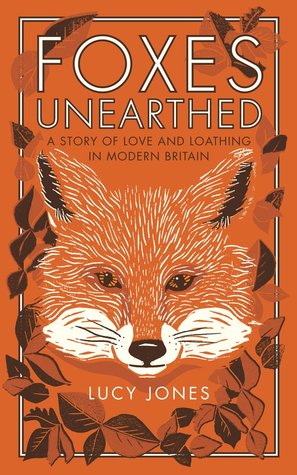
This is an important book for correcting misconceptions, but your enjoyment of it may be in proportion to your personal interest in the subject. In terms of fonts and cover design, though, you’re unlikely to come across a more gorgeous book this year.
Foxes Unearthed was published in paperback by Elliott & Thompson on March 16th. Thanks to Alison Menzies for arranging my free copy for review.
To encounter foxes in fiction, try the following:
- Glow by Ned Beauman
- The Many Selves of Katherine North by Emma Geen
- Midwinter by Fiona Melrose
- The Soho Leopard by Ruth Padel (a poetry book with a sequence on urban foxes)
& the forthcoming How to Be Human by Paula Cocozza (April 6th).
Blog Tour: Two Voices, One Story
“[B]eing an adoptive parent is like parenting in Technicolor: everything is just a little more intense. This means the highs can be really high, but it also means that the lows are going to be really low. You have to prepare yourself.”
~Sharon Roszia, quoted in A Book about Love, by Jonah Lehrer
Two Voices, One Story is a mother–daughter memoir that splits narration duties between Elaine Rizzo and Amy Masters, the now-teenage daughter she adopted from China in 1999. Elaine’s sections provide the main thread of their story, while Amy’s passages, generally shorter and printed in italics, chime in to give her perspective on various events and relationships that have been important in her life.
 Elaine is forthright about her infertility and the miscarriage that led to her decision to adopt. In the late 1990s, China’s one-child policy was still in place, but it was the severe flooding of the Yangtze River that led directly to Amy’s adoption. Thousands died and millions more were displaced. Given the context, it’s not so surprising that baby Amy was left outside a welfare center. She was given the Chinese name Tong Fang – “Copper Child.”
For me the highlight of the book was Elaine and Lee’s trip to China to pick up Amy. Although they were nervous and disoriented, they experienced the kindness of strangers and responded with compassion of their own, taking along extra toiletries and clothes of different sizes and leaving the surplus with the care center. Amy had bronchitis, one more worry on top of all the paperwork and red tape they had to go through to finalize the adoption.
Back in England, Amy had some behavioral problems that were likely vestiges of her time at the orphanage. She hated noise, especially thunderstorms; she hit herself and others; and she often woke up screaming. Private schooling ensured she wouldn’t get left behind, and there were many happy times with extended family and holidays to Australia and the west coast of Wales, where Elaine and Amy would later settle with Elaine’s second husband.
But life wasn’t always rosy: Amy was strong-willed and uncooperative – perhaps nothing out of the ordinary for a teenager, but still a challenge for her parents. Elaine recalls a social worker telling them “that very often adoptive parents don’t feel like they have the right to tell their child off, or that they think they shouldn’t say or do anything which might upset the child, because they are trying to compensate for what has happened prior to the adoption.”
Lengthy commuting to her job back in England and years-long house renovations demanded much of Elaine’s attention, yet she remained alert to what was going on with Amy. Unfortunately, in her teen years Amy experienced racism from a few schoolmates, including abusive Facebook messages that drove the family to contact the police. Amy herself, though, always comes across as easygoing about being different: “Every Christmas we used to do a Nativity show and I remember being an angel first and then one of the kings, which I suppose was the right role for me because I really do come from the East.”
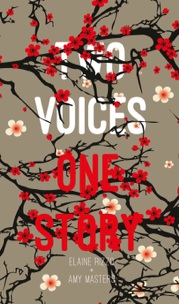
Even though this is a very quick read, my interest waxed and waned. The telling can be clichéd and sentimental, and I felt too much space was given to banal details that added little to an understanding of the central mother–daughter relationship. This self-published book has a very appealing cover but needs another look from an experienced editor who could fix the fairly frequent typos and punctuation issues and cut out the bullet points (nine pages’ worth) and speech tics like “I will also say…” and “I have to comment…”
I would certainly recommend this book to those who have a personal experience of or interest in adoption, particularly from overseas (for a fictional take on adoption from China, you might also try The Fortunes by Peter Ho Davies, The Red Thread by Ann Hood, and This Must Be the Place by Maggie O’Farrell), as well as to anyone wondering how to parent or educate a child who is in some way different.
I’ll end with some lovely words from Amy:
when my Chinese mum left me outside the gates of the welfare center almost eighteen years ago now, because there was nothing left for me in Tongling, she must have had the desperate hope that I would find a happy life with people who loved me. I can only say that her wish did come true.
My rating: 
Two Voices, One Story will be published by Clink Street Publishing on March 21st. Thanks to Rachel Gilbey of Authoright Marketing & Publicity for arranging my free copy for review.
I was pleased to participate in the blog tour for Two Voices, One Story.
Review: English Animals by Laura Kaye
“Maybe we can see that the animals are like us, or we are like animals.”
Laura Kaye’s impressive debut novel, English Animals, is a fresh take on themes of art, sex, violence and belonging. It has particular resonance in the wake of Brexit, showing the apparent lack of a cohesive English identity in spite of sometimes knee-jerk nationalism.
 The novel takes place within roughly a year and is narrated by Mirka Komárova, a 19-year-old Slovakian who left home suddenly after an argument with her parents and arrives in the English countryside to work for thirty-somethings Richard and Sophie Parker. She doesn’t know what to expect from her new employers: “Richard and Sophie sounded like good names for good people. But they could be anything, they could be completely crazy.”
It’s a live-in governess-type arrangement, and yet there are no children – Mirka later learns that Sophie is having trouble getting pregnant. Instead Mirka drives the volatile Parkers to the pub so they can get drunk whenever they want, and also helps with their various money-making ventures: cooking and cleaning for B&B guests and the summer’s wedding parties, serving as a beater for pheasant shoots, and assisting with Richard’s taxidermy business. Her relationship with them remains uncertain: she’s not a servant but not quite an equal either; it’s a careful friendship powered by jokes with Richard and cryptic crossword clues with Sophie.
At first Mirka seems disgusted by Sophie’s shabby family home and the many animals around the place, both living and dead. Initially squeamish about skinning animal corpses, she gets used to it as taxidermy becomes her artistic expression. Taking inspiration from whimsical Victorian portraits of dead animals in costume, she makes intricate modern tableaux with names like Mice Raving, Freelance Squirrels and Rats at the Office Party. When her art catches the eye of a London agent, she starts preparing her pieces for an exhibit and is the subject of a magazine profile. The interviewer writes this about her:
Mirka is someone who understands the philosophical nature of her art. How, in our strange condition of being simultaneously within and outside the animal kingdom, we invest taxidermy with our longing for permanence.
I loved the level of detail about Mirka’s work – it’s rare to encounter such a precise account of handiwork in fiction, as opposed to in nonfiction like Edmund de Waal’s The Hare with Amber Eyes and David Esterly’s The Lost Carving; Kaye herself is a potter, which might explain it – and I appreciated the many meanings that dead animals take on in the novel. They’re by turns food, art objects and sacrificial victims. Taxidermy is a perfect juxtaposition of physicality and the higher echelons of art, a canny way of blending death and beauty.
But of course the human residents of this community also fall into the title’s category: Many of them are what you might call ‘beastly’, and the threat of violence is never far away given Richard and Sophie’s argumentativeness. A promiscuous blonde, Sophie reminded me of Daisy in The Great Gatsby, so often described as careless: “You are a dangerous person, Sophie,” Mirka says. “Don’t say that. I didn’t mean to hurt anything.” Mirka replies, “You don’t care about other things. Everything is a game. Everyone is a toy for you to play with.”
The two different blurbs I’ve seen for the book both give too much away, so I will simply say that there’s an air of sexual tension and latent hostility surrounding this semi-isolated home, and it’s intriguing to watch the dynamic shift between Richard, Sophie and Mirka. I felt that I never quite knew what would happen or how far Kaye would take things.
I did have a few minor misgivings, though: sometimes Mirka’s narration reads like a stilted translation into English, rather than a fluent outpouring; there’s a bit too much domestic detail and heavy-handed symbolism; and the themes of xenophobia and homophobia might have been introduced more subtly, rather than using certain characters as overt mouthpieces.
All the same, I read this with great interest and curiosity throughout. It’s a powerful look at assumptions versus reality, how we approach the Other, and the great effort it takes to change; it’s easier to remain trapped in the roles we’ve acquired. I’d recommend this to readers of Polly Samson, Francesca Segal and even Rachel Johnson (the satire Shire Hell). In particular, I was reminded of Shelter by Jung Yun and Little Children by Tom Perrotta: though suburban in setting, they share Kaye’s preoccupations with sex and violence and the ways we try to hide our true selves beneath a façade of conformity.
This is one of the most striking debut novels I’ve encountered in recent years; it’s left me eager to see what Laura Kaye will do next.
English Animals was published by Little, Brown UK on January 12th. My thanks to Hayley Camis for the review copy.
My rating: 
I was delighted to be asked to participate in the blog tour for English Animals. See below for details of where other reviews and features have appeared or will be appearing soon.

Review: The Dark Circle by Linda Grant
Linda Grant’s seventh novel, The Dark Circle, stars Lenny and Miriam Lynskey, nineteen-year-old twins and representatives of London’s small Jewish population. It is 1949; Miriam works in a flower shop and Lenny has just been rejected by the army at his National Service medical appointment. He has tuberculosis and there are worries about Miriam’s lungs, too, so it’s off to the Gwendo (the Gwendolyn Downie Memorial Hospital for the Care of Chronic Cases of Tuberculosis, that is) for both of them. We briefly see them through the eyes of the cab driver who takes them down to Kent: “The pair in the back were common as muck.”
It’s clear this is no ordinary sanatorium; it has a “reputation for being a modern, iconoclastic facility for the very best people,” like Lady Anne and Miriam’s Oxford-educated roommate, Valerie. The Lynskeys, as NHS rather than private patients, may be looked down on as a different class of people, but they bring fresh life into the place. That’s doubly true of new arrival Arthur Persky, a twenty-six-year-old Navy man from Brooklyn. He enlivens the bleak, clinical surroundings with rock ’n roll music and a certain sex act. The Gwendo, once a place of boredom and conformity, now seems like a site of quiet rebellion.
 One of Grant’s key skills is characterization, and short chapters from different characters’ perspectives give us access to their backstories. I especially liked getting to know German refugee Hannah Spiegel. Kafka, oddly enough, forms a link between her and the Lynskeys: Valerie has been reading The Metamorphosis aloud to Miriam to try to educate her; Miriam, absolutely captivated, gets Lenny in on the listening sessions, and he asks Hannah to interpret the book for them since she’s read the original German. “No, no-one can explain, it’s not possible to do so,” she replies. “You experience it in your way, it’s a labyrinth you must pass through but the labyrinth is yourself.”
The same might be said of tuberculosis. Each of these patients has the same disease, so Dr. Limb and his nurses sometimes treat them as interchangeable, yet each medical journey is individual and unpredictable. The typical approach was a pneumothorax injection to temporarily collapse one lung so it could ‘rest’, but in extreme cases some patients would have ribs removed. Great hopes were pinned on streptomycin treatment, and on Rosh Hashanah, the Jewish day of reckoning in 1950, Dr. Limb takes on the role of God, weighing up who live and who will die in the coming year. He has seven courses of streptomycin to distribute, but who will get them? The weakest? The woman he’s in love with? Or the ones with the most chance of improving? Meanwhile, Miriam’s condition is worsening, and Lenny and Persky decide they’ll do whatever it takes to make sure she gets one of those injections.
I was impressed by how Grant evokes her period setting through dialogue, slang and music. The novel’s tone is wry yet melancholy, almost nostalgic. The terrific opening paragraph gives you a taste of the no-nonsense style:
London. Big black old place, falling down, hardly any colour apart from a woman’s red hat going into the chemist with her string bag, and if you looked carefully, bottle green leather shoes on that girl, but mostly grey and beige and black and mud-coloured people with dirty hair and unwashed shirt collars, because everything is short, soap is short, joy is short, sex is short, and no one on the street was laughing so jokes must be short too. Four years after the war and still everything is up shit creek.
The final 60 pages are set in the future and reveal what happens to Lenny, Miriam and key others in the decades after they leave the sanatorium. These former patients are bound together in the title’s “dark circle” of suffering, but because TB has been eradicated no one remembers their pain. “From a death sentence to a course of antibiotics in a decade,” Lenny marvels. The novel loses momentum a bit in this short final section. I felt it would have been more powerful if Parts II and III were cut and the book simply ended with the plot coming full circle and Lenny and Miriam leaving the Gwendo in a taxi. But this is a minor quibble. The Dark Circle does what the best fiction does: drops you right into a situation you’ve never thought about and can’t begin to imagine—until a first-class novelist does so for you.
The Dark Circle was published by Virago on November 3rd. My thanks to Poppy Stimpson of Little, Brown for the free review copy.
My rating: 
It was a delight to participate in my first blog tour. See below for details of where other reviews have appeared and will be appearing soon.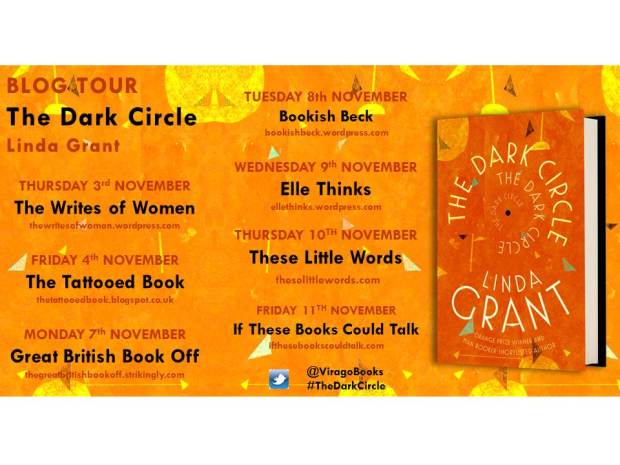
 Bookish Beck = Rebecca Foster. American transplant to England. Freelance proofreader and book reviewer.
 Bookish Beck