Bloxham Festival of Faith and Literature
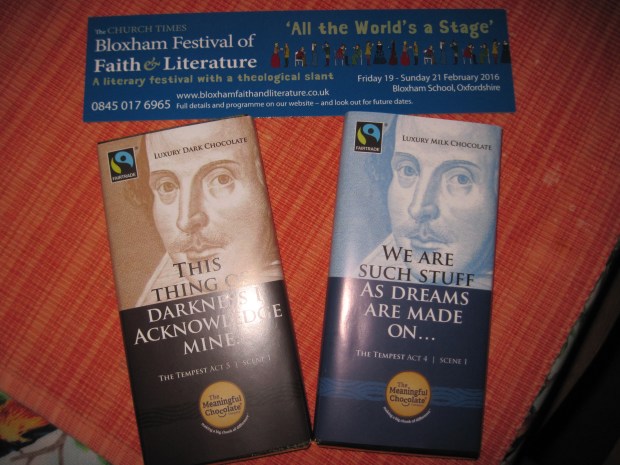
Bloxham Festival of Faith and Literature, “a literary festival with a theological slant,” has been running since 2011, but this past weekend marked the first time I managed to attend a few Saturday sessions. It was held at Oxfordshire’s very posh Bloxham School (sample course schedule: Mandarin, riding, and Shakespeare on Film). The theme for this year being “All the World’s a Stage,” all the events were given Shakespeare lines as titles. Hey, even the free chocolate bars from the Meaningful Chocolate Company were tailored to the Shakespeare theme!
The morning began with an interview with Sarah Perry. Now, I have to admit that I didn’t really get on with her first novel, After Me Comes the Flood. Still, I was intrigued by how she incorporates biblical themes and her religious background in her fiction, so I thought I’d give it a go. Perry herself wasn’t at all as I expected her to be. I’d only ever seen one tiny press photo, in which she had a somewhat tomboyish haircut and had a demurely downcast gaze. So I was pleasantly surprised to find she was voluble, learned, and confident; in a black lacey dress and with loosely pinned hair, she resembled a modern Gibson Girl with a Gothic twist.
Interviewed by the editor of the Church Times newspaper, Perry spoke a bit about her upcoming novel, The Essex Serpent (to be published in the UK by Serpent’s Tail on June 18th), set in 1890s London and an invented village on the Essex marshes. In keeping with the talk’s title, “I would not wish any companion in the world but you,” the book is about friendship, specifically that between a vicar and a widowed amateur naturalist. Inspired by her own relationship with her (male) best friend and by intimate ‘love letters’ she found that passed between friends (like St. Paul to the Philippians and D.H. Lawrence to Jack Murray, or Montaigne writing about his best friend), the novel seeks the goodness in its characters.
The two readings Perry gave were lush, Dickensian descriptions of the City under rain and a drunken man going for a dip in the marsh and seeing what appears to be a sea creature. Perry was surprised when her debut novel was described as Gothic, but she’s embraced the label now: her third book, currently in progress, is full-on Gothic horror. What links all of her work, she thinks, is the Gothic notion of the thing lurking over the shoulder. For Perry, that ever-present threat is Reformation theology: the idea that man is born in sin and deserves damnation. During her Strict Baptist upbringing (which she, not coincidentally, describes as being like living in the 1890s), she was cut off from contemporary culture and influenced primarily by the King James Bible and Foxe’s Book of Martyrs.
Perry spent a short time as a missionary in the Philippines and was a biblical fundamentalist until age 25, when she and her husband (whom she met at 13 and married at 20) left the church. Stepping outside of that limiting community was the impetus she needed to start writing; although she had had stories looping around her head since the age of four, she had rarely written anything down. She completed a creative writing MA and PhD, all while working full time at the Inns of Court.
 After Me Comes the Flood was rejected by 14 publishers; even her viva examiners, who passed her without corrections, were “ungracious,” she remarked. What it comes down to, she thinks, is simply that no one liked the book or knew what to make of it. It seemed unmarketable because it didn’t fit into a particular genre. At this point I was sheepishly keeping my head down, glad that Perry couldn’t possibly know about my largely unfavorable review in Third Way magazine. I confess that my reaction was roughly similar to the general consensus: “Not quite an allegory, [the book] still suffers from that genre’s pitfalls, such as one-dimensional characters,” I wrote.
A glowing Guardian review from poet John Burnside was enough to give Perry confidence to keep going as a novelist, and – having taken forever over writing her first book, an experience she likens to like pulling teeth because she had no idea what she was doing and could rarely overcome her natural laziness – she went on to write The Essex Serpent within just 10 months. And I’m glad she did, because this new book sounds right up my alley.
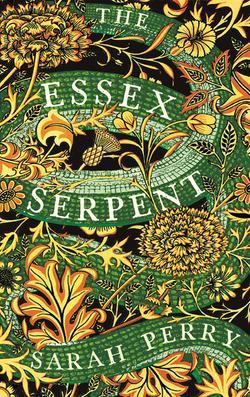 It will be interesting to see how she imagines a platonic friendship between the sexes in a historical setting, and the Dickensian and Gothic touches, even from the little taster I got, were delicious. I was especially intrigued to learn about her research into the friendship ‘triangle’ (betrayal! early death! forgiveness!) between William Ewart Gladstone, Alfred Tennyson, and Arthur Henry Hallam. Perry said she thinks the tide may be turning, that friendships rather than romantic love could be starting to dominate fiction; perhaps Hanya Yanagihara’s A Little Life from last year would be a good example.
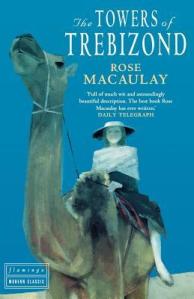
 In the other sessions I attended, a group of clergy revealed the shortlist for the £10,000 Michael Ramsey Prize for theology (to my surprise, I’d read one of the nominees, Unapologetic by Francis Spufford) and panelists introduced a forthcoming anthology of essays on Anglican women novelists from Charlotte Brontë onwards (to be published by Bloomsbury in January 2018). Jane Williams, wife of former archbishop Rowan Williams, will contribute a chapter on Barbara Pym, who obviously loved the Church but also sits at an anthropological distance to poke gentle fun at it. Her novels sound like great fun. Judith Maltby, one of the editors, convinced me that I need to read Rose Macauley’s The Towers of Trebizond (1956), while co-editor Alison Shell made the case for P.D. James’s late inclusion.
 Chaired by contemporary Anglican novelist Catherine Fox, the panel noted two common threads in many of the featured novelists: detective fiction and humor. The striking number of crime novelists (including Dorothy L. Sayers and Ellis Peters), Shell suggested, one might attribute to an Anglican license to moralize or a preoccupation with ‘last things’. Humor, meanwhile, seems to arise from the little hypocrisies inherent to religious life and to the fact that liturgical seriousness can often tilt into comedy. Other repeated themes include the sacraments, the role of the spinster, and class – the clergy are often educated but poor. I came away with a list of authors to try; many of their works are available through Virago reprints.
All in all, it was a terrific, thought-provoking experience for me – a perfect mixture of literature and theology, and a great way to spend a blustery February Saturday.
In Praise of Literary Prizes
I like a spot of competition. Whether watching Olympic figure skating, playing board games like Scrabble and Boggle, entering a low-key Oscars pool, or rooting for my favorites in American Idol seasons and Miss America pageants, I’ve always loved trying to pick the best. This means that literary prizes are hugely exciting for me, and I follow the races closely.
I’m particularly devoted to the Man Booker Prize. I was delighted to see Hanya Yanagihara’s A Little Life on the recent longlist (catch up on it here), a truly interesting set of books, diverse in terms of their genres and authors’ nationalities and nicely balanced between male and female writers (6:7). I’ve read four of the longlisted titles so far:
 The Fishermen, Chigozie Obioma (full review in May 2015 issue of Third Way): From a young Nigerian debut novelist comes a haunting tale of sibling rivalry and revenge. With sectarian riots afoot, the four oldest Agwu boys decide to make money by skipping school and fishing in the Omi-Ala River. Things get more complicated when Abulu, the local madman, issues a prophecy that seems bound to divide the brothers. The first quarter of the novel, especially, is drenched in foreshadowing (not always subtle, nor do the plot turns often rise above the predictable). Rich with prophecy and allusions, this owes much to biblical narratives and tragedies from Shakespeare to Chinua Achebe.
- Lila, Marilynne Robinson – reviewed at For Books’ Sake
- A Spool of Blue Thread, Anne Tyler – also reviewed at For Books’ Sake
- A Little Life, Hanya Yanagihara – reviewed at Shiny New Books

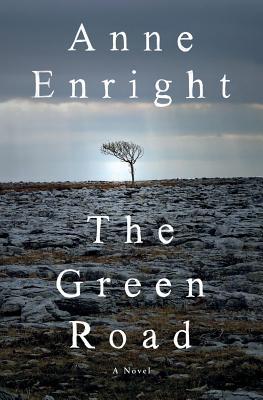 Next up: I’m reviewing The Green Road by Anne Enright for the November 2015 issue of Third Way. The Booker Prize shortlist will be announced on September 15th and the winner on October 13th.
Beyond the Booker, here are some of the other prizes I follow throughout the year, listed in vague chronological order:
 The Not the Booker Prize run by the Guardian. On this year’s shortlist is Shame by Melanie Finn, a book I loved when I reviewed it for Third Way’s April 2015 issue. It’s a powerful story of regret and the search for redemption. Though it has elements of a straightforward psychological thriller, the daring structure and moral complexities are more akin to Graham Greene. In alternating chapters, Pilgrim Jones contrasts flashbacks to her car accident and the subsequent investigation back in Switzerland with her present-tense African odyssey. This is Conrad’s Africa, a continent characterized by darkness and suffering. The question of culpability remains murky, yet the possibility of salvation shines through. [Voting will take place in October.]

- The Guardian First Book Award (open to both fiction and nonfiction): the shortlist will be announced this Friday, August 14th. One entry, Spill Simmer Falter Wither by Sara Baume, has already been chosen by readers, and the other nine are selected from publishers’ submissions. [Winner announced in late November.]
 The Dylan Thomas Prize for young writers (under 39) went to Joshua Ferris for To Rise Again at a Decent Hour last year. [Longlist in September, shortlist in October and winner announced in November.]
- The Costa Book Awards give separate prizes for fiction, debut fiction, biography, poetry, and children’s books, and also choose one overall winner. [Category shortlists in late November, category winners in early January and overall winner on January 26, 2016.]
- The Folio Prize, only two years old, considers any work of fiction published in English; before the Booker expanded to include American entries last year, it was the most Catholic of the fiction prizes. Now it risks being considered redundant; especially since it lost its Folio Society sponsorship, it’s unclear whether it will continue. [Shortlist in February and winner announced in March.]
 The Wellcome Book Prize is for medical-themed literature, fiction or nonfiction. Last year’s winner, The Iceberg by Marion Coutts, meant a lot to me for personal reasons but was also one of the most unusual and impressive memoirs I’ve ever read. I reviewed it for The Bookbag here. [Shortlist in March and winner announced in April.]

- The Pulitzer Prize is America’s premier literary award. I confess I often feel a little out of touch with the winners and don’t necessarily make a conscious effort to seek out the nominated books. I’d like to be more familiar with Pulitzer winners. Next year marks the prize’s centennial, so there’s no better time! [Winners announced in April.]
- The Independent Foreign Fiction Prize is for any book that has been translated into English and published in the UK in the previous year. I’ve found some great offbeat reads by browsing through previous longlists. As of next year, the prize is merging with the Man Booker International award, which previously recognized the life work of a foreign author every other year. [Longlist in March, shortlist in April and winner announced in May.]
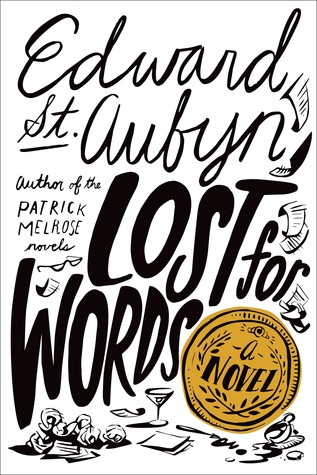
 The Bollinger Everyman Wodehouse Prize, the UK’s prize for comic literature, has run since 2000. Among the past winners are Paul Torday, Howard Jacobson, Terry Pratchett, Geoff Dyer, Gary Shteyngart, and (surprise!) Ian McEwan. I’ve read five of the winners, including Lost for Words by Edward St. Aubyn. [Shortlist in March and winner announced in May.]
- The Baileys Women’s Prize for Fiction (formerly known as the Orange Prize). Ali Smith won the 2015 award for How to Be Both. [Longlist in March; shortlist and winner announced in June.]
Do you follow literary prize races? Do you make a point of reading the winner and/or the shortlisted books? All comments welcome!
 Bookish Beck = Rebecca Foster. American transplant to England. Freelance proofreader and book reviewer.
