R.I.P. Reads, Part II: Feito, King, Link, Paver & Taylor
Soon it’ll be all novellas, all the time around here. But first I have a few more October reads to review.
A belated Happy Halloween! As a kid in the U.S. suburbs, I loved Halloween. It was such fun planning costumes – pumpkin, cowgirl and picnic table are a few memorable ones that I remember thanks to photographs – and my hoard of candy would last me for months. But these days, I tend to be pretty grumpy about the holiday. It never used to be a thing in the UK, but it has been creeping in year on year. I don’t mind a creatively carved jack o’ lantern, tasteful decoration or clever homemade costume. What does get my goat is plastic tat, gratuitous gore and the dozens of sodden sweets and wrappers littering the streets after last night’s rain and wind.
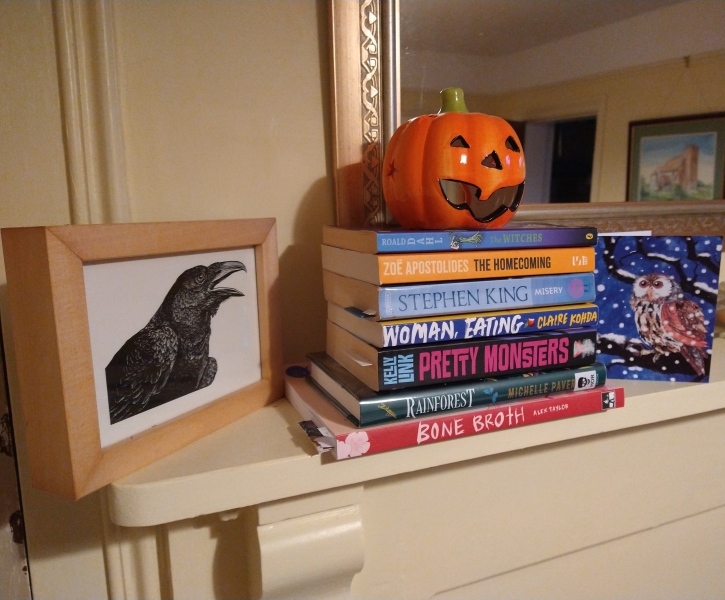
Anyway, we enjoyed the stormy evening because we spent it at friends’ having delicious autumnal lasagne and parkin, playing instruments and board games and eavesdropping on the trick-or-treaters. I had to laugh when J said “Take a couple” and one little girl replied, “That’s okay, I don’t really like sweeties.” These friends were keeping some ancient traditions alive: carving a turnip, wearing one’s clothes inside out and walking between two fires to ward off fairies. They also put potatoes in the treats bowl, which definitely confused the kids. (One did take a spud!)
I really leaned into the Readers Imbibing Peril reading this year. I had a somewhat lacklustre first batch, but these five were great!
Victorian Psycho by Virginia Feito (2025)
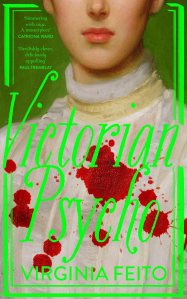 This was among my Most Anticipated titles of the year – for the bonkers blurb but also because of how much I’d enjoyed Feito’s debut, Mrs. March. Both novels go deep with mentally disturbed protagonists. The first channeled Patricia Highsmith with its stylish psychological suspense; here we have a full-on blend of slasher horror and sadistic humour, wrapped up in a Victorian pastiche. Winifred Notty (naughty girl indeed) is the new governess at Ensor House on the Yorkshire moors. She couldn’t care less about her charges, Andrew and Drusilla. No, she’s here to exact revenge on the master of the house, Mr. Pounds. But not before she’s dispatched many a random servant and baby. “Bodies pile up in the attic.” Her brutal fantasies are so realistic that at times it’s difficult to separate them from what she actually carries out. Miss Notty is also a highly sexual being whose fixations could certainly be interpreted in Freudian ways. Feito spins a traumatic backstory for her antiheroine but doesn’t make it any excuse for her gleeful reign of terror. It’s delicious fun, especially for a Victorianist, but don’t attempt if you’re squeamish. (Read via NetGalley)
Misery by Stephen King (1987)
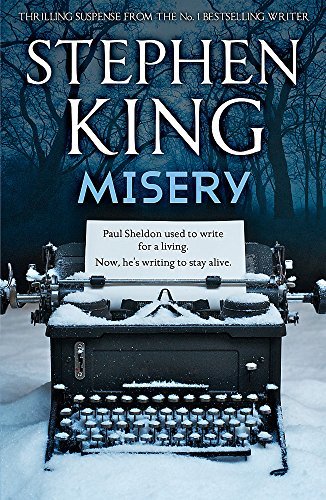 All these years I’d had two 1989–1990 films conflated: Misery and My Left Foot. I’ve not seen either but as an impressionable young’un I made a mental mash-up of the posters’ stills into a film featuring Daniel Day-Lewis as a paralyzed writer and Kathy Bates as a madwoman wielding an axe. (Turns out the left foot is relevant!)
Paul Sheldon wakes in a fog of pain, his legs shattered from a one-car accident on a snowy Colorado backroad. He’s famous for his historical potboilers about Misery Chastain but, like Arthur Conan Doyle with Sherlock Holmes, has killed off his most beloved character. Except now he’s in the home of Annie Wilkes, his rescuer and biggest fan, and she demands he resurrect Misery. Annie is a former nurse who left the profession after numerous suspicious deaths on her watch. She keeps Paul dependent on her – and on Novril, a fictional opiate. In a case of ‘Scheherazade complex’, he’ll be her prisoner until he’s completed a sequel that’s to her satisfaction. Compared to Pet Sematary, the only other King novel I’ve read, this was slow to draw me in because of the repetitive scenes in a claustrophobic setting, and I wearied of the excerpts from Paul’s manuscript. But eventually I was riveted, desperate to know how Paul was going to get out of this predicament and what the final showdown could be. Extremes of pain and obsession make this an intense study of the psychology of a wretched pair. (Public library)
Pretty Monsters by Kelly Link (2008)
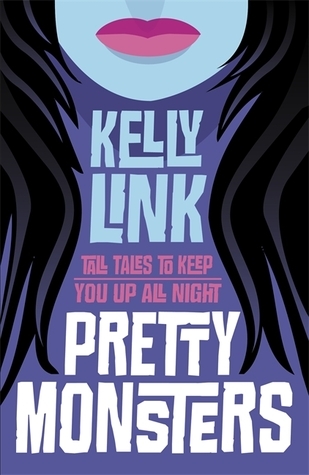 This is a reissue edition geared towards young adults. All but one of the 10 stories were originally published in literary magazines or anthologies. The stories are long, some approaching novella length, and took me quite a while to read. I got through the first three and will save the rest for next year. In “The Wrong Grave,” a teen decides to dig up his dead girlfriend’s casket to reclaim the poems he rashly buried with her last year – as did Dante Gabriel Rossetti, which Link makes a point of mentioning. A terrific blend of spookiness and comedy ensues.
“The Wizards of Perfil” and the title story are 50-some and 60-some pages, respectively, which allows a lot of space for intriguing weirdness and side plots. In the former, Onion’s cousin Halsa is purchased to be a servant to a wizard. The cousins both have the gift of foresight but can’t get the wizards to take them seriously when they beg that something to be done to prevent human disasters. It’s a brilliant allegory of the danger of waiting for an external force – God, the government, whatever – to solve everything versus getting on with it yourself. In the title story, a group of teens are obsessed with a mysterious Doctor Who-esque television show called The Library, which colours all their interactions. The main character Jeremy’s father is an eccentric sci-fi novelist named Gordon Strangle Mars who has written his son into his latest plot in a disturbing way. Jeremy recently inherited a gas station and phone box in Las Vegas and occasionally calls the phone box to air his grievances and solicit supernatural aid. My only other experience of Link was a standalone story I was once sent for review, “The Summer People,” which I didn’t get on with, so I was surprised to encounter such top-notch fantasy/horror tales. (Little Free Library)
Rainforest by Michelle Paver (2025)
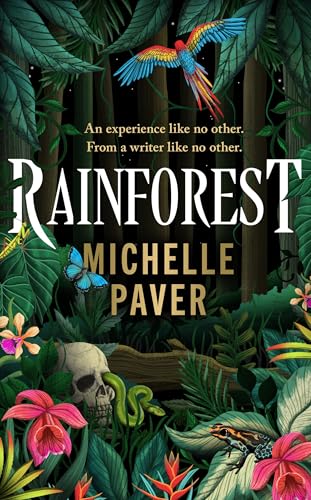 I’d read all three of Paver’s previous horror novels for adults (Thin Air, Dark Matter and Wakenhyrst) and found them easy, atmospheric reading but not nearly as scary as billed. This is her best yet. Set in 1973 on an expedition to Mexico, it has as its unreliable narrator Dr. Simon Corbett, an English entomologist. Adding to the findings of the archaeological dig he’s accompanying, he’ll be hunting for mantids (praying mantises, stick insects and the like) by fogging sacred trees with pesticides. He also experiments with taking a hallucinogenic plant extract used by the Indigenous shamans, hoping to be reunited with his lost love, Penelope.
We know that Corbett’s employment is tenuous and that he’s seeing a therapist. Paver authentically reproduces the casual racism and sexism of the time and seeds little hints that this protagonist may not be telling the whole truth about his relationship with Penelope. The long sequence where he’s lost in the jungle is fantastic. Corbett seems fated to repeat ancient masochistic rites, as if in penance for what he’s done wrong. My husband is an entomologist, so I was interested to read about period collecting practices. The novelty of the setting is a bonus to this high-quality psychological thriller and ghost story. (Public library)
Bone Broth by Alex Taylor (2025)
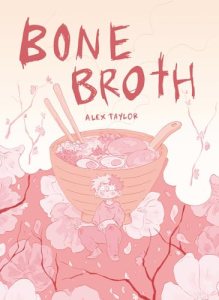 Ash is a trans man who starts working at a hole-in-the-wall ramen restaurant underneath a London railway arch. All he wants is to “pay for hormones, pay rent, [and] make enough to take a cutie on a date.” Bug’s Bones is run by an irascible elderly proprietor but staffed by a young multicultural bunch: Sock, Blue, Honey and Creamy. They quickly show Ash the ropes and within a month he’s turning out perfect bowls. He’s creeped out by the restaurant’s trademark bone broth, though, with its reminders of creatures turning into food. At the end of a drunken staff party, they find Bug lying dead and have to figure out what to do about it.
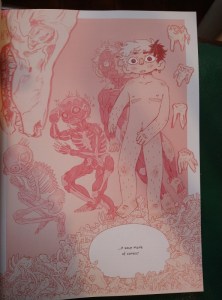 This storyline is in purple, whereas the alternating sequences of flashbacks are in a fleshy pinkish-red. As the two finally meet and meld, we see Ash trying to imitate the masculinity he sees on display while he waits for the surface to match what’s inside. I didn’t love the drawing style – though the full-page tableaux are a lot better than the high-school-sketchbook small panes – so that was an issue for me throughout, but this was an interesting, ghoulish take on the transmasc experience. Taylor won a First Graphic Novel Award.
With thanks to SelfMadeHero for the free copy for review.
And one DNF: Saltwash by Andrew Michael Hurley. (I was warned!) It had no menace or momentum at all…
Any stand-out creepy reading for you this year?
 Bookish Beck = Rebecca Foster. American transplant to England. Freelance proofreader and book reviewer.
 Bookish Beck