This and That (The January Blahs)
The January blahs have well and truly arrived. The last few months of 2023 (December in particular) were too full: I had so much going on that I was always rushing from one thing to the next and worrying I didn’t have the time to adequately appreciate any of it. Now my problem is the opposite: very little to do, work or otherwise; not much on the calendar to look forward to; and the weather and house so cold I struggle to get up each morning and push past the brain fog to settle to any task. As I kept thinking to myself all autumn, there has to be a middle ground between manic busyness and boredom. That’s the head space where I’d like to be living, instead of having to choose between hibernation and having no time to myself.
At least these frigid January days are good for being buried in books. Unusually for me, I’m in the middle of seven doorstoppers, including King by Jonathan Eig (perfect timing as Monday is Martin Luther King Jr. Day), Wellness by Nathan Hill, and Babel by R.F. Kuang (a nominal buddy read with my husband).
Another is Carol Shields’s Collected Short Stories for a buddy rereading project with Marcie of Buried in Print. We’re partway through the first volume, Various Miracles, after a hiccup when we realized my UK edition had a different story order and, in fact, different contents – it must have been released as a best-of. We’ll read one volume per month in January–March. I also plan to join Heaven Ali in reading at least one Margaret Drabble book this year. I have The Waterfall lined up, and her Arnold Bennett biography lurking. Meanwhile, the Read Indies challenge, hosted by Karen and Lizzy in February, will be a great excuse to catch up on some review books from independent publishers.
Literary prize season will be heating up soon. I put all of the Women’s Prize (fiction and nonfiction!) dates on my calendar and I have a running list, in a file on my desktop, of all the novels I’ve come across that would be eligible for this year’s race. I’m currently reading two memoirs from the Nero Book Awards nonfiction shortlist. Last year it looked like the Folio Prize was set to replace the Costa Awards, giving category prizes and choosing an overall winner. But then another coffee chain, Caffè Nero, came along and picked up the mantle.
This year the Folio has been rebranded as The Writers’ Prize, again with three categories, which don’t quite overlap with the Costa/Nero ones. The Writers’ Prize shortlists just came out on Tuesday. I happen to have read one of the poetry nominees (Chan) and one of the fiction (Enright). I’m going to have a go at reading the others that I can source via the library. I’ll even try The Bee Sting given it’s on both the Nero and Writers’ shortlists (ditto the Booker) and I have a newfound tolerance of doorstoppers.
As for my own literary prize involvement, my McKitterick Prize manuscript longlist is due on the 31st. I think I have it finalized. Out of 80 manuscripts, I’ve chosen 5. The first 3 stood out by a mile, but deciding on the other 2 was really tricky. We judges are meeting up online next week.
I’m listening to my second-ever audiobook, an Audible book I was sent as a birthday gift: There Plant Eyes by M. Leona Godin. My routine is to find a relatively mindless data entry task to do and put on a chapter at a time.
There are a handful of authors I follow on Substack to keep up with what they’re doing in between books: Susan Cain, Jean Hannah Edelstein, Catherine Newman, Anne Boyd Rioux, Nell Stevens (who seems to have gone dormant?), Emma Straub and Molly Wizenberg. So far I haven’t gone for the paid option on any of the subscriptions, so sometimes I don’t get to read the whole post, or can only see selected posts. But it’s still so nice to ‘hear’ these women’s voices occasionally, right in my inbox.
My current earworms are from Belle and Sebastian’s Late Developers album, which I was given for Christmas. These lyrics from the title track – saved, refreshingly, for last; it’s a great strategy to end on a peppy song (an uplifting anthem with gospel choir and horn section!) instead of tailing off – feel particularly apt:
Live inside your head
Get out of your bed
Brush the cobwebs off
I feel most awake and alive when I’m on my daily walk by the canal. It’s such a joy to hear the birdsong and see whatever is out there to be seen. The other day there was a red kite zooming up from a field and over the houses, the sun turning his tail into a burnished chestnut. And on the opposite bank, a cuboid rump that turned out to belong to a muntjac deer. Poetry fragments from two of my bedside books resonated with me.
This is the earnest work. Each of us is given
only so many mornings to do it—
to look around and love
the oily fur of our lives,
the hoof and the grass-stained muzzle.
Days I don’t do this
I feel the terror of idleness
like a red thirst.
That is from “The Deer,” from Mary Oliver’s House of Light, and reminds me that it’s always worthwhile to get outside and just look. Even if what you’re looking at doesn’t seem to be extraordinary in any way…
Importance leaves me cold,
as does all the information that is classed as ‘news’.
I like those events that the centre ignores:
small branches falling, the slow decay
of wood into humus, how a puddle’s eye
silts up slowly, till, eventually,
the birds can’t bathe there. I admire the edge;
the sides of roads where the ragwort blooms
low but exotic in the traffic fumes;
the scruffy ponies in a scrubland field
like bits of a jigsaw you can’t complete;
the colour of rubbish in a stagnant leat.
There are rarest enjoyments, for connoisseurs
of blankness, an acquired taste,
once recognised, it’s impossible to shake,
this thirst for the lovely commonplace.
(from “Six Poems on Nothing,” III by Gwyneth Lewis, in Parables & Faxes)
This was basically a placeholder post because who knows when I’ll next finish any books and write about them … probably not until later in the month. But I hope you’ve found at least one interesting nugget!
What ‘lovely commonplace’ things are keeping you going this month?
Bodily Harm and Stone Mattress by Margaret Atwood (#MARM)
It’s my sixth year participating in the annual Margaret Atwood Reading Month (#MARM), hosted by indomitable Canadian blogger Marcie of Buried in Print. In previous years, I’ve read Surfacing and The Edible Woman, The Robber Bride and Moral Disorder, Wilderness Tips, and The Door; and reread The Blind Assassin. Wish a happy belated birthday to MA, who turned 84 earlier this month. As it happens, today is my husband’s 40th birthday and I am tapping away at this in the passenger’s seat of the car as we hurtle through the freezing fog toward Slimbridge for some wintry birdwatching. I spent much of yesterday making his German chocolate cake (delicious but very involved) from a Hummingbird Bakery cookbook.

Bodily Harm (1982)
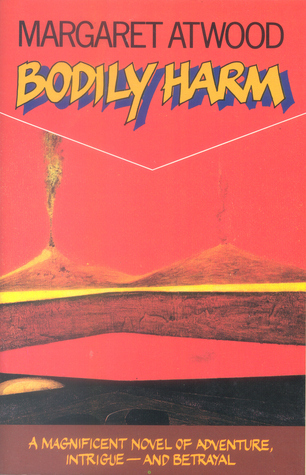 I had literally never heard of her fifth novel before I spotted it on the library catalogue and decided to have a go. The fact that nobody talks about it is evidence, I think, of an overbaked plot and more successful treatment of her trademark themes in other books. Nonetheless, it was perfectly readable and had its highlights. Renata Wilford, “Rennie,” is a journalist for hire from Ontario who has recently had her life turned upside down by breast cancer and the departure of her boyfriend, Jake. She flies to the Caribbean island nation of St. Antoine to write a travel piece, coinciding with the first elections since the British left. It’s a febrile postcolonial setting of shantytowns and shortages. Rennie tries to focus on boat trips, cocktails and beach lounging, but Dr. Minnow, who she met on the plane, is determined to show her the reality of his country – cold truths that include assassination and imprisonment.
Alongside the thriller plot are the more expected literary flashbacks to Rennie’s childhood, her life with Jake, and the cancer surgery and her crush on her surgeon. Her old friend Jocasta is an amusingly punky feminist and a counterpoint to Lora, the fellow Canadian and bad girl Rennie meets in St. Antoine. There are no speech marks in the sections set in the past, and there are some passages of direct monologue from Lora recounting her abusive upbringing. I felt Atwood was stretching to make points about cultural imperialism and violence, whereas the title is more applicable to the physical threats women face from illness and misogyny:
“The body, sinister twin, taking its revenge for whatever crimes the mind was supposed to have committed on it. Nothing had prepared her for her own outrage, the feeling that she’d been betrayed by a close friend. She’d given her body swimming twice a week, forbidden it junk food and cigarette smoke, allowed it a normal amount of sexual release. She’d trusted it. Why then had it turned against her?”
(University library) 
Stone Mattress (2014)
I was tempted to call this my first ever audiobook, but that is not technically true: 11 years ago, we had a David Attenborough book on in the car on the way to Cornwall. However, this definitely felt like a landmark. I’d long meant to catch up on Atwood’s last but one story collection, but my library had withdrawn the physical copy and only had the book on CD. How would I fit it into my life, I wondered? Others have told me they listen to audiobooks while commuting, cooking or cleaning … er, I don’t really do any of those! But I amassed a goodly list of tasks involving my hands but not much of my brain to complete while listening to the CDs through my PC speakers:
• Prepared two clothing recycling parcels (37 socks off to the London Sock Company’s Sock Amnesty programme; 3 shirts and 2 sets of pyjamas to Rapanui’s 100% cotton recycling scheme)
• Mended 13 socks, 4 shirts, 3 gloves, 2 cardigans, a shoulder bag strap, and a purse strap and lining
• Framed a photo for a Christmas gift
• Baked the aforementioned German chocolate cake
• Wrapped my husband’s birthday presents
• Wrote a couple of Christmas cards
 Nonetheless, I found it frustrating that it took so long to get through a story/disc, surely longer than I would have spent reading with my eyes (and so I have only managed 7.5 of 9 stories so far), and it was slightly harder for me to concentrate. It was also disorienting to not have visual cues, such that I had no idea how much of a story was remaining, and sometimes didn’t know how place or character names were spelt. One interesting novelty, though, was the reader voices. There are five different voice actors on this audiobook, three women (including MA herself on the title story) and two men. It is interesting to ponder how their intonation might affect my reaction to a story. For instance, Rob Delaney’s deadpan delivery really makes “The Freeze-Dried Groom,” a witty work of mild horror in which a fraudulent antiques dealer finds an entire wedding, complete with groom, abandoned in a storage unit.
As in a number of Atwood’s later works, recurring themes of ageing and the writer’s craft intertwine. I most enjoyed the opening linked trio of “Alphinland,” “Revenant” and “Dark Lady,” which orbit SFF writer Constance and her one-time lover, macho poet Gavin. The first story has Constance slipping between her fictional world and the real one, in which a winter storm is impending and her husband Ewan has been dead for four days. In “Revenant,” an elderly Gavin holds court as a scholar comes to interview him. Imagine his ire when he learns she is there to question him about Constance for her PhD research. “Dark Lady” brings the three major women from Gavin’s life into a face-off.
Funniest was “I Dream of Zenia with the Bright Red Teeth,” a The Robber Bride mini-sequel in which three ageing women fend off an interfering male with the help of a potential reincarnation of their late friend. I was reminded of the setup of Charlotte Wood’s The Weekend, not least for the presence of an annoying dog. Least engaging has been “The Dead Hand Loves You,” about Jack Dace, the author of an international horror classic who has always resented having to share his profits four ways with his early adulthood housemates because of his promise to catch up on his back rent from his creative earnings. I thought this one would never end. In general, though, this has been classic MA, mixing realism and fantasy in clever and witty ways. And I’m sure it won’t be my last audiobook. I was gifted an Audible book for my birthday by a blind friend, to start with. Now to store up some more busy work… (Public library audiobook) 
The Book of Longings by Sue Monk Kidd (& Audiobook Blog Tour)
~This review contains plot spoilers.~
Sue Monk Kidd’s bold fourth novel started as a what-if question: What if Jesus had a wife? Church tradition has always insisted that he remained unmarried, but she felt that, given the cultural norms of the Middle East at that time, it would have been highly unusual for him not to marry. Musing on the motivation for airbrushing a spouse out of the picture, on the last page of the novel Kidd asks, “Did [early Christians] believe making him celibate rendered him more spiritual?” Or “Was it because women were so often invisible?” Although The Book of Longings retells biblical events, it is chiefly an attempt to illuminate women’s lives in the 1st century CE and to chart the female contribution to sacred literature and spirituality.
Fourteen-year-old Ana is a headstrong young woman with a forthright voice and a determination to choose her own life. Privilege and luck are on her side: her father is the head scribe to Herod Antipas, the ruler of Galilee; and the repulsive widower to whom she’s been betrothed dies, freeing her to marry Jesus, a travelling craftsman who caught her eye at the market. Ana’s aunt, Yaltha from Alexandria, is a major influence in her life. She had a rare chance at education and encourages her niece in her writing. Ana knows several ancient languages and fills every papyrus scroll she can get her hands on with stories of the women in the Bible. Yaltha also gives her an incantation bowl in which to write her deeply held prayers.
If you’re familiar with Kidd’s other work (such as The Secret Life of Bees and Traveling with Pomegranates), you know that she often explores the divine feminine and matriarchal units. Historically, Christianity has a poor record of acknowledging its patriarchal tendencies and redressing the balance. But Kidd imagines that, right at the beginning, Jesus valued women and was open to them having a life beyond domestic chores and childrearing. He involves Ana in his discussions about God and the nature of the Kingdom; they both see and take compassion on people’s suffering; together they are baptized by John the Baptist. And when Ana tells Jesus she doesn’t believe she is meant to be a mother – her mother and aunt took herbal potions and have passed on their contraceptive knowledge to her – he accepts her choice, even though childlessness could bring shame on both of them.

I appreciated this picture of a woman who opts for writing and the spiritual life over motherhood. However, Kidd portrays a whole range of women’s experiences: Jesus’s mother and sister-in-law submit to the drudgery of keeping a household going; Ana’s friend is raped and has her tongue cut out in an attempt to silence her, yet finds new ways to express herself; and another major character is a servant involved in the healing rituals at a temple to Isis. A practicing Jew, Ana finds meaning in other religious traditions rather than dismissing them as idolatry. She also participates in wider intellectual life, such as by reading The Odyssey.
Some descriptions make this novel sound like alternative history. If you’re expecting Ana to save the day and change the course of history, you will be disappointed. Ana is simply an observer of the events documented in the Bible. While she recounts the inspirations for some parables and healing incidents, during two years in exile with her aunt she only hears secondhand accounts of Jesus’s ministry. Her brother, a Zealot, disagrees with Jesus on how to usher in the Kingdom of God. By the time Ana returns to Jerusalem, the events leading to the crucifixion have already been set in motion; she can only bear witness. For her, life will continue after Jesus’s death, in a women-led spiritual community. From avoiding motherhood to choosing a monastic-type life, Ana has a lot of freedom. Some readers may be skeptical about how realistic this life course is, but the key, I think, is to consider Ana as an outlier.
Kidd has made wise decisions here: for the most part she makes her story line parallel or tangential to the biblical record, rather than repeating material many will find overly familiar. She takes Jewish teaching as a starting point but builds a picture of a more all-encompassing spirituality drawn from multiple traditions. Her Jesus is recognizable and deeply human; Ana calls him “a peacemaker and a provocateur in equal measures” and remembers him telling her what it was like growing up with the stigma of his illegitimate birth. The novel is rooted in historical detail but the research into the time and place never takes over. Engrossing and convincing, this is a story of women’s intuition and yearning, and of the parts of history that often get overlooked. It wouldn’t be out of place on next year’s Women’s Prize longlist.
My rating:
The Book of Longings was released on Tuesday the 21st. My thanks to Tinder Press for the proof copy for review.
I’m the last stop on a small blog tour for the audiobook release: if you’re interested in listening to the first hour of The Book of Longings, visit the blogs below and follow the links. Each one is hosting a 10-minute excerpt. The final one is available here.
The Art of Mindful Reading by Ella Berthoud
Ella Berthoud is one of the bibliotherapists at the School of Life in London and co-author of The Novel Cure. (I wrote about my bibliotherapy session with her in this post.) For her contribution to a Leaping Hare Press series on mindfulness – whose titles range from The Mindful Art of Wild Swimming to Mindfulness and the Journey of Bereavement – she’s thought deeply about how reading can be an active, deliberate practice rather than a time of passive receiving or entertainment. Through handy exercises and quirky tips she encourages readers to take stock of how they read and to become more aware of each word on the page.

To start with, a close reading exercise using a passage from Alice in Wonderland invites you to find out whether you’re an auditory, visual or kinesthetic reader. I learned that I’m a cross between auditory and visual: I hear every word aloud in my head, but I also picture the scenes, usually unfolding in black and white in settings that are familiar to me (my childhood best friend’s home used to be a common backdrop, for instance). The book then discusses ways to incorporate reading into daily life, from breakfast to bedtime and from a favorite chair to the crook of a tree, and how to combine it with other activities. I will certainly be trying out the reading yoga poses!
As I discovered at my bibliotherapy appointment, Ella is passionate about getting people reading in as many different ways as possible. That can include listening to audiobooks, reading aloud with a partner, or reading silently but in company with other people. She also surveys the many ways there are of sharing an enthusiasm for books nowadays, such as Book Crossing, book clubs and Little Free Libraries.

Although she acknowledges the place of e-readers and smartphones, Ella generally describes reading as a tactile experience, and insists on the importance of keeping a print reading journal as well as a ‘Golden Treasury’ of favorite passages, two strategies that will combat the tendency to forget a book as soon as you’ve finished it.
Some of her suggestions of what to do with physical books are beyond the pale for me – such as using a knife to slice a daunting doorstopper into more manageable chunks, or beating up a much-hyped book to “rob [it] of its glamour and gloss, and bring it down from its pedestal to a more humble state, a place where you can read it in comfort” – but there are ideas here to suit every kind of reader. Take a quick break between novels and use this book to think about how you read and in what ways you could improve or intensify the experience.
Favorite passages:
“As a bibliotherapist, I believe that every novel you read shapes the person that you are, speaking to you on a deep, unconscious level, and altering your very nature with the ideas that it shows you.”
“I often find that people imagine reading fiction is a self-indulgent thing to do, and that they ought to be doing something else. Much research has been conducted into the benefits of reading fiction, which deepens your empathy and emotional intelligence, helps with making important life decisions and allows your brain to rest. Research has shown that reading provides as much relaxation as meditation”
My rating: 
With thanks to Leaping Hare Press for the free copy for review.
My Bibliotherapy Appointment at the School of Life
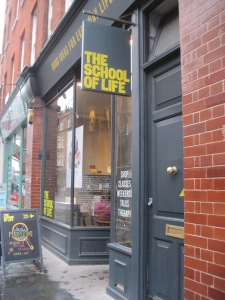 I’ve been interested in bibliotherapy for years, and I love The Novel Cure (see my review), the learned and playful advice book from Ella Berthoud and Susan Elderkin, two of the bibliotherapists at Alain de Botton’s London School of Life. Earlier this month I had the tremendous opportunity to have a personalized bibliotherapy appointment with Ella Berthoud at the School of Life. She’d put out a call on Twitter for volunteers to come for a free session (usually £100) to be observed by a journalist from La Repubblica writing about bibliotherapy – the translation of The Novel Cure has sold remarkably well in Italy. The feature will be part of a special color supplement in February, and I look forward to seeing if my story makes the cut! That is, if I can decipher any of the Italian.
Now, you might not think I’m the kind of person who needs a bibliotherapy assessment since I already find 300+ books per year I want to read; I worried that too, and felt a little bit guilty, but in the end I couldn’t pass up the chance, and Ella was happy to have me.

I took my copy of The Novel Cure along for Ella to sign.
Before my appointment I’d been asked to complete a two-page questionnaire about my reading habits and likes/dislikes, along with what’s going on in my life in general (the ‘therapy’ aspect is real). Once we were set up in the basement therapy room with hot drinks, Ella asked me more about how I read. I’d told her my reading was about two-thirds print books and one-third e-books. Had I ever tried audiobooks or reading aloud, she asked? The answer to both of those is no, I’m afraid. There’s no obvious place for audiobooks in my life because I work from home. However, as I’d mentioned I haven’t been able to get through a Dickens novel in five years, Ella suggested I try listening to one – abridged, it can be more like eight hours long instead of 42, and you still get a terrific story. She also highly recommended New Yorker and Guardian podcasts based around short stories and discussion.
 For reading aloud with my husband, Ella prescribed one short story per evening sitting – a way for me to get through short story collections, which I sometimes struggle to finish, and a different way to engage with books. We also talked about the value of rereading childhood favorites such as Watership Down and Little Women, which I haven’t gone back to since I was nine and 12, respectively. In this anniversary year, Little Women would be the ideal book to reread (and the new television adaptation is pretty good too, Ella thinks).
One other reading habit Ella is adamant about is keeping a physical reading journal in which you record the title of each book you read, where you read it, and about a paragraph of thoughts about it. It’s not meant to be a comprehensive response to every book; more like an aide-mémoire that you can get off the shelf in years to come to remind yourself of what you thought about a book. Specifically, Ella thinks writing down the location of your reading (e.g., on a train to Scotland) allows you to put yourself back in the moment. I tend to note where I bought a book, but not necessarily where I read it – for that, I would probably have to cross-reference my annual book list against a calendar. Since 2010 I’ve kept my book lists and responses in computer files, and I also keep full records via Goodreads, but I can see why having a physical journal would be a good back-up as well as a more pleasant representation of my reading. I’ll think about starting one.
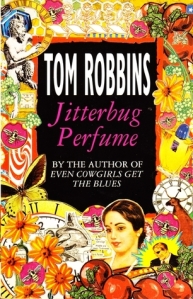 Various books came up over the course of our conversation: Abraham Verghese’s Cutting for Stone [appearance in The Novel Cure: The Ten Best Novels to Cure the Xenophobic, but Ella brought it up because of the medical theme], Tom Robbins’ Jitterbug Perfume [cure: ageing, horror of], and Julia Cameron’s The Artist’s Way, a nonfiction guide to thinking creatively about your life, chiefly through 20-minute automatic writing exercises every morning. We agreed that it’s impossible to dismiss a whole genre, even if I do find myself weary of certain trends, like dystopian fiction (I introduced Ella to Claire Vaye Watkins’ Gold Fame Citrus, one of my favorite recent examples).
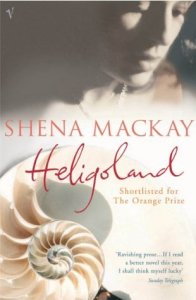 I came away with two instant prescriptions: Heligoland by Shena Mackay [cure: moving house], about a shell-shaped island house that used to be the headquarters of a cult. It’s a perfect short book, Ella tells me, and will help dose my feelings of rootlessness after moving more than 10 times in the last 10 years. She also prescribed Family Matters by Rohinton Mistry [cure: ageing parents] and an eventual reread of Jonathan Franzen’s The Corrections. As we discussed various other issues, such as my uncertainty about having children, Ella said she could think of 20 or more books to recommend me. “That’s a good thing, right?!” I asked.


Before I left, I asked Ella if she would ever prescribe nonfiction. She said they have been known to do so, usually if it’s written in a literary style (e.g. Robert Macfarlane and Alain de Botton). We chatted about medical memoirs and reading with the seasons for a little while, and then I thanked her and headed on my way. I walked around the corner to Skoob Books but, alas, didn’t find any of the books Ella had mentioned during our session. On the way back to the Tube station, though, I stopped at Judd Books and bought several secondhand and remaindered goodies, including these two:


(Imagine my surprise when I spotted The Year of the Hare in The Novel Cure under midlife crisis! Age seemed to be the theme of the day.)
 As soon as I got back from London I ordered secondhand copies of Heligoland, Jitterbug Perfume and The Artist’s Way, and borrowed Family Matters from the public library the next day. Within a few days four further book prescriptions arrived for me by e-mail. Ella did say that her job is made harder when her clients read a lot, so kudos to her for prescribing books I’d not read – with the one exception of Sebastian Barry’s Days Without End, which I love.
I’ve put in another order for Maggie and Me, the memoir by Damian Barr, plus (for reading aloud) Sum: Forty Tales from the Afterlives by David Eagleman and the collected short stories of Saki. I’m also keen to find The Victorian Chaise-Longue by Marghanita Laski, Ella’s final prescription, but as the Persephone Books reprint is pricey at the moment I may hold off and hope to chance upon a secondhand copy later in the year. Ella has been very generous with her recommendations, especially considering that I didn’t pay a penny. I certainly have plenty to be getting on with for now! I’ll report back later on in the year when I’ve had the chance to read some of these prescriptions.

The prescribed books I have gotten hold of so far.
 Bookish Beck = Rebecca Foster. American transplant to England. Freelance proofreader and book reviewer.
 Bookish Beck