Best Fiction of 2017, Plus Some Other Favorite Reads
Below I’ve chosen my top nine fiction releases from 2017 (seven by women!), followed by the backlist titles I loved the most this year. Many of these books have already featured on my blog in some way over the course of the year. To keep it simple for myself as well as for all of you who are figuring out whether you’re interested in these books or not, as with my nonfiction selections I’m mostly limiting myself to two sentences per title: the first is a potted summary; the second tells you why you should read it. I also link to any full reviews.
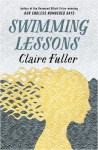 Swimming Lessons by Claire Fuller: This atmospheric novel reminiscent of Iris Murdoch is no happy family story; it’s full of betrayals and sadness, of failures to connect and communicate, yet it’s beautifully written, with all its scenes and dialogue just right. I recently caught up on Fuller’s acclaimed 2015 debut, Our Endless Numbered Days, and collectively I’m so impressed with her work, specifically the elegant way she alternates between time periods to gradually reveal the extent of family secrets and the faultiness of memory.
 The Lucky Ones by Julianne Pachico: You may remember that our shadow panel chose this as our winner for the Sunday Times Young Writer of the Year award: we were blown away by this linked short story collection set in a drug-fueled Colombia in which violence and its aftermath are never far away. For the originality of the setup and the sheer excellence of the writing, this can’t be topped.
 The Velveteen Daughter by Laurel Davis Huber: The name Margery Williams Bianco might not seem familiar, but chances are you remember her classic children’s book, The Velveteen Rabbit. This is about Margery and her daughter, Pamela Bianco, a painter and child prodigy troubled by mental illness, and the themes of creativity, mental health and motherhood are nestled in a highly visual debut novel full of cameos by everyone from Pablo Picasso to Eugene O’Neill.
 The Animators by Kayla Rae Whitaker: The cartooning world and the Kentucky–New York City dichotomy together feel like a brand new setting for a literary tragicomedy. Though it seems lighthearted, there’s a lot of meat to this story of the long friendship between two female animators as Whitaker contrasts the women’s public and private personas and imagines their professional legacy.
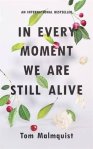 In Every Moment We Are Still Alive by Tom Malmquist: While it’s being marketed as a novel, this reads more like a stylized memoir: Similar to Karl Ove Knausgaard’s books, it features the author as the central character and narrator, and the story of grief it tells is a highly personal one. Malmquist does an extraordinary job of depicting his protagonist’s bewilderment at the sudden loss of his partner and his new life as a single father.
 How to Be Human by Paula Cocozza: As much as this is about a summer of enchantment and literal brushes with urban wildlife, it’s also about a woman’s life: loneliness, the patterns we get stuck in, and those unlooked-for experiences that might just liberate us. There’s something gently magical about the way the perspective occasionally shifts to give a fox’s backstory and impressions as a neologism-rich stream.
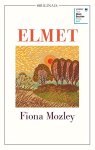 Elmet by Fiona Mozley: The dark horse on this past year’s Man Booker Prize longlist, this is a twisted fable about the clash of the land-owning and serf classes in contemporary England. It’s a gorgeous, timeless tale balanced between lush nature writing and Hardyesque pessimism.
-
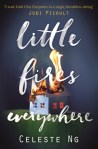 Little Fires Everywhere by Celeste Ng: A multi-layered story about many facets of motherhood: adoption, surrogacy, pregnancy, abortion; estrangement, irritation, longing and pride. Each and every character earns our sympathy here – a real triumph of characterization, housed in a tightly plotted and beautifully written novel you’ll race through.
And my fiction book of the year was:
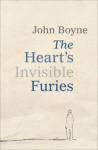 The Heart’s Invisible Furies by John Boyne: A wonderful seam of humor tempers the awfulness of much of what befalls Cyril Avery – born in Dublin in 1945 – for whom homosexuality seems a terrible curse. It’s an alternately heartbreaking and heartening portrait of a life lived in defiance of intolerance and tragedy.
My poetry read of the year was:
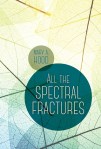 All the Spectral Fractures: New and Selected Poems, Mary A. Hood: There is so much substance and variety to this poetry collection spanning the whole of Hood’s career. A professor emerita of microbiology at the University of West Florida and a former poet laureate of Pensacola, Florida, she takes inspiration from the ordinary folk of the state, the world of academic scientists, flora and fauna, and the minutiae of everyday life.
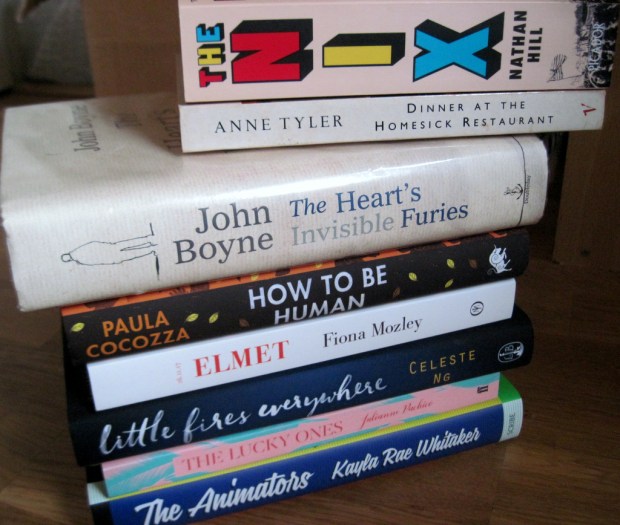
The year’s best books that I happen to have around in print.
And here’s a quick run-through of the seven best backlist titles I read this year:
-
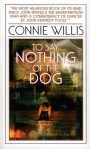 To Say Nothing of the Dog by Connie Willis: Time travel would normally be a turnoff for me, but Willis manages it perfectly in this uproarious blend of science fiction and pitch-perfect Victorian pastiche (boating, séances and sentimentality, oh my!).
-
 Homegoing by Yaa Gyasi: Brings together so many facets of the African and African-American experience; full of clear-eyed observations about the ongoing role race plays in American life.
-
 Days Without End by Sebastian Barry: Contains the most matter-of-fact consideration of same-sex relationships I’ve ever encountered in historical fiction. Heart-breaking, life-affirming, laugh-out-loud: those may be clichés, but it’s all these things and more.
-
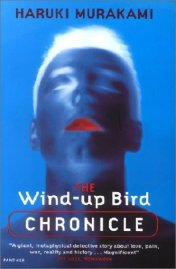
 The Wind-Up Bird Chronicle by Haruki Murakami: Mesmerizing and bizarre, but in the best possible way: it questions our comfort in the everyday by contorting familiar elements like dreams do. I’m a definite Murakami convert.
-
 The Nix by Nathan Hill: A rich story about family curses and failure, and how to make amends for a life full of mistakes. Hill is a funny and inventive writer.
-
 Signs for Lost Children by Sarah Moss: Simply superb in the way it juxtaposes England and Japan in the 1880s and comments on mental illness, the place of women, and the difficulty of navigating a marriage whether the partners are thousands of miles apart or in the same room.
My overall most memorable fiction read of the year, to my great surprise, was:
-
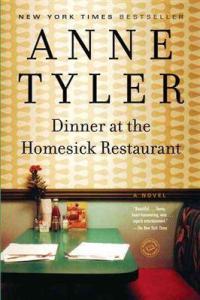 Dinner at the Homesick Restaurant by Anne Tyler: I’ve been lukewarm on Anne Tyler’s novels before – this is my sixth from her – but this instantly leapt onto my list of absolute favorite books. Its chapters are like perfectly crafted short stories focusing on different members of the Tull family. These vignettes masterfully convey the common joys and tragedies of a fractured family’s life. After Beck Tull leaves with little warning, Pearl must raise Cody, Ezra and Jenny on her own and struggle to keep her anger in check. Cody is a vicious prankster who always has to get the better of good-natured Ezra; Jenny longs for love but keeps making bad choices. Despite their flaws, I adored these characters and yearned for them to sit down, even just the once, to an uninterrupted family dinner of comfort food.
What were some of your top fiction reads of the year?
Tomorrow I’ll be naming some runners-up and listing a few other superlatives.
Library Checkout: December 2017
Posting early this month so that I’m not a nuisance on Christmas Day…
Most of the usual suspects from last month are still hanging around waiting to be read, though I also got (small!) fresh stacks out from both the public library and the university library.
LIBRARY BOOKS READ
- Our Endless Numbered Days by Claire Fuller

CURRENTLY READING
- Herzog by Saul Bellow
- The Heart’s Invisible Furies by John Boyne
- The Man Who Mistook His Wife for a Hat by Oliver Sacks
- Spirals in Time: The Secret Life and Curious Afterlife of Seashells by Helen Scales
CHECKED OUT, TO BE READ
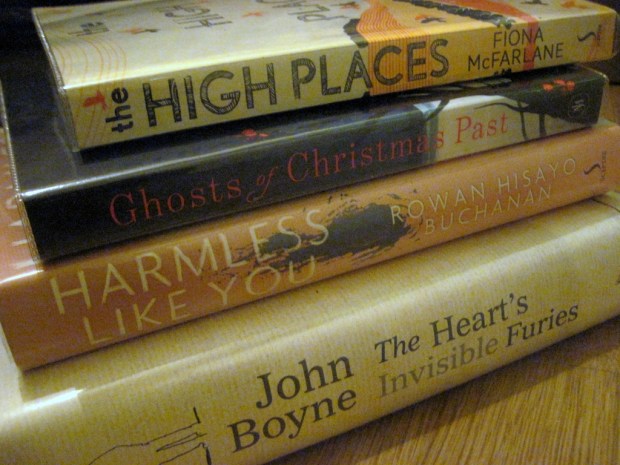
Public library

University library
Still out from the university library:
- This Cold Heaven: Seven Seasons in Greenland by Gretel Ehrlich
- To the Is-land: An Autobiography by Janet Frame
- Vita Nova [poetry] by Louise Glück
- The Cabaret of Plants: Botany and the Imagination by Richard Mabey
- There Is an Anger that Moves [poetry] by Kei Miller
- And When Did You Last See Your Father? by Blake Morrison
- The Catcher in the Rye by J.D. Salinger
- The Magnificent Spinster by May Sarton
RETURNED UNFINISHED
- The Cat Who Stayed for Christmas by Cleveland Amory
- Howl, Kaddish and Other Poems by Allen Ginsberg
RETURNED UNREAD
- Fresh Complaint: Stories by Jeffrey Eugenides – I’ve read all of his novels, so felt that I should at least try his short stories, but a glance at the table of contents made my heart sink. All of the stories are at least 20 pages long, and one is titled “The Oracular Vulva” (?!). I still have this on my Kindle, so perhaps I’ll try it another time.
What have you been reading from your local libraries? Does anything appeal from my stacks?
Merry Christmas to all!
The Best Books from the First Half of 2017
Believe it or not, but the year is almost half over already. A look back at the “Best of 2017” shelf I’ve started on Goodreads has revealed the eight releases that have stood out most clearly for me so far. All but one of these I have already featured on the blog in some way; links are provided. I’ve also included short excerpts from my reviews to show what makes each of these books so special.
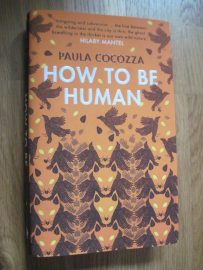 How to Be Human by Paula Cocozza: There’s something gently magical about the way the perspective occasionally shifts to give a fox’s backstory and impressions as a neologism-rich stream. As much as this is about a summer of enchantment and literal brushes with urban wildlife, it’s also about a woman’s life: loneliness, the patterns we get stuck in, and those unlooked-for experiences that might just liberate us. Cocozza sets up such intriguing contradictions between the domestic and the savage, the humdrum and the unpredictable.
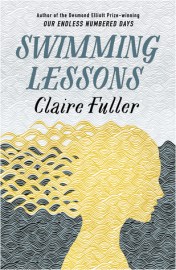 Swimming Lessons by Claire Fuller: This isn’t a happy family story. It’s full of betrayals and sadness, of failures to connect and communicate. Yet it’s beautifully written, with all its scenes and dialogue just right, and it’s pulsing with emotion. One theme is how there can be different interpretations of the same events even within a small family. The novel is particularly strong on atmosphere, reminding me of Iris Murdoch’s The Sea, The Sea and Diane Setterfield’s The Thirteenth Tale. Fuller also manages her complex structure very well.
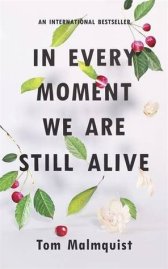 In Every Moment We Are Still Alive by Tom Malmquist: Malmquist does an extraordinary job of depicting his protagonist’s bewilderment at the sudden loss of his partner and his new life as a single father. While it’s being marketed as a novel, this reads more like a stylized memoir. Similar to Karl Ove Knausgaard’s books, it features the author as the central character and narrator, and the story of grief it tells is a highly personal one. This is a book I fully expect to see on next year’s Wellcome Book Prize shortlist.
 My Life with Bob by Pamela Paul: I’ve found a new favorite bibliomemoir. Whether she was hoarding castoffs from her bookstore job, obsessing about ticking off everything in the Norton Anthology, despairing that she’d run out of reading material in a remote yurt in China, or fretting that her new husband took a fundamentally different approach to the works of Thomas Mann, Paul (editor of the New York Times Book Review) always looks beyond the books themselves to ask what they say about her. Just the sort of book I wish I had written.
 My Jewish Year by Abigail Pogrebin: This bighearted, open-minded book strikes me as a perfect model for how any person of faith should engage with their tradition: not just offering lip service and grudgingly showing up to a few services a year, but knowing what you believe and practice, and why. From September 2014 to September 2015, Pogrebin celebrated all the holidays in the Jewish calendar. I was consistently impressed by how she draws thematic connections and locates the resonance of religious ritual in her daily life.
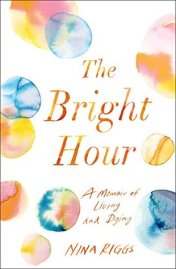 The Bright Hour by Nina Riggs: Beautiful prose enhances this literary and philosophical approach to terminal cancer. Riggs was a great-great-great-granddaughter of Ralph Waldo Emerson, and she quotes from her ancestor’s essays as well as from Michel de Montaigne’s philosophy of life to put things in perspective. She’s an expert at capturing the moments that make life alternately euphoric and unbearable – sometimes both at once. A wonderful book, so wry and honest, with a voice that reminds me of Anne Lamott and Elizabeth McCracken.
 Fragile Lives by Stephen Westaby: This is a vivid, compassionate set of stories culled from the author’s long career in heart surgery. Westaby conveys a keen sense of the adrenaline rush a surgeon gets while operating with the Grim Reaper looking on. I am not a little envious of all that he has achieved: not just saving the occasional life despite his high-mortality field – as if that weren’t enough – but also pioneering various artificial heart solutions and a tracheal bypass tube that’s named after him.
 The Animators by Kayla Rae Whitaker: Though it seems lighthearted on the surface, there’s a lot of meat to this story of the long friendship between two female animators. The cartooning world and the Kentucky–New York City dichotomy together feel like a brand new setting for a literary tragicomedy. I appreciated how Whitaker contrasts the women’s public and private personas and imagines their professional legacy. Plus I love a good road trip narrative, and this novel has two.
And here’s five more 4.5- or 5-star books that I read this year but were not published in 2017:
Days Without End by Sebastian Barry
Homegoing by Yaa Gyasi
When Breath Becomes Air by Paul Kalanithi
The Wind-Up Bird Chronicle by Haruki Murakami
To Say Nothing of the Dog by Connie Willis
What are some of the best books you’ve read so far this year?
What 2017 releases do I need to catch up on right away?
Marginalia, Bookmarks, Etc. Found in Books
 In two of the books I currently have on the go, items found in books are a key element. First there’s Swimming Lessons in Claire Fuller, in which one strand of the narrative is told via a series of letters Ingrid hid in various thematically relevant books from her husband’s overflowing collection before she disappeared 12 years ago.
I’ve also been skimming Reading Allowed, novelist Chris Paling’s book of mildly amusing anecdotes from his time working in a public library. As little interludes he records the items he’s found being used as bookmarks in library volumes: a postcard, a shopping list, a meal plan, a CV, and so on.
In my years working in bookshops and libraries I found lots of proper bookmarks left behind in books; this photo shows the ones I’ve kept (others I’ve given away, recycled or donated to the library basket).

This doesn’t account for all the train tickets, receipts, newspaper clippings, etc. that were serving as makeshift bookmarks. The strangest thing I think I ever found in a book was an old-fashioned faux pearl-topped hatpin marking a place in a copy of Elizabeth Barrett Browning’s collected poems.
And then there are the written messages I’ve found in books: other people’s bookplates (I especially like the one that appears in the front of each volume of my 1919 Chapman & Hall set of the complete works of Dickens – such an enviable reward for good attendance!);


a heartfelt message of friendship in the copy of May Sarton’s The Fur Person I got free from Book Thing of Baltimore;

a young lady’s thoughts strewn across the selected poems of Ted Hughes;

and a dead-simple recipe for a tropical fruit drink pencilled on the back cover of Patricia Volk’s memoir, Stuffed.

For me, the random objects and messages you might find are all part of the fun of buying secondhand books.
 Bookish Beck = Rebecca Foster. American transplant to England. Freelance proofreader and book reviewer.
 Bookish Beck