Landmark Books in My Life, Part II
This is a follow-up to a piece I wrote in September about the books that shaped my early life. I think of my twenties in general, and 2005–7 in particular, as a golden period in my reading life, when I started to develop the tastes that still guide my book choices today.

 I was an English and Religion major and studied abroad in England for my junior year in 2003–4. As I was getting ready to go overseas for that first time in the summer of 2003, Susan Allen Toth’s trilogy of travel memoirs, starting with My Love Affair with England, and Paul Collins’s Sixpence House whetted my appetite for travel in Great Britain and, in the case of the latter, made me determined to get to Hay-on-Wye, Wales as soon as I could. (I first visited in May 2004 and have gone back several times since.)
 One of the most memorable books I read during my year abroad was Robert Elsmere by Mrs. Humphry Ward. It’s almost forgotten nowadays, but was a bestseller at its release in 1888. The story of a minister’s loss of faith and how it affects his marriage, it’s a stand-in for a whole faith-and-doubt subgenre that was wildly popular at the time. The novel is long, brooding and overwritten—in many ways it exemplifies the worst characteristics of the Victorian novel—but it resonated with my own crisis of faith and planted the seed for my Master’s thesis on women’s faith and doubt narratives in Victorian fiction.
 Part of working through that ongoing crisis of faith was seeing other religions more objectively and being open to the similarities between them. I found Karen Armstrong’s comparative study of the Abrahamic faiths (Christianity, Judaism and Islam), A History of God, absolutely riveting when I read it in my senior year of college. It’s a classic.
 My academic conference career began and ended with one I attended the summer after college graduation. I adapted a paper I’d written about D.H. Lawrence’s new moral framework for sexuality and was accepted to present it at the D.H. Lawrence Society of North America’s annual conference in 2005, which that year was held in Santa Fe, New Mexico. Thankfully, I’ve mostly blanked out my actual paper presentation as part of a panel of three young people, but the trip as a whole was wonderful—it was my first time in the southwest, and the conference included great field trips to Lawrence’s ranch at Taos and the Georgia O’Keeffe museum. I prepared for the experience by reading David Lodge’s Small World, a paperback I’d plucked from the shelves of the bookstore where I worked part-time during my senior year. “A satire about the academic conference circuit? I’m there!” I thought, and since then David Lodge has become one of my two or three favorite authors.
 It wasn’t until I returned to England to get my Master’s in 2005–6 that I really reclaimed reading as a leisure activity. The last couple years of college had been so busy I’d barely been able to cope with my assigned reading; I remember never making it very far in any paperback I picked up from the public library (like Charles Frazier’s Cold Mountain, which I’ve never gone back to). But the long, lonely evenings in Leeds had to be filled somehow, and the upstairs stacks of the magnificent Brotherton Library had plenty to offer in the way of literary fiction. In that year I made my way through loads of books by A.S. Byatt and Julian Barnes, as well as David Lodge (my top 3, probably). Possession made the biggest impression, but I love pretty much all of Byatt’s work. If pressed to name my favorite author, it would be her.
 In the partial year between finishing my Master’s and getting married back in England, I lived at home with my parents and worked part-time at a community college library. My evening shifts were often dead quiet, so I got plenty of reading done behind the circulation desk. One book I selected at random from the public library shelves, Abigail Thomas’s A Three Dog Life, had a big impact on me in 2007. The memoir tells of her husband’s traumatic brain injury and the aftermath. Thomas writes in a fragmentary, episodic format that felt fresh and jolted me. I wasn’t entirely sure I liked the style, but it sure was intriguing.

 I picked up Meredith Hall’s Without a Map around the same time, which cemented my interest in women’s life stories. Memoirs have been among my favorite genres ever since. Mark Doty’s exquisite Heaven’s Coast, which I read the following year, kickstarted my particular fascination with bereavement memoirs. Also, I think it was through following up his memoirs with his collections of poems that I first got into contemporary poetry.
In recent years I’ve tried to branch out (e.g. into graphic novels and literature in translation), but contemporary literary fiction, historical fiction, memoirs, theology and travel books remain my preferred genres. Most of these loves I can trace back to my early twenties.
What books meant the most to you in young adulthood?
What I’ve Been Reading Recently
My own paper books! Really! Not exclusively; I still find Kindle books easiest to read during lunches and on the cross trainer. Still, I’m pleased with the progress I’ve made towards my summer resolution of reading my own books. In August I’ll have to get to grips with some of those doorstoppers I’ve been meaning to pick up. Below I give brief write-ups of what I’ve gotten through lately and recall how these books came into my collection to start with.
 June by Gerbrand Bakker: It seemed to make sense to read this during the month of June. I loved Bakker’s The Twin, but struggled to connect with this one. The first chapter and the last three (starting with “June”) are the best – I felt that the core 1969 material about the Queen’s visit and the family’s tragedy would make for a great short story or novella, but the bulk of the novel is languid contemporary moping about the ongoing effects on the Kaans. It took me forever to figure out who all the characters were and keep them straight (brothers Jan and Johan, for instance), and the way the perspective drifts from one to another doesn’t help with that. Matriarch Anna, with her habit of going up and lying in the hayloft when life gets to be too much for her, was my favorite character.
[Bought in a local charity shop for 20 pence.] 
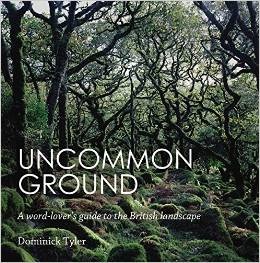 Uncommon Ground by Dominick Tyler: This is like a photographic companion to Robert Macfarlane’s Landmarks. Journeying around Britain, Tyler illustrates different geographical features, many of them known by archaic or folksy names. Some are just record shots, while others are true works of art. I especially liked the more whimsical terms: “Monkey’s birthday” for simultaneous rain and sunshine, and “Witches’ knickers” for plastic scraps waving from a tree or fence.
[I won a copy in a Guardian giveaway.] 
 Wave by Sonali Deraniyagala: The author was vacationing with her family at a national park on the southeast coast of her native Sri Lanka in December 2004 when the Boxing Day tsunami hit, killing her parents, husband, and two sons. Job-like, Deraniyagala gives shape to her grief and lovingly remembers a family life now gone forever as she tours her childhood home in Colombo and her London house. It’s not until over six years later that she feels “I can rest … with the impossible truth of my loss, which I have to compress often and misshape, just so I can bear it—so I can cook or teach or floss my teeth.” This is a wonderful tribute to everyone she lost. Her husband and sons, especially, come through clearly as individuals you feel that you know. Although it’s not a focus of the memoir, Sri Lanka’s natural beauty and food culture struck me – this would be an appealing place to visit.
[Borrowed from a friend in America.]
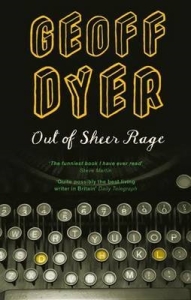 Out of Sheer Rage by Geoff Dyer: This is a book about D.H. Lawrence in the same way that Charlie Kaufman’s Adaptation is a film of The Orchid Thief. In other words, it’s not particularly about Lawrence at all; it’s just as much, if not more, about Geoff Dyer – his laziness, his procrastination, his curmudgeonly attitude, his futile search for the perfect places to read Lawrence’s works and write about Lawrence, his failure to feel the proper reverence at Lawrence sites, and so on. While I can certainly sympathize with Dyer’s wry comments about his work habits (“I hate doing anything in life that requires an effort”; “better reading than writing”; “all things in which I am interested … [are] a source of stress and anxiety”), I liked best the parts of the book where he actually writes about Lawrence. (Expanded review on Goodreads.)
[Bought – I think in the Hay Cinema Bookshop – for £2.99.] 
 The Middlesteins by Jami Attenberg: I was surprised how much I loved this. On the face of it it’s a fairly conventional dysfunctional family novel à la Jonathan Franzen, set among a Jewish family in Chicago. The main drama is provided by the mother, Edie, who seems to be slowly eating herself to death: she gorges herself on snacks and fast food several times a day even though she’s facing a third major surgery for diabetes. Her husband, Richard, ditched her in her time of need, leaving their adult children to pick up the slack. Every character is fully rounded (pun intended?) and the family interactions feel perfectly true to life. This isn’t really an ‘issues’ book, yet it deals with obesity in a much more subtle and compassionate way than Lionel Shriver’s Big Brother. (Expanded review on Goodreads.)
[In last year’s Christmas stocking, from the Waynesboro, Pennsylvania Dollar Tree.]
 The Republic of Love by Carol Shields: Not one of my favorites from Shields, but still enjoyable and reminiscent of Anne Tyler’s The Accidental Tourist. Her chapters alternate between the perspectives of radio disc jockey Tom Avery and folklorist Fay McLeod, two Winnipeg lonely hearts who each have their share of broken relationships behind them. It’s clear they’re going to meet and fall in love, but Shields is careful to interrogate myths of love at first sight and happily ever after. I especially liked the surprising interconnectedness of everyone in Winnipeg, the subplot about Fay’s parents’ marriage, and the habit of recording minor characters’ monologues. My major points of criticism would be that Tom sometimes feels like a caricature and I wasn’t entirely sure what the mermaid material was meant to achieve. (Expanded review on Goodreads.)
[In poor condition, so free from the Oxfam bookshop where I volunteered in Romsey in 2007–8.]
 Not That Kind of Girl: A Memoir by Carlene Bauer: Lena Dunham forever rendered this memoir obscure by stealing the title. I read it because I adored Bauer’s debut novel, Frances and Bernard. This could accurately be described as a spiritual memoir, and I think will probably appeal most to readers who grew up in a restrictive religious setting. A bookish, introspective adolescent, Bauer was troubled by how her church and Christian school denied the validity of secular art, including the indie rock she loved and the literature she lost herself in. All the same, Christian notions of purity and purpose stuck with her throughout her college days in Baltimore and then when she was trying to make it in publishing in New York City. This book resonated with my experience in many ways. What Bauer does best is to capture a fleeting mindset and its evolution into a broader way of thinking. (Expanded review on Goodreads.)
[Bought cheap on Amazon USA to qualify for super saver shipping.] 
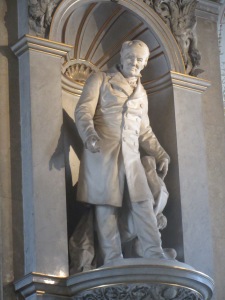
A statue of Alexander von Humboldt, in the grand stairwell of the Natural History Museum in Vienna.
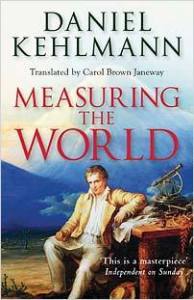
Measuring the World by Daniel Kehlmann: “Whenever things were frightening, it was a good idea to measure them.” This is a delightful historical picaresque about two late-eighteenth-century German scientists: Alexander von Humboldt, who valiantly explored South America and the Russian steppes, and Carl Friedrich Gauss, a misanthropic mathematician whose true genius wasn’t fully realized in his surveying and astronomical work. Both difficult in their own way, the men represent different models for how to do science: an adventurous one who goes on journeys of discovery, and one who stays at home looking at what’s right under his nose. I especially loved Gauss’s hot-air balloon ride and Humboldt’s attempt to summit a mountain. The lack of speech marks somehow adds to the dry wit.
[Purchased via a donation to the Book-Cycle of Exeter.]
What have you been reading recently?
Bloxham Festival of Faith and Literature
Bloxham Festival of Faith and Literature, “a literary festival with a theological slant,” has been running since 2011, but this past weekend marked the first time I managed to attend a few Saturday sessions. It was held at Oxfordshire’s very posh Bloxham School (sample course schedule: Mandarin, riding, and Shakespeare on Film). The theme for this year being “All the World’s a Stage,” all the events were given Shakespeare lines as titles. Hey, even the free chocolate bars from the Meaningful Chocolate Company were tailored to the Shakespeare theme!
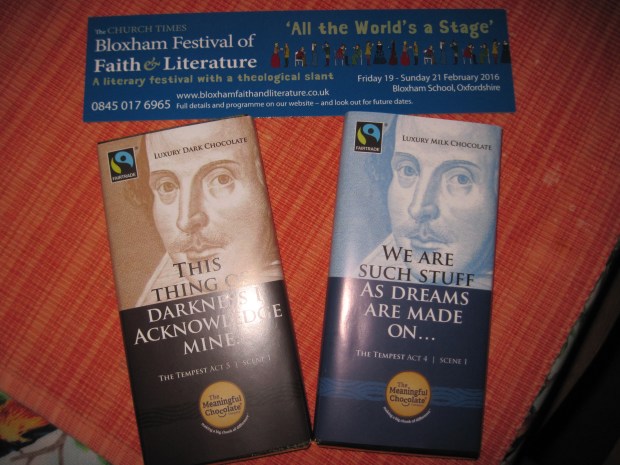
The morning began with an interview with Sarah Perry. Now, I have to admit that I didn’t really get on with her first novel, After Me Comes the Flood. Still, I was intrigued by how she incorporates biblical themes and her religious background in her fiction, so I thought I’d give it a go. Perry herself wasn’t at all as I expected her to be. I’d only ever seen one tiny press photo, in which she had a somewhat tomboyish haircut and had a demurely downcast gaze. So I was pleasantly surprised to find she was voluble, learned, and confident; in a black lacey dress and with loosely pinned hair, she resembled a modern Gibson Girl with a Gothic twist.
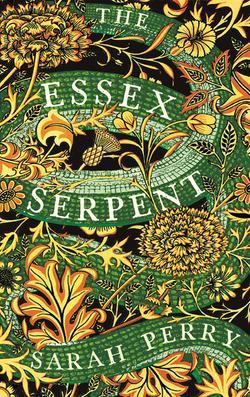
Interviewed by the editor of the Church Times newspaper, Perry spoke a bit about her upcoming novel, The Essex Serpent (to be published in the UK by Serpent’s Tail on June 18th), set in 1890s London and an invented village on the Essex marshes. In keeping with the talk’s title, “I would not wish any companion in the world but you,” the book is about friendship, specifically that between a vicar and a widowed amateur naturalist. Inspired by her own relationship with her (male) best friend and by intimate ‘love letters’ she found that passed between friends (like St. Paul to the Philippians and D.H. Lawrence to Jack Murray, or Montaigne writing about his best friend), the novel seeks the goodness in its characters.
The two readings Perry gave were lush, Dickensian descriptions of the City under rain and a drunken man going for a dip in the marsh and seeing what appears to be a sea creature. Perry was surprised when her debut novel was described as Gothic, but she’s embraced the label now: her third book, currently in progress, is full-on Gothic horror. What links all of her work, she thinks, is the Gothic notion of the thing lurking over the shoulder. For Perry, that ever-present threat is Reformation theology: the idea that man is born in sin and deserves damnation. During her Strict Baptist upbringing (which she, not coincidentally, describes as being like living in the 1890s), she was cut off from contemporary culture and influenced primarily by the King James Bible and Foxe’s Book of Martyrs.
Perry spent a short time as a missionary in the Philippines and was a biblical fundamentalist until age 25, when she and her husband (whom she met at 13 and married at 20) left the church. Stepping outside of that limiting community was the impetus she needed to start writing; although she had had stories looping around her head since the age of four, she had rarely written anything down. She completed a creative writing MA and PhD, all while working full time at the Inns of Court.
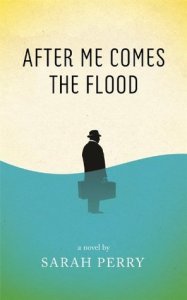 After Me Comes the Flood was rejected by 14 publishers; even her viva examiners, who passed her without corrections, were “ungracious,” she remarked. What it comes down to, she thinks, is simply that no one liked the book or knew what to make of it. It seemed unmarketable because it didn’t fit into a particular genre. At this point I was sheepishly keeping my head down, glad that Perry couldn’t possibly know about my largely unfavorable review in Third Way magazine. I confess that my reaction was roughly similar to the general consensus: “Not quite an allegory, [the book] still suffers from that genre’s pitfalls, such as one-dimensional characters,” I wrote.
A glowing Guardian review from poet John Burnside was enough to give Perry confidence to keep going as a novelist, and – having taken forever over writing her first book, an experience she likens to like pulling teeth because she had no idea what she was doing and could rarely overcome her natural laziness – she went on to write The Essex Serpent within just 10 months. And I’m glad she did, because this new book sounds right up my alley.
 It will be interesting to see how she imagines a platonic friendship between the sexes in a historical setting, and the Dickensian and Gothic touches, even from the little taster I got, were delicious. I was especially intrigued to learn about her research into the friendship ‘triangle’ (betrayal! early death! forgiveness!) between William Ewart Gladstone, Alfred Tennyson, and Arthur Henry Hallam. Perry said she thinks the tide may be turning, that friendships rather than romantic love could be starting to dominate fiction; perhaps Hanya Yanagihara’s A Little Life from last year would be a good example.
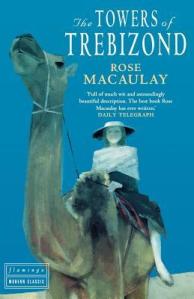
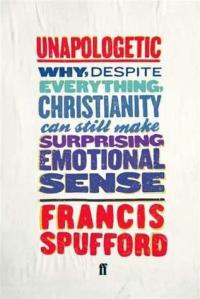 In the other sessions I attended, a group of clergy revealed the shortlist for the £10,000 Michael Ramsey Prize for theology (to my surprise, I’d read one of the nominees, Unapologetic by Francis Spufford) and panelists introduced a forthcoming anthology of essays on Anglican women novelists from Charlotte Brontë onwards (to be published by Bloomsbury in January 2018). Jane Williams, wife of former archbishop Rowan Williams, will contribute a chapter on Barbara Pym, who obviously loved the Church but also sits at an anthropological distance to poke gentle fun at it. Her novels sound like great fun. Judith Maltby, one of the editors, convinced me that I need to read Rose Macauley’s The Towers of Trebizond (1956), while co-editor Alison Shell made the case for P.D. James’s late inclusion.
 Chaired by contemporary Anglican novelist Catherine Fox, the panel noted two common threads in many of the featured novelists: detective fiction and humor. The striking number of crime novelists (including Dorothy L. Sayers and Ellis Peters), Shell suggested, one might attribute to an Anglican license to moralize or a preoccupation with ‘last things’. Humor, meanwhile, seems to arise from the little hypocrisies inherent to religious life and to the fact that liturgical seriousness can often tilt into comedy. Other repeated themes include the sacraments, the role of the spinster, and class – the clergy are often educated but poor. I came away with a list of authors to try; many of their works are available through Virago reprints.
All in all, it was a terrific, thought-provoking experience for me – a perfect mixture of literature and theology, and a great way to spend a blustery February Saturday.
The Seed Collectors & The A to Z of You and Me
The Seed Collectors by Scarlett Thomas
“I have no idea why everyone thinks nature is so benign and glorious and wonderful. All nature is trying to do is kill us as efficiently as possible.”
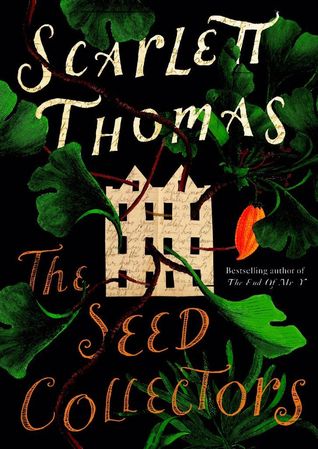 This offbeat novel about obsession, sex and inheritance is set in Kent in 2011 and stars an extended family of botanists. The concept of a family tree has a more than usually literal meaning here given the shared surname is Gardener and most members are named after plants. We have Great-Aunt Oleander, recently deceased; cousin Bryony and her children Holly and Ash; siblings Charlie and Clem (short for Clematis); and half-sister Fleur, who has taken over Oleander’s yoga center, Namaste House. The generation in between was virtually lost, perhaps to a plant-based drug overdose, on a seed collecting expedition to the South Pacific. Oleander has left each motherless child one of these possibly deadly seed pods.
Did I mention the book is saturated with sex? Incest, adultery, illegitimate children, S&M, Internet porn, you name it. But beyond that, the metaphorical language is highly sexualized – bursting with seeds, fertility and genital-like plants. I can’t think when I’ve encountered such oversexed vocabulary since D.H. Lawrence’s Sons and Lovers. Here’s a sampling:
Dave seems to be avoiding the clouds as he works the little plane up into the sky, penetrating it slowly, and really quite gently.
A surprising amount of plants look like dicks.
(of peat) It’s like walking on a giant’s pubes.
All lettuce wants is sex. And violence. Just like all plants. It wants to reproduce, and it wants to kill or damage its rivals so they don’t reproduce.
So many flowers are basically little sex booths.
And she was pulling him towards her, deeper into her, as if he were a flower and she an insect desperate for his cheap, sugary nectar.
Connections between characters morph and take on new dimensions as the book goes on. A few characters are unrealized, such as Fleur, which meant I felt slightly disconnected from them. (My ‘favorite’ in a book stuffed full of unlikable figures was probably Bryony, whose hunger for food, alcohol and shopping seems to be endless.) Likewise, not all the storylines are truly essential, so the book seems aimless for its final third; it definitely could have been shorter and tied together better, perhaps with some flashbacks to the previous generation’s experiences on the island to make the past feel more alive. The spiritual element remains vague, although there is a pleasant touch of magic realism along the way.
Despite these reservations, I truly enjoyed Thomas’s unusual writing. She moves freely between characters’ perspectives but also inserts odd second-person asides asking philosophical questions about wasted time and what is truly important in life. One peculiar little section even imagines the point-of-view of a robin in the garden of Namaste House, with made-up words fit for “The Jabberwocky”: “The man is, as always, incompt and untrig. He sloggers around his rooms in his black and grey ragtails like an elderly magpie.”
I like the range of questions you’re left with as a reader: Is nature malicious? Can we overcome our addictions? How much of who we are is down to our parentage? Does life really just come down to sex? The content of the novel might be reminiscent of A.S. Byatt and Andrea Barrett’s science-infused fiction or The World Before Us by Aislinn Hunter, but the style is totally different. I can’t even think who it reminds me of; it feels pretty one of a kind to me. Luckily this is Thomas’s sixth novel, so there’s plenty more for me to explore.
With thanks to Canongate for the free copy, won in a Goodreads giveaway.
My rating: 
The A to Z of You and Me by James Hannah
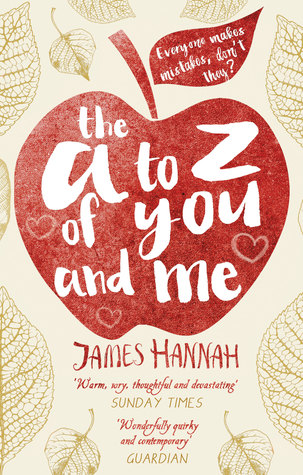 Lying in a hospice bed, 40-year-old Ivo looks back on his life. Even after just four short decades and a modest career at a garden center, he has plenty to regret. Hard partying and drug use exacerbated his diabetes and prompted kidney failure. His lifestyle also led indirectly to his girlfriend, a nursing student named Mia (the “you” whom he often addresses directly), leaving him. He’s estranged from his sister and the friends he’d been close to since school days, especially Mal. How did he mess up so badly and cut himself off so completely that he’s now dying alone? And how much can he put right before he goes?
There’s plenty of affecting writing in Hannah’s debut novel, as in one of my favorite passages: “The sun chooses this moment to radiate through to me, through me. It feels like – it feels like life. I can sense my corrupt blood bubbling and basking beneath the surface.” I also love how Hannah captures the routines of institutional life – the sights, smells and sounds that come to define Ivo’s circumscribed life:
Round the corner now. Noticeboard up on the right, pinned every inch over with flyers and leaflets. The papers at the bottom lift and flutter in the convection of the heater beneath.
I am lost in a world of regular hums, distant beeping, the periodic reheating of the coffee machine in the corridor, and that steady kazoo [of his next-door neighbor’s breathing].
Nurse Sheila and Amber, the daughter of another hospice patient, are great supporting characters. Sheila’s A to Z game, encouraging Ivo to think of a memory attached to body parts starting with each letter of the alphabet, provides a hokey but effective structure. As Ivo’s condition deteriorates and his thoughts are scrambled by morphine, his narration gradually becomes less coherent and more insular. This means that by the time we reach the conclusion (which somehow manages to be both predictable and shocking at the same time), we aren’t sure whether he’s giving a reliable account of events or imagining things.
Ultimately, I felt confused about what Hannah meant for the book to be. Is this Irvine Welsh lite? Or a Rachel Joyce style tear-jerker? It’s similar in setup to The Love Song of Miss Queenie Hennessy, you see, and the remembered relationship with Mia is rather sappy. However, keep in mind that in British English the letter Z is pronounced ‘zed’, so the title doesn’t rhyme, which keeps it from being overly twee. Another barrier to my appreciation of the novel was that I never understood why Ivo was dying. People don’t die of kidney failure nowadays, thanks to dialysis and transplantation. (I have a kidney disease, so I should know!)
I’d recommend this book to fans of Mark Haddon, David Nicholls and Donal Ryan. I’ll follow Hannah’s career and hope he can avoid melodrama and a contrived structure – the two near-pitfalls of this one – in the future.
With thanks to Transworld Books for the free copy, won in a Goodreads giveaway.
My rating: 
 Bookish Beck = Rebecca Foster. American transplant to England. Freelance proofreader and book reviewer.
 Bookish Beck