The Best Fiction of 2016: My Top 15
You might be surprised to hear that I received ‘only’ eight books for Christmas. (And a very fetching owl bookmark.) Here they are:

As I did last year, I’ve come up with my top 15 fiction books of the year (the three translated works first appeared in English in 2016) and even attempted to rank them. Many of these books have already featured on the blog in some way over the course of the year. To keep it simple for myself as well as for all of you who are figuring out whether you’re interested in these books or not, I’m limiting myself to two sentences per title: the first is a potted summary; the second tells you why you should read it. I also link to any full reviews.
Without further ado, let the countdown begin!
 Your Heart Is a Muscle the Size of a Fist by Sunil Yapa: A hard-hitting novel with an unforgettably resonant title, this is set at the 1999 Seattle WTO protest: Yapa explores the motivations and backstories of activists, police officers, and delegates as the day deteriorates into violence. This fine debut is about cultivating the natural compassion in your heart even while under the threat of the fist.
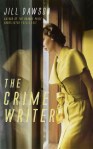 The Crime Writer by Jill Dawson: Beyond the barest biographical facts, Dawson has imagined the plot based on Patricia Highsmith’s own preoccupations: fear of a stalker, irksome poison-pen letters, imagining what it would be like to commit murder … and snails. You’re never quite sure as you’re reading what is actually happening in the world of the novel and what only occurs in Highsmith’s imagination, making this one of the most gripping, compulsive books I encountered this year.
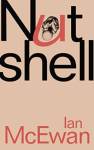 Nutshell by Ian McEwan: Within the first few pages, I was captivated and convinced by the voice of this contemporary, in utero Hamlet. His captive state pairs perfectly with Hamlet’s existential despair, but also makes him (and us as readers) part of the conspiracy: even as he wants justice for his father, he has to hope his mother and uncle will get away with their crime; his whole future depends on it.
 The Longest Night by Andria Williams: This absorbing work of historical fiction combines a remote setting, the threat of nuclear fallout, and a marriage strained to the breaking point in a convincing early 1960s atmosphere. A great debut and an author I’d like to hear more from.
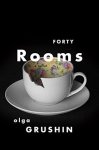 Forty Rooms by Olga Grushin: Each of us is said to occupy 40 rooms in our lives; this novel in 40 vignettes, one per room, tells the life story of a Russian immigrant to America who dreams of becoming a poet but ends up a suburban housewife and mother of six. I feel this book will resonate with women of every age, prompting them to question the path they’ve taken, the passions they’ve left unexplored, and whether it’s too late to change.
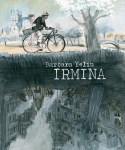 Irmina by Barbara Yelin: After her grandmother’s death Yelin, a Munich-based artist, found a box of diaries and letters that told the story of a budding love affair that was not to be and charted a young woman’s gradual capitulation to Nazi ideology. For the out-of-the-ordinary window onto Third Reich history and the excellent illustrations, I highly recommend this to graphic novel lovers and newbies alike.
 The Wonder by Emma Donoghue: In the 1850s a nurse investigates the case of an Irish girl surviving without food for months: miracle or hoax? Donoghue writes convincing and vivid historical fiction, peppering the text with small details about everything from literature to technology and setting up a particularly effective contrast between medicine and superstition.
 The Summer Guest by Alison Anderson: The kernel of the novel is a true story: for two summers in the late 1880s, Chekhov (known here as Anton Pavlovich) stayed at the Lintvaryovs’ guest house in Luka, Ukraine; one strand of the narration is a journal kept during those years by the family’s eldest daughter, who’s dying of a brain tumor. An elegantly plotted story about writing, translation, illness, and making the most of life.
 Quiet Flows the Una by Faruk Šehić: This autobiographical novel by a Bosnian poet and former soldier is full of poetic language and nature imagery. The lyrical writing about his beloved river provides a perfect counterpoint to the horror and absurdity of war.
 Three-Martini Lunch by Suzanne Rindell: Rindell brings the late 1950s, specifically the bustling, cutthroat New York City publishing world, to life through the connections between three young people who collide over a debated manuscript. It’s an expert evocation of Beat culture and post-war paranoia over communism and homosexuality.
 Golden Hill by Francis Spufford: The novel opens suddenly as twenty-four-year-old Richard Smith arrives from London with a promissory note for £1000; before he can finally get his money, he’ll fall in and out of love, fight a duel, and be arrested twice – all within the space of two months. Bawdy, witty, vivid historical fiction; simply brilliant.
 Why We Came to the City by Kristopher Jansma: Five university friends strive to make their lives count against the indifferent backdrop of recession-era New York City. You’ll see yourself in one or more of the characters, and the rest you’ll greet as if they were your own friends and makeshift family.
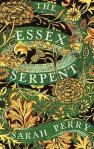 The Essex Serpent by Sarah Perry: The Essex Serpent was a real-life legend from the latter half of the seventeenth century, but Perry’s second novel has fear of the sea creature re-infecting Aldwinter, her invented Essex village, in the 1890s. This exquisite work of historical fiction explores the gaps – narrower than one might think – between science and superstition and between friendship and romantic love.
 The Tobacconist by Robert Seethaler: Seventeen-year-old Franz Huchel’s life changes for good when in 1937 his mother sends him away from his quiet lakeside village to work for her old friend Otto Trsnyek, a Vienna tobacconist. This novel is so many things: a coming-of-age story, a bittersweet romance, an out-of-the-ordinary World War II/Holocaust precursor, and a perennially relevant reminder of the importance of finding the inner courage to stand up to oppressive systems.
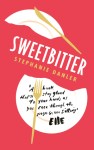 Sweetbitter by Stephanie Danler: The restaurant where twenty-two-year-old Tess works is a claustrophobic world unto itself, like a theatre set where the food is high art and the staff interactions are pure drama. Everything about this novel is utterly assured: the narration, the characterization, the prose style, the plot, the timing; it captures the intensity and idealism of youth yet injects a hint of nostalgia.
& A poetry selection:
 Still the Animals Enter by Jane Hilberry: A rich, strange, gently erotic collection featuring diverse styles and blurring the lines between child and adult, human and animal, life and death through the language of metamorphosis. The message is that we are part of a shared life beyond the individual family or even the human species; we are all connected.
What are the best novels you read this year? Any new favorite books or authors?
I’ll be back tomorrow with the best nonfiction books I read this year.
Reviews Roundup, April–May
Every month I compile the book reviews I’ve published elsewhere, with a rating (below each description) and a taster so you can decide whether to click on the link to read more.
The Bookbag
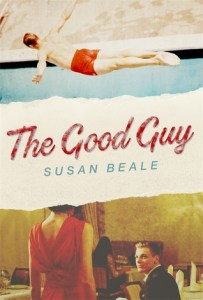 The Good Guy by Susan Beale: You might think there’s nothing new to add to the suburban-angst-and-adultery storyline. What Beale does so beautifully in this debut novel is to put you right into the minds of the three main characters. This is a story about the differences between what’s easy and what’s right, and the quest to make amends wherever possible. It’s also a cautionary tale: be careful what you wish for, because that boring life you were so eager to escape may just be what you wanted after all. I also love the range of settings, from the dazzling Shoppers’ World mall to a beach house on Cape Cod. This is a delicious, slightly gossipy summer read with a Mad Men feel to it. I’d especially recommend this to fans of The Longest Night and Tigers in Red Weather. Releases June 16th.

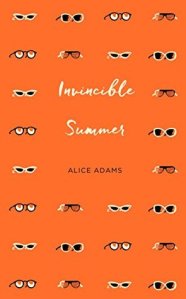 Invincible Summer by Alice Adams: Four Bristol University friends navigate the highs and lows of life in the 20 years following graduation. Like in One Day, the narrative checks in on the characters nearly every summer. As happens in real life, even the closest friends gradually drift apart. Job situations and relationships change, and external events like the financial collapse of 2008 take a toll. Compared to some other similar recent novels (e.g. Why We Came to the City by Kristopher Jansma), this debut somewhat lacks sparkle. Releases June 2nd in the UK and June 28th in the USA.

This Must Be the Place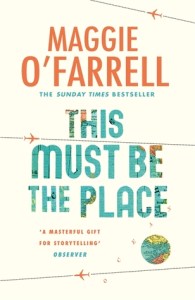 by Maggie O’Farrell: O’Farrell’s globe-trotting seventh novel opens in 2010 with Daniel Sullivan, an American linguistics professor in Donegal. Spreading outward from Ireland and reaching into every character’s past and future, this has all O’Farrell’s trademark insight into family and romantic relationships, as well as her gorgeous prose and precise imagery. The disparate locations and the title suggest our nomadic modern condition. It’s the widest scope she has attempted yet; that’s both a good and a bad thing. I did wonder if there were a few too many characters and plot threads.
BookBrowse
(A subscriber service, so I can only make excerpts available.)
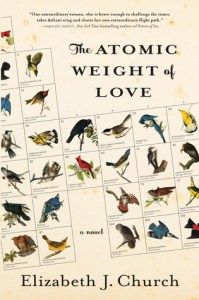 The Atomic Weight of Love by Elizabeth J. Church: In Church’s debut, an amateur ornithologist learns about love and sacrifice through marriage to a Los Alamos physicist and a relationship with a Vietnam veteran. Torn between two men who mean so much to her, Meri has to consider what her true duties are. “There was no good solution. No clear way out, no approach that would earn the Good Housekeeping Seal of Approval,” she wryly observes. I instantly warmed to Meri as a narrator and loved following her unpredictable life story. Church reveals the difficulty a woman of that time had in choosing her own path and making it fit into men’s plans, and shows how love, as the title suggests, can be a burden but also a thing of reassuring substance. Meri longs, like one of her beloved birds, to take flight into her dreams. Whether she gets there, and how, is a bittersweet trip but one you’ll be glad you went along for.
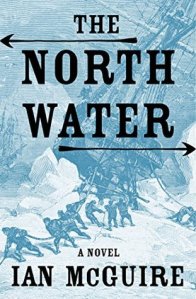 The North Water by Ian McGuire: A gritty tale of adventure and murder set aboard a mid-nineteenth-century whaling ship. Archaic adjectives pile up in a clever recreation of Victorian prose: “The men, empurpled, reeking, drenched in the fish’s steaming, expectorated gore.” Much of the novel is bleak and brutal like that. There are a lot of “F” and “C” words, too; this is so impeccably researched that I don’t doubt the language is accurate. McGuire never shies away from gory detail, whether that’s putrid smells, bodily fluids, animal slaughter, or human cruelty. I thought the novel’s villain was perhaps too evil, with no redeeming features. Still, this is a powerful inquiry into human nature and the making of ethical choices in extreme circumstances. From the open seas to the forbidding polar regions, this is a journey worth taking.
Foreword Reviews
Rediscovering the Immune System as an Integrated Organ by Peter Bretscher: A rigorous introduction to current immunological thought. Vocabulary terms are given in bold italics and defined in context on first use, and each chapter ends with a helpful synopsis. However, these summaries are almost as dense as the text itself, and the many acronyms are difficult to keep straight. Unlike a textbook, though, the book also contains welcome snippets of autobiography. Bretscher traces not just the evolution of immunological knowledge, but also the development of his own thinking. This will be an invaluable resource for students in search of a nonstandard immunology primer. With research under way into vaccinations against AIDS, tuberculosis, and cancer, the field has a bright future.
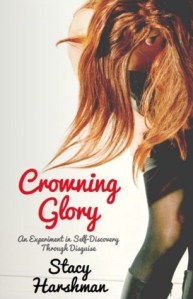 Crowning Glory: An experiment in self-discovery through disguise by Stacy Harshman: In 2005, Harshman decided to embark on a sociological experiment-cum-personal challenge: each week for six weeks she donned a different wig, and with the help of her assistant, Bonnie, she carefully recorded the reactions she received from onlookers and potential partners. Each day she chose three New York City locales, taking in events like lunch, happy hour, and late night socializing. Recalling the time she was hospitalized for a psychotic break in 2000, she marvels at how changing hairstyles could help her feel self-assured and sexy. The book is an appealing cross between a scientific study and a spy story.
Nudge
 All at Sea by Decca Aitkenhead: In May 2014, Aitkenhead, a Guardian writer, was on vacation with her partner Tony Wilkinson and their two young sons in Jamaica. A beautiful sunny morning turned disastrous when Tony swam out to rescue their son Jake and drowned. After the tragic events of the first chapter, this wrenching memoir retreats to consider the 10 years she and Tony (a former criminal and crack addict) spent as “the most implausible couple I have ever known.” More than half the book is devoted to the aftermath of Tony’s death, described in a matter-of-fact style that still manages to convey the depth of Aitkenhead’s pain. This is a unique combination of a journalist’s forthright storytelling and the ‘magical thinking’ Joan Didion introduced. Releases in the States on August 16th.
 Diary of a Short-Sighted Adolescent by Mircea Eliade: This rediscovered Romanian classic is what you might get if a teenage Adrian Mole was studying for a philosophy degree. Before picking this up I knew of Eliade as a commentator on world religions. I didn’t realize he also wrote novels. This is particularly special in that it’s a lost manuscript he wrote as a teenager; it was only discovered in a Bucharest attic after his death in the 1980s. The novel’s chief detriments – the repetitive nature of the sections about his schooling, and his obsessive introspection – are also, ironically, what make it most true to the adolescent experience. I’d recommend it to fans of My Brilliant Friend and Melanie Sumner’s How to Write a Novel.

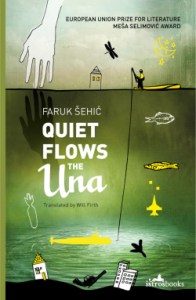 Quiet Flows the Una by Faruk Šehić: This autobiographical novel by a Bosnian poet and former soldier is full of poetic language and nature imagery. The narrator transcends his sordid war memories through his magical approach to life. Actual war scenes only come much later in the book; even then they are conveyed in such an abstract style that they seem more like hallucinations than remembered events. The lyrical writing about his beloved river provides a perfect counterpoint to the horror and absurdity of war. “We made this town, Bosanska Krupa, of black mire, yellow sand and green water borrowed from the Una. The tall towers of our town tickle God’s feet.” What most impressed me about passages like that one is the alliteration that shines through even after translation. I would highly recommend this to readers of Anthony Marra and Daniel Kehlmann.

 Shelter by Jung Yun: A Korean-American family faces up to violence past and present in this strong debut. Finances and relationships just keep going from bad to worse, as the novel’s tripartite structure suggests: “Dawn” cedes to “Dusk,” which descends into “Night.” You wonder just how terrible things can get – will this really reach the Thomas Hardy levels of tragedy it seems to portend? – until, in the incredible last 10 pages, Yun pulls back from violence and offers the hope of redemption. I did wonder if there were a few too many secondary characters. However, the Korean-American culture of honor and shame makes a perfect setting. I would recommend this to fans of David Vann and Richard Ford.
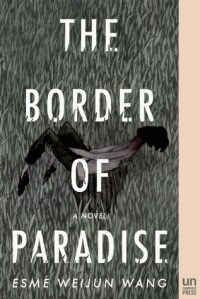 The Border of Paradise by Esmé Weijun Wang: Mental illness haunts an Asian-American family in this offbeat multi-generational saga. Wang’s debut novel opens in 1968 with David Nowak reporting from the motel room where he plans to kill himself. Succeeding portions of the novel are narrated from other perspectives: David’s wife Jia-Hui, aka Daisy, whom he met in Taiwan; then their son William and his half-sister Gillian. Jia-Hui’s narrative is the most entrancing. Presented as a translation, it includes occasional foreign characters or blank spaces where she couldn’t quite catch what someone was saying in English. Her sections are full of foreboding about the family legacy of madness. I was reminded most of A Reunion of Ghosts and All My Puny Sorrows. Something about this book left a slightly bitter aftertaste for me, but there’s no doubt Wang has fine plotting, character building, and prose skills.
 The Story of a Seagull and the Cat Who Taught Her to Fly by Luis Sepúlveda: Zorba, a fat black cat, will be alone this summer while his boy’s family go on holiday – convenient given the adventure that’s about to befall him. Kengah, an exhausted and oil-drenched seagull, lands on his balcony and lays a final, precious egg. She makes Zorba promise he will not eat the egg but will look after her baby and teach it to fly. He enlists his motley group of fellow cats at the port of Hamburg to help him figure out how to raise a chick. Sepúlveda, a Chilean author, was jailed under the Pinochet regime and was later on the crew of a Greenpeace ship. The environmental message here is noticeable but not overpowering. Geared towards confident nine- to eleven-year-olds, this might also be read aloud with younger children.
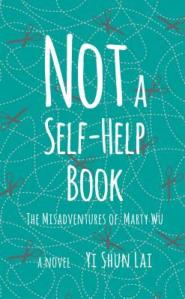 Not a Self-Help Book: The Misadventures of Marty Wu by Yi Shun Lai: Marty Wu is an advertising account executive for a NYC retirees’ magazine but dreams of opening her own costume shop. This debut novel is her Bridget Jones-esque diary, often written in a kind of shorthand style contrasting her goals with her seemingly inevitably failures, as in: “Crap. Is 4:00 a.m. Have breakfast meeting. Must sleep.” She’s constantly quoting to herself the advice and wisdom she’s gleaned from various motivational books she picked up in hopes of self-improvement. Lai writes engagingly about the contrasts between Taiwan and the States, especially the complexities of family roles. This is a lighthearted, summery read. Watch Marty ditch self-help books and start living the life she wants anyway.
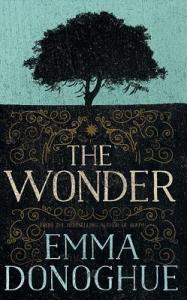 The Wonder by Emma Donoghue: A nurse investigates the case of an Irish girl surviving without food for months: miracle or hoax? The novel draws on about 50 historical cases of “Fasting Girls” that occurred in Europe and North America in the 16th to 20th centuries. It sets up a particularly effective contrast between medicine and superstition. Donoghue writes convincing, vivid historical fiction, peppering the text with small details about everything from literature to technology. This is the fifth book I’ve read by her, and it’s by far my favorite. With the two-week time limit and the fact that most scenes take place in the cabin – with just a handful set in other village locales like the bog and the pub where Lib stays – this has something of the flavor of a locked-room mystery. Releases September 20th.
Football by Jean-Philippe Toussaint: A nostalgic tour through a soccer fan’s highlights. Over the years Toussaint has realized what he loves about the sport: its seasonality (the World Cup “comes round every four years with the regularity of a leap-year seasonal fruit”) and the rituals of attending a match. On the other hand, he recognizes downsides, such as temporary permission given to chauvinism and the fact that it doesn’t age well – it’s an instant thing; one doesn’t tend to watch repeats. My favorite chapter, set in 2014, is less about sports and more about a hard time in the author’s personal life: he had recently lost his father and finished a ten-year novel sequence, leaving him unsure what to do next. I enjoyed his introspective passages about the writing life and the sense of purpose it gives his struggles. I was not the ideal reader, given my general antipathy to sports and my unfamiliarity with the author. All the same, I can see how this would appeal to fans of Fever Pitch.
Happy 200th Birthday, Charlotte Brontë!
Today marks a big anniversary: the bicentennial of Charlotte Brontë’s birth. I’ve noticed a whole cluster of books being published or reissued in time for her 200th birthday, many of which I’ve reviewed with enjoyment; some of which I’ve sampled and left unfinished. I hope you’ll find at least one book on this list that will take your fancy. There could be no better time for going back to Charlotte Brontë’s timeless stories and her quiet but full life story.
Short Stories Inspired by Jane Eyre
MINOR SPOILERS AHEAD.
 Reader, I Married Him: Stories Inspired by Jane Eyre, edited by Tracy Chevalier
A mixed bag. Although there are some very good stand-alone stories (from Tessa Hadley, Sarah Hall, Emma Donoghue and Elizabeth McCracken, as you might expect), ultimately the theme is not strong enough to tie them all together and some seem like pieces the authors had lying around and couldn’t figure out what else to do with. Think about it this way: what story isn’t about romance and the decision to marry?
A few of the tales do put an interesting slant on this age-old storyline by positing a lesbian relationship for the protagonist or offering the possibility of same-sex marriage. Then there are the stories that engage directly with the plot and characters of Jane Eyre, giving Grace Poole’s (Helen Dunmore) or Mr. Rochester’s (Salley Vickers) side of things, putting Jane and Rochester in couples therapy (Francine Prose), or making Jane and Helen Burns part of a post-WWII Orphan Exchange (Audrey Niffenegger). My feeling with these spinoff stories was, I’m afraid, what’s the point? Plus there were a number of others that just felt tedious.
My least favorites were probably by Lionel Shriver (incredibly boring!), Kirsty Gunn (unrealistic, and she gives the name Mr. Rochester to a dog!) and Susan Hill (the title story, but she’s made it about Wallis Simpson – and has the audacity to admit, as if proudly, that she’s never read Jane Eyre!). On the other hand, one particular standout is by Elif Shafak. A Turkish Muslim falls in love with a visiting Dutch student but is so unfamiliar with romantic cues that she doesn’t realize he isn’t equally taken with her.
In Patricia Park’s story, my favorite of all, a Korean girl from Buenos Aires moves to New York City to study English. Park turns Jane Eyre on its head by having Teresa give up on the chance of romance to gain stability by marrying Juan, the St. John Rivers character. I loved getting a glimpse into a world I was entirely ignorant of – who knew there was major Korean settlement in Argentina? This also redoubled my wish to read Park’s novel, Re Jane. She’s working on a second novel set in Buenos Aires, so perhaps it will expand on this story.
The Bookbag reviews
Charlotte Brontë’s Secret Love by Jolien Janzing
Charlotte and Emily Brontë’s time in Belgium – specifically, Charlotte’s passion for her teacher, Constantin Heger – is the basis for this historical novel. The authoritative yet inviting narration is a highlight, but some readers may be uncomfortable with the erotic portrayal; it doesn’t seem to fit the historical record, which suggests an unrequited love affair.
Sanctuary by Robert Edric
Branwell Brontë narrates his final year of life, when alcoholism, mental illness and a sense of disgrace hounded him to despair. I felt I never came to understand Branwell’s inner life, beneath the decadence and all the feeling sorry for himself. This gives a sideways look at Charlotte, Emily and Anne, though the sisters are little more than critical voices here; none of them has a distinctive personality.
Mutable Passions : Charlotte Brontë: A Disquieting Affair by Philip Dent
Dent focuses on a short period in Charlotte Brontë’s life: with all her siblings dead and Villette near completion, a surprise romance with her father’s curate lends a brief taste of happiness. Given her repeated, vociferous denial of feelings for Mr. Nicholls, I had trouble believing that, just 20 pages later, his marriage proposal would provoke rapturous happiness. To put this into perspective, I felt Dent should have referenced the three other marriage proposals Brontë is known to have received. Overwritten and suited to readers of romance novels than to Brontë enthusiasts, this might work well as a play. Dent is better at writing individual scenes and dialogue than at providing context.
Two Abandonees
I had bad luck with these two novels, which both sounded incredibly promising but I eventually abandoned (along with Yuki Chan in Brontë Country, featured in last month’s Six Books I Abandoned Recently post):
 Jane Steele by Lyndsay Faye
Jane Steele is not quite Jane Eyre, though her life seems to mirror that of Brontë’s heroine in most particulars. How she differs is in her violent response to would-be sexual abusers. She’s a feminist vigilante wreaking vengeance on her enemies, whether her repulsive cousin or the vindictive master of “Lowan Bridge” (= Cowan Bridge, Brontë’s real-life school + Lowood, Jane Eyre’s). I stopped reading because I didn’t honestly think Faye was doing enough to set her book apart. “Reader, I murdered him” – nice spin-off line, but there wasn’t enough original material here to hold my attention. (Read the first 22%.)
 The Madwoman Upstairs by Catherine Lowell
There was every reason for me to love this novel – awkward American narrator, Oxford setting, Brontë connections aplenty, snarky literary criticism – but I got bored with it. Perhaps it was the first-person narration: being stuck in sarcastic Samantha Whipple’s head means none of the other characters feel real; they’re just paper dolls, with Orville a poor excuse for a Mr. Rochester substitute. I did laugh out loud a few times at Samantha’s unorthodox responses to classic literature (“Agnes Grey is, without question, the most boring book ever written”), but I gave up when I finally accepted that I had no interest in how the central mystery/treasure hunt played out. (Read the first 56%.)
An Excellent Biography
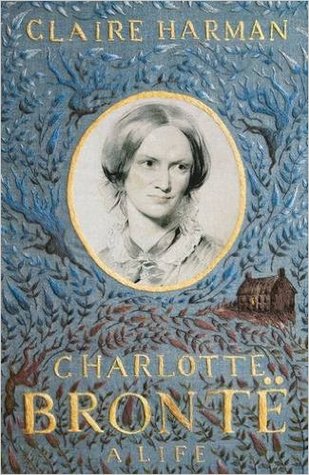 If I could recommend just one book from the recent flurry of Brontëana, it would be Charlotte Brontë: A Life by Claire Harman, which I reviewed for For Books’ Sake back in November.
One of the things Harman’s wonderful biography does best is to trace how the Brontës’ childhood experiences found later expression in their fiction. A chapter on the publication of Jane Eyre (1847) is a highlight. Diehard fans might not encounter lots of new material, but Harman does make a revelation concerning Charlotte’s cause of death – not TB, as previously believed, but hyperemesis gravidarum, or extreme morning sickness. This will help you appreciate afresh the work of a “poet of suffering” whose novels were “all the more subversive because of [their] surface conventionality.” Interesting piece of trivia for you: this and the Janzing novel (above) open with the same scene from Charlotte’s time in Belgium.
 Bookish Beck = Rebecca Foster. American transplant to England. Freelance proofreader and book reviewer.
 Bookish Beck