2016 Runners-Up and Other Superlatives
Let’s hear it for the ladies! In 2016 women writers accounted for 9 out of my 15 top fiction picks, 12 out of my 15 nonfiction selections, and 8 of the 10 runners-up below. That’s 73%. The choices below are in alphabetical order by author, with any full reviews linked in. Many of these have already appeared on the blog in some form over the course of the year.
Ten Runners-Up:
FICTION
 Hag-Seed by Margaret Atwood: Atwood looks more like a good witch every year, and here she works her magic on The Tempest to produce the most satisfying volume of the Hogarth Shakespeare series yet. There’s a really clever play-within-the-play-within-the-play thing going on, and themes of imprisonment and performance resonate in multiple ways.
 The Atomic Weight of Love by Elizabeth J. Church: In Church’s debut, an amateur ornithologist learns about love and sacrifice through marriage to a Los Alamos physicist and a relationship with a Vietnam veteran. I instantly warmed to Meri as a narrator and loved following her unpredictable life story.
 We Love You, Charlie Freeman by Kaitlyn Greenidge: The Freemans are raising Charlie, a chimpanzee, as part of their family for a Toneybee Institute experiment and teaching him to communicate via sign language. This is a rich and unsettling story of human–human interactions, even more so than human–animal interactions; it’s a great first novel and I will follow Greenidge’s career with interest.
To the Bright Edge of the World by Eowyn Ivey: Ivey’s intricate second novel weaves together diaries, letters, photographs, and various other documents and artifacts to tell the gently supernatural story of an exploratory mission along Alaska’s Wolverine River in 1885 and its effects through to the present day. I can highly recommend this rollicking adventure tale to fans of historical fiction and magic realism.
This Must Be the Place by Maggie O’Farrell: Spreading outward from Ireland and reaching into every character’s past and future, this has all O’Farrell’s trademark insight into family and romantic relationships, as well as her gorgeous prose and precise imagery. I have always felt that O’Farrell expertly straddles the (perhaps imaginary) line between literary and popular fiction; her books are addictively readable but also hold up to critical scrutiny.
Commonwealth by Ann Patchett: This deep study of blended family dynamics starts with an early 1960s christening party Los Angeles policeman Fix Keating is throwing for his younger daughter, Franny; we see the aftermath of that party in the lives of six step-siblings in the decades to come. This is a sophisticated and atmospheric novel I would not hesitate to recommend to literary fiction fans in general and Patchett fans in particular.
 The Last Painting of Sara de Vos by Dominic Smith: Jessie Burton, Tracy Chevalier and all others who try to write historical fiction about the Netherlands in the seventeenth century, eat your hearts out. Such a beautiful epoch-spanning novel about art and regret.
Shelter by Jung Yun: A Korean-American family faces up to violence past and present in a strong debut that offers the hope of redemption. I would recommend this to fans of David Vann and Richard Ford.
NONFICTION
I Will Find You by Joanna Connors: By using present-tense narration, Connors makes the events of 1984 feel as if they happened yesterday: a blow-by-blow of the sex acts forced on her at knife-point over the nearly one-hour duration of her rape; the police reports and trials; and the effects it all had on her marriage and family. This is an excellent work of reconstruction and investigative reporting.
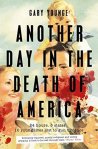 Another Day in the Death of America by Gary Younge: Younge built this book by choosing a 24-hour period (November 22 to 23, 2013) and delving into all 10 gun deaths of young Americans on record for that time: seven black, two Latino, and one white; aged nine to 18; about half at least vaguely gang-related, while in two – perhaps the most crushing cases – there was an accident while playing around with a gun. I dare anyone to read this and then try to defend gun ‘rights’ in the face of such senseless, everyday loss.
Various Superlatives:
Best Discoveries of the Year: Apollo Classics reprints (I reviewed three of them this year); Diana Abu-Jaber, Linda Grant and Kristopher Jansma.
Most Pleasant Year-Long Reading Experience: The seasonal anthologies issued by the UK Wildlife Trusts and edited by Melissa Harrison (I reviewed three of them this year).

Most Improved: I heartily disliked Sarah Perry’s debut novel, After Me Comes the Flood. But her second, The Essex Serpent, is exquisite.
Debut Novelists Whose Next Work I’m Most Looking Forward to: Stephanie Danler, Kaitlyn Greenidge, Francis Spufford, Andria Williams and Sunil Yapa.
The Year’s Biggest Disappointments: Here I Am by Jonathan Safran Foer, Today Will Be Different by Maria Semple, and Swing Time by Zadie Smith. Here’s hoping 2017 doesn’t bring any letdowns from beloved authors.


The Worst Book I Read This Year: Paulina & Fran (2015) by Rachel B. Glaser. My only one-star review of the year. ’Nuff said?
The 2016 Novels I Most Wish I’d Gotten to: (At least the 10 I’m most regretful about)
- The Power by Naomi Alderman
- The Museum of You by Carys Bray
- The Course of Love by Alain de Botton
- What Belongs to You by Garth Greenwell*
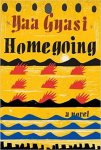 Homegoing by Yaa Gyasi
- The Waiting Room by Leah Kaminsky
- The Inseparables by Stuart Nadler
- Harmony by Carolyn Parkhurst*
- The Nest by Cynthia D’Aprix Sweeney*
- The Underground Railroad by Colson Whitehead*
*Haven’t been able to find anywhere yet; the rest are on my Kindle.
Which of these should I get reading on the double?
Coming tomorrow: Some reading goals for 2017.
The Best Fiction of 2016: My Top 15
You might be surprised to hear that I received ‘only’ eight books for Christmas. (And a very fetching owl bookmark.) Here they are:

As I did last year, I’ve come up with my top 15 fiction books of the year (the three translated works first appeared in English in 2016) and even attempted to rank them. Many of these books have already featured on the blog in some way over the course of the year. To keep it simple for myself as well as for all of you who are figuring out whether you’re interested in these books or not, I’m limiting myself to two sentences per title: the first is a potted summary; the second tells you why you should read it. I also link to any full reviews.
Without further ado, let the countdown begin!
 Your Heart Is a Muscle the Size of a Fist by Sunil Yapa: A hard-hitting novel with an unforgettably resonant title, this is set at the 1999 Seattle WTO protest: Yapa explores the motivations and backstories of activists, police officers, and delegates as the day deteriorates into violence. This fine debut is about cultivating the natural compassion in your heart even while under the threat of the fist.
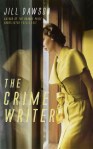 The Crime Writer by Jill Dawson: Beyond the barest biographical facts, Dawson has imagined the plot based on Patricia Highsmith’s own preoccupations: fear of a stalker, irksome poison-pen letters, imagining what it would be like to commit murder … and snails. You’re never quite sure as you’re reading what is actually happening in the world of the novel and what only occurs in Highsmith’s imagination, making this one of the most gripping, compulsive books I encountered this year.
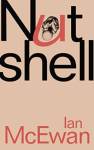 Nutshell by Ian McEwan: Within the first few pages, I was captivated and convinced by the voice of this contemporary, in utero Hamlet. His captive state pairs perfectly with Hamlet’s existential despair, but also makes him (and us as readers) part of the conspiracy: even as he wants justice for his father, he has to hope his mother and uncle will get away with their crime; his whole future depends on it.
 The Longest Night by Andria Williams: This absorbing work of historical fiction combines a remote setting, the threat of nuclear fallout, and a marriage strained to the breaking point in a convincing early 1960s atmosphere. A great debut and an author I’d like to hear more from.
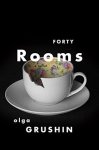 Forty Rooms by Olga Grushin: Each of us is said to occupy 40 rooms in our lives; this novel in 40 vignettes, one per room, tells the life story of a Russian immigrant to America who dreams of becoming a poet but ends up a suburban housewife and mother of six. I feel this book will resonate with women of every age, prompting them to question the path they’ve taken, the passions they’ve left unexplored, and whether it’s too late to change.
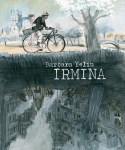 Irmina by Barbara Yelin: After her grandmother’s death Yelin, a Munich-based artist, found a box of diaries and letters that told the story of a budding love affair that was not to be and charted a young woman’s gradual capitulation to Nazi ideology. For the out-of-the-ordinary window onto Third Reich history and the excellent illustrations, I highly recommend this to graphic novel lovers and newbies alike.
 The Wonder by Emma Donoghue: In the 1850s a nurse investigates the case of an Irish girl surviving without food for months: miracle or hoax? Donoghue writes convincing and vivid historical fiction, peppering the text with small details about everything from literature to technology and setting up a particularly effective contrast between medicine and superstition.
 The Summer Guest by Alison Anderson: The kernel of the novel is a true story: for two summers in the late 1880s, Chekhov (known here as Anton Pavlovich) stayed at the Lintvaryovs’ guest house in Luka, Ukraine; one strand of the narration is a journal kept during those years by the family’s eldest daughter, who’s dying of a brain tumor. An elegantly plotted story about writing, translation, illness, and making the most of life.
 Quiet Flows the Una by Faruk Šehić: This autobiographical novel by a Bosnian poet and former soldier is full of poetic language and nature imagery. The lyrical writing about his beloved river provides a perfect counterpoint to the horror and absurdity of war.
 Three-Martini Lunch by Suzanne Rindell: Rindell brings the late 1950s, specifically the bustling, cutthroat New York City publishing world, to life through the connections between three young people who collide over a debated manuscript. It’s an expert evocation of Beat culture and post-war paranoia over communism and homosexuality.
 Golden Hill by Francis Spufford: The novel opens suddenly as twenty-four-year-old Richard Smith arrives from London with a promissory note for £1000; before he can finally get his money, he’ll fall in and out of love, fight a duel, and be arrested twice – all within the space of two months. Bawdy, witty, vivid historical fiction; simply brilliant.
 Why We Came to the City by Kristopher Jansma: Five university friends strive to make their lives count against the indifferent backdrop of recession-era New York City. You’ll see yourself in one or more of the characters, and the rest you’ll greet as if they were your own friends and makeshift family.
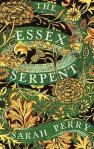 The Essex Serpent by Sarah Perry: The Essex Serpent was a real-life legend from the latter half of the seventeenth century, but Perry’s second novel has fear of the sea creature re-infecting Aldwinter, her invented Essex village, in the 1890s. This exquisite work of historical fiction explores the gaps – narrower than one might think – between science and superstition and between friendship and romantic love.
 The Tobacconist by Robert Seethaler: Seventeen-year-old Franz Huchel’s life changes for good when in 1937 his mother sends him away from his quiet lakeside village to work for her old friend Otto Trsnyek, a Vienna tobacconist. This novel is so many things: a coming-of-age story, a bittersweet romance, an out-of-the-ordinary World War II/Holocaust precursor, and a perennially relevant reminder of the importance of finding the inner courage to stand up to oppressive systems.
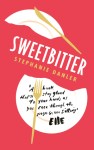 Sweetbitter by Stephanie Danler: The restaurant where twenty-two-year-old Tess works is a claustrophobic world unto itself, like a theatre set where the food is high art and the staff interactions are pure drama. Everything about this novel is utterly assured: the narration, the characterization, the prose style, the plot, the timing; it captures the intensity and idealism of youth yet injects a hint of nostalgia.
& A poetry selection:
 Still the Animals Enter by Jane Hilberry: A rich, strange, gently erotic collection featuring diverse styles and blurring the lines between child and adult, human and animal, life and death through the language of metamorphosis. The message is that we are part of a shared life beyond the individual family or even the human species; we are all connected.
What are the best novels you read this year? Any new favorite books or authors?
I’ll be back tomorrow with the best nonfiction books I read this year.
Books in Brief: Five I Loved Recently
Here are mini-reviews of five books I loved recently: two I originally reviewed for other websites and three stellar library reads; three works of historical fiction and two nonfiction books.
Known and Strange Things: Essays
By Teju Cole
 This collects 55 short pieces under three headings: literature, visual arts, and travel. Alongside straightforward book reviews are essays in which Cole engages with his literary heroes. A 400-page book of disparate essays is a hard ask, and even photography aficionados may struggle through the long middle section. All the same, patience is rewarded by Part III, “Being There,” in which he deftly blends memoir and travelogue. Again and again he reflects on displacement and ambiguity. Born in Michigan but raised in Nigeria, Cole returned to the States for college. Though erudite and wide-ranging, these essays are not quite as successful as, say, Julian Barnes’s or Geoff Dyer’s in making any and every topic interesting to laymen. Still, Cole proves himself a modern Renaissance man, interweaving experience and opinion in rigorous yet conversational pieces that illuminate the arts. (See my full review on the Pittsburgh Post-Gazette website.)
Winter
By Christopher Nicholson
 A perfect novel about a few months of Thomas Hardy’s later life. On the surface it’s the story of a rather odd love triangle: the octogenarian Hardy was infatuated with Gertrude Bugler, a local Dorset actress who had agreed to play his Tess on the London stage; his neurotic second wife, Florence, got wind of his feelings and jealously decided to sabotage Gertie. Underneath, I found this to be a deeply moving book about fear – of death, but also of not having lived the way you wanted and meant to. The perspective moves between Florence and Gertie in the first person and an omniscient third-person narrator. Chapters 1, 6 and 8, in particular, are a pitch-perfect pastiche of Hardy’s style. A bleak country winter is the perfect setting for a story of personal decay and a marriage grown cold. This brought back vivid memories of my visit to Hardy’s house in 2004 and coincided with my own vision of who Hardy was.
The Complete Maus
By Art Spiegelman
 The only graphic novel to win the Pulitzer Prize, this brings the Holocaust home in a fresh way. Like Animal Farm, it uses the conceit of various animal associations: Jews are mice, Poles are pigs, Nazis are cats, and Americans are dogs. Spiegelman draws what, from a distance of decades, his father Vladek remembers about his almost unbelievable series of escapes, including time in Auschwitz. Spiegelman gives the book an extra dimension by including his 1970s/80s recording sessions with his father as a framing story for most chapters. The narration is thus in Vladek’s own broken English, and we see how exasperating Spiegelman finds him – for pinching pennies and being racist against blacks, for instance – even as he’s in awe of his story. You can see how this paved the way for comic artists like Roz Chast and Alison Bechdel. I recommend it to absolutely anyone, graphic novel fan or no.
Golden Hill
By Francis Spufford
 Bawdy, witty, vivid historical fiction; simply brilliant. You’ll never doubt for a second that you are in 1746 New York – an English colony with a heavy Dutch influence, and slavery still the standard. The novel opens suddenly as twenty-four-year-old Richard Smith arrives from London with a promissory note for £1000. He won’t explain how he came by the money or what he intends to do with it, but the order seems legitimate. This puts the merchant Mr. Lovell in rather a bind, because that kind of cash simply can’t be come by. Before he can finally get his money, Smith will fall in and out of love, fight a duel, and be arrested twice – all within the space of two months. In a book full of fantastic scenes, Smith and Septimus’ narrow escape via the rooftops on Pope Day stands out. The finest thing about the novel, though, is the authentic eighteenth-century diction. Spufford writes very good creative nonfiction, with five books to date, but with his debut novel he’s hit a home run.
Resolution
By A.N. Wilson
 From a prolific author of both fiction and nonfiction, a meticulously researched novel about George Forster, one of the naturalists on Captain Cook’s second voyage. Rather than giving a simple chronological account of the journey and its aftermath, Wilson employs a sophisticated structure that alternates vignettes from the voyage with scenes from about 10 years later, when George is unhappily married to Therese and struggling to find suitable work. This is the second novel I’ve read by Wilson, after The Potter’s Hand. I find his fiction to be thoroughly convincing as well as engaging. This reminded me most of Measuring the World by Daniel Kehlmann, another rip-roaring tale of exploration with prose emulating the more detached narrative style of the eighteenth century. Recommended to any readers of historical fiction and adventure stories. (See my full review at The Bookbag.)
Have you read any of these? Which one takes your fancy?
Bloxham Festival of Faith and Literature
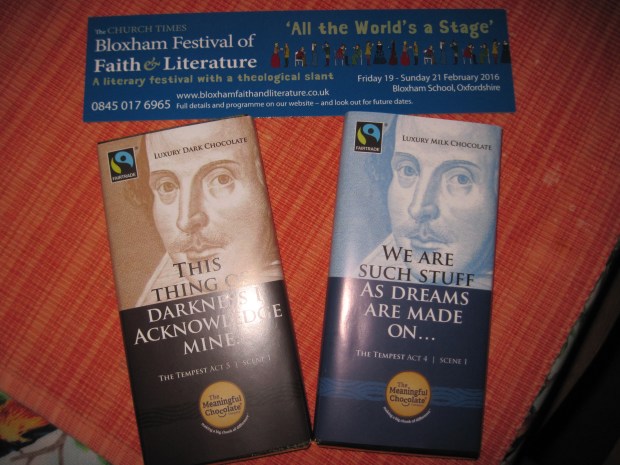
Bloxham Festival of Faith and Literature, “a literary festival with a theological slant,” has been running since 2011, but this past weekend marked the first time I managed to attend a few Saturday sessions. It was held at Oxfordshire’s very posh Bloxham School (sample course schedule: Mandarin, riding, and Shakespeare on Film). The theme for this year being “All the World’s a Stage,” all the events were given Shakespeare lines as titles. Hey, even the free chocolate bars from the Meaningful Chocolate Company were tailored to the Shakespeare theme!
The morning began with an interview with Sarah Perry. Now, I have to admit that I didn’t really get on with her first novel, After Me Comes the Flood. Still, I was intrigued by how she incorporates biblical themes and her religious background in her fiction, so I thought I’d give it a go. Perry herself wasn’t at all as I expected her to be. I’d only ever seen one tiny press photo, in which she had a somewhat tomboyish haircut and had a demurely downcast gaze. So I was pleasantly surprised to find she was voluble, learned, and confident; in a black lacey dress and with loosely pinned hair, she resembled a modern Gibson Girl with a Gothic twist.
Interviewed by the editor of the Church Times newspaper, Perry spoke a bit about her upcoming novel, The Essex Serpent (to be published in the UK by Serpent’s Tail on June 18th), set in 1890s London and an invented village on the Essex marshes. In keeping with the talk’s title, “I would not wish any companion in the world but you,” the book is about friendship, specifically that between a vicar and a widowed amateur naturalist. Inspired by her own relationship with her (male) best friend and by intimate ‘love letters’ she found that passed between friends (like St. Paul to the Philippians and D.H. Lawrence to Jack Murray, or Montaigne writing about his best friend), the novel seeks the goodness in its characters.
The two readings Perry gave were lush, Dickensian descriptions of the City under rain and a drunken man going for a dip in the marsh and seeing what appears to be a sea creature. Perry was surprised when her debut novel was described as Gothic, but she’s embraced the label now: her third book, currently in progress, is full-on Gothic horror. What links all of her work, she thinks, is the Gothic notion of the thing lurking over the shoulder. For Perry, that ever-present threat is Reformation theology: the idea that man is born in sin and deserves damnation. During her Strict Baptist upbringing (which she, not coincidentally, describes as being like living in the 1890s), she was cut off from contemporary culture and influenced primarily by the King James Bible and Foxe’s Book of Martyrs.
Perry spent a short time as a missionary in the Philippines and was a biblical fundamentalist until age 25, when she and her husband (whom she met at 13 and married at 20) left the church. Stepping outside of that limiting community was the impetus she needed to start writing; although she had had stories looping around her head since the age of four, she had rarely written anything down. She completed a creative writing MA and PhD, all while working full time at the Inns of Court.
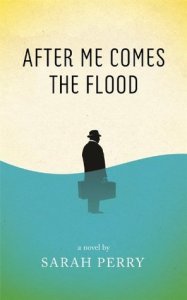 After Me Comes the Flood was rejected by 14 publishers; even her viva examiners, who passed her without corrections, were “ungracious,” she remarked. What it comes down to, she thinks, is simply that no one liked the book or knew what to make of it. It seemed unmarketable because it didn’t fit into a particular genre. At this point I was sheepishly keeping my head down, glad that Perry couldn’t possibly know about my largely unfavorable review in Third Way magazine. I confess that my reaction was roughly similar to the general consensus: “Not quite an allegory, [the book] still suffers from that genre’s pitfalls, such as one-dimensional characters,” I wrote.
A glowing Guardian review from poet John Burnside was enough to give Perry confidence to keep going as a novelist, and – having taken forever over writing her first book, an experience she likens to like pulling teeth because she had no idea what she was doing and could rarely overcome her natural laziness – she went on to write The Essex Serpent within just 10 months. And I’m glad she did, because this new book sounds right up my alley.
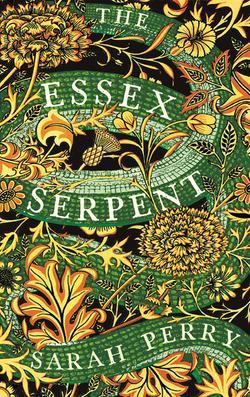 It will be interesting to see how she imagines a platonic friendship between the sexes in a historical setting, and the Dickensian and Gothic touches, even from the little taster I got, were delicious. I was especially intrigued to learn about her research into the friendship ‘triangle’ (betrayal! early death! forgiveness!) between William Ewart Gladstone, Alfred Tennyson, and Arthur Henry Hallam. Perry said she thinks the tide may be turning, that friendships rather than romantic love could be starting to dominate fiction; perhaps Hanya Yanagihara’s A Little Life from last year would be a good example.
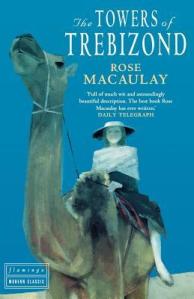
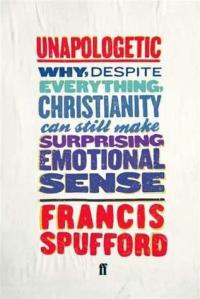 In the other sessions I attended, a group of clergy revealed the shortlist for the £10,000 Michael Ramsey Prize for theology (to my surprise, I’d read one of the nominees, Unapologetic by Francis Spufford) and panelists introduced a forthcoming anthology of essays on Anglican women novelists from Charlotte Brontë onwards (to be published by Bloomsbury in January 2018). Jane Williams, wife of former archbishop Rowan Williams, will contribute a chapter on Barbara Pym, who obviously loved the Church but also sits at an anthropological distance to poke gentle fun at it. Her novels sound like great fun. Judith Maltby, one of the editors, convinced me that I need to read Rose Macauley’s The Towers of Trebizond (1956), while co-editor Alison Shell made the case for P.D. James’s late inclusion.
 Chaired by contemporary Anglican novelist Catherine Fox, the panel noted two common threads in many of the featured novelists: detective fiction and humor. The striking number of crime novelists (including Dorothy L. Sayers and Ellis Peters), Shell suggested, one might attribute to an Anglican license to moralize or a preoccupation with ‘last things’. Humor, meanwhile, seems to arise from the little hypocrisies inherent to religious life and to the fact that liturgical seriousness can often tilt into comedy. Other repeated themes include the sacraments, the role of the spinster, and class – the clergy are often educated but poor. I came away with a list of authors to try; many of their works are available through Virago reprints.
All in all, it was a terrific, thought-provoking experience for me – a perfect mixture of literature and theology, and a great way to spend a blustery February Saturday.
 Bookish Beck = Rebecca Foster. American transplant to England. Freelance proofreader and book reviewer.
