Three for #ReadingWales26: Tishani Doshi, Gwyneth Lewis & Jan Morris
As well as Reading Ireland Month, it’s Reading Wales Month, hosted by Karen of BookerTalk and Kath of Nut Press. I read three relevant books by women – my ideal trio of a novel, a poetry collection and a memoir – and also experienced some additional poetry via a special church service.
Fountainville by Tishani Doshi (2013)
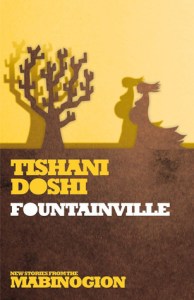 This is part of a Seren series retelling the medieval Welsh legends in the Mabinogion. Doshi has Welsh and Indian parentage; here she blends her knowledge of both countries and their stories. Luna, the narrator, works as an assistant to Begum, the Lady of the Fountain. Begum and her husband Kedar, a gangster, operate a shady surrogacy clinic. Then Owain Knight comes to town and makes Luna a proposition and things get complicated. Though this is novella length, it took me ages to slog through it. My lack of familiarity with the source text felt like a problem – I’d rather it had been summarized in a foreword rather than an afterword – and Doshi’s narrative is insipid despite the soap opera-ready content; I saw none of the spark and originality I’ve found in her excellent poetry. On this evidence I’m unlikely to pick up any more of her fiction. In any case, it was appropriate that I bought an ex-Swansea Libraries copy from Richard Booth’s Bookshop in Hay-on-Wye. (Secondhand purchase)
First Rain in Paradise by Gwyneth Lewis (2025)
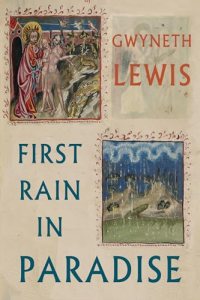 I’ve read a couple of Lewis’s poetry collections before (e.g. Parables and Faxes), as well as her memoir of depression and her travel book about sailing with her husband. She was Wales’s first poet laureate in 2005–6 and this is her sixth collection in English. The first section about her childhood with an emotionally abusive mother envisions her mother as a spider. The rest of the book traces the effects of that early trauma into chronic illness and mental health struggles. There is a sense of lost time. “Late Blackberries” opens “Where was I during the glut? I missed / the first sweetness, alluring and glossy // black as a dormouse’s eye, when pickings / were easy. A decade lost being ill tastes // bitter.” The imagery is drawn from physics, the countryside, medieval religious art, and the discovery of mummies. The two most quintessentially Welsh poems are “Red Waistcoat,” about coming across a dead ewe in a field, and “Under,” commemorating a fatal 2011 mining accident. Forasmuch as the book’s themes seemed perfectly assembled to appeal to me, I never felt they’d been brought to life in the language. (Secondhand purchase – Exeter charity shop)
A Writer’s House in Wales by Jan Morris (2002)
“My house is so absolutely of its setting, is rooted so profoundly not just in the soil, but in the very idea of Wales, that anywhere else it would lose all charisma.”
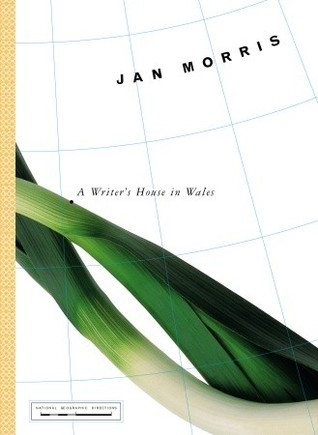 Although Jan Morris was famous for travelling the world and writing all about it, she equally loved being able to retreat to Trefan Morys, “for me … a summation, a metaphor, a paradigm, a microcosm, an examplar, a multum in parvo, a demonstration, a solidification, an essence, a regular epitome of all that I love about my country.” That excerpt from the first paragraph is a typical example of her effusive overwriting. This short book was clearly written for people (Americans) who know nothing about Wales, not even where on earth it is. I love her cosy evocation of her home – actually the renovated 18th-century stable block of the former family home, ample for her and Elizabeth in their dotage – and its bookshelves and animal life, whether domestic (Ibsen the Norwegian forest cat) or wild (bats in the attic!).
However, this was a reread and I found it indulgent as well as quaint this time around. It reminded me most of her diaries (the first volume was In My Mind’s Eye) and would be ideal for reading in tandem with those. Morris writes, “I am emotionally in thrall to Welshness.” I couldn’t help but think of biographer Sara Wheeler’s words about Morris’s contradictions: “she was a famous chronicler of the British Empire (some say an apologist for it) and a card-carrying Welsh nationalist. She was singular and contrary”. Wheeler slept in this house, in Morris’s bed, after her death while working through the papers.
I’ve always meant to source more from this National Geographic Directions series of brief travel books in which authors celebrate a beloved place. The only other I’ve read is Land’s End, Michael Cunningham’s book on Provincetown. (Free from The Book Thing of Baltimore)
For Advent last year and Lent this year, my church put on special evening compline services that combine liturgy and folk-inspired music my husband helped with. Earlier this month we had an extraordinary R.S. Thomas-themed service with some poems read aloud from the pulpit and others set to avant-garde music (a theremin was ruled out, but a harmonium, melodeon and glockenspiel featured, as well as a mandolin, banjo, toy piano and electric guitar). I was mostly unfamiliar with Thomas, who was a priest as well as a poet, and was gobsmacked by the commingling of scientific and theological vocabulary and the tolerance of doubt. Here are some extracts.
It is this great absence
that is like a presence,
that compels me to address it without hope
of a reply.
You speak
all languages and none,
answering our most complex
prayers with the simplicity
of a flower, confronting
us, when we would domesticate you
to our uses, with the rioting
viruses under our lens.
You have made God small,
setting him astride
a pipette
And all this in a carefully assembled pamphlet that I’ve kept as a souvenir.
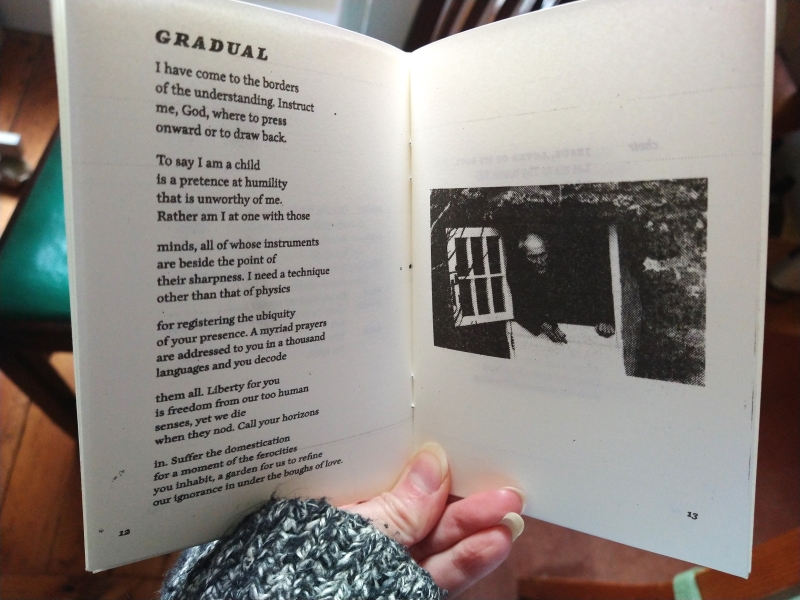
I might not have chosen the best books this year, but I’m still feeling well disposed towards the Welsh. A nice link is that Thomas lived just a few miles from Morris. In her book she calls him “perhaps the greatest Welsh poet writing in English since George Herbert.” She describes him thus: “I last set eyes on R. S. Thomas standing all alone beside our coastal road gazing silently into an adjacent wood, as though communing with the crows and blackbirds in its branches … Whenever I recall him at the roadside that day, looking silently into the trees as though the answer to all things was to be found among them, the memory gives me a sense of calm and liberation, as Wales itself does”.
Miscellaneous #ReadIndies Reviews: Mostly Poetry + Brown, Sands
Catching up on a few final #ReadIndies contributions in early March! Short responses to some indie reading I did from my shelves over the course of last month.

Bloodaxe Books:
Parables & Faxes by Gwyneth Lewis (1995)
 I was surprised to discover this was actually my fourth book by Lewis, a bilingual Welsh author: two memoirs, one of depression and one about marriage; and now two poetry collections. The table of contents suggest there are only 16 poems in the book, but most of the titles are actually headings for sections of anywhere between 6 and 16 separate poems. She ranges widely at home and abroad, as in “Welsh Espionage” and the “Illinois Idylls.” “I shall taste the tang / of travel on the atlas of my tongue,” Lewis writes, an example of her alliteration and sibilance. She’s also big on slant and internal rhymes – less so on end rhymes, though there are some. Medieval history and theology loom large, with the Annunciation featuring more than once. I couldn’t tell you now what that many of the poems are about, but Lewis’s telling is always memorable.
Sample lines:
For the one
who said yes,
how many
said no?
…
But those who said no
for ever knew
they were damned
to the daily
as they’d disallowed
reality’s madness,
its astonishment.
(from “The ‘No’ Madonnas,” part of “Parables & Faxes”)
(Secondhand purchase – Westwood Books, Sedbergh) 
&
Fields Away by Sarah Wardle (2003)
 Wardle’s was a new name for me. I saw two of her collections at once and bought this one as it was signed and the themes sounded more interesting to me. It was her first book, written after inpatient treatment for schizophrenia. Many of the poems turn on the contrast between city (London Underground) and countryside (fields and hedgerows). Religion, philosophy, and Greek mythology are common points of reference. End rhymes can be overdone here, and I found a few of the poems unsubtle (“Hubris” re: colonizers and “How to Be Bad” about daily acts of selfishness vs. charity). However, there are enough lovely ones to compensate: “Flight,” “Word Tasting” (mimicking a wine tasting), “After Blake” (reworking “Jerusalem” with “And will chainsaws in modern times / roar among England’s forests green?”), “Translations” and “Word Hill.”
Favourite lines:
(oh, but the last word is cringe!)
Catkin days and hedgerow hours
fleet like shafts of chapel sun.
Childhood in a cobwebbed bower
guards a treasure chest of fun.
(from “Age of Awareness”)
(Secondhand purchase – Carlisle charity shop) 
Carcanet Press:
Tripping Over Clouds by Lucy Burnett (2019)
 The title is a setup for the often surrealist approach, but where another Carcanet poet, Caroline Bird, is warm and funny with her absurdism, Burnett is just … weird. Like, I’d get two stanzas into a poem and have no idea what was going on or what she was trying to say because of the incomplete phrases and non-standard punctuation. Still, this is a long enough collection that there are a good number of standouts about nature and relationships, and alliteration and paradoxes are used to good effect. I liked the wordplay in “The flight of the guillemet” and the off-beat love poem “Beer for two in Brockler Park, Berlin.” The noteworthy Part III is composed of 34 ekphrastic poems, each responding to a different work of (usually modern) art.
Favourite lines:
This is a place of uncalled-for space
and by the grace of the big sky,
and the serrated under-silhouette of Skye,
an invitation to the sea unfolds
to come and dine with mountain.
(from “Big Sands”)
(New (bargain) purchase – Waterstones website) 
&
The Met Office Advises Caution by Rebecca Watts (2016)
 The problem with buying a book mostly for the title is that often the contents don’t live up to it. (Some of my favourite ever titles – An Arsonist’s Guide to Writers’ Homes in New England, The Voluptuous Delights of Peanut Butter and Jam – were of books I couldn’t get through). There are a lot of nature poems here, which typically would be enough to get me on board, but few of them stood out to me. Trees, bats, a dead hare on the road; maps, Oxford scenes, Christmas approaching. All nice enough; maybe it’s just that the poems don’t seem to form a cohesive whole. Easy to say why I love or hate a poet’s style; harder to explain indifference.
Sample lines:
Branches lash out; old trees lie down and don’t get up.
A wheelie bin crosses the road without looking,
lands flat on its face on the other side, spilling its knowledge.
(from the title poem)
(New (bargain) purchase – Amazon with Christmas voucher)
Faber:
Places I’ve Taken My Body by Molly McCully Brown (2020)
 The title signals right away how these linked autobiographical essays split the ‘I’ from the body – Brown resents the fact that disability limits her experience. Oxygen deprivation at their premature birth led to her twin sister’s death and left her with cerebral palsy severe enough that she generally uses a wheelchair. In Bologna for a travel fellowship, she writes, “There are so many places that I want to be, but I can’t take my body anywhere. But I must take my body everywhere.” A medieval city is particularly unfriendly to those with mobility challenges, but chronic pain and others’ misconceptions (e.g. she overheard a guy on her college campus lamenting that she’d die a virgin) follow her everywhere.
A poet, Brown earned minor fame for her first collection, which was about historical policies of enforced sterilization for the disabled and mentally ill in her home state of Virginia. She is also a Catholic convert. I appreciated her exploration of poetry and faith as ways of knowing: “both … a matter of attending to the world: of slowing my pace, and focusing my gaze, and quieting my impatient, indignant, protesting heart long enough for the hard shell of the ordinary to break open and reveal the stranger, subtler singing underneath.” This is part of a terrific run of three pieces, the others about sex as a disabled person and the odious conservatism of the founders of Liberty University. Also notable: “Fragments, Never Sent,” letters to her twin; and “Frankenstein Abroad,” about rereading this novel of ostracism at its 200th anniversary. (Secondhand purchase – Amazon)
New River Books:
The Hedgehog Diaries: A Story of Faith, Hope and Bristle by Sarah Sands (2023)
 Reasons for reading: 1) I’d enjoyed Sands’s The Interior Silence and 2) Who can resist a book about hedgehogs? She covers a brief slice of 2021–22 when her aged father was dying in a care home. Having found an ill hedgehog in her garden and taken it to a local sanctuary, she developed an interest in the plight of hedgehogs. In surveys they’re the UK’s favourite mammal, but it’s been years since I saw one alive. Sands brings an amateur’s enthusiasm to her research into hedgehogs’ place in literature, philosophy and science. She visits rescue centres, meets activists in Oxfordshire and Shropshire who have made hedgehog welfare a local passion, and travels to Uist to see where hedgehogs were culled in 2004 to protect ground-nesting birds’ eggs. The idea is to link personal brushes with death with wider threats of extinction. Unfortunately, Sands’s lack of expertise is evident. This was well-meaning, but inconsequential and verging on twee. (Christmas gift from my wishlist)
This and That (The January Blahs)
The January blahs have well and truly arrived. The last few months of 2023 (December in particular) were too full: I had so much going on that I was always rushing from one thing to the next and worrying I didn’t have the time to adequately appreciate any of it. Now my problem is the opposite: very little to do, work or otherwise; not much on the calendar to look forward to; and the weather and house so cold I struggle to get up each morning and push past the brain fog to settle to any task. As I kept thinking to myself all autumn, there has to be a middle ground between manic busyness and boredom. That’s the head space where I’d like to be living, instead of having to choose between hibernation and having no time to myself.
At least these frigid January days are good for being buried in books. Unusually for me, I’m in the middle of seven doorstoppers, including King by Jonathan Eig (perfect timing as Monday is Martin Luther King Jr. Day), Wellness by Nathan Hill, and Babel by R.F. Kuang (a nominal buddy read with my husband).
Another is Carol Shields’s Collected Short Stories for a buddy rereading project with Marcie of Buried in Print. We’re partway through the first volume, Various Miracles, after a hiccup when we realized my UK edition had a different story order and, in fact, different contents – it must have been released as a best-of. We’ll read one volume per month in January–March. I also plan to join Heaven Ali in reading at least one Margaret Drabble book this year. I have The Waterfall lined up, and her Arnold Bennett biography lurking. Meanwhile, the Read Indies challenge, hosted by Karen and Lizzy in February, will be a great excuse to catch up on some review books from independent publishers.
Literary prize season will be heating up soon. I put all of the Women’s Prize (fiction and nonfiction!) dates on my calendar and I have a running list, in a file on my desktop, of all the novels I’ve come across that would be eligible for this year’s race. I’m currently reading two memoirs from the Nero Book Awards nonfiction shortlist. Last year it looked like the Folio Prize was set to replace the Costa Awards, giving category prizes and choosing an overall winner. But then another coffee chain, Caffè Nero, came along and picked up the mantle.
This year the Folio has been rebranded as The Writers’ Prize, again with three categories, which don’t quite overlap with the Costa/Nero ones. The Writers’ Prize shortlists just came out on Tuesday. I happen to have read one of the poetry nominees (Chan) and one of the fiction (Enright). I’m going to have a go at reading the others that I can source via the library. I’ll even try The Bee Sting given it’s on both the Nero and Writers’ shortlists (ditto the Booker) and I have a newfound tolerance of doorstoppers.
As for my own literary prize involvement, my McKitterick Prize manuscript longlist is due on the 31st. I think I have it finalized. Out of 80 manuscripts, I’ve chosen 5. The first 3 stood out by a mile, but deciding on the other 2 was really tricky. We judges are meeting up online next week.
I’m listening to my second-ever audiobook, an Audible book I was sent as a birthday gift: There Plant Eyes by M. Leona Godin. My routine is to find a relatively mindless data entry task to do and put on a chapter at a time.
There are a handful of authors I follow on Substack to keep up with what they’re doing in between books: Susan Cain, Jean Hannah Edelstein, Catherine Newman, Anne Boyd Rioux, Nell Stevens (who seems to have gone dormant?), Emma Straub and Molly Wizenberg. So far I haven’t gone for the paid option on any of the subscriptions, so sometimes I don’t get to read the whole post, or can only see selected posts. But it’s still so nice to ‘hear’ these women’s voices occasionally, right in my inbox.
My current earworms are from Belle and Sebastian’s Late Developers album, which I was given for Christmas. These lyrics from the title track – saved, refreshingly, for last; it’s a great strategy to end on a peppy song (an uplifting anthem with gospel choir and horn section!) instead of tailing off – feel particularly apt:
Live inside your head
Get out of your bed
Brush the cobwebs off
I feel most awake and alive when I’m on my daily walk by the canal. It’s such a joy to hear the birdsong and see whatever is out there to be seen. The other day there was a red kite zooming up from a field and over the houses, the sun turning his tail into a burnished chestnut. And on the opposite bank, a cuboid rump that turned out to belong to a muntjac deer. Poetry fragments from two of my bedside books resonated with me.
This is the earnest work. Each of us is given
only so many mornings to do it—
to look around and love
the oily fur of our lives,
the hoof and the grass-stained muzzle.
Days I don’t do this
I feel the terror of idleness
like a red thirst.
That is from “The Deer,” from Mary Oliver’s House of Light, and reminds me that it’s always worthwhile to get outside and just look. Even if what you’re looking at doesn’t seem to be extraordinary in any way…
Importance leaves me cold,
as does all the information that is classed as ‘news’.
I like those events that the centre ignores:
small branches falling, the slow decay
of wood into humus, how a puddle’s eye
silts up slowly, till, eventually,
the birds can’t bathe there. I admire the edge;
the sides of roads where the ragwort blooms
low but exotic in the traffic fumes;
the scruffy ponies in a scrubland field
like bits of a jigsaw you can’t complete;
the colour of rubbish in a stagnant leat.
There are rarest enjoyments, for connoisseurs
of blankness, an acquired taste,
once recognised, it’s impossible to shake,
this thirst for the lovely commonplace.
(from “Six Poems on Nothing,” III by Gwyneth Lewis, in Parables & Faxes)
This was basically a placeholder post because who knows when I’ll next finish any books and write about them … probably not until later in the month. But I hope you’ve found at least one interesting nugget!
What ‘lovely commonplace’ things are keeping you going this month?
 Bookish Beck = Rebecca Foster. American transplant to England. Freelance proofreader and book reviewer.
 Bookish Beck