Review: Darke by Rick Gekoski
Dr. James Darke, the narrator of rare-book dealer Rick Gekoski’s debut novel, is of the same lineage as titular antiheroes like Hendrik Groen and Fredrik Backman’s Ove, or J. Mendelssohn, protagonist of the title novella in Colum McCann’s Thirteen Ways of Looking: an aging widower and curmudgeon with an unforgettable voice.
As Darke begins, this retired English teacher is literally sealing himself off from the world. He hires a handyman to take out the door’s built-in letterbox, change the locks and install a high-tech peephole; he has all his mail redirected to an old colleague, George; he changes his e-mail address; and he compiles a thorough list of service providers who will come to him – everything from grocery deliveries to a doctor. Now, with any luck, he won’t need to set foot outside his London home while he writes this “coming-of-old-age book.”
 For eight months Darke stays in self-imposed exile, his solitude broken only by visits from Bronya, a Bulgarian cleaner who engages him in discussions of his beloved Dickens. Although he’s only sixty-something, Darke sounds like a much older man, complaining of constipation and vision problems and launching a vendetta against the annoying neighbor dog. Ignoring the pile of adamant letters George guiltily delivers on behalf of Darke’s daughter, Lucy, he keeps up his very particular habits and rituals (I loved the steps of making coffee with an espresso-maker) and gives himself over to memories of life with Suzy.
The novel is tripartite: In Part I we meet Darke and get accustomed to his angry, hypercritical voice. In Part II we descend into a no-holds-barred account of his wife Suzy’s death from lung cancer. She’s another wonderful character: pessimistic, ungraceful and utterly foul-mouthed. Here Darke unleashes the full extent of his bitterness. He mocks the approach, advocated by Joan Didion (“that poor Joan D’Idiot,” he calls her!), of turning to sages of the past for comfort, instead insisting that literature – including W.B. Yeats, T.S. Eliot and all the rest – was of no use to him in the face of his wife’s impending death:
We don’t have God, so we have literature, with its associated proverbs and allegories, its received wisdom. We quote and genuflect and defer and pay homage, as if in a holy sanctuary. But just as God failed us, so too will reading. We will turn against it as certainly, and rightly, as we did against Him. Nobody, and nothing, can explain life for us.
Luckily, Part III is something of a reprieve, as Darke starts to come out of his temporary retreat and resume life. He has a rental car delivered and sets out for Oxford, where he revisits his and Suzy’s old university haunts and hesitantly reopens a connection with Lucy and her young son, Rudy.
Sebastian Barry astutely notes the novel’s debt to Dante, but the component parts of the Divine Comedy are reordered, with the purgatory of the house-bound months broken by the hellish narrative of Suzy’s dying, which is then lifted by Darke’s return to life.
Each section has a different tone and is enjoyable in its own way, but for me there was no getting around the fact that Part I is the most entertaining. I was surprised to read in the Acknowledgments that Gekoski toned down this first dose of Darke considerably, on the advice of his wife and his literary agent; I think he could have hammed him up a fair bit more. Also, Lucy didn’t ring true for me as a character, which detracted from what’s meant to be an alternately volatile and poignant relationship; I preferred Darke’s scenes with Bronya.
In any case, the novel makes great metaphorical use of light and darkness. Not so subtle, maybe, but it works:
witnessing a protracted and horrible death infects the soul, the images implant themselves, root and flourish, you can never look at yourself or others in the innocent light – you are tarnished, uncleanably darkened.
And of course, look to literature and you find nothing but “shitslingers – Kahlil Gibran, Mr Tolstoy, the dreaded Eliot – all of them. Just wandering in the dark with flashlights.”
With lots of memorable scenes and turns of phrase, Darke is a rewarding glance at loss, literature and the sometimes futile search for salvation. It’s inspiring to see Gekoski, an American-born academic and literary critic (he’s been dubbed the Bill Bryson of the book world), turn his hand to fiction at age 71. I knew of him through his nonfiction, including Outside of a Dog: A Bibliomemoir, which I read in 2010, and have also enjoyed a couple of his articles that nicely presage this novel, on the subjects of reading through grief and turning against print books. I hope you’ll give his work a try.
Darke was published in the UK on February 2nd. With thanks to Becca Nice and Jamie Norman of Canongate for the free copy for review.
My rating: 
Reviews Roundup, April–May
Every month I compile the book reviews I’ve published elsewhere, with a rating (below each description) and a taster so you can decide whether to click on the link to read more.
The Bookbag
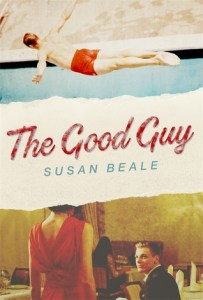 The Good Guy by Susan Beale: You might think there’s nothing new to add to the suburban-angst-and-adultery storyline. What Beale does so beautifully in this debut novel is to put you right into the minds of the three main characters. This is a story about the differences between what’s easy and what’s right, and the quest to make amends wherever possible. It’s also a cautionary tale: be careful what you wish for, because that boring life you were so eager to escape may just be what you wanted after all. I also love the range of settings, from the dazzling Shoppers’ World mall to a beach house on Cape Cod. This is a delicious, slightly gossipy summer read with a Mad Men feel to it. I’d especially recommend this to fans of The Longest Night and Tigers in Red Weather. Releases June 16th.

 Invincible Summer by Alice Adams: Four Bristol University friends navigate the highs and lows of life in the 20 years following graduation. Like in One Day, the narrative checks in on the characters nearly every summer. As happens in real life, even the closest friends gradually drift apart. Job situations and relationships change, and external events like the financial collapse of 2008 take a toll. Compared to some other similar recent novels (e.g. Why We Came to the City by Kristopher Jansma), this debut somewhat lacks sparkle. Releases June 2nd in the UK and June 28th in the USA.

This Must Be the Place by Maggie O’Farrell: O’Farrell’s globe-trotting seventh novel opens in 2010 with Daniel Sullivan, an American linguistics professor in Donegal. Spreading outward from Ireland and reaching into every character’s past and future, this has all O’Farrell’s trademark insight into family and romantic relationships, as well as her gorgeous prose and precise imagery. The disparate locations and the title suggest our nomadic modern condition. It’s the widest scope she has attempted yet; that’s both a good and a bad thing. I did wonder if there were a few too many characters and plot threads.
BookBrowse
(A subscriber service, so I can only make excerpts available.)
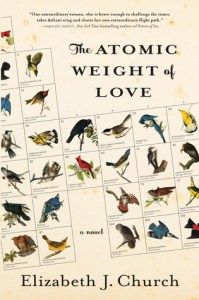 The Atomic Weight of Love by Elizabeth J. Church: In Church’s debut, an amateur ornithologist learns about love and sacrifice through marriage to a Los Alamos physicist and a relationship with a Vietnam veteran. Torn between two men who mean so much to her, Meri has to consider what her true duties are. “There was no good solution. No clear way out, no approach that would earn the Good Housekeeping Seal of Approval,” she wryly observes. I instantly warmed to Meri as a narrator and loved following her unpredictable life story. Church reveals the difficulty a woman of that time had in choosing her own path and making it fit into men’s plans, and shows how love, as the title suggests, can be a burden but also a thing of reassuring substance. Meri longs, like one of her beloved birds, to take flight into her dreams. Whether she gets there, and how, is a bittersweet trip but one you’ll be glad you went along for.
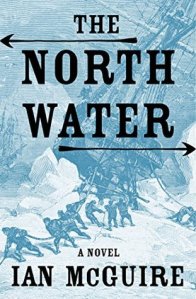 The North Water by Ian McGuire: A gritty tale of adventure and murder set aboard a mid-nineteenth-century whaling ship. Archaic adjectives pile up in a clever recreation of Victorian prose: “The men, empurpled, reeking, drenched in the fish’s steaming, expectorated gore.” Much of the novel is bleak and brutal like that. There are a lot of “F” and “C” words, too; this is so impeccably researched that I don’t doubt the language is accurate. McGuire never shies away from gory detail, whether that’s putrid smells, bodily fluids, animal slaughter, or human cruelty. I thought the novel’s villain was perhaps too evil, with no redeeming features. Still, this is a powerful inquiry into human nature and the making of ethical choices in extreme circumstances. From the open seas to the forbidding polar regions, this is a journey worth taking.
Foreword Reviews
Rediscovering the Immune System as an Integrated Organ by Peter Bretscher: A rigorous introduction to current immunological thought. Vocabulary terms are given in bold italics and defined in context on first use, and each chapter ends with a helpful synopsis. However, these summaries are almost as dense as the text itself, and the many acronyms are difficult to keep straight. Unlike a textbook, though, the book also contains welcome snippets of autobiography. Bretscher traces not just the evolution of immunological knowledge, but also the development of his own thinking. This will be an invaluable resource for students in search of a nonstandard immunology primer. With research under way into vaccinations against AIDS, tuberculosis, and cancer, the field has a bright future.
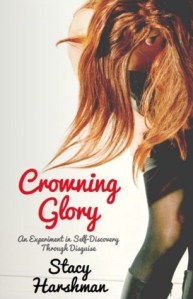 Crowning Glory: An experiment in self-discovery through disguise by Stacy Harshman: In 2005, Harshman decided to embark on a sociological experiment-cum-personal challenge: each week for six weeks she donned a different wig, and with the help of her assistant, Bonnie, she carefully recorded the reactions she received from onlookers and potential partners. Each day she chose three New York City locales, taking in events like lunch, happy hour, and late night socializing. Recalling the time she was hospitalized for a psychotic break in 2000, she marvels at how changing hairstyles could help her feel self-assured and sexy. The book is an appealing cross between a scientific study and a spy story.
Nudge
 All at Sea by Decca Aitkenhead: In May 2014, Aitkenhead, a Guardian writer, was on vacation with her partner Tony Wilkinson and their two young sons in Jamaica. A beautiful sunny morning turned disastrous when Tony swam out to rescue their son Jake and drowned. After the tragic events of the first chapter, this wrenching memoir retreats to consider the 10 years she and Tony (a former criminal and crack addict) spent as “the most implausible couple I have ever known.” More than half the book is devoted to the aftermath of Tony’s death, described in a matter-of-fact style that still manages to convey the depth of Aitkenhead’s pain. This is a unique combination of a journalist’s forthright storytelling and the ‘magical thinking’ Joan Didion introduced. Releases in the States on August 16th.
 Diary of a Short-Sighted Adolescent by Mircea Eliade: This rediscovered Romanian classic is what you might get if a teenage Adrian Mole was studying for a philosophy degree. Before picking this up I knew of Eliade as a commentator on world religions. I didn’t realize he also wrote novels. This is particularly special in that it’s a lost manuscript he wrote as a teenager; it was only discovered in a Bucharest attic after his death in the 1980s. The novel’s chief detriments – the repetitive nature of the sections about his schooling, and his obsessive introspection – are also, ironically, what make it most true to the adolescent experience. I’d recommend it to fans of My Brilliant Friend and Melanie Sumner’s How to Write a Novel.

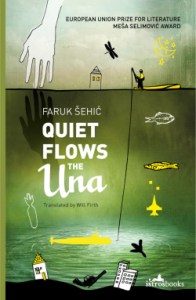 Quiet Flows the Una by Faruk Šehić: This autobiographical novel by a Bosnian poet and former soldier is full of poetic language and nature imagery. The narrator transcends his sordid war memories through his magical approach to life. Actual war scenes only come much later in the book; even then they are conveyed in such an abstract style that they seem more like hallucinations than remembered events. The lyrical writing about his beloved river provides a perfect counterpoint to the horror and absurdity of war. “We made this town, Bosanska Krupa, of black mire, yellow sand and green water borrowed from the Una. The tall towers of our town tickle God’s feet.” What most impressed me about passages like that one is the alliteration that shines through even after translation. I would highly recommend this to readers of Anthony Marra and Daniel Kehlmann.

 Shelter by Jung Yun: A Korean-American family faces up to violence past and present in this strong debut. Finances and relationships just keep going from bad to worse, as the novel’s tripartite structure suggests: “Dawn” cedes to “Dusk,” which descends into “Night.” You wonder just how terrible things can get – will this really reach the Thomas Hardy levels of tragedy it seems to portend? – until, in the incredible last 10 pages, Yun pulls back from violence and offers the hope of redemption. I did wonder if there were a few too many secondary characters. However, the Korean-American culture of honor and shame makes a perfect setting. I would recommend this to fans of David Vann and Richard Ford.
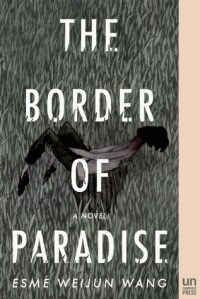 The Border of Paradise by Esmé Weijun Wang: Mental illness haunts an Asian-American family in this offbeat multi-generational saga. Wang’s debut novel opens in 1968 with David Nowak reporting from the motel room where he plans to kill himself. Succeeding portions of the novel are narrated from other perspectives: David’s wife Jia-Hui, aka Daisy, whom he met in Taiwan; then their son William and his half-sister Gillian. Jia-Hui’s narrative is the most entrancing. Presented as a translation, it includes occasional foreign characters or blank spaces where she couldn’t quite catch what someone was saying in English. Her sections are full of foreboding about the family legacy of madness. I was reminded most of A Reunion of Ghosts and All My Puny Sorrows. Something about this book left a slightly bitter aftertaste for me, but there’s no doubt Wang has fine plotting, character building, and prose skills.
 The Story of a Seagull and the Cat Who Taught Her to Fly by Luis Sepúlveda: Zorba, a fat black cat, will be alone this summer while his boy’s family go on holiday – convenient given the adventure that’s about to befall him. Kengah, an exhausted and oil-drenched seagull, lands on his balcony and lays a final, precious egg. She makes Zorba promise he will not eat the egg but will look after her baby and teach it to fly. He enlists his motley group of fellow cats at the port of Hamburg to help him figure out how to raise a chick. Sepúlveda, a Chilean author, was jailed under the Pinochet regime and was later on the crew of a Greenpeace ship. The environmental message here is noticeable but not overpowering. Geared towards confident nine- to eleven-year-olds, this might also be read aloud with younger children.
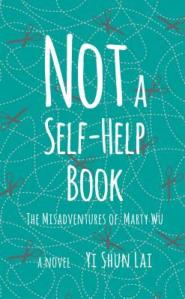 Not a Self-Help Book: The Misadventures of Marty Wu by Yi Shun Lai: Marty Wu is an advertising account executive for a NYC retirees’ magazine but dreams of opening her own costume shop. This debut novel is her Bridget Jones-esque diary, often written in a kind of shorthand style contrasting her goals with her seemingly inevitably failures, as in: “Crap. Is 4:00 a.m. Have breakfast meeting. Must sleep.” She’s constantly quoting to herself the advice and wisdom she’s gleaned from various motivational books she picked up in hopes of self-improvement. Lai writes engagingly about the contrasts between Taiwan and the States, especially the complexities of family roles. This is a lighthearted, summery read. Watch Marty ditch self-help books and start living the life she wants anyway.
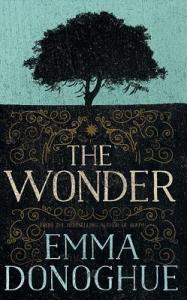 The Wonder by Emma Donoghue: A nurse investigates the case of an Irish girl surviving without food for months: miracle or hoax? The novel draws on about 50 historical cases of “Fasting Girls” that occurred in Europe and North America in the 16th to 20th centuries. It sets up a particularly effective contrast between medicine and superstition. Donoghue writes convincing, vivid historical fiction, peppering the text with small details about everything from literature to technology. This is the fifth book I’ve read by her, and it’s by far my favorite. With the two-week time limit and the fact that most scenes take place in the cabin – with just a handful set in other village locales like the bog and the pub where Lib stays – this has something of the flavor of a locked-room mystery. Releases September 20th.
Football by Jean-Philippe Toussaint: A nostalgic tour through a soccer fan’s highlights. Over the years Toussaint has realized what he loves about the sport: its seasonality (the World Cup “comes round every four years with the regularity of a leap-year seasonal fruit”) and the rituals of attending a match. On the other hand, he recognizes downsides, such as temporary permission given to chauvinism and the fact that it doesn’t age well – it’s an instant thing; one doesn’t tend to watch repeats. My favorite chapter, set in 2014, is less about sports and more about a hard time in the author’s personal life: he had recently lost his father and finished a ten-year novel sequence, leaving him unsure what to do next. I enjoyed his introspective passages about the writing life and the sense of purpose it gives his struggles. I was not the ideal reader, given my general antipathy to sports and my unfamiliarity with the author. All the same, I can see how this would appeal to fans of Fever Pitch.
Bibliotherapy for the New Year
In January lots of us tend to think about self-improvement for the New Year. Books can help! I’m resurrecting a post I first wrote as part of a series for Bookkaholic in April 2013 in hopes that those new to the concept of bibliotherapy will find it interesting.
I happen to believe – and I’m not the only one, not by a long shot – that a relationship with books can increase wellbeing. The right book at the right time can be a powerful thing, not just amusing and teaching, but also reassuring and even healing. Indeed, an ancient Greek library at Thebes bore an inscription on the lintel naming it a “Healing-Place for the Soul.”
The term “bibliotherapy,” from the Greek biblion (books) + therapeia (healing), was coined in 1916 by Samuel McChord Crothers (1857-1927). Crothers, a Unitarian minister and essayist, introduced the word in an Atlantic Monthly piece called “A Literary Clinic.” The use of books as a therapeutic tool then came to the forefront in America during the two world wars, when librarians received training in how to suggest helpful books to veterans recuperating in military hospitals. Massachusetts General Hospital had founded one of the first patients’ libraries, in 1844, and many other state institutions – particularly mental hospitals – had followed suit by the time of the First World War. Belief in the healing powers of reading was becoming more widespread; whereas once it had been assumed that only religious texts could edify, now it was clear that there could be benefits to secular reading too.
Read this for what ails you
Clinical bibliotherapy is still a popular strategy, often used in combination with other medical approaches to treat mental illness. Especially in the UK, where bibliotherapy is offered through official National Health Service (NHS) channels, library and health services work together to give readers access to books that may aid the healing process. Over half of England’s public library systems offer bibliotherapy programs, with a total of around 80 schemes documented as of 2006. NHS doctors will often write patients a ‘prescription’ for a recommended book to borrow at a local library. These books will usually fall under the umbrella of “self-help,” with a medical or mental health leaning: guides to overcoming depression, building self-confidence, dealing with stress, and so on.
Books can serve as one component of cognitive behavioral therapy, which aims to modify behavior through the identification of irrational thoughts and emotions. Bibliotherapy has also been shown to be an effective method of helping children and teenagers cope with problems: everything from parents’ divorce to the difficulties of growing up and resisting peer pressure. Overall, bibliotherapy is an appealing strategy for medical professionals to use with patients because it is low-cost and low-risk but disproportionately effective.
In addition to clinical bibliotherapy, libraries also support what is known as “creative bibliotherapy” – mining fiction and poetry for their healing powers. Library pamphlets and displays advertise their bibliotherapy services under names such as “Read Yourself Well” or “Reading and You,” with eclectic, unpredictable lists of those novels and poems that have proved to be inspiring or consoling. With all of these initiatives, the message is clear: books have the power to change lives by reminding ordinary, fragile people that they are not alone in their struggles.
The School of Life
London’s School of Life, founded by Alain de Botton, offers classes, psychotherapy sessions, secular ‘sermons,’ and a library of recommended reading tackle subjects such as job satisfaction, creativity, parenting, ethics, finances, and facing death with dignity. In addition, the School offers bibliotherapy sessions (one-on-one, for adults or children, or, alternatively, for couples) that can take place in person or online. A prospective reader fills out a reading history questionnaire before meeting the bibliotherapist, and can expect to walk away from the session with one instant book prescription. A full prescription of another 5-10 books arrives within a few days.
In 2011 The Guardian sent six of its writers on School of Life bibliotherapy sessions; their consensus seemed to be that, although the sessions produced some intriguing book recommendations, at £80 (or $123) each they were an unnecessarily expensive way of deciding what to read next – especially compared to asking a friend or skimming newspapers’ reviews of new books. Nonetheless, it is good to see bibliotherapy being taken seriously in a modern, non-medical context.
A consoling canon
You don’t need a doctor’s or bibliotherapist’s prescription to convince you that reading makes you feel better. It cheers you up, makes you take yourself less seriously, and gives you a peaceful space for thought. Even if there is no prospect of changing your situation, getting lost in a book at least allows you to temporarily forget your woes. In Comfort Found in Good Old Books (1911), a touching work he began writing just 10 days after his son’s sudden death, George Hamlin Fitch declared “it has been my constant aim to preach the doctrine of the importance of cultivating the habit of reading good books, as the chief resource in time of trouble and sickness.”
Indeed, as Rick Gekoski noted last year in an article entitled “Some of my worst friends are books,” literary types have always turned to reading to help them through grief. He cites the examples of Joan Didion coming to grips with her husband’s death in The Year of Magical Thinking, or John Sutherland facing up to his alcoholism in The Boy Who Loved Books. Gekoski admits to being “struck and surprised, both envious and a little chagrined, by how literary their frame of reference is. In the midst of the crisis…a major reflex is to turn, for consolation and understanding, to favorite and esteemed authors.” Literary critic Harold Bloom confirms that books can provide comfort; in The Western Canon he especially recommends William Wordsworth, Walt Whitman, and Emily Dickinson as “great poets one can read when one is exhausted or even distraught, because in the best sense they console.”
Just as in a lifetime of reading you will develop your own set of personal classics, you are also likely to build up a canon of favorite books to consult in a crisis – books that you turn to again and again for hope, reassurance, or just some good laughs. For instance, in More Book Lust Nancy Pearl swears by Bill Bryson’s good-natured 1995 travel book about England, Notes from a Small Island: “This is the single best book I know of to give someone who is depressed, or in the hospital.” (With one caveat: beware, your hospitalized reader may well suffer a rupture or burst stitches from laughing.)
Just what you needed
There’s something magical about that serendipitous moment when a reader comes across just the right book at just the right time. Charlie D’Ambrosio confides that he approaches books with a quiet wish: “I hope in my secret heart someone, somewhere, mysteriously influenced and moved, has written exactly what I need” (his essay “Stray Influences” is collected in The Most Wonderful Books). Yet this is not the same as superstitiously expecting to open a book and find personalized advice. Believe it or not, this has been an accepted practice at various points in history. “Bibliomancy” means consulting a book at random to find prophetic help – usually the Bible, as in the case of St. Augustine and St. Francis of Assisi. St. Francis’s first biographer, Thomas of Celano, wrote that “he humbly prayed that he might be shown, at his first opening the book, what would be most fitting for him to do” (in his First Life of St Francis of Assisi).
Perhaps meeting the right book is less like a logical formula and more like falling in love. You can’t really explain how it happened, but there’s no denying that it’s a perfect match. Nick Hornby likens this affair of the mind to a dietary prescription – echoing that medical tone bibliotherapy can often have: “sometimes your mind knows what it needs, just as your body knows when it’s time for some iron, or some protein” (in More Baths, Less Talking).
Entirely by happenstance, a book that recently meant a lot to me is one of the six inaugural School of Life titles, How to Stay Sane by psychotherapist Philippa Perry. Clearly and practically written, with helpful advice on how to develop wellbeing through self-observation, healthy relationships, optimism, and exercise, Perry’s book turned out to offer just what I needed.
I’ve been busy visiting family in the States but I’ll be back soon with a review of The Novel Cure from School of Life bibliotherapists Ella Berthoud and Susan Elderkin.
 Bookish Beck = Rebecca Foster. American transplant to England. Freelance proofreader and book reviewer.
 Bookish Beck