Short Nonfiction Series for Novellas in November + Nonfiction November
Most Novellas in November participants focus on fiction, which is understandable and totally fine; I also like to incorporate works of short nonfiction during the month, which is a great opportunity to combine challenges with Nonfiction November.
Building on this list I wrote in 2021 (all the recommendations stand, but I’d update it by adding Weatherglass Books to the list of UK publishers), here are some nonfiction series that publish brief, intriguing works:
404 Ink’s Inklings series bears the tagline “big ideas to carry in your pocket.”
 I have reviewed Happy Death Club.
Biteback Publishing’s Provocations series “is a groundbreaking new series of short polemics composed by some of the most intriguing voices in contemporary culture.”
- I have reviewed Last Rights. I spied a pair of books by John Sutherland on youth and ageing at my library.

Bloomsbury’s Object Lessons series “is a series of concise, collectable, beautifully designed books about the hidden lives of ordinary things.”
- I have reviewed Doctor, Dust, Grave, Pregnancy Test, and Recipe.
Bloomsbury’s 33 1/3 is “a series of short books about popular music.”
- I have reviewed Jesus Freak.
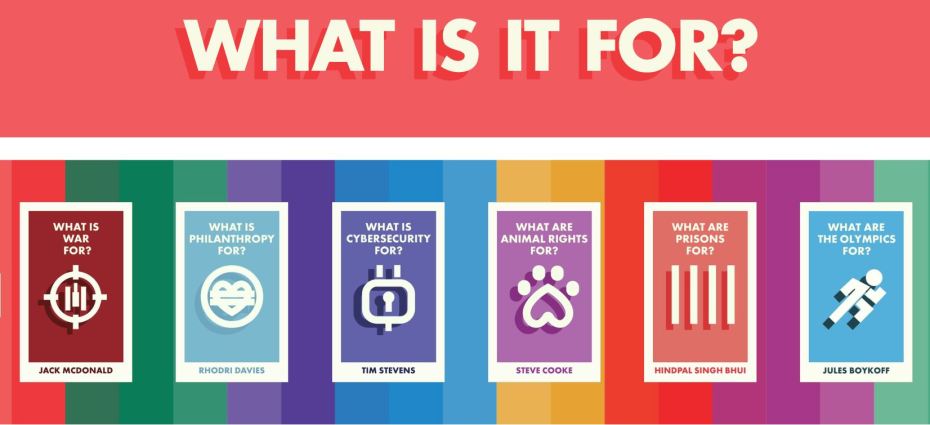
Bristol University Press’s What Is It For series is edited by George Miller, creator of the OUP Very Short Introductions (see below). Miller believes “short, affordable books can, and should, be intelligent and thought-provoking”; he hopes these will “be an agent for positive change,” addressing “tough questions about purpose and fitness for purpose: what has to change for the future to be better?”
A number of Fitzcarraldo Editions’ Essays are significantly under 200 pages.
 I have reviewed Intervals, A Very Easy Death, Happening, I Remain in Darkness, A Woman’s Story, and Alphabetical Diaries (plus others that are longer).
[Edited:] Thanks so much to Liz for letting me know about Jacaranda Books’ A Quick Ting On series, “the first ever non-fiction book series dedicated to Black British culture,” with books on plantains, Grime music, Black hair, and more.
[Edited:] There are three books so far in the Leaping Hare Press Find Your Path self-help series. I have just downloaded Find Your Path through Imposter Syndrome from Edelweiss.
Little Toller Books publishes mostly short nature and travel monographs and reprints.
- I have reviewed Deer Island, Aurochs and Auks, Orison for a Curlew, Herbaceous, The Ash Tree, and Snow.

From the Little Toller website
[Edited:] Thanks so much to Annabel for making me aware of Melville House’s The FUTURES series, which gives “imaginative future visions on a wide range of subjects, written by experts, academics, journalists and leading pop-culture figures.”
MIT Press’s Essential Knowledge series “offers accessible, concise, beautifully produced books on topics of current interest.” I spotted the Plastics book at my library.
Oxford University Press’s Very Short Introductions now cover a whopping 867 subjects!
- I had a couple of them assigned in my college days, including Judaism.
Penguin’s 100-book Great Ideas series reprints essays that introduce readers to “history’s most important and game-changing theories, philosophies and discoveries in accessible, concise editions.”
A number of Profile’s health-themed Wellcome Collection Books are well under 200 pages.
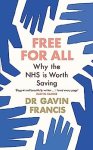
- I have reviewed Recovery, Free for All, Chasing the Sun, An Extra Pair of Hands, and After the Storm (plus others that are longer).


Saraband’s In the Moment series contains “portable, accessible books … exploring the role of both mind and body in movement, purpose, and reflection, finding ways of being fully present in our activities and environment.”
- I’m interested in Writing Landscape by Linda Cracknell and On Community by Casey Plett.
 Most of the original School of Life books are around 150 pages long. Their newer Essential Ideas series of three titles also promises “pocket books.”
- I have reviewed How to Develop Emotional Health, How to Age, How to Be Alone, and How to Think about Exercise.
Why not see if your local library has any selections from one or more of these series? #LoveYourLibrary

If you’re a reluctant nonfiction reader, choosing a short book could be a great way to engage with a topic that interests you – without a major time commitment. #NonfictionNovember
Keep in touch via X (@bookishbeck / @cathy746books) and Instagram (@bookishbeck / @cathy_746books). Add any related posts to the link-up. Don’t forget the hashtag #NovNov24.
Any suitable short nonfiction on your shelves?
The Art of Mindful Reading by Ella Berthoud
Ella Berthoud is one of the bibliotherapists at the School of Life in London and co-author of The Novel Cure. (I wrote about my bibliotherapy session with her in this post.) For her contribution to a Leaping Hare Press series on mindfulness – whose titles range from The Mindful Art of Wild Swimming to Mindfulness and the Journey of Bereavement – she’s thought deeply about how reading can be an active, deliberate practice rather than a time of passive receiving or entertainment. Through handy exercises and quirky tips she encourages readers to take stock of how they read and to become more aware of each word on the page.

To start with, a close reading exercise using a passage from Alice in Wonderland invites you to find out whether you’re an auditory, visual or kinesthetic reader. I learned that I’m a cross between auditory and visual: I hear every word aloud in my head, but I also picture the scenes, usually unfolding in black and white in settings that are familiar to me (my childhood best friend’s home used to be a common backdrop, for instance). The book then discusses ways to incorporate reading into daily life, from breakfast to bedtime and from a favorite chair to the crook of a tree, and how to combine it with other activities. I will certainly be trying out the reading yoga poses!
As I discovered at my bibliotherapy appointment, Ella is passionate about getting people reading in as many different ways as possible. That can include listening to audiobooks, reading aloud with a partner, or reading silently but in company with other people. She also surveys the many ways there are of sharing an enthusiasm for books nowadays, such as Book Crossing, book clubs and Little Free Libraries.

Although she acknowledges the place of e-readers and smartphones, Ella generally describes reading as a tactile experience, and insists on the importance of keeping a print reading journal as well as a ‘Golden Treasury’ of favorite passages, two strategies that will combat the tendency to forget a book as soon as you’ve finished it.
Some of her suggestions of what to do with physical books are beyond the pale for me – such as using a knife to slice a daunting doorstopper into more manageable chunks, or beating up a much-hyped book to “rob [it] of its glamour and gloss, and bring it down from its pedestal to a more humble state, a place where you can read it in comfort” – but there are ideas here to suit every kind of reader. Take a quick break between novels and use this book to think about how you read and in what ways you could improve or intensify the experience.
Favorite passages:
“As a bibliotherapist, I believe that every novel you read shapes the person that you are, speaking to you on a deep, unconscious level, and altering your very nature with the ideas that it shows you.”
“I often find that people imagine reading fiction is a self-indulgent thing to do, and that they ought to be doing something else. Much research has been conducted into the benefits of reading fiction, which deepens your empathy and emotional intelligence, helps with making important life decisions and allows your brain to rest. Research has shown that reading provides as much relaxation as meditation”
My rating: 
With thanks to Leaping Hare Press for the free copy for review.
 Bookish Beck = Rebecca Foster. American transplant to England. Freelance proofreader and book reviewer.
 Bookish Beck