The 2017 Releases I’m Most Excited About
2017 hasn’t even begun and already I’m overwhelmed by the quantity and quality of new books to be released. This is by no means a full picture of what’s coming out next year; it’s only 30 titles that I happen to have heard about and/or know I want to seek out. The descriptions are taken from the publisher blurbs on Goodreads, NetGalley or Edelweiss. Some of these I already have access to in galley form; others I’ll be doing my darndest to get hold of! (Within categories, titles are in alphabetical order by author rather than by publication date.)
ASSIGNED
English Animals by Laura Kaye (for the blog tour) [Jan. 12, Little, Brown UK]: “When Mirka [from Slovakia] gets a job in a country house in rural England, she has no idea of the struggle she faces to make sense of a very English couple, and a way of life that is entirely alien to her.”
 Pachinko by Min Jin Lee (for BookBrowse) [Feb. 7, Grand Central]: “Pachinko follows one Korean family through the generations, beginning in [the] early 1900s. … [A] sweeping saga of an exceptional family in exile from its homeland and caught in the indifferent arc of history.”
No One Is Coming to Save Us by Stephanie Watts Powell (for the Pittsburgh Post-Gazette) [Apr. 4, Ecco]: “The Great Gatsby brilliantly recast in the contemporary South: a powerful first novel about an extended African-American family and their colliding visions of the American Dream.”
The Twelve Lives of Samuel Hawley by Hannah Tinti (for The Bookbag) [Mar. 28, Tinder Press]: “A father protects his daughter from the legacy of his past and the truth about her mother’s death in this thrilling new novel … Both a coming-of-age novel and a literary thriller, The Twelve Lives of Samuel Hawley explores what it means to be a hero, and the cost we pay to protect the people we love most.”
NOVELS (all by authors I’ve enjoyed in the past)
Greatest Hits by Laura Barnett [June 15, W&N]: “Cass Wheeler [is] a British singer-songwriter, hugely successful since the early 70s … Her task is to choose 16 songs from among the hundreds she has written … for a uniquely personal Greatest Hits record”
The Idiot by Elif Batuman [Mar. 14, Penguin]: “1995: Selin, the daughter of Turkish immigrants, arrives for her freshman year at Harvard. … With superlative emotional and intellectual sensitivity, mordant wit, and pitch-perfect style, Batuman dramatizes the uncertainty of life on the cusp of adulthood.”
The Hearts of Men by Nickolas Butler [Mar. 7, Ecco]: “Nelson, irrevocably scarred from the Vietnam War, becomes Scoutmaster of Camp Chippewa, while Jonathan marries, divorces, and turns his father’s business into a highly profitable company. … [A] sweeping, panoramic novel about the slippery definitions of good and evil, family and fidelity”
New Boy by Tracy Chevalier [May 16, Hogarth]: “The tragedy of Othello is transposed to a 1970s suburban Washington schoolyard, where kids fall in and out of love with each other before lunchtime, and practice a casual racism picked up from their parents and teachers.”
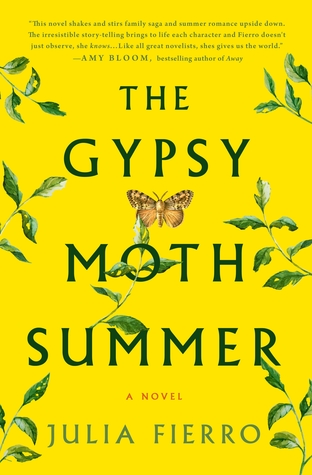 Gypsy Moth Summer by Julia Fierro [June 6, St. Martin’s]: “It is the summer of 1992 and a gypsy moth invasion blankets Avalon Island. … The Gypsy Moth Summer is about love, gaps in understanding, and the struggle to connect: within families; among friends; between neighbors and entire generations.” – Plus, get a load of that gorgeous cover!
Grief Cottage by Gail Godwin [June 6, Bloomsbury USA]: “Grief Cottage is the best sort of ghost story, but it is far more than that—an investigation of grief, remorse, and the memories that haunt us. The power and beauty of this artful novel wash over the reader like the waves on a South Carolina beach.”
The Evening Road by Laird Hunt [Feb. 7, Little, Brown & Co.]: “Reminiscent of the works of Louise Erdrich, Edward P. Jones and Marilynne Robinson, The Evening Road is the story of two remarkable women on the move through an America riven by fear and hatred, and eager to flee the secrets they have left behind.”
 The Awkward Age by Francesca Segal [May 4, Chatto & Windus]: “In a Victorian terraced house, in north-west London, two families have united in imperfect harmony. … This is a moving and powerful novel about the modern family: about starting over; about love, guilt, and generosity; about building something beautiful amid the mess and complexity of what came before.” – Sounds like Ann Patchett’s Commonwealth…
The Best of Adam Sharp by Graeme Simsion [Feb. 9, Penguin]: “The Best of Adam Sharp is about growing old and feeling young, about happy times and sad memories, about staying together and drifting apart, but most of all, it’s about how the music we make together creates the soundtrack that shapes our lives.” – Sounds a lot like the Barnett!
SHORT STORIES (also by authors I’ve enjoyed in the past)
The Dinner Party by Joshua Ferris: [May 2, Little, Brown & Co.]: “Full of the keenly observed, mordant wit that characterizes his beloved, award-winning novels, the stories in The Dinner Party are about people searching for answers in the aftermath of life’s emotional fissures”
Bad Dreams and Other Stories by Tessa Hadley [May 16, Harper]: “Hadley has proven herself to be the champion of revealing the hidden depths in the deceptively simple. In these short stories it’s the ordinary things that turn out to be most extraordinary: the history of a length of fabric or a forgotten jacket.”
NOVELS BY AUTHORS NEW TO ME
 A Separation by Katie Kitamura [Feb. 7, Riverhead Books]: “A mesmerizing, psychologically taut novel about a marriage’s end and the secrets we all carry.”
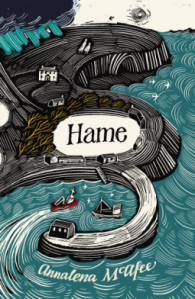
Hame by Annalena McAfee (Mrs. Ian McEwan) [Feb. 9, Harvill Secker]: “Mhairi McPhail dismantles her life in New York and moves with her 9-year-old daughter, Agnes, to the remote Scottish island of Fascaray. Mhairi has been commissioned to write a biography of the late Bard of Fascaray, Grigor McWatt, a cantankerous poet with an international reputation.”
NONFICTION: memoirs
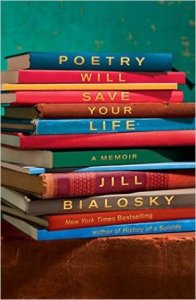 Poetry Can Save Your Life: A Memoir by Jill Bialosky [June 13, Atria]: “[A]n unconventional coming-of-age memoir organized around the 43 remarkable poems that gave her insight, courage, compassion, and a sense of connection at pivotal moments in her life.”
Between Them: Remembering My Parents by Richard Ford [May 2, Harper Collins]: “Ford brings his trademark candor, wit, and empathetic storytelling to the most intimate of landscapes: that of his love for two people who remain a mystery. Mining poignant details of his life in the American South during some iconic periods of the 20th century, Between Them illuminates the writer’s past as well as his beliefs on memory, relationships, and self-knowledge.”
The Mighty Franks: A Family Memoir by Michael Frank [May 16, Farrar, Straus and Giroux]: “A psychologically acute memoir about an unusual and eccentric Hollywood family.”
Sick: A Life of Lyme, Love, Illness, and Addiction by Porochista Khakpour [Aug. 8, Harper Perennial]: “In the tradition of Brain on Fire and The Empathy Exams, an honest, beautifully rendered memoir of chronic illness, misdiagnosis, addiction, and the myth of full recovery that details author Porochista Khakpour’s struggles with late-stage Lyme disease.”
A Stitch of Time: The Year a Brain Injury Changed My Language and Life by Lauren Marks [May 2, Simon & Schuster]: “Lauren Marks was twenty-seven, touring a show in Scotland with her friends, when an aneurysm ruptured in her brain and left her fighting for her life. … [A]n Oliver Sacks-like case study of a brain slowly piecing itself back together”
Homing Instincts: Early Motherhood on a Midwestern Farm by Sarah Menkedick [May 2, Pantheon]: “Fresh, intimate, and radiantly meditative, Homing Instincts is the story of one woman’s ‘coming of age’ as a first-time parent on her family’s rural Ohio farm.”
My Jewish Year: 18 Holidays, One Wondering Jew by Abigail Pogrebin [Mar. 14, Fig Tree Books]: “Although she grew up following some holiday rituals, Pogrebin realized how little she knew about their foundational purpose and contemporary relevance; she wanted to understand what had kept these holidays alive and vibrant, some for thousands of years. Her curiosity led her to embark on an entire year of intensive research, observation, and writing about the milestones on the religious calendar.”
 Theft by Finding: Diaries (1977–2002) by David Sedaris [May 30, Little, Brown & Co.]: “[F]or the first time in print: selections from the diaries that are the source of his remarkable autobiographical essays.”
How to Make a French Family: A Memoir of Love, Food, and Faux Pas by Samantha Vérant [Apr. 4, Sourcebooks]: “When Samantha is given a second chance at love at the age of forty, she moves to southwestern France, thinking she’s prepared for her new role in life as an instant American wife and stepmom. It turns out, though, that making a French family takes more than just good intentions and a quick lesson in croissant-baking.”
NONFICTION: poetry, biography, essays, travel
Eat This Poem: A Literary Feast of Recipes Inspired by Poetry by Nicole Gulotta [Mar. 21, Roost Books]: “The twenty-five inspiring poems in this book—from such poets as Marge Piercy, Louise Glück, Mark Strand, Mary Oliver, Billy Collins, Jane Hirshfield—are accompanied by seventy-five recipes that bring the richness of words to life in our kitchen, on our plate, and through our palate.”
Mozart’s Starling by Lyanda Lynn Haupt [May 16, Little, Brown & Co.]: “A charming story of Mozart and his pet starling, along with a natural history of the bird.”
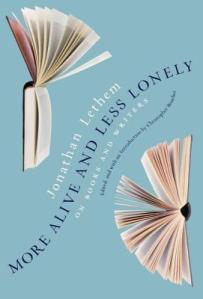 More Alive and Less Lonely: On Books and Writers by Jonathan Lethem [Mar. 14, Melville House]: “[C]ollects more than a decade of Lethem’s finest writing on writing, with new and previously unpublished material, including: impassioned appeals for forgotten writers and overlooked books, razor-sharp essays, and personal accounts of his most extraordinary literary encounters and discoveries.”
The Not-Quite States of America by Doug Mack [Feb. 14, W.W. Norton]: “American Samoa, Guam, Puerto Rico, the Northern Mariana Islands, and the U.S. Virgin Islands—and their 4 million people—are often forgotten, even by most Americans. … When Doug Mack realized just how little he knew about the territories, he set off on a globe-hopping quest covering more than 30,000 miles to see them all.”
What 2017 books are you most looking forward to?
Which of these interest you?
Reviews Roundup, January–February
One of my goals with this blog is to have one convenient place where I can gather together all my writing that has appeared in disparate online locations. To that end, once a month I provide links to all book reviews I’ve published elsewhere, with a rating (below each description) and a taster so you can decide whether to read more. A few exceptions: I won’t point out my Kirkus Indie, BlueInk or Publishers Weekly reviews since I don’t get a byline. Meanwhile, I’ve done my first review for the Pittsburgh Post-Gazette – exciting!
The Bookbag
The Noise of Time by Julian Barnes: “Art is the whisper of history, heard above the noise of time.” Through a fictionalized biography of the Russian composer Shostakovich, Barnes questions how art can withstand political oppression. Knowing Barnes’s penchant for stylistic experimentation, this was never going to be a straightforward, chronological life story. Instead, as he so often does, he sets up a tripartite structure, focusing on three moments when Shostakovich has a reckoning with Power. The book is full of terrific one-liners (“Integrity is like virginity: once lost, never recoverable”), but there are not many memorable scenes to latch on to.

Motions and Moments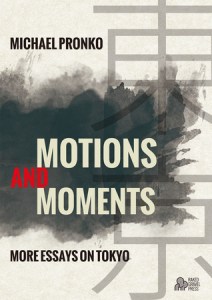 : More Essays on Tokyo (& interview) by Michael Pronko: Pronko’s third collection of essays about his adopted city is an eloquent tribute to a place full of contradictions and wonders. Compared to his earlier collection, Beauty and Chaos, I sense Pronko is now more comfortable in his surroundings, perhaps happier to include himself in ‘we’ rather than looking on passively at ‘them’. For instance – inspired by Japanese women’s perfect outfits – he consciously tries to dress better, and he’s taken to eating ramen and sleeping on a futon, just like a native. The highlight is a set of pieces written in the aftermath of the 2011 earthquake / tsunami.

BookBrowse
 The Portable Veblen by Elizabeth McKenzie: Veblen, named after the late-nineteenth-century Norwegian-American economist, is one of the oddest heroines you’ll ever meet. She thinks squirrels are talking to her and kisses flowers. But McKenzie doesn’t just play Veblen for laughs; she makes her a believable character well aware of her own psychological backstory. I suspect the squirrel material could be a potential turn-off for readers who can’t handle too much whimsy. Over-the-top silly in places, this is nonetheless a serious account of the difficulty of Veblen and Paul, her neurology researcher fiancé, blending their dysfunctional families and different ideologies – which is what marriage is all about.
 Weathering by Lucy Wood: This atmospheric debut novel is set in a crumbling house by an English river and stars three generations of women – one of them a ghost. Ada has returned to her childhood home after 13 years to scatter her mother Pearl’s ashes, sort through her belongings, and get the property ready to sell. In a sense, then, this is a haunted house story. Yet Wood introduces the traces of magical realism so subtly that they never feel jolting. Like the river, the novel is fluid, moving between the past and present with ease. The vivid picture of the English countryside and clear-eyed look at family dynamics remind me most of Tessa Hadley (The Past) and Polly Samson (The Kindness).
Foreword Reviews
When We Were Invincible by Jonathan Harnisch: In this short novel, a young man wrestles with depression and Tourette’s syndrome, which together drive him to the point of suicide. A series of dreams and chance meetings, along with the possibility of romance and faith in God, pull him back from the edge. The book successfully introduces philosophical themes and gives a sympathetic picture of mental illness. However, it is weaker at filling in background and providing transitions, and there are many awkward, unlikely lines of dialogue. Recommended to fans of The Curious Incident of the Dog in the Night-Time.

Nudge
 The Life and Death of Sophie Stark by Anna North: The twisty, clever story of a doomed filmmaker – perfect for fans of Hausfrau. Who is Sophie Stark? A New York City-based indie director whose four documentary-style movies are “almost more like life than life itself.” Bisexual and with certain traits of high-functioning autism, Sophie is easily misunderstood. She’s a rebel who doesn’t conform to social niceties. The book is told through five first-person reminiscences from the people closest to her. In this respect the novel’s format recalls Kitchens of the Great Midwest. My favorite sections, though, are the reviews of her films, all by the same critic.
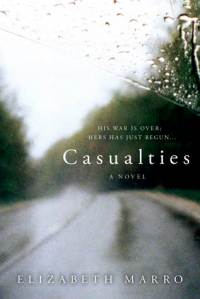 Casualties by Betsy Marro: A powerful, melancholy debut novel about how war affects whole families, not just individual soldiers. As in Bill Clegg’s Did You Ever Have a Family, which Casualties resembles in tone if not in style, a bereaved mother sets off on a journey. Ruth’s unlikely companion on the road trip east is a Gulf War amputee who appears little more than a conman but genuinely wants to clean up his act so he can reconcile with his teenage daughter. At times the road trip scenario felt a little far-fetched to me, and Casey too obvious a replacement son figure. Yet as both he and Ruth ponder how much they have lost and the small things they can try to put right, they together form a touching picture of the various ways war’s effects can linger.
Pittsburgh Post-Gazette
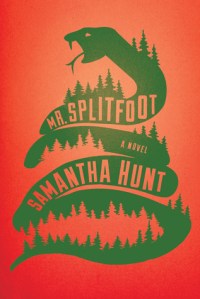 Mr. Splitfoot by Samantha Hunt: “All stories are ghost stories,” Samantha Hunt proclaims in her quirky third novel about the crossover between motherhood and mysticism. In a dual storyline that takes in fundamentalist cults, unlikely mediums and a pregnant woman’s pilgrimage, Hunt asks whether one can ever believe in the unseen. Mr. Splitfoot has the offbeat charm of Scarlett Thomas’s work. While the plot ultimately feels like a bit of a jumble, its vision of unexpected love and loyalty remains compelling. “The End’s always coming,” but it is how one lives in the face of brutality and impending extinction that matters.
I also post reviews of most of my casual reading and skimming on Goodreads:
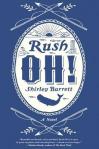 Rush Oh! by Shirley Barrett: A debut novel in which an Australian whaler’s daughter looks back at 1908, a catastrophic whaling season but also her first chance at romance. I felt that additional narrators, such as a whaleman or an omniscient voice, would have allowed for more climactic scenes. Still, I found this gently funny, especially the fact that the family’s cow and horse are inseparable and must be together on any outing. There are some great descriptions of whales, too.
 Felicity by Mary Oliver: I was disappointed with my first taste of Mary Oliver’s poetry. So many readers praise her work to the skies, and I’ve loved excerpts I’ve read elsewhere. However, I found these to be rather simplistic and clichéd, especially poems’ final lines, e.g. “Soon now, I’ll turn and start for home. / And who knows, maybe I’ll be singing.” or “Late, late, but now lovely and lovelier. / And the two of us, together—a part of it.” I’ll definitely try more of her work, but I’ll look out for an older, classic collection.
 Paulina & Fran by Rachel B. Glaser: Full of blunt, faux-profound sentences and smutty, two-dimensional characters. Others may rave about it, but this wasn’t for me. I get that it is a satire on female friendship and youth entitlement. But I hated how the main characters get involved in a love triangle, and once they leave college any interest I had in them largely disappeared. Least favorite lines: “Paulina. She’s like Cleopatra, but more squat.” / “She’s more like Humphrey Bogart” and “She craved the zen-ness of being rammed.”

 Noah’s Wife by Lindsay Starck: I kept wanting to love this book, but never quite did. It’s more interesting as a set of ideas – a town where it won’t stop raining, a minister losing faith, homeless zoo animals sheltering with ordinary folk – than as an executed plot. My main problem was that the minor characters take over so that you never get to know the title character, who remains nameless. There’s also a ton of platitudes towards the end. It reminded me most of The Readers of Broken Wheel Recommend and Not Forgetting the Whale (another cozy environmental dystopia based around biblical allusions).
 Spill Simmer Falter Wither by Sara Baume: This sounded like a charmingly offbeat story about a loner and his adopted dog setting off on a journey. As it turns out, this debut is much darker than expected, but what saves it from being unremittingly depressing is the same careful attention to voice you encounter in fellow Irish writers like Donal Ryan and Anne Enright. It’s organized into four sections, with the title’s four verbs as headings. In a novel low on action, the road trip is much the most repetitive section, extending to the language as well. Even so, Baume succeeds in giving a compassionate picture of a character whose mental state comes into question. (Full review in March 2016 issue of Third Way magazine.)
 Medium Hero by Korby Lenker: Lenker is an indie musician, and the 27 autobiographical stories in his debut collection are about the everyday challenges of being on the road versus trying to pay the bills. Many feature “Korby” or “Simon” as fictional stand-ins, and recurring locations include his hometown of Twin Falls, Idaho and his adopted home of Nashville. As the title suggests, Lenker has no illusions about being famous or out of the ordinary. Most of the time he just tries to be a decent guy, the kind who prays for family members in distress even though he’s not sure he believes in God. Lest that sound too serious, though, there are also stories about peeing his pants and the perils of being a metrosexual.
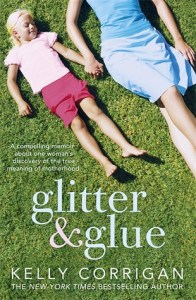 Glitter and Glue by Kelly Corrigan: Slides down like ice cream. And I say that even though the whole basis for this memoir feels rather thin. Corrigan frames it around five months in the early 1990s when she worked as a nanny for two Australian kids whose mother died of cancer. For a young woman fresh out of college, it was like a trial run for being a mother, and also gave her a new appreciation for everything her own mother had done for her during her Philadelphia Catholic upbringing. If Corrigan’s father was the ‘glitter’ of the family, her mother was the ‘glue’ – holding everything together in the background. This is impressively reconstructed, dialogue and all, from letters, journals and photos.
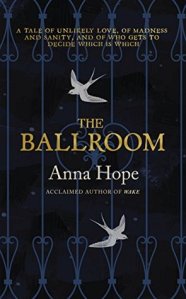 The Ballroom by Anna Hope: This novel was inspired by the story of the author’s great-great-grandfather, an Irishman who was a patient at Menston Asylum in West Yorkshire from 1909 to 1918. The novel zeroes in on the long, hot summer of 1911, focusing through alternating close third-person chapters on John Mulligan, a new patient named Ella Fay, and Dr. Charles Fuller, who wants to put his mental hospital at the frontline of eugenics research. Ultimately I didn’t like this quite as much as Wake, but I think it cements Anna Hope’s reputation as a solid historical fiction writer. I hope with her next book she’ll move beyond the years around World War I to consider a less-chronicled era.
 Life without a Recipe by Diana Abu-Jaber: The Jordanian–American writer reflects on how various food cultures have sustained her through a life that hasn’t always turned out as expected. Three marriages, a move from Portland to Florida, a winding path to motherhood in her forties, and her father’s death from leukemia are some of the main events. Like Sasha Martin’s Life from Scratch, this is more about family and personal history than it is about food (and there are no recipes). Still, food is the stuff of memories, and it is what binds her to two strong characters: her Jordanian father Bud with his stuffed grape leaves, and her maternal grandmother Grace with her frequent baking and the pastries they consumed together in Paris.
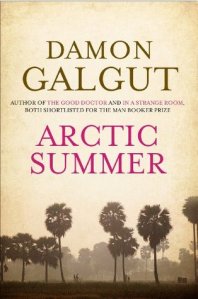 Arctic Summer by Damon Galgut: This fictionalized account of the life of E.M. Forster focuses on the drawn-out composition of A Passage to India, which he began in 1913 but wouldn’t complete and publish until 1924. In between he broke off to write his explicitly homosexual novel Maurice (only published posthumously), spent three years working in Egypt during the war, and served as a secretary to an Indian maharajah. As fictionalized biographies of authors go, I’d rate this somewhere between David Lodge’s A Man of Parts (H.G. Wells) and Colm Tóibín’s superior The Master (Henry James); all three share a heavy focus on the author’s sexuality. “Buggery in the colonies. It wasn’t noble” is one of my favorite random snippets from this novel, and sums up, for me, its slightly prurient aftertaste.
 Bookish Beck = Rebecca Foster. American transplant to England. Freelance proofreader and book reviewer.
 Bookish Beck