Wellcome Book Prize 2017 Shadow Panel
Newsflash! I’ve started a shadow panel of readers who will make our way through the six medical-themed titles shortlisted for the Wellcome Book Prize and deliberate to choose our own winner before the official prize announcement on Monday, April 24th. I hope to get the panel up to five – I’ve been in contact with a couple of science journalists via Twitter – but for now we are three, including:
Paul Cheney: blogs at Halfman, Halfbook and writes for Nudge’s Book Life section.
Amy Pirt: blogs at This Little Bag of Dreams and writes for Mookychick and g3 magazine.
The Wellcome Book Prize is an annual award sponsored by the Wellcome Trust, a global charitable foundation founded by Sir Henry Wellcome in 1936 and dedicated to improving health. The current incarnation of the prize has been running since 2009 and the winner gets a whopping £30,000. Books are nominated by their publishers, and for the 2017 award cycle they must have been issued in the UK between January 1, 2016 and December 31, 2016.
One thing that’s unique about the Wellcome Prize is that both fiction and nonfiction books are eligible. Here’s how the website describes the aim of the prize:
To be eligible for entry, a book should have a central theme that engages with some aspect of medicine, health or illness. At some point, medicine touches all our lives. Books that find stories in those brushes with medicine are ones that add new meaning to what it means to be human. The subjects these books grapple with might include birth and beginnings, illness and loss, pain, memory, and identity. In keeping with its vision and goals, the Wellcome Book Prize aims to excite public interest and encourage debate around these topics.
So as we’re reading (or looking back at) the six shortlisted books, those are the criteria we’ll be keeping in mind.
Here’s the full 2017 shortlist:
- How to Survive a Plague by David France: a history of the AIDS crisis.
- When Breath Becomes Air* by Paul Kalanithi: a posthumous memoir by a neurosurgeon.
- Mend the Living* by Maylis de Kerangal (trans. Jessica Moore): a novel about a donor heart [published in the USA as The Heart].
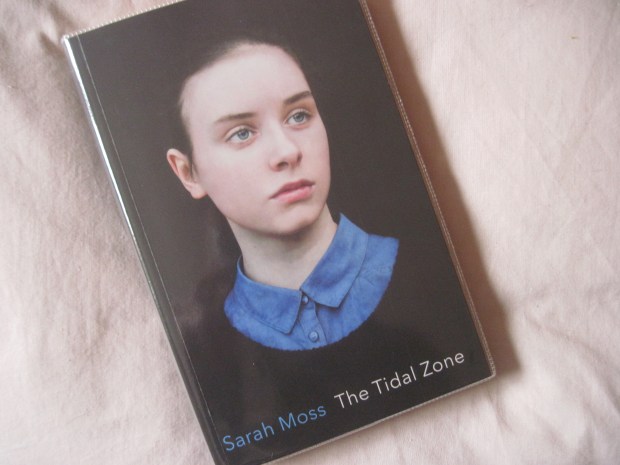
- The Tidal Zone by Sarah Moss: a novel about a child who suddenly falls ill.
- The Gene by Siddhartha Mukherjee: a thorough history of genetics.
- I Contain Multitudes by Ed Yong: a survey of the human body’s microbes.

* = the two I’ve already read and reviewed on Goodreads. I’ll get these reviews together for my first shortlist post on Thursday. Next up for me is The Tidal Zone, which I plan to start today. I have the three other nonfiction titles on request from the public library and hope they’ll come in soon – each one is well over 300 pages, so I’ll need plenty of time with them!
For more on this year’s nominees and the official judging panel, see this Guardian article.
What interests you from the Wellcome Book Prize shortlist? Are there some titles you’ve already read? If you’ve reviewed any of these, let me know and I’d be happy to link to your reviews when I post mine.
Also, if you’d like to read any of the shortlisted books along with us over the next five weeks, I’d love to know that you’re taking part and will help share your reviews, so do get in touch!
(A huge thanks to Naomi of The Writes of Woman for advice on running a shadow panel.)
Favorite Nonfiction Reads of 2016
Below I’ve chosen my 10 favorite nonfiction books published in 2016, followed by five older nonfiction reads that I only discovered this year. I find it nigh on impossible to compare different genres of nonfiction, so I’m not ranking these but simply listing them alphabetically by author (interestingly, all but one of the 2016 books are by women).
As with yesterday’s fiction choices, many of these books have already featured on the blog in some way over the course of the year. To keep it simple for myself as well as for all of you who are figuring out whether you’re interested in these books or not, I’m limiting myself to two sentences per title: the first is a potted summary; the second tells you why you should read it. I also link to any full reviews.
The Best of 2016
 This Is Cancer by Laura Holmes Haddad: A stage IV inflammatory breast cancer survivor, the author wrote the “What to Expect” guide she wishes she could have found at the time of her diagnosis in 2012. Throughout this comprehensive, well-structured book, she uses her own experience to set out practical advice for dealing with the everyday medical and emotional realities of cancer.
 Lab Girl by Hope Jahren: With witty anecdotes and recreated dialogue, Jahren tells about her Minnesota upbringing, her long years in education, her ultimate specialization in geobiology/botany, crossing the country to take up academic posts in Atlanta, Baltimore and Hawaii, her long-time platonic relationship with eccentric lab partner Bill, and zany road trips across America for conferences and field work. What I think she does best is convey what it’s like to have true passion for your work, a rare thing.
 When Breath Becomes Air by Paul Kalanithi: Kalanithi was 36 and just completing his neurosurgery residency in Stanford, California when he was diagnosed with advanced lung cancer that did not respond well to treatment; he devoted his last year to writing this. I would recommend this cancer memoir to anyone for the beauty of its prose – a fine blend of literature and medicine – and the simple yet wholehearted picture of a life cut short.
 The Lonely City by Olivia Laing: A remarkable piece of work fusing social history, commentary on modern art, biographical observation and self-knowledge. It’s a testament to Laing’s skill when I say that I knew next to nothing about any of these artists to start with and have little fondness for modern art but still found her book completely absorbing.
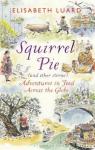 Squirrel Pie (and Other Stories): Adventures in Food across the Globe by Elisabeth Luard: Broadly speaking, this is about indigenous and peasant cooking traditions, a remit that allows Luard to include and adapt travel pieces she’s written over the past 20 years. It’s a cozy and conversational book for anyone who enjoys cooking or eating food from different cuisines (from Maui and Romania to Gujarat and Ethiopia); Luard’s own sketches and line drawings provide a lovely accompaniment.
 Cure: A Journey into the Science of Mind over Body by Jo Marchant: Marchant, a journalist with a PhD in genetics and medical microbiology, investigates instances where the mind seems to contribute to medical improvement: the use of placebos in transplant recipients, hypnosis for IBS patients, virtual reality to help burn victims manage pain, and the remarkable differences that social connection, a sense of purpose, meditation and empathic conversation all make. I finished the book feeling intrigued and hopeful about what this might all mean for the future of medicine.
 Poor Your Soul by Mira Ptacin: Ptacin’s wonderful memoir is based around two losses: her brother in a collision with a drunk driver, and a pregnancy in 2008; she skips back and forth in time to examine the numb aftermath of trauma as well as the fresh pain of actually going through it. I loved so much about this book, especially her memories of growing up in the cereal capital of America in Michigan and the account of her mother coming to America from Poland and setting up a fine-dining restaurant.
 The Violet Hour: Great Writers at the End by Katie Roiphe: An erudite, elegiac work of literary biography that takes in Susan Sontag, Sigmund Freud, John Updike, Dylan Thomas, Maurice Sendak and James Salter. What Roiphe observes of Sendak’s habit of drawing the dead and dying could equally be applied to The Violet Hour: it’s about seeing the beauty in what terrifies you.
 Beyond the High Blue Air: A Memoir by Lu Spinney: In March 2006 Lu Spinney’s twenty-nine-year-old son, Miles King, was on a snowboarding holiday in Austria; on the final morning of the trip he took a fall that would leave this athlete, intellectual, and entrepreneur with a traumatic brain injury. Spinney tells her sad tale remarkably well, in a consciously literary style: with no speech marks and present-tense narration, thought and action flow lucidly into dialogue and daydream; she always chooses just the right metaphors, too.
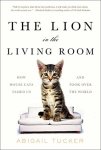 The Lion in the Living Room: How House Cats Tamed Us and Took Over the World by Abigail Tucker: From the earliest domestication of animals to the cat meme-dominated Internet, Tucker marvels at how cats have succeeded by endearing themselves to humans and adapting as if effortlessly to any habitat in which they find themselves. This is the amazing cat book I’d been looking for, but I don’t think you even have to be a pet person to find this wide-ranging book enthralling.
If I had to list an overall favorite nonfiction book of the year, it would be The Violet Hour.
The Best of the Rest
Stir: My Broken Brain and the Meals That Brought Me Home by Jessica Fechtor (2015): At age 28 Fechtor, then a graduate student in history and Yiddish, collapsed on a treadmill with a brain bleed; a subsequent surgery to clip the aneurysm left her blind in one eye. She gives a glimpse into an ordinary existence turned upside down and the foods that helped her regain a zest for life by reconnecting her with her family and her Jewish heritage.
A Time of Gifts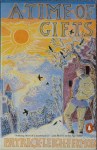 by Patrick Leigh Fermor (1977): Over the course of three years in the 1930s, starting when he was just 18, Fermor walked from Holland to Constantinople; this first of three volumes covers up until his entry into Hungary. His descriptions of the landscape and the people he interacted with are as fresh as if they happened yesterday; the precious glimpse of pre-war history and the damn fine writing make this a true masterwork of travel writing.
The Cloister Walk by Kathleen Norris (1996): Norris draws lessons from the time she spent as a lay Benedictine oblate but also simply reflects on her own life: the blessings and challenges of being a freelance poet and theologian; the daily discipline involved in marriage, keeping a house and gardening; and childhood memories from Virginia, Illinois and Hawaii. This is an impressively all-encompassing and eloquent set of essays on how faith intersects with everyday life.
One of Us : The Story of a Massacre and Its Aftermath by Åsne Seierstad (2015): An utterly engrossing account of Anders Behring Breivik’s July 22, 2011 attacks on an Oslo government building (8 dead) and the political youth camp on the island of Utøya (69 killed). This is a book about love and empathy – what they can achieve and what happens when they are absent; it shows how wide the ripples of one person’s actions can be, and how deep individual motivation goes.
 The Complete Maus by Art Spiegelman (1986): Spiegelman drew these allegorical tableaux to illustrate what, from a distance of decades, his Polish father Vladek told him about his almost unbelievable series of escapes, including time in Auschwitz. The only graphic novel to win the Pulitzer Prize, this brings the Holocaust home in a fresh way and paved the way for comic artists like Roz Chast and Alison Bechdel.
What were some of your top nonfiction reads of the year?
Tomorrow I’ll list some runners-up for the year, and award a few more superlatives.
 Bookish Beck = Rebecca Foster. American transplant to England. Freelance proofreader and book reviewer.
 Bookish Beck