Making Plans for March
How is it March already?! The last weekend of February flew by with a trip to Exeter to visit friends. Between Saturday and Sunday we spotted: a humpback whale off the Devon coast at Slapton (occasioning many cries of “Thar she blows!”), a giant pug painted on an underpass, a mighty fine cream tea, and far too many secondhand books at Book-Cycle.


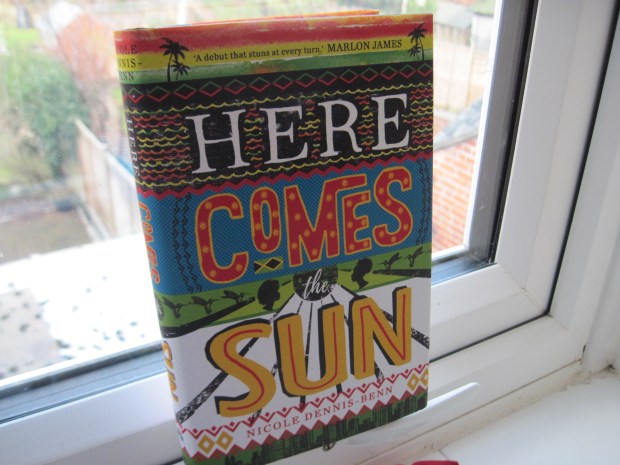
For me the month of March holds an alarming number of deadlines for book reviews: 15, to be precise. Yipes! Luckily I’ve already managed to submit two of these reviews, and I plan to write a third this afternoon. Most of those are as part of my paid work, but I’ll also be participating in two blog tours for nonfiction books on adoption and foxes, respectively, and contributing a review of Here Comes the Sun by Nicole Dennis-Benn to Shiny New Books.
As to other planned blog posts for the month…
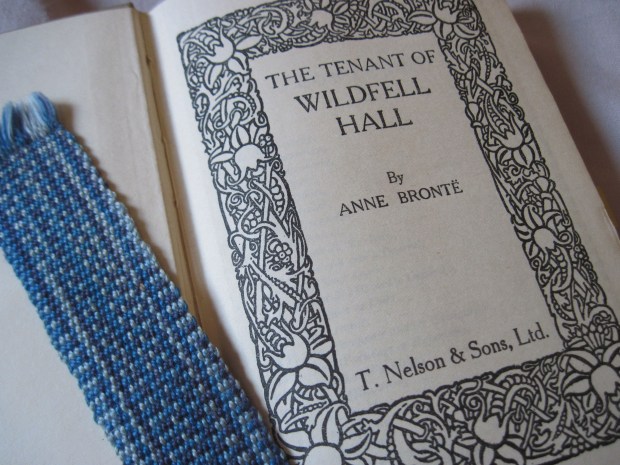
- Thanks to your comments I’ve started The Tenant of Wildfell Hall as my monthly classic (27 pages in and I’m loving it already).
- I’m doing some thematic reading for World Kidney Day on the 9th.
- I’m thinking of getting my first Haruki Murakami book, The Wind-Up Bird Chronicle, out from the library as my doorstopper of the month.
- I’ll be reviewing Narcissism for Beginners by Martine McDonagh (terrific) and The Family Gene by Joselin Linder (haven’t started yet).
- A couple more books may turn up from publishers if I’m lucky.
Some other themed reading challenges are underway but will probably roll over to future months.
Today I’m picking up three library holds: The Good People by Hannah Kent, The Best of Adam Sharp by Graeme Simsion and Days Without End by Sebastian Barry (this one’s for a BookBrowse review due in April). All are likely to be requested after me, so somehow I have to fit them in during the next three weeks. I do hope they’re quick reads!
So, a busy month – back to the reading! How does the month look for you?
Review: Darke by Rick Gekoski
Dr. James Darke, the narrator of rare-book dealer Rick Gekoski’s debut novel, is of the same lineage as titular antiheroes like Hendrik Groen and Fredrik Backman’s Ove, or J. Mendelssohn, protagonist of the title novella in Colum McCann’s Thirteen Ways of Looking: an aging widower and curmudgeon with an unforgettable voice.
As Darke begins, this retired English teacher is literally sealing himself off from the world. He hires a handyman to take out the door’s built-in letterbox, change the locks and install a high-tech peephole; he has all his mail redirected to an old colleague, George; he changes his e-mail address; and he compiles a thorough list of service providers who will come to him – everything from grocery deliveries to a doctor. Now, with any luck, he won’t need to set foot outside his London home while he writes this “coming-of-old-age book.”
 For eight months Darke stays in self-imposed exile, his solitude broken only by visits from Bronya, a Bulgarian cleaner who engages him in discussions of his beloved Dickens. Although he’s only sixty-something, Darke sounds like a much older man, complaining of constipation and vision problems and launching a vendetta against the annoying neighbor dog. Ignoring the pile of adamant letters George guiltily delivers on behalf of Darke’s daughter, Lucy, he keeps up his very particular habits and rituals (I loved the steps of making coffee with an espresso-maker) and gives himself over to memories of life with Suzy.
The novel is tripartite: In Part I we meet Darke and get accustomed to his angry, hypercritical voice. In Part II we descend into a no-holds-barred account of his wife Suzy’s death from lung cancer. She’s another wonderful character: pessimistic, ungraceful and utterly foul-mouthed. Here Darke unleashes the full extent of his bitterness. He mocks the approach, advocated by Joan Didion (“that poor Joan D’Idiot,” he calls her!), of turning to sages of the past for comfort, instead insisting that literature – including W.B. Yeats, T.S. Eliot and all the rest – was of no use to him in the face of his wife’s impending death:
We don’t have God, so we have literature, with its associated proverbs and allegories, its received wisdom. We quote and genuflect and defer and pay homage, as if in a holy sanctuary. But just as God failed us, so too will reading. We will turn against it as certainly, and rightly, as we did against Him. Nobody, and nothing, can explain life for us.
Luckily, Part III is something of a reprieve, as Darke starts to come out of his temporary retreat and resume life. He has a rental car delivered and sets out for Oxford, where he revisits his and Suzy’s old university haunts and hesitantly reopens a connection with Lucy and her young son, Rudy.
Sebastian Barry astutely notes the novel’s debt to Dante, but the component parts of the Divine Comedy are reordered, with the purgatory of the house-bound months broken by the hellish narrative of Suzy’s dying, which is then lifted by Darke’s return to life.
Each section has a different tone and is enjoyable in its own way, but for me there was no getting around the fact that Part I is the most entertaining. I was surprised to read in the Acknowledgments that Gekoski toned down this first dose of Darke considerably, on the advice of his wife and his literary agent; I think he could have hammed him up a fair bit more. Also, Lucy didn’t ring true for me as a character, which detracted from what’s meant to be an alternately volatile and poignant relationship; I preferred Darke’s scenes with Bronya.
In any case, the novel makes great metaphorical use of light and darkness. Not so subtle, maybe, but it works:
witnessing a protracted and horrible death infects the soul, the images implant themselves, root and flourish, you can never look at yourself or others in the innocent light – you are tarnished, uncleanably darkened.
And of course, look to literature and you find nothing but “shitslingers – Kahlil Gibran, Mr Tolstoy, the dreaded Eliot – all of them. Just wandering in the dark with flashlights.”
With lots of memorable scenes and turns of phrase, Darke is a rewarding glance at loss, literature and the sometimes futile search for salvation. It’s inspiring to see Gekoski, an American-born academic and literary critic (he’s been dubbed the Bill Bryson of the book world), turn his hand to fiction at age 71. I knew of him through his nonfiction, including Outside of a Dog: A Bibliomemoir, which I read in 2010, and have also enjoyed a couple of his articles that nicely presage this novel, on the subjects of reading through grief and turning against print books. I hope you’ll give his work a try.
Darke was published in the UK on February 2nd. With thanks to Becca Nice and Jamie Norman of Canongate for the free copy for review.
My rating: 
 Bookish Beck = Rebecca Foster. American transplant to England. Freelance proofreader and book reviewer.
 Bookish Beck