Failing at Classics of the Month
I’ve attempted two Dickens novels in the last five years, and left both unfinished. I at least got about 200 pages into Dombey and Son in 2012 before I gave up, but my recent attempts to get past the first couple of chapters in Our Mutual Friend have been utterly unsuccessful. I finally gave myself permission to set it aside at page 41 – and I didn’t even read all of that; I’d started skimming in a last-ditch attempt to get myself hooked by the story. Have I lost my Dickens mojo? Do I not have sufficient patience to read Victorian triple-deckers anymore? I truly hope this is just a phase and I’ll be able to get back into Dickens someday. I certainly intend to read his whole oeuvre eventually, even the obscure ones.
So I don’t have a classic for April, nor a true doorstopper (I’ve classified David France’s How to Survive a Plague as such – a bit of a cheat since I only skimmed it). Instead what I have to offer are a modern classic and a graphic adaptation of another Dickens novel.
On the Black Hill by Bruce Chatwin, which I mostly read during our trip to Hay-on-Wye earlier in the month, is worthy of being called a modern classic. It has echoes of D.H. Lawrence and especially Thomas Hardy, and it’s a pleasantly offbeat look at the developments of the twentieth century as seen through the lives of Welsh identical twins Benjamin and Lewis Jones. Opening in the 1980s, when the brothers are eccentric old gents sleeping side by side in their late parents’ bed, the book then retreats to the beginning: at the turn of the last century ornery Amos Jones fell for an educated rector’s daughter and their volatile relationship played out at The Vision farm. One son was caught up in the First World War, one had love affairs; neither “ever strayed further than Hereford.” Through sickness, community scandal, and the rise and fall of fortunes, they remain wedded to Welsh village life.

“The Vision” farm is in the background to the right.
I especially loved Chatwin’s descriptions of the natural world (he’d visited Radnorshire as a boy and considered it a kind of spiritual home), and the glimpses he gives into the twins’ preternatural closeness:
Lewis and Benjamin gambolled ahead, put up grouse, played finger-football with rabbit-droppings, peered over the precipice onto the backs of kestrels and ravens and, every now and then, crept off into the bracken, and hid. They liked to pretend they were lost in a forest, like the Twins in Grimms’ fairy-tale, and that each stalk of bracken was the trunk of a forest tree. … They lay on their backs and gazed on the clouds that crossed the fretted patches of sky … they would press their foreheads together, each twin losing himself in the other’s grey eye.
(Clearance book from Blackwell’s in Oxford.  )
)
 The David Copperfield graphic novel by Jacqueline Morley (illustrated by Penko Gelev) is part of the Graffex series of graphic novel literary retellings issued by Salariya Book Company. It’s remarkably faithful to Dickens’s original, with just a bit of condensing in terms of the plot and a few secondary characters cut out or greatly reduced in importance. Although this is no substitute for reading David Copperfield itself (my favorite book), I could see it being useful for high school or college students who need a quick recap of what happens when preparing for a quiz or essay. The three main young females are amusingly similar and idealized, but all the other characters’ looks are true to the novel’s descriptions (and previous adaptations). The end matter – a brief biography of Dickens, commentary on the novel, a timeline of stage and screen versions – is particularly helpful, though in the chronology of Dickens’s works they forgot Dombey and Son!

(Remainder copy from Addyman Books in Hay-on-Wye.  )
)
Next month: I’ve pulled out a couple of short (~210 pages each) classics from the shelf. I recently read a graphic novel about Gauguin that I’ll be reviewing on Monday, so I fancy following it up with W. Somerset Maugham’s The Moon and Sixpence, which is said to be based on Gauguin’s life. It’ll be only my second Maugham after Of Human Bondage, which I loved in 2015. Anna of the Five Towns will be my first taste of Arnold Bennett’s fiction (though I’ve read his Literary Taste).
Book-Lovers’ Quotes (& Dubious Habits)
“They say books about books are profitless, but they certainly make very pleasant reading.”
(W. Somerset Maugham’s “The Book Bag,” 1951)
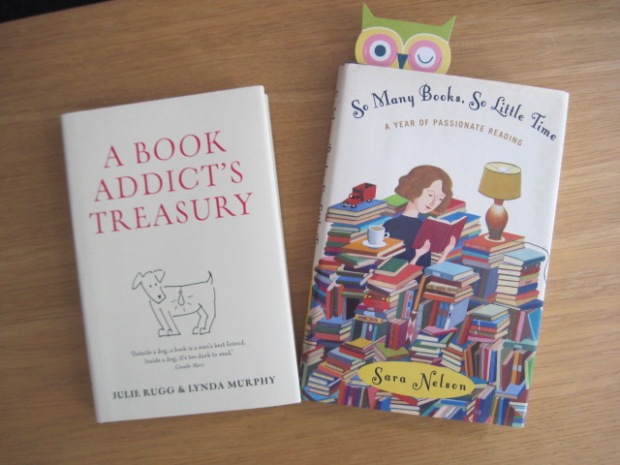
A Book Addict’s Treasury by Julie Rugg and Lynda Murphy was my bedside book for the first half of the year. I like having a literary-themed book to read a bit of daily, rather like a secular devotional. Last year John Sutherland and Stephen Fender’s Love, Sex, Death and Words filled that purpose. The authors have chosen a huge variety of quotations from fiction and nonfiction, ranging from the Middle Ages to the present day. The chapters are loosely thematic, with topics like lending and borrowing, organizing one’s library, bad book habits, and so on.
Here’s a sampling of the quotes that meant the most to me:
- “I can remember when I read any book, as the act of reading adheres to the room, the chair, the season.” (Guy Davenport)
- “To read good books is like holding a conversation with the most eminent minds of past centuries.” (René Descartes)
- “How useful it would be to have an authoritative list of books that, despite the world’s generally high opinion of them, one really need not read.” (Joseph Epstein)
- “I am all for the giving and receiving of books at Christmas, though not keen either on giving or receiving ‘gift books’, the kind of tarted-up books which appear at this time of year and no other. I agree that the only thing you could do with such books is to give them away.” (Daniel George)
- “As often as I survey my bookshelves I am reminded of Lamb’s ‘ragged veterans’.” (George Gissing)
- “Libraries are reservoirs of strength, grace and wit, reminders of order, calm and continuity, lakes of mental energy.” (Germaine Greer)
I also came across two controversial reader habits I’m not sure how I feel about:
1. “The outward and visible mark of the citizenship of the book-lover is his book-plate.” (Edmund Gosse)
I do have two packs of book-plates featuring a rather nice black-and-white engraving of a puffin on a rock, but I’ve never used them. For one thing, my collection seems too changeable: what if I decide, after reading a book, to resell it or pass it on to someone else? I also wouldn’t know how to choose which lucky 20 books get a bookplate. (Probably only those monolithic hardbacks I’m sure to keep as reference books for decades to come.)
2. Harold Nicolson’s habit of labeling passages from books with “F and C” (= “very feeble and cheap”) and “G.B.” or “B.B.” (= “Good Bits” or “Bad Bits”)!
I’ve never annotated my books, apart from a few textbooks in college. It just seems like defacement; are my thoughts really so important that they need to be preserved forever? Instead I use Post-It flags to mark passages I want to revisit, and usually copy those out into my annual book list (a huge Word file).
My current bedside book fit for a bibliophile is So Many Books, So Little Time: A Year of Passionate Reading by Sara Nelson. Favorite quote so far:
“Part of the appeal of books, of course, is that they’re the cheapest and easiest way to transport you from the world you know into one you don’t. … dollar for dollar, hour per hour, it’s the most expedient way to get from our proscribed little ‘here’ to an imagined, intriguing ‘there.’”
What are your favorite book-related quotes? Do you use bookplates and annotations?
Discover Some Shiny New Books
If you haven’t already come across it, let me commend to you the UK-based web magazine Shiny New Books. It’s been around for two years now and has just released Issue #10. Each installment is stuffed full of terrific reviews and features. I suggest setting aside a bit of time each day for a week or two, say a half-hour tea break, to browse what the site has to offer. It specifically highlights what’s been recently published or reprinted in the UK, so in some cases these will be books that are already available in North America; in others these will be sneak previews of books not yet published there. You’re sure to find plenty that appeals.
I’m proud to be part of the stellar (if I do say so myself) team of SNB reviewers. Somehow I just kept volunteering for things and ended up with – whoops! – a whole five pieces in this latest issue: four reviews (two fiction, one nonfiction, and one classic reprint) and an interview. Two of the novels were fantastic, among my best reads of the year so far, while the other two books were worthwhile, even very good in places. Here are tasters of my reviews; click on a title to read the whole thing – and then spend some good time browsing the site.
Sweetbitter by Stephanie Danler
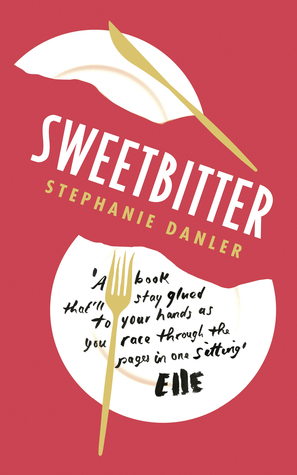 Twenty-two-year-old Tess arrives in New York City by car in June 2006. Two days later she interviews at a restaurant in Union Square and gets a job as a backwaiter and barista. Camaraderie makes the restaurant not just bearable but a kind of substitute home. Tess is most fascinated by two colleagues who stand apart from the crowd: Simone, the resident wine know-it-all, and bartender Jake. Try as she might, Tess can’t work out the dynamic between them. To mirror her one-year taste apprenticeship, the book is broken into four seasonal parts, headed by short sections in the second person or first-person plural. Everything about this novel is utterly assured: the narration, the characterization, the prose style, the plot, the timing. It’s hard to believe that Danler is a debut author rather than a seasoned professional. It captures the intensity and idealism of youth yet injects a hint of nostalgia. I’m willing to go out on a limb and call Sweetbitter my favorite novel of 2016.
My rating: 
I also interviewed Stephanie Danler over e-mail.
My Son, My Son by Howard Spring
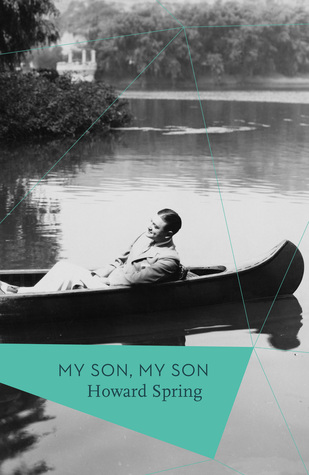 My Son, My Son opens in working-class Manchester in the 1870s and stretches through the aftermath of World War I. Like a Dickensian urchin, William Essex escapes his humble situation thanks to a kind benefactor and becomes a writer. His best friend is Dermot O’Riorden, a fervid Irish Republican. William’s and Dermot’s are roughly parallel tracks. Their sons’ lives, however, are a different matter. Oliver Essex and Rory O’Riorden are born on the same day, and it’s clear at once that both fathers intend to live vicariously through their sons. My Son, My Son struck me as an unusual window onto World War I, a subject I’ve otherwise wearied of in fiction. A straight line could be drawn between Great Expectations, Maugham’s Of Human Bondage, My Son, My Son, and The Goldfinch: all four feature a simultaneously sympathetic and enraging protagonist who overcomes family difficulties to dream of fame and fortune. No mere period or local interest piece, this is a book for the ages.
My rating: 
The Sellout by Paul Beatty
 This is such an outrageous racial satire that I kept asking myself how Beatty got away with it. Not only did he get away with it, he won a National Book Critics Circle Award. The novel opens at the U.S. Supreme Court, where the narrator has been summoned to defend himself against a grievous but entirely true accusation: he has reinstituted slavery and segregation in his hometown of Dickens, California. All the old stereotypes of African Americans are here, many of them represented by Hominy Jenkins. This reminded me most of Ishmael Reed’s satires and, oddly enough, Julian Barnes’s England, England, which similarly attempts to distill an entire culture and history into a limited space and time. The plot is downright silly in places, but the shock value keeps you reading. Even so, after the incendiary humor of the first third, the satire wears a bit thin. I yearned for more of an introspective Bildungsroman, which there are indeed hints of.
My rating: 
The Abundance by Annie Dillard
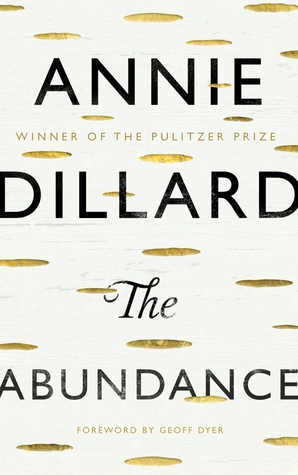 Dillard was raised a Christian in Pittsburgh, Pennsylvania, but her writing expresses an open spirituality rather than any specific faith. For readers who are reasonably familiar with her work, the selection given here might be a little disappointing. Why reread 60 pages from Pilgrim at Tinker Creek, I thought, when I have a copy of it up on the shelf? Rather than reading long, downright strange portions of For the Time Being and Teaching a Stone to Talk, why not go find whole copies to read (which might help with understanding them in context)? None of Dillard’s poetry or fiction has been included, and the most recent piece, “This Is the Life,” from Image magazine, is from 2002. I wish there could have been more fresh material as an enticement for existing fans. However, this will serve as a perfect introduction for readers who are new to Dillard’s work and want a taste of the different nonfiction genres she treats so eloquently and mysteriously.
My rating: 
Of Human Bondage: Finally Caught Up from 2015
When it came to it, it isn’t me
was all he seemed to learn
from all his diligent forays outward.
(from “It Isn’t Me” by James Lasdun)
I chose to read this doorstopper from 1915 because it appeared in The Novel Cure on a list entitled “The Ten Best Novels for Thirty-Somethings.” By happy accident, I was also reading it throughout its centenary year. My knowledge of W. Somerset Maugham’s work was limited – I had seen the 2006 film version of The Painted Veil but never read anything by him – so I had no clear idea of what to expect. I was pleased to encounter a narrative rich with psychological insight and traces of the Victorian novel.
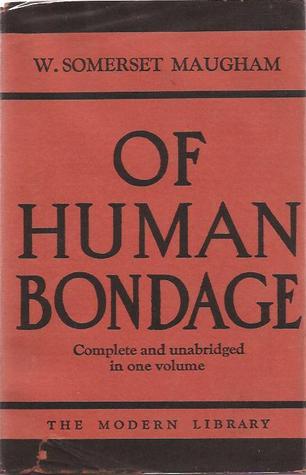 Philip Carey is not unlike a Dickensian hero: born with a club foot and orphaned as a child, he’s raised by his stern vicar uncle in Kent and reluctantly attends boarding school. Much of the book is filled with his post-schooling wanderings and professional shilly-shallying, along with multiple romantic missteps. He studies in Germany, tries to make it as a painter in Paris, and returns to London to train as an accountant and then as a doctor. Each attempted career seems to fail, as does every relationship. Philip reminded me most of David Copperfield, especially after he meets the jolly, Micawber-esque Thorpe Athelny during his hospital internship and becomes friendly with his wife and children.
As is common in Victorian novels, Philip is troubled by his conflicting desires. When it comes to women, he cannot get love to match up with lust. As a youth he loses his virginity to Emily Wilkinson, a woman in her mid-30s, then wants nothing to do with her. A few other dalliances have mixed success, but the novel focuses on Philip’s connection to Mildred Rogers. A café waitress, she’s vain and ill-tempered and acts indifferent to Philip – but is happy for him to spend money on her. He’s disgusted and infatuated all at once: “He did not care if she was heartless, vicious and vulgar, stupid and grasping, he loved her. He would rather have misery with [her] than happiness with [another].” Though Mildred tries to eschew the traditional roles of wife and mother, the Victorian notion of the fallen woman haunts her.
This on-again, off-again romance forms the heart of the book. Both Philip and Mildred are maddening in their own way. Not since Pip (another Philip, interestingly) in Great Expectations have I been so furious at a main character for consistently making the wrong choices, being dazzled by beauty and status and ignoring the more important things in life. Yet the close third-person narration sees so deeply into Philip’s psyche that I could not help but feel sympathy for him, too, cringing over his every failure – especially when stock market losses leave him destitute and he undertakes humiliating (to him) work at a department store. The novel is liberally studded with intimate paragraphs conveying Philip’s thoughts:
He painted with the brain, and he could not help knowing that the only painting worth anything was done with the heart. … [H]e had a terrible fear that he would never be more than second-rate. Was it worth while for that to give up one’s youth, and the gaiety of life, and the manifold chances of being?
Pain and disease and unhappiness weighed down the scale so heavily. What did it all mean? He thought of his own life, the high hopes with which he had entered upon it, the limitations which his body forced upon him, his friendlessness, and the lack of affection which had surrounded his youth. He did not know that he had ever done anything but what seemed best to do, and what a cropper he had come! Other men, with no more advantages than he, succeeded, and others again, with many more, failed. It seemed pure chance. The rain fell alike upon the just and upon the unjust, and for nothing was there a why and a wherefore.
Another humanizing element that especially appealed to me was Philip’s loss of Christian faith. During my study abroad year and especially my master’s year at Leeds, when I wrote a dissertation on women’s loss-of-faith narratives in Victorian fiction, I read a lot of novels about belief and doubt. In Philip’s case, I was interested to see how Maugham portrays what is usually seen as a loss as more of a liberation:
Suddenly he realised that he had lost also that burden of responsibility which made every action of his life a matter of urgent consequence. He could breathe more freely in a lighter air. He was responsible only to himself for the things he did. Freedom! He was his own master at last. From old habit, unconsciously he thanked God that he no longer believed in Him.
Although Philip frequently indulges in self-pity, he also has moments where he wakes up to the wonder of life. These epiphanies of the beauty of London, of the whole world, were among my favorite scenes.
Unusually in a long book, I thought the last 150 pages were the strongest. I struggled to pay attention throughout Philip’s schooling and wearied of the endless negotiations with Mildred, but when Philip is at his lowest point – like the protagonist of Knut Hamsun’s Hunger, not even sure if he’ll find enough to eat – there’s a real intensity to the plot that made this last chunk fly by.
I read a 1930s Modern Library copy from the University of Reading, but consulted Robert Calder’s introduction to the 1992 Penguin Classics edition for background information. It seems the novel was recognizably autobiographical for Maugham, though where a club foot was Philip’s source of shame, for the author it was his stammer (and his sexuality – he married but is known to have been a homosexual).
Like Joyce’s roughly contemporary A Portrait of the Artist as a Young Man, Calder notes, Of Human Bondage fits into the “apprentice novel” genre. Despite being published in 1915, it is set in a recent past so makes no reference to the First World War, though the Boer War plays a background role. I didn’t find the book to be particularly dated; I even discovered that a couple of sayings I might have pegged as later inventions were around in the 1910s: “like it or lump it” and “put that in your pipe and smoke it.”
Of Human Bondage met with a lukewarm critical response in its own time but does seem to be among the more beloved – if obscure – classics nowadays. Calder insists that it “remains Maugham’s most complete statement of the importance of physical and spiritual liberty.”
There have been three film versions – and another is in production this year, apparently. The best known, from 1934, launched the career of Bette Davis, who gave it her all as Mildred Rogers (she was a write-in favorite for the Oscars that year). Overacting, for sure, but her blonde wave and simpering looks were perfect for the role. By contrast, Leslie Howard’s is a fairly subtle Philip. The movie – condensed, amazingly, to just over an hour and a half – focuses on his club foot and his relationship with Mildred; I was disappointed that no attempt was made to reproduce Philip’s introspective monologues through voiceovers.
To my surprise, Calder asserts that Of Human Bondage “has become one of the most widely read of modern novels, particularly by young people, who still find relevance in Philip’s struggle for a free and meaningful life.” It was good enough for Holden Caulfield, after all. It struck me during my reading that two recent novels may have taken inspiration from Maugham: the main character in Esther Freud’s Mr. Mac and Me, set in 1914, has a club foot; and in Hanya Yanagihara’s A Little Life Jude’s shame over his deteriorating physical condition, especially his legs, is reminiscent of Philip’s.
I’m not sure I’ll try anything else by Maugham – how could I when there’s still so much of Dickens and Hardy left to read? – but I’m certainly glad I read this. It’s clear why Berthoud and Elderkin thought Of Human Bondage would be a perfect read for someone in their 30s: it’s infused with the protagonist’s nostalgia for his youth and regret at opportunities not taken and time lost. The novel imagines a world where, even without a god pulling a string, some misfortune seems to be fated. Even so, free will is there, allowing you to recover from failure and try something new that will be truer to yourself in this one and only life.
My rating: 
I Like Big Books and I Cannot Lie
You can never get a cup of tea large enough or a book long enough to suit me.
~ C. S. Lewis

My best friend got me this tote bag for my 30th birthday. Rarely has there been a better slogan.
 Here’s to doorstoppers! Books of 500 pages or more [the page count is in brackets for each of the major books listed below] can keep you occupied for entire weeks of a summer – or for just a few days if they’re gripping enough. There’s something delicious about getting wrapped up in an epic story and having no idea where the plot will take you. Doorstoppers are the perfect vacation companions, for instance. I have particularly fond memories of getting lost in Jonathan Strange and Mr. Norrell by Susanna Clarke [782] on a week’s boating holiday in Norfolk with my in-laws, and of devouring The Crimson Petal and the White by Michel Faber [835] on a long, queasy ferry ride to France.
I have an MA in Victorian Literature, so I was used to picking up novels that ranged between 600 and 900 pages. Of course, one could argue that the Victorians were wordier than necessary due to weekly deadlines, the space requirements of serialized stories, and the popularity of subsequent “triple-decker” three-volume publication. Still, I think Charles Dickens’s works, certainly, stand the test of time. His David Copperfield [~900] is still my favorite book. I adore his sprawling stories crammed full of major and minor characters. Especially in a book like David Copperfield that spans decades of a character’s life, the sheer length allows you time to get to know the protagonist intimately and feel all his or her struggles and triumphs as if they were your own.

Nothing ‘little’ about this review copy.
I felt the same about A Little Life by Hanya Yanagihara [720], which I recently reviewed for Shiny New Books. Jude St. Francis is a somewhat Dickensian character anyway, for his orphan origins at least, and even though the novel is told in the third person, it is as close a character study as you will find in contemporary literature. I distinctly remember two moments in my reading, one around page 300 and one at 500, when I looked up and thought, “where in the world will this go?!” Even as I approached the end, I couldn’t imagine how Yanagihara would leave things. That, I think, is one mark of a truly masterful storyteller.

Slow but steady progress.
Speaking of Dickensian novels, in recent years I’ve read two Victorian pastiches that have an authentically Victorian page count, too: The Luminaries by Eleanor Catton [848] and Death and Mr. Pickwick by Stephen Jarvis [816]. The Luminaries, which won the 2013 Booker Prize, has an intricate structure (based on astrological charts) that involves looping back through the same events – making it at least 200 pages too long.
It was somewhat disappointing to read Jarvis’s debut novel in electronic format; without the physical signs of progress – a bookmark advancing through a huge text block – it’s more difficult to feel a sense of achievement. Once again one might argue that the book’s digressive nature makes it longer than necessary. But with such an accomplished debut that addresses pretty much everything ever written or thought about The Pickwick Papers, who could quibble?

I was initially rather daunted by the heft of The Luminaries.
John Irving’s novels are Dickensian in their scope as well as their delight in characters’ eccentricities, but fully modern in terms of themes – and sexual explicitness. Along with Dickens, he’s a mutual favorite author for my husband and me, and his A Prayer for Owen Meany [637] numbers among our collective favorite novels. Most representative of his style are The World According to Garp and The Cider House Rules.
Here are a handful of other long novels I’ve read and reviewed within the last few years (the rating is below each description):
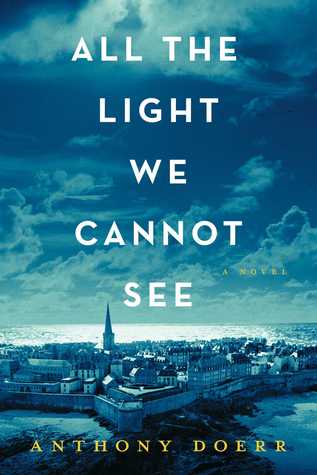 All the Light We Cannot See by Anthony Doerr [531] – The 2015 Pulitzer Prize winner; set in France and Germany during World War II.

In the Light of What We Know by Zia Haider Rahman [555] – Digressive intellectualizing about race, class and war as they pertain to British immigrants.

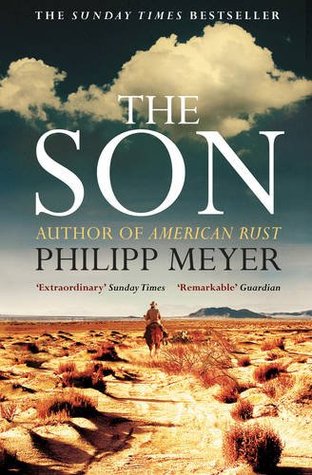 The Son by Philipp Meyer [561] – An old-fashioned Western with hints of Cormac McCarthy.

The Art of Fielding by Chad Harbach [512] – Baseball is a window onto modern life in this debut novel about homosocial relationships at a small liberal arts college.
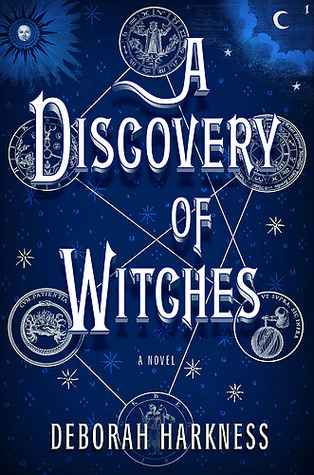 “A Discovery of Witches” fantasy trilogy by Deborah Harkness: A Discovery of Witches [579], Shadow of Night [584], and The Book of Life [561] – Thinking girl’s vampire novels, with medieval history and Oxford libraries thrown in.
/  /
/ 
And here’s the next set of doorstoppers on the docket:
Of Human Bondage by W. Somerset Maugham [766] – A Dickensian bildungsroman about a boy with a clubfoot who pursues art, medicine and love.
The Goldfinch by Donna Tartt [864] – I have little idea of what this is actually about. A boy named Theo, art, loss, drugs and 9/11? Or just call it life in general. I’ve read Tartt’s other two books and was enough of a fan to snatch up a secondhand paperback for £1.
A Brief History of Seven Killings by Marlon James [686] (as with A Little Life, the adjective in the title surely must be tongue-in-cheek!) – The starting point is an assassination attempt on Bob Marley in the late 1970s, but this is a decades-sweeping look at Jamaican history. I won a copy in a Goodreads giveaway.
A Suitable Boy by Vikram Seth [1,474!] – A sprawling Indian family saga. Apparently he’s at work on a sequel entitled A Suitable Girl.
This Thing of Darkness by Harry Thompson [744] – A novel about Charles Darwin and his relationship with Robert FitzRoy, captain of the Beagle.
The Last Chronicle of Barset by Anthony Trollope [891] – As the title suggests, this is the final novel in Trollope’s six-book “Chronicles of Barsetshire” series. Alas, reading this one requires reading the five previous books, so this is more like a 5,000-page commitment…
Now, a confession: sometimes I avoid long books because they just seem like too much work. It’s sad but true that a Dickens novel takes me infinitely longer to read than a modern novel of similar length. The prose is simply more demanding, there’s no question about it. So if I’m faced with a choice between one 800-page novel that I know could take me months of off-and-on reading and three or four 200–300-page contemporary novels, I’ll opt for the latter every time. Part of this also has to do with meeting my reading goals for the year: when you’re aiming for 250 titles, it makes more sense to read a bunch of short books than a few long ones. I need to get better about balancing quality and quantity.
How do you feel about long books? Do you seek them out or shy away? Comments welcome!
 Bookish Beck = Rebecca Foster. American transplant to England. Freelance proofreader and book reviewer.
 Bookish Beck