Review: How Saints Die by Carmen Marcus
“A story is like a net: you have to make your own; you have to throw the loops just right; you have to be careful what gets in and what gets out, what you catch and what you keep.”
Ten-year-old Ellie Fleck isn’t like the other children in her North Yorkshire town. The daughter of Pete, a grizzled fisherman, and Kate, an Irish Catholic woman who’s in a mental hospital after a presumed suicide attempt, Ellie was raised on stories of selkies and martyrdoms. Superstition infuses her daily life, making her afraid of pool trips with her classmates – it’s bad luck for fishermen to learn to swim – and leading her to expect her dead grandmother’s soul to waft in through an open window on Halloween night.
 What with bullies’ beatings and her teacher Mr. Lockwood’s disapproval, it’s no wonder Ellie misses lots of school, going sea-coaling with her father or running off to the coast alone instead. But with Christmas approaching and Kate due home from the hospital, Ellie’s absences warrant an official visit. Social worker May Fletcher, the mother of Ellie’s new friend Fletch, is also concerned about Ellie’s home life. “How Saints Die,” Ellie and Fletch’s gruesome skit performed as an addendum to the school Nativity play, seems like proof that something is seriously wrong.
This is performance poet Carmen Marcus’s debut novel; from what I can tell it seems partially autobiographical. It powerfully conveys the pull of the sea and the isolation of an unconventional 1980s childhood. The dreamy, hypnotic prose alternates passages from Ellie’s perspective with shorter chapters from the points of view of the adults in her life, including her father, busybody neighbor Mrs. Forster, and May Fletcher. Marcus is equally skilled at the almost stream-of-consciousness passages describing Ellie’s trips to the sea and at humorous one-line descriptions:
Sand and salt in the cut, stinging. Her dad would know what to do. She wants him here, now, to show her. Without him the beach takes her up entirely, the shushshush of the sea and the coarse cackle of the waders at the waters-edge, creakcrackcreakcrackyawyaw; the wind tugging at the shell of her ear. All of it pulling, nipping, cutting at her – snipsnipsnip – and now blood, her edges ragged and wet.
Mrs Forster always smells faintly sweet and acidic like old Christmas cake.
– What are sins?
– They’re like germs but in your thoughts.
It’s easy to get lost in Ellie’s supernatural world of spirits and sea wolves, while the occasional outsider views make it clear just how dangerous some of her notions could be. Like Paula Cocozza’s How to Be Human, this sets up an intriguing contrast between magic realism and madness. The language is full of transformations and fairy tale tropes. I was reminded at times of Amy Sackville’s Orkney and Fiona Melrose’s Midwinter. Although there is perhaps one perilous situation too many at the climax and the resolution is a bit drawn out (and there is also less punctuation than I would like), this is still a strong and absorbing first novel and one I fully expect to see on next year’s Women’s Prize for Fiction longlist.
My rating: 
How Saints Die is published in the UK today, July 13th, by Harvill Secker. My thanks to Louise Court for sending a free copy for review.
In Praise of Literary Prizes
I like a spot of competition. Whether watching Olympic figure skating, playing board games like Scrabble and Boggle, entering a low-key Oscars pool, or rooting for my favorites in American Idol seasons and Miss America pageants, I’ve always loved trying to pick the best. This means that literary prizes are hugely exciting for me, and I follow the races closely.
I’m particularly devoted to the Man Booker Prize. I was delighted to see Hanya Yanagihara’s A Little Life on the recent longlist (catch up on it here), a truly interesting set of books, diverse in terms of their genres and authors’ nationalities and nicely balanced between male and female writers (6:7). I’ve read four of the longlisted titles so far:
 The Fishermen, Chigozie Obioma (full review in May 2015 issue of Third Way): From a young Nigerian debut novelist comes a haunting tale of sibling rivalry and revenge. With sectarian riots afoot, the four oldest Agwu boys decide to make money by skipping school and fishing in the Omi-Ala River. Things get more complicated when Abulu, the local madman, issues a prophecy that seems bound to divide the brothers. The first quarter of the novel, especially, is drenched in foreshadowing (not always subtle, nor do the plot turns often rise above the predictable). Rich with prophecy and allusions, this owes much to biblical narratives and tragedies from Shakespeare to Chinua Achebe.
- Lila, Marilynne Robinson – reviewed at For Books’ Sake
- A Spool of Blue Thread, Anne Tyler – also reviewed at For Books’ Sake
- A Little Life, Hanya Yanagihara – reviewed at Shiny New Books

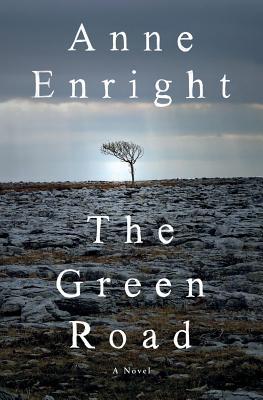 Next up: I’m reviewing The Green Road by Anne Enright for the November 2015 issue of Third Way. The Booker Prize shortlist will be announced on September 15th and the winner on October 13th.
Beyond the Booker, here are some of the other prizes I follow throughout the year, listed in vague chronological order:
 The Not the Booker Prize run by the Guardian. On this year’s shortlist is Shame by Melanie Finn, a book I loved when I reviewed it for Third Way’s April 2015 issue. It’s a powerful story of regret and the search for redemption. Though it has elements of a straightforward psychological thriller, the daring structure and moral complexities are more akin to Graham Greene. In alternating chapters, Pilgrim Jones contrasts flashbacks to her car accident and the subsequent investigation back in Switzerland with her present-tense African odyssey. This is Conrad’s Africa, a continent characterized by darkness and suffering. The question of culpability remains murky, yet the possibility of salvation shines through. [Voting will take place in October.]

- The Guardian First Book Award (open to both fiction and nonfiction): the shortlist will be announced this Friday, August 14th. One entry, Spill Simmer Falter Wither by Sara Baume, has already been chosen by readers, and the other nine are selected from publishers’ submissions. [Winner announced in late November.]
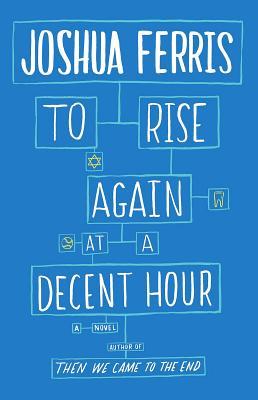
 The Dylan Thomas Prize for young writers (under 39) went to Joshua Ferris for To Rise Again at a Decent Hour last year. [Longlist in September, shortlist in October and winner announced in November.]
- The Costa Book Awards give separate prizes for fiction, debut fiction, biography, poetry, and children’s books, and also choose one overall winner. [Category shortlists in late November, category winners in early January and overall winner on January 26, 2016.]
- The Folio Prize, only two years old, considers any work of fiction published in English; before the Booker expanded to include American entries last year, it was the most Catholic of the fiction prizes. Now it risks being considered redundant; especially since it lost its Folio Society sponsorship, it’s unclear whether it will continue. [Shortlist in February and winner announced in March.]
 The Wellcome Book Prize is for medical-themed literature, fiction or nonfiction. Last year’s winner, The Iceberg by Marion Coutts, meant a lot to me for personal reasons but was also one of the most unusual and impressive memoirs I’ve ever read. I reviewed it for The Bookbag here. [Shortlist in March and winner announced in April.]

- The Pulitzer Prize is America’s premier literary award. I confess I often feel a little out of touch with the winners and don’t necessarily make a conscious effort to seek out the nominated books. I’d like to be more familiar with Pulitzer winners. Next year marks the prize’s centennial, so there’s no better time! [Winners announced in April.]
- The Independent Foreign Fiction Prize is for any book that has been translated into English and published in the UK in the previous year. I’ve found some great offbeat reads by browsing through previous longlists. As of next year, the prize is merging with the Man Booker International award, which previously recognized the life work of a foreign author every other year. [Longlist in March, shortlist in April and winner announced in May.]
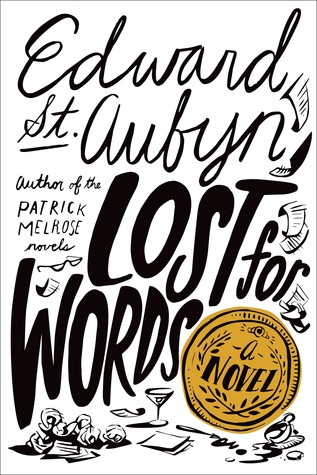
 The Bollinger Everyman Wodehouse Prize, the UK’s prize for comic literature, has run since 2000. Among the past winners are Paul Torday, Howard Jacobson, Terry Pratchett, Geoff Dyer, Gary Shteyngart, and (surprise!) Ian McEwan. I’ve read five of the winners, including Lost for Words by Edward St. Aubyn. [Shortlist in March and winner announced in May.]
- The Baileys Women’s Prize for Fiction (formerly known as the Orange Prize). Ali Smith won the 2015 award for How to Be Both. [Longlist in March; shortlist and winner announced in June.]
Do you follow literary prize races? Do you make a point of reading the winner and/or the shortlisted books? All comments welcome!
 Bookish Beck = Rebecca Foster. American transplant to England. Freelance proofreader and book reviewer.
