Bloomsbury’s Object Lessons series “is a series of concise, collectable, beautifully designed books about the hidden lives of ordinary things.” (I have previously reviewed Doctor, Dust, Grave, Pregnancy Test, and Recipe.) I love how interdisciplinary these short nonfiction works are, combining history and pop culture and often incorporating science or medicine, too. Here are my thoughts on three 2024 additions to the series.
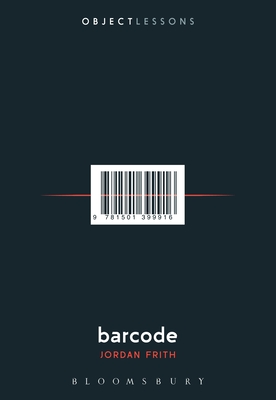 Barcode by Jordan Frith: The barcode was patented in 1952 but didn’t come into daily use until 1974. It was developed for use by supermarkets – the Universal Product Code or UPC. (These days a charity shop is the only place you might have a shopping experience that doesn’t rely on barcodes.) A grocery industry committee chose between seven designs, two of which were round. IBM’s design won and became the barcode as we know it. “Barcodes are a bit of a paradox,” Frith, a communications professor with previous books on RFID and smartphones to his name, writes. “They are ignored yet iconic. They are a prime example of the learned invisibility of infrastructure yet also a prominent symbol of cultural critique in everything from popular science fiction to tattoos.” In 1992, President Bush was considered to be out of touch when he expressed amazement at barcode scanning technology. I was most engaged with the chapter on the Bible – Evangelicals, famously, panicked that the Mark of the Beast heralded by the book of Revelation would be an obligatory barcode tattooed on every individual. While I’m not interested enough in technology to have read the whole thing, which does skew dry, I found interesting tidbits by skimming. (Public library) [152 pages]
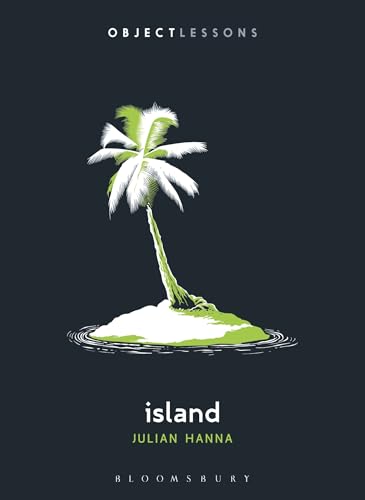 Island by Julian Hanna: The most autobiographical, loosest and least formulaic of these three, and perhaps my favourite in the series to date. Hanna grew up on Vancouver Island and has lived on Madeira; his genealogy stretches back to another island nation, Ireland. Through disparate travels he comments on islands that have long attracted expats: Hawaii, Ibiza, and Hong Kong. From sweltering Crete to the polar night, from family legend to Virginia Woolf’s To the Lighthouse, the topics are as various as the settings. Although Hanna is a humanities lecturer, he even gets involved in designing a gravity battery for Eday in the Orkneys (fully powered by renewables), having won funding through a sustainable energy prize, and is part of a team that builds one in situ there in three days. I admired the honest exploration of the positives and negatives of islands. An island can promise paradise, a time out of time, “a refuge for eccentrics.” Equally, it can be a site of isolation, of “domination and exploitation of fellow humans and of nature.” We may think that with the Internet the world has gotten smaller, but islands are still bastions of distinct culture. In an era of climate crisis, though, some will literally cease to exist. Written primarily during the Covid years, the book contrasts the often personal realities of death, grief and loneliness with idyllic desert-island visions. Whimsically, Hanna presents each chapter as a message in a bottle. What a different book this would have been if written by, say, a geographer. (Read via Edelweiss) [180 pages]
 X-Ray by Nicole Lobdell: X-ray technology has been with us since 1895, when it was developed by German physicist Wilhelm Roentgen. He received the first Nobel Prize in physics but never made any money off of his discovery and died in penury of a cancer that likely resulted from his work. From the start, X-rays provoked concerns about voyeurism. People were right to be wary of X-rays in those early days, but radiation was more of a danger than the invasion of privacy. Lobdell, an English professor, tends to draw slightly simplistic metaphorical messages about the secrets of the body. But X-rays make so many fascinating cultural appearances that I could forgive the occasional lack of subtlety. There’s an in-depth discussion of H.G. Wells’s The Invisible Man, and Superman was only one of the comic-book heroes to boast X-ray vision. The technology has been used to measure feet for shoes, reveal the hidden history of paintings, and keep air travellers safe. I went in for a hospital X-ray of my foot not long after reading this. It was such a quick and simple process, as you’ll find at the dentist’s office as well, and safe enough that my radiographer was pregnant. (Read via Edelweiss) [152 pages]

 Bookish Beck = Rebecca Foster. American transplant to England. Freelance proofreader and book reviewer.
 Bookish Beck
Love the way Hanna seems to have approached the brief—seems quite different from the other Object Lesson books!
LikeLiked by 1 person
True. These books can be formulaic: here is the history, here is where it appears in popular culture, etc. I appreciated the swerve!
LikeLike
Not being much of a non-fiction reader, this list has passed me by. It looks well worth exploring.
LikeLiked by 1 person
There are sure to be at least a few on it that attract you.
LikeLiked by 1 person
I forgot all about several of this series lurking in my novella/short nf pile. The Islands one does sound fun, and I would read the Barcodes!
LikeLiked by 1 person
Great options for NovNov next year!
LikeLiked by 1 person
ObjectLessons sounds like a great collection!
LikeLiked by 1 person
The selection of topics is very wide ranging. I’m sure you could find something to interest you.
LikeLiked by 1 person
Island feels like a weird choice of ‘object’ for this series but I’m glad it worked so well.
LikeLiked by 1 person
Definitely one of the more abstract ones (similarly, I wonder how “Fake” worked); the author is a prof of cultural studies / digital culture.
LikeLiked by 1 person
The Hidden Lives of Ordinary Things. I love it. I will look for books in this series. Thank you.
My Novellas in November wrap-up: https://headfullofbooks.blogspot.com/2024/12/novellas-in-november-wrap-up.html
LikeLiked by 1 person
The series is well worth exploring. Thanks for joining us for Novellas in November!
LikeLike
Okay. I looked it up on Goodreads. Nothing. Then I looked on Amazon and there is a boxed set (but I don’t know what is in the set. It doesn’t say) that costs $225 dollars and is over 4000 pages long. Ha! Clearly not the same thing. I wonder if it is not published here in the US.
LikeLike
Nevermind. I found it when I searched for the title X-Rays by Nicole L. Very clever. Now I’m off to see if my library has any of them. I’m guessing the first book I found was all 85 of the booklets. (Maybe?)
LikeLike
Wow, I didn’t know a box set was available. That would be quite overwhelming! For the most part I have accessed the series as e-books from NetGalley and Edelweiss, but I do own one in print and my library has another. Fingers crossed your library will have some for you to try.
LikeLiked by 1 person
This series looks wonderful! Oh dear …
LikeLiked by 1 person
Maybe you need to collect them all… 😉
LikeLiked by 1 person
What a curious selection of new topics for this year: no wonder you found them so interesting!
LikeLiked by 1 person
I’d happily read almost any of them if they were on easy library access.
LikeLike
[…] included The House of Dolls by Barbara Comyns, Recognising the Stranger by Isabella Hammad, and Island by Julian Hanna. I also reviewed a film based on a novella, Small Things Like […]
LikeLike