20 Books of Summer, 11: The Singer’s Gun by Emily St. John Mandel
After a strong start, I reeeeaaaalllly slowed down on the summer reading. I’ll review a few more books this week and have another four on the go (I’ve substituted a few shorter ones into the stack already!), so I just need to decide on a final two and should make it by the end of the month.
 I earmarked The Singer’s Gun (2010), Emily St. John Mandel’s second novel, for the challenge because I’d heard that her new one coming out in September, Exit Party, was a sequel of sorts – more on that later. You can see signs of the intricate literary suspense she would become known for, but this has a comparatively simple plot. After his Italian honeymoon, Anton Waker makes the baffling choice to stay on Ischia rather than returning to New York with his bride. He’s left behind a corporate job he got under false pretences to live and work in an island hotel. Small-time crime is a family legacy: his parents’ antique business is a front for stolen goods; and with his cousin, Aria, he sold fake passports to immigrants. (His clients included Elena, who was from the Arctic North of Canada and later became his secretary.) He’s promised to do one last job for Aria on Ischia, for a cool $18,000, and then he’s out.
Of course, it’s never going to be that simple. For one thing, the stakes have escalated – Aria is being investigated for people trafficking – and for another, the title object, like Chekhov’s, is bound to cause unforeseen consequences. It’s a compact story with just a handful of major characters. The other is Alex Broden, a State Department detective who rarely makes it home for her little girl’s bedtime because she’s obsessed with solving a couple of people-trafficking cases. I felt Mandel was tempted to turn this into a sort of police procedural, yet Broden gets too little page time for readers to develop much of an interest in her. Anton is a bit of a blank as well; a rare detail that makes him sympathetic is that he misses his one-eyed cat, Jim, so much that he has him catnapped and flown over to Italy.
 The shipping industry and a hotel setting prefigure elements of The Glass Hotel (2020), which is Mandel’s finest work. As for the sequel: Exit Party is described as being about one “Ari Waker” in 2031 Los Angeles. It has a postapocalyptic setup (like Station Eleven) and the Moon is a setting (like in Sea of Tranquillity). I’m guessing that Ari is Aria, 20 years later. I’ll find out when I read Exit Party in September! This was an easy and relatively engaging read, but probably not a necessary trip into Mandel’s back catalogue unless you’re a completist. (New purchase – Awesomebooks.com)
July Releases by Carson, Du Bois, Humphreys, Nolen & Watkins
This month I have novels set in the Mojave Desert and a Northern Ireland that never was; poetry about food and cross-cultural identity / adolescent boys and self-harm; and a short nonfiction book offering ideas for how to reconnect with nature. Repeated themes include environmental damage, Bible imagery and toxic masculinity.
Few and Far Between by Jan Carson
“So this is all true.”
“Historically true or made-up true?”
“What’s the difference?”
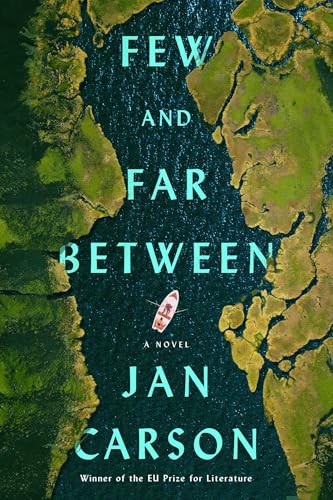 This was my first from Carson – and her U.S. debut – though she’s well known in Northern Ireland for her novels and short story collections. (Our own Cathy of 746 Books gets a mention in the Acknowledgements!) Her fourth novel is a work of alternative history with subtle magic realist touches. In 1958, Terrence O’Neill (shortly to be elected Prime Minister) proposed draining Lough Neagh to give Northern Ireland a seventh county. That never happened, but in the world of Carson’s novel it did, creating “the Ark,” an archipelago of islands in the large lake. It was primarily a refuge for people fleeing the Troubles – and also happens to provide a nice raft of allusions to the Book of Genesis. In 2017, middle-aged siblings Marion and Robert-John Connolly are two of the last few remaining residents of the Ark, working as caretakers. They grew up here with their overbearing anthropologist father and German mother. Rumour has it that the government will soon flood the lake to deal with an algae bloom. The Connollys hope that the arrival of Alex Anderson, a homegrown academic writing a history of the Ark, will be their chance to defend their home.
Carson has given careful attention to her worldbuilding here. Along with the previously inhabited islands are four on the “Far Side” that seem more metaphorical: Middle Flat houses “the Sleepers,” who are in a coma due to trauma (cf. Suzanne O’Sullivan’s The Sleeping Beauties); Church Flat is a sort of bardo for the “Almost Dead”; Tom’s Hard is a suicide spot; and Eglish Flat is where people go to bury things they don’t want anyone to know about. Except, like the return of the repressed made physical, all that detritus has been resurfacing. Excerpts from Alex’s manuscript in progress treat this all matter-of-factly, and before long it all feels completely natural. Flashbacks to the 1970s and 1990s fill in backstories for the oddball central characters, whose off-kilter upbringing keeps them tied to an island chain that harbours as many bad memories as good ones. This was intriguing for its blend of realism and fabulist elements; I never knew what was going to happen next. I’ll read more by Carson for sure.
With thanks to Scribner for the proof copy for review.
Eating Air by Suyin Du Bois
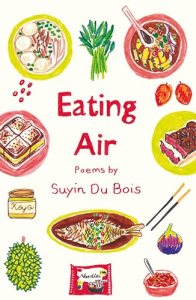 In this yummy debut poetry pamphlet, food is wrapped up with memory and serves as tokens of a mixed Chinese-Malaysian and Belgian identity. Sometimes when Du Bois is travelling in Asia, people assume that she is a total foreigner and bring her a fork instead of chopsticks, or remark on her bravery in trying dishes that are an acquired taste. In fact, she’s up for eating anything, no matter how spicy or unusual. Food can be about travel and adventure, but also about comfort and a sense of home. Family chats and celebrations revolve around good meals and drink: “We sate silence with stories / of firm favourites and elusive treats we long for”. A trip to London’s Chinatown entails more of that delicious alliteration and sibilance: “a pile of slender leaves serenades me with its many names: / eng chai, ong choy, kangkong, water spinach, morning glory.” I particularly loved the clever blend of cookery and family tradition in “Ode to Kaya,” where the quest for the perfect egg jam made with palm sugar and coconut milk brings back memories of a departed relative: “Goh Ee Poh has long since condensed / into photographs, so I sweeten my never-asked / regret, trace down someone else’s heirloom recipe.” These 19 poems are a feast, ranging widely across places, languages and cuisines.
With thanks to The Emma Press for the free copy for review.
Unwilded: Finding Our Way Back to Nature by Alastair Humphreys
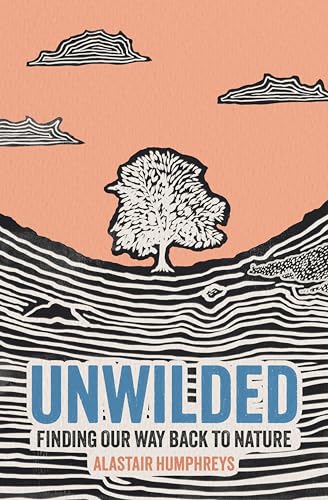 I discovered Humphreys’ work through his previous book, the Wainwright Prize-longlisted Local (and he’s now a judge for this year’s nature writing race). His wry, sometimes silly tone is reminiscent of Lev Parikian, and the two authors share a clear passion for the natural world and for enthusing others about its everyday wonders here in England. Humphreys opens with two recent events that reassured him that people care about nature: the public outcry that greeted the illegal cutting down of the famous Sycamore Gap tree at Hadrian’s Wall, and the joyful (if competitive) response to sightings of the Aurora Borealis. The former also serves as a cautionary tale of what happens when people are disconnected from nature: The two men convicted for the Sycamore Gap incident retorted that it was “just a tree.”
Humphreys doesn’t point fingers but acknowledges that the issue is systemic and affects all of us, even avowed countryside-lovers: “Our busy indoor lives, the moth-like lure of bright screens and shopping centres, and restricted access to much of our remaining green space all combine to make us more disconnected from the natural world than any previous generation.” Short chapters give strategies for various activities that, in as little as 15 minutes, could get people more engaged with the outdoors: litter picking, photographing the same tree every week for a year, foraging for blackberries, testing the water quality in a local stream, wild swimming, planting trees, and joining in a parkrun. I liked his idea of marking each full moon by enjoying a different spot by night. He also worked outdoors for one hour per day for a week, and dabbled in performance art through graffiti reading “15 Minutes to Nature” with an arrow or “NOTICE THIS TREE.” It’s easy to become disheartened by the scale of environmental problems, but Humphreys suggests choosing five to focus on, and then joining up with other local concerned citizens to work towards five corresponding mitigating actions. This is a readable and practical book written with a light touch. Like Lucy Jones’s Losing Eden, it ends with a utopian epilogue imagining humans living in harmony with a restored natural world. Let’s all keep living in hope, and doing our bit to make it a reality.
With thanks to the author and Eye Books for the free copy for review.
Afterlight by Caleb Nolen
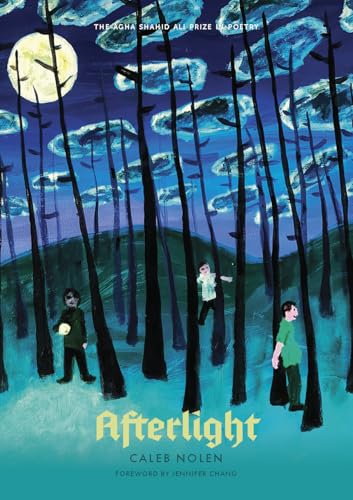 Nolen’s debut collection won the Agha Shahid Ali Prize in Poetry (the same award that my old blogger friend Carolyn Oliver won for her first book, Inside the Storm I Want to Touch the Tremble). It reflects on an early life marked by male friendship, addiction and other self-destructive behaviours, including suicidal ideation. The poet barely knew his father, who had a new wife and kids and treated meetings with his older sons as begrudged obligations. He and his high school friends snuck beer, weed and prescription pills. There were other even more dangerous things around, too –
from “First Gun”
A pistol, wrapped in an old shirt, hidden behind a panel
in his parents’ basement. When he brought it out to show us,
he held it carefully in both hands.
I was reading this collection at the same time as Michael Amherst’s The Boyhood of Cain, and the two chimed for their equation of expected masculinity with violence –
from “Letter to Cain”
My first consolation, my first friend,
tell me what you learned when the blood cried out:
who are we the keepers of, we who were not kept?
Nolen is 40, too young to have four dead friends – Bobby, Mike, Jonathan and Troy – threading through his memory. The book is rife with biblical references (“Jonah Years,” “Killing the Fattened Calf”), including letters addressed to particular figures: Abel, Job, the Woman Taken in Adultery, Paul the Apostle, Judas, the Man Possessed by Demons. Personal and religious history mesh, such that the quartet of departed friends are included alongside Mary of Oignies and the like in an Appendix of Hagiographies.
You’re making a life out of scribbling
the names of your dead friends.
This is a sombre collection that looks back with pain rather than nostalgia. Gentle alliteration and glimpses of nature help to make the vision of the past endurable.
With thanks to the University of Utah Press for the advanced e-copy for review.
Yellow Pine by Claire Vaye Watkins
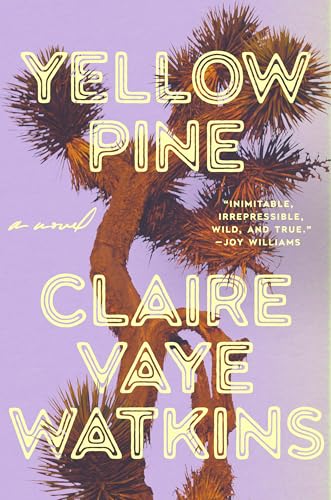 Watkins’s fourth work of fiction exudes love for a distinctive and endangered landscape: the deserts of the American West. Rose has worked for the Sierra Club and has a preteen daughter, Juniper, who lives with her father back east. The book opens with Miles, a former lover, returning to Rose’s life. Approaching age 40 and grieving her alcoholic mother’s untimely death, she finds herself yearning for a baby even though she feels it’s morally questionable to have children in a time of climate breakdown. If Miles won’t commit, she has a backup plan called “The Swirl” whereby male acquaintances will be invited to inseminate her after signing away parental rights. (Just the sperm, thanks; Rose will take care of the rest.) Meanwhile, she’s part of a loose group based at the Yellow Pine encampment, protesting the construction of a solar farm that would devastate local tortoise populations. The defenders’ impassioned conversations about how to work toward good in a time of corporation-driven extinctions are a highlight. It’s a bold, kooky, horny novel in the same vein as Melissa Broder’s Death Valley and Miranda July’s All Fours, but still manages an intellectual rigour and felicity of prose that I perhaps wasn’t expecting. Some sample lines:
It was surprisingly nice to be named a friend by the man who’d once poured salt on the slug of her heart
Rose and Miles sallied forth, trying again in Indian summer in a low-key failed state on a dying planet.
Love laid down a new layer. Rose’s despair patinaed with faith.
“I’m trying to be unapocalyptic. I’m trying to be practical.”
I’ve been reading Watkins since her debut story collection, Battleborn, won the Dylan Thomas Prize, though it’s her first novel, Gold Fame Citrus, to which I’m most partial. Her third book, I Love You but I’ve Chosen Darkness, went too far off the rails for me, whereas this one is a return to form. The outlook is a little bit woo-woo and I appreciated the environmental theme more than the indulgent autofiction framework. Still, it feels realistic and up-to-the-minute, positing human connection and purposeful collective action as antidotes to hopelessness. (“It wasn’t enough to be anti … You had to be for something.”)
With thanks to riverrun/John Murray (Hachette) for the free copy for review.
Which of these July releases have you read, or will you seek out now?
What am I missing out on?
Summer Reads, Part I: Buti, Ellis, C. Foster (Reread), Itami, Thomson
The less said about the summer of 2026, the better. It feels like the heat wave will never end. We’ve had 4 mm of rain the whole month. Drought imperils so much. But it’s not right to complain when wildfires rage not so far away. One glance at the news headlines and there’s no avoiding the signs of climate breakdown everywhere. I can’t bear it. I just keep reading.
Year of the Drought by Roland Buti (2015; 2017)
[Translated from French by Charlotte Mandell]
How exhausting was that summer of 1976, always beating down on our heads!
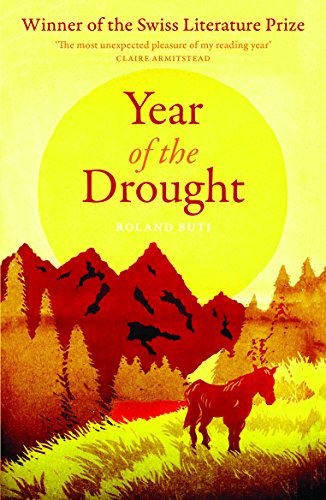 This Swiss novella takes place during the infamous European heat wave that people still talk about half a century later. It’s a perfect febrile setting for 13-year-old Gus’s coming-of-age, which includes a sexual awakening and the dawning realisation that his parents aren’t perfect; that in fact his family is falling apart. The Sutters’ operations embody the move from family smallholding to an industrial model. They keep a small number of cattle but are also experimenting with large-scale henhouses holding thousands of birds. In contrast with that vast flock, about whose welfare the characters seem indifferent, is an injured white dove that Gus finds and keeps as a pet. (A wise choice by Buti: it’s easier to feel compassion for an individual, such as the dove or the old farm horse, Bagatelle, than for a faceless mass.) Helping Gus and his father on the farm is distant cousin Rudy, who has Down’s syndrome; disrupting their routines is Cécile, Gus’s mother’s friend, who has come to stay with them.
Because of the drought, our minds were full of dreams of coolness and moisture
Dreams of rain, dreams of love, dreams of preserving some mythical family happiness that maybe never existed. Like the weather, everything goes wrong – in tragic ways. It’s all so awful I recoiled. Buti jumps ahead several decades to offer a longer view of the land, but I couldn’t ignore how casually the teenage Gus adopted his father’s violent, misogynistic ways. None of what happens bodes well for the future. The one laugh I got out of the experience was the charity shop accidentally labelling the book “Romance fiction.” (Secondhand – BHF, Newbury) 
Book 1 of The Summerhouse Trilogy
The Clothes in the Wardrobe by Alice Thomas Ellis (1987)
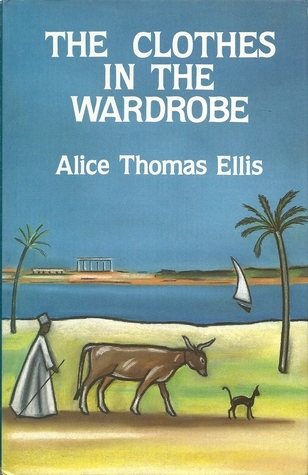 I hadn’t had great luck with Ellis, fiction and nonfiction, before, but I’m so glad I was tempted by this omnibus edition and tried her again. This melancholy, introspective novella was right up my street. Margaret’s yearning for her Egyptian upbringing isn’t the only reason I reached for Moon Tiger as a readalike; Ellis’s tone reminded me of Barbara Comyns and Penelope Lively for its mix of cynicism and nostalgia. Margaret is soon to marry Sylvester, though she doesn’t love him at all and he’s closer to her mother’s age as well as a known womanizer. Perhaps the engagement was her mother’s idea more than her own? The title is an apt symbol for living to someone else’s expectations: “my life fitted me as ill as a garment designed for somebody else,” Margaret thinks. It’s no coincidence that she’s to be married in her mother’s old wedding dress. There are also sartorial metaphors around memory (“Did the elderly have minds like old wardrobes stuffed to overflowing…”) and resistance to ageing. I marked out so many shrewd observations and witty conversations. I empathized with Margaret’s feeling of being trapped in a life she hasn’t chosen.
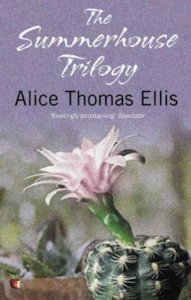 It seems like one of those books where nothing will happen, but there’s actually a surprise ending that looks set to move Margaret onto a different track. As I understand it, the other two volumes repeat the weeks leading up to the wedding from other perspectives: Margaret’s staid mother-in-law-to-be; and her mother’s bohemian friend Lili, who was her bridesmaid back in Egypt and arrives in time to shake things up. I love that premise. The omnibus cover seems random, but the question of whether the cactus in the summerhouse will flower as good luck for the wedding becomes an important plot point. I’ll jump right into Book 2. (Secondhand – Regent Books, Wantage)
The Screaming Sky by Charles Foster (2021)
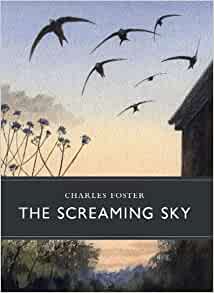 The only thing that has redeemed these dry, scorching days is the swifts screeching across the sky. How can it be that I was once unaware of them? How is it possible for people not to look up for these noisy acrobats whenever they’re outdoors? Somehow, I was oblivious until maybe 10–15 years ago. Now, I always have at least one eye on the sky during these crucial few months. And although this year swifts have been with me since early April (first in Portugal and then in our neighbourhood), I’m already dreading their departure for Africa in a few weeks. They’re still here! I trill to myself each morning. But soon that won’t be true. And with populations in freefall, there may come a day when they don’t return to the UK at all.
Charles Foster is a kindred spirit who sets similar emotional store by the presence or absence of the common swift (Apus apus). I appreciated this when I first read it five years ago (my review), but all the more so now. The monograph takes us through one year with swifts. In the summer, he needs travel no further than his own street in Oxford, but the rest of the time he has to chase them down in continental Europe and central and southern Africa. It’s an old-fashioned quest, a romantic pursuit, a hopeless attempt to keep hold of creatures as fast and elusive as the wind. Foster salts his narrative with all the salient facts but acknowledges that, for all we claim to know about them, these birds retain an essential magic and mystery. “Their power, freedom and joy are the way that everything really is – though we don’t usually see it. It is just that when the swifts scream through the sky, you can’t miss it. That’s how everything, all the time, is meant to be.” (Review copy from Little Toller Books)
My original rating:
My rating now: 
Bonus content:
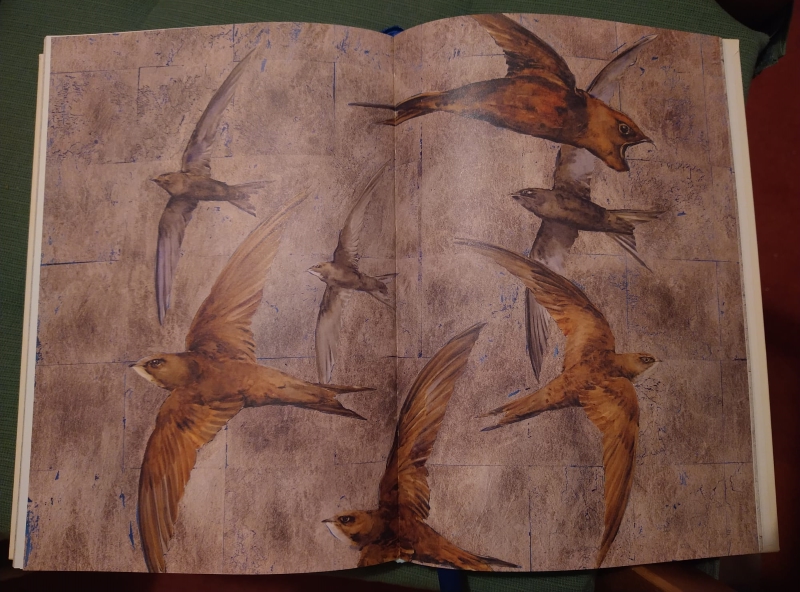
From Robert Macfarlane’s The Book of Birds (illus. Jackie Morris):
From the Spell Songs album Let the Light In: “Swifts”
& My current earworm, also featuring Kris Drever: a more general reassurance – or at least philosophical acceptance – that change is the one constant in life, in perfect pop song form (“Change”)
And from Ugandan poet Nick Makoha’s The New Carthaginians: “in the first part of the night, I saw the coastal villages, men arguing / about the price of oil and swifts darting into shadows.” (from “Codex© of Birds”)
Kakigori Summer by Emily Itami (2025)
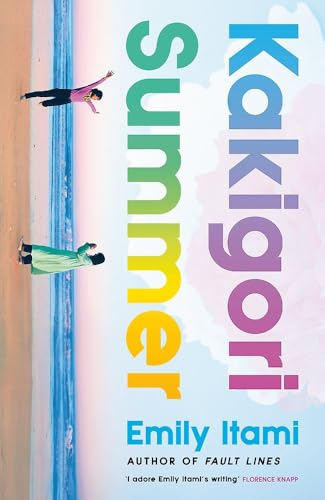 Itami was shortlisted for a Costa Award for her enjoyable 2021 debut, Fault Lines. Kakigori is a flavoured shaved-ice dessert and it’s a great choice of title for this bittersweet – but mostly sweet – story of three sisters raised between Tokyo and London who reunite in Japan to spend a summer together with their prickly great-grandmother, Obaachan, who’s nearing 100. Narration alternates between Rei, the oldest, who has a high-flying finance job and keeps everyone in line; Kiki, who’s a single mother and works in a care home for the elderly; and Ai, a flighty pop star now in disgrace for her affair with a married man. Although there is much joy in their banter, little Hikaru’s antics, and the pursuit of the finest culinary treats, a shadow over it all is their mother’s unexplained death. She went for a swim one day when they were girls and never came back, nor was a body ever found; they have to suspect suicide. (“Well, that’s that, then. Nothing will be all right ever again.”) This easy-reading novel affirms the goodness of life despite the reality of death. Its typically Japanese feasts and funerary rites brought to mind Bryan Washington’s similarly well-balanced Memorial. My only note would be that I’m not sure the voices were distinctive enough to warrant three first-person narrators; third person rotating would probably have done the job. (Public library)
Saltwater: A Midsummer Ghost Story by Elaine Thomson (2026)
“The dead are closer than we think.”
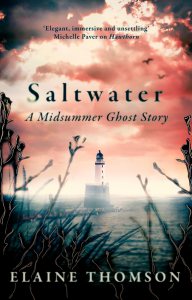 I hadn’t heard of the Scottish island of Stroma, so assumed it was made up. In fact, it’s real, lying between Orkney and the north coast of Caithness on mainland Scotland, but uninhabited as of 1962. Tom Torrance travels by train and boat from Edinburgh a few days before midsummer to oversee the last steps in the construction of the island’s lighthouse and meet with Mr Stevenson (of the famous lighthouse-building clan, which included novelist Robert Louis Stevenson). With him is his brother Jamie; he’s not of much practical help, but they cling to each other because they lost their mother to tuberculosis a week ago. The travelling minister Tom meets on the train gives him a rowan-wood amulet and cautions him that midsummer is a liminal time when the spirit world is close at hand. Tom doesn’t heed the warning. He arrives to find a disaster-prone construction project that has entailed serious injuries and broken machinery. Flora Christie and her grandmother, Thrawn Jean, are local women with healing powers who are treated with suspicion: women, especially those with red hair, are considered bad luck around boats. The men want to seal a “witch bottle” into the wall for good luck. He dismisses their superstitions but at the same time keeps seeing hallucinations of the dead in the waves and on the in-construction edifice. Is it grief, Flora’s special whisky, or a real taste of the supernatural?
This was highly reminiscent of Michelle Paver’s work. The typical Victorian-pastiche ghost story bores me because it’s always just the same: the narrator is a dignified gentleman who can’t possibly be seeing such things, yet documents them and his own horror with great precision. Thomson set herself an interesting challenge, writing a quartet of Scottish ghost stories set at turning points of the year. (This is the second, after Hawthorn.) I probably won’t try the others unless my library acquires them. (Public library)
Miscellaneous for #ReadIndies: Grenville & Holman-Hunt, Trans History & Travel Poetry, Kathleen Jamie & Kristen Zory King
Squeaking in some more reviews on the last day of a challenge, as is my wont. Today I have mini-responses to a wide selection: a graphic novel companion to LGBTQ history, an exposé that will have you checking the ingredients lists on all your toiletries and other household cleaning products, a memoir of an eccentric Edwardian childhood, poems about modes of travel and the states of mind they produce, superb nature essays blending personal and environmental writing, and a mini collection of flash fiction about young women.
Trans History: From Ancient Times to the Present Day by Alex L. Combs and Andrew Eakett (2025)
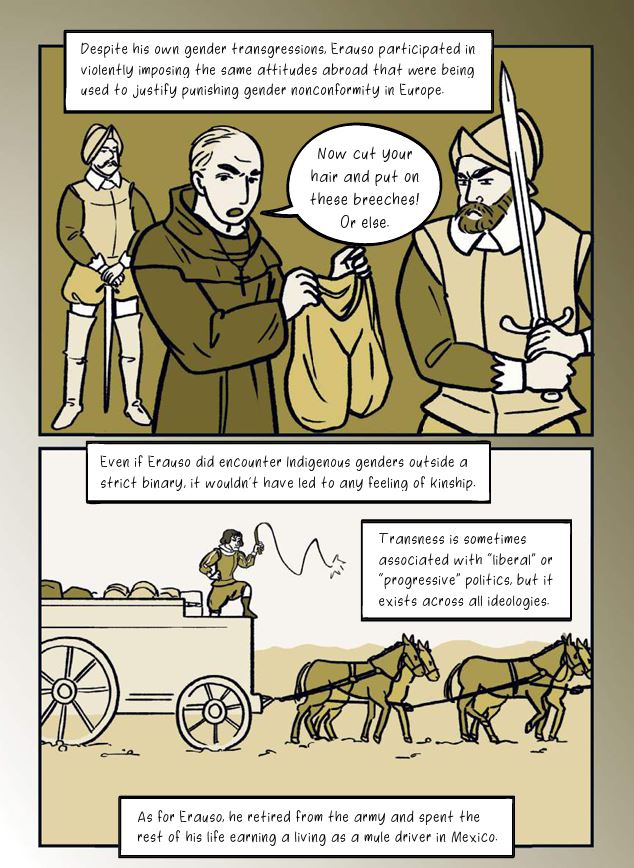
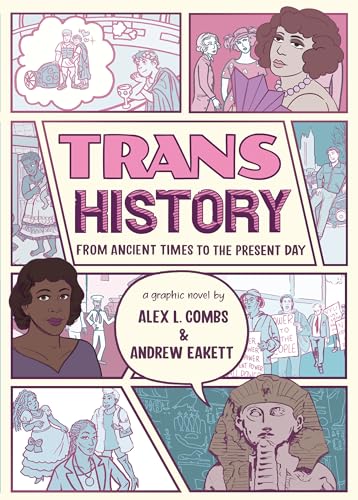 Queer people of all varieties have always been with us; they just might have understood their experience or talked about it in different terms. So while Combs and Eakett are careful not to apply labels retrospectively, they feature a plethora of people who lived as a different gender to that assigned at birth. Apart from a few familiar names like Lili Elbe and Marsha P. Johnson, most were new to me. For every heartening story of an emperor, monk or explorer who managed to live out their true identity in peace, there are three distressing ones of those forced to conform. Many Indigenous cultures held a special place for gender-nonconforming individuals; colonizers would have seen this as evidence of desperate need of civilizing. Even doctors who were willing to help with early medical transitions retained primitive ideas about gender and its connection to genitals. The structure is chronological, with a single colour per chapter. Panes reenact scenes and feature talking heads explaining historical developments and critical theory. A final section is devoted to modern-day heroes campaigning for trans rights and seeking to preserve an archive of queer history. This was a little didactic, but ideal for teens, I think, and certainly not just one for gender studies students.
Readalike: Meg-John Barker’s Sexuality: A Graphic Guide
 (Read via Edelweiss) [Candlewick Press]
The Case Against Fragrance by Kate Grenville (2017)
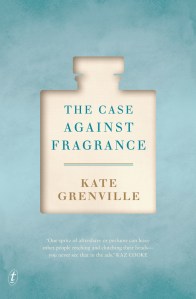 File this with other surprising nonfiction books by well-known novelists. In 2015, Grenville started struggling while on a book tour: everything from a taxi’s air freshener and a hotel’s cleaning products to a fellow passenger’s perfume was giving her headaches. She felt like a diva for stipulating she couldn’t be around fragrances, but as she started looking into it she realized she wasn’t alone. I thought this was just going to be about perfume, but it covers all fragranced products, which can list “parfum” on their ingredients without specifying what that is – trade secrets. The problem is, fragrances contain any of thousands of synthetic chemicals, most of which have never been tested and thus are unregulated. Even those found to be carcinogens or endocrine disruptors in rodent studies might be approved for humans because it’s not taken into account how these products are actually used. Prolonged or repeat contact has cumulative effects. The synthetic musks in toiletries and laundry detergents are particularly bad, acting as estrogen mimics and likely associated with prostate and breast cancer. I tend to buy whatever’s on offer in Boots, but as soon as my Herbal Essences bottle is empty I’m going back to Faith in Nature (look for plant extracts). The science at the core of the book is a little repetitive, but eased by the social chapters to either side, and you can tell from the footnotes that Grenville really did her research.
Readalike: Chris van Tulleken’s Ultra-Processed People
 (Secondhand – gift from my wish list) [Text Publishing]
My Grandmothers and I by Diana Holman-Hunt (1960)
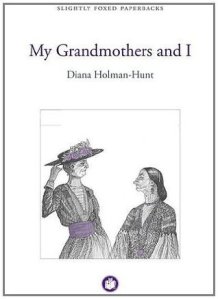 The author was the granddaughter of Pre-Raphaelite painter William Holman Hunt (The Light of the World et al.). While her father was away in India, she was shunted between two homes: Grandmother and Grandfather Freeman’s Sussex estate, and the mausoleum-cum-gallery her paternal grandmother, “Grand,” maintained in Kensington. The grandparents have very different ideas about the sorts of foodstuffs and activities that are suitable for little girls. Both households have servants, but Grand only has the one helper, Helen. Grand probably has a lot of money tied up in property and paintings but lives like a penniless widow. Grand encourages abstemious habits – “Don’t be ruled by Brother Ass, he’s only your body and a nuisance” – and believes in boiled milk and margarine. The single egg she has Helen serve Diana in the morning often smells off. “Food is only important as fuel; whether we like it or not is quite immaterial,” Grand insists. Diana might more naturally gravitate to the pleasures of the Freeman residence, but when it comes time to give a tour of the Holman Hunt oeuvre, she does so with pride. There are some funny moments, such as Diana asking where babies come from after one of the Freemans’ maids gives birth, but this felt so exaggerated and fictionalized – how could she possibly remember details and conversations at the distance of several decades? – that I lost interest by the midpoint.
Readalike: Gwen Raverat’s Period Piece
(Secondhand – Community Furniture Project) [Slightly Foxed]
In Transit: Poems of Travel, ed. Sarah Jackson and Tim Youngs (2018)
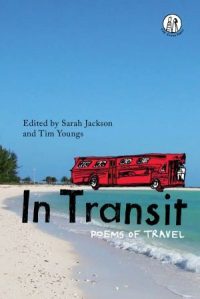 Some methods of transport are just more romantic than others. The editors’ introduction notes that “Trains were by far the most popular … followed by aeroplanes and then boats.” Walks and car journeys were surprisingly scarce, they observed, though there are a couple of poems about wandering in New York City. Often, the language is of maps, airports, passports and long flights; of trading one place for another as exile, expatriate or returnee. The collection circuits the globe: China, the Middle East, Greece, Scandinavia, the bayous of the American South. France and Berlin show up more than once. The Emma Press anthologies vary and this one had fewer standout entries than average. However, a few favourites were Nancy Campbell’s “Reading the Water,” about a boy launching out to sea in a kayak; Simon Williams’s “Aboard the Grey Ghost,” about watching for dolphins on a wartime voyage from England to the USA; and Vicky Sparrow’s “Dual Gauge,” which follows a train of thought – about humans as objects moving, perhaps towards death – during a train ride.
(New purchase from publisher) [The Emma Press]
Findings by Kathleen Jamie (2005)
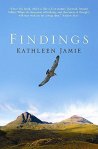
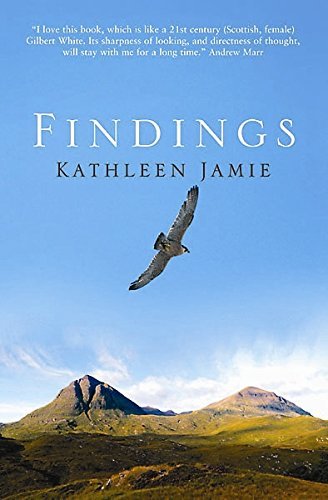 As I found when I reread Sightlines in 2022, Jamie’s topics couldn’t be better suited to my interests: Scottish islands, seabirds, medical history, and the meaning we derive from mortality. She visits the Orkney Islands just before the winter solstice, which draws a faithful few to the tomb of Maes Howe. From her attic room in Fife, she watches peregrine falcons on a cliff face. A gannet’s skull is her prized souvenir from a boat tour to an uninhabited Hebridean island. Vigilance pays off when she hears, then sees, corncrake on the Isle of Coll. Although she has a penchant for empty places, she also writes about cityscapes and hospitals. “Skylines” looks out over Edinburgh, also the setting for “Surgeons’ Hall,” about the pathology museum on the Royal College of Surgeons campus (my 2018 visit). In “Fever” her husband has a scary bout of pneumonia. Jamie is one of our wisest writers on nature and human culture. She asks whether any creatures are truly wild given the pervasiveness of human influence. Even as she seeks out the ancient, she knows we are all ephemeral. “Sabbath” is the best single essay, combining a visit to Lewis with her worry for her mother, who’s had a stroke, and her grandmother, who is to move into a care home. She explores the island “relishing the movement of my body, its own small continuing strength. It wouldn’t last forever – that was the truth of it – but today I could cycle along a road, to see where it led.”
(University library) [Sort Of Books]
My rating in 2012:
My rating now: 
Ladies, Ladies, Ladies by Kristen Zory King (2025)
 I’d never encountered “chapbook” being used for prose rather than poetry, but it’s an apt term for this 61-page paperback containing 18 stories. It’s remarkable how much King can pack into just a few pages: a voice, a character, a setting and situation, an incident, a salient backstory, and some kind of epiphany or resolution. Fifteen of the pieces focus on one named character, with another three featuring a set (“Ladies,” hence the title). Laura-Jean wonders whether it was a mistake to tell her ex’s mother what she really thinks about him in a Christmas card. A love of ice cream connects Margot’s past and present. A painting in a museum convinces Paige to reconnect with her estranged sister. Alice is sure she sees her double wandering around, and Mary contemplates stealing other people’s cats. The women are moved by rage or lust; stymied by loneliness or nostalgia. Is salvation to be found in scripture or poetry? Each story is distinctive, with no words wasted. I’ll look out for future work by King.
(Duplicate copy passed on by Marcie – thank you!) [Stanchion Books]
Which of these do you fancy reading?
Six more indie publishers spotlighted, for a total of 19 books and 18 publishers this month – job done!
Also covered:
Ansell, Farrier, Febos, Hoffman, Orlean, Stacey
Chevillard, Hopkins & Bateman, McGrath, Richardson
Victorian-Themed Novels by Annie Elliot and Livi Michael
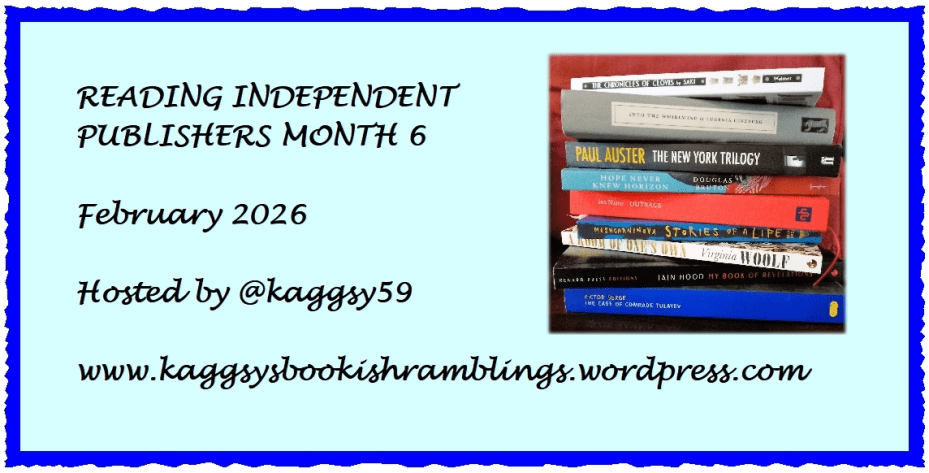
There are plenty more indie books that I’m in the middle of, or picked out but didn’t get to in February. As much as possible, I’ll continue reading (indie) books from my shelves this year.
Book Serendipity, January to February
I call it “Book Serendipity” when two or more books that I read at the same time or in quick succession have something in common – the more bizarre, the better. This is a regular feature of mine every couple of months. Because I usually have 20–30 books on the go at once, I suppose I’m more prone to such incidents. People frequently ask how I remember all of these coincidences. The answer is: I jot them down on scraps of paper or input them immediately into a file on my PC desktop; otherwise, they would flit away! Feel free to join in with your own.
The following are in roughly chronological order.
- An old woman with purple feet (due to illness or injury) in one story of Brawler by Lauren Groff and John of John by Douglas Stuart.

- Someone is pushed backward and dies of the head injury in Zofia Nowak’s Book of Superior Detecting by Piotr Cieplak and one story of Brawler by Lauren Groff.
- The Hindenburg disaster is mentioned in A Long Game by Elizabeth McCracken and Evensong by Stewart O’Nan.
- Reluctance to cut into a corpse during medical school and the dictum ‘see one, do one, teach one’ in the graphic novel See One, Do One, Teach One: The Art of Becoming a Doctor by Grace Farris and Separate by C. Boyhan Irvine.
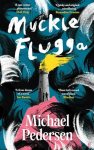 A remote Scottish island setting and a harsh father in Muckle Flugga by Michael Pedersen [Shetland] and John of John by Douglas Stuart [Harris]. (And another Scottish island setting in A Calendar of Love by George Mackay Brown [Orkney].)
- A mention of genuine Harris tweed in Alone in the Classroom by Elizabeth Hay and John of John by Douglas Stuart.
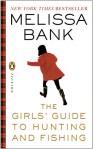
- The Katharine Hepburn film The Philadelphia Story is mentioned in The Girls’ Guide to Hunting and Fishing by Melissa Bank and Woman House by Lauren W. Westerfield.
- A mention of Icelandic poppies in Nighthawks by Lisa Martin and Boundless by Kathleen Winter.
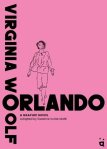
- Vita Sackville-West is mentioned in the Orlando graphic novel adaptation by Susanne Kuhlendahl and Boundless by Kathleen Winter.
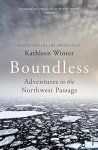
- Fear of bear attacks in Black Bear by Trina Moyles and Boundless by Kathleen Winter. Bears also feature in A Rough Guide to the Heart by Pam Houston and No Paradise with Wolves by Katie Stacey. [Looking through children’s picture books at the library the other week, I was struck by how many have bears in the title. Dozens!]
- I was reading books called Memory House (by Elaine Kraf) and Woman House (by Lauren W. Westerfield) at the same time, both of them pre-release books for Shelf Awareness reviews.
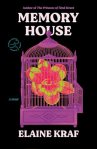
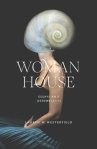
- An adolescent girl is completely ignorant of the facts of menstruation in I Who Have Never Known Men by Jacqueline Harpman and Carrie by Stephen King.
- Camembert is eaten in The Honesty Box by Lucy Brazier and Ordinary Saints by Niamh Ni Mhaoileoin.
- A herbal tonic is sought to induce a miscarriage in The Girls Who Grew Big by Leila Mottley and Bog Queen by Anna North.

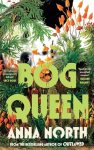
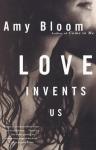
- Vicks VapoRub is mentioned in Love Invents Us by Amy Bloom, Kin by Tayari Jones, and Dirt Rich by Graeme Richardson.
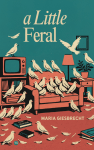
- An adolescent girl only admits to her distant mother that she’s gotten her first period because she needs help dealing with a stain (on her bedding / school uniform) in Love Invents Us by Amy Bloom, An Experiment in Love by Hilary Mantel, and Ordinary Saints by Niamh Ni Mhaoileoin. (I had to laugh at the mother asking the narrator of the Mantel: “Have you got jam on your underskirt?”) Basically, first periods occurred a lot in this set! They are also mentioned in A Little Feral by Maria Giesbrecht and one story of The Blood Year Daughter by G.G. Silverman. [I also had three abortion scenes in this cycle, but I think it would constitute spoilers to say which novels they appeared in.)
- A casual job cleaning pub/bar toilets in Kin by Tayari Jones and John of John by Douglas Stuart.
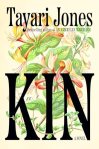
- Kansas City is a location mentioned in Strangers by Belle Burden, Mrs. Bridge by Evan S. Connell, and Dreams in Which I’m Almost Human by Hannah Soyer. (Not actually sure if that refers to Kansas or Missouri in two of them.)
- The notion of “flirting with God” is mentioned in Love Invents Us by Amy Bloom and A Little Feral by Maria Giesbrecht.
- A signature New Orleans cocktail, the Sazerac (a variation on the whisky old-fashioned containing absinthe), appears in Kin by Tayari Jones and Let the Bad Times Roll by Alice Slater.
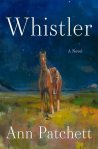
- An older person’s smell brings back childhood memories in Love Invents Us by Amy Bloom and Whistler by Ann Patchett.
- The fact that complaining of chest pain will get you seen right away in an emergency room is mentioned in Love Invents Us by Amy Bloom and The Girls Who Grew Big by Leila Mottley.
- Thickly buttered toast is a favoured snack in The Honesty Box by Lucy Brazier and An Experiment in Love by Hilary Mantel.
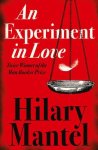 A scene of trying on fur coats in Love Invents Us by Amy Bloom and An Experiment in Love by Hilary Mantel.
- Lime and soda is drunk in Our Numbered Bones by Katya Balen, Kin by Tayari Jones, and Whistler by Ann Patchett.
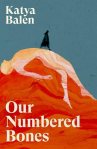
- A husband 17 years older than his wife in Kin by Tayari Jones and Whistler by Ann Patchett.
- The protagonist seems to hold a special attraction for old men in Love Invents Us by Amy Bloom and Whistler by Ann Patchett.
- A tattoo of a pottery shard (her ex-husband’s) in Strangers by Belle Burden and one of an arrowhead (her own) in Dreams in Which I’m Almost Human by Hannah Soyer.
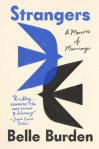
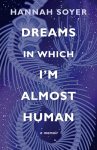
- A relationship with an older editor at a publishing house: The Girls’ Guide to Hunting and Fishing by Melissa Bank (romantic) and Whistler by Ann Patchett (stepfather–stepdaughter).
- Repeated vomiting and a fever of 103–104°F leads to a diagnosis of appendicitis in My Grandmothers and I by Diana Holman-Hunt and Whistler by Ann Patchett.
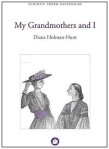 Multiple pet pugs in Strangers by Belle Burden and My Grandmothers and I by Diana Holman-Hunt.
- Palm crosses are mentioned in My Grandmothers and I by Diana Holman-Hunt and Kin by Tayari Jones.
- A Miss Jemison in Kin by Tayari Jones and a Miss Jamieson in Elizabeth and Ruth by Livi Michael.
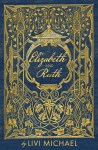
- Pasley as a surname in Elizabeth and Ruth by Livi Michael and a place name (Pasley Bay) in Boundless by Kathleen Winter.
- A remark on a character’s unwashed hair in My Grandmothers and I by Diana Holman-Hunt and Let the Bad Times Roll by Alice Slater.
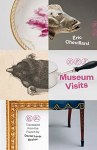
- A mention of a monkey’s paw in Museum Visits by Éric Chevillard and Let the Bad Times Roll by Alice Slater.

- A character gets 26 (22) stitches in her face (head) after a car accident, a young person who’s vehemently anti-smoking, and a mention of being dusted orange from eating Cheetos, in Whistler by Ann Patchett and Let the Bad Times Roll by Alice Slater.
- Pre-eclampsia occurs in Strangers by Belle Burden and The Girls Who Grew Big by Leila Mottley.
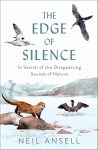
- There’s a chapter on searching for corncrakes on the Isle of Coll (the Inner Hebrides of Scotland) in The Edge of Silence by Neil Ansell, which I read last year; this year I reread the essay on the same topic in Findings by Kathleen Jamie.
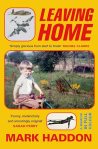
- Worry over women with long hair being accidentally scalped – if a horse steps on her ponytail in Mare by Emily Haworth-Booth; if trapped in a London Underground escalator in Leaving Home by Mark Haddon.
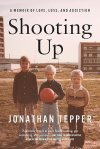 A pet ferret in My Grandmothers and I by Diana Holman-Hunt and Shooting Up by Jonathan Tepper.
- A dodgy doctor who molests a young female patient in Leaving Home by Mark Haddon and Elizabeth and Ruth by Livi Michael.
- A high school girl’s inappropriate relationship with her English teacher is the basis for Love Invents Us by Amy Bloom, and then Half His Age by Jennette McCurdy, which I started soon after.

- College roommates who become same-sex lovers, one of whom goes on to have a heterosexual marriage, in Kin by Tayari Jones and Whistler by Ann Patchett.
- A mention of Sephora (the cosmetics shop) in Half His Age by Jennette McCurdy and Whistler by Ann Patchett.
- A discussion of the Greek mythology character Leda in Mrs. Bridge by Evan S. Connell and Whistler by Ann Patchett (where it’s also a character name).
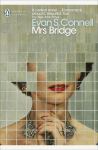
- A workaholic husband who rarely sees his children and leaves their care to his wife in Strangers by Belle Burden and Mrs. Bridge by Evan S. Connell.
- An apparently wealthy man who yet steals food in Strangers by Belle Burden and Let the Bad Times Roll by Alice Slater.
- Characters named Lulubelle in Mrs. Bridge by Evan S. Connell and Lulabelle in Kin by Tayari Jones.
- Characters named Ruth in Mrs. Bridge by Evan S. Connell, Kin by Tayari Jones, and Elizabeth and Ruth by Livi Michael.
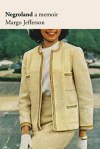 A mention of Mary McLeod Bethune in Negroland by Margo Jefferson and Kin by Tayari Jones.
- Doing laundry at a whorehouse in Kin by Tayari Jones and Elizabeth and Ruth by Livi Michael.
- A male character nicknamed Doll in John of John by Douglas Stuart and then Elizabeth and Ruth by Livi Michael.
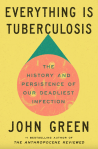
- A mention of tuberculosis of the stomach in Findings by Kathleen Jamie and Shooting Up by Jonathan Tepper. I was also reading a whole book on tuberculosis, Everything Is Tuberculosis by John Green, at the same time.
- Mention of Doberman dogs in Mrs. Bridge by Evan S. Connell and one story of The Blood Year Daughter by G.G. Silverman.
- Extreme fear of flying in Leaving Home by Mark Haddon and Whistler by Ann Patchett.
What’s the weirdest reading coincidence you’ve had lately?
#ReadIndies Nonfiction Catch-Up: Ansell, Farrier, Febos, Hoffman, Orlean and Stacey
These are all 2025 releases; for some, it’s approaching a year since I was sent a review copy or read the book. Silly me. At last, I’ve caught up. Reading Indies month, hosted by Kaggsy in memory of her late co-host Lizzy Siddal, is the perfect time to feature books from five independent publishers. I have four works that might broadly be classed as nature writing – though their topics range from birdsong and technology to living in Greece and rewilding a plot in northern Spain – and explorations of celibacy and the writer’s profession.
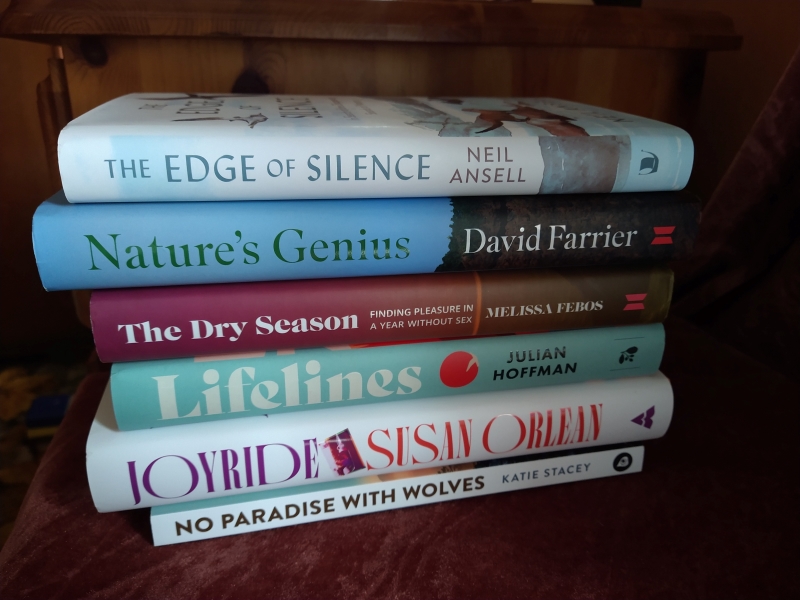
The Edge of Silence: In Search of the Disappearing Sounds of Nature by Neil Ansell
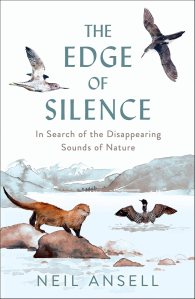 Ansell draws parallels between his advancing hearing loss and the biodiversity crisis. He puts together a wish list of species – mostly seabirds (divers, grebes), but also inland birds (nightjars) and a couple of non-avian representatives (otters) – that he wants to hear and sets off on public transport adventures to find them. “I must find beauty where I can, and while I still can,” he vows. From his home on the western coast of Scotland near the Highlands, this involves trains or buses that never align with the ferry timetables. Furthest afield for him are two nature reserves in northern England where his mission is to hear bitterns “booming” and natterjack toads croaking at night. There are also mountain excursions to locate ptarmigan, greenshank, and black grouse. His island quarry includes Manx shearwaters (Rum), corncrakes (Coll), puffins (Sanday), and storm petrels (Shetland).
Camping in a tent means cold nights, interrupted sleep, and clouds of midges, but it’s all worth it to have unrepeatable wildlife experiences. He has a very high hit rate for (seeing and) hearing what he intends to, even when they’re just on the verge of what he can decipher with his hearing aids. On the rare occasions when he misses out, he consoles himself with earlier encounters. “I shall settle for the memory, for it feels unimprovable, like a spell that I do not want to break.” I’ve read all of Ansell’s nature memoirs and consider him one of the UK’s top writers on the natural world. His accounts of his low-carbon travels are entertaining, and the tug-of-war between resisting and coming to terms with his disability is heartening. “I have spent this year in defiance of a relentless, unstoppable countdown,” he reflects. What makes this book more universal than niche is the deadline: we and all of these creatures face extinction. Whether it’s sooner or later depends on how we act to address the environmental polycrisis.
With thanks to Birlinn for the free copy for review.
Nature’s Genius: Evolution’s Lessons for a Changing Planet by David Farrier
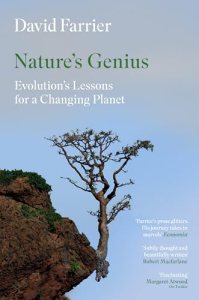 Farrier’s Footprints, which tells the story of the human impact on the Earth, was one of my favourite books of 2020. This contains a similar blend of history, science, and literary points of reference (Farrier is a professor of literature and the environment at the University of Edinburgh), with past changes offering a template for how the future might look different. “We are forcing nature to reimagine itself, and to avert calamity we need to do the same,” he writes. Cliff swallows have evolved blunter wings to better evade cars; captive breeding led foxes to develop the domesticated traits of pet dogs.
It’s not just other species that experience current evolution. Thanks to food abundance and a sedentary lifestyle, humans show a “consumer phenotype,” which superseded the Palaeolithic (95% of human history) and tends toward earlier puberty, autoimmune diseases, and obesity. Farrier also looks at notions of intelligence, language, and time in nature. Sustainable cities will have to cleverly reuse materials. For instance, The Waste House in Brighton is 90% rubbish. (This I have to see!)
There are many interesting nuggets here, and statements that are difficult to argue with, but I struggled to find an overall thread. Cool to see my husband’s old housemate mentioned, though. (Duncan Geere, for collaborating on a hybrid science–art project turning climate data into techno music.)
With thanks to Canongate for the free copy for review.
The Dry Season: Finding Pleasure in a Year without Sex by Melissa Febos
Febos considers but rejects the term “sex addiction” for the years in which she had compulsive casual sex (with “the Last Man,” yes, but mostly with women). Since her early teen years, she’d never not been tied to someone. Brief liaisons alternated with long-term relationships: three years with “the Best Ex”; two years that were so emotionally tumultuous that she refers to the woman as “the Maelstrom.” It was the implosion of the latter affair that led to Febos deciding to experiment with celibacy, first for three months, then for a whole year. “I felt feral and sad and couldn’t explain it, but I knew that something had to change.”
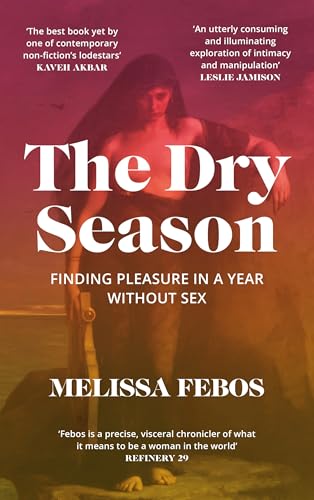 The quest involved some research into celibate movements in history, but was largely an internal investigation of her past and psyche. Febos found that she was less attuned to the male gaze. Having worn high heels almost daily for 20 years, she discovered she’s more of a trainers person. Although she was still tempted to flirt with attractive women, e.g. on an airplane, she consciously resisted the impulse to spin random meetings into one-night stands. (A therapist had stopped her short with the blunt observation, “you use people.”) With a new focus on the life of the mind, she insists, “My life was empty of lovers and more full than it had ever been.” (This reminded me of Audre Lorde’s writing on the erotic.) As Silvana Panciera, an Italian scholar on the beguines (a secular nun-like sisterhood), told her: “When you don’t belong to anyone, you belong to everyone. You feel able to love without limits.”
Intriguing that this is all a retrospective, reflecting on her thirties; Febos is now in her mid-forties and married to a woman (poet Donika Kelly). Clearly she felt that it was an important enough year – with landmark epiphanies that changed her and have the potential to help others – to form the basis for a book. For me, she didn’t have much new to offer about celibacy, though it was interesting to read about the topic from an areligious perspective. But I admire the depth of her self-knowledge, and particularly her ability to recreate her mindset at different times. This is another one, like her Girlhood, to keep on the shelf as a model.
With thanks to Canongate for the free copy for review.
Lifelines: Searching for Home in the Mountains of Greece by Julian Hoffman
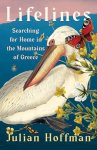
 Hoffman’s Irreplaceable was my nonfiction book of 2019. Whereas that was a work with a global environmentalist perspective, Lifelines is more personal in scope. It tracks the author’s unexpected route from Canada via the UK to Prespa, a remote area of northern Greece that’s at the crossroads with Albania and North Macedonia. He and his wife, Julia, encountered Prespa in a book and, longing for respite from the breakneck pace of life in London, moved there in 2000. “Like the rivers that spill into these shared lakes, lifelines rarely flow straight. Instead, they contain bends, meanders and loops; they hold, at times, turns of extraordinary surprise.” Birdwatching, which Hoffman suggests is as “a way of cultivating attention,” had been their gateway into a love for nature developed over the next quarter-century and more, and in Greece they delighted in seeing great white and Dalmatian pelicans (which feature on the splendid U.S. cover. It would be lovely to have an illustrated edition of this.)
 One strand of this warm and fluent memoir is about making a home in Greece: buying and renovating a semi-derelict property, experiencing xenophobia and hospitality from different quarters, and finding a sense of belonging. They’re happy to share their home with nesting wrens, who recur across the book and connect to the tagline of “a story of shelter shared.” In probing the history of his adopted country, Hoffman comes to realise the false, arbitrary nature of borders – wildlife such as brown bears and wolves pay these no heed. Everything is connected and questions of justice are always intersectional. The Covid pandemic and avian influenza (which devastated the region’s pelicans) are setbacks that Hoffman addresses honestly. But the lingering message is a valuable one of bridging divisions and learning how to live in harmony with other people – and with other species.
With thanks to Elliott & Thompson for the free copy for review.
Joyride by Susan Orlean
As a long-time staff writer for The New Yorker, Orlean has had the good fortune to be able to follow her curiosity wherever it leads, chasing the subjects that interest her and drawing readers in with her infectious enthusiasm. She grew up in suburban Ohio, attended college in Michigan, and lived in Portland, Oregon and Boston before moving to New York City. Her trajectory was from local and alternative papers to the most enviable of national magazines: Esquire, Rolling Stone and Vogue. Orlean gives behind-the-scenes information on lots of her early stories, some of which are reprinted in an appendix. “If you’re truly open, it’s easy to fall in love with your subject,” she writes; maintaining objectivity could be difficult, as when she profiled an Indian spiritual leader with a cult following; and fended off an interviewee’s attachment when she went on the road with a Black gospel choir.
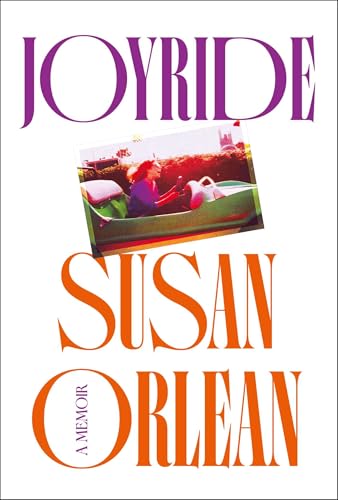 Her personal life takes a backseat to her career, though she is frank about the breakdown of her first marriage, her second chance at love and late motherhood, and a surprise bout with lung cancer. The chronological approach proceeds book by book, delving into her inspirations, research process and publication journeys. Her first book was about Saturday night as experienced across America. It was a more innocent time, when subjects were more trusting. Orlean and her second husband had farms in the Hudson Valley of New York and in greater Los Angeles, and she ended up writing a lot about animals, with books on Rin Tin Tin and one collecting her animal pieces. There was also, of course, The Library Book, about the wild history of the main Los Angeles public library. But it’s her The Orchid Thief – and the movie (not) based on it, Adaptation – that’s among my favourites, so the long section on that was the biggest thrill for me. There are also black-and-white images scattered through.
It was slightly unfortunate that I read this at the same time as Book of Lives – who could compete with Margaret Atwood? – but it is, yes, a joy to read about Orlean’s writing life. She’s full of enthusiasm and good sense, depicting the vocation as part toil and part magic:
“I find superhuman self-confidence when I’m working on a story. The bashfulness and vulnerability that I might otherwise experience in a new setting melt away, and my desire to connect, to observe, to understand, powers me through.”
“I like to do a gut check any time I dismiss or deplore something I don’t know anything about. That feels like reason enough to learn about it.”
“anything at all is worth writing about if you care about it and it makes you curious and makes you want to holler about it to other people”
With thanks to Atlantic Books for the free copy for review.
No Paradise with Wolves: A Journey of Rewilding and Resilience by Katie Stacey
I had the good fortune to visit Wild Finca, Luke Massey and Katie Stacey’s rewilding site in Asturias, while on holiday in northern Spain in May 2022, and was intrigued to learn more about their strategy and experiences. This detailed account of the first four years begins with their search for a property in 2018 and traces the steps of their “agriwilding” of a derelict farm: creating a vegetable garden and tending to fruit trees, but also digging ponds, training up hedgerows, and setting up rotational grazing. Their every decision went against the grain. Others focussed on one crop or type of livestock while they encouraged unruly variety, keeping chickens, ducks, goats, horses and sheep. Their neighbours removed brush in the name of tidiness; they left the bramble and gorse to welcome in migrant birds. New species turned up all the time, from butterflies and newts to owls and a golden fox.
Luke is a wildlife guide and photographer. He and Katie are conservation storytellers, trying to get people to think differently about land management. The title is a Spanish farmers’ and hunters’ slogan about the Iberian wolf. Fear of wolves runs deep in the region. Initially, filming wolves was one of the couple’s major goals, but they had to step back because staking out the animals’ haunts felt risky; better to let them alone and not attract the wrong attention. (Wolf hunting was banned across Spain in 2021.) There’s a parallel to be found here between seeing wolves as a threat and the mild xenophobia the couple experienced. Other challenges included incompetent house-sitters, off-lead dogs killing livestock, the pandemic, wildfires, and hunters passing through weekly (as in France – as we discovered at Le Moulin de Pensol in 2024 – hunters have the right to traverse private land in Spain).
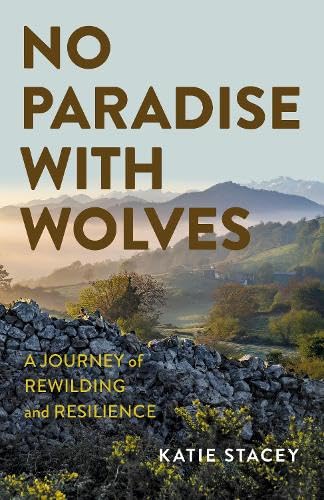
Luke and Katie hope to model new ways of living harmoniously with nature – even bears and wolves, which haven’t made it to their land yet, but might in the future – for the region’s traditional farmers. They’re approaching self-sufficiency – for fruit and vegetables, anyway – and raising their sons, Roan and Albus, to love the wild. We had a great day at Wild Finca: a long tour and badger-watching vigil (no luck that time) led by Luke; nettle lemonade and sponge cake with strawberries served by Katie and the boys. I was clear how much hard work has gone into the land and the low-impact buildings on it. With the exception of some Workaway volunteers, they’ve done it all themselves.
Katie Stacey’s storytelling is effortless and conversational, making this impassioned memoir a pleasure to read. It chimed perfectly with Hoffman’s writing (above) about the fear of bears and wolves, and reparation policies for farmers, in Europe. I’d love to see the book get a bigger-budget release complete with illustrations, a less misleading title, the thorough line editing it deserves, and more developmental work to enhance the literary technique – as in the beautiful final chapter, a present-tense recreation of a typical walk along The Loop. All this would help to get the message the wider reach that authors like Isabella Tree have found. “I want to be remembered for the wild spaces I leave behind,” Katie writes in the book’s final pages. “I want to be remembered as someone who inspired people to seek a deeper connection to nature.” You can’t help but be impressed by how much of a difference two people seeking to live differently have achieved in just a handful of years. We can all rewild the spaces available to us (see also Kate Bradbury’s One Garden against the World), too.
With thanks to Earth Books (Collective Ink) for the free copy for review.
Which of these do you fancy reading?
A Return to the Outer Hebrides & What I Read (Including 20 Books of Summer, 4–5)
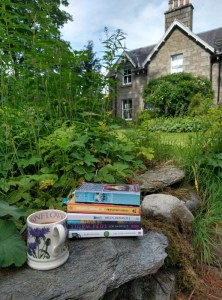
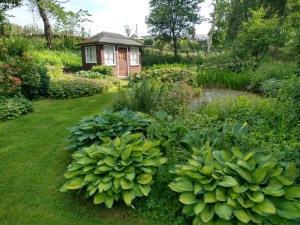
Three summers ago, we first explored the Outer Hebrides, moving south from Lewis through Harris to North Uist and Benbecula. It took longer than expected to make it back to the Western Isles. (It’s also taken longer than expected to write up a trip we took in late June. My excuse is we’ve been having work done in the house for a couple of weeks and it’s thrown off routines, plus we’re now away again on a short break.) We kept our word and completed the southern half of the chain this year, staying on South Uist and journeying via Eriskay to Barra and Vatersay. As last time, we combined public transport and car rental. Unlike last time, we had no major transport disasters. We took the train up to Edinburgh, where we rented a car and headed first of all to the edge of the Cairngorms. The village had little to offer apart from riverside scenery, so while my husband did beetle-collecting fieldwork nearby, I spent my time reading in the idyllic B&B grounds. Here the wildlife came to me: seven stags and a red squirrel! I’ve substituted in two of my relevant trip reads to my 20 Books of Summer roster.
20 Books of Summer, #4
The Cone-Gatherers by Robin Jenkins (1955)
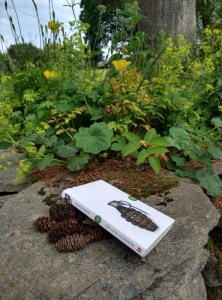
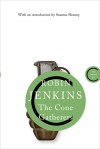 Rightly likened to Of Mice and Men, this is an engrossing short novel about two brothers, Neil and Calum, tasked with climbing trees and gathering the pinecones of a wealthy Scottish estate. They will be used to replant the many woodlands being cut down to fuel the war effort. Calum, the younger brother, is physically and intellectually disabled but has a deep well of compassion for living creatures. He has unwittingly made an enemy of the estate’s gamekeeper, Duror, by releasing wounded rabbits from his traps. Much of the story is taken up with Duror’s seemingly baseless feud against the brothers – though we’re meant to understand that his bedbound wife’s obesity and his subsequent sexual frustration may have something to do with it – as well as with Lady Runcie-Campbell’s class prejudice. Her son, Roderick, is an unexpected would-be hero and voice of pure empathy. I read this quickly, with grim fascination, knowing tragedy was coming but not quite how things would play out. The introduction to Canongate’s Canons Collection edition is by actor Paul Giamatti, of all people. (Secondhand – Community Furniture Project, Newbury)
Then it was a several-hour drive to Oban to take our rescheduled ferry over to Lochboisdale in South Uist for the holiday proper to begin. With a six-night Airbnb stay booked in the home of a local woman, we relaxed into an unhurried pace of life. It’s more about the landscape than any particular indoor attractions here; during rainy spells we toured the excellent museum, tasted gin and rum at the North Uist (Downpour) and Benbecula (MacMillan Spirits) distilleries, took advantage of 5 for £1 books and CDs at the Benbecula thrift shop, and tried a couple of cafes, but for the most part we just made a few short excursions per day.


-
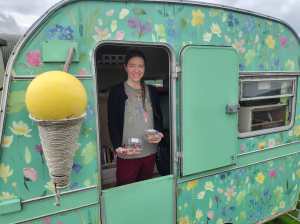
- Honesty box with cakes
-
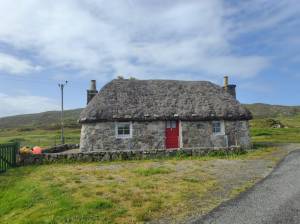
- Photos by Chris Foster
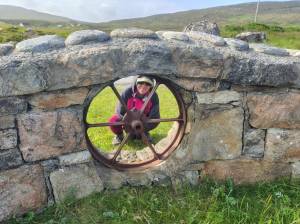
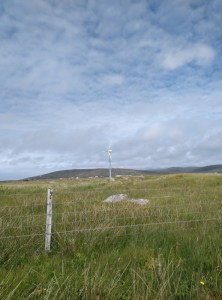
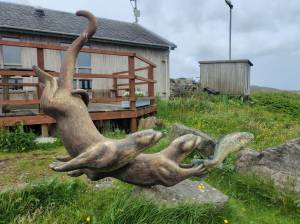
We saw acres of machair (wildflower-rich fields), sand dunes undermined by an empire of rabbits, deserted beaches, and rare patches of woodland. We successfully staked out white-tailed sea eagles, red-throated divers, and a red-necked phalarope; watched cuckoos and short-eared owls (who are active in the daytime) as much as possible; and stared at every likely sea loch but failed to find an otter. Each evening we’d heat up a simple supper – pouches of curry and rice; ravioli with tomato sauce – using the microwave and hob. In quite a contrast to the heatwave-mired south of England, we had 12–16 degrees C (54–61 degrees F) most days, with light rain and high winds. The radiators and Rayburn (a big stove like an Aga) were on most of the time.


20 Books of Summer, #5
The Inn at the Edge of the World by Alice Thomas Ellis (1990)
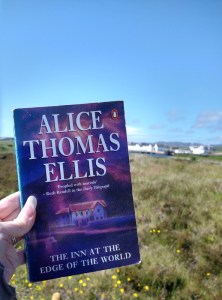 Eric and Mabel moved from the Midlands to run a hotel on a remote Scottish island. He places an advertisement in select London periodicals to lure in some Christmas-haters for the holidays and attracts a motley group: a bereaved former soldier writing a biography of General Gordon, a pair of actors known only for commercials, a psychoanalyst, and a department store buyer looking for a novel sweater pattern. Mabel decides she’s had enough and flees the island just as the guests start arriving. One guest is stalking another; one has history on the island. And all along, there are hints that this is a site of major selkie activity. I found it jarring how the novella moved from Shena Mackay-like social comedy into magic realism and doubt I’ll read more by Ellis (I’d already read one volume of Home Life), though this was light and enjoyable enough. (Secondhand – Awesomebooks.com)
I was pleased that I managed to find two relevant hyperlocal reads. It was so neat to encounter the same place names out the car window and in my books:
To the Edge of the Sea: Schooldays of a Crofter’s Child by Christina Hall (1995)
Hall’s father inherited a South Uist croft and the family struggled so much financially that she was sent to live with her schoolteacher aunts on Benbecula and then Barra. Some things haven’t changed on the islands, such as the rabbits on the machair and the notoriously choppy ferry rides back to the mainland, where she attended a convent school at Fort William. There are some enjoyable pen portraits, such as of an Irish peddler. The most memorable incident was when she ran away from the aunts’ to attend a family wedding on Benbecula. The tone is pleasant, reminiscent of early Diana Athill and Doreen Tovey, but this isn’t one to pick up unless you have a particular interest in the places described. (Public library)
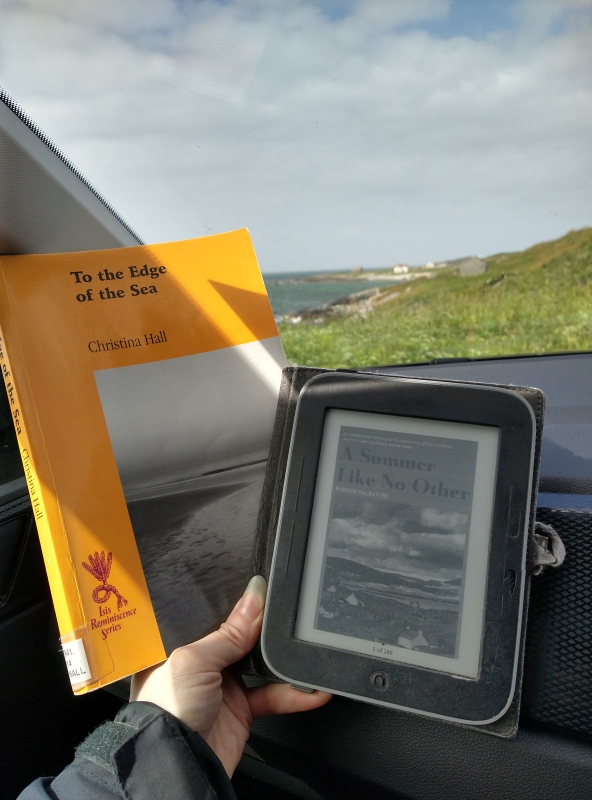
A Summer Like No Other by Martin MacIntyre (2018; 2025)
As World Cup fever ramps up in the summer of 1978, aimless 20-year-old Colin Quinn breaks from his university studies to shadow his uncle, Dr. Ruairidh Gillies, during his locum on South Uist. Between the home medical visits and recording folktales and songs by an eighty-something bard and several other members of the community, Colin gets to know almost everyone – but the person he knows the least well is himself. His involvement with the bard’s great-niece and her abusive husband will change the tenor of the summer for him, and have lasting consequences that only become clear decades later.
 The many Gaelic phrases, defined in footnotes, help to create the atmosphere. The chapter epigraphs from the legend of Oisín (son of Fionn Mac Cumhaill) and Tír Na nÓg, the land of eternal youth, heighten the contrast between Colin’s idealism and the reality of this life-changing season. I think this is the first book I’ve read that was originally published in Gaelic and I hope it will find readers far beyond its island niche. (BookSirens)
There’s Something about Mary
My husband would like it known that he was the clever clogs who spotted a theme to our trip: Mary.
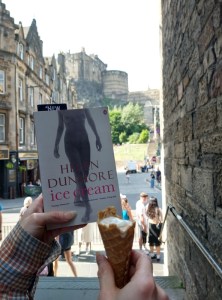 1) Our transit through Edinburgh was brief and muggy, but we made sure to leave just enough time to queue for cones at Mary’s Milk Bar, which has the most interesting flavours you’ll find anywhere. Pictured, though half eaten, are my one scoop of Earl Grey and peach sorbet and one scoop of fig and cardamom ice cream. When we returned to Edinburgh to return the car at the end of our trip, I took the train home by myself but C stayed on for a conference, during which he treated himself to another round at Mary’s.
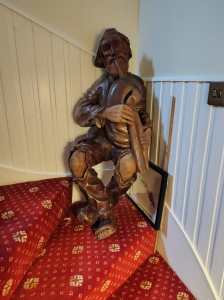
A piper statue at the Airbnb that continually frightened us on the stairs.
2) Our South Uist host was Mary MacInnes, a major mover and shaker in the local Gaelic-speaking community. (Her Alexa even obeyed Gaelic commands.) She is a retired head teacher of one of the schools and had various grandchildren popping in and out. Thanks to her heads-up, we had a unique cultural experience: a local arts venue’s lunchtime ceilidh of live music that was being filmed for BBC Scotland. Between her and others, we heard a lot of spoken Gaelic and got further into the mood by finding Julie Fowlis’s Gaelic-language albums online and playing them in our rental car. Each morning, Mary served us breakfast. We made the mistake of answering “Yes” to the question “D’ye take porridge?” on the first morning and had to slog through a stodgy bowl for five of the next six days. However, she also produced fresh-baked scones on two days and that made up for it. Triangular and baked in a cast-iron skillet, they tasted more like soda bread and were a perfect snack with jam.
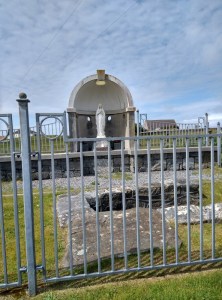
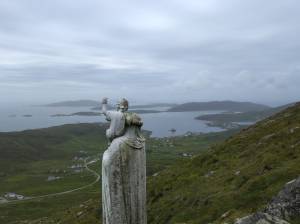
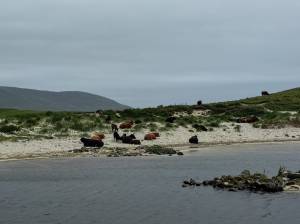
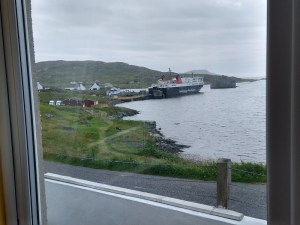
3) The final full day of our trip was spent on Barra, a quick hop from South Uist. Whereas Lewis and Harris are staunchly Protestant, the southern islands are Catholic. We’d found a roadside shrine on South Uist, and on this late June day we devoted a couple of hours to climbing up Heaval, Barra’s highest hill as far as the statue of Mary, Star of the Sea. We were taken with this round, rugged island of secluded coves and beach-lounging cows; I can imagine going back to spend more time there. (I’d also like to see a bit more of Eriskay, from which our ferry departed and where the shipwreck that inspired Whisky Galore – one to read next time – took place.) Our hostel room overlooked the harbour where our ferry for the mainland was docked, which was handy as we had to be in the queue by 6:10 the next morning.
My additional reasonably local or otherwise relevant reading:
Four Ducks on a Pond: A Highland Memory by Nicholas the Cat with Annabel Carothers (2010)
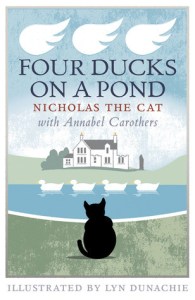 A quaint short memoir set in the 1950s on the island of Mull (which we sailed past on our way to and from the Outer Hebrides). It’s narrated in tongue-in-cheek fashion by Nicholas the Cat, who pals around with the farm’s dogs, horse and goats and comments on the doings of its human inhabitants, such as “Puddy” (Carothers), a war widow, and her daughter Fionna, who goes away to school. “We understand so much about them, yet they understand so little about us,” he opines. Indeed, the animals are all observant and can communicate with each other. Corrieshellach is a fine horse taken to compete in shows. The goats are lucky to escape with their lives after a local outbreak of foot-and-mouth disease among livestock. Nicholas grows fat on rabbits and fathers several litters. He voices some traditional views (the Clearances: bad but the Empire: good; crows: bad); then again, cats would certainly be C/conservatives. A sweet Blyton-esque read for precocious children or sentimental adults, this passed the time nicely on a long drive. It could do with a better title, though; the ducks only play a tiny role. (Favourite aside: “that beverage which humans find so comforting when things aren’t right. Tea.”) (Secondhand – Benbecula thrift shop)
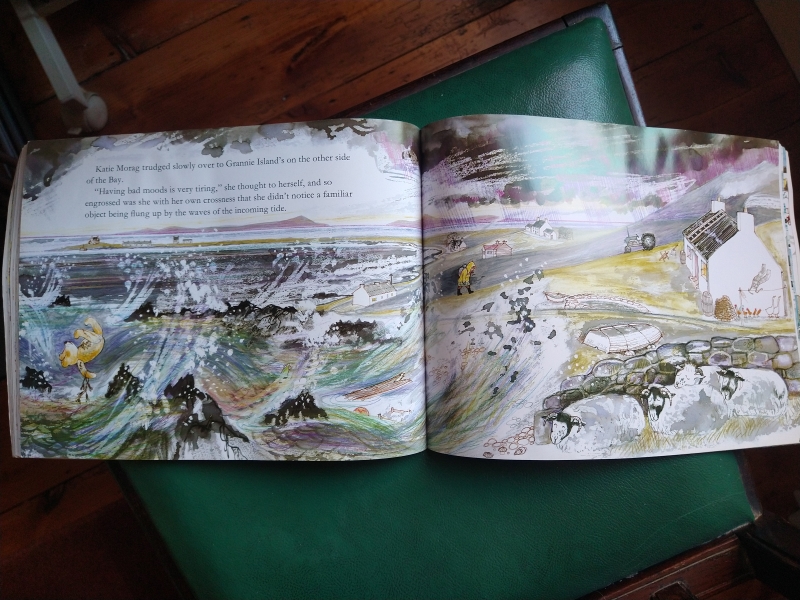
Katie Morag’s Island Stories by Mairi Hedderwick (1995)
 I read half of this large-format paperback before our trip and the rest afterward. It collects four of Hedderwick’s picture books, which are all set on the Isle of Struay, a kind of Hebridean composite that reproduces the islands’ wildlife and scenery beautifully. Katie Morag’s parents run the shop and post office and her mother always seems to be producing another little brother. In Katie Morag Delivers the Mail, the little red-haired girl causes chaos by delivering parcels at random. Sophisticated Granma Mainland and practical Grannie Island are the stars of Katie Morag and the Two Grandmothers. Katie Morag learns to deal with her anger and with being punished, respectively, in …and the Tiresome Ted and …and the Big Boy Cousins. Cute stories with useful lessons, but the illustrations are the main attraction. I’ll get the rest of the books out from the library. (Little Free Library)
Island Calling by Francesca Segal (2025)
The sequel to Welcome to Glorious Tuga, which I reviewed for Shelf Awareness last year. Charlotte Walker is a tortoise researcher who becomes the default veterinarian on this remote South Atlantic island that combines a 1950s English ethos with a cosmopolitan heritage from sailors and settlers. In this volume, Charlotte resolves her troubled love triangle and cements her understanding of her father’s identity. But the main thing that happens is that her posh and entitled mother, Lucinda Compton-Neville, takes a break from her busy job as a QC to travel to the island and demand that Charlotte return to London with her. Motherhood is a strong theme throughout: Natalie Lindo, already a mother of four, has to decide what to do about a high-risk pregnancy; half-feral Annie Goss rejects her mother’s affection, and so on. Some of the characters are lovably quirky, but overall I find the cliché-laden series lackluster, a pointless and indulgent side-track and thus a real waste of talent by Segal (after The Innocents and Mother Ship, especially). If you enjoy romance novels or escapist beach reads, you might feel differently. But I won’t bother reading the third volume.
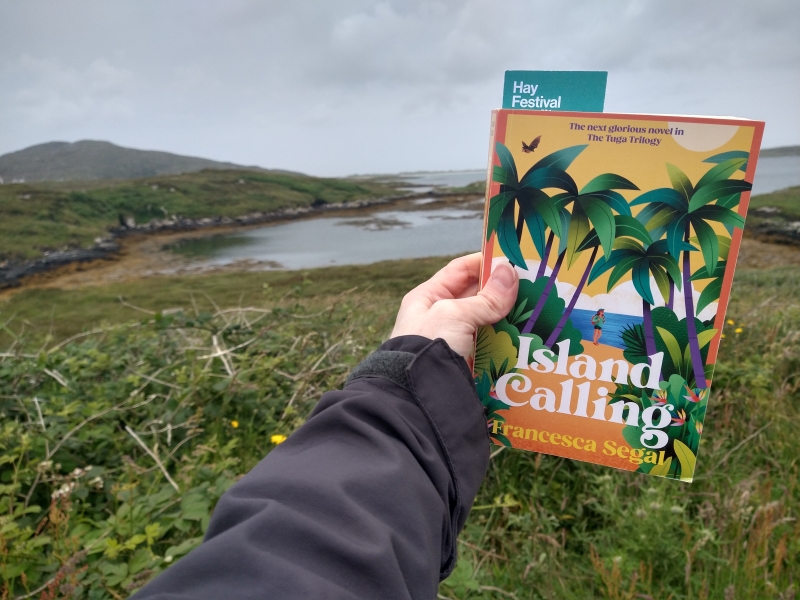
With thanks to Chatto & Windus (Penguin) for the proof copy for review.
I also made good progress on Storm Pegs by Jen Hadfield, a memoir of life in Shetland – different islands with their own character, but still fitting the hardy Scottish spirit.
I’d finished my first 7 Books of Summer by the end of June, so I was on track as of then. (Reviews of two more coming up on Friday.) I’m in the middle of some designated reads, but it’ll be ages before I finish any. I’ll hope to review another batch by the end of July.
Three Object Lessons Books for #NovNov24 & #NonfictionNovember (Frith, Hanna, Lobdell)
Bloomsbury’s Object Lessons series “is a series of concise, collectable, beautifully designed books about the hidden lives of ordinary things.” (I have previously reviewed Doctor, Dust, Grave, Pregnancy Test, and Recipe.) I love how interdisciplinary these short nonfiction works are, combining history and pop culture and often incorporating science or medicine, too. Here are my thoughts on three 2024 additions to the series.
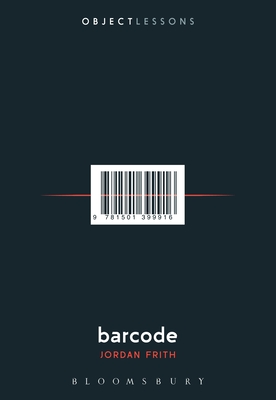 Barcode by Jordan Frith: The barcode was patented in 1952 but didn’t come into daily use until 1974. It was developed for use by supermarkets – the Universal Product Code or UPC. (These days a charity shop is the only place you might have a shopping experience that doesn’t rely on barcodes.) A grocery industry committee chose between seven designs, two of which were round. IBM’s design won and became the barcode as we know it. “Barcodes are a bit of a paradox,” Frith, a communications professor with previous books on RFID and smartphones to his name, writes. “They are ignored yet iconic. They are a prime example of the learned invisibility of infrastructure yet also a prominent symbol of cultural critique in everything from popular science fiction to tattoos.” In 1992, President Bush was considered to be out of touch when he expressed amazement at barcode scanning technology. I was most engaged with the chapter on the Bible – Evangelicals, famously, panicked that the Mark of the Beast heralded by the book of Revelation would be an obligatory barcode tattooed on every individual. While I’m not interested enough in technology to have read the whole thing, which does skew dry, I found interesting tidbits by skimming. (Public library) [152 pages]
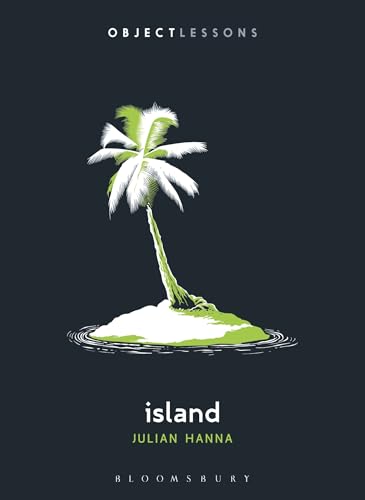 Island by Julian Hanna: The most autobiographical, loosest and least formulaic of these three, and perhaps my favourite in the series to date. Hanna grew up on Vancouver Island and has lived on Madeira; his genealogy stretches back to another island nation, Ireland. Through disparate travels he comments on islands that have long attracted expats: Hawaii, Ibiza, and Hong Kong. From sweltering Crete to the polar night, from family legend to Virginia Woolf’s To the Lighthouse, the topics are as various as the settings. Although Hanna is a humanities lecturer, he even gets involved in designing a gravity battery for Eday in the Orkneys (fully powered by renewables), having won funding through a sustainable energy prize, and is part of a team that builds one in situ there in three days. I admired the honest exploration of the positives and negatives of islands. An island can promise paradise, a time out of time, “a refuge for eccentrics.” Equally, it can be a site of isolation, of “domination and exploitation of fellow humans and of nature.” We may think that with the Internet the world has gotten smaller, but islands are still bastions of distinct culture. In an era of climate crisis, though, some will literally cease to exist. Written primarily during the Covid years, the book contrasts the often personal realities of death, grief and loneliness with idyllic desert-island visions. Whimsically, Hanna presents each chapter as a message in a bottle. What a different book this would have been if written by, say, a geographer. (Read via Edelweiss) [180 pages]
 X-Ray by Nicole Lobdell: X-ray technology has been with us since 1895, when it was developed by German physicist Wilhelm Roentgen. He received the first Nobel Prize in physics but never made any money off of his discovery and died in penury of a cancer that likely resulted from his work. From the start, X-rays provoked concerns about voyeurism. People were right to be wary of X-rays in those early days, but radiation was more of a danger than the invasion of privacy. Lobdell, an English professor, tends to draw slightly simplistic metaphorical messages about the secrets of the body. But X-rays make so many fascinating cultural appearances that I could forgive the occasional lack of subtlety. There’s an in-depth discussion of H.G. Wells’s The Invisible Man, and Superman was only one of the comic-book heroes to boast X-ray vision. The technology has been used to measure feet for shoes, reveal the hidden history of paintings, and keep air travellers safe. I went in for a hospital X-ray of my foot not long after reading this. It was such a quick and simple process, as you’ll find at the dentist’s office as well, and safe enough that my radiographer was pregnant. (Read via Edelweiss) [152 pages]

A Review for PKD Awareness Day: The Mourner’s Bestiary by Eiren Caffall
Today is PKD Awareness Day. Because the author and I both have polycystic kidney disease, I’m doing something I rarely do and reprinting an early review of mine that has already appeared on Shelf Awareness. I could hardly believe it when I was trawling through the list of review book offers and saw that Eiren Caffall also has PKD, then even more astonished to learn that it is a major theme in her memoir, which also weaves in marine biology and environmental concerns. An altogether intriguing book that, of course, held personal interest for me.
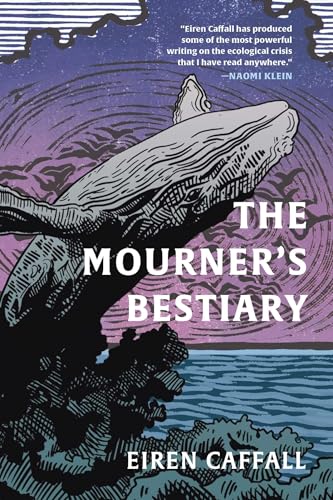
The Mourner’s Bestiary by Eiren Caffall
Eiren Caffall’s debut is an ardent elegy for her illness-haunted family and for the ailing marine environments that inspire her.
For centuries, the author’s family has been subject to “the Caffall Curse.” Polycystic kidney disease, a degenerative genetic condition, causes fluid-filled cysts to proliferate in a person’s enlarged kidneys. PKD can involve pain, fatigue, high blood pressure, kidney failure, and a heightened risk of brain aneurysm. Given Caffall’s paternal family history, she expected to die before age 50.
 Caffall’s melancholy memoir spotlights moments that opened her eyes to medical and environmental catastrophe. In 1980, when she was nine years old, she and her parents vacationed at a rental cottage on Long Island Sound. They nicknamed the pollution-ridden site “Dogshit Beach”—her mother spent idyllic summers there as a child, yet now “both the ecosystem and my father were slipping away.” For the first time, Caffall became aware of her father’s suffering and lack of energy. She realized that she, too, might have inherited PKD and could face similar struggles as an adult.
In 2014, Caffall, then a single mother, took her nine-year-old son, Dex, on vacation to the Gulf of Maine. During the trip, she had a fall that prompted a seizure, and she and Dex were evacuated from Monhegan Island by Coast Guard ship. Although no further seizures ensued and no clear cause emerged, the crisis served as a wake-up call, reminding her of how serious PKD is and that it might afflict her son as well.
The book draws fascinating connections between personal experiences and ecological threats. Caffall structures her story as a gallery of endangered marine animals such as the Longfin Inshore Squid and Humpback Whale, tracing their history and exposing the dangers they face in degraded environments. Red tides (massive algal blooms) and floods are apt metaphors for physical trials: “the Sound was dying, hypoxic … from an overwhelm of nutrients flooding an ecosystem—nitrogen, phosphorus, imbalanced saline—the same things that overwhelm a body when kidneys can no longer filter blood properly.”
Re-created scenes enliven accounts of family illness and therapeutic developments. The lyrical hybrid narrative, informed by scientific journals and government publications, is as impassioned about restoring the environment as it is about ensuring equality of access to health care. Personal and species extinction are just cause for “permanent mourning,” Caffall writes, but adapting to change keeps hope alive.
(Coming out in the USA from Row House Publishing on October 15th)
Posted with permission from Shelf Awareness.
[I couldn’t help but compare family members’ trajectories. Like her father, my mother was on dialysis for a time before getting a transplant, from her cousin. Like her aunt, my uncle died of a brain aneurysm, which is an associated risk. It sounds like Caffall has been much more severely affected than I have thus far. She is 53 and on Tolvaptan, a cutting-edge drug that slows the growth of cysts and thus the decline in kidney function. But even within families, the disease course is so varied. A cousin of mine was in her thirties when she had a transplant, whereas I am still very much in the early stages.]
A shout-out to the PKD Foundation in the States and the PKD Charity here in the UK.
A related post: In 2017 I reviewed four books for World Kidney Day.
From the supermarket last week: a plum that wanted to be a kidney.
#MoominWeek & #WITMonth, II: Moominpappa at Sea by Tove Jansson
My first two reads for Women in Translation month were Catalan and French novellas. With this third one I’m tying in with Moomin Week, hosted by Chris and Mallika in honour of Paula of Book Jotter. Happy nuptials to Paula! Not a blogger I’ve interacted with before, but I welcomed the excuse to finish a book I started a few months ago. I’ve actually reviewed five Moomin books here before: Moominvalley in November, Moominland Midwinter, Tales from Moominvalley, Moominsummer Madness, and Finn Family Moomintroll. (It’s also the third year in a row that I’ve reviewed something by Jansson for WIT Month.)

Appropriate reading at sea (on a ferry to France)
I didn’t grow up with the Moomins, but as an adult I’ve come to love the series for how it lovingly depicts everyday disasters and neuroses and, beneath the whimsical adventures, offers an extra level of thoughtfulness for adult readers. The setting of this one was particularly appropriate. Here’s the opening paragraph:
One afternoon at the end of August, Moominpappa was walking about in his garden feeling at a loss. He had no idea what to do with himself, because it seemed everything there was to be done had already been done or was being done by somebody else.
 The sense of being ‘all at sea’ persists for Pappa and the other characters even after they sail to ‘his’ island in the Gulf of Finland, drawn to see in person the lighthouse he has kept as a model on the shelf. They arrive to find the island mysteriously empty and the facilities derelict. Moomintroll goes exploring alone and meets intriguing “sea-horses” that look more equine than marine. Nature is alive and resistant to ‘improvements’ such as Moominmamma trying to tame the wildness with her rose bushes and apple trees. The forest also seems to be retreating from the sea; everything fears it, in fact. The sullen fisherman is no help, and the hulking Groke seems to be a metaphor for depression as well as a literal monster.
There is a sense of everything being awry, and by the close that’s only partially rectified. Pappa ends with conflicting feelings towards the island: proprietary yet timorous. I imagine this is based on Jansson’s own experiences living on a Finnish island (see also The Summer Book). This wasn’t among my favourite Moomin books, but I always appreciate the juxtaposition of the domestic and wild, the cosy and the melancholy. Just two more for me to find now (I’ve read them all in random order): The Moomins and the Great Flood and Moominpappa’s Memoirs.
[Translated from the Swedish by Kingsley Hart] (University library)


 Bookish Beck = Rebecca Foster. American transplant to England. Freelance proofreader and book reviewer.
 Bookish Beck