Like many bloggers and other book addicts, I’m irresistibly drawn to the new books released each year. However, I consistently find that many memorable reads were published earlier. A few of these are from 2022 or 2023 and most of the rest are post-2000; the oldest is from 1910. These 14 selections (alphabetical within genre but in no particular rank order), together with my Best of 2024 post coming up on Tuesday, make up about the top 10% of my year’s reading. Repeated themes included adolescence, parenting (especially motherhood) and trauma. The two not pictured below were read electronically.

Fiction
Fun facts:
- I read 4 of these for book club (Forster, Mandel, Munro and Obreht)
- 3 (Mandel, McEwan and Obreht) were rereads
- I read 2 as part of my Carol Shields Prize shadowing (Foote and Zhang)
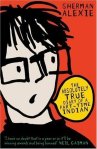 The Absolutely True Diary of a Part-Time Indian by Sherman Alexie: Groundbreaking for both Indigenous literature and YA literature, this reads exactly like a horny 14-year-old boy’s diary, but “Junior” (Arnold Spirit, Jr.) is also self-deprecating and sweetly vulnerable. Poverty, alcoholism, casinos: they don’t feel like clichés of Indian reservations because Alexie writes from experience and presents them matter-of-factly. Junior moves to a white high school and soon becomes adept at code-switching (and cartooning). Heartfelt; spot on.
 The Street by Bernardine Bishop: A low-key ensemble story about the residents of one London street: a couple struggling with infertility, a war veteran with dementia, and so on. Most touching is the relationship between Anne and Georgia, a lesbian snail researcher who paints Anne’s portrait; their friendship shades into quiet, middle-aged love. Beyond the secrets, threats and climactic moments is the reassuring sense that neighbours will be there for you. Bishop’s style reminds me most of Tessa Hadley’s. A great discovery.
 Coleman Hill by Kim Coleman Foote: Is this family memoir? Or autofiction? Foote draws on personal stories but also invokes overarching narratives of Black migration and struggle. The result is magisterial, a debut that is like oral history and a family scrapbook rolled into one, with many strong female characters. Like a linked story collection, it pulls together 15 vignettes from 1916 to 1989 and told in different styles and voices, including AAVE. The inherited trauma is clear, yet Foote weaves in counterbalancing lightness and love.
 Howards End by E.M. Forster: Rereading for book club, I was so impressed by its complexities – the illustration of class, the character interactions, the coincidences, the deliberate doublings and parallels. It covers so many issues, always without a heavy touch. So many sterling sentences: depictions of places, observations of characters, or maxims that are still true of life. Well over a century later and the picture of well-meaning wealthy intellectuals’ interference making others’ lives worse is just as cutting.
 Reproduction by Louisa Hall: Procreation. Duplication. Imitation. All three connotations are appropriate for the title of an allusive novel about motherhood and doppelgangers. A pregnant writer starts composing a novel about Mary Shelley and finds the borders between fiction and (auto)biography blurring. It’s a recognisable piece of autofiction, with a sublime clarity as life is transcribed to the page exactly as it was lived. A tale of transformation – chosen or not – and peril in a country hurtling toward self-implosion. Brilliantly envisioned.
 Station Eleven by Emily St. John Mandel: This has persisted as a definitive imagination of post-apocalypse life. On a reread, I was captivated by the different layers of the nonlinear story, from celebrity gossip to a rare graphic novel series, and the links between characters and storylines. Mandel also seeds subtle connections to later work. Themes that struck me were the enduring power of art and the value of the hyperlocal. It seems prescient of Covid-19, but more so of climate collapse. An ideal blend of the literary and the speculative.
 On Chesil Beach by Ian McEwan: A perfect novella. Its core is the July 1962 night when Edward and Florence attempt to consummate their marriage, but it stretches back to cover everything we need to know about them – their family dynamics, how they met, what they want from life – and forward to see their lives diverge. Is love enough? It’s a maturing of the author’s vision: tragedy is not showy and grotesque like in his early work, but quiet, hinging on the smallest action, the words not said. This absolutely flayed me emotionally on a reread.
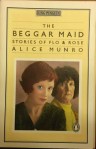 The Beggar Maid by Alice Munro: Linked short stories about a hardscrabble upbringing in small-town Ontario and a woman’s ongoing search for love. Rose’s stepmother Flo is resentful and stingy. She feels she’s always been hard done by, and takes it out on Rose. From early on, we know Rose makes it out of West Hanratty and gets a chance at a larger life, that her childhood becomes a tale of deprivation. Each story is intense, pitiless, and practically as detailed as an entire novel. Rich in insight into characters’ psychology.
 The Tiger’s Wife by Téa Obreht: Natalia, a medical worker in a war-ravaged country, learns of her grandfather’s death away from home. The only one who knew the secret of his cancer, she sneaks away from an orphanage vaccination program to reclaim his personal effects, hoping they’ll reveal something about why he went on this final trip. On this reread I was utterly entranced, especially by the sections about The Deathless Man. I had forgotten the medical element, which of course I loved. My favourite Women’s Prize winner.
 Land of Milk and Honey by C Pam Zhang: On a smog-covered planet where 98% of crops have failed, scarcity reigns – but there is a world apart, a mountaintop settlement at the Italian border where money can buy anything. The 29-year-old Chinese American chef’s job is to produce lavish, evocative multi-course meals. Her relationship with her employer’s 21-year-old daughter is a passionate secret. Each sentence is honed to flawlessness, with paragraphs of fulsome descriptions of meals. A striking picture of desire at the end of the world.
Nonfiction
 Matrescence: On the Metamorphosis of Pregnancy, Childbirth and Motherhood by Lucy Jones: A potent blend of scientific research and stories from the frontline. Jones synthesizes a huge amount of information into a tight narrative structured thematically but also proceeding chronologically through her own matrescence. The hybrid nature of the book is its genius. There’s a laser focus on her physical and emotional development, but the statistical and theoretical context gives a sense of the universal. For anyone who’s ever had a mother.
 Stations of the Heart: Parting with a Son by Richard Lischer: Lischer opens by looking back on the day when his 33-year-old son Adam called to tell him his melanoma was back. Tests revealed metastases everywhere, including in his brain. The next few months were a Calvary of sorts, and Lischer, an emeritus professor at Duke Divinity School, draws deliberate parallels with biblical and liturgical preparations for Good Friday. His prose is a just right match: stately, resolute and weighted with spiritual allusion, yet never morose.
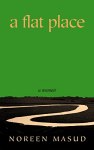 A Flat Place by Noreen Masud: A travel memoir taking in flat landscapes of the British Isles. But flatness is a psychological motif as well as a topographical reality. Growing up with a violent Pakistani father and passive Scottish mother, Masud chose the “freeze” option in fight-or-flight situations. A childhood lack of safety, belonging and love left her with complex PTSD. Her portrayals of sites and journeys are engaging and her metaphors are vibrant. Geography, history and social justice are a backdrop for a stirring personal story.
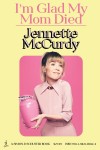 I’m Glad My Mom Died by Jennette McCurdy: True to her background in acting and directing, the book is based around scenes and dialogue, and present-tense narration mimics her viewpoint starting at age six. Much imaginative work was required to make her chaotic late-1990s California household, presided over by a hoarding Mormon cancer survivor, feel real. Abuse, eating disorders, a paternity secret: The mind-blowing revelations keep coming. So much is sad. And yet it’s a very funny book in its observations and turns of phrase.
What were some of your best backlist reads this year?
 Bookish Beck = Rebecca Foster. American transplant to England. Freelance proofreader and book reviewer.
 Bookish Beck
I love that our favourite Women’s Prize winner is the same! Hall and Zhang were also hits for me.
LikeLiked by 1 person
It wasn’t the case originally; I voted for Larry’s Party at the time. But a reread of The Tiger’s Wife changed my mind.
LikeLiked by 1 person
Bernardine Bishop sounds like a pleasing discovery.
LikeLiked by 1 person
Indeed! Especially because I picked it up at random from a charity shop having never heard of her or the book. This was one of two posthumous novels out of three in total that she published. I now have the others on the shelves as treats for another time.
LikeLiked by 1 person
I did not get around to rereading Station Eleven like I’d hoped this year, but will try again next year.
Most of my reading is backlist, and a favorite of this year is Dominicana by Angie Cruz.
LikeLiked by 1 person
I still have several from Mandel’s backlist to read.
I loved Dominicana! Alas, I didn’t get on with her next novel when I tried that from the library.
LikeLiked by 1 person
Yes, I think that your review is what made me put it on my list. Her next one is on my TBR list – so fingers crossed.
LikeLiked by 1 person
Big yes to The Tiger’s Wife, which is absolutely great. I must reread Howards End (nearly brought my copy back from the US with me!) And Bernardine Bishop sounds like a find.
LikeLiked by 1 person
I think 2025 may need to be a year of (re)reading the rest of Forster.
LikeLike
Ha, ha, most of the books I read this year are backlist books! Especially because I’m trying to finish my A Century of Books project. In fact, I was just looking at a list of best books of 2024 and reflecting about how few I have read this year. I have to catch up!
I’ve read five of your fiction books and of course none of your nonfiction ones.
LikeLiked by 1 person
I tend to be current year-focused because of paid reviewing, and accepting review copies from publishers. But like I said above, the backlist books can end up being more memorable overall.
LikeLiked by 1 person
I have been more current-year focused than I am this year.
LikeLike
I loved Obrecht’s Inland even more than The Tiger’s Wife, though I might be in the minority there. And I admit I didn’t even know she had a third novel out. My backlist faves this year were Shuggie Bain and The Dutch House, which I’ve read again and again.
LikeLiked by 1 person
I didn’t get far with Inland.
Patchett is always a joy! We are thinking about reading something of hers for book club.
LikeLiked by 1 person
She just keeps getting better!
LikeLike
I’ve read and enjoyed seven of your fiction selections but none of your non-fiction (I didn’t enjoy The Tiger’s Wife very much the first time around but I might enjoy it more on rereading too, who knows). Is that the Munro which begins with Royal Beatings? One of my favourite of her stories. You konw that I loved Coleman Hill too. I’ve yet to read the last few from the Carol Shields list but I might get to them before this year’s announcements (maaaaaybe, close anyway). I haven’t compiled my 2024 sheet yet, so I’m curious to see which ones I highlighted through the year as stand-outs, how hard it might be to narrow the list a little.
LikeLiked by 1 person
I think you’d really appreciate A Flat Place.
Yes, that’s the right Munro. Amazing (but also gut-punching) stuff.
LikeLike
The Bishop sounds interesting and I loved Howards End the two times I read it, so hooray for that one. Now I need to look at how many backlist and new books I had on my best of … 9 backlist, 11 new, not bad!
LikeLiked by 1 person
Nearly a 50-50 split; that seems about right for your reading habits!
LikeLike
I am impressed that four of your favourite reads in 2024 were discovered via book club! Between my reading tastes and moody habits, I’ve had little success with book clubs. 😅
LikeLiked by 1 person
I wouldn’t say ‘discovered’ … I have a heavy hand in guiding the book club selections! (I’m the co-leader and used to source the books as well.)
LikeLike
Ah, I see! Maybe that’s the ticket to participating in an enjoyable book club 😁
LikeLike