It’s Mother’s Day in the UK today, so I’m featuring three books about mothers and motherhood: a poetry collection, a memoir, and a novel. There are complicated emotions at play in all of these books, whether because of the loss of a child, a mother’s misbehaviour, or a combination of abuse and unfitness.
Her Birth by Rebecca Goss (2013)
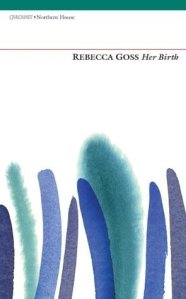 Goss’s first child, Ella, died at 16 months of a rare heart condition, Severe Ebstein’s Anomaly. This collection is in three parts, the first recreating vignettes from her daughter’s short life, the purgatorial central section dwelling in the aftermath of grief, and the third summoning the courage to have another baby. “So extraordinary was your sister’s / short life, it’s hard for me to see // a future for you. I know it’s there, … yet I can’t believe // my fortune”. The close focus on physical artefacts and narrow slices of memory wards away mawkishness. The poems are sweetly affecting but never saccharine. “I kept a row of lilac-buttoned relics / in my wardrobe. Hand-knitted proof, something/ to haul my sorry lump of heart and make it blaze.” (New purchase from Bookshop UK with buyback credit)
How to Survive Your Mother by Jonathan Maitland (2006)
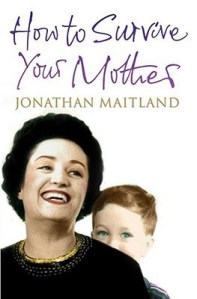 I can’t remember where I came across this in the context of recommended family memoirs, but the title and premise were enough to intrigue me. I’d not previously heard of Maitland, who at the time was known for a TV investigative reporting show called Watchdog exposing con artists. The irony: he was soon to discover that his own mother was a con artist. By chance, he met a journalist who recalled a scandal involving his parents’ old folks’ homes. Maitland toggles between flashbacks to his earlier life and fragments from his investigation, which involved archival research but mostly interviews with his estranged sister, his mother’s ex-husbands, and more.
Bru was a larger-than-life character: Israeli, obsessed with cars and personal upkeep – she once lied to her son that she’d had “eyebrow cancer” rather than admit to having had a facelift, and prone to suicide attempts and other grand gestures, such as opening a “gay hotel” in the 1970s. It eventually emerges that she talked an old man under her care into changing his will to make her his sole beneficiary; she and Maitland’s father also borrowed money from other vulnerable elderly customers. No doubt Bru had narcissistic personality disorder. This was interesting for the psychological insight but not so much for the blow-by-blow. It might have made a better novel. (Secondhand – Awesomebooks.com) 
Every Day Is Mother’s Day by Hilary Mantel (1985)
 If you mostly know Mantel for her Thomas Cromwell trilogy, her debut novel, a black comedy, will come as a surprise. Two households become entangled in sordid ways in 1974. The Axons, Evelyn and her intellectually disabled adult daughter, Muriel, live around the corner from Florence Sidney, who still resides in her family home and whose brother Colin lives nearby with his wife and three children (the fourth is on the way). Colin is having an affair with Muriel’s social worker, Isabel Field. Evelyn is dismayed to realize that Muriel has, somehow, fallen pregnant.
Everyone in this short, spiky novel has been neglected by or separated from a mother, and/or finds motherhood oppressive. The picture is bleak indeed. Colin and Florence’s mother is institutionalized; Muriel’s pregnancy is an embarrassment to be hidden; childbirth is a traumatic memory for Evelyn: “She had been left alone to scream, on a high white bed. … The parasite was straining to be away.” But you’ll find humour and delicious creepiness here, too: a dinner party so atrocious you have to laugh; Evelyn’s utter lack of manners and house that seems to be haunted by poltergeists. The offspring of Barbara Comyns and Shirley Jackson, this is also reminiscent of Muriel Spark or early Margaret Atwood.
I could see the seeds of future Mantel (Evelyn is a retired amateur medium – a precursor of the psychic in Beyond Black) but enjoyed this for its own sake. Very annoyingly, when I started reading this and saw on Goodreads that it has a sequel, I glanced at the page for the latter and there was a huge spoiler. Harrumph. Not sure I’ll read Vacant Possession, but this was strong evidence that it’s worth diving into the back catalogue of big-name authors. (Public library)
 Bookish Beck = Rebecca Foster. American transplant to England. Freelance proofreader and book reviewer.
 Bookish Beck
That Mantel sounds wonderful!
LikeLiked by 1 person
It’s a wicked delight.
LikeLiked by 1 person
I generally love Mantel, but the only comedy I tried by her was Beyond Black, and it was too ridiculous for me. I think Fludd was also supposed to be comedy, but somehow I didn’t get on the same wavelength with it.
LikeLiked by 1 person
I don’t remember caring for Beyond Black, but it was many years ago that I read it. I have a copy of Fludd and I hope I’ll enjoy that one, too.
LikeLiked by 1 person
I remember Beyond Black more vividly than Fludd, even though I didn’t finish it. I can’t remember what Fludd was about at all.
LikeLike
The way you describe the Mantel makes me think a little of Barbara Trapido, whose novel Temples of Delight also has an irresistibly awful dinner party! I love how versatile she (Mantel) was.
LikeLiked by 1 person
I’ve still not tried Trapido, but I have a copy of that one so I really should!
LikeLike
How deftly you’ve combined this trio for review, thematically speaking. At first I thought I’d read one of Mantel’s early ones, but turns out that I was muddling it with Jane Gardam’s The Queen of the Tamborine…and not likely for any good reason. I’ve never gotten back to finish the Cromwell trio either, although I did really enjoy Wolf Hall after a couple of tries.
LikeLiked by 2 people
Controversially, I believe the middle volume, Bring Up the Bodies, is the best one, and would even counsel reading it as a standalone. (I never got through the third.)
LikeLike
[…] too, with Carmel likening roast parsnips to “ogres’ penises.” Further proof, along with Every Day Is Mother’s Day, that it’s well worth exploring authors’ back catalogue. (Public […]
LikeLike
[…] Mothering Sunday in the UK today, so, like last year, I’m featuring three very different books about mothers and motherhood: a memoir, a novel and a […]
LikeLike