Surveying the Almighty TBR List
Coming to the end of one year and looking ahead to another: it’s a good opportunity to take stock of my virtual and physical to-read piles once more. Thanks to fellow book bloggers Naomi at The Writes of Woman and Eleanor at Elle Thinks for giving me this meme idea and tagging me in it, respectively.
How do you keep track of your TBR pile?
I have a ridiculously large to-read shelf on Goodreads, but that’s more like a vague lifelong wish list – some of them I own, some I’ve only heard of and want to investigate further, some I’m desperate to get hold of, and so on. I recently culled my online TBR and cut it by about 10%, but it’s still overwhelming. In real life, I take occasional inventories of the unread books in our flat (192 at last count). However, this doesn’t account for the fact that at least half of my book collection is still in my parents’ house in the States. While I’m back there for some time over the holidays, I enjoy gazing at my books and choosing a select few to bring back in my suitcase. On this trip I’ll be boxing them all up to go into storage. When shall I ever be reunited with them?!
Is your TBR mostly print or e-book?
If I only consider the books I already have access to, there are more unread print ones on my shelves than there are e-book approvals through NetGalley and Edelweiss. There’s not all that much in it, though; I might estimate the print TBR at 400–500, while I have about 300 books at my disposal through those online sources and new titles come up for request all the time.
How do you determine which books from your TBR to read next?
This generally depends on review deadlines, library due dates, and e-book expirations. In some sense, then, my reading list is completely imposed on me from outside. However, I always make sure I let whimsy guide some of my choices. Next year I hope to be even better about just picking up a book off my shelves and starting it for no reason other than instantaneous interest.
A book that has been on my TBR the longest
On the virtual TBR: probably Fast Food Nation and some of Margaret Atwood’s back catalogue. On the vague list in my head: all the more obscure Dickens and Hardy titles.
 A book I recently added to my TBR
Rochester Knockings: A Novel of the Fox Sisters by Hubert Haddad.
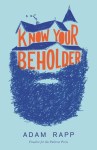 A book on my TBR strictly because of its beautiful cover
I love the beard-house on the cover of Know Your Beholder by Adam Rapp.
A book on my TBR that I never plan on reading
Will I really pick up Martin Amis’s novels, or Ian McEwan’s early work? How about those obscure Thomas Hardy novels like A Laodicean and A Pair of Blue Eyes?
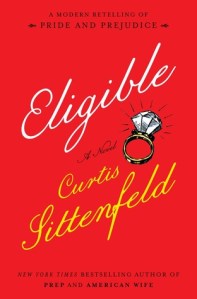 An unpublished book on my TBR that I’m excited for
I recently started Eligible by Curtis Sittenfeld (to be published on April 19, 2016). Her novel American Wife is one of my absolute favorites, so I was excited about her Pride and Prejudice retelling and lucky enough to be sent an advanced copy. I’m not that into it yet – the third-person omniscient voice is taking a while to get used to because first-person female narrators are Sittenfeld’s forte – but I hope it will pick up soon.
 A book on my TBR that everyone recommends
I’ve encountered almost universal praise for Elena Ferrante’s four autobiographical novels, the first of which is My Brilliant Friend. They’re on my priority list for 2016.
A book on my TBR that everyone has read but me
1984 by George Orwell.
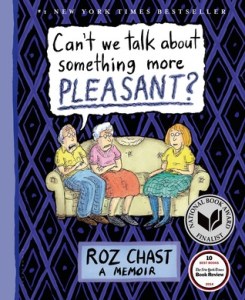 A book on my TBR that I’m dying to read
Some of my priority books to get hold of are Nell Zink’s novels, the final two books in Jane Smiley’s The Last Hundred Years trilogy, Can’t We Talk about Something More Pleasant? by Roz Chast, and Reasons to Stay Alive by Matt Haig. I’ve also been meaning to read The Signature of All Things by Elizabeth Gilbert for ages, and I’m intrigued to try The Guest Cat by Takashi Hiraide.
How many books are on your TBR shelf?
5,664 on the Goodreads shelf; maybe 500 in the print queue.
People I’m tagging:
Shannon at River City Reading
Lucy at Literary Relish
Dickens: Not Just for Christmas
Charles Dickens is almost singlehandedly responsible for creating our view of the traditional Christmas. It’s no surprise, then, that many people associate him with the holiday season. An armchair next to a fire somehow seems like the ideal place for curling up with one of his chunky tomes. I know some readers who try to pick up one of his books every winter, like Lucy over at Literary Relish. This year my husband is reading a facsimile edition of the original serialized version of Hard Times (re-issued by Stanford University’s Discovering Dickens project in 2005) in the run-up to Christmas, and also plans to get through The Cricket on the Hearth. One of my goals for 2016 is to return to Dombey and Son, which I got about 200 pages into a few years ago but never managed to finish.
We’ve also been lucky enough to catch a number of Dickens-themed theatre productions over the years: in London, Patrick Stewart’s one-man production of A Christmas Carol and Simon Callow’s one-man The Mystery of Charles Dickens, an open-air version of A Christmas Carol that took place around the streets of York, and, this year, Dickens Abridged at Norden Farm Centre for the Arts near Maidenhead. This was from Adam Long, the same brilliant mind that, as a founding member of The Reduced Shakespeare Company, helped create The Complete Works of William Shakespeare (abridged) as well as The Complete History of America (abridged) and The Bible: The Complete Word of God (abridged). I’ve seen four of their shows now, and all were utterly hilarious.
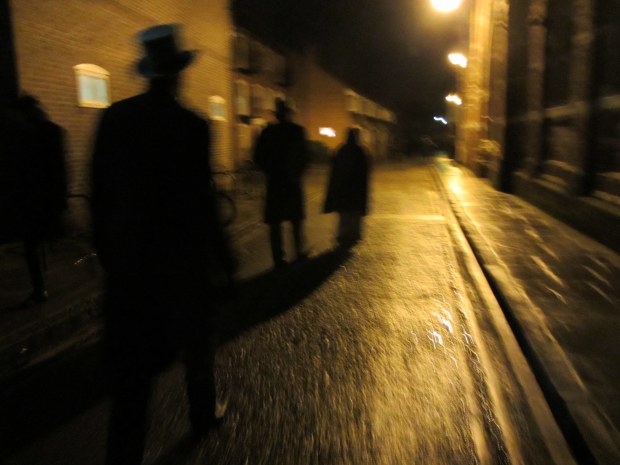
A spooky scene: walking the streets of York for a wandering production of A Christmas Carol.
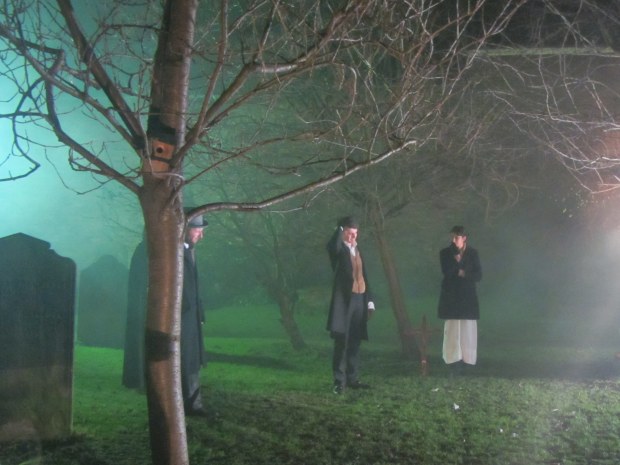
York Christmas Carol: stopping for a scene in a graveyard.
To our surprise, Dickens Abridged was basically a musical in a comedy folk style. We were reminded of Flight of the Conchords or Folk On. There were just four male actors on stage playing all the historical and fictional roles, including, of course, all the female ones. Some of Dickens’s novels didn’t even get a mention (though did I really expect Barnaby Rudge to turn up?!), others got the briefest of nods, and some came in for extensive treatment.
![A Christmas Carol: Mr. Fezziwig's Ball. John Leech [Public domain], via Wikimedia Commons](https://commons.wikimedia.org/wiki/File:A_Christmas_Carol_-_Mr._Fezziwig%27s_Ball.jpg?uselang=en-gb)
A Christmas Carol: Mr. Fezziwig’s Ball. John Leech [Public domain], via Wikimedia Commons
Among the show’s highlights were the guillotine scene in A Tale of Two Cities, Tiny Tim’s amazing transforming crutch, and the refrain sung by Dickens: “I am a man of anxiety and sorrow” – sung in a 1980s power ballad style, if you can imagine that.
What I found most remarkable about this production was how it was not just the abridged works of Dickens but also the abridged life of Dickens. His time at the blacking factory and his marriage to Catherine Hogarth are two turning points that the play emphasized to good effect. Some readers only vaguely familiar with Dickens might not know about his troubled marriage and the divorce case that left Catherine in disgrace as Dickens took up with a mistress, young actress Nelly Ternan. So while Dickens Abridged was heavy on the laughs, it was also informative and thoughtful.
Dickens: not just for Christmas, but it’s a good time to dive into his works if you haven’t already.
Is Dickens part of your regular holiday reading? Who are some of your other favorite authors to read at this time of year?
Books as Objects of Beauty
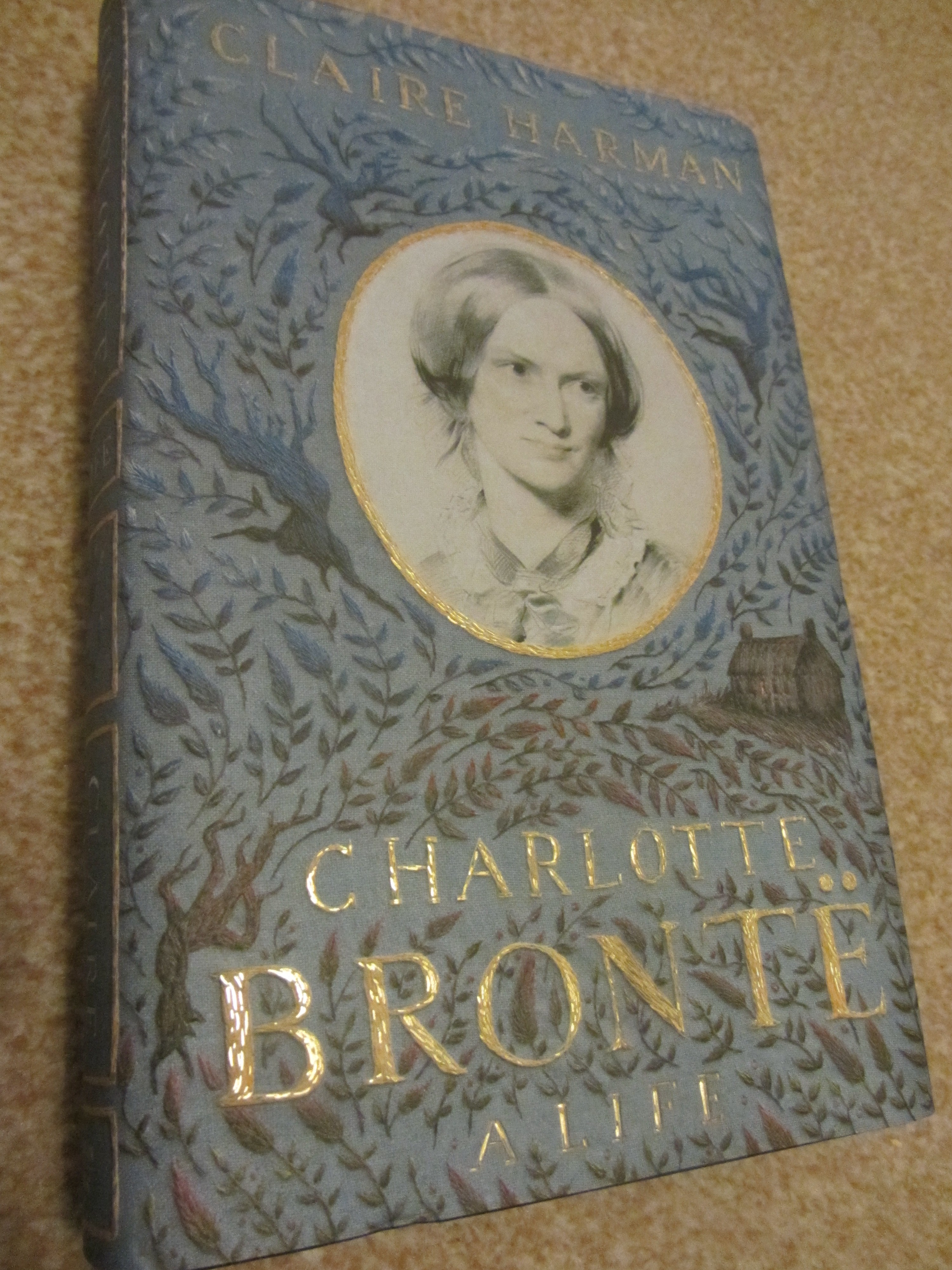
At least half of my reading nowadays is e-books, usually downloaded from NetGalley and Edelweiss and read on my Kindle. All the same, I still love the feel and smell of paper books, and it’s a special treat when the books are things of beauty in their own right. A few books I’ve reviewed recently have been absolutely stunning physical objects. Here are some photographs and a rundown of their key attributes:
The Water Book by Alok Jha – Just look at that gorgeous, shiny cover! I was less taken with the contents of the book itself, but never mind. (My review is forthcoming at Nudge.)
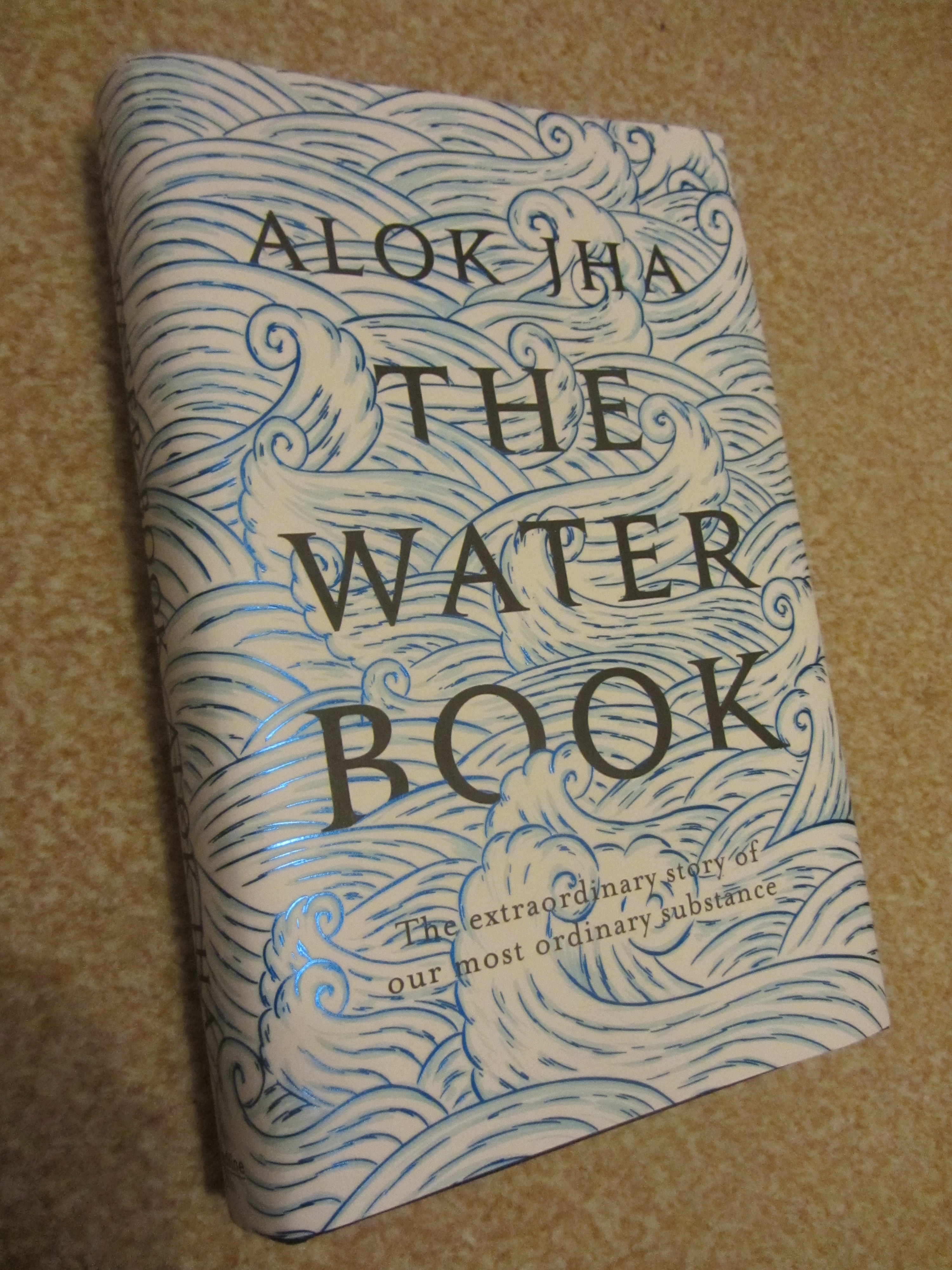
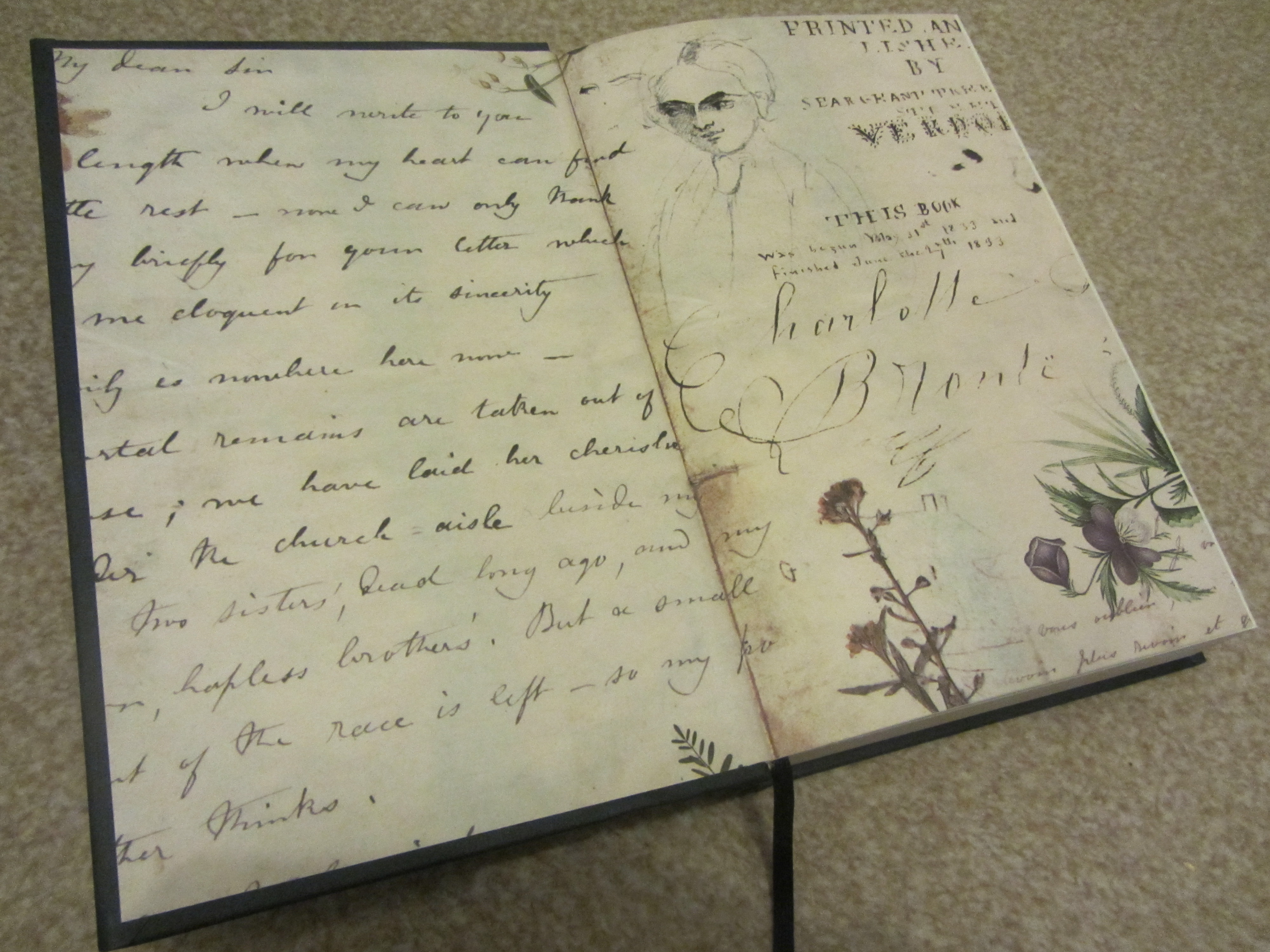
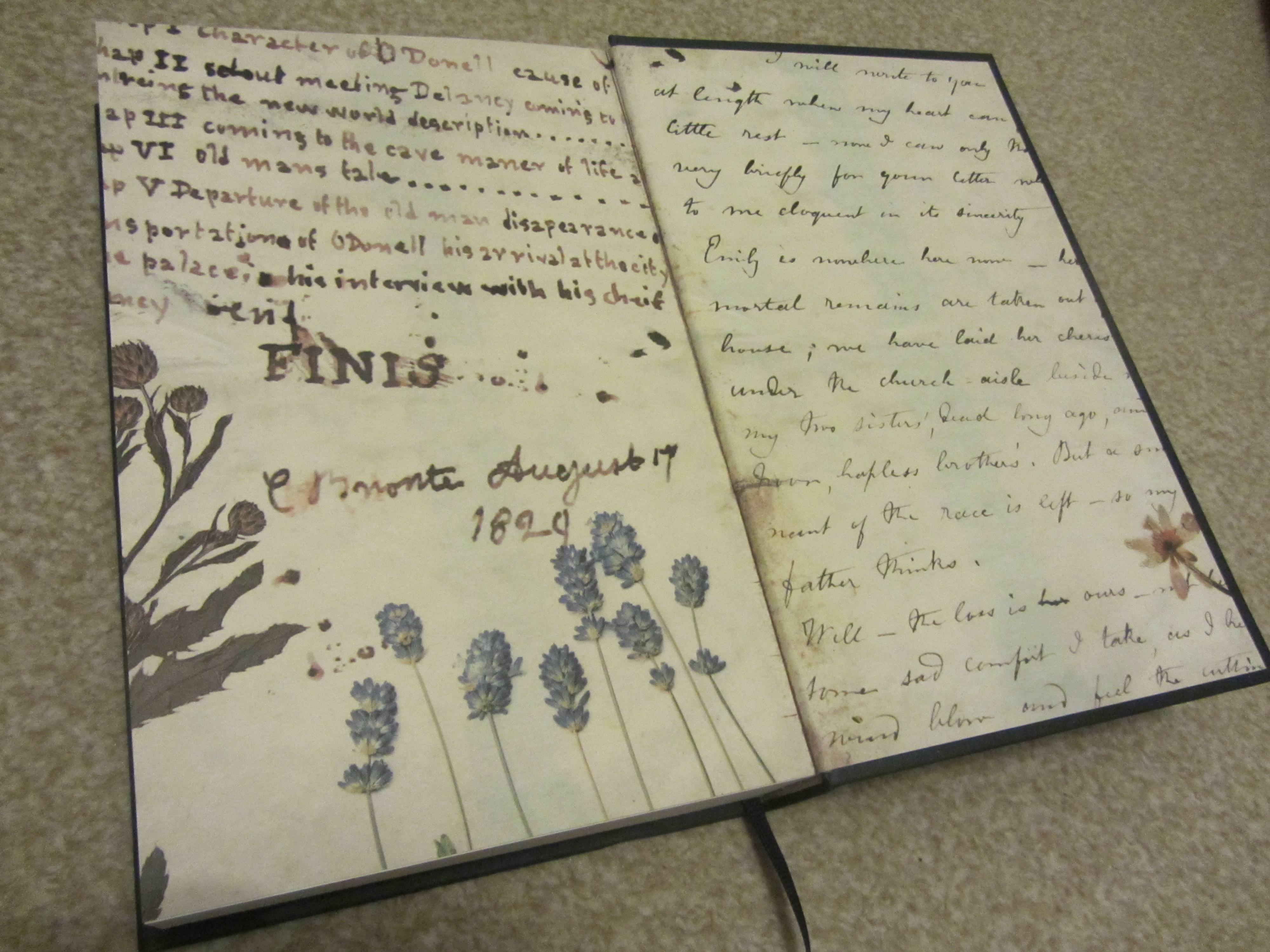
Charlotte Brontë: A Life by Claire Harman – Embossed embroidery effect on the cover, handwriting and sketches (including the only known C. Brontë self-portrait, only recently identified) on the endpapers, and built-in ribbon bookmark. (My review will go up at For Books’ Sake on Wednesday.)
A Brief History of Seven Killings by Marlon James – The dustjacket of this Booker Prize winner is lovely enough, but take it off and you still hold a striking object, in appropriately Rastafarian colors. (Full review in December issue of Third Way magazine.)


Ruins by Peter Kuper – Embossed title on the cover, with the monarch in matte; entomological drawings on the endpapers; alternating monochrome and full-color sequences; plus a built-in ribbon bookmark. (To be reviewed here in the near future.)


To survive in this modern age, physical books have to be more than just words on a page, because e-books do that much more efficiently. They simply have to be beautiful.
What are some of the most eye-catching books you’ve encountered recently?
Library Checkout: October 2015
I used to be a library fiend. At one point we belonged to about six different library systems thanks to our jobs at universities and our frequent back-and-forths to a couple of towns where we used to live. Back when reservations were still free through Reading Borough Libraries I would regularly have 20 or more new books on request at any one time, and every trip to the library required backpacks, tote bags and my husband’s help to get everything to the car.
Now that holds cost 50 pence each, however, I’ve cut back to basically zero. Most of what I used to read via libraries has now been replaced by e-books downloaded from NetGalley and Edelweiss. This is rather a shame, as I still love the feeling of stocking up with piles of physical books. I’ll still make an exception and pay 40 pence to reserve a book through our (more strictly local) Wokingham Borough Libraries when it’s something I’m hugely keen to read, like the new Jonathan Franzen novel or a book I need to review and can’t find online.
Nowadays I mostly peruse my local library for poetry collections and new nonfiction, though I can occasionally be tempted by recent fiction I haven’t gotten my hands on by other means.
(Thanks to Shannon at River City Reading for the great idea and the template! Check out her blog for other link-ups.)
LIBRARY BOOKS READ
- The Cartographer Tries to Map a Way to Zion, Kei Miller [I also saw the author speak at Reading Poetry Festival.]
- Purity, Jonathan Franzen
CHECKED OUT, TO BE READ
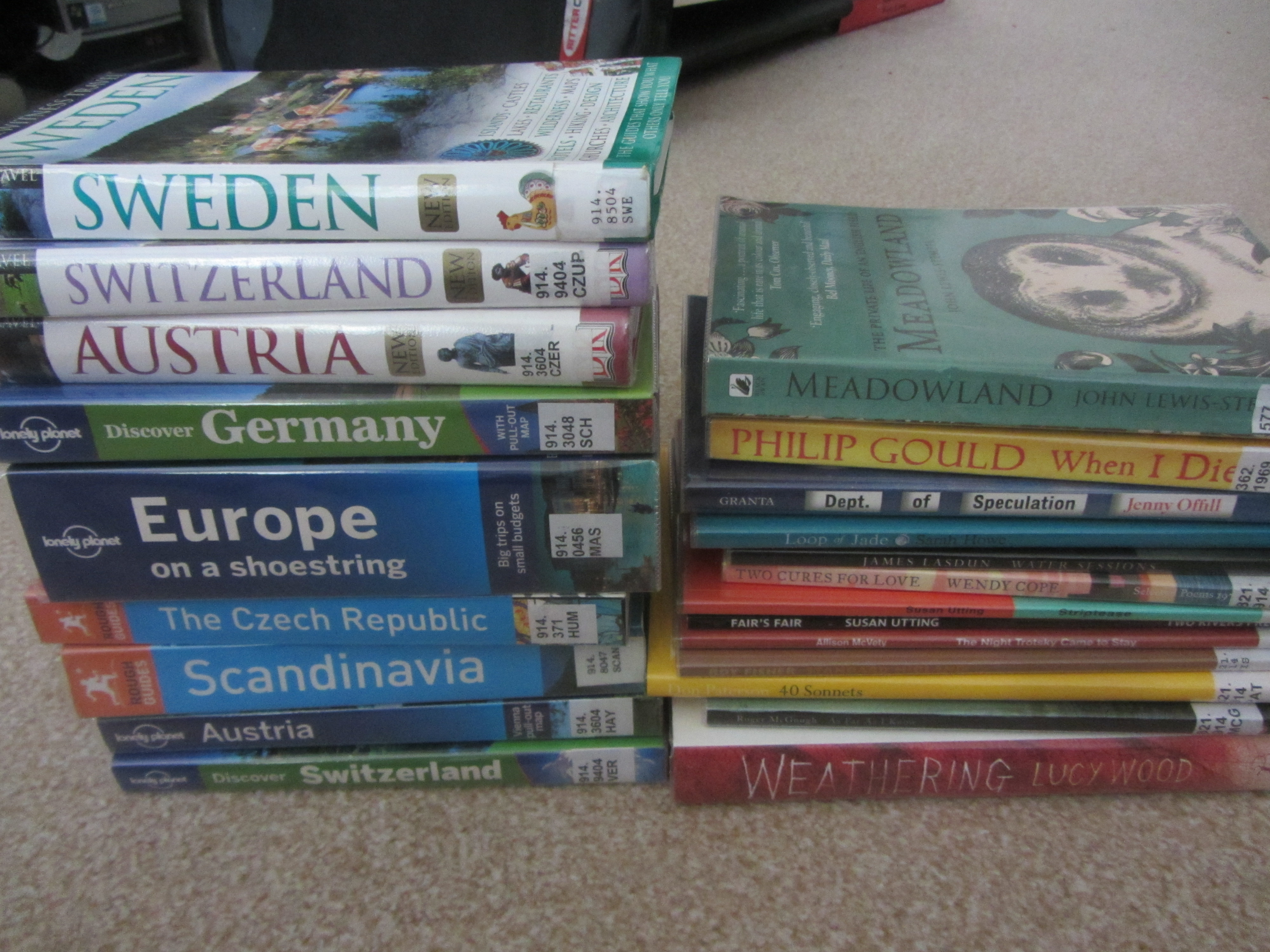
- DK Eyewitness Guides to Sweden, Austria, and Switzerland; Rough Guides to Scandinavia and the Czech Republic; Lonely Planet Guides to Germany, Austria, Switzerland, and “Europe on a Shoestring” [we’re contemplating a big trip around Europe by train next spring; the next few months will be for dreaming and planning]
- When I Die: Lessons from the Death Zone, Philip Gould
- Dept. of Speculation, Jenny Offill
- Weathering, Lucy Wood [for BookBrowse review]
- Meadowland: The Private Life of an English Field, John Lewis-Stempel
Poetry books:
- As Far as I Know, Roger McGough
- Two Cures for Love: Selected Poems 1979–2006, Wendy Cope
- The Night Trotsky Came to Stay, Allison McVety
- 40 Sonnets, Don Patterson
- Fair’s Fair, Susan Utting
- Striptease, Susan Utting
- Loop of Jade, Sarah Howe
- Water Sessions, James Lasdun
- Standard Midland, Roy Fisher
Do you take advantage of your local libraries?
What were some of your best recent library reads?
Taking Stock
A Book Inventory for August 26th
At the end of 2014 I went around our flat and counted all my owned but unread books that I still wanted to read. At that point I counted 155.
One of my reading goals for 2015 has been to attempt to read more of the books I actually own. But an inventory in March revealed 180 unread books.
After some concerted effort, but also some book shopping at Bookbarn International and elsewhere, would that figure be higher or lower by late August??
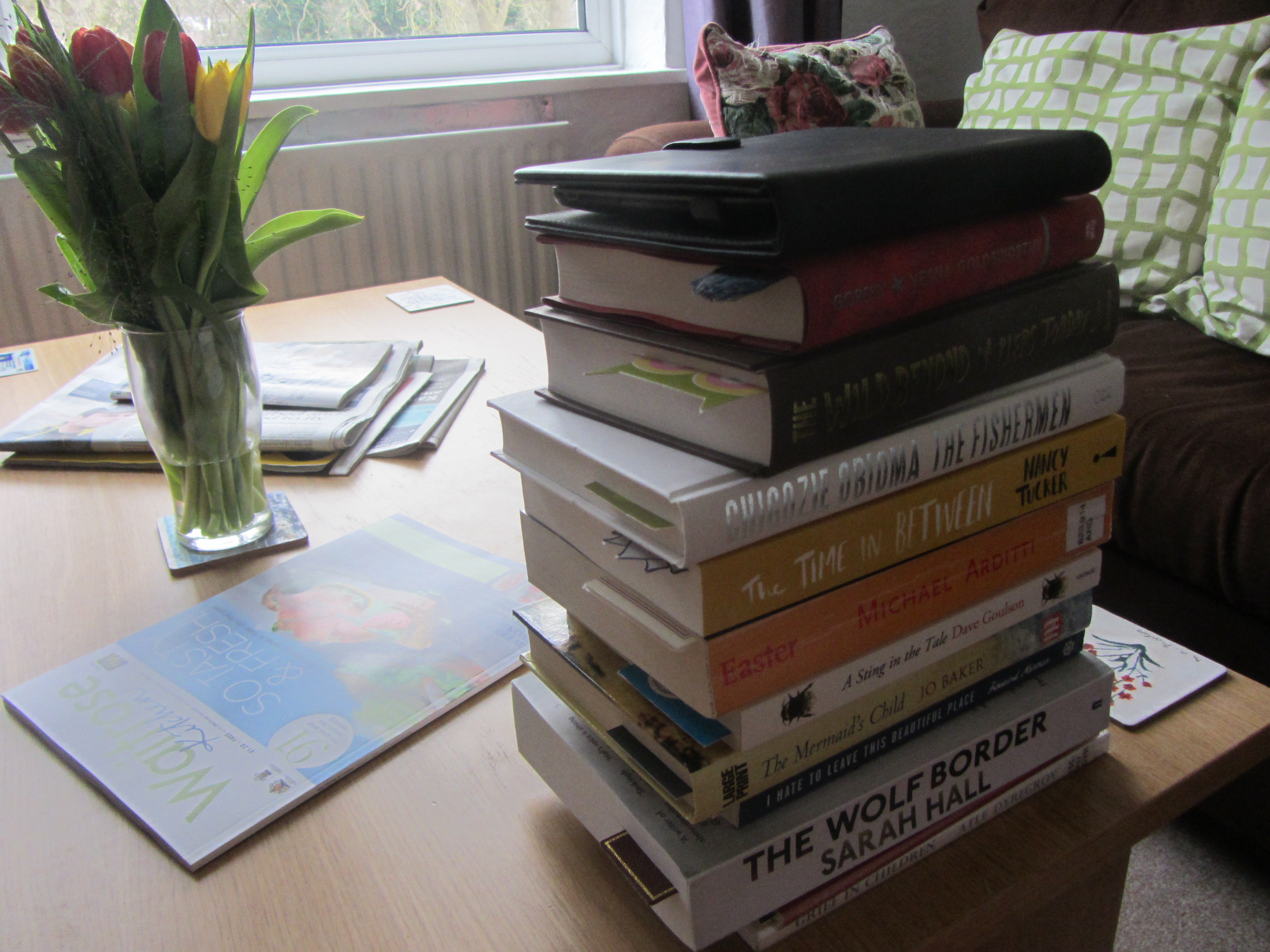
A towering book stack from earlier in the year.
Well, the answer is that it’s gone up, but only slightly, to 193.
To read all the books in the flat by the end of 2016, I’d have to pretty much put an embargo on accessing any new books that come out next year (whether via NetGalley/Edelweiss or the library), except for ones I’m reviewing for pay. I don’t think I could bear the thought of missing out on many of the latest books!
How many unread books are hanging around your place? Is this a problem, or an opportunity?
All comments welcome!
I Like Big Books and I Cannot Lie
You can never get a cup of tea large enough or a book long enough to suit me.
~ C. S. Lewis

My best friend got me this tote bag for my 30th birthday. Rarely has there been a better slogan.
 Here’s to doorstoppers! Books of 500 pages or more [the page count is in brackets for each of the major books listed below] can keep you occupied for entire weeks of a summer – or for just a few days if they’re gripping enough. There’s something delicious about getting wrapped up in an epic story and having no idea where the plot will take you. Doorstoppers are the perfect vacation companions, for instance. I have particularly fond memories of getting lost in Jonathan Strange and Mr. Norrell by Susanna Clarke [782] on a week’s boating holiday in Norfolk with my in-laws, and of devouring The Crimson Petal and the White by Michel Faber [835] on a long, queasy ferry ride to France.
I have an MA in Victorian Literature, so I was used to picking up novels that ranged between 600 and 900 pages. Of course, one could argue that the Victorians were wordier than necessary due to weekly deadlines, the space requirements of serialized stories, and the popularity of subsequent “triple-decker” three-volume publication. Still, I think Charles Dickens’s works, certainly, stand the test of time. His David Copperfield [~900] is still my favorite book. I adore his sprawling stories crammed full of major and minor characters. Especially in a book like David Copperfield that spans decades of a character’s life, the sheer length allows you time to get to know the protagonist intimately and feel all his or her struggles and triumphs as if they were your own.

Nothing ‘little’ about this review copy.
I felt the same about A Little Life by Hanya Yanagihara [720], which I recently reviewed for Shiny New Books. Jude St. Francis is a somewhat Dickensian character anyway, for his orphan origins at least, and even though the novel is told in the third person, it is as close a character study as you will find in contemporary literature. I distinctly remember two moments in my reading, one around page 300 and one at 500, when I looked up and thought, “where in the world will this go?!” Even as I approached the end, I couldn’t imagine how Yanagihara would leave things. That, I think, is one mark of a truly masterful storyteller.

Slow but steady progress.
Speaking of Dickensian novels, in recent years I’ve read two Victorian pastiches that have an authentically Victorian page count, too: The Luminaries by Eleanor Catton [848] and Death and Mr. Pickwick by Stephen Jarvis [816]. The Luminaries, which won the 2013 Booker Prize, has an intricate structure (based on astrological charts) that involves looping back through the same events – making it at least 200 pages too long.
It was somewhat disappointing to read Jarvis’s debut novel in electronic format; without the physical signs of progress – a bookmark advancing through a huge text block – it’s more difficult to feel a sense of achievement. Once again one might argue that the book’s digressive nature makes it longer than necessary. But with such an accomplished debut that addresses pretty much everything ever written or thought about The Pickwick Papers, who could quibble?

I was initially rather daunted by the heft of The Luminaries.
John Irving’s novels are Dickensian in their scope as well as their delight in characters’ eccentricities, but fully modern in terms of themes – and sexual explicitness. Along with Dickens, he’s a mutual favorite author for my husband and me, and his A Prayer for Owen Meany [637] numbers among our collective favorite novels. Most representative of his style are The World According to Garp and The Cider House Rules.
Here are a handful of other long novels I’ve read and reviewed within the last few years (the rating is below each description):
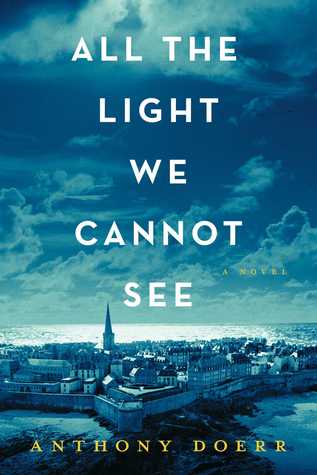 All the Light We Cannot See by Anthony Doerr [531] – The 2015 Pulitzer Prize winner; set in France and Germany during World War II.

In the Light of What We Know by Zia Haider Rahman [555] – Digressive intellectualizing about race, class and war as they pertain to British immigrants.

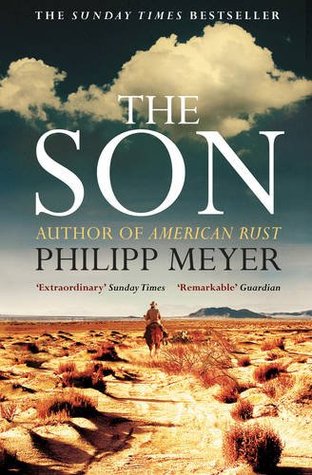 The Son by Philipp Meyer [561] – An old-fashioned Western with hints of Cormac McCarthy.

The Art of Fielding by Chad Harbach [512] – Baseball is a window onto modern life in this debut novel about homosocial relationships at a small liberal arts college.
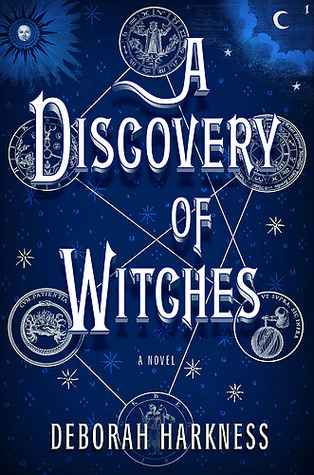 “A Discovery of Witches” fantasy trilogy by Deborah Harkness: A Discovery of Witches [579], Shadow of Night [584], and The Book of Life [561] – Thinking girl’s vampire novels, with medieval history and Oxford libraries thrown in.
/  /
/ 
And here’s the next set of doorstoppers on the docket:
Of Human Bondage by W. Somerset Maugham [766] – A Dickensian bildungsroman about a boy with a clubfoot who pursues art, medicine and love.
The Goldfinch by Donna Tartt [864] – I have little idea of what this is actually about. A boy named Theo, art, loss, drugs and 9/11? Or just call it life in general. I’ve read Tartt’s other two books and was enough of a fan to snatch up a secondhand paperback for £1.
A Brief History of Seven Killings by Marlon James [686] (as with A Little Life, the adjective in the title surely must be tongue-in-cheek!) – The starting point is an assassination attempt on Bob Marley in the late 1970s, but this is a decades-sweeping look at Jamaican history. I won a copy in a Goodreads giveaway.
A Suitable Boy by Vikram Seth [1,474!] – A sprawling Indian family saga. Apparently he’s at work on a sequel entitled A Suitable Girl.
This Thing of Darkness by Harry Thompson [744] – A novel about Charles Darwin and his relationship with Robert FitzRoy, captain of the Beagle.
The Last Chronicle of Barset by Anthony Trollope [891] – As the title suggests, this is the final novel in Trollope’s six-book “Chronicles of Barsetshire” series. Alas, reading this one requires reading the five previous books, so this is more like a 5,000-page commitment…
Now, a confession: sometimes I avoid long books because they just seem like too much work. It’s sad but true that a Dickens novel takes me infinitely longer to read than a modern novel of similar length. The prose is simply more demanding, there’s no question about it. So if I’m faced with a choice between one 800-page novel that I know could take me months of off-and-on reading and three or four 200–300-page contemporary novels, I’ll opt for the latter every time. Part of this also has to do with meeting my reading goals for the year: when you’re aiming for 250 titles, it makes more sense to read a bunch of short books than a few long ones. I need to get better about balancing quality and quantity.
How do you feel about long books? Do you seek them out or shy away? Comments welcome!
How Many Books Is Too Many? (to be reading at once)
You can never have too many books. But it’s entirely possible to have too many on the go at one time, or too many on the physical to-read pile (as opposed to the virtual to-read list; mine currently numbers in the thousands over at Goodreads). I was prompted to think about this at the end of 2014, when I went around our flat and counted all my owned but unread books that I still wanted to read. At that point I counted 155.
One of my reading goals for 2015 was born: I would attempt to read more of the books I actually own – at least enough to keep pace with my secondhand book buying habit. So yesterday afternoon, expecting to be heartened by my progress, I did a recount. Result? 180.
WHAT?! The number went up! Gah!
It must be that all-paperbacks-for-£1 shopping spree we did at the bookshop in Henley-on-Thames…and then I brought some books back in my suitcase on our last trip to America…plus a few more review copies have arrived.
There are books all over the flat: in the spare room, on the bedroom bookcase, on the bedside tables, on the hallway bookcase, on a big four-shelf case in the lounge, on desk shelves, even in an overflow area on the shelving unit of board games, jigsaw puzzles, CDs and DVDs.
And that’s not counting the dozens of approved e-books awaiting download on NetGalley and Edelweiss, and the others already on my Nook and Kindle e-readers. It’s nigh on impossible to say no to free books, after all.
Okay, so I’ve established that I have a book hoarding obsession that extends into both the print and electronic realms. (It’s no surprise I worked for a website called Bookkaholic for two years, is it?) But is this really such a problem? It’s somehow comforting to know that I’ll never run out of reading material.
A related concern, though, is this: Am I reading too many books at once? I have 13 on the go at the moment (8 print and 5 electronic). Especially since I got my Nook, I find that I’ve developed a kind of ADHD when it comes to books. It’s so easy to click from one book to another that I sometimes don’t stick with one for more than a chapter at a time. Sometimes, if I’m in a rut, I’ll read the first few pages of 10 or more books before I manage to settle on one.
Up until college, I was the kind of person who faithfully read just one book at a time. Since then, though, I’ve become convinced of the merit of having two or more on the go at a time: at least one novel and at least one work of nonfiction, maybe with some poetry thrown in. If you have nonfiction from very different genres – for instance, a spiritual autobiography and a nature book; or a travel book and a foodie memoir – you could read multiple nonfiction books at the same time.
The benefits are multiple.
- If you’re bored with one book, spend time with another one. You can always go back.
- Sometimes a pairing is fortuitous – what you’re learning in one book will have bearing on another, or the same historical figure will turn up in both.
- The psychological burden of having a tall stack of books staring you down may encourage you to read more.
Yet there are disadvantages.
- With novels and short story collections, you may get characters and storylines mixed up if you have too many in your head at once.
- You’ll make progress in all the books more slowly.
- If you get gripped by one, you might abandon the others temporarily.
Your turn:
How many books do you read at once?
What do you think is an ideal number?
How do you manage your (physical or virtual) to-read shelf?
 Bookish Beck = Rebecca Foster. American transplant to England. Freelance proofreader and book reviewer.
 Bookish Beck