Library Checkout: January 2016
I’ve been back in the UK for a few weeks now and in my leisure reading have been trying to focus on the books I already own (especially giveaway books I feel obligated to review) plus a priority list of library reads.
(Thanks to Shannon at River City Reading for the great blog idea and template! Check out her blog for other link-ups.)
LIBRARY BOOKS READ
- Can’t We Talk about Something More Pleasant? by Roz Chast [one-week loan from University of Reading library; already returned]
- Glitter and Glue: A memoir by Kelly Corrigan
- How to Connect with Nature by Tristan Gooley [from the School of Life series]
- Reasons to Stay Alive by Matt Haig
- Swithering by Robin Robertson [poetry]
LIBRARY BOOKS CURRENTLY READING
- The Zookeeper’s Wife by Diane Ackerman
- Persepolis by Marjane Satrapi [graphic novel]
- Early Warning by Jane Smiley
CHECKED OUT, TO BE READ
- The Human Age: The World Shaped by Us by Diane Ackerman
- Walking Away by Simon Armitage
- History of a Suicide: My Sister’s Unfinished Life by Jill Bialosky
- Bibliotherapy with Bereaved Children by Eileen H. Jones [will probably only skim]
- Rising Ground: A Search for the Spirit of Place by Philip Marsden
- The Book of Aron by Jim Shepard
Plus, it’s time to redouble our efforts at planning a Europe trip for early summer:
- Travellers Sweden
- Lonely Planet guide to Germany
ON REQUEST
My Brilliant Friend, Elena Ferrante [I’m 8th in the queue, so I’ll be waiting a while!]
Have you been taking advantage of your local libraries? What were some of your best recent reads?
More Specific 2016 Goals
Following up on the handful of low-key resolutions I made at the start of the month, I can report that three of my volunteer reviewing positions plus a paid one all seem to have come to a natural end, so that frees me up a little more to seek out big-name opportunities and focus on reading more of the unread books in my own collection plus library copies of books by the authors I’m most keen to try.
Now that nearly one twelfth of this ‘new’ year has passed, I feel like it’s time to set some more specific goals for 2016.
Blogging
Be more strategic about which books I review in full on here. So far it’s just been a random smattering of books I requested online or through publishers. Overall, I don’t feel like I have a clear rationale for which books I feature here and which ones I just respond to via Goodreads. Perhaps I’ll focus on notable reading experiences I feel like drawing attention to (like The Goldfinch recently), or target some pre-release literary fiction to help create buzz.
Start writing more concise reviews. The task of writing just two sentences about my top books from 2015 got me thinking that sometimes less might be more. (See Shannon’s Twitter-length reviews!) Ironically, though, dumping a whole bunch of thoughts about a book can feel easier and less time-consuming than crafting one tight paragraph. As Blaise Pascal said, “I have only made this letter longer because I have not had the time to make it shorter.”
Redesign this blog and get lots of advice from other book bloggers on how to develop it. It’s my one-year anniversary coming up in March and I want to think about what direction to take the site in. I feel like I need to find a niche rather than just post at random.
Update my social media profiles and pictures. In some cases I’m still using photos taken of me nearly three years ago. Not that I’ve changed too much in appearance since then, but I might as well stay current!
Leisure Reading
Make it through my backlog of giveaway books. In the photo below, the books on the left I won through Goodreads giveaways, and the pile on the right I won through various other giveaways, usually through Twitter or publisher newsletters.

Although there is no strict compulsion to review the books you win, it’s an informal obligation I’d like to honor. Before too many months go by, then, I’d like to read and review them all. That’ll help me meet the next goal…
Get down to 100 or fewer unread books in the flat by the end of the year. Although this seems like an achievable goal, it does mean getting through about 100 of the books we own, on top of any review books that come up throughout the year, not to mention my Kindle backlog from NetGalley and Edelweiss (so I am definitely NOT counting those in the 100!).
Weed our bookshelves. Alas, it’s looking like we’re going to be moving again in August, so before then it would be great if I could reduce our overflow areas so that everything can fit on our four matching bookcases with little or no double-stacking. I’ll start by picking out the books I’ve already read and don’t think I’ll read or refer to again. Which brings me to a related goal…
Start a Little Free Library or make another arrangement for giving away proof copies. Advanced copies technically should not be resold, so ones I don’t want to keep I tend to give away to friends and family or to a thrift store if they don’t too obviously look like proofs (i.e. they have a finished cover and don’t say “Proof copy” in enormous letters). I figure if a charity shop can get £1 for the copy, why not? It’s a perfectly good, readable book. However, I should really come up with a better solution. If not an LFL, then maybe I could arrange to keep a giveaway box outside a charity shop or at the train station wherever we next live.
Career
Take control of my e-mail inboxes. There are currently over 11,000 messages in my personal account and nearly 1,100 in my professional account. I attribute this partly to sentimentality and partly to fear of deleting something important I might need to reference later.
Find a way to incorporate exercise into my workday. I really, really need a treadmill desk. Or any piece of exercise equipment with a ledge that would hold a Kindle or laptop. That way I could continue reading and writing so that working out wouldn’t feel like lost time. Otherwise I am far too sedentary in my normal life.

Apropos of nothing, but always worth remembering.
What are some of your updated goals for 2016 – reading-related or otherwise?
Bibliotherapy for the New Year
In January lots of us tend to think about self-improvement for the New Year. Books can help! I’m resurrecting a post I first wrote as part of a series for Bookkaholic in April 2013 in hopes that those new to the concept of bibliotherapy will find it interesting.
I happen to believe – and I’m not the only one, not by a long shot – that a relationship with books can increase wellbeing. The right book at the right time can be a powerful thing, not just amusing and teaching, but also reassuring and even healing. Indeed, an ancient Greek library at Thebes bore an inscription on the lintel naming it a “Healing-Place for the Soul.”
The term “bibliotherapy,” from the Greek biblion (books) + therapeia (healing), was coined in 1916 by Samuel McChord Crothers (1857-1927). Crothers, a Unitarian minister and essayist, introduced the word in an Atlantic Monthly piece called “A Literary Clinic.” The use of books as a therapeutic tool then came to the forefront in America during the two world wars, when librarians received training in how to suggest helpful books to veterans recuperating in military hospitals. Massachusetts General Hospital had founded one of the first patients’ libraries, in 1844, and many other state institutions – particularly mental hospitals – had followed suit by the time of the First World War. Belief in the healing powers of reading was becoming more widespread; whereas once it had been assumed that only religious texts could edify, now it was clear that there could be benefits to secular reading too.
Read this for what ails you
Clinical bibliotherapy is still a popular strategy, often used in combination with other medical approaches to treat mental illness. Especially in the UK, where bibliotherapy is offered through official National Health Service (NHS) channels, library and health services work together to give readers access to books that may aid the healing process. Over half of England’s public library systems offer bibliotherapy programs, with a total of around 80 schemes documented as of 2006. NHS doctors will often write patients a ‘prescription’ for a recommended book to borrow at a local library. These books will usually fall under the umbrella of “self-help,” with a medical or mental health leaning: guides to overcoming depression, building self-confidence, dealing with stress, and so on.
Books can serve as one component of cognitive behavioral therapy, which aims to modify behavior through the identification of irrational thoughts and emotions. Bibliotherapy has also been shown to be an effective method of helping children and teenagers cope with problems: everything from parents’ divorce to the difficulties of growing up and resisting peer pressure. Overall, bibliotherapy is an appealing strategy for medical professionals to use with patients because it is low-cost and low-risk but disproportionately effective.
In addition to clinical bibliotherapy, libraries also support what is known as “creative bibliotherapy” – mining fiction and poetry for their healing powers. Library pamphlets and displays advertise their bibliotherapy services under names such as “Read Yourself Well” or “Reading and You,” with eclectic, unpredictable lists of those novels and poems that have proved to be inspiring or consoling. With all of these initiatives, the message is clear: books have the power to change lives by reminding ordinary, fragile people that they are not alone in their struggles.
The School of Life
London’s School of Life, founded by Alain de Botton, offers classes, psychotherapy sessions, secular ‘sermons,’ and a library of recommended reading tackle subjects such as job satisfaction, creativity, parenting, ethics, finances, and facing death with dignity. In addition, the School offers bibliotherapy sessions (one-on-one, for adults or children, or, alternatively, for couples) that can take place in person or online. A prospective reader fills out a reading history questionnaire before meeting the bibliotherapist, and can expect to walk away from the session with one instant book prescription. A full prescription of another 5-10 books arrives within a few days.
In 2011 The Guardian sent six of its writers on School of Life bibliotherapy sessions; their consensus seemed to be that, although the sessions produced some intriguing book recommendations, at £80 (or $123) each they were an unnecessarily expensive way of deciding what to read next – especially compared to asking a friend or skimming newspapers’ reviews of new books. Nonetheless, it is good to see bibliotherapy being taken seriously in a modern, non-medical context.
A consoling canon
You don’t need a doctor’s or bibliotherapist’s prescription to convince you that reading makes you feel better. It cheers you up, makes you take yourself less seriously, and gives you a peaceful space for thought. Even if there is no prospect of changing your situation, getting lost in a book at least allows you to temporarily forget your woes. In Comfort Found in Good Old Books (1911), a touching work he began writing just 10 days after his son’s sudden death, George Hamlin Fitch declared “it has been my constant aim to preach the doctrine of the importance of cultivating the habit of reading good books, as the chief resource in time of trouble and sickness.”
Indeed, as Rick Gekoski noted last year in an article entitled “Some of my worst friends are books,” literary types have always turned to reading to help them through grief. He cites the examples of Joan Didion coming to grips with her husband’s death in The Year of Magical Thinking, or John Sutherland facing up to his alcoholism in The Boy Who Loved Books. Gekoski admits to being “struck and surprised, both envious and a little chagrined, by how literary their frame of reference is. In the midst of the crisis…a major reflex is to turn, for consolation and understanding, to favorite and esteemed authors.” Literary critic Harold Bloom confirms that books can provide comfort; in The Western Canon he especially recommends William Wordsworth, Walt Whitman, and Emily Dickinson as “great poets one can read when one is exhausted or even distraught, because in the best sense they console.”
Just as in a lifetime of reading you will develop your own set of personal classics, you are also likely to build up a canon of favorite books to consult in a crisis – books that you turn to again and again for hope, reassurance, or just some good laughs. For instance, in More Book Lust Nancy Pearl swears by Bill Bryson’s good-natured 1995 travel book about England, Notes from a Small Island: “This is the single best book I know of to give someone who is depressed, or in the hospital.” (With one caveat: beware, your hospitalized reader may well suffer a rupture or burst stitches from laughing.)
Just what you needed
There’s something magical about that serendipitous moment when a reader comes across just the right book at just the right time. Charlie D’Ambrosio confides that he approaches books with a quiet wish: “I hope in my secret heart someone, somewhere, mysteriously influenced and moved, has written exactly what I need” (his essay “Stray Influences” is collected in The Most Wonderful Books). Yet this is not the same as superstitiously expecting to open a book and find personalized advice. Believe it or not, this has been an accepted practice at various points in history. “Bibliomancy” means consulting a book at random to find prophetic help – usually the Bible, as in the case of St. Augustine and St. Francis of Assisi. St. Francis’s first biographer, Thomas of Celano, wrote that “he humbly prayed that he might be shown, at his first opening the book, what would be most fitting for him to do” (in his First Life of St Francis of Assisi).
Perhaps meeting the right book is less like a logical formula and more like falling in love. You can’t really explain how it happened, but there’s no denying that it’s a perfect match. Nick Hornby likens this affair of the mind to a dietary prescription – echoing that medical tone bibliotherapy can often have: “sometimes your mind knows what it needs, just as your body knows when it’s time for some iron, or some protein” (in More Baths, Less Talking).
Entirely by happenstance, a book that recently meant a lot to me is one of the six inaugural School of Life titles, How to Stay Sane by psychotherapist Philippa Perry. Clearly and practically written, with helpful advice on how to develop wellbeing through self-observation, healthy relationships, optimism, and exercise, Perry’s book turned out to offer just what I needed.
I’ve been busy visiting family in the States but I’ll be back soon with a review of The Novel Cure from School of Life bibliotherapists Ella Berthoud and Susan Elderkin.
A Few Simple New Year’s Resolutions
I’m not big on New Year’s resolutions – I prefer to set challenges and commitments at any time of year – but I have a few professional and reading-related goals that I will share here for the sake of accountability.
Career
- Target a few more big-name publications. My work will appear in the Pittsburgh Post-Gazette and the Los Angeles Review of Books in the early months of 2016 – that’s progress, but I’d like to work on getting some other noteworthy publications.
- Assess which freelance gigs are working for me and which ones are not worth it. Sometimes I look at the number of hours I put into a project compared to the ultimate payment amount and think I must be crazy to continue with it.
- Find ways of being paid into my British bank account rather than hoarding lots of dollars in an American bank account where they’re not doing me much good.
Leisure Reading
- Focus on reading more of the books I actually own. This means cutting down on NetGalley and Edelweiss requests and volunteer reviewing!
- Keep an ongoing priority list of books and authors I want to try, and make steady progress through it. On the list so far: Elena Ferrante, Matt Haig, Karl Ove Knausgaard, Wallace Stegner, Tim Winton, and Nell Zink.
What are some of your goals for 2016 – reading-related or otherwise?
Library Checkout: December 2015

This month while staying with family in the States I’ve gotten to do one of my favorite things: raid Maryland’s public libraries for some American titles I’d been hankering to read. Through the local Prince George’s County Memorial Library System I’m able to request any book in Maryland for free on interlibrary loan.
We picked these books up from the library on the 11th, so I think I did pretty well to get through 12 in total, considering it was the holidays and we were busy going back and forth to Pennsylvania and visiting friends. It helped that several were poetry collections, two of the memoirs were very short, and two books I only skimmed.
Still, my reach was wider than my grasp: I had to return four books unread.
(Thanks to Shannon at River City Reading for the great blog idea and template! Check out her blog for other link-ups.)
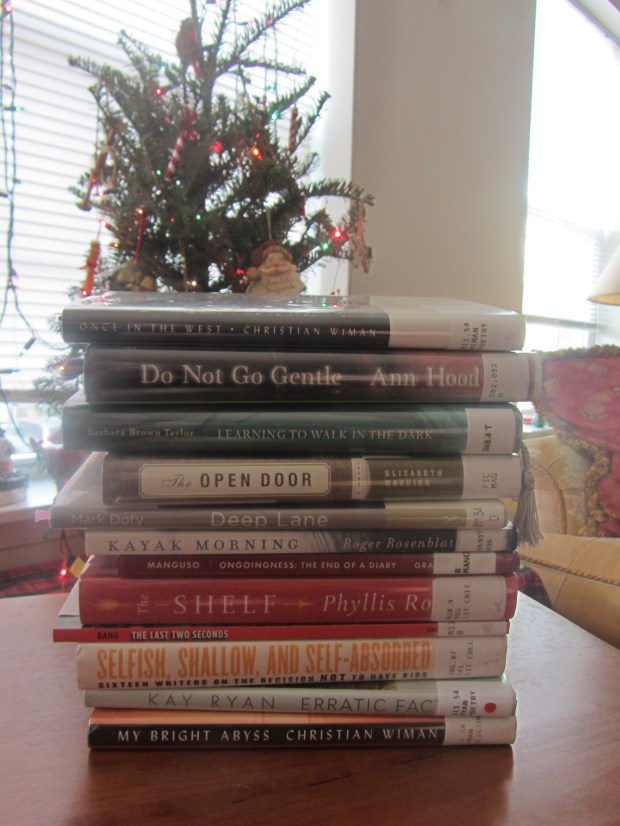
LIBRARY BOOKS READ
The Open Door, Elizabeth Maguire (novel about Constance Fenimore Woolson)
Kayak Morning: Reflections on Love, Grief, and Small Boats, Roger Rosenblatt
Ongoingness: The End of a Diary, Sarah Manguso*
My Bright Abyss: Meditation of a Modern Believer, Christian Wiman
Do Not Go Gentle: My Search for Miracles in a Cynical Time, Ann Hood
Learning to Walk in the Dark, Barbara Brown Taylor*
[Not books, but I did also borrow and finish Parks & Recreation Seasons 4 and 5.]
+ Poetry books:
Deep Lane, Mark Doty*
The Last Two Seconds, Mary Jo Bang*
Erratic Facts, Kay Ryan
Once in the West, Christian Wiman
* = interlibrary loan orders
Skimmed only:
The Shelf from LEQ to LES: Adventures in Extreme Reading, Phyllis Rose
Selfish, Shallow and Self-Absorbed: Sixteen Writers on the Decision Not to Have Kids, ed. Meghan Daum
RETURNED UNREAD
Tickets for a Prayer Wheel, Annie Dillard
The Vermeer Conspiracy, Eytan Halaban
Notes on the Assemblage, Juan Felipe Herrera
The Folded Clock: A Diary, Heidi Julavits
ON HOLD
The Invention of Nature: Alexander von Humboldt’s New World, Andrea Wulf
What were some of your best recent library reads?
Surveying the Almighty TBR List
Coming to the end of one year and looking ahead to another: it’s a good opportunity to take stock of my virtual and physical to-read piles once more. Thanks to fellow book bloggers Naomi at The Writes of Woman and Eleanor at Elle Thinks for giving me this meme idea and tagging me in it, respectively.
How do you keep track of your TBR pile?
I have a ridiculously large to-read shelf on Goodreads, but that’s more like a vague lifelong wish list – some of them I own, some I’ve only heard of and want to investigate further, some I’m desperate to get hold of, and so on. I recently culled my online TBR and cut it by about 10%, but it’s still overwhelming. In real life, I take occasional inventories of the unread books in our flat (192 at last count). However, this doesn’t account for the fact that at least half of my book collection is still in my parents’ house in the States. While I’m back there for some time over the holidays, I enjoy gazing at my books and choosing a select few to bring back in my suitcase. On this trip I’ll be boxing them all up to go into storage. When shall I ever be reunited with them?!
Is your TBR mostly print or e-book?
If I only consider the books I already have access to, there are more unread print ones on my shelves than there are e-book approvals through NetGalley and Edelweiss. There’s not all that much in it, though; I might estimate the print TBR at 400–500, while I have about 300 books at my disposal through those online sources and new titles come up for request all the time.
How do you determine which books from your TBR to read next?
This generally depends on review deadlines, library due dates, and e-book expirations. In some sense, then, my reading list is completely imposed on me from outside. However, I always make sure I let whimsy guide some of my choices. Next year I hope to be even better about just picking up a book off my shelves and starting it for no reason other than instantaneous interest.
A book that has been on my TBR the longest
On the virtual TBR: probably Fast Food Nation and some of Margaret Atwood’s back catalogue. On the vague list in my head: all the more obscure Dickens and Hardy titles.
 A book I recently added to my TBR
Rochester Knockings: A Novel of the Fox Sisters by Hubert Haddad.
 A book on my TBR strictly because of its beautiful cover
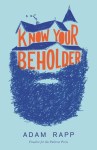
I love the beard-house on the cover of Know Your Beholder by Adam Rapp.
A book on my TBR that I never plan on reading
Will I really pick up Martin Amis’s novels, or Ian McEwan’s early work? How about those obscure Thomas Hardy novels like A Laodicean and A Pair of Blue Eyes?
 An unpublished book on my TBR that I’m excited for
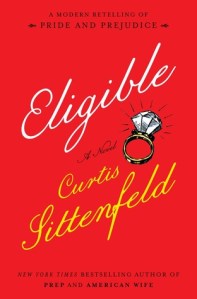
I recently started Eligible by Curtis Sittenfeld (to be published on April 19, 2016). Her novel American Wife is one of my absolute favorites, so I was excited about her Pride and Prejudice retelling and lucky enough to be sent an advanced copy. I’m not that into it yet – the third-person omniscient voice is taking a while to get used to because first-person female narrators are Sittenfeld’s forte – but I hope it will pick up soon.
 A book on my TBR that everyone recommends
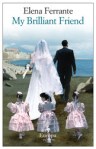
I’ve encountered almost universal praise for Elena Ferrante’s four autobiographical novels, the first of which is My Brilliant Friend. They’re on my priority list for 2016.
A book on my TBR that everyone has read but me
1984 by George Orwell.
 A book on my TBR that I’m dying to read
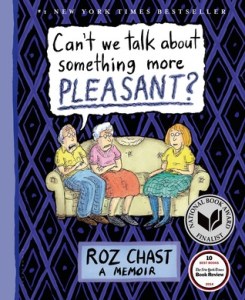
Some of my priority books to get hold of are Nell Zink’s novels, the final two books in Jane Smiley’s The Last Hundred Years trilogy, Can’t We Talk about Something More Pleasant? by Roz Chast, and Reasons to Stay Alive by Matt Haig. I’ve also been meaning to read The Signature of All Things by Elizabeth Gilbert for ages, and I’m intrigued to try The Guest Cat by Takashi Hiraide.
How many books are on your TBR shelf?
5,664 on the Goodreads shelf; maybe 500 in the print queue.
People I’m tagging:
Shannon at River City Reading
Lucy at Literary Relish
Dickens: Not Just for Christmas
Charles Dickens is almost singlehandedly responsible for creating our view of the traditional Christmas. It’s no surprise, then, that many people associate him with the holiday season. An armchair next to a fire somehow seems like the ideal place for curling up with one of his chunky tomes. I know some readers who try to pick up one of his books every winter, like Lucy over at Literary Relish. This year my husband is reading a facsimile edition of the original serialized version of Hard Times (re-issued by Stanford University’s Discovering Dickens project in 2005) in the run-up to Christmas, and also plans to get through The Cricket on the Hearth. One of my goals for 2016 is to return to Dombey and Son, which I got about 200 pages into a few years ago but never managed to finish.
We’ve also been lucky enough to catch a number of Dickens-themed theatre productions over the years: in London, Patrick Stewart’s one-man production of A Christmas Carol and Simon Callow’s one-man The Mystery of Charles Dickens, an open-air version of A Christmas Carol that took place around the streets of York, and, this year, Dickens Abridged at Norden Farm Centre for the Arts near Maidenhead. This was from Adam Long, the same brilliant mind that, as a founding member of The Reduced Shakespeare Company, helped create The Complete Works of William Shakespeare (abridged) as well as The Complete History of America (abridged) and The Bible: The Complete Word of God (abridged). I’ve seen four of their shows now, and all were utterly hilarious.
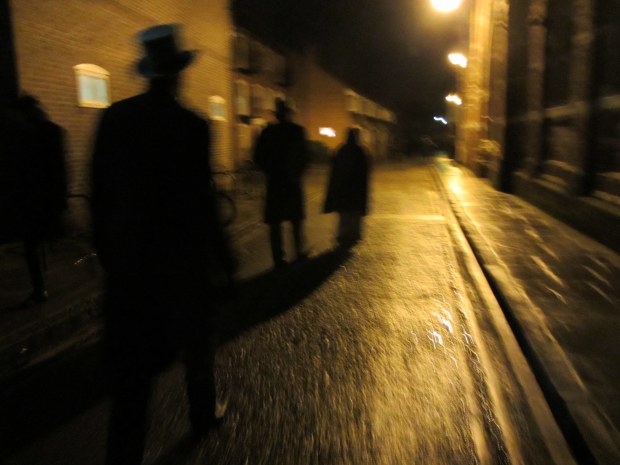
A spooky scene: walking the streets of York for a wandering production of A Christmas Carol.
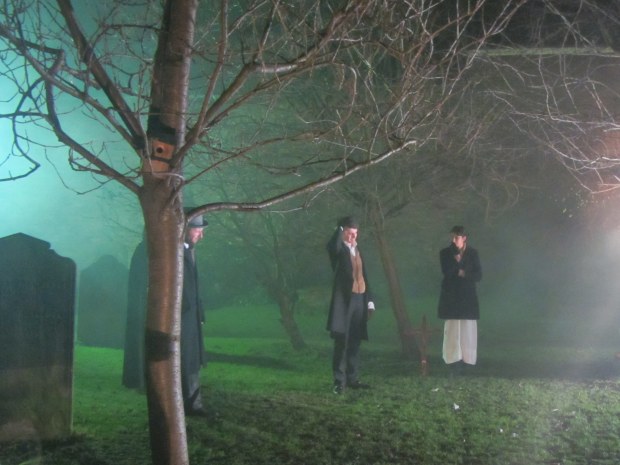
York Christmas Carol: stopping for a scene in a graveyard.
To our surprise, Dickens Abridged was basically a musical in a comedy folk style. We were reminded of Flight of the Conchords or Folk On. There were just four male actors on stage playing all the historical and fictional roles, including, of course, all the female ones. Some of Dickens’s novels didn’t even get a mention (though did I really expect Barnaby Rudge to turn up?!), others got the briefest of nods, and some came in for extensive treatment.
![A Christmas Carol: Mr. Fezziwig's Ball. John Leech [Public domain], via Wikimedia Commons](https://commons.wikimedia.org/wiki/File:A_Christmas_Carol_-_Mr._Fezziwig%27s_Ball.jpg?uselang=en-gb)
A Christmas Carol: Mr. Fezziwig’s Ball. John Leech [Public domain], via Wikimedia Commons
Among the show’s highlights were the guillotine scene in A Tale of Two Cities, Tiny Tim’s amazing transforming crutch, and the refrain sung by Dickens: “I am a man of anxiety and sorrow” – sung in a 1980s power ballad style, if you can imagine that.
What I found most remarkable about this production was how it was not just the abridged works of Dickens but also the abridged life of Dickens. His time at the blacking factory and his marriage to Catherine Hogarth are two turning points that the play emphasized to good effect. Some readers only vaguely familiar with Dickens might not know about his troubled marriage and the divorce case that left Catherine in disgrace as Dickens took up with a mistress, young actress Nelly Ternan. So while Dickens Abridged was heavy on the laughs, it was also informative and thoughtful.
Dickens: not just for Christmas, but it’s a good time to dive into his works if you haven’t already.
Is Dickens part of your regular holiday reading? Who are some of your other favorite authors to read at this time of year?
Books as Objects of Beauty
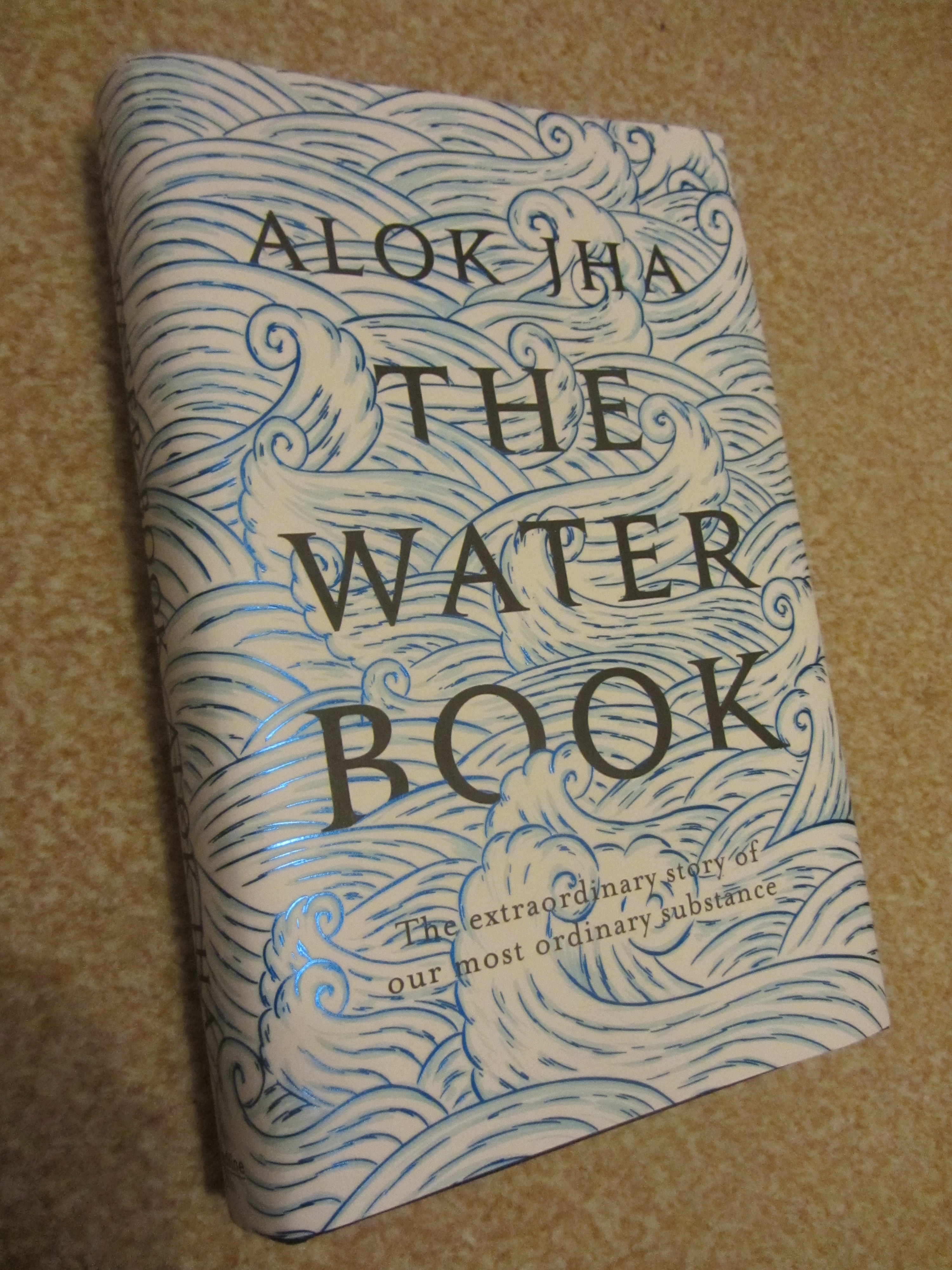
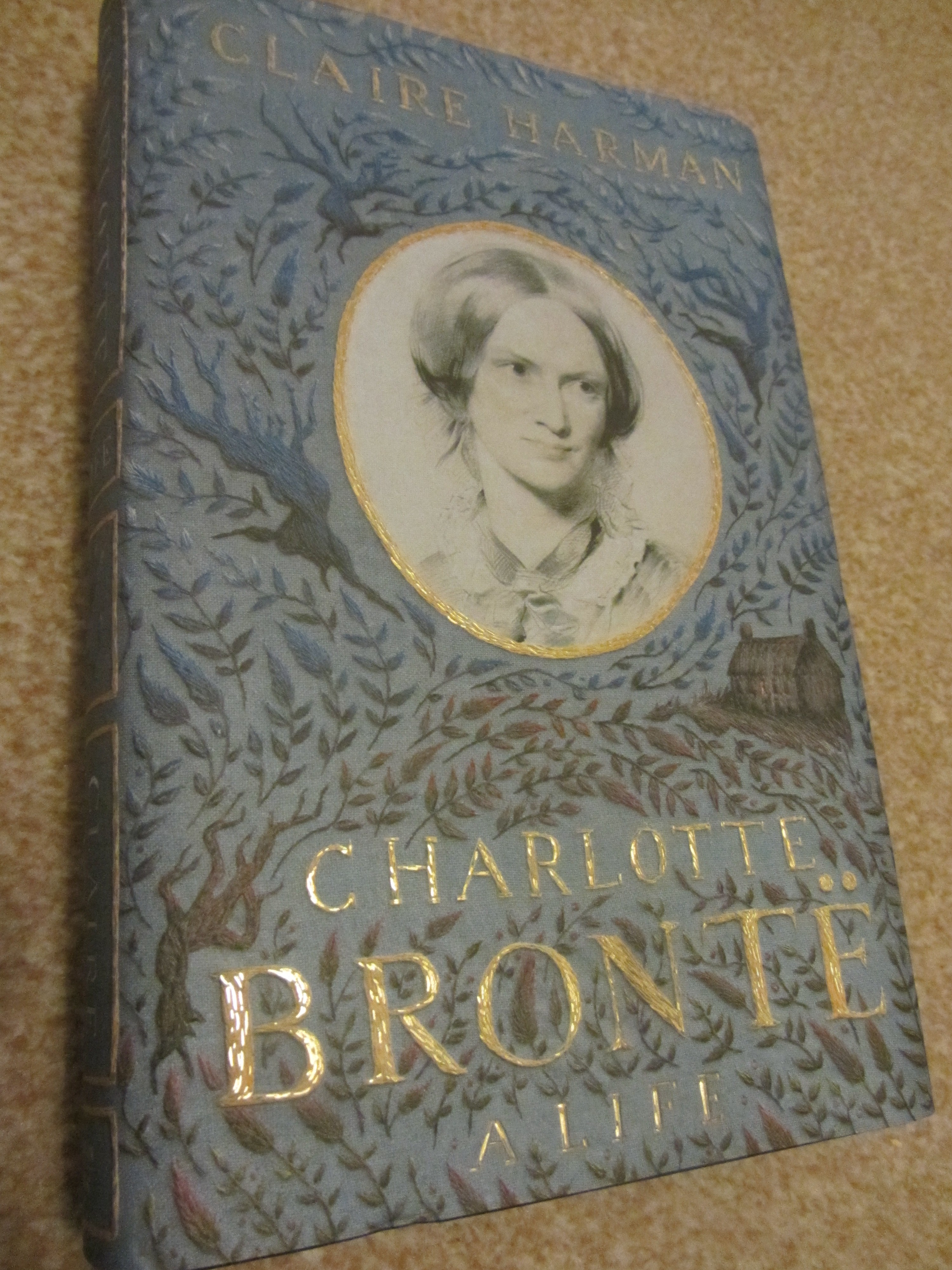
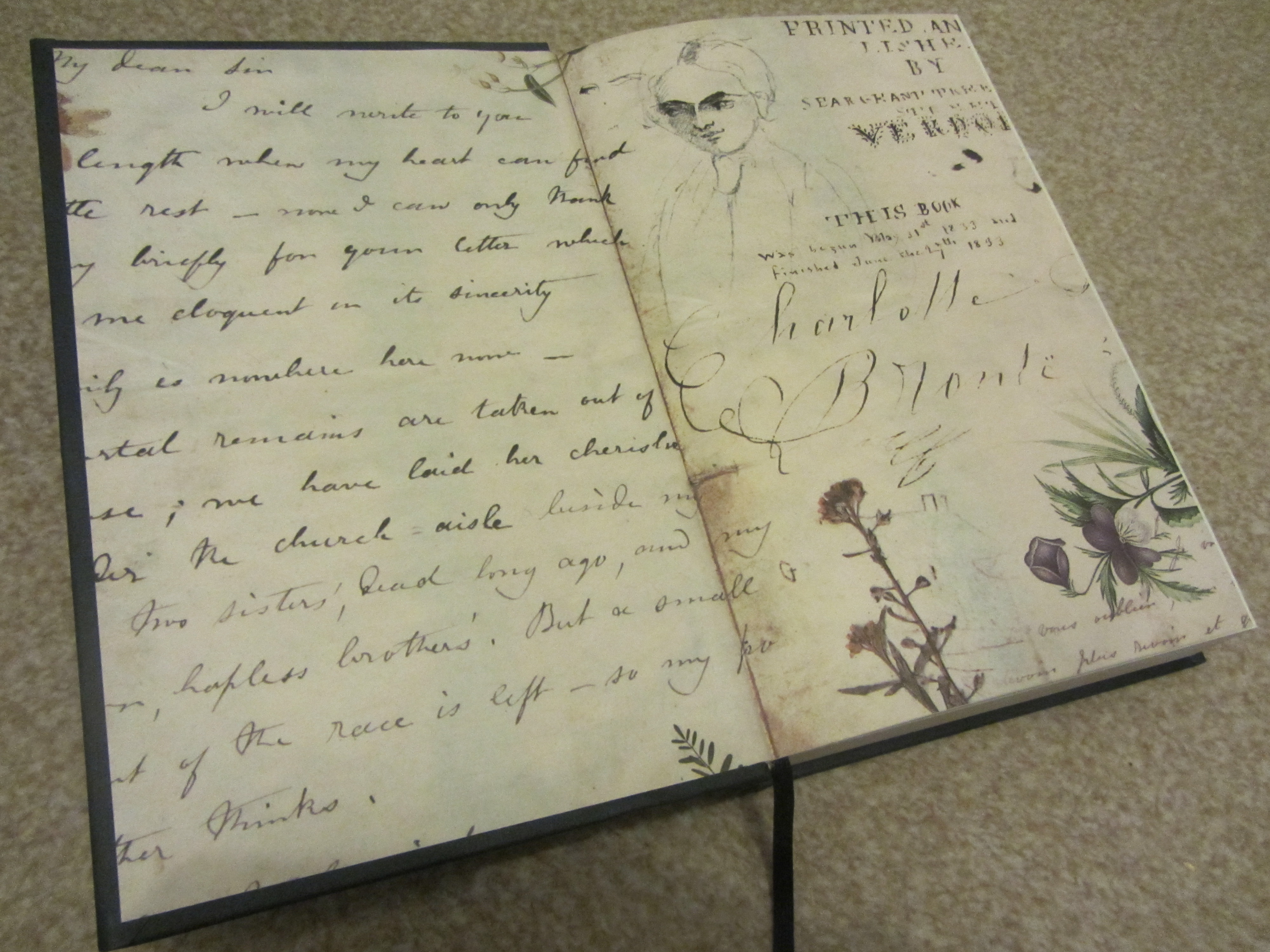
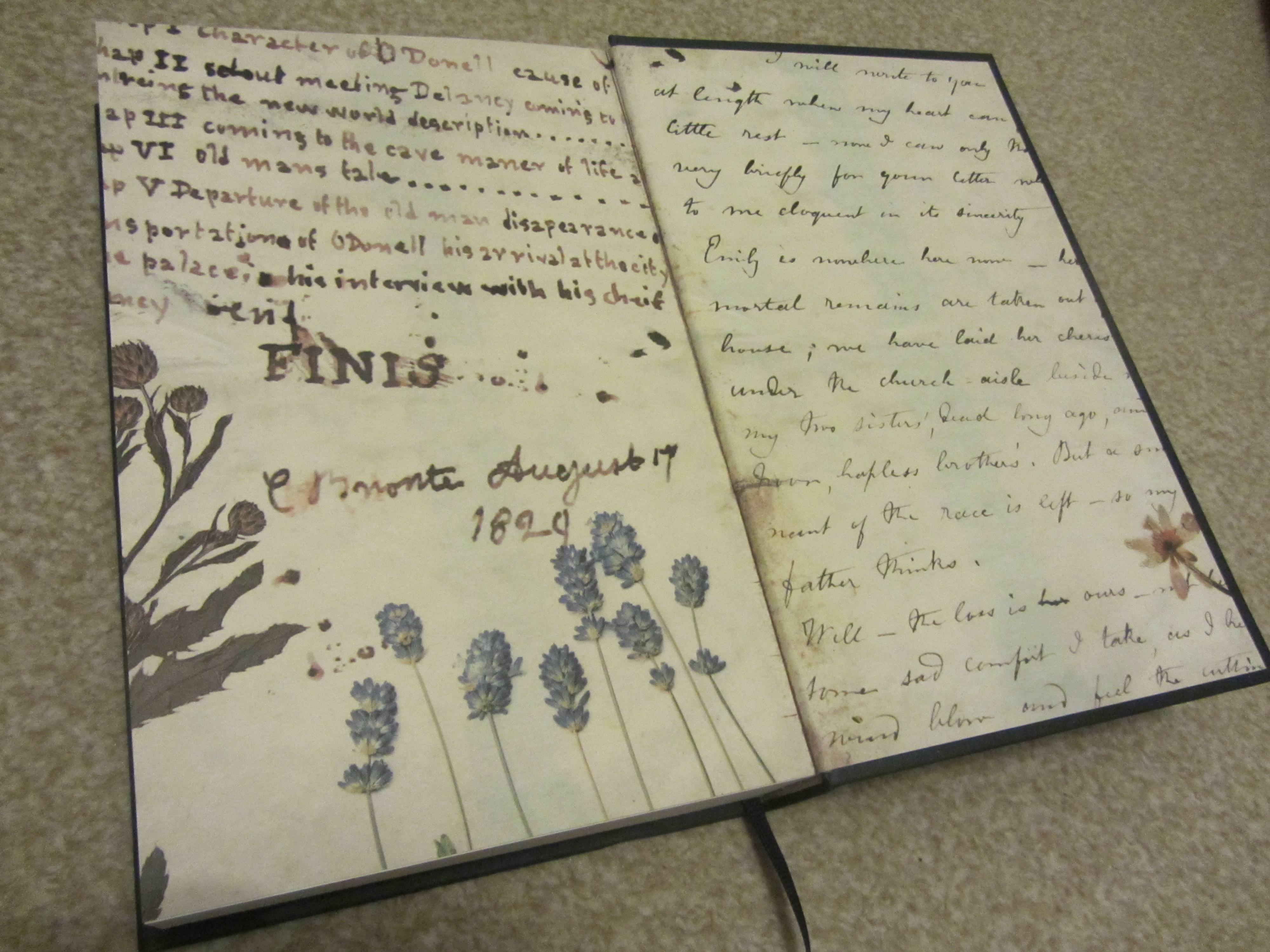
At least half of my reading nowadays is e-books, usually downloaded from NetGalley and Edelweiss and read on my Kindle. All the same, I still love the feel and smell of paper books, and it’s a special treat when the books are things of beauty in their own right. A few books I’ve reviewed recently have been absolutely stunning physical objects. Here are some photographs and a rundown of their key attributes:
The Water Book by Alok Jha – Just look at that gorgeous, shiny cover! I was less taken with the contents of the book itself, but never mind. (My review is forthcoming at Nudge.)
Charlotte Brontë: A Life by Claire Harman – Embossed embroidery effect on the cover, handwriting and sketches (including the only known C. Brontë self-portrait, only recently identified) on the endpapers, and built-in ribbon bookmark. (My review will go up at For Books’ Sake on Wednesday.)
A Brief History of Seven Killings by Marlon James – The dustjacket of this Booker Prize winner is lovely enough, but take it off and you still hold a striking object, in appropriately Rastafarian colors. (Full review in December issue of Third Way magazine.)


Ruins by Peter Kuper – Embossed title on the cover, with the monarch in matte; entomological drawings on the endpapers; alternating monochrome and full-color sequences; plus a built-in ribbon bookmark. (To be reviewed here in the near future.)


To survive in this modern age, physical books have to be more than just words on a page, because e-books do that much more efficiently. They simply have to be beautiful.
What are some of the most eye-catching books you’ve encountered recently?
Library Checkout: October 2015
I used to be a library fiend. At one point we belonged to about six different library systems thanks to our jobs at universities and our frequent back-and-forths to a couple of towns where we used to live. Back when reservations were still free through Reading Borough Libraries I would regularly have 20 or more new books on request at any one time, and every trip to the library required backpacks, tote bags and my husband’s help to get everything to the car.
Now that holds cost 50 pence each, however, I’ve cut back to basically zero. Most of what I used to read via libraries has now been replaced by e-books downloaded from NetGalley and Edelweiss. This is rather a shame, as I still love the feeling of stocking up with piles of physical books. I’ll still make an exception and pay 40 pence to reserve a book through our (more strictly local) Wokingham Borough Libraries when it’s something I’m hugely keen to read, like the new Jonathan Franzen novel or a book I need to review and can’t find online.
Nowadays I mostly peruse my local library for poetry collections and new nonfiction, though I can occasionally be tempted by recent fiction I haven’t gotten my hands on by other means.
(Thanks to Shannon at River City Reading for the great idea and the template! Check out her blog for other link-ups.)
LIBRARY BOOKS READ
- The Cartographer Tries to Map a Way to Zion, Kei Miller [I also saw the author speak at Reading Poetry Festival.]
- Purity, Jonathan Franzen
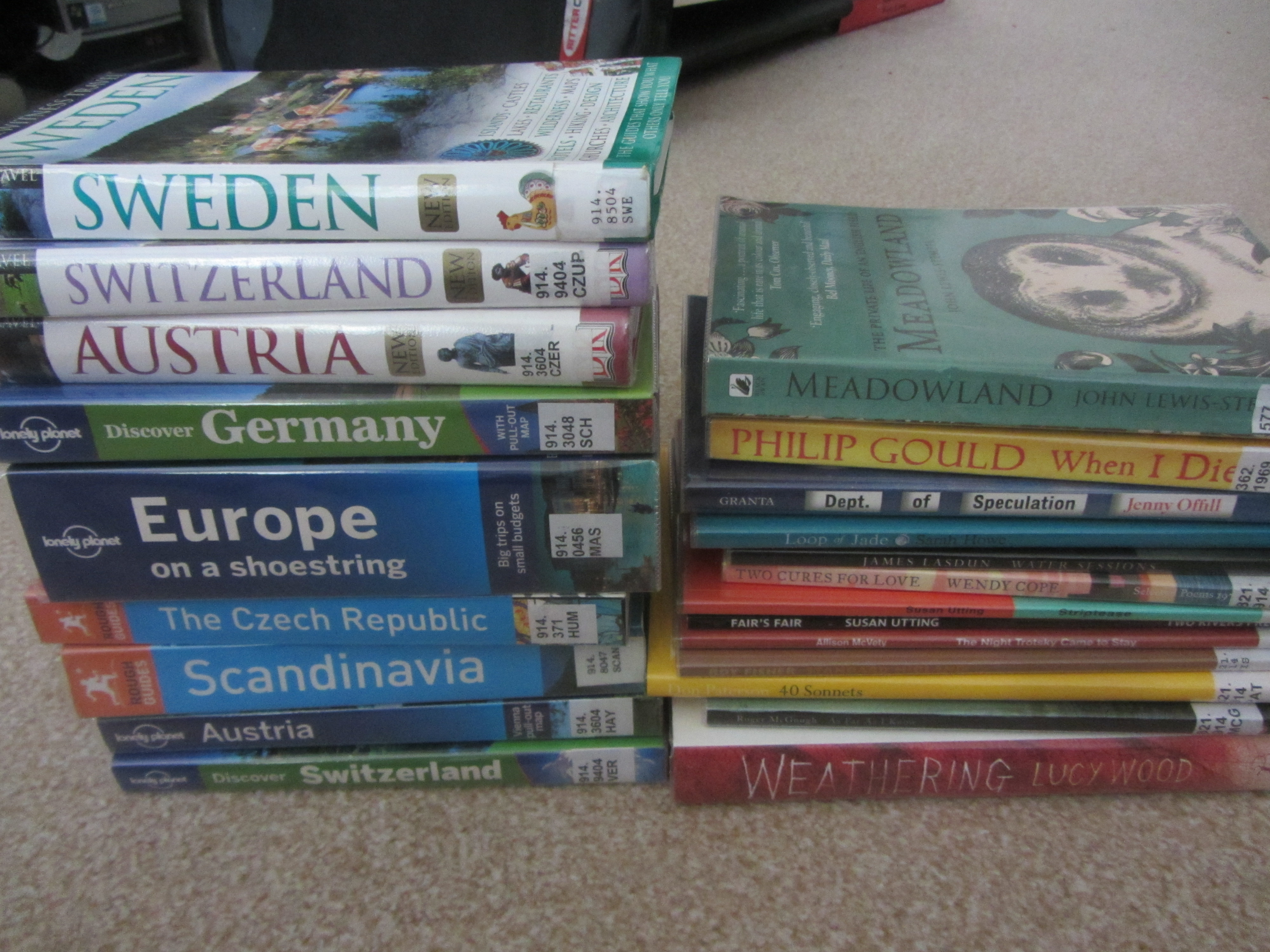
CHECKED OUT, TO BE READ
- DK Eyewitness Guides to Sweden, Austria, and Switzerland; Rough Guides to Scandinavia and the Czech Republic; Lonely Planet Guides to Germany, Austria, Switzerland, and “Europe on a Shoestring” [we’re contemplating a big trip around Europe by train next spring; the next few months will be for dreaming and planning]
- When I Die: Lessons from the Death Zone, Philip Gould
- Dept. of Speculation, Jenny Offill
- Weathering, Lucy Wood [for BookBrowse review]
- Meadowland: The Private Life of an English Field, John Lewis-Stempel
Poetry books:
- As Far as I Know, Roger McGough
- Two Cures for Love: Selected Poems 1979–2006, Wendy Cope
- The Night Trotsky Came to Stay, Allison McVety
- 40 Sonnets, Don Patterson
- Fair’s Fair, Susan Utting
- Striptease, Susan Utting
- Loop of Jade, Sarah Howe
- Water Sessions, James Lasdun
- Standard Midland, Roy Fisher
Do you take advantage of your local libraries?
What were some of your best recent library reads?
 Bookish Beck = Rebecca Foster. American transplant to England. Freelance proofreader and book reviewer.
 Bookish Beck