My Salinger Year and Hotel Alpha
My Salinger Year by Joanna Rakoff
“Publishing, books, life. … It seemed possible to get one right. But not all three.”
 I’ve hardly read any Salinger, but that’s okay – neither had Joanna Rakoff until about two-thirds of the way through her year working for the legendary recluse’s literary agency in New York City. One long weekend she gorged on his complete works and found – in a man she’d previously encountered only as a shouting elderly voice on the phone – a kindred spirit.
This was 1996, and Rakoff was 23 years old, living with a boyfriend who didn’t appreciate her in a crummy apartment and harboring secret literary ambitions. On the cusp of the digital world, the Agency still resisted computers. Rakoff did most of her work on a typewriter and read manuscripts from the slush pile, extracting a couple of promising ones and getting a colleague to read her boyfriend Don’s unpublishable novel in turn. She had heavy student loans after graduate studies in London, and could barely afford a daily deli salad for lunch.
Mostly Rakoff spent her time typing form letters to Salinger’s fans, informing correspondents that he had asked not to have his letters forwarded. Believing she might make a difference, she went off-piste and started writing personal replies to some of the more wrenching letters: war veterans, struggling students, and a quiet young man who didn’t know what to do with his emotions. Alas, it backfired: more often than not she’d get an angry response, with the writer objecting to her presuming to take the place of Salinger and dispense life advice.
It’s remarkable how, at a distance of nearly 20 years, Rakoff makes this all seem like it happened yesterday: she adds in just the right amount of what Mary Karr, in The Art of Memoir, calls “carnal detail” to make her story seem timely and believable. The tone is nostalgic but also bittersweet – while it was a precious year, Rakoff also realizes what she could have done better (chiefly, ditching Don sooner).
Especially for female readers, this will instantly take you back to your own immediate post-college days of trying to figure out what life is about and who you wanted to be. “Was it possible, too, that one could be complicated, intellectual, awake to the world, that one could be an artist, and also be rosy and filled with light? Was it possible that one could be all those things and also be happy?”
With thanks to Bloomsbury for my free copy, won in a Facebook giveaway.
My rating: 
Hotel Alpha by Mark Watson
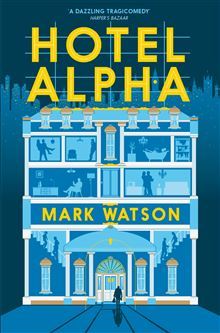 You may be unsurprised to learn there’s a touch of The Grand Budapest Hotel to this one. Hotel founder Howard York, though he sounds an awful lot like an Ayn Rand creation (i.e. Howard Roark, the architect-hero of The Fountainhead), is most like the Ralph Fiennes character. He uses his influence to finagle anything for a guest; “you could believe, sitting here in his castle, that he really did mean to live a couple of centuries and that everything he had built would still be standing around him.” But even he can’t stop tragedy; a fire at the hotel in the 1980s orphaned and blinded a small boy named Chas, who Howard then adopted.
The novel is told in alternating first-person chapters from Chas and Graham, the hotel concierge. Graham reminded me of Stevens in The Remains of the Day: very proper, even uptight, but with a hidden passion. Technology’s advance helps Chas immensely, but makes Graham feel superseded; “I have lived a great part of my own life in homage to my own past,” he acknowledges.
Key events take place between 2001 and 2005, with a historical backdrop including 9/11, the Olympic bid, and the 7/7 bombings. Chas works in PR and is involved with Kathleen, a journalist who’s opposed to the Iraq War. Howard, on the other hand, always supports the winning team and status quo. He is also a man of secrets. Why did Chas’s tutor, Ella, and Graham’s assistant, Agatha, both suddenly leave the hotel for America years ago? It all has to do with the legend of what happened the night of the fire, the truth of which will be exposed in time.
Watson is a stand-up comedian as well as the author of several novels. I like how he shows both the good and bad sides of technology here. My favorite part was Chas’s visit to China with Kathleen; even though he’s mostly stuck in a hotel, he still experiences extreme culture shock.
There are another 100 stories about the Hotel Alpha on the website, eight of which are printed as an appendix to the paperback edition. Much as I liked the main characters (especially Agatha), I didn’t think the two voices were distinctive enough – I wish Watson had incorporated more of the stories’ narrative variety (some first-person and some third-person) into the novel itself.
My rating: 
With thanks to Picador for my free copy, won in a newsletter giveaway.
Review: The First Bad Man, Miranda July
 Scribner sent me a copy of this one entirely at random. I had barely heard of the author (an indie filmmaker and visual artist) and knew nothing about the book before starting it – which is probably for the best given that a simple synopsis makes it sound even weirder than it really is and would likely have turned me off. That black-and-white cover doesn’t really give you any clues, either, though when you open it up you get the riotously colored modern art swirls of the endpapers. You could think of the design as emblematic of the book itself: unpromising from the outside but reasonably rewarding once you get into it.
Cheryl Glickman is a neurotic 43-year-old manager at Open Palm, a Los Angeles area women’s self-defense organization that now mostly runs fitness classes. Her obsessive personality comes through with her devotion to “the system,” a strict minimalism that involves as few possessions as possible, plus reusing everything to save time and increase efficiency, and her crush on Phillip Bettelheim, an odious colleague 22 years her senior.
The book opens with two key events: Phil recommends she undergo chromotherapy for the globus in her throat; and her bosses con her into hosting their 21-year-old daughter, Clee, who seems to do nothing but lie around watching TV. The color therapy morphs into more general therapy with Ruth-Anne, while the unwanted houseguest changes Cheryl’s life forever, though not at all in the way one might expect.

Open up the dull cover and you get the colorful surprise of the endpapers.
“What was the name of the situation I was in? What category was this?” Cheryl wonders to herself. Clee messes with her system and starts mocking and even physically abusing Cheryl. Instead of kicking her out, though, Cheryl codifies their fights into reenactments of some of Open Palm’s 1990s self-defense videos (the title phrase comes from one of these scenarios).
And then things get sexual. First Phil starts texting about his infatuation with a 16-year-old, asking permission to make a move. Next Cheryl starts an intense masturbation campaign, imagining Clee in various pornographic situations. Sometimes Cheryl pretends she is Phil diddling Clee. To take her mind off things, Ruth-Anne suggests that Cheryl sing. She chooses a David Bowie song.
(Still with me?)
Cheryl has conflicted feelings about Clee. She likes the physical closeness of their combative relationship. At the same time, she’s disgusted by Clee’s laziness and smelly feet. Still, she’s fixated. “Her cowlike vacuousness didn’t really bother me anymore. Or it didn’t matter—her personality was just a little piece of parsley decorating warm tawny haunches.”
Eventually Cheryl wakes up to the reality that she is “a middle-aged woman who couldn’t keep her hands off herself.” The first half of the book is about fantasy and fabrication. “Real comes and goes and isn’t very interesting,” as Ruth-Anne says. In the second, though, things swiftly turn concrete when Clee realizes she’s pregnant. Cheryl takes on an advisory and later a supportive role; “I’d been her enemy, then her mother, then her girlfriend. That was three lifetimes right there.”
Does Clee love Cheryl? Does Cheryl love Clee? It’s hard to say; “maybe that was the point of love: not to think.” Regardless, all of a sudden, Cheryl finds herself a mother. “[Clee] was the worst possible person to do this with—that was evident now, but what could I do?” July herself had a new baby at the time of writing this novel, which accounts for how authentic the Jack sections feel. It’s a bit of an aimless story, but watching Cheryl’s development is certainly interesting. I could have done without most of the Phil stuff, but it turns out he’s important to the plot.
If I had to compare July’s style to anyone else’s, it would be Douglas Coupland. At times Cheryl was also a bit like Don Tillman in The Rosie Effect, what with her matter-of-fact recounting of Jack’s fetal development. Blend the voyeuristic raunchiness of The Heart Goes Last with the uncomfortable physical reality of After Birth, two novels I’ve previously reviewed on this blog, and you get an idea of the dynamic at work here.
I can’t say I entirely enjoyed the book; I don’t always appreciate quirky-for-quirkiness’-sake. However, my utter lack of expectations was a good thing, and I thought July did a solid job of making her somewhat unpleasant characters sympathetic by making them go through one of life’s central challenges: parenthood. She also comes up with some delightfully off-the-wall sentences, as in my favorite passage, in which Cheryl vocalizes her thoughts to baby Jack:
“You are a sweet potato.”This sounded literal, as if I was letting him know he was a root vegetable, a tuber. “You’re a baby,” I added, just in case there was any confusion on that last point.
My rating:
Have you ever read a book by a celebrity known for their achievements in a different field? What did you think?
Review: The Heart Goes Last, Margaret Atwood
 Last month an unsolicited e-copy of The Heart Goes Last landed in my inbox: a random Thursday afternoon present for this Margaret Atwood fan. I was meant to review it for one of the websites I write for, but a misunderstanding meant the book was also assigned to someone else. So while I won’t be getting paid for my review (Boooooo!), I was still grateful for the opportunity to read the book early.
Atwood’s last project before this was the Maddaddam dystopian trilogy, and while there are still some dystopian elements here, she is blending speculative elements with realist social commentary in a way that makes me hope she is leaving some of the overt absurdity of her science-fiction scenarios behind.
 I didn’t dislike the Maddaddam books per se, but nor did I feel that it was necessary to turn Oryx and Crake into a trilogy, especially when the two following novels only re-examined events from different perspectives, filling in backstory rather than adding new present action (see my Maddaddam review on For Books’ Sake). It felt like a fairly indulgent ten-year project distracting Atwood from producing potential gems along the lines of The Blind Assassin, one of my favorites.
The Heart Goes Last began as four Positron short stories that appeared on the Byliner website between 2012 and 2013. We’re in a vague post-financial crisis, post-environmental apocalypse world, a little like California or The Road but not quite as drastic. Stan and Charmaine are a married couple reduced to living in their car. Charmaine works in a bar, but Stan has lost his job and won’t quite stoop to his brother Conor’s level of moving money around offshore. (It’s no coincidence his brother’s nickname is “Con.”)
One day Charmaine sees an ad for the Positron Project and convinces Stan to sign them up. Participants spend every other month working in the model community of Consilience…and every other month in prison. “DO TIME NOW, BUY TIME FOR OUR FUTURE!” one slogan reads. They share their home with another couple on an alternate schedule.
It’s a little like Pleasantville or The Truman Show: Consilience is stuck somewhere between the 1950s and a sustainable future. Doris Day and Bing Crosby play over the speakers (“The past is so much safer, because whatever’s in it has already happened”), but everyone rides scooters and cheerfully goes about their jobs – Stan as a poultry inspector, and Charmaine in hospital procurement.
Yet Positron has some sordid and even sinister side-projects. With an echo of Animal Farm, Atwood emphasizes how seductive this ultimately oppressive community can seem:
“Hey. Everyone’s different.” / “But some are more different than others.”
Things get weird as foul-mouthed Stan becomes obsessed with the sex lives of their alternates, Max and Jasmine. He imagines their lovemaking to be so much more passionate than his with Charmaine. Yet Charmaine, so seemingly bland and innocent (her worst curse is “Darn it to heck”), is up to something. What is she doing sneaking around derelict houses, and what is her top-secret job within the prison?
Gradually both Stan and Charmaine, separately, get caught up in a conspiracy to take Positron down from the inside. The wacky plot involves “prostibot” sex dolls (tagline: “Better than real”), Elvis Presley and Marilyn Monroe impersonators, and a Midsummer Night’s Dream-esque procedure that reprograms people so they fall in love with the first creature they see after they wake up.
This is all reasonably good fun, but, as with the Maddaddam books, the technology and naming tip over into pure silliness, and here there’s an added layer of raunchiness I’m not accustomed to seeing from Atwood. In distinguishing the fake from the real, the novel goes deep into unpleasant themes of fetishism and voyeurism.
I’m not as down on the book as the Kirkus reviewer (their hatchet job is quite amusing), but I did find it problematic. Charmaine is whiny and annoying throughout, as well as implausibly naïve. All the characters are similarly one-dimensional, even those with secrets. Moreover, the plot takes plenty of unexpected turns with some Shakespearean comedy reversals, but it’s downright ludicrous at times. There’s even a situation straight out of Ted, one of the worst movies I’ve had the bad luck to sample.
In short, a somewhat disappointing one-off from Atwood. Almost the best thing about it is the title, which refers to both biological death and the difficulty of faking true love. I long for the doyenne of Canadian fiction to return to contemporary realism or even historical fiction. There’s just as much scope in those genres for serious social commentary as there is in speculative fiction. Or maybe I should just delve into her extensive back catalogue instead.
My rating:
Have you read Atwood’s recent books? What’s your take?
Review: The Penny Heart by Martine Bailey
“Time devours all things: love and murder and secrets.”
 I loved Martine Bailey’s first novel, last year’s An Appetite for Violets. My description of that one – “lively, well-researched historical fiction, seasoned with mystery and culinary tradition” – is apt here, although this doesn’t quite live up to Bailey’s debut. As in Violets, the setting is the English Midlands in the late eighteenth century, and one of the main characters is a cook at a grand home. However, whereas cook Biddy Leigh herself was the narrator of Violets, through journal entries, here the first-person perspective is that of the mistress of Delafosse Hall (in Greaves, Lancashire), Grace Croxon.
After being dissuaded from making an unfortunate love match, Grace has been pressed into marriage with Michael Croxon, a brooding, almost possessed character. It soon becomes clear that his affections lie elsewhere and he has married Grace for her money, which will fund his ill-fated attempt to set up a mill. My favorite section of the book is the middle, in which Grace is like the Gothic heroine trapped in a spooky house with a distant husband and all kinds of strange goings-on that she doesn’t understand. She reminded me most of the protagonist of Daphne du Maurier’s Rebecca.
At the same time as Grace is trying to figure out what is happening at Delafosse, we also learn the surprising story of how Peg Blissett came to be the Croxons’ new cook. Under another name, she suffered tremendous trials, including transportation to Australia and a dramatic escape to live with New Zealand natives. She also lost her true love, Jack, and on her return to England determines to have her revenge on the man responsible for sending her to prison.
It takes a while to figure out how Peg’s story ties in with Grace and Michael’s, and the plot gets very melodramatic towards the end, with hints of the Victorian sensation novel, but overall it’s a satisfying and atmospheric tale. It’s mostly in comparison with Violets that I locate this book’s weaknesses: a first-person narrative from Peg would have been more interesting, as well as fairer to her own story (and she would seem less like a pantomime villainess towards the end); and the date and place information plus recipes heading each section feel largely unnecessary, whereas they were integral to the previous book.
I kept getting a funny feeling as I was reading that this book must have been written first and later revised to capitalize on the success of Violets, which might account for the way that the culinary theme seems slightly shoehorned in here. Still, Bailey comes up with memorable characters and plots, with the kinds of twists and turns that keep you wondering where it will all lead. I hope that her third novel will break new ground rather than just repeating themes and structures she’s used before.
I was delighted to win a free copy through a Goodreads First Reads giveaway.
My rating: 
Review: The Girl Who Slept with God, Val Brelinski
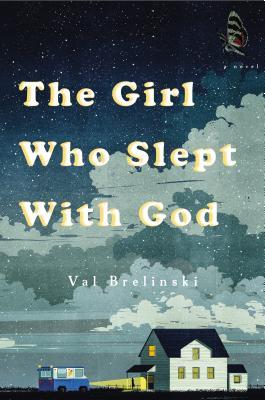 That striking title sets the scene for an out-of-the-ordinary coming-of-age novel set in a fundamentalist Christian family in Arco, Idaho in 1970. The Quanbecks renounce dancing, movies, alcohol and everything else that represents regular teenage life for thirteen-year-old Jory. She and her sisters are sheltered from the world within their church and Christian school. That sense of being set apart only grows stronger when seventeen-year-old Grace comes back pregnant from a short mission trip to Mexico. Grace swears it was an immaculate conception and she, like Mary, has been entrusted with carrying God’s child. Is she telling the truth, is she repressing a traumatic event, or is she mentally ill? Val Brelinski keeps that question largely open throughout her strong debut novel.
Grace’s actions will have a lasting effect on Jory. The girls’ parents – their father a Harvard-educated astronomer and their mother a virtual shut-in who relies on prescription anxiety pills – decide that Grace will live away from them and the community, and Jory will keep her company. Dr. Quanbeck buys a small house next-door to Hilda Kleinfelter and withdraws both girls from school so word can’t get around. Jory will attend secular Schism High, where she gets an education in teenage socialization that includes the Homecoming dance, liquor and an accidental LSD trip. Hilda becomes a sort of surrogate grandmother to the girls, and Grip, a deadbeat ice cream van driver in his twenties, is their new best friend.
Brelinski is sensitive to the ways in which religion and romantic infatuation influence her characters’ choices, and even when things get a little bit uncomfortable – like when Grip and Jory steal a kiss – the plot feels true to life. The choice of close third-person narration from Jory’s perspective, rather than first-person, thankfully keeps the book from resembling a teen diary. This is the best of both worlds: we get Jory’s thoughts, but in more sophisticated literary language. The novel also blends biblical metaphors and Dr. Quanbeck’s astronomical vocabulary to good effect, as in this lovely passage near the end:
The universe had opened up and revealed its own perfectly blank face to [Jory’s] own, returning her gaze with a flattened emptiness that stretched on and on and on—a world so wide and featureless and open, so dark and formless, that light never pierced it: no sun, no moon, no stars. And it now seemed entirely possible that two girls … could stumble mutely on across the face of it forever, seeking a home, and a resting place, and finding none.
 In a book full of memorable characters, I found Grace and Dr. Quanbeck to be the most compelling ones, mostly for how logic and superstition collide in their thinking. Like the father in A Song for Issy Bradley by Carys Bray, one of my favorite novels from last year, Dr. Quanbeck could almost seem like the villain here for the choices he imposes on his family, but the picture of him is nuanced so that you can see how desperately he loves his family and wants to protect them from worldly pain.
 Along with Issy Bradley (set in Britain’s Mormon community), the novel reminded me most of We Sinners by Hanna Pylväinen, another picture of family life under strict religious guidelines, and How to Tell Toledo from the Night Sky by Lydia Netzer, a love story with astronomical overtones. Much as I liked it, I did think Brelinski’s novel was about a quarter too long; both the middle section – where Jory is negotiating her newfound freedom – and the dénouement felt drawn out. It would be interesting to see Brelinski’s talent for characterization and scene-setting applied to short stories or a much shorter novel. I also thought the initial decision to set the two girls up in their own home felt slightly far-fetched.
All the same, I appreciated this balanced picture of family life. The Quanbecks are never just oddities or your stereotypical dysfunctional family, but as idealistic and messed up as all the rest of us. As Mrs. Kleinfelter puts it, “Most [families] are pretty much the same, I think. Good and bad mixed together in a small bag. Or a small house.”
My rating:
I received early access to this book through the Penguin First to Read program.
Review: Early One Morning by Virginia Baily
Like the Roberto Benigni film Life Is Beautiful, Virginia Baily’s second novel* shows how the Holocaust affected Italy’s Jews. It’s not a Holocaust novel, though; it’s a before-and-after story that’s more about adoption, coming of age when you don’t know who you are, and adapting to motherhood. It’s about choices, inevitabilities, regrets and a love that endures.
 October 1943: Chiara Ravello is walking near Rome’s Jewish ghetto when she spots a large group of people being herded into trucks. A Jewish woman catches her eye and directs her seven-year-old son to go with Chiara. Pretending the boy is her nephew, Chiara saves him from certain death. The war years have been a hard time for the Ravello family: Chiara’s father and her fiancé both died about five years ago, and her mother perished in a bombing a few months ago. Now she and her epileptic sister Cecilia are preparing to flee the occupation by taking refuge in their grandmother’s home in the hills above Rome. Chiara never expected to be a mother after Carlo’s death, but now she has the chance to raise Daniele Levi as her own.
That’s where many novels would have ended it: with a hopeful conclusion after a time of hardship; with a new beginning spooling out in the future. Instead, this is where Baily starts her bittersweet tale. It’s no happily ever after for Chiara and Daniele; indeed, over the years that Daniele is a silent, sullen boy, then a rebellious teenager, and finally a drug addict, Chiara will frequently question the impulsive choice she made that morning in 1943. She seems doomed, in Daniele’s eyes at least, to be “the wicked stepmother, half-provider, half-tyrant.” This gives the novel something of the flavor of Lionel Shriver’s We Need to Talk about Kevin, another rare instance of fictional ambivalence about motherhood.
There’s an extra layer to the novel, however. In 1973, Chiara learns that Daniele has a daughter he never knew: Maria, now 16, lives with her mother in Wales. Angry and unsure of her new identity, Maria has boycotted her school leaving exams and asks to live with Chiara for the summer instead. Baily describes these two very different characters equally well, and does a great job of capturing the feel of Rome and its surroundings, especially through Maria’s viewpoint. She also moves deftly between the events of 1943–44 and those of 1973 in alternating chapters, giving subtle clues as to the time period through her interesting choice of tense: right up to the last chapter, she uses the present tense to describe past action, and the past tense for current action.
Through the flashbacks, we learn surprising truths about how Chiara abandoned a family member and gained a best friend. She made dubious choices during the war, but also showed great bravery and generosity. Baily gives just enough away, and so gradually that the novel’s nearly 400 pages pass quickly. In touching on World War II and the Holocaust only peripherally, the novel avoids well-worn, clichéd narratives and does something new.
The writing does not draw attention to itself; there are no long-winded descriptions or ornate sentences. Baily relies more on food (as in “[Maria’s] insides were lubricated with olive oil”) and period fashion to add detail and local color. Still, where there is metaphorical language it usually refers to animals and seems both appropriate and evocative. I also love the warm, earthy tones of the book’s cover, which reminds me of my time spent in Tuscany last year. However, I’m not sure the novel’s title works; it doesn’t say enough about the book.
Still, I admire how Baily takes what seems like a familiar Holocaust rescue story and turns it on its head. A late passage in which Chiara watches over Daniele as he sleeps off a hangover hints at the emotional ambiguities she conveys here:
Funny how sometimes she used to think that because he had this horseshoe birthmark, a talisman of good fortune imprinted in his skin, he carried his luck with him. How she persisted in thinking it was luck that had saved him when the rest of his family had perished, and not, as he seems to want to demonstrate to her, its opposite.
‘I don’t blame you, Ma,’ he has told her more than once.
‘So why are you so intent on throwing your life away?’ she has asked him, but he doesn’t seem to have an answer.
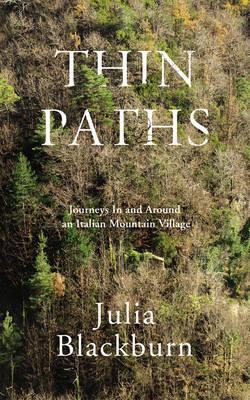 I would particularly recommend this novel to fans of Maggie O’Farrell and Anthony Doerr. Read this alongside Julia Blackburn’s Thin Paths or another choice from my Italian summer reading list – it’s the next best thing to being there.
My rating:
*At first I presumed this was a debut, but it turns out she wrote one novel previously, under the name Ginny Baily, Africa Junction (2011).
Many thanks to Virago for my free copy, received through a newsletter giveaway.
The Truth According to Us and Safekeeping
They say there are only two basic plots: a stranger comes to town, or the hero sets off on a journey. So far this summer I’ve enjoyed two novels that exemplify one or the other model.
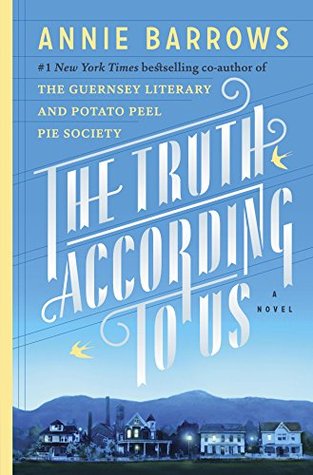 First is The Truth According to Us by Annie Barrows, co-author of the endearing The Guernsey Literary and Potato Peel Pie Society. This atmospheric historical novel is set in the sweltering summer of 1938. Layla Beck, a spoiled senator’s daughter, has been sent to Macedonia, West Virginia by the WPA to document the town’s story in advance of its sesquicentennial. Her uncle pulls strings to get her the job even though he thinks his flighty niece is “exactly as fit to work on the project as a chicken is to drive a Buick.”
From a lunatic Civil War general onwards, Macedonia has certainly had a colorful history. The problem is that all the local lights want to skew history to present themselves in the most favorable light. This applies to the family Layla boards with as well, the Romeyns. Felix and Jottie’s father ran the American Everlasting Hosiery Company until a devastating fire some 20 years ago – blamed on Jottie’s old sweetheart, Vause Hamilton.
Now Felix’s twelve-year-old daughter Willa, who narrates much of the novel, wants to get to the bottom of things. What really happened during that factory fire? Why are the Romeyns snubbed around town? Has her divorcé father turned to bootlegging, and can she stop Miss Beck from bewitching him? Like Scout Finch in To Kill a Mockingbird or Flavia de Luce in Alan Bradley’s mysteries, Willa is a spunky heroine whose curiosity carries the plot.
Once again Barrows makes good use of the epistolary format by inserting the letters Layla sends and receives during her time in Macedonia. Third person narration also gets us into the mind of Jottie, one of the strongest characters. However, later sections of the novel get a little bogged down in Jottie’s romantic history, and overall it is too long by at least a quarter. Barrows is better at capturing everyday speech and routines than momentous activities like a factory strike, but she certainly evokes the oppressive heat of a long American summer.
As Willa concludes, “The truth of other people is a ceaseless business. You try to fix your ideas about them, and you choke on the clot you’ve made.” This novel reminds us that others – whether strangers or family – are always a mystery, and history is a matter of interpretation.
My rating:
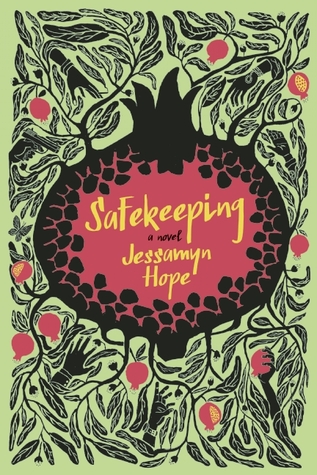 Next up is Safekeeping, the debut novel from Jessamyn Hope. A bit like All the Light We Cannot See, the Pulitzer Prize-winning novel from Anthony Doerr, the plot revolves around a priceless jewel. In this case it’s a medieval sapphire brooch that has been passed down through Adam’s family for centuries. In 1994, after the death of his grandfather, a Holocaust survivor, Adam undertakes a quest to return the brooch to the woman he fell in love with on an Israeli kibbutz and never forgot. Adam has his own problems – he’s a recovering junkie and alcoholic – but he feel he owes this to his grandfather’s memory.
A kibbutz undergoing the bitter transition from communalism to salaried work provides a vivid contrast to Adam’s native New York City. Hope populates her novel with a wonderful cast of eccentric characters. There’s Ulya, a Belarussian prima donna with a shoplifting habit; Claudette, a French Canadian Catholic crippled by mental health issues; Ziva, a kibbutz veteran who fights the changes tooth and nail despite advancing infirmity; and Ofir, a young man who endeavors to finish his military service early so he can return to his beloved piano.
I loved the way that Hope links the disparate characters in a constellation of connections. Acts of generosity, small or large, make a huge difference, even though betrayals past and present still linger. Close third person narration shifts easily between all the characters’ viewpoints, while two surprising historical interludes add depth. Hope handles flashbacks as elegantly as I’ve ever seen: you follow characters into their thoughts and suddenly snap back to the present right along with them.
I’ll confess I was slightly disappointed with the inconclusive ending. We follow the brooch rather than the characters, which means that in two cases we are left wondering about a person’s fate. Still, I was so impressed with the writing, especially the interweaving of past and present, that I will be eager to watch Hope’s career. Safekeeping is published by Fig Tree Books, a champion of modern Jewish literature, and has one of the most terrific book covers I’ve seen in a while.
My rating:
Review: The House of Hawthorne by Erika Robuck
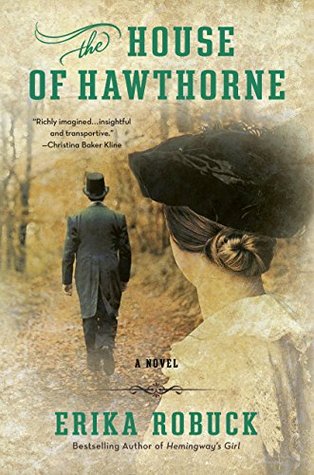 We often resent books we’re forced to read in school, but The Scarlet Letter wasn’t like that for me. Even though it was assigned reading for high school, I could instantly sense how important it was in the history of American literature. The tragic story of Hester Prynne and her judgmental community is one that stays with me half a lifetime later. I reread it in college for a Hawthorne & Melville course, for which I also read The Blithedale Romance, The House of the Seven Gables, and several of Nathaniel Hawthorne’s best short stories.
My more-than-average interest in Hawthorne, combined with my love of historical fiction about “famous wives” (see my BookTrib articles on the subject, including one specifically about the Hemingway and Fitzgerald wives) meant that I was eager to read Erika Robuck’s latest. She’s made a name for herself with novels about some of history’s famous women, including Zelda Fitzgerald, Edna St. Vincent Millay and one of the Hemingway wives, but somehow I’ve never read anything by her until now.
“Time flies over us, but leaves its shadow behind.”
(one of Robuck’s epigraphs, from Hawthorne’s The Marble Faun)

Nathaniel Hawthorne in 1840 (from Wikimedia Commons).
The novel is from the first-person perspective of Sophia Peabody, later the wife of Nathaniel Hawthorne. The Peabodys were an artistic, intellectual family who encouraged Sophia to cultivate her talent as a painter and sculptor, but illness often held her back: she suffered from debilitating headaches and turned to morphine and mesmerism for relief. The story begins and ends in the spring of 1864, when Nathaniel, suffering from a stomach ailment, sets off on a final journey without Sophia. In between these bookends, the novel spans the 1830s through the 1860s, taking in Sophia’s sojourn in Cuba as a young woman, her and Nathaniel’s courtship, and the challenges of parenthood and making a living from art.
My favorite portions of the novel were set in Concord, Massachusetts, that haven for writers and Transcendentalists. Ralph Waldo Emerson, Henry David Thoreau and Herman Melville all play minor roles. It’s especially amusing to see Melville, Hawthorne’s ardent admirer, overstep the boundaries of polite society and become an irksome stalker. What I did not realize from previous biographical reading about the Hawthornes is that they nearly always struggled for money. They rented Emerson’s uncle’s house in Concord but were evicted when they fumbled to make payments. Nathaniel’s jobs in the Custom House and as the U.S. Consul in Liverpool (appointed by President Franklin Pierce, who was a personal friend and whose biography he wrote) were undertaken out of financial desperation rather than interest.
The Hawthornes’ time in Europe was another highlight of the novel for me. They encounter the Brownings and finally get a chance to see all the Italian art that has inspired Sophia over the years. Their oldest daughter, Una, also falls ill with malaria, which provides some great dramatic scenes in later chapters. I warmed to this late vision of Sophia as a devoted mother, whereas I struggled to accept her as a vibrant young woman and a randy wife. Her constant complaints about headaches are annoying, and I wasn’t convinced that the Cuba chapters were relevant to the novel as a whole; Robuck tries to link Sophia’s observations of slavery there with the abolitionist sentiments of the 1860s, but Sophia’s devotion to the antislavery cause was only ever half-hearted, so I didn’t believe the experience in Cuba could have affected her that deeply. Her unconsummated lust for Fernando is also, I suppose, meant to prefigure her abiding passion for Nathaniel – which is described in frequent, cringe-worthy sex scenes and flowery lines like “In his gaze, I feel our souls rise up to meet each other.”
Ultimately, my disconnection from Sophia as narrator meant that I would prefer to read about the Hawthornes in biographies, of which there are plenty. Two novels I would recommend that incorporate many of the same historical figures are Miss Fuller by April Bernard and What Is Visible by Kimberly Elkins (about the deaf-blind Laura Bridgman – who has a tiny cameo here). Beautiful Fools by R. Clifton Spargo uses a Cuba setting to better effect in telling the story of Scott and Zelda Fitzgerald’s last holiday. I preferred all three of these to The House of Hawthorne. However, I’m certainly up for trying more of Robuck’s fiction.
My rating:
I received early access to this book through the Penguin First to Read program.
Review: After Birth by Elisa Albert
 Looking for a heartwarming story about new motherhood? You won’t find it here. The narrator of Elisa Albert’s second novel, Ari, gave birth to Walker a year ago but still hasn’t gotten over the disruption to her life: the constant demands on her time and affection, the decay of her postgraduate thesis, and post-traumatic flashbacks to her caesarean section. Birth wasn’t the blissful, Earth Mother experience she wanted it to be; it was more like butchery: “nightmare blur of newborn stitches tears antibiotic awake constipation tears wound tears awake awake awake limping tears screaming tears screaming shit piss puke tears.” Now don’t get her wrong; she loves Walker: “He’s an awesome baby, a swell little guy. Still a baby, though, of which even the best are oppressive fascist bastard dictator narcissists.”
So even though Ari is reasonably happy and settled in her upstate New York home with her husband Paul (a professor 15 years her senior) and Walker, putting in the occasional shift at the local co-op and sending half-hearted ideas to her advisor, she can’t escape the thought that life isn’t as it should be. That is, until Mina Morris, bassist from a late-eighties girl band, moves to town to sublet her friends’ place while they’re on sabbatical in Rome. Ari had a girl crush on Mina before she ever met her, but when she realizes Mina is nine months’ pregnant, she sees a chance to put her new mommy expertise to good use. She’ll give Mina all the advice and support she wished she’d had. When the need arises, she’ll even breastfeed Mina’s newborn son, Zev. (Albert had a similar experience when her son was failing to thrive from breastfeeding and a friend fed him for her; see her Guardian article.)
 There isn’t a whole lot of plot to After Birth. Mina comes into Ari’s life for just two months and then moves on. Ari temporarily indulges her fantasy of a feminist collective where women help each other give birth and raise each other’s children; it is enough of a healing experience that she can conceive of resuming her thesis or even – ha! – having another baby. Still, she acknowledges that “the work of childbearing, done fully, done consciously, is all-consuming. So who’s gonna write about it if everyone doing it is lost forever within it? You want adventures, you want poetry and art, you want to salon it up over at Gertrude and Alice’s, you’d best leave the messy all-consuming baby stuff to someone else.”
It can be hard to warm to Ari’s sarcastic voice and jarringly short or disorientingly run-on phrases. Albert’s choice to exclude speech marks means that the whole book reads like a sort of fever dream, with past and present and different voices melding. My favorite passage is a monologue by an Oprah-like black nurse who encourages Ari in her early attempts at breastfeeding. There are also frequent flashbacks to Ari’s childhood: Jewish summer camp and the aftermath of her mother Janice’s untimely death. The memories of her mother’s illness (DES treatment leading to breast cancer) and the touches of magic realism as the dead Janice occasionally pops up alongside Ari, usually kvetching about her choices, make this uncannily similar to The Year My Mother Came Back by Alice Eve Cohen.
After Birth might not prove to be a classic of ambivalent motherhood, but if you’re in the right mood for it I reckon you’ll find it to be a striking novella.
My rating:
 Bookish Beck = Rebecca Foster. American transplant to England. Freelance proofreader and book reviewer.
 Bookish Beck