Dressing Up for the Carnival by Carol Shields (Buddy Reread)
Marcie of Buried in Print and I have spent the first few months or so of 2024 rereading Carol Shields’s short stories: one volume per month from the Collected Stories. (Previous reviews: Various Miracles (1985) and The Orange Fish (1989).) Dressing Up for the Carnival was a late collection, published in 2000 – just a few years before the author’s death. Like Various Miracles, it’s a long book; in fact, at 22 stories, it’s the longest of the three. And, just like the other two, it opens with the title story, which is itself akin to “Various Miracles” with its pile-up of seemingly random happenings. All the examples are of how the things that people wear, or carry, create a persona. I noted pleasing symmetry in that “Dressing Up for the Carnival” opens the book, while the final story is “Dressing Down,” about a married couple divided by the husband’s devotion to naturism for one month out of each year.
 I hadn’t realized that Unless, Shields’s final, Booker-shortlisted novel, arose from one of these stories: “A Scarf.” It took me just two paragraphs to figure it out, based on her narrator’s punning novel title (My Thyme Is Up). I’d also forgotten about the fun Shields pokes at literary snobbishness through her protagonist winning the Offenden Prize, which “recognizes literary quality and honors accessibility”. (There is actually a UK prize that rewards ease of reading, the Goldsboro Books Glass Bell Award.)
Many main characters throughout Shields’s work are artists, musicians, writers or poets. When windows are subject to an exorbitant tax, two painters decide to create their own, a joint project that brings the couple closer (in “Windows”). The elevated diction and proliferating French phrases skewer the narrator’s pretensions. Edging towards surrealism is another custom of Shields’s, seen here in “Weather,” where meteorological phenomena – or the lack thereof – are literal and a metaphor for marriage. This one finds an echo in “Stop!”, a fable about a queen who avoids all risk and change and thus disallows weather.
A number of the flash-length stories are similarly allegorical, or linguistic experiments, e.g., “Absence,” which is lipogrammatic (no “I”). “Flatties: their Various Forms and Uses” is a faux-anthropological one about flatbreads that reminded me of “Today Is the Day.” “The Harp” looks at the aftermath of the freak accident of a harp falling from the sky. “Keys” is a daisy-chain type of story (like “Home” et al.), with the keys symbolic of access, ownership, secrets, home, and more. Academia is another frequent subject for Shields. “Ilk” has the same academic jargon (“narrativity is ovarian, not ejaculatory”) and mockery of a predominantly male preserve as in “The Metaphor Is Dead–Pass It On” and “Salt.”
A topic shared with The Orange Fish is the biographer’s art. I loved “Edith-Esther,” about a biographer who becomes so obsessed with the expression of spirituality in his subject’s works that he completely skews her life story towards it, even though she tells him flat out she doesn’t believe in God. What a nightmare for an author to be so misunderstood; it’s no accident, of course, that it’s a male critic doing it to a female writer. “Invention” imagines creation scenarios for everything from steering wheel covers to daydreaming.
 In “Dying for Love,” an early standout for me, three wronged women consider suicide. The vocabulary quickly alerts the reader to a change of time period after each section break. All three decide “Life is a thing to be cherished”. My three favourites, though, were the final three – all slightly cheeky with the focus on sex (and naturism). They were together an excellent way to close the volume, and the Collected Stories. In “The Next Best Kiss,” single mother Sandy meets a new paramour at a conference. She and Todd share garrulousness, and a sexual connection. But he doesn’t’ see the appeal of her biography’s subject, a Gregor Mendel-meets-John Clare type, and she is aghast to learn that he still lives with his mother.
“Eros,” set at a sexually charged dinner party (and you know from Larry’s Party that Shields is brilliant at party scenes), spools back through Ann’s erotic life, all the way to childhood ignorance and curiosity. “Everyone knew this awful secret which was everywhere suggested but which for Ann lay, still, a quarter-inch out of reach.” That Ann has lost a breast to cancer treatment made me ponder whether this story reflected Shields’s own experience – she died in 2003 of a recurrence of breast cancer.
There were a few too many second-tier stories here compared to The Orange Fish, but several gems; and I always appreciate Shields’s wordplay and insider’s satire on being an academic and/or a writer.
My original rating (c. 2008): 
My rating now: 
Bonus
Shields’s final short story, “Segue,” is printed first in the Collected Stories. Dutiful Marcie read it first, whereas I saved it for last to try to preserve a sense of chronological order. Max Sexton writes novels, the latest of which sounds exactly like The Corrections – a 2001 publication, and Shields also references 9/11. Jane Sexton, the narrator, writes sonnets (“little sounds”) and thinks about ageing, routine, and the transmutation of life into art. A sonnet typically involves a “turn,” which I suppose is the origin of the title. Coming to the end of her life, did Shields think of herself primarily as a poet? This line did strike me as autobiographical: “Forget you are a sixty-seven-year-old woman with a girlish white pageboy.” The Oak Park, Illinois setting inevitably reminded me of Hemingway, but Shields, too, was from Chicago. The final line captures the bittersweet nature of so much of her work: “if it weren’t for my particular circumstances I would be happy.”
Rereading Shields is a habit I plan to keep up. For my next reread, I fancy Mary Swann.
Six Degrees of Separation: From Ruth Ozeki to Ruth Padel
This month we begin with The Book of Form and Emptiness by Ruth Ozeki, which recently won the Women’s Prize for Fiction. It happens to be my least favourite of her books that I’ve read so far, but I was pleased to see her work recognised nonetheless. (See also Kate’s opening post.)

 #1 One of the peripheral characters in Ozeki’s novel is an Eastern European philosopher who goes by “The Bottleman.” I had to wonder if he was based on avant-garde Slovenian philosopher Slavoj Žižek. Back in 2010, when I was working at a university library in London and had access to nearly any book I could think of – and was still committed to trying to read the sorts of books I thought I should enjoy rather than what I actually did – I skimmed a couple of Žižek’s works, including First as Tragedy, Then as Farce (2009), which arose from 9/11 and the global financial crisis and questions whether we can ever stop history repeating itself without undermining capitalism.
 #2 In searching my archives for farces I’ve read, I came across one I took notes on but never wrote up back in 2013: Japanese by Spring by Ishmael Reed (1993), an academic comedy set at “Jack London College” in Oakland, California. The novel satirizes almost every ideology prevalent in the 1960s–80s: multiculturalism, racism, xenophobia, nationalism, feminism, affirmative action and various literary critical methods. Reed sets up exaggerated and polarized groups and opinions. (You know it’s not to be taken entirely seriously when you see character names like Chappie Puttbutt, President Stool and Professor Poop, short for Poopovich.) The college is sold off to the Japanese and Ishmael Reed himself becomes a character. There are some amusing lines but I ended up concluding that Reed wasn’t for me. If you’ve enjoyed work by Paul Beatty and Percival Everett, he might be up your street.
 #3 “Call me Ishmael” – even if, like me, you have never gotten through Moby-Dick by Herman Melville (1851), you probably know that famous opening line. I took an entire course on Nathaniel Hawthorne and Melville as an undergraduate and still didn’t manage to read the whole thing! Even my professor acknowledged that Melville could have done with a really good editor to rein in his ideas and cut out some of his digressions.
 #4 A favourite that I can recommend instead is Moby-Duck by Donovan Hohn (2011). It’s just the kind of random, wide-ranging nonfiction I love: part memoir, part travelogue, part philosophical musing on human culture and our impact on the environment. In 1992 a pallet of “Friendly Floatees” bath toys fell off a container ship in a storm in the North Pacific. Over the next two decades those thousands of plastic animals made their way around the world, informing oceanographic theory and delighting children. Hohn’s obsessive quest for the origin of the bath toys and the details of their high seas journey takes on the momentousness of his literary antecedent. He visits a Chinese factory and sees plastics being made; he volunteers on a beach-cleaning mission in Alaska. (I’d not seen the Ozeki cover that appears in Kate’s post, but how pleasing to note that it also has a rubber duck on it!)
 #5 Alongside Moby-Duck on my “uncategorizable” Goodreads shelf is The Snow Leopard by Peter Matthiessen (1978), one of my Books of Summer from 2019. A nature/travel classic that turns into something more like a spiritual memoir, it’s about a trip to Nepal in 1973, with Matthiessen joining a zoologist to study Himalayan blue sheep – and hoping to spot the elusive snow leopard. He had recently lost his partner to cancer, and relied on his Buddhist training to remind himself of tenets of acceptance and transience.
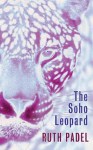 #6 Ruth Padel is one of my favourite contemporary poets and a fixture at the New Networks for Nature conference I attend each year. She has a collection named The Soho Leopard (2004), whose title sequence is about urban foxes. The natural world and her travels are always a major element of her books. From one Ruth to another, then, by way of philosophy, farce, whaling, rubber ducks and mountain adventuring.
Where will your chain take you? Join us for #6Degrees of Separation! (Hosted on the first Saturday of each month by Kate W. of Books Are My Favourite and Best.) Next month’s starting point is a wildcard: use the book you finished with this month (or, if you haven’t done an August chain, the last book you’ve read).
Have you read any of my selections? Tempted by any you didn’t know before?
The #1954Club: Pictures from an Institution by Randall Jarrell
A quick follow-up to Friday’s post with one more read from 1954, plus a skim. The one is a series of comic portraits set on a women’s college campus, and the other is the story of a preacher’s son in 1930s Harlem. (Both: University library;  )
)

Pictures from an Institution by Randall Jarrell
 I have a real soft spot for novels set on college campuses. Any time I’ve looked through lists of options, Jarrell’s has been there. Still, it took the 1954 Club for me to finally pick up a copy. For about the first half, I was fully engaged with this academic comedy even though it doesn’t have a plot as such. The stage is Benton women’s college; the cast includes various eccentric professors and other staff, from President Robbins on down. Gertrude Johnson, a visiting writer, is writing a novel about Benton. The problem for her – and for us as readers – is two-fold: the characters are almost too eccentric to be believed, and nothing happens here.
The narrator, a poetry professor at Benton, knew Gertrude socially back in New York City. His descriptions of his fellow faculty are often hilarious. For instance, here’s his picture of Flo Whittaker:
Mostly she wore, in the daytime in the winter, a tweed skirt, a sweater-set, and a necklace. The skirt looked as if a horse had left her its second-best blanket; the sweaters looked as if an old buffalo, sitting by a fire of peat, had knitted them for her from its coat of the winter before
The Whittakers’ house is so full of kitschy knick-knacks that “Jeremy Bentham’s stuffed body would not have been ill at ease.” And then there’s the Robbinses’ ill-behaved pair of Afghan hounds, and Dr. Rosenbaum the music professor, whose German accent is rendered over-the-top.
Funny as parts of the novel can be, the humour can feel dated and sometimes relies on niche cultural references. The very first line, for example: “Half the campus was designed by Bottom the Weaver, half by Ludwig Mies van der Rohe”. However, elsewhere Jarrell mocks the pretentiousness of modern art and of the Benton set, who also seem woke avant la lettre:
Most of the people of Benton would have swallowed a porcupine, if you had dyed its quills and called it Modern Art; they longed for men to be discovered on the moon, so that they could show that they weren’t prejudiced towards moon men; and they were so liberal and selfless, politically
Amusing pen portraits and witty lines made this pleasant to spend time with, but not a read that will stick with me.
As usual for any reading challenge, I bit off more than I could chew and started a fourth book but couldn’t get through it in time and, in all honesty, wasn’t finding it compelling. I’ll have to give it a better try on another occasion.
Go Tell It on the Mountain by James Baldwin
 I’ve enjoyed Baldwin’s work before (The Fire Next Time, Giovanni’s Room), but didn’t make it much past page 30 of this novel about John Grimes, a preacher’s son in Harlem, before starting to skim. The central section contains long flashbacks to the backstory of three secondary characters, whereas I was more interested in John’s story (semi-autobiographical for Baldwin, apparently). Mostly I thought of how the content and narrative style must have influenced the following generations of African American writers, including Toni Morrison and Catherine Adel West – both of whom I was reading at the same time.
 Bookish Beck = Rebecca Foster. American transplant to England. Freelance proofreader and book reviewer.
 Bookish Beck