“Why We Sleep” … And Why Can’t I Wake Up?
Why We Sleep: The New Science of Sleep and Dreams by Matthew Walker
I’d heard about this book but didn’t feel compelled to get hold of it until David Lodge, one of my favorite authors, named it his book of 2017 in the TLS year-end roundup. I got an e-copy from NetGalley but then found the physical book on the bestsellers display in my local library and found that a more conducive format for skimming. It’s a fairly long and dense book, with smallish type and scientific figures, so I knew I was unlikely to read the whole thing, but enjoyed mining it for fascinating information about evolution, neuroscience and child development.
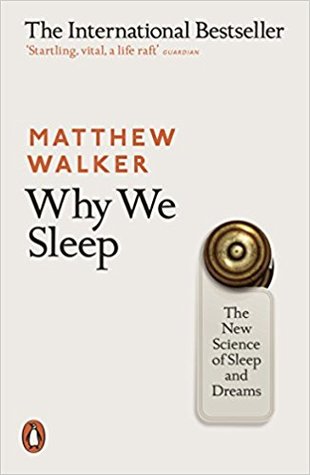 We often hear that sleep, diet and exercise are the three pillars of health, but Walker, a professor of neuroscience at the University of California, Berkeley, goes further: he believes sleep is the platform on which diet and exercise rest. Getting 7–9 hours of sleep a night is not some luxury to aim for but an absolute essential for the brain to process new information and prepare for receiving more the next day. Dreaming is like overnight therapy, and fuels creativity. Sleep deprivation has been associated with dementia and cancer: it’s no accident that Margaret Thatcher and Ronald Reagan, who prided themselves on getting by on just five hours of sleep a night, both developed Alzheimer’s. Just a few nights of insufficient sleep can weaken the immune system and increase the risks of developing a serious illness. It’s no wonder Walker calls sleep loss an epidemic.
Here are some other facts I gleaned:
- During primate evolution, the transition to sleeping on the ground instead of in trees meant we could sleep more deeply – not having to worry about falling out – and the resulting increase in REM sleep and dreams contributed to the development of complex culture and creativity.
- Fetuses are asleep most of the time; they kick in their sleep. Alcohol use during pregnancy or breastfeeding can lead to a decline in the offspring’s sleep quality or quantity.
- People with autism get 30–50% less REM sleep than neurotypical people.
- The postprandial slump in energy many of us experience is evolutionarily inbuilt, and suggests that a short nap (30–40 minutes) would be natural and beneficial. For instance, some African tribespeople still regularly nap at the hottest point of the day.
Walker’s sleep tips are mostly common-sense stuff you will have heard before. His #1 piece of advice is to have a sleep schedule, always going to sleep and waking up at the same time. (“Catching up” on weekends doesn’t work, though napping before 3 p.m. can.) Set an alarm for bedtime so you’ll stick to it, he suggests.
My rating: 
Making It Personal
I like my sleep, and I like my lie-ins. It’s one of many reasons why I don’t have kids. But I hoped that the older I got the better I’d be about waking up in the mornings. That hasn’t seemed to be the case. The past couple of weeks have been abnormal in that my husband has been working from home, too – he’s been on strike from the university and/or keeping clear of the snow – but on an average weekday, when the alarm goes off at a time starting with a 6, I feel like I could sleep for hours more. I usually cover my head with a pillow and stay in bed with the cat curled against my legs for an extra half-hour while my husband showers and starts getting things ready; only when I hear the tea being poured do I finally extricate myself from the covers and lurch downstairs to eat breakfast and make our sandwiches for the day.
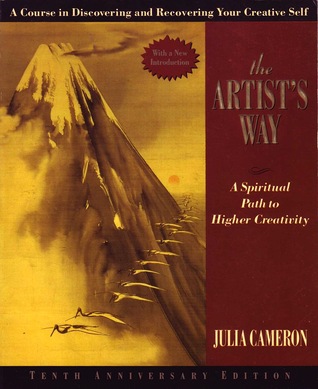 One of my bibliotherapy prescriptions was The Artist’s Way by Julia Cameron, a 12-week set of readings and exercises – chiefly 20 minutes of automatic writing each morning and creative “dates” you take yourself on. For the former, you set your alarm half an hour early each day and fill three longhand pages with whatever comes to mind. It’s not a journal; it’s more a way of processing what’s going on in your life, gradually moving from mundane thoughts about daily pressures to more creative stuff. But if I can’t wake up for our regular alarm, how in the world would I get up even earlier to commit to this creative exercise? I’ve wondered if I could cheat a bit and do the pages after a short nap in the early afternoons, but I think the idea really is to put down whatever comes into your head first thing every morning.
I can see that this would be a good discipline, especially as I come up to my fifth anniversary of freelancing and take stock of my career. I just don’t know if I can make myself do it.
Have you read anything about sleep, creativity or mindfulness recently?
Also on my TBR to be skimmed:
 24/7: Late Capitalism and the Ends of Sleep by Jonathan Crary
- The Business of Sleep: How Sleeping Better Can Transform Your Career by Vicki Culpin, a TEDx speaker and professor of organizational behavior [forthcoming on May 8th from Bloomsbury Business]
- The Secret World of Sleep: The Surprising Science of the Mind at Rest by Penelope A. Lewis
- Dreamland: Adventures in the Strange Science of Sleep by David K. Randall
My Most Anticipated 2018 Releases, Part I
Here are 30 books that are on my radar for the months of January through June. This is by no means a full inventory of what’s coming out (or even of what I have available through NetGalley and Edelweiss); instead, think of it as a preview of the books I actually intend to read. This time my list seems strangely skewed towards plants (the covers too), with a couple of bird- and medical-themed reads in there too. Also: two feminist group biographies, plenty of historical fiction, some short stories, a bit of true crime, and a fair few memoirs. I hope you’ll find a book or two here to tempt you.
(The descriptions below are generally adapted from the publisher blurbs on Goodreads, NetGalley or Edelweiss. Some of these I already have access to in print or galley form; others I’m still on the look-out for. The list is in chronological order by first publication date; if multiple books release on the same day they are in alphabetical order by author surname.)
January
 On the Bright Side: The New Secret Diary of Hendrik Groen [Jan. 11, Michael Joseph (Penguin UK)]: I loved the first Hendrik Groen novel back in 2016 (reviewed here); this promises more of the same witty, bittersweet stories about elderly Dutch eccentrics. “Chaos will ensue as 85-year-old Hendrik Groen is determined to grow old with dignity … He dreams of escaping the confines of his care home and practising hairpin turns on his mobility scooter.” (NetGalley download)
 Writer’s Luck: A Memoir: 1976–1991 by David Lodge [Jan. 11, Harvill Secker]: I reviewed the first volume of Lodge’s memoirs, Quite a Good Time to Be Born, for Nudge back in 2015, so I’m eager to continue his life story in this second installment. “Readers of Lodge’s novels will be fascinated by the insights this book gives—not only into his professional career but also more personal experience. The main focus, however, is on writing as a vocation.”
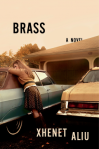 Brass: A Novel by Xhenet Aliu (for BookBrowse review) [Jan. 23, Random House]: “A waitress at the Betsy Ross Diner, Elsie hopes her nickel-and-dime tips will add up to a new life. Then she meets Bashkim, … who left Albania to chase his dreams. … Told in equally gripping parallel narratives with biting wit and grace, Brass announces a fearless new voice with a timely, tender, and quintessentially American story.” (NetGalley download)
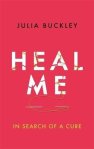 Heal Me: In Search of a Cure by Julia Buckley [Jan. 25, Weidenfeld & Nicolson]: The “search for a cure [for chronic pain] takes her on a global quest, exploring the boundaries between science, psychology and faith with practitioners on the fringes of conventional, traditional and alternative medicine. Rais[es] vital questions about the modern medical system … and the struggle to retain a sense of self.” (print review copy)
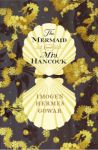 The Mermaid and Mrs. Hancock by Imogen Hermes Gowar [Jan. 25, Harvill Secker]: “A spellbinding story of curiosity, love and obsession from an astonishing new talent. One September evening in 1785, the merchant Jonah Hancock hears urgent knocking on his front door. One of his captains is waiting eagerly on the step. He has sold Jonah’s ship for what appears to be a mermaid.” Comes recommended by Elle. (NetGalley download)
February
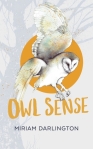 Owl Sense by Miriam Darlington [Feb. 6, Guardian Faber]: Darlington’s previous nature book, Otter Country, was stunning. Here, “Darlington sets out to tell a new story. Her fieldwork begins with wild encounters in the British Isles and takes her to the frosted borders of the Arctic. In her watching and deep listening to the natural world, she cleaves myth from reality and will change the way you think of this magnificent creature.”
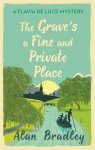 The Grave’s a Fine and Private Place by Alan Bradley [Feb. 8, Orion]: I’ve read all eight Flavia de Luce novels so far, which is worth remarking on because I don’t otherwise read mysteries and I usually find child narrators annoying. There’s just something delicious about this series set in 1950s England. This one will be particularly interesting because a life-changing blow came at the end of the previous book.
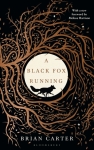 A Black Fox Running by Brian Carter [Feb. 8, Bloomsbury UK]: “A beautiful lost classic of nature writing” from 1981 that “sits alongside Tarka the Otter, Watership Down,” et al. “This is the story of Wulfgar, the dark-furred fox of Dartmoor, and of his nemesis, Scoble the trapper, in the seasons leading up to the pitiless winter of 1947. As breathtaking in its descriptions of the natural world as it is perceptive in its portrayal of damaged humanity.” Championed by Melissa Harrison.
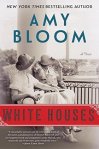 White Houses by Amy Bloom [Feb. 13, Random House]: The story of Lorena Hickock’s friendship/affair with Eleanor Roosevelt. “From Washington, D.C. to Hyde Park, from a little white house on Long Island to an apartment on Manhattan’s Washington Square, Amy Bloom’s new novel moves elegantly through fascinating places and times, written in compelling prose and with emotional depth, wit, and acuity.” (Edelweiss download)
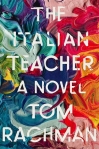 The Italian Teacher by Tom Rachman [Feb. 20, Riverrun/Viking]: I’m a huge fan of Rachman’s, especially his previous novel, The Rise & Fall of Great Powers. “1955: The artists are gathering together for a photograph. In one of Rome’s historic villas, a party is bright with near-genius, shaded by the socialite patrons of their art. … Rachman displays a nuanced understanding of twentieth-century art and its demons, vultures and chimeras.” (Edelweiss download)
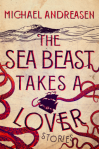 The Sea Beast Takes a Lover: Stories by Michael Andreasen [Feb. 27, Dutton (Penguin Group)]: “Romping through the fantastic with big-hearted ease, these stories cut to the core of what it means to navigate family, faith, and longing, whether in the form of a lovesick kraken slowly dragging a ship of sailors into the sea [or] a small town euthanizing its grandfathers in a time-honored ritual.” (NetGalley download)
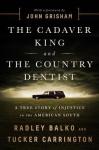 The Cadaver King and the Country Dentist: A True Story of Injustice in the American South by Radley Balko and Tucker Carrington [Feb. 27, PublicAffairs]: “After two three-year-old girls were raped and murdered in rural Mississippi, law enforcement pursued and convicted two innocent men, [who] spent a combined thirty years in prison before finally being exonerated in 2008. Meanwhile, the real killer remained free.”
March
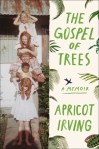 The Gospel of Trees: A Memoir by Apricot Irving [March 6, Simon & Schuster]: “Apricot Irving grew up as a missionary’s daughter in Haiti—a country easy to sensationalize but difficult to understand. Her father was an agronomist, a man who hiked alone into the hills … to preach the gospel of trees in a deforested but resilient country. Her mother and sisters, meanwhile, spent most of their days in the confines of the hospital compound they called home. As a child, this felt like paradise; as a teenager, the same setting felt like a prison.”
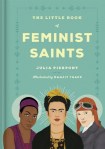 The Little Book of Feminist Saints by Julia Pierpont (illus. by Manjitt Thapp) [March 6, Random House]: This project reminds me a lot of A Glorious Freedom with its focus on women’s achievements and the full-color portraits of the subjects. I’ve just opened the file and the first two pieces give you a sense of the range that will be covered: Artemisia Gentileschi and Michelle Obama! (Edelweiss download)
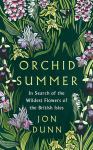 Orchid Summer: In Search of the Wildest Flowers of the British Isles by Jon Dunn [March 8, Bloomsbury UK]: Dunn’s were my favorite contributions to the Wildlife Trusts’ Seasons anthologies (e.g. Winter). I’ve also enjoyed following his botanical travels on Twitter. “From the chalk downs of the south coast of England to the heathery moorland of the Shetland Isles, and from the holy island of Lindisfarne in the east to the Atlantic frontier of western Ireland, Orchid Summer is a journey into Britain and Ireland’s most beautiful corners.”
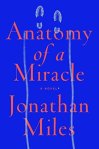 Anatomy of a Miracle by Jonathan Miles [March 13, Hogarth]: Miles’s previous novel, Want Not, is one of the books I most wish I’d written. “Rendered paraplegic after a traumatic event, Cameron Harris has been living his new existence alongside his sister, Tanya, in their battered Biloxi, Mississippi neighborhood where only half the houses made it through Katrina. … [A] stunning exploration of faith, science, mystery, and the meaning of life.”
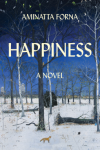 Happiness by Aminatta Forna [March 16, Grove Atlantic]: “London. A fox makes its way across Waterloo Bridge. The distraction causes two pedestrians to collide—Jean, an American studying the habits of urban foxes, and Attila, a Ghanaian psychiatrist there to deliver a keynote speech. … Forna’s unerring powers of observation show how in the midst of the rush of a great city lie numerous moments of connection.” (NetGalley download)
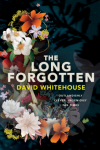 The Long Forgotten by David Whitehouse [March 22, Pan Macmillan/Picador]: “When the black box flight recorder of a plane that went missing 30 years ago is found at the bottom of the sea, a young man named Dove begins to remember a past that isn’t his. The memories belong to a rare flower hunter in 1980s New York, whose search led him around the world and ended in tragedy.” (NetGalley download)
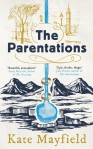 The Parentations by Kate Mayfield (to review for Shiny New Books?) [March 29, Oneworld]: From editor Jenny Parrott: “a stunning speculative historical novel … The story spans 200 years across Iceland and London, as a strange boy who can never die is surrounded by a motley collection of individuals, each with vested interests in his welfare. … [S]ome of the most extraordinary literary prose I’ve read during a thirty-year career.”
April
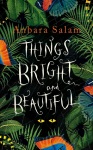 Things Bright and Beautiful by Anbara Salam [April 5, Fig Tree]: “1954, the South Pacific islands. When Beatriz Hanlon agreed to accompany her missionary husband Max to a remote island, she knew there would be challenges. But it isn’t just the heat and the damp and the dirt. There are more insects than she could ever have imagined, and the islanders are strangely hostile. [Then] an unexpected … guest arrives, and the couple’s claustrophobic existence is stretched to breaking point.” Sounds like Euphoria by Lily King. (NetGalley download)
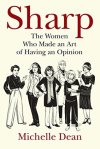 Sharp: The Women Who Made an Art of Having an Opinion by Michelle Dean [April 10, Grove Press]: “Dorothy Parker, Rebecca West, Hannah Arendt, Mary McCarthy, Susan Sontag, Pauline Kael, Joan Didion, Nora Ephron, Renata Adler, and Janet Malcolm—these brilliant women’s lives intertwine as they cut through the cultural and intellectual history of America in the twentieth century, arguing as fervently with each other as they did with the sexist attitudes of the men who often undervalued their work as critics and essayists.”
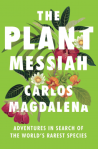 The Plant Messiah: Adventures in Search of the World’s Rarest Species by Carlos Magdalena [April 10, Doubleday]: “Carlos Magdalena is not your average horticulturist. He’s a man on a mission to save the world’s most endangered plants. … [He] takes readers from the Amazon to the jungles of Mauritius. … Back in the lab, we watch as he develops groundbreaking, left-field techniques for rescuing species from extinction, encouraging them to propagate and thrive once again.” (NetGalley download)
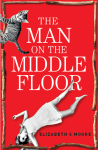 The Man on the Middle Floor by Elizabeth S. Moore (for blog tour) [April 12, RedDoor Publishing]: “Despite living in the same three-flat house in the suburbs of London, the residents are strangers to one another. … They have lived their lives separately, until now, when an unsolved murder and the man on the middle floor connect them. … It questions whether society is meeting the needs of the fast growing autistic section of society.” (print ARC)
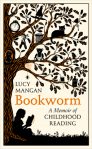 Bookworm: A Memoir of Childhood Reading by Lucy Mangan [April 24, Random House UK]: “This is a love letter to the joys of childhood reading, full of enthusiasm and wit, telling the colorful story of our best-loved children’s books, the extraordinary people who created them, and the thousand subtle ways they shape our lives.” (NetGalley download)
 You Think It, I’ll Say It: Stories by Curtis Sittenfeld [April 24, Random House]: I would read anything Curtis Sittenfeld wrote; American Wife is still one of my absolute favorites. “The theme that unites these stories … is how even the cleverest people tend to misread others, and how much we all deceive ourselves. Sharp and tender, funny and wise, this collection shows [her] knack for creating real, believable characters that spring off the page.”
May
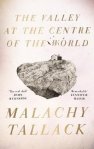 The Valley at the Centre of the World by Malachy Tallack [May 3, Canongate]: I’ve reviewed and enjoyed both of Tallack’s previous nonfiction works, including The Un-Discovered Islands. “Set against the rugged west coast of Shetland, in a community faced with extinction, [this] is a novel about love and grief, family and inheritance, rapid change and an age-old way of life. … [T]hese islanders must decide: what is left of us when the day’s work is done, the children grown, and all our choices have been made?”
 Shapeshifters: A Journey through the Changing Human Body by Gavin Francis [May 8, Basic Books]: “Francis considers the inevitable changes all of our bodies undergo—such as birth, puberty, and death, but also … those that only some of our bodies will: like getting a tattoo, experiencing psychosis, suffering anorexia, being pregnant, or undergoing a gender transition. … [E]ach event becomes an opportunity to explore the meaning of identity.”
 The Ensemble by Aja Gabel [May 15, Riverhead]: An “addictive debut novel about four young friends navigating the cutthroat world of music and their complex relationships with each other, as ambition, passion, and love intertwine over the course of their lives.”
 Why Do Birds Suddenly Disappear? by Lev Parikian (for blog tour) [May 17, Unbound]: “A lapsed and hopeless birdwatcher’s attempt to see 200 birds in a year. But it’s not just about birds. It’s about family, music, nostalgia; hearing the stories of strangers; the nature of obsession and obsession with nature.”
June
 The Great Believers by Rebecca Makkai [June 19, Viking]: I loved both of Makkai’s previous novels and have her short story collection on my Kindle. “Fiona is in Paris tracking down her estranged daughter, who disappeared into a cult. While staying with an old friend, a famous photographer …, she finds herself finally grappling with the devastating ways the AIDS crisis affected her life and her relationship with her daughter.” (Edelweiss download)
Other lists of enticing 2018 releases that might give you some ideas:
Guardian (UK, nonfiction)
Halfman, Halfbook (UK, mostly science/nature and history)
Parchment Girl (mostly nonfiction)
Stylist (UK)
Which 2018 books are you most looking forward to? Do any of my choices interest you?
Books in Brief: Five I Loved Recently
Feminist social history, visits with the world’s bees, a novel about a peculiar child and his reclusive writer mother, witty notes on Englishness, and tips on surviving heartbreak: five very different books, but I hope one or more of them is something that you’d enjoy.
Flâneuse: Women Walk the City in Paris, New York, Tokyo, Venice and London
By Lauren Elkin
 Raised in New York and now a Paris resident, Lauren Elkin has always felt at home in cities. Here she traces how women writers and artists have made the world’s great cities their own, blending memoir, social history and literary criticism. In a neat example of form flowing from content, the book meanders from city to city and figure to figure. My interest waned during later chapters on protesting (‘taking to the streets’) and the films of Agnès Varda. However, especially when she’s musing on Martha Gellhorn’s rootlessness, Elkin captures the angst of being a woman caught between places and purposes in a way that expatriates like myself will appreciate. It’s in making the history of the flâneuse personal that Elkin opens her book up to a wider swathe of readers than just the feminist social historians and literary critics who might seem like her natural audience. I would particularly recommend this to readers of Rebecca Solnit and Olivia Laing. (See my full review at The Bookbag.)
My rating:
Bee Quest: In Search of Rare Bees
By Dave Goulson
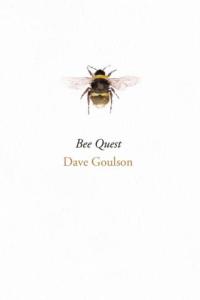 Goulson grows more like Bill Bryson and Gerald Durrell with each book. Although the topic of this, his third nature book (all of them are broadly about insects), is probably of least personal interest to me, there are plenty of wonderful asides and pieces of trivia that make it worth journeying along with him from Poland to Ecuador in the search for rare bees. For as close-up as his view often is, he also sees the big picture of environmental degradation and species loss. I learned some fairly dismaying facts: gold mining is extremely destructive to the environment, producing 20 tons of toxic material per ring; and it takes five liters of water to produce one almond in California. As for a more hopeful statistic: the billions of dollars it would take to set up conservation efforts for all the world’s species would still only equate to cutting world Coke consumption by 20%. It’s all a matter of priorities.
A favorite line:
“As is often the case in entomology, in the end it all comes down to the genitals.”
My rating:
Be Frank with Me
By Julia Claiborne Johnson
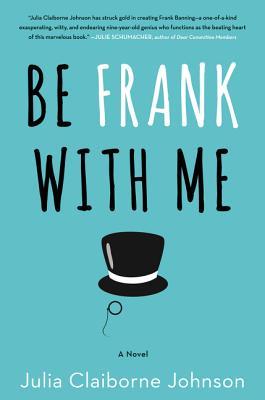 Alice, a young publishing assistant, is sent from New York City to Los Angeles to encourage one-hit wonder and Harper Lee type M.M. Banning to produce her long-delayed second novel. But when she arrives she discovers her most pressing duty is keeping an eye on Mimi’s oddball son, nine-year-old Frank. I doubt you’ve ever met a character quite like Frank. (I appreciated how, although he is clearly on what would be termed the autistic spectrum, Johnson avoids naming his condition.) Alice narrates the whole book in the first person. She finds herself caught in a four-person battle of wits – Alice, Mimi, Frank, and “itinerant male role model” Xander – inside Mimi’s big glass-fronted fishbowl of a house. There were a couple moments when I wondered where this madcap plot could be going. In particular, we have to wait a long time to find out whether Mimi is actually going to deliver another book. But the payout is worth waiting for. (See my full review at The Bookbag.)
My rating:
How to Be an Alien
By George Mikes
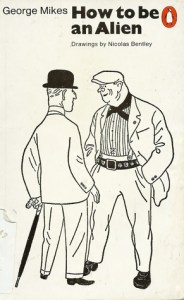 (The first volume in the How to Be a Brit omnibus; originally published in 1946.) You can draw a straight line from this through Bill Bryson’s Notes from a Small Island to the “Very British Problems” phenomenon. Mikes (that’s “mee-cash” – he was a Hungarian journalist who accidentally moved to England permanently when he was sent to London as a correspondent just before World War II) made humorous observations that have, in general, aged well. The mini-essays on tea, weather, and queuing struck me as particularly apt. I’d heard this line before, though I can’t remember where: “An Englishman, even if he is alone, forms an orderly queue of one.”
Another favorite passage:
“It is all right to have central heating in an English home, except the bath room, because that is the only place where you are naked and wet at the same time, and you must give British germs a fair chance.” [This reminds me of when my mother made her first trip to England in 2004 to visit me during my study abroad year; in her family newsletter reporting on the experience, one of her key observations was, “British bathrooms are antiquated.” My husband and I still quote this to each other regularly.]
My rating:
A Manual for Heartache
By Cathy Rentzenbrink
 This is a follow-up to Rentzenbrink’s memoir, The Last Act of Love, which was about the accident that left her brother in a vegetative state for eight years and the legal battle she and her parents fought to be able to end his life. The first quarter of this book contains fairly generic advice for people who have been through family tragedy, illness or some other hardship. It’s when Rentzenbrink makes things personal, talking about her own struggles with PTSD and depression and strategies that have helped her over the years, that the book improves, and it maintains a pretty high standard therafter. Although you wouldn’t really call anything in here groundbreaking, it’s a slim and accessible volume that I could see being helpful for anyone who’s grieving, even someone who’s not usually a reader or has a short attention span. (I won a copy in a Goodreads giveaway.)
A couple favorite passages:
“Experiencing grief for the first time is like the dark twin of falling in love. It feels a bit crazy, and we don’t think anyone has ever felt exactly as we do. But of course they have.”
“We don’t need to be unbroken. Our first step is simply to stop trying to hide our scars. Heartache is human.”
My rating: 
Have you read any of these? Which one takes your fancy?
The Essex Serpent by Sarah Perry
This exquisite work of historical fiction explores the gaps – narrower than one might think – between science and superstition and between friendship and romantic love. The Essex Serpent was a real-life legend from the latter half of the seventeenth century, but Perry’s second novel has fear of the sea creature re-infecting Aldwinter, her invented Essex village, in the 1890s. Mysterious deaths and disappearances are automatically attributed to the Serpent who dwells in the depths of the Blackwater. This atmosphere of paranoia triggers some schoolgirls to erupt in frenzied delusions as in The Crucible. It is unclear whether the Church should tolerate a source of mystery or dismiss it all as nonsense – after all, there’s a winged serpent carved onto one of the pews at the parish church.
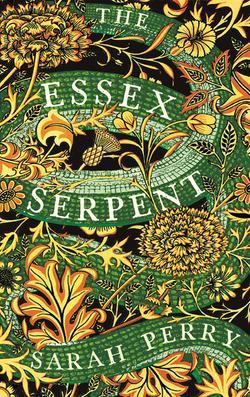 In a domestic counterpart to all these supernatural goings-on, we gain entry into two middle-class households. Cora Seaborne’s abusive husband, Michael, has recently died of throat cancer, leaving her to raise their odd (autistic, I wondered?) eleven-year-old son Francis on her own. She has an amateur interest in fossils to rival Mary Anning’s, so when she hears of a cache near Colchester she leaves London for Essex, bringing along Frankie and her companion, Martha. Mutual friends put her in touch with Will Ransome, the vicar of Aldwinter, sure that he and his family – consumptive wife Stella and children Joanna, James and John – will be able to show her around the coast.
Despite an inauspicious first meeting, which sees Cora and Will, still unknown to each other, hauling a drowning sheep out of a lake, theirs soon becomes a close, easy friendship. Cora feels she can speak her mind about the faith she lost and the new marvels she finds in nature:
I had faith, the sort I think you might be born with, but I’ve seen what it does and I traded it in. It’s a sort of blindness, or a choice to be mad – to turn your back on everything new and wonderful – not to see that there’s no fewer miracles in the microscope than in the gospels!
She holds her own in cerebral debates with Will as he deplores his parishioners’ fantasies about the Serpent. Is there really such a big difference between his faith – “all strangeness and mystery – all blood, and brimstone,” Cora teases – and the Serpent legend? In seeming contradiction to his career path, Will is more suspicious than many of the other characters of things he doesn’t understand and can’t explain away, like hypnosis and a Fata Morgana.
The novel’s nuanced treatment of faith and doubt is enhanced by references to Victorian science, including fossil hunting and early medical procedures. Dr. Luke Garrett, Michael’s surgeon, is one of Cora’s best friends back in London; she calls him “The Imp.” In one of the most striking passages of the entire book, he performs rudimentary heart surgery on the young victim of a stab wound. Perry fills in the novel’s background with a plethora of apt Victorian themes, including housing reform and London crime. For a book of 440 pages, it has a large cast and a fairly epic scope. Although there are places where subplots and minor characters might have been expanded upon, Perry wisely refrains from stuffing the novel with evidence of her research. Indeed, it’s a restrained book overall, yet breaks out into effusiveness in just the right places, as in Stella’s mystical adoration of the color blue.
Descriptive passages and the letters passing between the characters give a clear sense of the months passing, yet there is also something timelessly English about the narrative – Dickensian in places (Our Mutual Friend) and Hardyesque in others (Far from the Madding Crowd). I especially loved this picture of the June countryside:
Essex has her bride’s gown on: there’s cow parsley frothing by the road and daisies on the common, and the hawthorn’s dressed in white; wheat and barley fatten in the fields, and bindweed decks the hedges.
Cross this cozy pastoral vision with the Gothic nature of the Serpent craze and you get quite a unique atmosphere. The vague, unexplained sense of menace didn’t work for me at all in Perry’s previous novel, After Me Comes the Flood, but here it’s just right.
It was no doubt true in the late Victorian period that “men and women can’t be friends because the sex part always gets in the way” (as famously declared in When Harry Met Sally). No one is sure what to make of a sexually available, self-assured female like Cora. The different kinds of Greek love, from philia to eros, keep shading into each other here. Like the water that forms the book’s metaphorical substrate, the relationships ebb and flow. Yet there’s no denigrating any connection as just friendship; in fact, friendship is enough to rescue one character from suicide. Like Hanya Yanagihara’s A Little Life, the novel asks whether love is ever enough to save us – and gives a considerably more optimistic answer.

My proof copy didn’t have quite such a gorgeous cover but did come intriguingly wrapped in snakeskin ribbon…
The fact that I have an MA in Victorian literature means I’m drawn to Victorian-set novels but also highly critical about their authenticity. While reading this, though, I thoroughly believed that I was in 1890. Moreover, Perry adroitly illuminates the situation of the independent “New Woman” and the quandary of science versus religion (which were the joint subjects of my dissertation: women’s faith and doubt narratives in Victorian fiction).
I’m delighted, especially having seen Perry speak at Bloxham Festival in February (see my write-up for more on her background and the inspirations behind this novel), to have liked The Essex Serpent three times as much as her debut. It has an elegant, evocative writing style reminiscent of A.S. Byatt and Penelope Fitzgerald. Something holds me back from the full 5 stars – too diffuse? Too much staying on the surface of things? Not quite intimate enough, especially about Cora’s inner life? – but I still declare myself mightily impressed. The Essex Serpent counts as one of my favorite novels of 2016 so far. You can see why Serpent’s Tail (how perfect is her publisher’s name?!) rushed this one into publication a few weeks early. Expect to see it on the Booker Prize shortlist and any other award list you care to mention.
With thanks to Anna-Marie Fitzgerald at Serpent’s Tail for the free review copy.
My rating: 
Reviews Roundup, January–February
One of my goals with this blog is to have one convenient place where I can gather together all my writing that has appeared in disparate online locations. To that end, once a month I provide links to all book reviews I’ve published elsewhere, with a rating (below each description) and a taster so you can decide whether to read more. A few exceptions: I won’t point out my Kirkus Indie, BlueInk or Publishers Weekly reviews since I don’t get a byline. Meanwhile, I’ve done my first review for the Pittsburgh Post-Gazette – exciting!
The Bookbag
The Noise of Time by Julian Barnes: “Art is the whisper of history, heard above the noise of time.” Through a fictionalized biography of the Russian composer Shostakovich, Barnes questions how art can withstand political oppression. Knowing Barnes’s penchant for stylistic experimentation, this was never going to be a straightforward, chronological life story. Instead, as he so often does, he sets up a tripartite structure, focusing on three moments when Shostakovich has a reckoning with Power. The book is full of terrific one-liners (“Integrity is like virginity: once lost, never recoverable”), but there are not many memorable scenes to latch on to.

Motions and Moments : More Essays on Tokyo (& interview) by Michael Pronko: Pronko’s third collection of essays about his adopted city is an eloquent tribute to a place full of contradictions and wonders. Compared to his earlier collection, Beauty and Chaos, I sense Pronko is now more comfortable in his surroundings, perhaps happier to include himself in ‘we’ rather than looking on passively at ‘them’. For instance – inspired by Japanese women’s perfect outfits – he consciously tries to dress better, and he’s taken to eating ramen and sleeping on a futon, just like a native. The highlight is a set of pieces written in the aftermath of the 2011 earthquake / tsunami.

BookBrowse
 The Portable Veblen by Elizabeth McKenzie: Veblen, named after the late-nineteenth-century Norwegian-American economist, is one of the oddest heroines you’ll ever meet. She thinks squirrels are talking to her and kisses flowers. But McKenzie doesn’t just play Veblen for laughs; she makes her a believable character well aware of her own psychological backstory. I suspect the squirrel material could be a potential turn-off for readers who can’t handle too much whimsy. Over-the-top silly in places, this is nonetheless a serious account of the difficulty of Veblen and Paul, her neurology researcher fiancé, blending their dysfunctional families and different ideologies – which is what marriage is all about.
 Weathering by Lucy Wood: This atmospheric debut novel is set in a crumbling house by an English river and stars three generations of women – one of them a ghost. Ada has returned to her childhood home after 13 years to scatter her mother Pearl’s ashes, sort through her belongings, and get the property ready to sell. In a sense, then, this is a haunted house story. Yet Wood introduces the traces of magical realism so subtly that they never feel jolting. Like the river, the novel is fluid, moving between the past and present with ease. The vivid picture of the English countryside and clear-eyed look at family dynamics remind me most of Tessa Hadley (The Past) and Polly Samson (The Kindness).
Foreword Reviews
When We Were Invincible by Jonathan Harnisch: In this short novel, a young man wrestles with depression and Tourette’s syndrome, which together drive him to the point of suicide. A series of dreams and chance meetings, along with the possibility of romance and faith in God, pull him back from the edge. The book successfully introduces philosophical themes and gives a sympathetic picture of mental illness. However, it is weaker at filling in background and providing transitions, and there are many awkward, unlikely lines of dialogue. Recommended to fans of The Curious Incident of the Dog in the Night-Time.

Nudge
 The Life and Death of Sophie Stark by Anna North: The twisty, clever story of a doomed filmmaker – perfect for fans of Hausfrau. Who is Sophie Stark? A New York City-based indie director whose four documentary-style movies are “almost more like life than life itself.” Bisexual and with certain traits of high-functioning autism, Sophie is easily misunderstood. She’s a rebel who doesn’t conform to social niceties. The book is told through five first-person reminiscences from the people closest to her. In this respect the novel’s format recalls Kitchens of the Great Midwest. My favorite sections, though, are the reviews of her films, all by the same critic.
 Casualties by Betsy Marro: A powerful, melancholy debut novel about how war affects whole families, not just individual soldiers. As in Bill Clegg’s Did You Ever Have a Family, which Casualties resembles in tone if not in style, a bereaved mother sets off on a journey. Ruth’s unlikely companion on the road trip east is a Gulf War amputee who appears little more than a conman but genuinely wants to clean up his act so he can reconcile with his teenage daughter. At times the road trip scenario felt a little far-fetched to me, and Casey too obvious a replacement son figure. Yet as both he and Ruth ponder how much they have lost and the small things they can try to put right, they together form a touching picture of the various ways war’s effects can linger.
Pittsburgh Post-Gazette
 Mr. Splitfoot by Samantha Hunt: “All stories are ghost stories,” Samantha Hunt proclaims in her quirky third novel about the crossover between motherhood and mysticism. In a dual storyline that takes in fundamentalist cults, unlikely mediums and a pregnant woman’s pilgrimage, Hunt asks whether one can ever believe in the unseen. Mr. Splitfoot has the offbeat charm of Scarlett Thomas’s work. While the plot ultimately feels like a bit of a jumble, its vision of unexpected love and loyalty remains compelling. “The End’s always coming,” but it is how one lives in the face of brutality and impending extinction that matters.
I also post reviews of most of my casual reading and skimming on Goodreads:
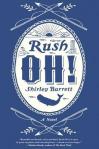 Rush Oh! by Shirley Barrett: A debut novel in which an Australian whaler’s daughter looks back at 1908, a catastrophic whaling season but also her first chance at romance. I felt that additional narrators, such as a whaleman or an omniscient voice, would have allowed for more climactic scenes. Still, I found this gently funny, especially the fact that the family’s cow and horse are inseparable and must be together on any outing. There are some great descriptions of whales, too.
 Felicity by Mary Oliver: I was disappointed with my first taste of Mary Oliver’s poetry. So many readers praise her work to the skies, and I’ve loved excerpts I’ve read elsewhere. However, I found these to be rather simplistic and clichéd, especially poems’ final lines, e.g. “Soon now, I’ll turn and start for home. / And who knows, maybe I’ll be singing.” or “Late, late, but now lovely and lovelier. / And the two of us, together—a part of it.” I’ll definitely try more of her work, but I’ll look out for an older, classic collection.
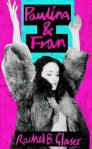 Paulina & Fran by Rachel B. Glaser: Full of blunt, faux-profound sentences and smutty, two-dimensional characters. Others may rave about it, but this wasn’t for me. I get that it is a satire on female friendship and youth entitlement. But I hated how the main characters get involved in a love triangle, and once they leave college any interest I had in them largely disappeared. Least favorite lines: “Paulina. She’s like Cleopatra, but more squat.” / “She’s more like Humphrey Bogart” and “She craved the zen-ness of being rammed.”

 Noah’s Wife by Lindsay Starck: I kept wanting to love this book, but never quite did. It’s more interesting as a set of ideas – a town where it won’t stop raining, a minister losing faith, homeless zoo animals sheltering with ordinary folk – than as an executed plot. My main problem was that the minor characters take over so that you never get to know the title character, who remains nameless. There’s also a ton of platitudes towards the end. It reminded me most of The Readers of Broken Wheel Recommend and Not Forgetting the Whale (another cozy environmental dystopia based around biblical allusions).
 Spill Simmer Falter Wither by Sara Baume: This sounded like a charmingly offbeat story about a loner and his adopted dog setting off on a journey. As it turns out, this debut is much darker than expected, but what saves it from being unremittingly depressing is the same careful attention to voice you encounter in fellow Irish writers like Donal Ryan and Anne Enright. It’s organized into four sections, with the title’s four verbs as headings. In a novel low on action, the road trip is much the most repetitive section, extending to the language as well. Even so, Baume succeeds in giving a compassionate picture of a character whose mental state comes into question. (Full review in March 2016 issue of Third Way magazine.)
 Medium Hero by Korby Lenker: Lenker is an indie musician, and the 27 autobiographical stories in his debut collection are about the everyday challenges of being on the road versus trying to pay the bills. Many feature “Korby” or “Simon” as fictional stand-ins, and recurring locations include his hometown of Twin Falls, Idaho and his adopted home of Nashville. As the title suggests, Lenker has no illusions about being famous or out of the ordinary. Most of the time he just tries to be a decent guy, the kind who prays for family members in distress even though he’s not sure he believes in God. Lest that sound too serious, though, there are also stories about peeing his pants and the perils of being a metrosexual.
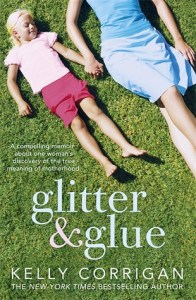 Glitter and Glue by Kelly Corrigan: Slides down like ice cream. And I say that even though the whole basis for this memoir feels rather thin. Corrigan frames it around five months in the early 1990s when she worked as a nanny for two Australian kids whose mother died of cancer. For a young woman fresh out of college, it was like a trial run for being a mother, and also gave her a new appreciation for everything her own mother had done for her during her Philadelphia Catholic upbringing. If Corrigan’s father was the ‘glitter’ of the family, her mother was the ‘glue’ – holding everything together in the background. This is impressively reconstructed, dialogue and all, from letters, journals and photos.
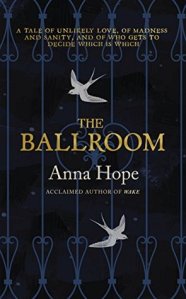 The Ballroom by Anna Hope: This novel was inspired by the story of the author’s great-great-grandfather, an Irishman who was a patient at Menston Asylum in West Yorkshire from 1909 to 1918. The novel zeroes in on the long, hot summer of 1911, focusing through alternating close third-person chapters on John Mulligan, a new patient named Ella Fay, and Dr. Charles Fuller, who wants to put his mental hospital at the frontline of eugenics research. Ultimately I didn’t like this quite as much as Wake, but I think it cements Anna Hope’s reputation as a solid historical fiction writer. I hope with her next book she’ll move beyond the years around World War I to consider a less-chronicled era.
 Life without a Recipe by Diana Abu-Jaber: The Jordanian–American writer reflects on how various food cultures have sustained her through a life that hasn’t always turned out as expected. Three marriages, a move from Portland to Florida, a winding path to motherhood in her forties, and her father’s death from leukemia are some of the main events. Like Sasha Martin’s Life from Scratch, this is more about family and personal history than it is about food (and there are no recipes). Still, food is the stuff of memories, and it is what binds her to two strong characters: her Jordanian father Bud with his stuffed grape leaves, and her maternal grandmother Grace with her frequent baking and the pastries they consumed together in Paris.
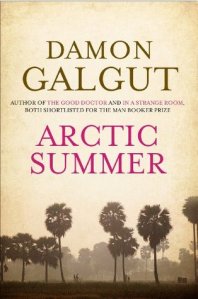 Arctic Summer by Damon Galgut: This fictionalized account of the life of E.M. Forster focuses on the drawn-out composition of A Passage to India, which he began in 1913 but wouldn’t complete and publish until 1924. In between he broke off to write his explicitly homosexual novel Maurice (only published posthumously), spent three years working in Egypt during the war, and served as a secretary to an Indian maharajah. As fictionalized biographies of authors go, I’d rate this somewhere between David Lodge’s A Man of Parts (H.G. Wells) and Colm Tóibín’s superior The Master (Henry James); all three share a heavy focus on the author’s sexuality. “Buggery in the colonies. It wasn’t noble” is one of my favorite random snippets from this novel, and sums up, for me, its slightly prurient aftertaste.
 Bookish Beck = Rebecca Foster. American transplant to England. Freelance proofreader and book reviewer.
 Bookish Beck