Mega #ShortStorySeptember Catch-Up! Fetto, P. Fitzgerald, Henley, Logan, L. Moore, E. Williams & 2 Partial Reads, 3 DNFs, 2 Single Stories
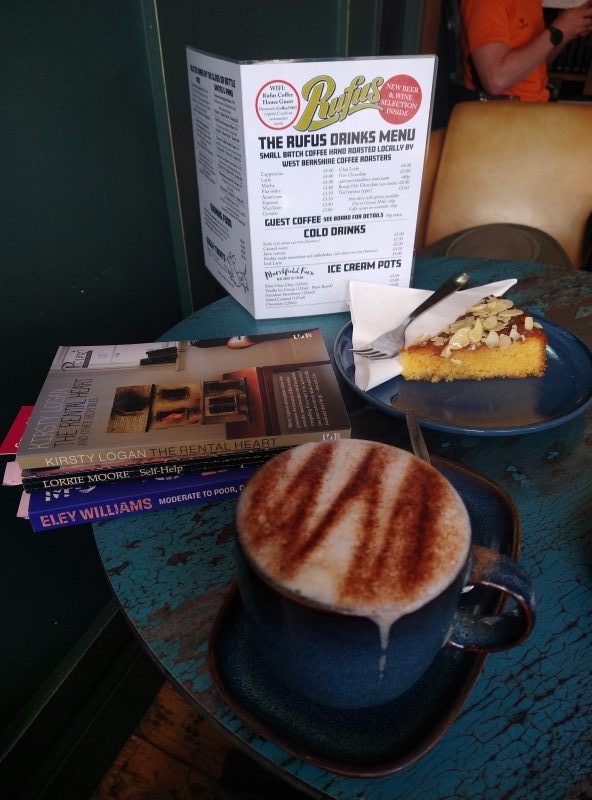
In total, I read 10 collections, as well as parts of five more, and nine individual stories for Short Story September. It would be absurd for me to be disappointed with those numbers (in comparison to last year’s 15 collections, I guess). Today is the last day of the link-up, so I’m calling it a day and giving brief responses to the rest of the books I read for the challenge. (My other reviews: six stories, Old Romantics by Maggie Armstrong, “Death in Midsummer” by Yukio Mishima, three R.I.P. collections.) The range of styles, settings, and subject matter in the below really showcase how much the short story can do, often in very few pages.
Hail Mary by Funmi Fetto (2025)
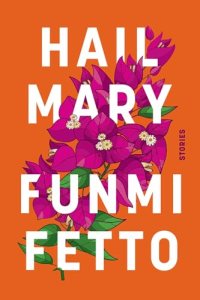 These nine stories explore religious and cultural limitations on Nigerian women’s lives at home and in London. The title story questions whether Riliwa’s efforts to assimilate have been worthwhile; “It amazed her how much England was lauded and celebrated back home. Her reality was cruel and cold.” In “Dodo Is Yoruba for Fried Plantain,” Morayo married into privilege in the Gloucestershire countryside, but long since discovered the relationship was a sham. On trips to London markets to buy authentic African ingredients, she wonders if reconnecting with her roots will redeem lost time. A longing for motherhood underpins several of the stories, even sometimes explaining willingness to ignore homosexual urges. I was most impressed by “House Girl,” in which the abused protagonist flees her inescapable situation in a full-on Anna Karenina finale. There is not a lot of cheer here, but ample Adichie-esque talent with character, details, and plot to keep one reading. (Public library)
The Means of Escape by Penelope Fitzgerald (2000)
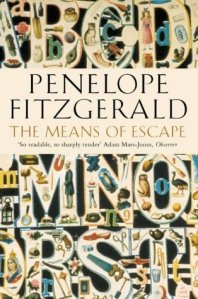 I already reviewed the single story “The Axe,” which is the odd one out – a mischievous ghost story. The rest are more typical of Fitzgerald: elegant slices of historical fiction, immediately establishing mastery of a place, time and set of circumstances, whether that be a convict on the loose in 1850s Australia (the title story), Impressionist-era English painters seeking models in Paris (“The Red-Haired Girl)”, or a poor boy who loses his precious medal in the 1660s (“Desideratus”). A couple of the stories appear to be contemporary and have a gently comic tone: the fussy conductor located on a tiny Scottish island in “Beehernz,” the overbearing stately-home guide in “Not Shown.” There’s a timeless, allegorical feel to “The Prescription” (one of two Greek/Turkish settings), in which doctors who once had a mentor–student relationships give rival diagnoses, and the title of “Our Lives Are Only Lent to Us” indicates philosophizing about the tragic losses in a small Central American town. I was dazzled by the breadth of Fitzgerald’s imagination and the confidence of her execution. (Secondhand – Community Furniture Project, Newbury)
Apple & Palm by Patricia Henley (2026)
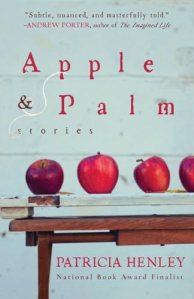 How had I never heard of Henley – an accomplished novelist, story writer, poet and playwright who was a National Book Award finalist for her debut? These eight linked short stories initially attracted me because they’re set in (fictional) Whistle Pig, Western Maryland, a region of my home state I know reasonably well, with Baltimore an occasional counterpart. Each spins its own web of connections and complications; together, they form a composite portrait of a community through its (ageing) women. Though Roxy’s 100th birthday has passed, she still shows her photographs and supports friends through a women’s art collective. Jill manages the family orchard and frets about her gambling-addicted father. After a disabling accident, Harper borrows Aunt Jill’s car for her gig as an artist’s model. Claire lashes out at her tenure refusal and her husband’s request for an open marriage. Sally leaves an IVF struggle behind for a vacation home in the Bahamas. A massage therapist hears a customer’s life story; sixtysomething friends diverge through varying experiences of illness and sex. I especially appreciated the matter-of-fact portrayal of a middle-aged asexual character. These fine stories reminded me of work by Stewart O’Nan and Ann Patchett.
Published by Cornerstone Press. With thanks to publicist Caitlin Hamilton Summie for the e-copy for review.
The Rental Heart and Other Fairytales by Kirsty Logan (2014)
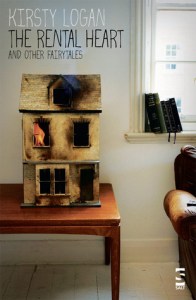 I’m not sure why I felt led to buy this Polari First Book Prize winner, as I’ve struggled with Logan’s fiction before (“The Gracekeeper” here was expanded into a novel). Of the 20 stories, many are flash length; I tended to prefer the slightly longer, queer takes on history and folklore. “Underskirts” is voiced by houseguests and servants, including the various maids the Lady of the manor seduces. It starts as a bit of fun when teenage girls experiment sexually with each other; then one goes to live with Baba Yaga in “Witch.” In “Coin-Operated Boys,” Elodie comes up with a novel solution to her lack of suitors. Many of the characters are young people reeling from loss or facing transition moments. A fair few stories are in titled or numbered fragments and have multiple narrators or a reverse chronology. You certainly couldn’t complain of them being samey. Still, many feel wispy, like there isn’t enough time to care about or understand the characters; to turn a skit into a full-length, satisfying drama. (New purchase from Salt Publishing)
Self-Help by Lorrie Moore (1985)
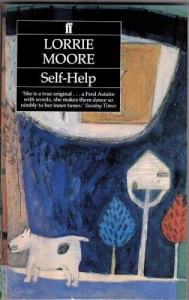 My fourth collection (after Bark, Birds of America and Like Life) by Moore, who is truly one of the great short story writers. In keeping with the title, four story names start with “How” and several are in the second person, to distance the main character and/or establish a tongue-in-cheek, advice-giving imperative. Women navigate marriage, infidelity, motherhood, and having ill or mentally compromised mothers of their own. I got Melissa Bank and Nora Ephron vibes from the first story, “How to Be an Other Woman.” Charlene’s quick wit makes her much more than just a mistress: “‘So, you’re a secretary.’ Squirm and quip: ‘More like a sedentary’.” “The Kid’s Guide to Divorce” adopts a child’s perspective with equal aplomb and is only four pages. In “Go Like This,” Liz schedules her escape from cancer for Bastille Day. The diary entries of “Amahl and the Night Visitors” wrestle with freedom vs. control in a couple’s relationship through their argument about whether or not to let the cat go outside. A woman persists in writing despite her professors and classmates objecting to her “outrageous and incompetent” sense of plot. There are such hilarious turns of phrase – “a strange flesh sundae of despair and exhilaration,” “full-haired as Easter basket grass” – throughout that I was taken aback by the dark turn in the final story, “To Fill,” where the narrator’s flippant wordplay masks her mental instability. A treat for Amy Bloom and Helen Simpson fans. (Secondhand – The Bookshop, Wigtown)
Moderate to Poor, Occasionally Good by Eley Williams (2024)
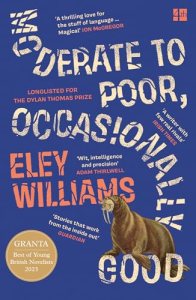 I could make a quip about how apt the title is for the contents, but that would feel mean. My sense with Williams’s second collection was that her practice was to think of an outlandish image or moment and go from there. What if a courtship withered because one partner accidentally sent footage of walrus sex? (“Scrimshaw,” which was a finalist for the BBC National Short Story Award in 2020.) What if someone hired a skywriter to scrawl “Will you marry me?” outside a restaurant window and it wasn’t received well? What if someone reading the radio shipping forecast (which lends the title phrase) used that segment to address their failing relationship? These 19 stories are inventive, yes, and often delight in wordplay and obscure vocabulary. That will be no surprise to anyone who’s read Attrib. and Other Stories or The Liar’s Dictionary. Too often, though, it feels like showing off skill but not committing emotionally, which means I didn’t believe in the lovelorn narrators and their peculiar predicaments. (“Too-quick chicanery of thought can cause a conversational form of the bends.” Quite.) The highlight was “Squared Circle,” about two pro wrestlers who convene every year on the anniversary of their famous showdown, even when one is seriously ill. (Gift from my wish list last year)
I’m still reading two excellent linked short story collections that I’m taking my time over:
 Rattlebone by Maxine Clair (1994): Vibrant and varied snapshots of a Black community in Kansas. I feel like Tayari Jones must have been influenced by it.
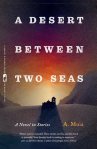 A Desert between Two Seas by A. Muia (2025): Exquisitely detailed historical stories about a Mexican priest, his houseboy’s enforced pearl-diving, and the wanderings that ensue.
A few DNFs:
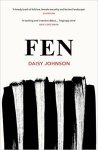 Fen by Daisy Johnson (2016): Adolescent girls discover sex – “Virginity was a half-starved dog you were looking after, wanted to give away as quickly as possible so you could forget it ever existed.” I read six stories but found the majority of them too similar, and provocative for the sake of it. Two good ones: “Starver” compares disordered eating with local eels that refuse to eat when the land is drained; in “Language,” a ghost struggles to communicate. (Gift from my wish list)
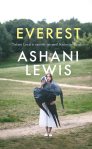 Everest by Ashani Lewis (2024): I read more than two-thirds of the book but can barely tell you anything about it. There’s some anxiety about social media, some coming-of-age discovery, some mean-girls friendship. Technically, the stories are accomplished, but they lack warmth. Two good ones: “Antarctica,” about an ill, older woman petitioning to go to the Scott Polar Research Institute; in “The Imitation Oyster,” fine dining is the basis of a liaison. (Public library)
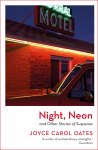 Night, Neon by Joyce Carol Oates (2021): I reviewed two stories on Oates’s birthday. My third Oates DNF; I don’t have high hopes of getting through a book by this lady. Despite the short form, she has such repetitive phrasing. Two good ones: in “Curious,” a writer makes generous anonymous donations to change a grocery clerk’s life; in “Parole Hearing, California Institution for Women, Chino, CA,” a Charles Manson follower appeals. Even in this nine-pager – short for Oates – the anaphora of “Because…” statements gets old. (Public library)
Single stories:
“The Quiet” by Carys Davies (2014)
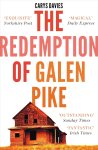 [from The Redemption of Galen Pike]
A good companion to West and Clear; all three share a vivid historical setting and a surprise ending that makes you want to stand up and cheer. Susan Boyce is a pioneer’s wife, isolated and battered. Her neighbour, Henry Fowler, keeps coming around, including when her husband is away, and at first there’s a hint of menace about his visits. But then they compare their scars. Brilliant. (New purchase from Salt Publishing)
“The Necklace” by Guy de Maupassant (1884)
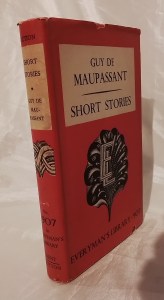 [translated from French by Marjorie Laurie; from the Everyman Short Stories volume]
Thanks to Emma of Words and Peace for recommending this one. It’s such an instant classic I a) can’t believe I’d never encountered it before and b) can’t imagine a time when it didn’t exist. A young woman with little money but grand pretensions marries.
She was eternally restive under the conviction that she had been born to enjoy every refinement and luxury. Depressed by her humble surroundings, the sordid walls of her dwelling, its worn furniture and shabby fabrics were a torment to her.
She had no pretty gowns, no jewels, nothing—and yet she cared for nothing else. She felt that it was for such things as these that she had been born.
Now, as Madame Loisel, she is keen to make a good impression at her first society outing, an At Home at the Education Office, but has nothing to wear. She begs her husband for money to buy a new dress, then borrows a diamond necklace from a friend. When the necklace gets lost in the hustle and bustle of the party, it has lasting consequences. “How small a thing can serve to save or ruin you!” This sobering morality tale is like Flaubert crossed with O. Henry. The lesson I drew from it was, just confess! I lost one of the earrings that I borrowed from a friend to wear to the Booker Prize ceremony, and everything was fine! (Little Free Library)
Whew, all caught up!
And the final statistics for Short Story September:
25 bloggers
80 posts
38 individual stories &
60 whole collections reviewed
(+ 1 bonus biography of a short story writer)
All the posts are here and here.

Thank you all again for joining in!
#ShortStorySeptember: Single Stories by Barnes, Bellow, Enright, P. Fitzgerald, Mackay, and Norman
Thanks for all the contributions to Short Story September thus far! I usually review whole collections, but today I’m highlighting individual stories I read either as stand-alones, in an unrelated volume, or as a taster from a book I might finish some other time. A few really surprised me for being so dissimilar to other work by the author. These six seem to illustrate different techniques or situations that short stories are good at exploring, thus my headings. (Beware mild spoilers in most of these brief responses.)
The Pastiche
“Homage to Hemingway” by Julian Barnes (2011)
[from Through the Window]
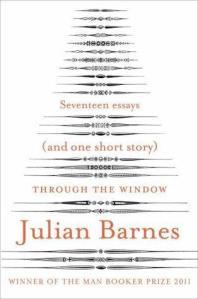 The protagonist is a literature instructor and failed novelist whom we see undertaking three different teaching gigs (in rural Wales, the Alps, and the American Midwest), like the triptych of expatriate Americans waiting for trains in Hemingway’s “Homage to Switzerland,” which is specifically referenced here. He believes fiction is “omnivorous and essentially amoral” and hopes to inspire his students to “reflect on life’s influence on art, and then art’s influence back on life.” This is, of course, a huge theme across Barnes’s oeuvre. Luckily, Barnes doesn’t attempt mimicry of Hemingway’s style, which really wouldn’t suit him at all, but I enjoyed the barbs his students throw. For example, Kate describes Hemingway as “the ultimate dead white male … celebration of machismo. Boys with toys.” This wasn’t very memorable but has me hankering to track down and reread Barnes’s full-length story collections. (Public library)
The Character Study
“Leaving the Yellow House” by Saul Bellow (1958)
[Penguin Modern: 36]
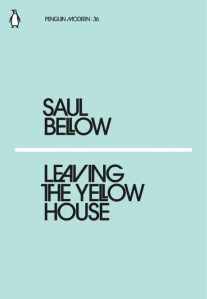 I wouldn’t have recognized this as Bellow’s writing were his name not on the cover. I think of him as a chronicle of Jewish city-dwellers; this is the story of a woman in a tiny town in the American West. Everyone in Sego Desert Lake knows that Hattie is an alcoholic. She’s now in her early seventies and pretty much has bourbon running through her veins. When she gets her car stuck on train tracks while driving drunk and breaks her arm in the ensuing kerfuffle, she and her acquaintances are forced to think seriously about what’s going to happen to her. She looks back on her two marriages and her relationship with India, who used to own her house – I never did work out who India was to her; a friend? an employer? – as she sets to the task of writing her will. Who deserves to have the house in turn? The title has a double meaning and also points to the final leave-taking of death. Hattie is not a very likeable character but has a certain admirable dignity, like Olive Kitteridge or Hagar in The Stone Angel. I liked her fancy that her whole life has been filmed and she’ll soon be able to revisit any moment she chooses. A melancholy slice of mid-century Americana. (Secondhand – Community Furniture Project, Newbury)
The Shock Ending
“Pillow” by Anne Enright (2008)
[from Taking Pictures]
 Alison, from Ireland, is part of a set of international roommates at her American college. Li is always asking her questions about what things mean or how they work. The first lines have her querying “What is a homosexual?” With this Enright sets us up to think that Li has a crush on Alison. First, the roommates find out that Li is her surname and really they should call her Ping. And then one morning Alison wakes up struggling to breathe because Ping is trying to smother her with the title object. I gasped aloud! The incident seems to come out of nowhere but I guess illustrates how easy it can be to hide mental illness. I kind of wish it wasn’t the Chinese girl who ended up being unstable, though. I’m not sure short stories are where Enright shines; I read the first two stories in this volume but won’t finish it. (Public library)
The Visual Pun
“The Axe” by Penelope Fitzgerald (1975)
[from The Means of Escape]
An office worker recalls having to make redundancies, including of his dignified clerical assistant, W. S. Singlebury. He feels even worse about it when the man invites him to visit his home. This faux report to the Company boss chronicles a growing sense of unease as he returns to work and finds the fired man still in the office, gruesomely injured and leaking blood all over. Fitzgerald has playfully imagined Singlebury getting the axe, literally, and then haunting the man responsible. I’ve never experienced such gleeful mischief from Fitzgerald – I only knew her austere historical novellas – but sure enough, this originally appeared in The Times Anthology of Ghost Stories. (Secondhand – Community Furniture Project, Newbury)
The Family Drama in Miniature
“The Worlds Smallest Unicorn” by Shena Mackay (1999)
[from The Worlds Smallest Unicorn and Other Stories]
 Fan’s brother-in-law, Teddy, has just returned from Hong Kong and she’s not happy about it: “now here was this succubus squatting in her kitchen, expecting to be fed.” She sees in the newspaper that an old flame of his, a singer, has died and he sets out for the funeral, passing a circus billet advertising the title act. (Since it reproduces what was on the tacky poster, I can let Mackay off for the grammatical gaffe, though it doth offend the eyes!) It seems to be a metaphor for anything that’s too good to be true, such as Fan’s affair with Teddy years ago. Her adolescent daughters’ banter and the South London environs are highlights in this one, but so far the book is not living up to the collection I read by Mackay last year, Dreams of Dead Women’s Handbags. (Secondhand – Slightly Foxed, Berwick)
The Relationship Study
“Kiss in the Hotel Joseph Conrad” by Howard Norman (1989)
[from Kiss in the Hotel Joseph Conrad]
 The narrator is dishonourably discharged from Canada’s air force for faking an emergency beach landing during a practice flight in 1943. “We’ve come up with a new, Asshole category,” the colonel declares as he dismisses him. Still, this amiable joker hopes his pluck will endear him to Imogene Linny, who has a kissing booth for would-be soldiers on the Halifax wharf. She recognizes him from his prank and says, “You can kiss something, but it ain’t, I guarantee you, my lips.” In the two decades that follow, he keeps tabs on Imogene as she marries into a hotel empire and he works on the greyhound tracks. After all, he paid his dollar at that booth but never got his kiss. This could have gone creepy but Norman keeps it quirky and sweet instead. His novels, too, often feature Atlantic Canada, oddballs, and hotels. (Secondhand – Hay Cinema Bookshop)
Are any of these authors, and their stories, familiar to you?
Which of these six story types do you prefer?
#NovNov24 Halfway Check-In & Small Things Like These Film Review
Somehow half of November has flown by. We hope you’ve been enjoying reading and reviewing short books this month. So far we have had 40 participants and 84 posts! Remember to add your posts to the link-up, or alert us via a comment here or on Bluesky (@cathybrown746.bsky.social / @bookishbeck.bsky.social), Instagram (@cathy_746books / @bookishbeck), or X (@cathy746books / @bookishbeck).

If you haven’t already, there’s no better time to pick up our buddy read, Orbital by Samantha Harvey, which won the Booker Prize on Tuesday evening. Chair of judges Edmund de Waal said it is “about a wounded world” and that the panel’s “unanimity about Orbital recognises its beauty and ambition.” I was surprised to learn that it is only the second-shortest Booker winner; Offshore by Penelope Fitzgerald is even shorter.

Another popular novella many of us have read is Small Things Like These by Claire Keegan (my latest review is here). I went to see the excellent film adaptation, with a few friends from book club, at our tiny local arthouse cinema on Wednesday afternoon. I’ve read the book twice now – I might just read it a third time before Christmas – and from memory the film is remarkably faithful to its storyline and scope. (The only significant change I think of is that Bill doesn’t visit Ned in the hospital, but there are still flashbacks to the role that Ned played in Bill’s early life.)
 The casting and cinematography are exceptional. Cillian Murphy portrays Bill with just the right blend of stoicism, meekness, and angst. Emily Watson is chilling as Sister Mary, the Mother Superior of the convent, which is suitably creepy with dim brick hallways and clinical laundry rooms. The grimy cobbles and dull streetlamps of the town contrast with the warm light in the scenes of Bill’s remembered childhood at Mrs Wilson’s. Repeated shots – of Bill’s truck setting off across the bridge in the early morning, of him scrubbing coal dust from his hands with carbolic soap, of his eyes wide open in the middle of the night – are not recursive but a way of establishing the gruelling nature of his tasks and the unease that plagues him. A life of physical labour has aged him beyond 39 (cf. Murphy is 48) and he’s in pain from shouldering sacks of coal day in and day out.
Both book and film are set in 1985 but apart from the fashions and the kitschy Christmas decorations and window dressings you’d be excused for thinking it was the 1950s. Bill’s business deals in coal, peat and tinder; rural Ireland really was that economically depressed and technologically constrained. (Another Ireland-set film I saw last year, The Miracle Club, is visually very similar – it even features two of the same actors – although it takes place in 1967. It’s as if nothing changed for decades.)
 By its nature, the film has to be a little more overt about what Bill is feeling (and generally not saying, as he is such a quiet man): there are tears at Murphy’s eyes and anxious breathing to make Bill’s state of mind obvious. Yet the film retains much of the subtlety of Keegan’s novella. You have to listen carefully during the conversation between Bill and Sister Mary to understand she is attempting to blackmail him into silence about what goes on at the convent.
At the end of the film showing, you could have heard a pin drop. Everyone was stunned at the simple beauty of the final scene, and the statistics its story is based on. It’s truly astonishing that Magdalene Laundries were in operation until the late 1990s, with Church support. Rage and sorrow build in you at the very thought, but Bill’s quietly heroic act of resistance is an inspiration. What might we, ordinary people all, be called on to do for women, the poor, and the oppressed in the years to come? We have no excuse not to advocate for them.
(Arti of Ripple Effects has also reviewed the film here.)
So far this month I’ve read nine novellas and reviewed eight. One of these was a one-sitting read, and I have another pile of ones that I could potentially read of a morning or evening next week. I’m currently reading another 16 … it remains to be seen whether I will average one a day for the month!
20 Books of Summer, 5: A House Full of Daughters by Juliet Nicolson
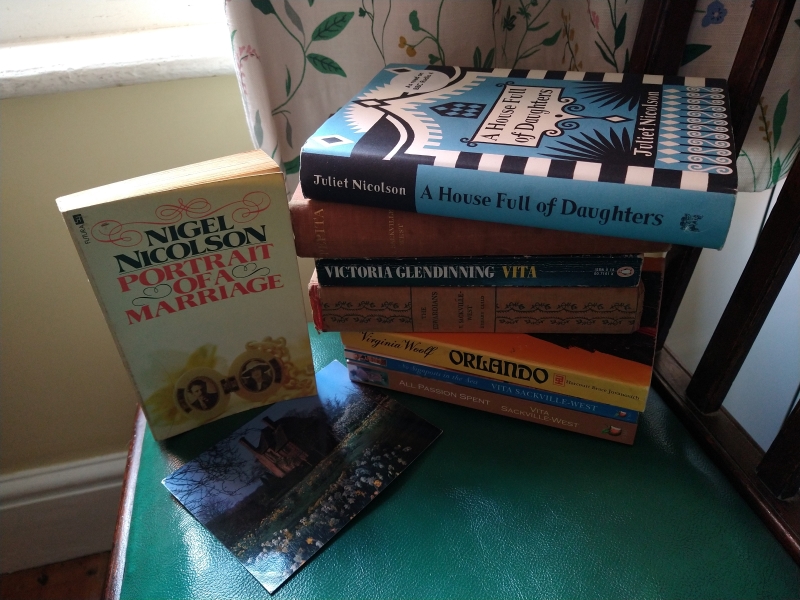
Journalist and popular historian Juliet Nicolson is Vita Sackville-West’s granddaughter and one of the few remaining guardians of her living memory. This 2015 family memoir chronicles the lives of seven (eight, really) generations of women and travels from Malaga in the 1830s to present-day England. Nicolson acknowledges the inherited privilege that has typified this clan since the time of Vita’s grandmother but prefers to emphasize the roles that place and talent have played. It is enough of a biography of Vita to have won a Bisexual Book Award but, even though Vita only had sons, the focus is on mother–daughter bonds and how values and experiences have recurred across nearly two centuries.
First came Pepita, who rose from poverty in southern Spain to be a legendary dancer (“the Beyoncé of her day,” Nicolson quipped at an online event I attended – see below) and catch the eye of an English diplomat, Lionel Sackville-West, at a performance in Paris. Although Pepita was already married to her dancing teacher, she shook off her controlling mother and became Sackville-West’s longtime mistress, bearing him seven children. They could all have been disinherited for illegitimacy, however, had Pepita’s daughter Victoria not secured the link – and access to the family estate, Knole – by marrying her cousin, young Lionel Sackville-West. Vita wrote in Pepita, her joint biography of her mother and grandmother, “My mother appears to have been born with the faculty of attracting the most peculiar and improbable happenings,” such as a proposal of marriage from the recently widowed U.S. president, Chester Arthur, when she accompanied her father to Washington, DC.

Vita is the book’s presiding spirit and pivot point, but I already knew a lot about her from reading Victoria Glendinning’s biography plus two of her novels, so this material was too familiar. The fact that we then leap from daughters to a daughter-in-law (Nicolson’s mother, Philippa Tennyson-d’Eyncourt – these figures are all posher than posh!) is unfortunate as it dilutes the theme. However, Nicolson gives a behind-the-scenes look at Sissinghurst and the marriages between Vita and Harold, loving but also a cover for same-sex relationships for both of them; and Nigel and Philippa, which was a disaster almost from the start. Nicolson is also brave to admit the alcoholism that she subconsciously received from her mother. Philippa died at 58, but by admitting she had a problem Nicolson was able to get help and turn things around. Two generations followed: her two daughters and one granddaughter, who is now 11.
Nicolson sees patterns repeating across the generations: emotional abandonment by parents, “the lack of confidence, the fear of failure, and the seeking of approval where there was none” as well as “writing about the life and work of an earlier generation.” She hopes that with this book she has marked the arrival of “an increasingly tolerant and accepting generation, one that is not afraid to learn from the mistakes of the past and is determined not to repeat them”. (Fun but unrelated fact: Penelope Fitzgerald was one of Nicolson’s teachers.)

On the staircase leading up to Vita’s study in the tower, September 2009.
I visited Sissinghurst in 2009 – I can’t believe I haven’t been back in the past 15 years – and when we briefly lived in Sevenoaks in 2012 we also went to Knole. Both are magical places, especially Sissinghurst. For a few years there I was on a kick of reading a lot by and about Vita (I can recommend No Signposts in the Sea) and I also absorbed a fair bit via Adam Nicolson’s books (that’s Juliet’s brother) and his wife Sarah Raven’s – her recipes are to die for, and she’s kept up the gardens in a way that would make Vita proud. So I’d say it probably helps to have an existing interest in the family, but it should be a reasonably engrossing read in any case. (Free from a neighbour)
Yesterday I watched “The Inspiration of Vita Sackville-West,” a recording of an RSL event held at the London Library in October that was aired to tie in with their annual Dalloway Day as well as the 95th anniversary of the publication of Virginia Woolf’s Orlando (for which Vita was a model) and, of course, Pride Month. The panelists were Juliet Nicolson; trans novelist Shola von Reinhold, whose LOTE (2020) won the Republic of Consciousness and James Tait Black Memorial Prizes; fashion critic Charlie Porter; and writer Olivia Laing. The discussion was expertly chaired by Shahidha Bari, an academic, fashion writer and presenter of BBC Two’s Inside Culture. She opened by asking each speaker to define Vita in one word. Nicolson chose “lover,” which von Reinhold echoed. Porter said “physical.” Laing cheated with a made-up compound word: “androgynous-aristocratic-aesthete.”
And the conversation went on from there. Nicolson spoke of her grandmother as a formidable woman, tall and tobacco-scented, and remembered the exotic treasures she and her siblings found in Vita’s tower study, such as a bottle of emerald-green nail polish. She described Vita as enigmatic and representing duality: she was born a Victorian but has been embraced by modernist and queer studies; she was conventional in some ways, but also a rebel. Porter has written about fashion and the Bloomsbury circle, with Woolf as one of his subjects, so he thinks about Vita mostly as a muse. He read from Vita’s letter to Harold describing meeting Woolf, whom she thought “quite old” and “atrociously dressed.” Nonetheless, she’d lost her heart. Woolf in her turn commented on Vita’s moustache, which was likely a sign of her Spanish heritage rather than excess testosterone as some have theorized.
For von Reinhold, Vita is an early example of androgyny, a precursor to today’s trans and nonbinary identities. Laing, who has recently published a book on gardening, focused on Vita as a garden writer and designer. She said she doesn’t really value Vita’s novels but thinks her garden books (collections of her Observer columns) are extraordinary and read a passage in which she dreamt up the famous White Garden she would create at Sissinghurst (I read a kinda crummy novel about it a few years ago, The White Garden by Stephanie Barron).
The event gave a very good sense of Vita as a person but not as a writer. Audience questions brought up her poetry (oh God, it’s awful!) and travel books but that was as far as it went, and there was no discussion of the novels. Nicolson mentioned Pepita in passing but mostly talked about Portrait of a Marriage, which was half written by Vita and then finished by Nigel, a publisher (he was half of Weidenfeld and Nicolson, aka W&N). He had the courage to reveal his mother’s sexuality and Nicolson said that she believes Vita’s legacy is courage – to create a garden from scratch as a self-taught amateur, yes; but mostly to be oneself.
Book Serendipity, March to April 2022
This is a bimonthly feature of mine. I call it Book Serendipity when two or more books that I read at the same time or in quick succession have something in common – the more bizarre, the better. Because I usually 20–30 books on the go at once, I suppose I’m more prone to such incidents. The following are in roughly chronological order.
(I always like hearing about your bookish coincidences, too! Laura had what she thought must be the ultimate Book Serendipity when she reviewed two novels with the same setup: Groundskeeping by Lee Cole and Last Resort by Andrew Lipstein.)
- The same sans serif font is on Sea State by Tabitha Lasley and Lean Fall Stand by Jon McGregor – both released by 4th Estate. I never would have noticed had they not ended up next to each other in my stack one day. (Then a font-alike showed up in my TBR pile, this time from different publishers, later on: What Strange Paradise by Omar El Akkad and When We Were Birds by Ayanna Lloyd Banwo.)


- Kraftwerk is mentioned in The Facebook of the Dead by Valerie Laws and How High We Go in the Dark by Sequoia Nagamatsu.
- The fact that bacteria sometimes form biofilms is mentioned in Hybrid Humans by Harry Parker and Slime by Susanne Wedlich.
- The idea that when someone dies, it’s like a library burning is repeated in The Reactor by Nick Blackburn and In the River of Songs by Susan Jackson.
- Espresso martinis are consumed in If Not for You by Georgina Lucas and Wahala by Nikki May.
- Prosthetic limbs turn up in Groundskeeping by Lee Cole, The Book of Form and Emptiness by Ruth Ozeki, and Hybrid Humans by Harry Parker.
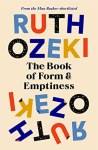
- A character incurs a bad cut to the palm of the hand in After You’d Gone by Maggie O’Farrell and The Book of Form and Emptiness by Ruth Ozeki – I read the two scenes on the same day.
- Catfish is on the menu in Groundskeeping by Lee Cole and in one story of Antipodes by Holly Goddard Jones.
 Reading two novels with “Paradise” in the title (and as the last word) at the same time: Paradise by Toni Morrison and To Paradise by Hanya Yanagihara.
- Reading two books by a Davidson at once: Damnation Spring by Ash and Tracks by Robyn.
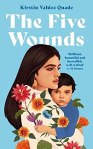
- There’s a character named Elwin in The Five Wounds by Kirstin Valdez Quade and one called Elvin in The Two Lives of Sara by Catherine Adel West.

- Tea is served with lemon in The Beginning of Spring by Penelope Fitzgerald and The Two Lives of Sara by Catherine Adel West.
- There’s a Florence (or Flo) in Go Tell It on the Mountain by James Baldwin, These Days by Lucy Caldwell and Pictures from an Institution by Randall Jarrell. (Not to mention a Flora in The Sentence by Louise Erdrich.)
 There’s a hoarder character in Olga Dies Dreaming by Xóchitl González and The Book of Form and Emptiness by Ruth Ozeki.
- Reading at the same time two memoirs by New Yorker writers releasing within two weeks of each other (in the UK at least) and blurbed by Jia Tolentino: Home/Land by Rebecca Mead and Lost & Found by Kathryn Schulz.
- Three children play in a graveyard in Falling Angels by Tracy Chevalier and Build Your House Around My Body by Violet Kupersmith.


- Shalimar perfume is worn in These Days by Lucy Caldwell and The Five Wounds by Kirstin Valdez Quade.
- A relative is described as “very cold” and it’s wondered what made her that way in Very Cold People by Sarah Manguso and one of the testimonies in Regrets of the Dying by Georgina Scull.
 Cherie Dimaline’s Empire of Wild is mentioned in The Sentence by Louise Erdrich, which I was reading at around the same time. (As is The Beginning of Spring by Penelope Fitzgerald, which I’d recently finished.)
- From one poetry collection with references to Islam (Bless the Daughter Raised by a Voice in Her Head by Warsan Shire) to another (Auguries of a Minor God by Nidhi Zak/Aria Eipe).
- Two children’s books featuring a building that is revealed to be a theatre: Moominsummer Madness by Tove Jansson and The Unadoptables by Hana Tooke.
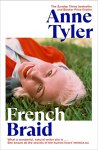
- Reading two “braid” books at once: Braiding Sweetgrass by Robin Wall Kimmerer and French Braid by Anne Tyler.

- Protests and teargas in The Sentence by Louise Erdrich and The Book of Form and Emptiness by Ruth Ozeki.
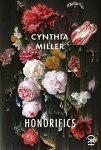
- Jellyfish poems in Honorifics by Cynthia Miller and Love Poems in Quarantine by Sarah Ruhl.
- George Floyd’s murder is a major element in The Sentence by Louise Erdrich and Love Poems in Quarantine by Sarah Ruhl.
What’s the weirdest reading coincidence you’ve had lately?
The Beginning of Spring with Penelope Fitzgerald & Karl Ove Knausgaard
(From To Star the Dark by Doireann Ní Ghríofa)
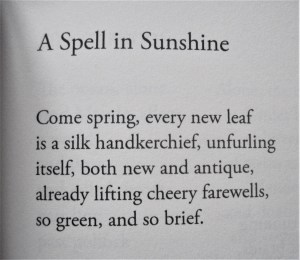
Reading with the seasons is one way I mark time. This is the first of two, or maybe three, batches of spring reading for me this year. The daffodils have already gone over; bluebells and peonies are coming out; and all the trees, including the two wee apple trees we’ve planted at our new house, are sprouting hopeful buds.
The Beginning of Spring by Penelope Fitzgerald (1988)
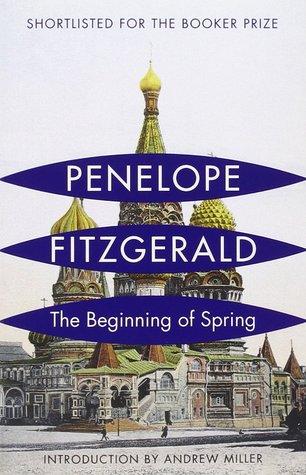 My fourth from Fitzgerald. One of her later novels, this was shortlisted for the Booker Prize. Its pre-war Moscow setting seemed to take on extra significance as I read it during the early weeks of the Russian occupation of Ukraine. Its title is both literal, referring to the March days in 1913 when “there was the smell of green grass and leaves, inconceivable for the last five months” and the expatriate Reid family can go to their dacha once again, and metaphorical. For what seems to printer Frank Reid – whose wife Nellie has taken a train back to England and left him to raise their three children alone – like an ending may actually presage new possibilities when his accountant, Selwyn, hires a new nanny for the children.
I have previously found Fitzgerald’s work slight, subtle to the point of sailing over my consciousness without leaving a ripple. While her characters and scenes still underwhelm – I always want to go deeper – I liked this better than the others I’ve read (The Bookshop, Offshore, and The Blue Flower), perhaps simply because it’s not a novella so is that little bit more expansive. And though she’s not an author you’d turn to for plot, more does actually happen here, including a gunshot. Frank is a genial Everyman, fond of Russia yet exasperated with its bureaucracy and corruption – this “magnificent and ramshackle country.” He knows how things work and isn’t above giving a bribe when it’s expedient for his business:
He took an envelope out of his drawer, and, conscious of taking only a mild risk, since the whole unwieldy administration of All the Russias, which kept working, even if only just, depended on the passing of countless numbers of such envelopes, he slid it across the top of the desk. The inspector opened it without embarrassment, counted out the three hundred roubles it contained and transferred them to a leather container, half way between a wallet and a purse, which he kept for ‘innocent income’.
I particularly liked Uncle Charlie’s visit, the glimpses of Orthodox Easter rituals, and a strangely mystical moment of communion with some birch trees. A part of me did wonder if the setting was neither here nor there, if a few plastered-on descriptions of Moscow were truly enough to constitute convincing historical fiction. That’s a question for those more familiar with Russia and its literature to answer, but I enjoyed the seasonal awakening. (Secondhand, charity shop in Bath) 
Spring by Karl Ove Knausgaard (2016; 2018)
[Translated from the Norwegian by Ingvild Burkey; illustrated by Anna Bjerger]
 Knausgaard is a repeat presence in my seasonal posts: I’ve also reviewed Autumn, Winter and Summer. I read his quartet out of order, finishing with the one that was published third. The project was conceived as a way to welcome his fourth child, Anna, into the world. Whereas the other books prioritize didactic essays on seasonal experiences, this is closer in format to Knausgaard’s granular autofiction: the throughline is a journey through an average day with his baby girl, from when she wakes him before 6 a.m. to a Walpurgis night celebration (“the evening when spring is welcomed in with song in Sweden”). They see the other kids off to school, then make a disastrous visit to a mental hospital – he forgets his bank card and ID, the baby’s bottle, everything, and has to beg cash from his bank to buy petrol to get home.
Looming over the circadian narrative is his wife’s mental health crisis the summer before (his ex-wife Linda Boström Knausgård, a writer in her own right, has bipolar disorder), while she was pregnant with Anna, and the repercussions it has had for their family. Other elements echo those of the previous books: the formation of memories, to what extent his personality is fixed, whether he’s fated to turn into his father, minor health concerns, and so on. Although this volume is less aphoristic than the previous books, there are still moments when he muses on life and gives general advice:
Self-deception is perhaps the most human thing of all. … And perhaps the following is nothing but self-deception: the easy life is nothing to aspire to, the easy choice is never the worthiest solution, only the difficult life is a life worth living. I don’t know. But I think that’s how it is. What would seem to contradict this, is that I wish you and your siblings simple, easy, long and happy lives. … The advantage of having siblings is that it is a lifelong attachment, and that nothing can break it.
All in all, this was the highlight of the series for me. Each of the four is illustrated by a different contemporary artist. Bjerger is less abstract than some of the others, which I count as a plus. (New bargain/remainder copy, Minster Gate Bookshop, York) 

This daffodil bookmark was embroidered by local textile artist Christine Highnett. My mother bought it for me from Sandham Memorial Chapel’s gift shop last summer.
A favourite random moment: A creeper coming through the tile roof of his office pushes a book off the shelf. It’s American Psycho. “I still found it incredible. And a little frightening, the blind force of growth”.
Speaking of meaningful, or perhaps ironic, timing: He records a conversation with his neighbour, who was mansplaining about Russian aggression and the place of Ukraine: “Kiev was the first great city in what became the Russian empire. … The Ukraine and Russia are like twins. … They belong together. At least the Russians see it that way. … The very idea of Russia is imperialistic.”
Any spring reads on your plate?
Novellas in November Wrap-Up
This is the first year that Novellas in November ran as an official blogger challenge. Cathy and I have been bowled over by the level of response: as of the time of this writing, 30 bloggers have taken part, publishing a total of 89 posts. (I’ve collected all the links on this master post.) Thank you all for being so engaged and helping to spread the love of short books!
We’re already thinking about how to adapt things for next year if we host #NovNov again.

A few specific books were reviewed more than once: The Swallowed Man by Edward Carey, The Spare Room by Helen Garner, and Train Dreams by Denis Johnson.
Three different novellas by Georges Simenon featured, and two by Hubert Mingarelli.
Other novellas discussed more than once were Breakfast at Tiffany’s by Truman Capote, The Metamorphosis by Franz Kafka, Bonjour Tristesse by Françoise Sagan, and Ethan Frome by Edith Wharton.
Aside from the above, here are other frequently mentioned authors who tend(ed) to write short books perfect for Novellas in November: James Baldwin, J.L. Carr, Penelope Fitzgerald, Jean Rhys, Muriel Spark, John Steinbeck, Nathanael West, and Jacqueline Woodson.
Along with Charco Press and Peirene Press, two more UK publishers whose books lend themselves to this challenge are And Other Stories and Fairlight Books. (If you have more ideas of authors and publishers, let me know and I’ll update these sections.)
And here’s my statistics for 2020:
Total number of novellas read this month: 16 (the same as 2019; vs. 26 in 2018)
Favorites: Dear Ijeawele by Chimamanda Ngozi Adichie (nonfiction); La Symphonie Pastorale by André Gide & Bonjour Tristesse by Françoise Sagan (in translation); The Lost Words by Robert Macfarlane and Jackie Morris
What’s the best novella you read this month?
First Encounter: Maggie Nelson
Maggie Nelson is the author of four volumes of poetry and five wide-ranging works of nonfiction that delve into the nature of violence and sexuality. From what I’d heard about her writing, I knew to expect an important and unconventional thinker with a distinctive, lyrical style. As of early June, Vintage has made some of her backlist, including The Red Parts: Autobiography of a Trial and Bluets, available for the first time in the UK.
I read The Red Parts for The Bookbag. Here’s an excerpt from my full review:
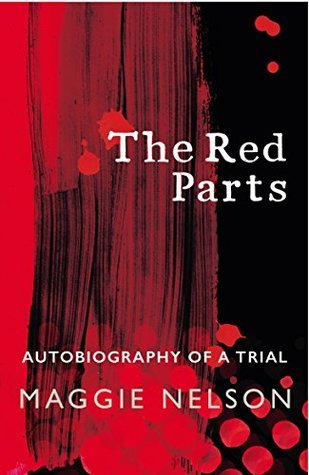 Nelson’s aunt was murdered in Michigan in 1969. Thirty-five years later, just as Nelson had completed writing a poetry collection about her, the case was reopened when new DNA evidence emerged. Most authors would quickly zero in on the trial itself, giving a blow-by-blow of the lawyers’ questioning and witnesses’ statements. Although Nelson does document important developments in the month-long trial, and describes autopsy photographs in blunt detail, her account is much more diffuse than one might expect. Interspersed with Jane’s history are other dark memories: Nelson’s father’s sudden death, her sister’s wild years, aborted love affairs. The title phrase tangentially refers to the words of Jesus in the New Testament, traditionally printed in red, so it has a sort of dual meaning: this is a (futile) search for the gospel truth about her aunt’s death, and also a conscious dive into the parts of life that frighten us. This fluid, engrossing narrative is no ordinary true crime story, but a meditative reflection on loss and identity.
My rating:
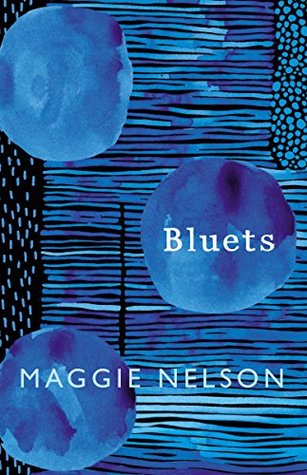 Bluets is a fragmentary record of Nelson’s arbitrary obsession with the color blue. It’s composed of 240 short numbered essays of about a paragraph each; some are just one or two sentences. At one point Nelson refers to these as “propositions,” but really they are more like metaphorical musings. Blue takes on so many meanings: with the connotation of “depressed”, it applies to her loneliness and sense of loss after the breakdown of a relationship (she continues addressing her former partner as “you” here) and a friend’s serious accident:
Loneliness is solitude with a problem. Can blue solve the problem, or can it at least keep me company within it?
Mostly I have felt myself becoming a servant of sadness. I am still looking for the beauty in that.
Then there’s blues music (Billie Holiday), seedy sex (“blue movies”), Joan Mitchell’s 1973 abstract painting Les Bluets, Novalis’ blue flower (which gives the title to a Penelope Fitzgerald novel), and so on. Nelson likens herself to a male bowerbird lining her nest with blue – sometimes literally, as with the collection of “blue amulets” that she keeps on a windowsill so sunlight can pass through the glass and illuminate the stones. I recalled that Sarah Perry lists Bluets as one inspiration for The Essex Serpent, in which the character Stella is fascinated with the color blue and keeps a similar trove of trinkets.
Bluets is a difficult work to characterize, but it seems closest in style to Jenny Offill’s Dept. of Speculation, which is also built on loosely linked aphorisms. The problem with books like these is that individual lines may stand out as profound but don’t contribute to an overall story line or argument. Moreover, Nelson’s forthrightness about sex, which edges towards crassness and feels out of place in this dreamily academic text, took me some getting used to.
Two more favorite lines:
I walked around Brooklyn and noticed that the faded periwinkle of the abandoned Mobil gas station on the corner was suddenly blooming.
If I were today on my deathbed, I would name my love of the color blue and making love with you as two of the sweetest sensations I knew on this earth.
My rating: 
Many thanks to Cat Mitchell of Penguin Random House for the free review copy.
The Red Parts was the more straightforward and satisfying read of this pair, but Bluets is certainly an original and artful bedside book. I would certainly read more by Nelson; I’m particularly interested in The Argonauts (2015), a memoir about forming her unconventional family – her partner, Harry Dodge, is transgender.
Have you read anything by Maggie Nelson? Do her books appeal?
The Essex Serpent by Sarah Perry
This exquisite work of historical fiction explores the gaps – narrower than one might think – between science and superstition and between friendship and romantic love. The Essex Serpent was a real-life legend from the latter half of the seventeenth century, but Perry’s second novel has fear of the sea creature re-infecting Aldwinter, her invented Essex village, in the 1890s. Mysterious deaths and disappearances are automatically attributed to the Serpent who dwells in the depths of the Blackwater. This atmosphere of paranoia triggers some schoolgirls to erupt in frenzied delusions as in The Crucible. It is unclear whether the Church should tolerate a source of mystery or dismiss it all as nonsense – after all, there’s a winged serpent carved onto one of the pews at the parish church.
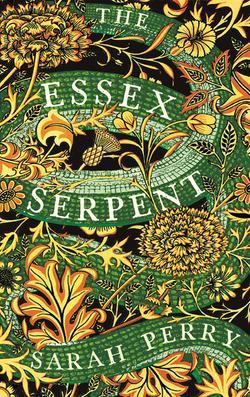 In a domestic counterpart to all these supernatural goings-on, we gain entry into two middle-class households. Cora Seaborne’s abusive husband, Michael, has recently died of throat cancer, leaving her to raise their odd (autistic, I wondered?) eleven-year-old son Francis on her own. She has an amateur interest in fossils to rival Mary Anning’s, so when she hears of a cache near Colchester she leaves London for Essex, bringing along Frankie and her companion, Martha. Mutual friends put her in touch with Will Ransome, the vicar of Aldwinter, sure that he and his family – consumptive wife Stella and children Joanna, James and John – will be able to show her around the coast.
Despite an inauspicious first meeting, which sees Cora and Will, still unknown to each other, hauling a drowning sheep out of a lake, theirs soon becomes a close, easy friendship. Cora feels she can speak her mind about the faith she lost and the new marvels she finds in nature:
I had faith, the sort I think you might be born with, but I’ve seen what it does and I traded it in. It’s a sort of blindness, or a choice to be mad – to turn your back on everything new and wonderful – not to see that there’s no fewer miracles in the microscope than in the gospels!
She holds her own in cerebral debates with Will as he deplores his parishioners’ fantasies about the Serpent. Is there really such a big difference between his faith – “all strangeness and mystery – all blood, and brimstone,” Cora teases – and the Serpent legend? In seeming contradiction to his career path, Will is more suspicious than many of the other characters of things he doesn’t understand and can’t explain away, like hypnosis and a Fata Morgana.
The novel’s nuanced treatment of faith and doubt is enhanced by references to Victorian science, including fossil hunting and early medical procedures. Dr. Luke Garrett, Michael’s surgeon, is one of Cora’s best friends back in London; she calls him “The Imp.” In one of the most striking passages of the entire book, he performs rudimentary heart surgery on the young victim of a stab wound. Perry fills in the novel’s background with a plethora of apt Victorian themes, including housing reform and London crime. For a book of 440 pages, it has a large cast and a fairly epic scope. Although there are places where subplots and minor characters might have been expanded upon, Perry wisely refrains from stuffing the novel with evidence of her research. Indeed, it’s a restrained book overall, yet breaks out into effusiveness in just the right places, as in Stella’s mystical adoration of the color blue.
Descriptive passages and the letters passing between the characters give a clear sense of the months passing, yet there is also something timelessly English about the narrative – Dickensian in places (Our Mutual Friend) and Hardyesque in others (Far from the Madding Crowd). I especially loved this picture of the June countryside:
Essex has her bride’s gown on: there’s cow parsley frothing by the road and daisies on the common, and the hawthorn’s dressed in white; wheat and barley fatten in the fields, and bindweed decks the hedges.
Cross this cozy pastoral vision with the Gothic nature of the Serpent craze and you get quite a unique atmosphere. The vague, unexplained sense of menace didn’t work for me at all in Perry’s previous novel, After Me Comes the Flood, but here it’s just right.
It was no doubt true in the late Victorian period that “men and women can’t be friends because the sex part always gets in the way” (as famously declared in When Harry Met Sally). No one is sure what to make of a sexually available, self-assured female like Cora. The different kinds of Greek love, from philia to eros, keep shading into each other here. Like the water that forms the book’s metaphorical substrate, the relationships ebb and flow. Yet there’s no denigrating any connection as just friendship; in fact, friendship is enough to rescue one character from suicide. Like Hanya Yanagihara’s A Little Life, the novel asks whether love is ever enough to save us – and gives a considerably more optimistic answer.

My proof copy didn’t have quite such a gorgeous cover but did come intriguingly wrapped in snakeskin ribbon…
The fact that I have an MA in Victorian literature means I’m drawn to Victorian-set novels but also highly critical about their authenticity. While reading this, though, I thoroughly believed that I was in 1890. Moreover, Perry adroitly illuminates the situation of the independent “New Woman” and the quandary of science versus religion (which were the joint subjects of my dissertation: women’s faith and doubt narratives in Victorian fiction).
I’m delighted, especially having seen Perry speak at Bloxham Festival in February (see my write-up for more on her background and the inspirations behind this novel), to have liked The Essex Serpent three times as much as her debut. It has an elegant, evocative writing style reminiscent of A.S. Byatt and Penelope Fitzgerald. Something holds me back from the full 5 stars – too diffuse? Too much staying on the surface of things? Not quite intimate enough, especially about Cora’s inner life? – but I still declare myself mightily impressed. The Essex Serpent counts as one of my favorite novels of 2016 so far. You can see why Serpent’s Tail (how perfect is her publisher’s name?!) rushed this one into publication a few weeks early. Expect to see it on the Booker Prize shortlist and any other award list you care to mention.
With thanks to Anna-Marie Fitzgerald at Serpent’s Tail for the free review copy.
My rating: 
My Favorite Nonfiction Reads of 2015
Without further ado, I present to you my 15 favorite non-fiction books read in 2015. I’m a memoir junkie so many of these fit under that broad heading, but I’ve dipped into other areas too. I give two favorites for each category, then count down my top 7 memoirs read this year.
Note: Only four of these were actually published in 2015; for the rest I’ve given the publication year. Many of them I’ve already previewed through the year, so – like I did yesterday for fiction – I’m limiting myself to two sentences per title: the first is a potted summary; the second tells you why you should read this book. (Links given to full reviews.)
Foodie Lit
 A Homemade Life: Stories and Recipes from My Kitchen Table by Molly Wizenberg (2009): Wizenberg reflects on the death of her father Burg from cancer, time spent living in Paris, building a new life in Seattle, starting her food blog, and meeting her husband through it. Each brief autobiographical essay is perfectly formed and followed by a relevant recipe, capturing precisely how food is tied up with memories.
 Comfort Me with Apples: More Adventures at the Table by Ruth Reichl (2001): Reichl traces the rise of American foodie culture in the 1970s–80s (Alice Waters and Wolfgang Puck) through her time as a food critic for the Los Angeles Times, also weaving in personal history – from a Berkeley co-op with her first husband to a home in the California hills with her second after affairs and a sticky divorce. Throughout she describes meals in mouth-watering detail, like this Thai dish: “The hot-pink soup was dotted with lacy green leaves of cilantro, like little bursts of breeze behind the heat. … I took another spoonful of soup and tasted citrus, as if lemons had once gone gliding through and left their ghosts behind.”
Nature Books
 Meadowland: The Private Life of an English Field by John Lewis-Stempel (2014): Lewis-Stempel is a proper third-generation Herefordshire farmer, but also a naturalist with a poet’s eye. Magical moments and lovely prose, as in “The dew, trapped in the webs of countless money spiders, has skeined the entire field in tiny silken pocket squares, gnomes’ handkerchiefs dropped in the sward.”
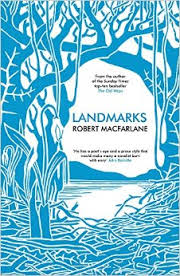 Landmarks by Robert Macfarlane: This new classic of nature writing zeroes in on the language we use to talk about our environment, both individual words – which Macfarlane celebrates in nine mini-glossaries alternating with the prose chapters – and the narratives we build around places, via discussions of the work of nature writers he admires. Whether poetic (“heavengravel,” Gerard Manley Hopkins’s term for hailstones), local and folksy (“wonty-tump,” a Herefordshire word for a molehill), or onomatopoeic (on Exmoor, “zwer” is the sound of partridges taking off), his vocabulary words are a treasure trove.
Theology Books
 Amazing Grace: A Vocabulary of Faith by Kathleen Norris (1998): In few-page essays, Norris gives theological words and phrases a rich, jargon-free backstory through anecdote, scripture and lived philosophy. This makes the shortlist of books I would hand to skeptics to show them there might be something to this Christianity nonsense after all.
 My Bright Abyss: Meditation of a Modern Believer by Christian Wiman (2013): Seven years into a cancer journey, Wiman, a poet, gives an intimate picture of faith and doubt as he has lived with them in the shadow of death. Nearly every page has a passage that cuts right to the quick of what it means to be human and in interaction with other people and the divine.
General Nonfiction
 Penelope Fitzgerald: A Life by Hermione Lee (2013): Although Penelope Fitzgerald always guarded literary ambitions, she was not able to pursue her writing wholeheartedly until she had reared three children and nursed her hapless husband through his last illness. This is a thorough and sympathetic appreciation of an underrated author, and another marvellously detailed biography from Lee.
 Being Mortal: Medicine and What Matters in the End by Atul Gawande (2014): A surgeon’s essential guide to decision-making about end-of-life care, but also a more philosophical treatment of the question of what makes life worth living: When should we extend life, and when should we concentrate more on the quality of our remaining days than their quantity? The title condition applies to all, so this is a book everyone should read.
Memoirs
 The Year My Mother Came Back by Alice Eve Cohen: Wry and heartfelt, this is a wonderful memoir about motherhood in all its variations and complexities; the magic realism (Cohen’s dead mother keeps showing up) is an added delight. I recommend this no matter what sort of relationship, past or present, you have with your mother, especially if you’re also a fan of Anne Lamott and Abigail Thomas.
- The Art of Memoir
 by Mary Karr: There is a wealth of practical advice here, on topics such as choosing the right carnal details (not sexual – or not only sexual – but physicality generally), correcting facts and misconceptions, figuring out a structure, and settling on your voice. Karr has been teaching (and writing) memoirs at Syracuse University for years now, so she’s thought deeply about what makes them work, and sets her theories out clearly for readers at any level of familiarity.
 A Circle of Quiet by Madeleine L’Engle (1971): In this account of a summer spent at her family’s Connecticut farmhouse, L’Engle muses on theology, purpose, children’s education, the writing life, the difference between creating stories for children and adults, neighbors and fitting into a community, and much besides. If, like me, you only knew L’Engle through her Wrinkle in Time children’s series, this journal should come as a revelation.
-
 Do No Harm: Stories of Life, Death and Brain Surgery by Henry Marsh (2014): “Terrible job, neurosurgery. Don’t do it.” – luckily for us, Henry Marsh reports back from the frontlines of brain surgery so we don’t have to. In my favorite passages, Marsh reflects on the mind-blowing fact that the few pounds of tissue stored in our heads could be the site of our consciousness, our creativity, our personhood – everything we traditionally count as the soul.
 I Hate to Leave This Beautiful Place by Howard Norman (2013): Norman has quickly become one of my favorite writers. You wouldn’t think these disparate autobiographical essays would fit together as a whole, given that they range in subject from Inuit folktales and birdwatching to a murder–suicide committed in Norman’s Washington, D.C. home and a girlfriend’s death in a plane crash, but somehow they do; after all, “A whole world of impudent detours, unbridled perplexities, degrading sorrow, and exacting joys can befall a person in a single season, not to mention a lifetime.”
 Portrait of an Addict as a Young Man by Bill Clegg (2010): Through this book I followed literary agent Bill Clegg on dozens of taxi rides between generic hotel rooms and bar toilets and New York City offices and apartments; together we smoked innumerable crack pipes and guzzled dozens of bottles of vodka while letting partners and family members down and spiraling further down into paranoia and squalor. He achieves a perfect balance between his feelings at the time – being out of control and utterly enslaved to his next hit – and the hindsight that allows him to see what a pathetic figure he was becoming.
And my overall favorite nonfiction book of the year:
 1. The Light of the World by Elizabeth Alexander: In short vignettes, beginning afresh with every chapter, Alexander conjures up the life she lived with – and after the sudden death of – her husband Ficre Ghebreyesus, an Eritrean chef and painter. This book is the most wonderful love letter you could imagine, and no less beautiful for its bittersweet nature.
What were some of your best nonfiction reads of the year?
 Bookish Beck = Rebecca Foster. American transplant to England. Freelance proofreader and book reviewer.
