In Cambridge for “Nature Matters”
We spent a few days last week in Cambridge, England for New Networks for Nature’s interdisciplinary “Nature Matters” conference, this year on the theme of “In Touch with the Wild.” This is the fourth year my husband (a biologist with the University of Reading) has participated, and the third year in a row that I’ve attended for a day. While other years the gathering has been in the small town of Stamford, this year’s temporary move to Cambridge gave us the impetus to finally explore this world-famous city for the first time.
Arriving later than we meant to on a Thursday evening, checking into our noisy hostel and then having to dash out in time for my husband to make the first event (and making a futile attempt to find an open coffee shop where I could while away a couple hours)…this all meant our first impression of the city was not great. However, cheap, terrific Chinese street food on Friday after the conference, followed by a delicious glass of cider in a pub and a sunny day for exploring the bustling city center on Saturday created a more favorable overall feeling.
-
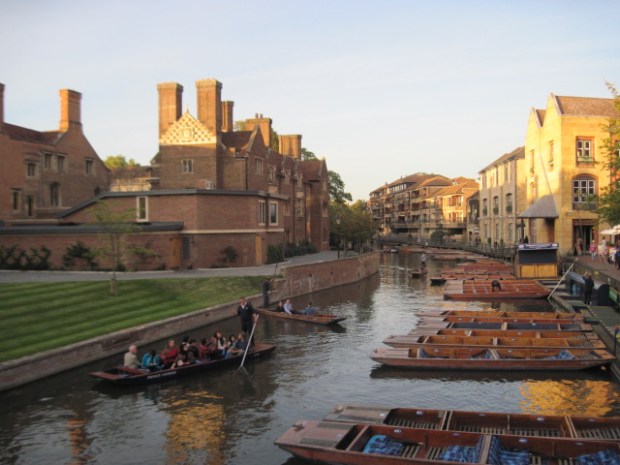
- Venice? No! Cambridge.

-
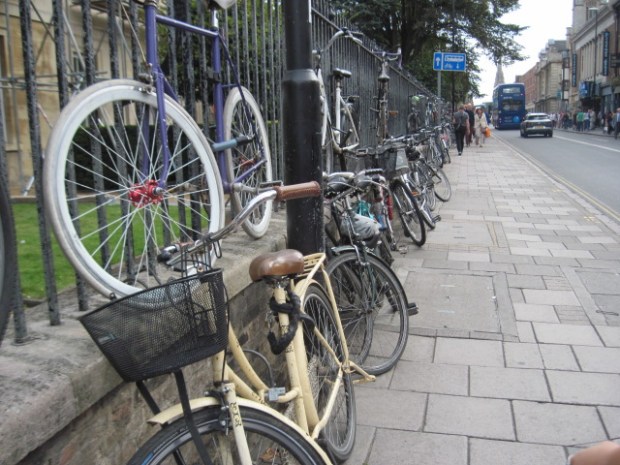
- Everyone cycles.
-

- King’s College.

-
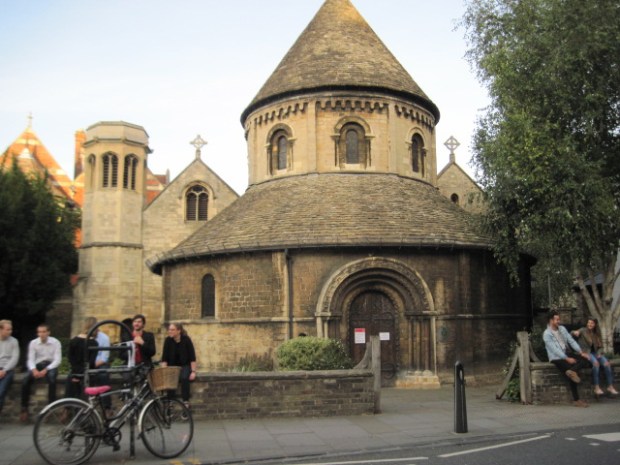
- The Church of the Holy Sepulchre, aka The Round Church.
Last year’s conference highlights for me were a debate about nature’s economic value and a panel on the purpose of nature poetry. This year’s sessions tackled personal connection with nature, rewilding (setting aside tracts of land for wilderness and reintroducing native species that have been driven out or gone locally extinct, such as wolves and wild boar), and coping with a sense of loss. With everyone from geographers to a singer and a painter involved on the day I attended, the conference succeeded in drawing in different fields from the sciences and the arts to provide commentary on ways we might reconnect with nature.
 The day’s first event brought together author William Fiennes, poet Alison Brackenbury, and Cambridge psychologist Laurie Parma. Fiennes spoke about writing an introduction to John Fowles’s long, curmudgeonly essay The Tree. Whereas Fowles denigrates Linnaeus, Fiennes thinks of him as a hero; like Adam in the Bible, Linnaeus knew the value of naming things. “In order to care about something, we first have to notice it,” Fiennes insisted; for him the noticing began when he was a child going round the garden with his father and learning plant names. Rather than thinking of names as a control mechanism, he suggested they can be a first step in “granting [a species] a place in your sensorium.”
 Brackenbury, who comes from four generations of Lincolnshire shepherds, recited from memory seven poems from her latest collection, Skies, several of which reflect on species’ extinctions or comebacks. “Look at them well before they go” is the broadly applicable piece of advice that closes “The Elms.” I especially liked one poem about a starling’s many songs.
Parma relayed the scientific evidence for green spaces mitigating stress and promoting happiness. At an event like this there’s an inevitable feeling that the speakers are preaching to the choir: we already know the personal value of time in nature, as well as the scale of environmental degradation. Still, this came home afresh in the following session as Dr. Stuart Butchart of BirdLife International spoke about the situation in Hawaii, where deforestation, non-native mosquitoes and other invasive animals are rapidly driving native birds to extinction. Photojournalist Toby Smith then questioned whether the nature photographer’s role should be to chronicle nature’s degradation or to celebrate what’s left. Many speakers acknowledged the difficult balance between mourning losses and applauding successes.
I spent most of Saturday scouring Cambridge’s charity shops and made out like a bandit, coming away with 15 books for £15.39. If you happen to find yourself in Cambridge and have seen all you need to of the colleges and the river (it doesn’t take very long), I can recommend Burleigh Street for charity shops but also Mill Road, a slightly more off-the-beaten-path student area of ethnic eateries and cheap stores. Books for Amnesty has an incredible selection; I took advantage of a couple James Lasdun books from their £1 poetry shelf. Best of all was the Salvation Army store, where all books were either 40 or 70 pence. I amassed a huge pile and then put half of it back when I remembered I would have to carry these books the mile or so back into town and then haul them around the whole rest of the day. I also did well at RSPCA’s two shops, one a dedicated bookshop on Mill Road.

Cambridge is certainly rich in secondhand book buying opportunities. Other shops I browsed but didn’t buy from included G. David Books and the tiny Sarah Key Books (also known as “The Haunted Bookshop” – I’d love to know why! – and included on a Guardian list of 10 of the best secondhand bookstores), both on St. Edward’s Passage, and the multi-floored emporium Heffers on St. John’s Street, which has a great selection of board games and gift items as well as new and used books.
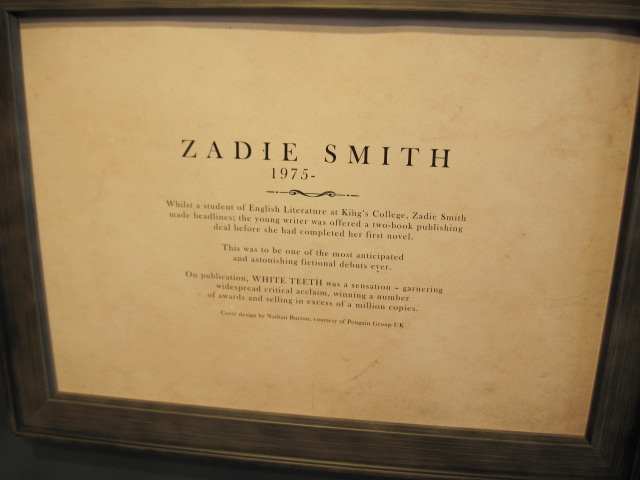
As a literary destination, Cambridge left a bit to be desired, though. There weren’t any literary graves for me to find, nor any notable houses or statues. Many of the college’s famous alumni are known for work in other fields. There’s Newton, Darwin and Hawking in the sciences, for instance – they all appear in this mural in the hostel dining room. Plenty of political figures attended, as well as lots of living authors (Wikipedia has an extensive list; the hostel wall featured Zadie Smith as a fairly recent example of a literary alumna).


So, overall, a nice enough city for a day trip but not somewhere you need to stay much longer. Granted, it was outside of term time so King’s College wasn’t running its usual chapel services, and I never did make it out to the Fitzwilliam Museum. Still, I reckon you’ll find much more to see and do in Oxford, a city I’ve visited again and again ever since my undergraduate study abroad days took me there for weekly theology tutorials.
Your thoughts (on new cities, connecting with nature and secondhand book shopping) are always welcome!
Return to Bookbarn
Sounds like a summer blockbuster, doesn’t it? There was certainly plenty of tension on our drive from the Reading area to Somerset this past Friday, as traffic on the M4 built up and our time for book shopping ticked down from a planned hour and a half to just 35 minutes before store closing. It had been almost exactly one year since my last trip to Bookbarn International, and after weeks of wheedling I’d finally persuaded my husband to make the detour on our way to visit friends in Bristol.
Despite the tight deadline, I enjoyed my browsing and scored some good finds. As usual, it seemed like a terrific bargain: £14.50 for 15 books. One’s a gift for our nephew in America, four are nature books my husband chose, and the rest are mine! Bonus: a few days later it occurred to me to ask after the collectible books I left behind last year for Bookbarn to sell for me and it turns out I have nearly £21 coming to me – so in effect our shopping was free!
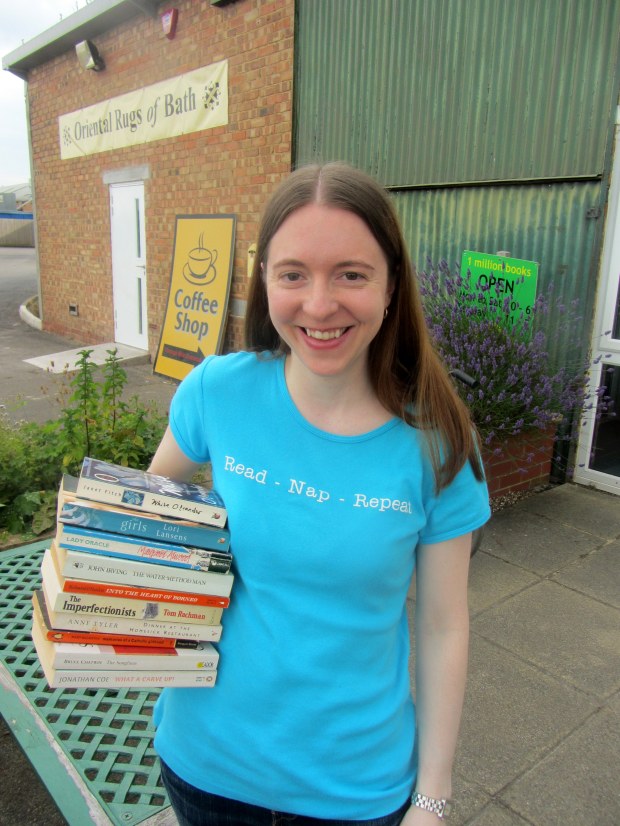
In case you can’t read the titles in the photo, here’s my haul:
Travel books:
The Songlines, Bruce Chatwin
Into the Heart of Borneo, Redmond O’Hanlon
[I featured both of the world-class travel writers in a recent article for Bookmarks, so it’s only proper that I actually read something by them.]
Memoir:
Memories of a Catholic Girlhood, Mary McCarthy [I’m a sucker for religious memoirs.]
Fiction:
Lady Oracle, Margaret Atwood [It’s been a while since I tried one from her back catalogue.]
What a Carve Up!, Jonathan Coe [I enjoyed the recent ‘sequel’, Number 11.]
White Oleander, Janet Fitch [An Oprah favorite I’ve long meant to read.]
The Water-Method Man, John Irving [Let’s hope for better things from his second novel.]
The Girls, Lori Lansens [I can’t resist a conjoined twins story.]
The Imperfectionists, Tom Rachman [Already read some years back, but worth owning.]
Dinner at the Homesick Restaurant, Anne Tyler [To continue my run of Tyler classics.]
Had any secondhand book coups lately?
Book-Cycle of Exeter
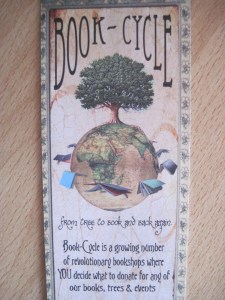 This past weekend we paid a visit to close friends who live in Exeter, Devon. A bleak day of exploring the city in torrential wind and rain was saved by a wonderful tea room (The Hidden Treasure) and a stop at Book-Cycle, a storefront bookshop with a difference: each customer can take just three books per day, and the price is whatever you decide to donate to the charity’s UK tree-planting and worldwide literacy efforts. Not quite as amazing a free-for-all as The Book Thing of Baltimore, then, but still quite a treasure trove with a great selection, especially of recent fiction.
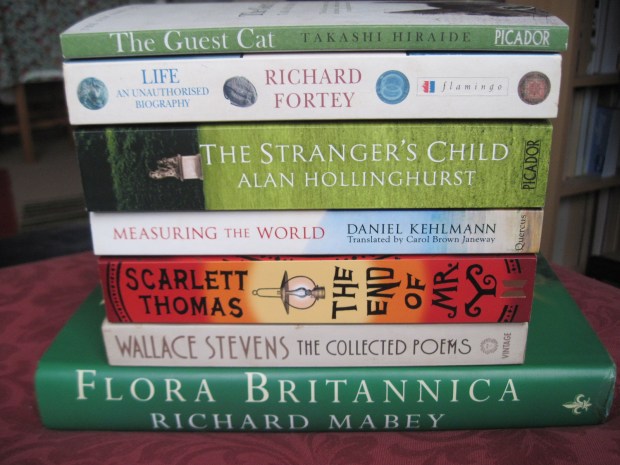
My husband and I came away with three books each for a total donation of £4 (the extent of the change in our wallets) – an incredible bargain considering he probably would have paid more than that just for the coffee table book on plants. Add on a copy of Takashi Hiraide’s The Guest Cat found at Oxfam Books and we spent just £5.99 for an excellent Saturday haul.

A welcome tea and cake stop.
Book-Cycle has a number of branches in England (plus one in Rome), though none of them are particularly convenient for where we live. It seems pretty straightforward to set up your own Book-Cycle shelf in a café or shop, however, so perhaps I’ll look into doing that this summer – in addition to or instead of a Little Free Library.
What were your best recent book finds?
When Is a Bookshop Not a Bookshop?
The answer to the riddle: when all the books are free! Christmas came early on Sunday when I visited a place I long knew of but had never visited: The Book Thing of Baltimore. It’s an entirely not-for-profit venture run with the help of volunteers and donations. “Our mission is to put unwanted books into the hands of those who want them,” says their website. My hubby and I were going into the city to meet friends for the day, so I suggested a quick run to Book Thing, a hidden treasure on an unassuming concrete lot that’s only open on the weekends.
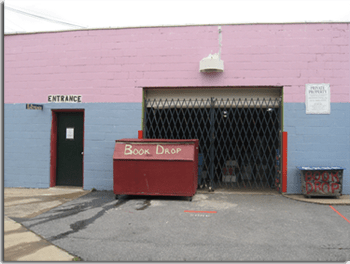
The unassuming shop front for Book Thing. (From their website)
I brought along a backpack crammed full of unwanted books from my old bedroom to donate, thinking that I would pick up just two or three in return. I was expecting one disorganized room full of pretty crummy books. To my delight, it was an enormous four-room warehouse with an amazing selection. A wonderful place to wander around and pick up things at random, but not great for seeking out particular titles given that the books – notably, fiction and biographies – are in no discernible alphabetical order.
Are you at all surprised to learn that I came away with a backpack just as overstuffed as I came with? At one point, as I was stacking up some terrific animal-themed books, my husband said, “You do realize you can only take what you can fit in your backpack? We’re going back by train!” My refrain was “but they’re all free!” I ended up with 31 books in total.
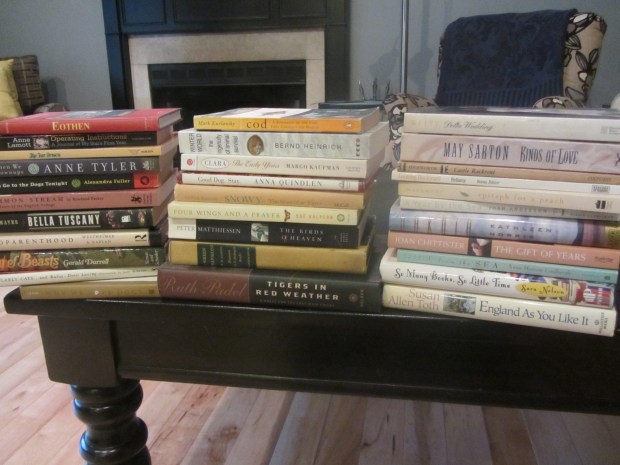
The haul.
I was especially thrilled with: The Fur Person, May Sarton’s book about cats, which I’d been hoping to find secondhand on this trip; Tigers in Red Weather, Ruth Padel’s travel book about searching for the world’s few remaining tigers in all their known habitats – I’d already read it but my husband hasn’t; Dakota by Kathleen Norris, a new favorite theology writer; Sara Nelson’s So Many Books, So Little Time (how apt!); and A Year by the Sea by Joan Anderson, which I’d never heard of but should fit right into my interest in women’s diaries.
Lest you think I’m some selfish book fiend, note that the pile on the left in the photograph below is for giving away to family and friends this Christmas. (Yes, I am aware that the pile of books we are keeping dwarfs the gift stack. Sigh.)
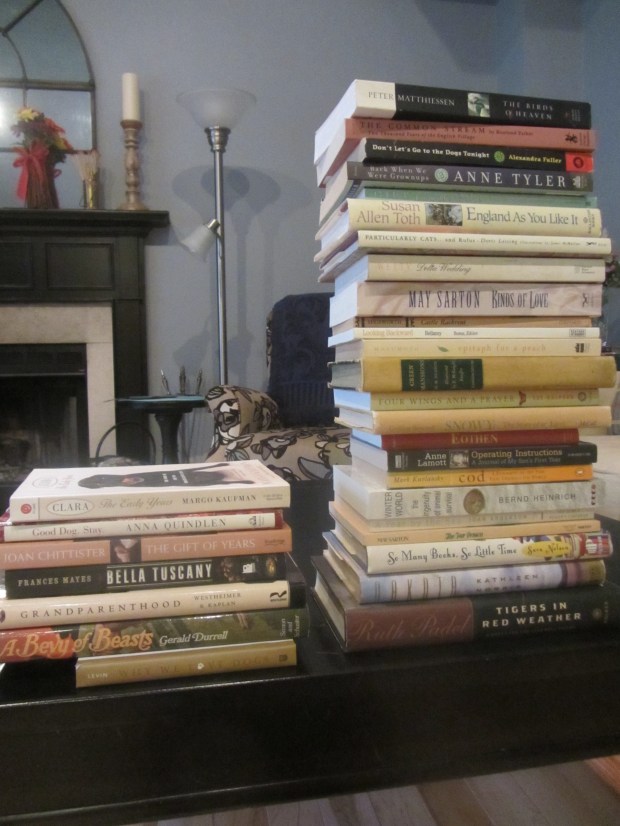
Dueling stacks.
All in all, it was a great day in Baltimore. We had a terrific lunch at City Café; browsed part of the amazing (and also free!) Walters Art Museum; toured the central campus of Johns Hopkins University, where my friend is a PhD student; walked through a small park; observed the shops and eateries of hipster Hampden; and saw the famous Christmas lights on 34th Street. They call it “Charm City,” and on Sunday it more than lived up to its name.
Book Thing is as sprawling as my favorite bookshop, Wonder Book (Frederick, Maryland), but you needn’t hand over any money. It’s as varied and tempting as any public library, but you don’t have to bring the books back. Nothing says “Merry Christmas” like free books!
Today’s Secondhand Book Haul
Today, as an early birthday outing for me, we headed to Henley-on-Thames by train, getting off one stop early at Shiplake to walk a couple of miles along the river.
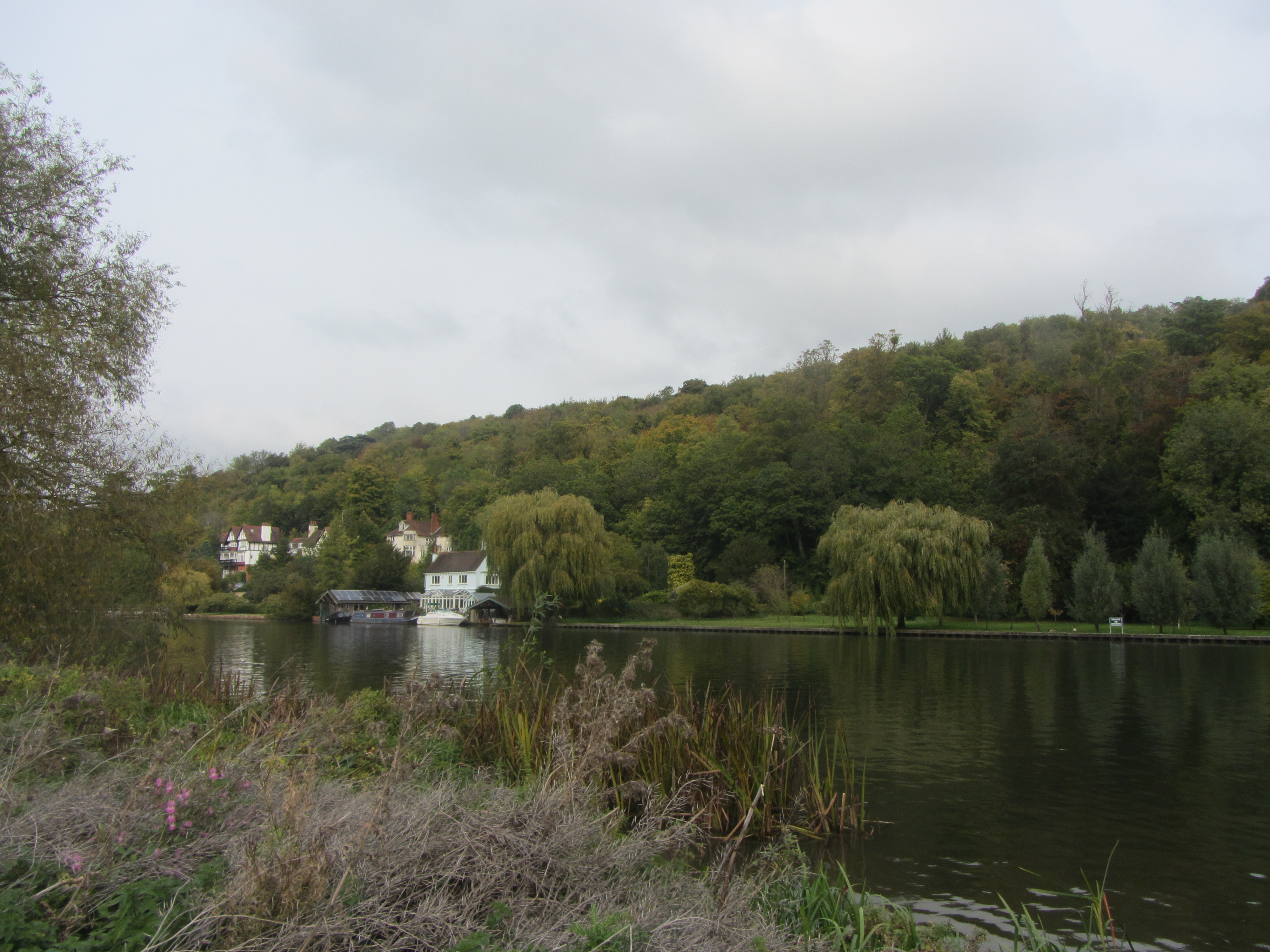
Courtesy of Chris Foster
Henley has one of our favorite local secondhand bookstores. It’s only our second time there, but we instantly became devotees thanks to their £1 section, which includes all paperbacks.

Courtesy of Chris Foster
Today’s haul (total spend = £10):
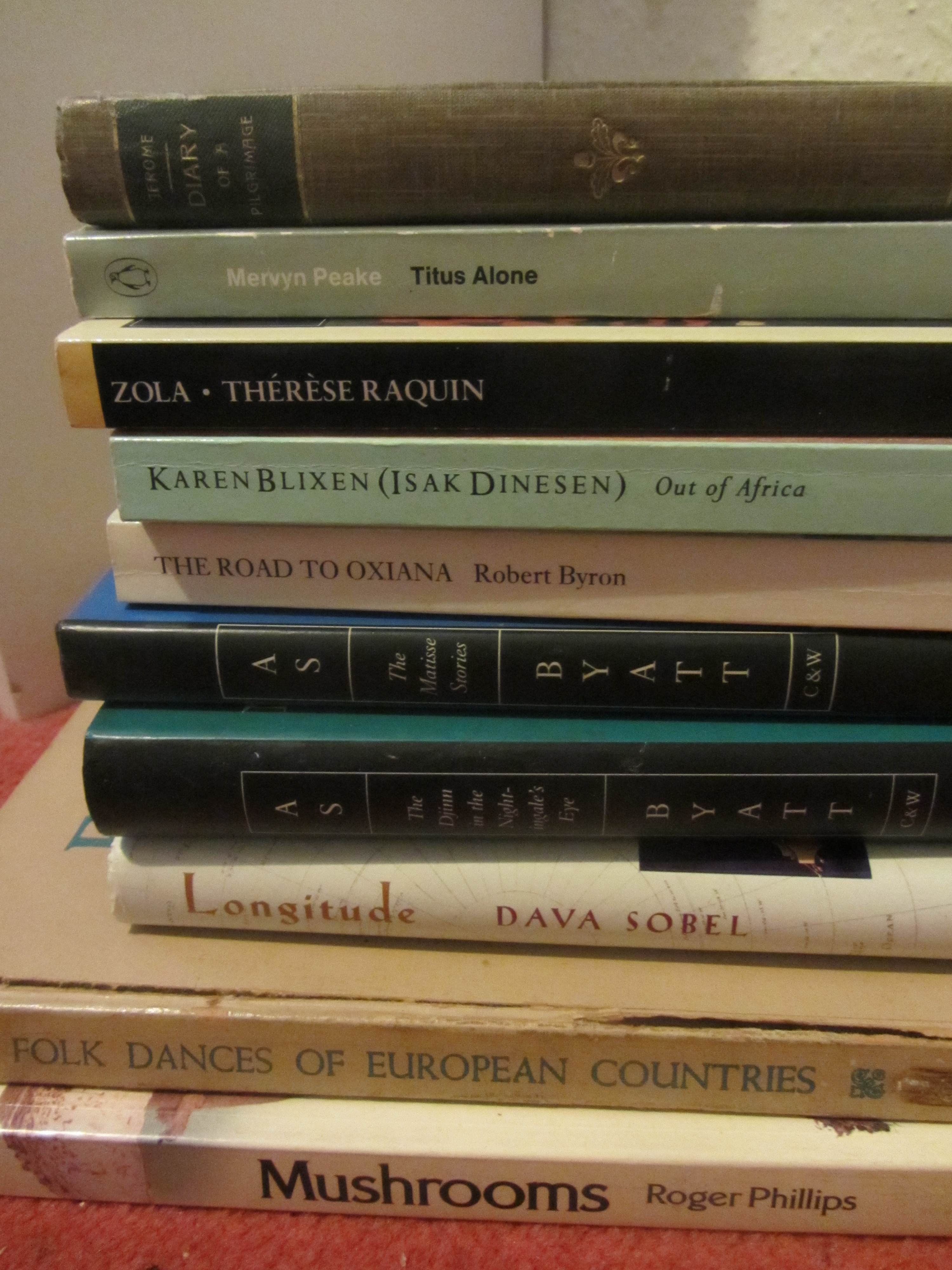
I’m especially pleased with the £1 copy of Diary of a Pilgrimage by Jerome K. Jerome, a novel about a journey by train and boat from England to Germany to see the Oberammergau Passion Play. We have plans to travel around Europe by train next year, so this will be a fun one to slip in a handbag for the Germany leg.
Tonight I’m headed to the theatre for the second time in a week – I shall report back about both trips on Monday.
A Tale of Two Bookshops: Bookbarn International and Wonder Book
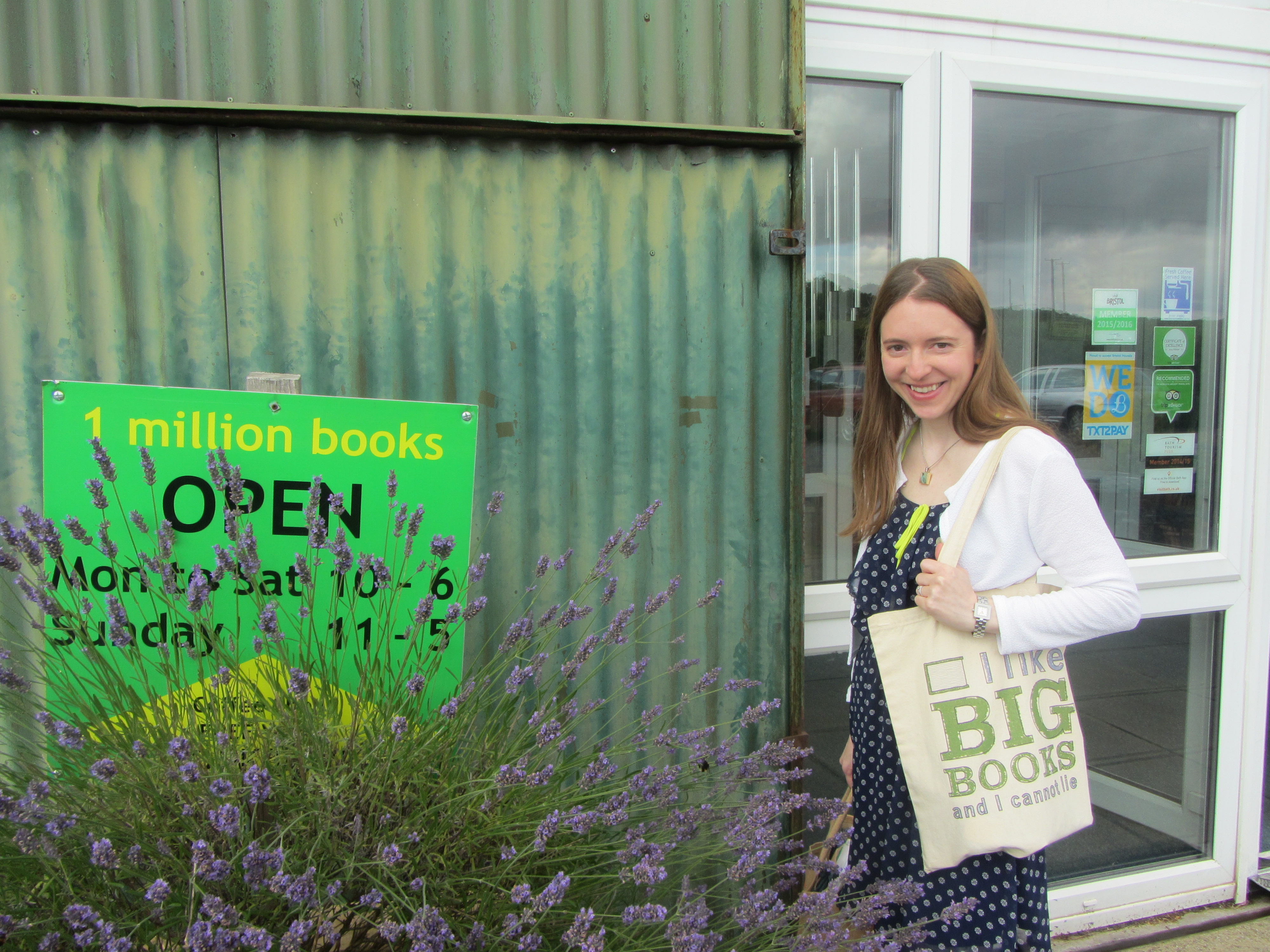
A friend’s wedding in Bristol last Saturday provided the perfect opportunity for a return visit to Bookbarn International, a terrific secondhand bookshop near Bath in northeast Somerset. Between the stock on their shelves and in the warehouse from which they sell online, they have millions of books, and all the ones in the shop are either £1 or 50 pence (children’s books and, when I went, all paperback fiction as a summer reading promotion). It’s like heaven for this bibliophile. I first went a couple years ago on the way back from Cornwall – although, on both occasions, my longsuffering husband protests, Bookbarn wasn’t really ‘on the way’ in any sense.
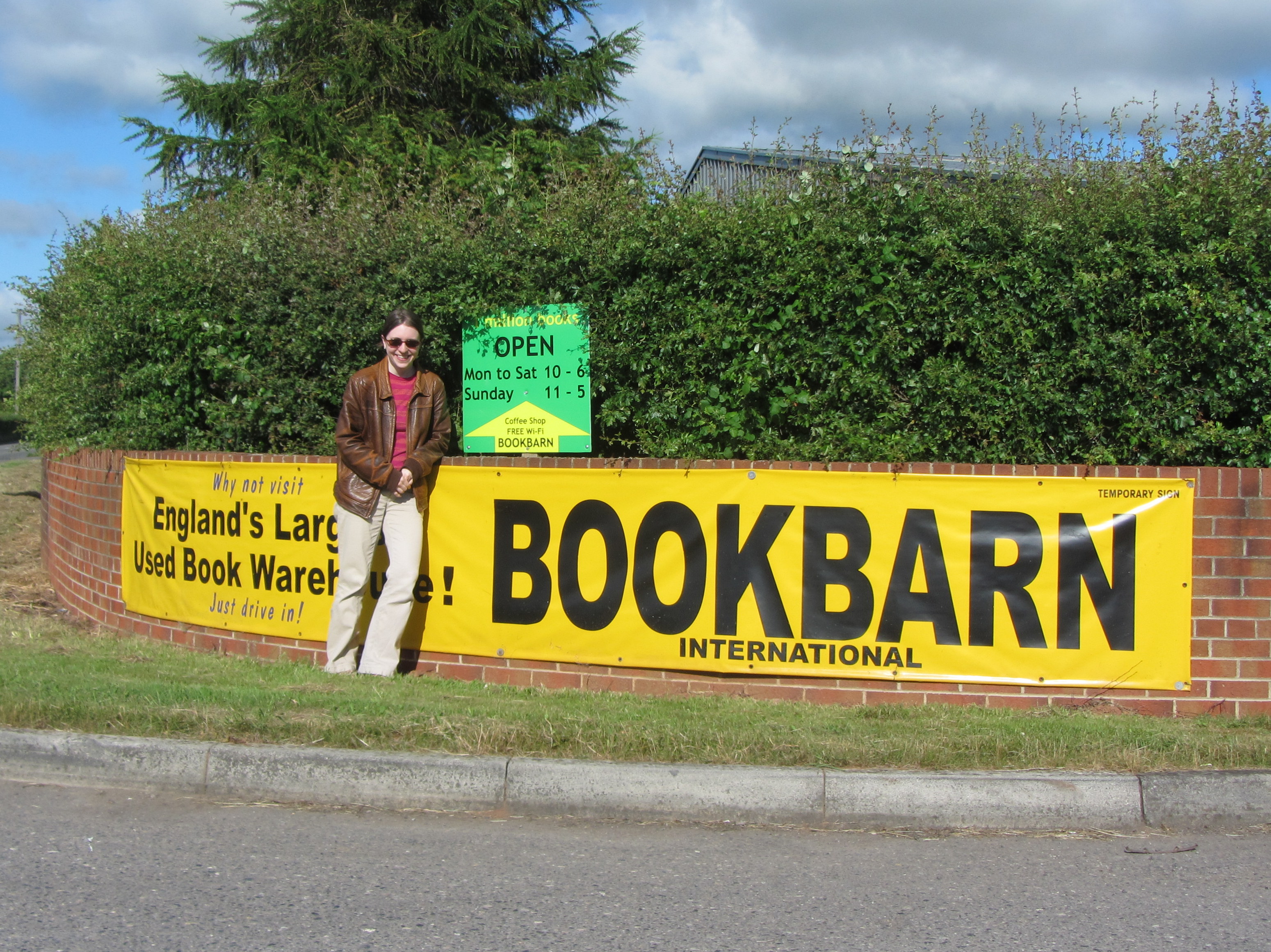
First visit in June 2013

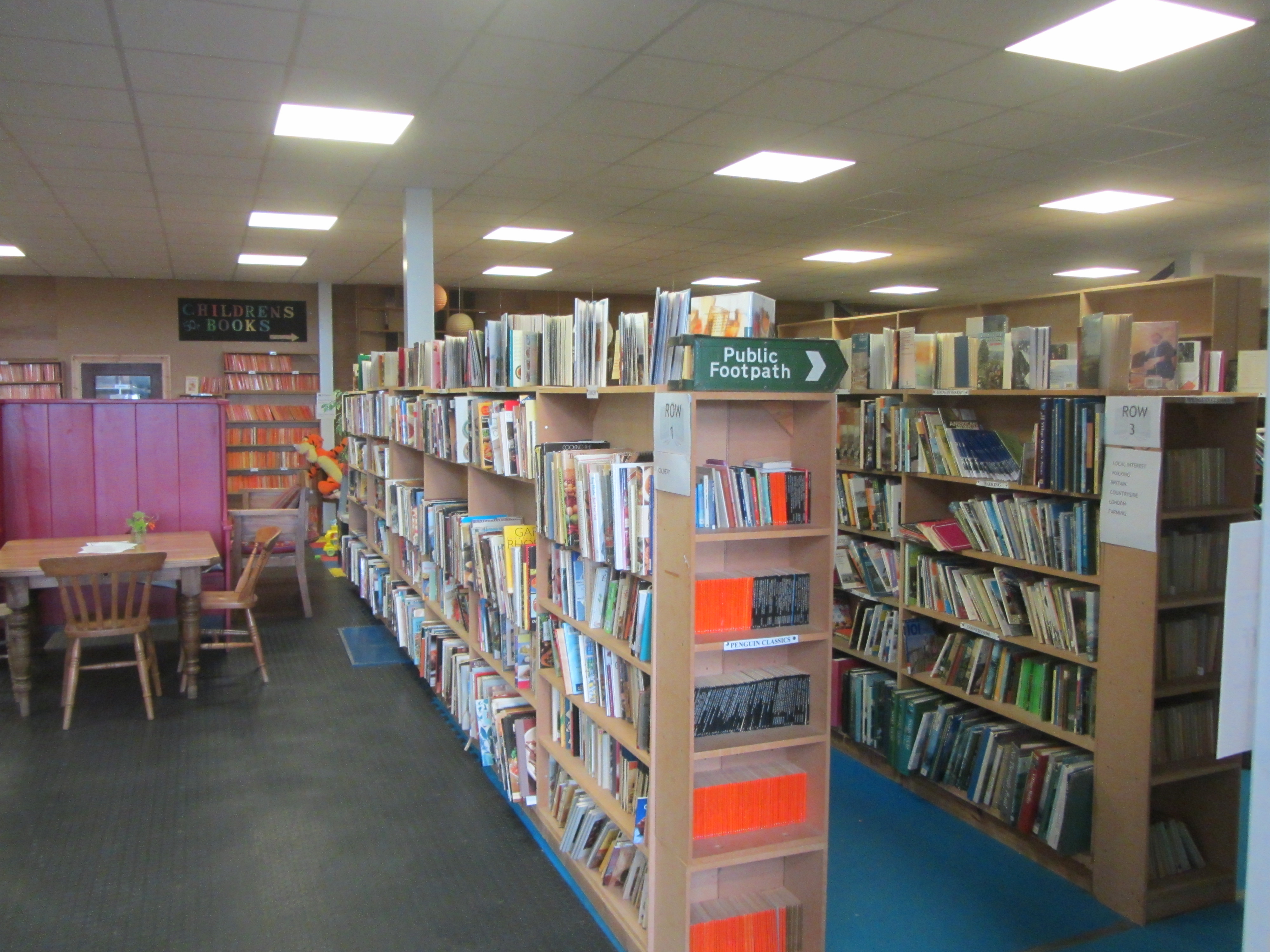
Well worth the detour, though, as Bookbarn is basically the British equivalent of my beloved Wonder Book, a chain with several branches in Maryland. I first encountered the store when my sister worked for WHAG television station in Hagerstown, and when I chose to go to college in Frederick, I wouldn’t say that the town’s two Wonder Book branches (one has since closed, alas) were a deciding factor, but they were certainly a bonus. I even worked there as a part-time book assistant during my senior year at Hood College, and it didn’t quite spoil my love for the place – though I’ll admit it’s much better to be a customer than an employee.

The Frederick location (photo from their website).

Say it ain’t so! You never know what you’ll find in terms of categorization at Wonder Book.
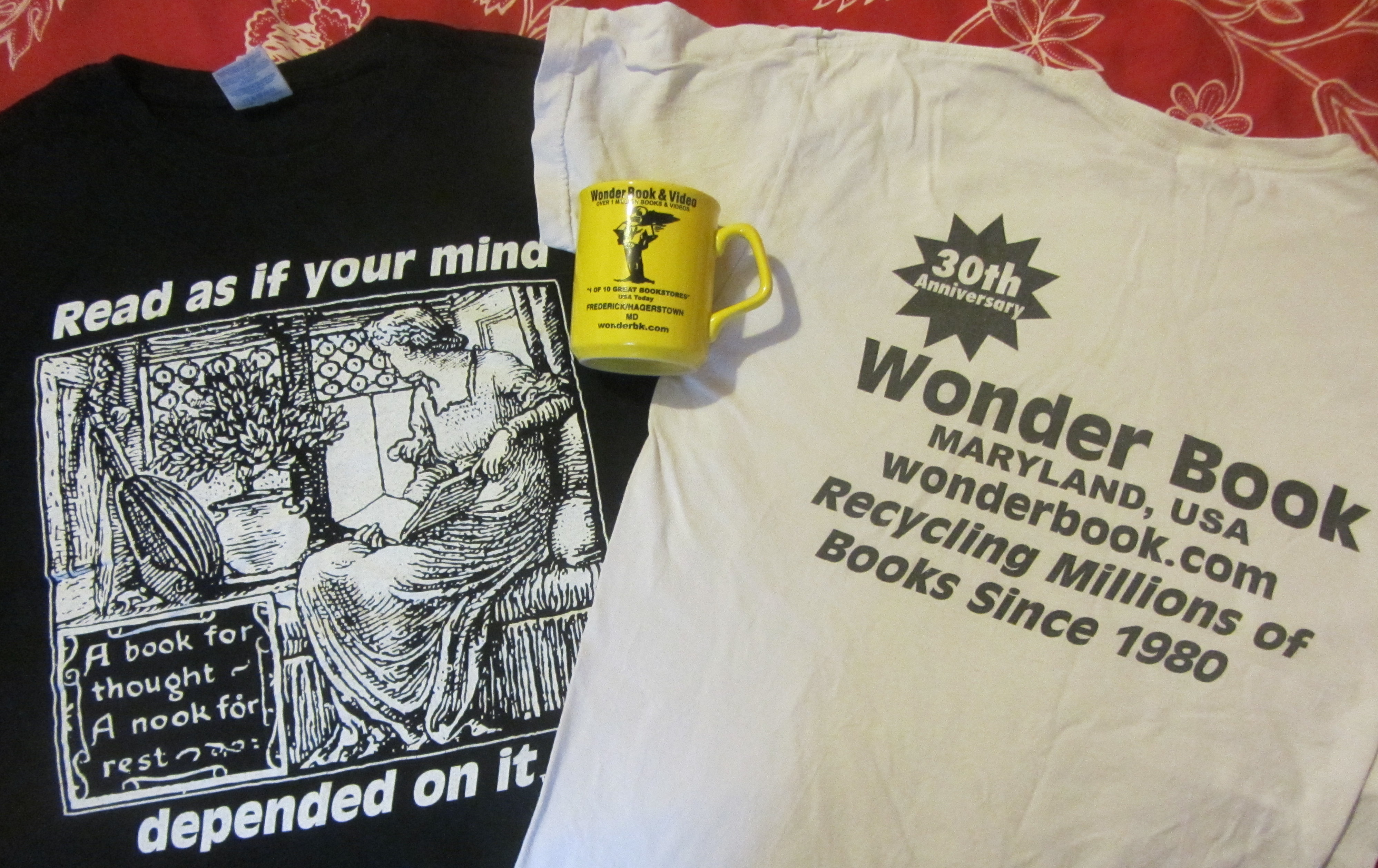
I’ve lived abroad for over eight years now, but I still manage to get back to Wonder Book once or twice a year during visits to family. Like Bookbarn, it’s an enormous warehouse-like place with dozens of different categories and subcategories of books, most at very reasonable prices. Again like Bookbarn, it’s the kind of place where you’ll need to allow time to root around, since within sections the books might not be in perfect alphabetical order. The stock rolls over so quickly or, especially in the case of theology, is so overwhelmingly large that there’s just no way to sensibly organize it all. Come with a list, but be willing to browse at a leisurely pace and let serendipity guide you as much as the subject headings. You’ll also find snacks and book-themed gifts such as (at Wonder Book anyway) mugs and T-shirts.
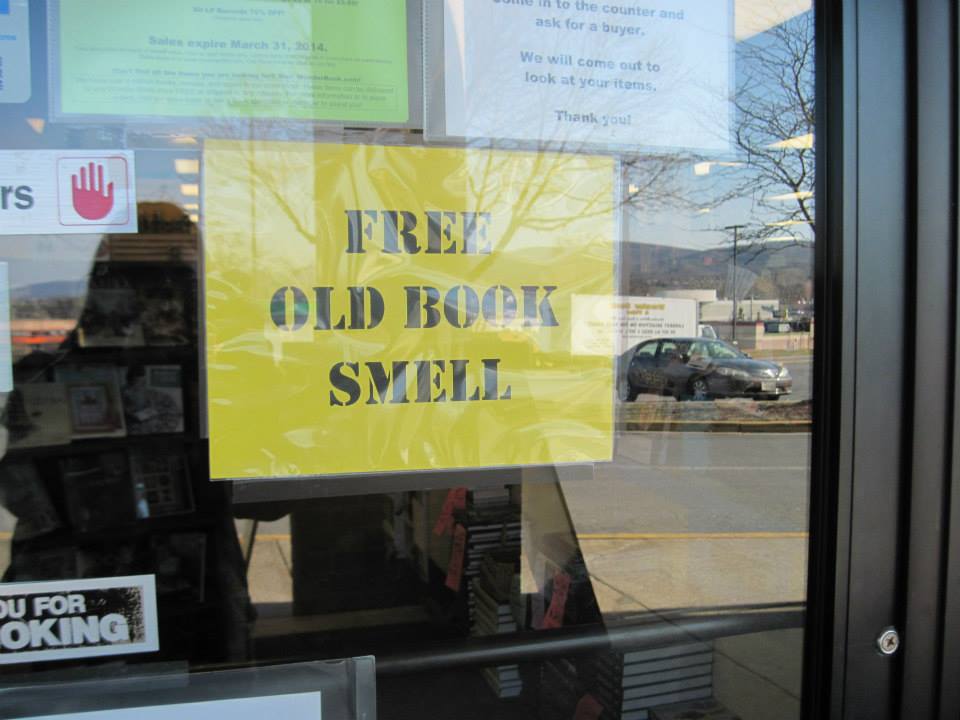
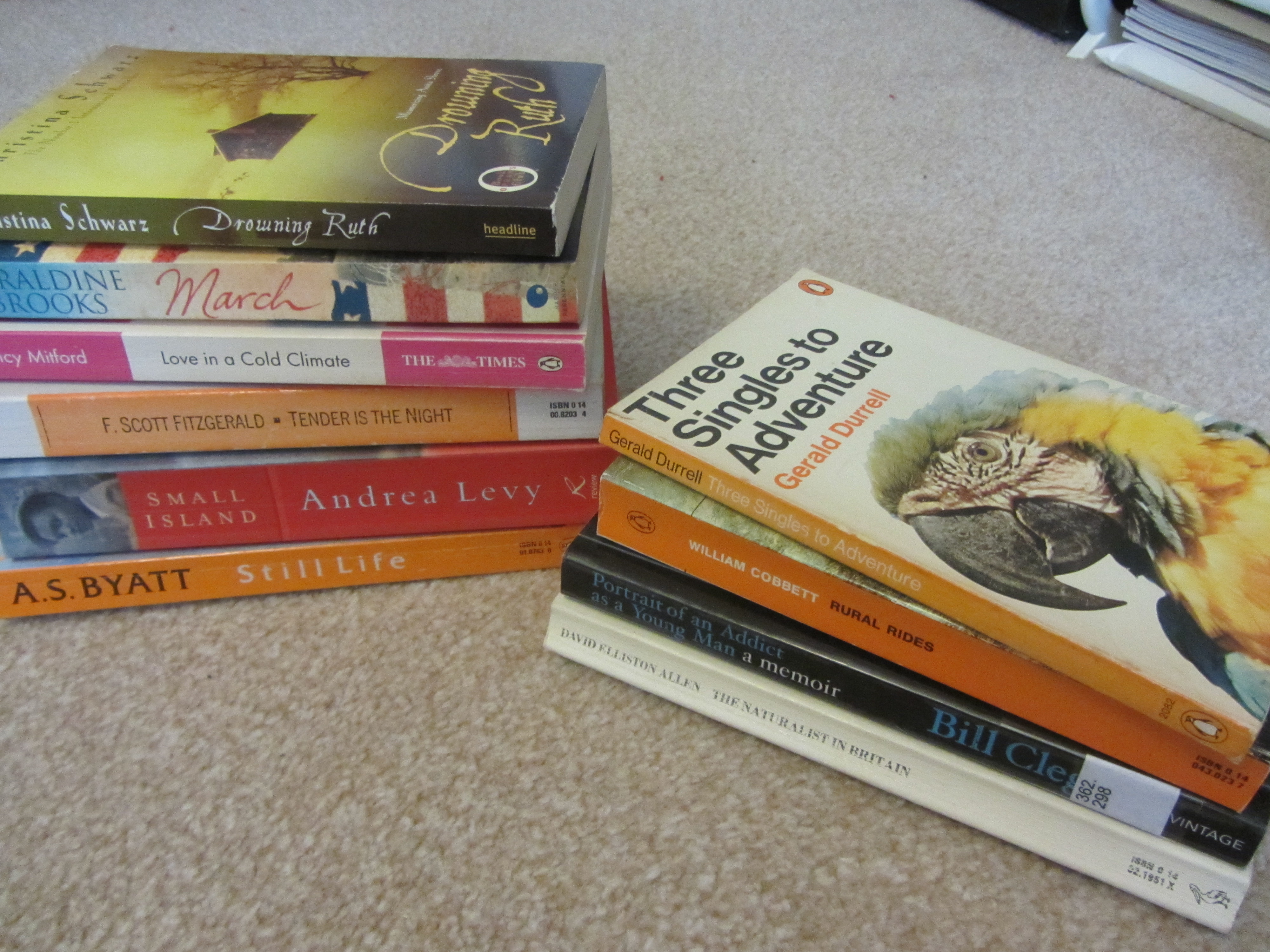
On this last visit to Bookbarn I got 18 books for all of £12 – bargain! Pictured below are my purchases, minus the ones certain readers or their children might be getting for birthday or Christmas presents later in the year…
For the greatest concentration of wonderful bookshops in one place, I can’t recommend Hay-on-Wye, Wales highly enough (see my article on Book Towns for more). See also Jen Campbell’s The Bookshop Book for more ideas of bookshops to seek out wherever your travels take you.
Are you a devoted secondhand book shopper? What are some of your favorite bookshops in the United States, United Kingdom, or further afield?
 Bookish Beck = Rebecca Foster. American transplant to England. Freelance proofreader and book reviewer.
 Bookish Beck