20 Books of Summer, 9–10: Leave the World Behind & Leaving Atlanta
Halfway there! And I’m doing better than it might appear in that I’m in the middle of another 7 books and just have to decide what the final 3 will be. This was a sobering but satisfying pair of novels in which race and class play a part but the characters are ultimately helpless in the face of disasters and violence. Both: 
Leave the World Behind by Rumaan Alam (2020)
The title heralds a perfect holiday read, right? A New York City couple, Amanda and Clay, have rented a secluded vacation home in Long Island with their teenagers, Archie and Rose, and plan on a week of great beach weather and mild hedonism: food, drink, secret cigarettes, a hot tub, maybe some sex. But late on the first night there’s a knock on the door from the owners, sixtysomething Black couple Ruth and G. H. Something is going on; although the house still has power, all phone and Internet services have gone down. Rather than return to a potentially chaotic city, the older couple set course for their country retreat to hunker down. George is in finance and believes money solves everything, so he offers Amanda and Clay $1000 cash for the inconvenience of having their holiday interrupted.
 From an amassing herd of deer to Archie’s sudden mystery illness, everything quickly turns odd. Glimpses of what’s happening in the wider world are surrounded by a menacing haziness, but the events seem to embody modern anxieties about being cut off from information and wondering who to trust. Given the blurbs and initial foreshadowing, I expected racial tension to be a main driver of an incendiary household climax. Instead, the threat is external and largely unexplained, and the couples are forced to rely on each other as tribalism sets in. (It’s uncanny that this was written before Covid, published during.)
This was a book club read and one of the most divisive I can remember. I was among the few who thought it gripping, intriguing, and even genuinely frightening. Others found the characters unlikable, the plot implausible or silly, and the writing heavy-handed. Alam is definitely poking fun at privileged bougie families. He draws attention to the author as puppet-master, inserting shrewd hints of what is occurring elsewhere or will soon befall certain characters. Some passages skirt pomposity with their anaphora and rhetorical questioning. Alliteration, repetition, and stark pronouncements make the prose almost baroque in places. Alam’s style is theatrical, even arch, but it suits the premonitory tone. I admired how he constantly upends genre expectations, moving from literary fiction to domestic drama to dystopia to magic realism to horror. The stuff of nightmares – being naked in front of strangers, one’s teeth falling out – becomes real, or at least real in the world of the book. The reminder is that we are never as in control as we think we are; always, disasters are unfolding. What will we do, and who will we be, as the inevitable unfolds?
You demanded answers, but the universe refused. Comfort and safety were just an illusion. Money meant nothing. All that meant anything was this—people, in the same place, together. This was what was left to them.
Absorbing, timely, controversial: read it! (Free from a neighbour)
Leaving Atlanta by Tayari Jones (2002)
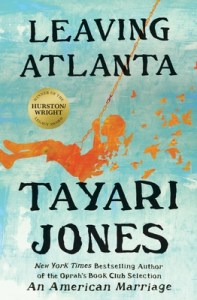 Jones’s debut novel is about the Atlanta Child Murders, a real-life serial killer spree that targeted 29 African American children between 1979 and 1982. (Two of the victims attended her elementary school.) Rather than addressing the gruesome reality, however, she takes a sideways look by considering the effect that fear has on students whose classmates start disappearing. Three sections rather like linked novellas take on the perspective of three different Oglethorpe Elementary fifth graders: LaTasha Baxter, Rodney Green, and Octavia Harrison. The POV moves from third to second to first person, a creative writing experiment that succeeds at pulling readers closer in. The AAVE-inflected dialogue and interactions feel genuine in each, and I liked the playful addition of “Tayari Jones” as a fringe character.
Even as their school is making news headlines, the children’s concerns are perennial adolescent ones: how to avoid bullying, who to sit with at lunch, how to be friendly yet not falsely encourage members of the opposite sex. And at home, all three struggle with an absent or overbearing father. At age 11, these kids are just starting to realize that their parents aren’t perfect and might not be able to keep them safe. I especially warmed to Octavia’s voice, even as her story made my heart ache: “cussing at myself for being too stupid to see that nothing lasts. That people get away from you like a handful of sweet smoke.” I preferred this offbeat, tender coming-of-age novel to Silver Sparrow and would place it on a par with An American Marriage. (Birthday gift from my wish list)
To Paradise by Hanya Yanagihara (Doorstopper of the Quarter)
When I expressed interest in Hanya Yanagihara’s To Paradise on Twitter, having loved A Little Life and tepidly admired The People in the Trees, I didn’t expect to be chosen to receive one of my most anticipated releases of the year. A proof arrived while I was in the States for Christmas. As soon as I got back, I started it – with a vision of doing little else but reading it for a few days and reviewing it early in January. Instead, I read about 30 pages and set it aside, the 700-page heft mocking me from my coffee table stack for the better part of two months. Finally, I forced myself to set a daily reading goal: first 30 pages, then 40, then 60; and on Friday I read the last 100 pages over a couple sessions in the summerhouse. That regimented approach was what it took for me to get through my first doorstopper of the year.
The novel is in three parts – discrete enough to feel like separate books – set largely in 1893, 1993, and 2093. New York City’s Washington Square, even one particular house, recurs as a setting in all three, with some references to the American West and South and with flashbacks to time in Hawaii linking Books II and III.
The overarching theme is the American project: is freedom, both individual and collective, a worthy and attainable goal? Or are the country’s schisms too deep to be overcome? Class, race, sexuality, and physical and mental illness are some of the differences that Yanagihara explores. Even when equality of treatment has been won in one time and scenario – same-sex marriage is de rigueur in her alternative version of the 1890s, where the USA is divided into several nations – there is always the threat of a taken-for-granted right being retracted.
In Book I, David Bingham, who is to inherit his grandfather’s Washington Square property, considers a family-approved arranged marriage with an older man, Charles, versus eloping with a lower-class male teacher, Edward, with whom he has fallen in love. Edward wants them to light out for California, where new opportunities await but homosexuality is outlawed. Can they live in freedom if they’re repressing an essential part of their identity? The austere, elegant tone is a pitch-perfect pastiche of Henry James or Edith Wharton. Although this section took me the longest to read, it was the one I most appreciated for its flawless evocation of the time period and a rigid class structure. As in The Underground Railroad, though, the alt-history angle wasn’t really the most memorable aspect.
In Book II, David Bingham, also known as Kawika, is a paralegal having a secret affair with Charles, a partner in his law firm. Various friends and former lovers in their circle have AIDS, but Charles’s best friend Peter is dying of cancer. Before Peter flies to Switzerland for an assisted death, Charles throws him one last dinner party. Meanwhile, David receives a long letter from his ill father recounting their descent from Indigenous nobility and his failed attempt to set up a self-sufficient farm on their inherited land in Hawaii. This strand is closest to Yanagihara’s previous novels, the gay friendship circle reminiscent of A Little Life and the primitive back-to-the-land story recalling The People in the Trees. I also thought of Mrs Dalloway – David wanted to get the flowers for the party himself – and of Three Junes.
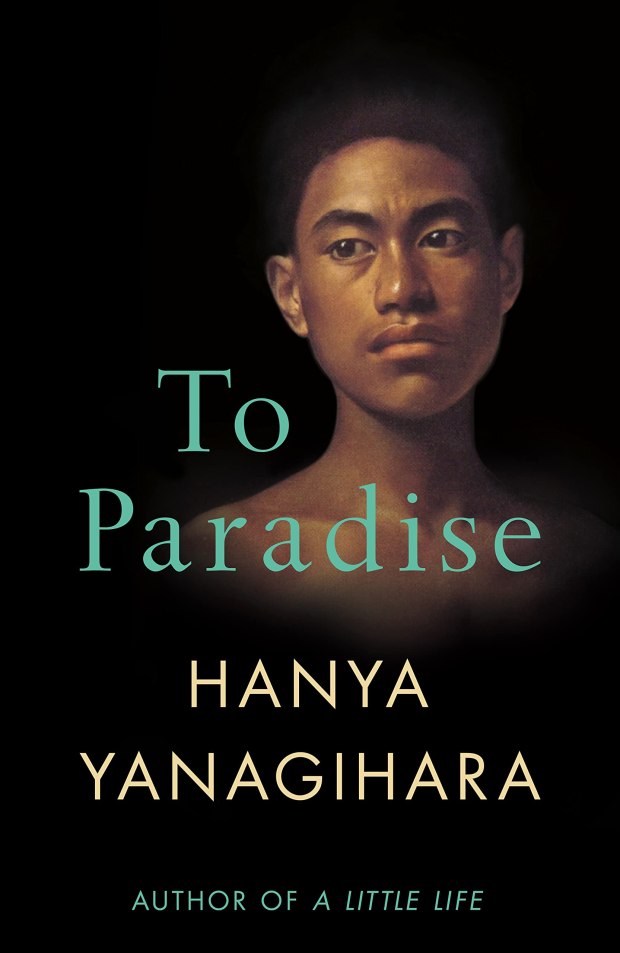 Book III is set in a dystopian future of extreme heat, rationing and near-constant pandemics. The totalitarian state institutes ever more draconian policies, with censorship, quarantine camps and public execution of insurgents. The narrator, intellectually disabled after a childhood illness, describes the restrictions with the flat affect of the title robot from Kazuo Ishiguro’s Klara and the Sun. When a stranger offers her the chance to escape, she is forced to weigh up freedom against safety. An alternating strand, based around letters sent by a Chinese Hawaiian character, traces how things got this bad, from the 2040s onwards.
While the closing speculative vision is all too plausible, two other literary/science fiction releases I’ve read this year, Sea of Tranquillity by Emily St. John Mandel and How High We Go in the Dark by Sequoia Nagamatsu, are more powerful and direct. Book III takes up half of the text and could stand alone, but the fact that it appears as a culmination of two other narratives creates false expectations that it can’t meet. The connections between the three are incidental – abandonment by a mother, a child raised by a grandparent, an arranged marriage, isolating illness – with recurring tactics like stories within stories and epistolary sections. The most overt cohesive strategy, the repeating of names across time periods, feels gimmicky and, again, sets readers up for a letdown by promising meaning that isn’t there.
Ultimately, the message seems to be: America’s problems are inherent, and so persist despite apparent progress. It takes a lot of words to build to that somewhat obvious point. I couldn’t suppress my disappointment that none of the storylines are resolved – this does, however, mean that one can choose to believe things will turn out happily for the characters. Their yearning for a more authentic life, even in a rotten state, makes it easy to empathize with their situations. I had high regard for the self-assured cross-genre prose (my interest waning only during the elder Kawika’s improbably long letter), but felt the ambition perhaps outshone the achievement.
As I learned when reviewing a recent book about American utopian projects, Heaven Is a Place on Earth, and interviewing its author, Adrian Shirk, an imagined utopia and a projected dystopia aren’t actually so different. Here was her response to one of my questions:
At one point you say, “utopia is never far from its opposite.” Dystopian novels are as popular as ever. To what extent do you think real-life utopias and fictional dystopias have the same aims?
I think real-life utopian experiments and fictional dystopias both offer warnings about the dangers of relying too much on ideology, and not enough on living, or choosing the person over the belief. So, in that way, real utopian experiments and fictional dystopian narratives are two sides of the same coin: a dystopia is a utopia that lost sight of—or never included—understanding itself as resistance to a violent empire, and thus starts to look like a violent empire itself.
Both start by diagnosing a societal sickness. The question is how we then get to paradise.
Page count: 701
Book I: 
Book II:
Book III: 
My overall rating:
With thanks to Picador for the proof copy for review.
 Bookish Beck = Rebecca Foster. American transplant to England. Freelance proofreader and book reviewer.
 Bookish Beck