Book Serendipity, January to February 2024
I call it “Book Serendipity” when two or more books that I read at the same time or in quick succession have something in common – the more bizarre, the better. This is a regular feature of mine every couple of months. Because I usually have 20–30 books on the go at once, I suppose I’m more prone to such incidents. The following are in roughly chronological order.
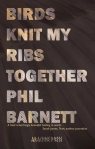
- I finished two poetry collections by a man with the surname Barnett within four days in January: Murmur by Cameron Barnett and Birds Knit My Ribs Together by Phil Barnett.

- I came across the person or place name Courtland in The Optimist’s Daughter by Eudora Welty, then Cortland in a story from The Orange Fish by Carol Shields, then Cotland (but where? I couldn’t locate it again! Was it in Elizabeth Is Missing by Emma Healey?).
- The Manet painting Olympia is mentioned in Christmas Holiday by W. Somerset Maugham and The Paris Novel by Ruth Reichl (both of which are set in Paris).


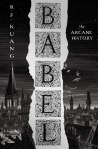
- There’s an “Interlude” section in Babel by R.F. Kuang and The Vulnerables by Sigrid Nunez.
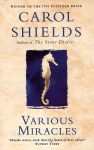
- The Morris (Minor) car is mentioned in Elizabeth Is Missing by Emma Healey and Various Miracles by Carol Shields.
- The “flour/flower” homophone is mentioned in Babel by R.F. Kuang and Various Miracles by Carol Shields.
- A chimney swift flies into the house in Cat and Bird by Kyoko Mori and The Optimist’s Daughter by Eudora Welty.
- A character named Cornelius in The Fruit Cure by Jacqueline Alnes and Wellness by Nathan Hill.
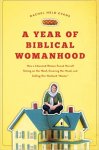
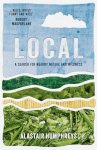
- Reading two year challenge books at the same time, A Year of Biblical Womanhood by Rachel Held Evans and Local by Alastair Humphreys, both of which are illustrated with frequent black-and-white photos by and of the author.
- A woman uses a bell to summon children in one story of Universally Adored and Other One Dollar Stories by Elizabeth Bruce and The Optimist’s Daughter by Eudora Welty.
- Apple turnovers get a mention in A Year of Biblical Womanhood by Rachel Held Evans and Wellness by Nathan Hill.
- A description of rolling out pie crust in A Year of Biblical Womanhood by Rachel Held Evans and Cat and Bird by Kyoko Mori.

- The idea of a house giving off good or bad vibrations in Wellness by Nathan Hill and a story from Various Miracles by Carol Shields.

- Emergency C-sections described or at least mentioned in Brother Do You Love Me by Manni Coe, The Unfamiliar by Kirsty Logan, Wellness by Nathan Hill, and lots more.
- Frustration with a toddler’s fussy eating habits, talk of “gentle parenting” methods, and mention of sea squirts in Wellness by Nathan Hill and Matrescence by Lucy Jones.
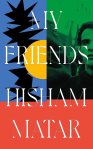
- The nickname “Poet” in The Tidal Year by Freya Bromley and My Friends by Hisham Matar.
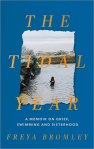
- A comment about seeing chicken bones on the streets of London in The Tidal Year by Freya Bromley and Went to London, Took the Dog by Nina Stibbe.
- Swans in poetry in The Tidal Year by Freya Bromley and Egg/Shell by Victoria Kennefick.
- A mention or image of Captcha technology in Egg/Shell by Victoria Kennefick and Went to London, Took the Dog by Nina Stibbe.
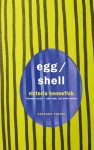

- An animal automaton in Loot by Tania James and Egg/Shell by Victoria Kennefick.
- A mention of Donna Tartt in The Tidal Year by Freya Bromley, Looking in the Distance by Richard Holloway, and Matrescence by Lucy Jones.
- Cathy Rentzenbrink appears in The Tidal Year by Freya Bromley and Went to London, Took the Dog by Nina Stibbe.
 Dialogue is given in italics in the memoirs The Tidal Year by Freya Bromley and The Unfamiliar by Kirsty Logan.
- An account of a man being forced to marry the sister of his beloved in A Year of Biblical Womanhood by Rachel Held Evans, Wellness by Nathan Hill, and The Tiger’s Wife by Téa Obreht.
- Saying that one doesn’t want to remember the loved one as ill (but really, not wanting to face death) so not saying goodbye (in Cat and Bird by Kyoko Mori) or having a closed coffin (Wellness by Nathan Hill).
- An unhappy, religious mother who becomes a hoarder in Wellness by Nathan Hill and I’m Glad My Mom Died by Jennette McCurdy.
- Characters called Lidija and Jin in Exhibit by R. O. Kwon and Lydia and Jing in the first story of This Is Salvaged by Vauhini Vara.
- Distress at developing breasts in Cactus Country by Zoë Bossiere and I’m Glad My Mom Died by Jennette McCurdy.
- I came across mentions of American sportscaster Howard Cosell in Heartburn by Nora Ephron and Stations of the Heart by Richard Lischer (two heart books I was planning on reviewing together) on the same evening. So random!
- Girls kissing and flirting with each other (but it’s clear one partner is serious about it whereas the other is only playing or considers it practice for being with boys) in Cactus Country by Zoë Bossiere and Winter’s Bone by Daniel Woodrell.
- A conversion to Catholicism in Places I’ve Taken My Body by Molly McCully Brown and Stations of the Heart by Richard Lischer.
- A zookeeper is attacked by a tiger when s/he goes into the enclosure (maybe not the greatest idea!!) in Tiger by Polly Clark and The Tiger’s Wife by Téa Obreht.

- The nickname Frodo appears in Tiger by Polly Clark and Brother Do You Love Me by Manni Coe.
- Opening scene of a parent in a coma, California setting, and striking pink and yellow cover to Death Valley by Melissa Broder and I’m Glad My Mom Died by Jennette McCurdy.

- An Englishman goes to Nigeria in Howards End by E.M. Forster and Immanuel by Matthew McNaught.
 The Russian practice of whipping people with branches at a spa in Tiger by Polly Clark and Fight Night by Miriam Toews.
- A mother continues washing her daughter’s hair until she is a teenager old enough to leave home in Mrs. March by Virginia Feito and I’m Glad My Mom Died by Jennette McCurdy.
- Section 28 (a British law prohibiting the “promotion of homosexuality” in schools) is mentioned in A Bookshop of One’s Own by Jane Cholmeley, Some Kids I Taught and What They Taught Me by Kate Clanchy, and Brother Do You Love Me by Manni Coe.
- Characters named Gord (in one story from Various Miracles by Carol Shields, and in Fight Night by Miriam Toews), Gordy (in The Absolutely True Diary of a Part-Time Indian by Sherman Alexie), and Gordo (in Blood Red by Gabriela Ponce).

- Montessori and Waldorf schools are mentioned in Cactus Country by Zoë Bossiere and When Fragments Make a Whole by Lory Widmer Hess.
- A trailer burns down in The Absolutely True Diary of a Part-Time Indian by Sherman Alexie and Cactus Country by Zoë Bossiere.
What’s the weirdest reading coincidence you’ve had lately?
These Precious Days by Ann Patchett
I consider myself an Ann Patchett fan, having read eight of her books by now. Although she’s better known for her novels, I have a slight preference for her nonfiction – Truth and Beauty, her memoir of her friendship with Lucy Grealy; and her two collections of autobiographical essays, This Is the Story of a Happy Marriage and now These Precious Days, which made it onto my Best of 2021 list last month. Compared to the previous volume, the essays here, though no less sincere and thoughtful, are more melancholy. The preoccupation with death and drive to simplify life (“My Year of No Shopping,” “How to Practice”) seem appropriate for Covid times.
The opening essay, “Three Fathers,” gives wry portraits of her father and her two stepfathers, contrasting their careers, her relationship with each, and their deaths. In a final piece before the epilogue, she notes the bittersweet privilege of her membership in the American Academy of Arts and Letters – new members are only inducted to replace senior ones, for each of whom she receives a death notice in the mail. Memento mori are everywhere; “The human impulse is to look for order, but there isn’t any. People come and go. When you try to find your place among all the living and dead, the numbers are unmanageable.”
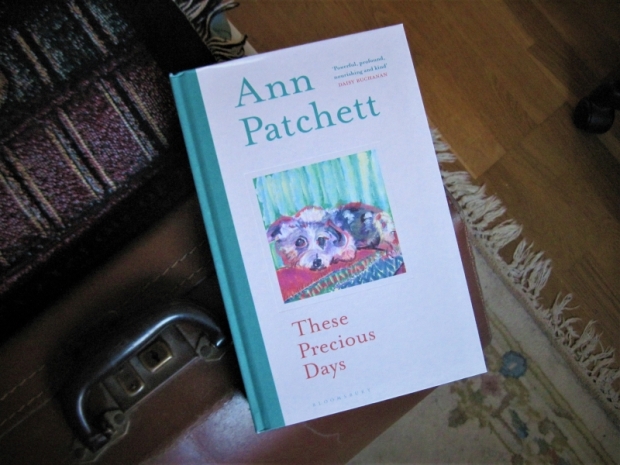
The long title essay, first published in Harper’s, is about her stranger-than-fiction friendship with Tom Hanks’s personal assistant, Sooki Raphael (her painting of Patchett’s dog Sparky adorns the cover). They first made contact after Patchett read an early copy of Hanks’s short story collection, gave it a nice endorsement, and then interviewed him at the D.C. stop on his book tour. Sooki had recurrent pancreatic cancer; Patchett’s husband Karl, a doctor, got her into a medical trial in Nashville and she lived with them throughout her treatment, including during Covid. There are so many twists to this story, so many moments when it might have faltered. Patchett is well aware of the unlikelihood and uses it to comment on her own plots, and the fact that sometimes what she thinks a novel is about ends up being far from the truth.
Patchett also expresses her appreciation of other authors (“Eudora Welty, an introduction,” “Reading Kate DiCamillo”), looks back to her young adulthood (“The First Thanksgiving,” “The Paris Tattoo”) and explores her other key relationships: her ever-youthful mother is the subject of “Sisters,” she celebrates a childhood friend in “Tavia,” and her worry over her 16-years-older husband fuels “Flight Plan” (about his amateur pilot hobby) and “The Moment Nothing Changed” (about his heart attack scare). Many of the shorter pieces first appeared in other publications or anthologies; a few verge on throwaway if I’m being harsh (did we need the essays on Snoopy and knitting?).
But it’s the approach that distinguishes the work as a whole: a clear eye on herself and others; honesty and deep emotion that never tip into mawkishness. I also enjoyed the little glimpses into her everyday domestic life, as well as her work behind the scenes at Parnassus Books. The one essay that meant the most to me, though, was “There Are No Children Here,” which matter-of-factly covers everything I’d ever like to say or hear about childlessness. At their best, Patchett’s books are not just pleasant reads but fond companions on the journey of life, and that’s how I felt about this one. (Susan included it on her list of comfort reading, too.)
With thanks to Bloomsbury for the free copy for review.
 Bookish Beck = Rebecca Foster. American transplant to England. Freelance proofreader and book reviewer.
 Bookish Beck