Hamnet by Maggie O’Farrell (Blog Tour Review)

I’ve been a huge admirer of Maggie O’Farrell’s work ever since I read The Hand that First Held Mine, which won the Costa Novel Award, in 2011. I was intrigued by the premise of her new book, in which she delves further back into history than she has before to imagine the context of the death of William Shakespeare’s son Hamnet and the effect it had on the playwright’s work – including, four years later, Hamlet.
Curiously, O’Farrell has decided never to mention Shakespeare by name in her novel, so he remains a passive, shadowy figure seen only in relation to his wife and children – he’s referred to as “the father,” “the Latin tutor” or “her husband.” Instead, the key characters are his wife Agnes (most will know her as Anne, but Agnes was the name her father, Richard Hathaway, used for her in his will) and Hamnet himself.

As the novel opens, 11-year-old Hamnet is alone in his grandfather’s glove workshop. His twin sister Judith has a fever and lumps at her neck and he is frantically trying to find an adult. But with his father in London, his mother off tending her bees and his grandfather’s indifference all too ready to shade into violence, there is no one to help. Although it’s Judith who appears to be ill with the Plague, readers know from the scant historical record that it is Hamnet who dies. Somehow, even though we see this coming, it’s still a heavy blow. Hamnet is a story of the moments that change everything, of regrets that last forever: Agnes will ever after be afflicted with a sense of having neglected her children just when they needed her.
Short chapters set in that summer of 1596 alternate with longer ones from 15 years before, when WS was engaged as a Latin tutor to the sons of a sheep farmer to pay off his father’s debts. Soon he became captivated by a young woman with a kestrel whom he assumed to be the family’s maid but learned was actually the unconventional daughter of the household, Agnes. She had a reputation as a herbal healer and was known to have second sight – just by holding someone’s hand, she could see into their past or predict their future.
There are some wonderfully vivid scenes in this earlier story line, including a tryst in the apple shed and Agnes going off alone into the forest to give birth to their first child, Susanna. My favourite chapter of all, though, is the central one that traces the journey of the pestilence from a glassmaker’s studio in Italy to the small Warwickshire village. The medical subplot of Hamnet has taken on a new significance that O’Farrell surely never predicted when she was immersing herself in the time period by undertaking falconry and mudlarking.
Although I remain a big fan, Hamnet is the least successful of the six books of O’Farrell’s that I’ve read. Her trademark third person omniscient voice and present tense narration, which elsewhere exude confidence and immediacy, here create detachment and even vagueness (“A boy is coming down a flight of stairs”; “Look. Agnes is pouring water into a pan”). The strategy for evoking the 16th century seems to be to throw in the occasional period prop, but the dialogue and vocabulary can feel anachronistic, as in “Boys! Stop that this instant! Or I’ll come up there and give you something to wail about”.
In comparison with historical fiction I’ve read recently by Geraldine Brooks and Hilary Mantel, this fell short. Overall, I found the prose flat and repetitive, which diluted the portrait of grief. My reaction was lukewarm, but this should not deter readers from trying this wonderful writer – if not this book, then any one of her previous five.
My thanks to Midas PR and Tinder Press for the free copy for review.
Recent Writing for BookBrowse, Shiny New Books and the TLS
We’re back from a pleasant but whirlwind weekend in France. Even just sticking to one corner of Normandy, there was far too much to see and do and not enough good weather to do it all in. Highlights were the Bayeux tapestry, the gorse-covered rocky cliff above a river at Les Roches de Ham, a delicious three-course meal in a restaurant just outside Bayeux, fresh bread and cake from boulangeries, and the enormous Sunday morning open-air market in Caen. (Low point: being sick on the boat on the way back. I hate sailing.) I finished up The Dreamers by Karen Thompson Walker, read all of A Breath of French Air by H.E. Bates, and started a few more books.
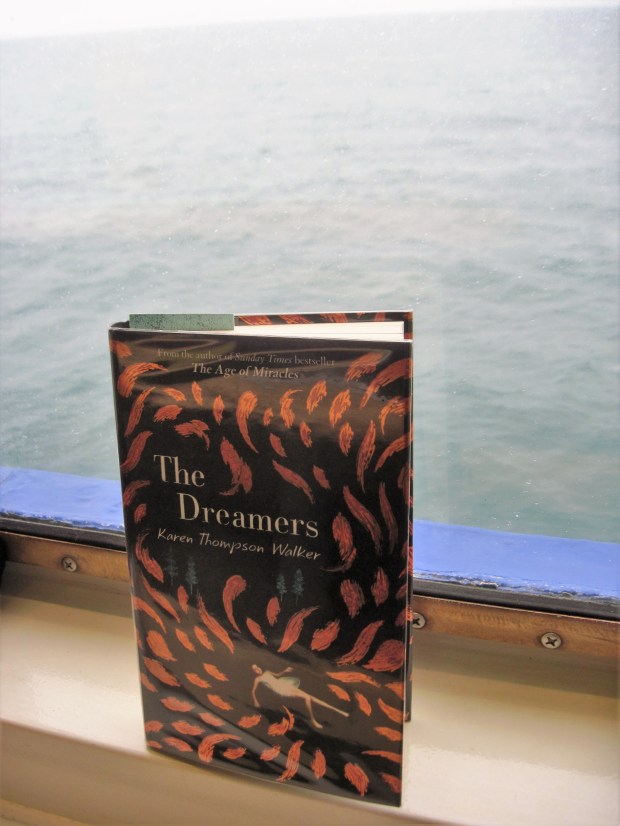
It was good to have a gripping novel to take my mind off the rocking motion of the ferry on the trip out.
Here are excerpts from and links to some of my recent print or online writing for other places. (No surprise that four out of the five are nonfiction and involve medical or bereavement themes!)
BookBrowse
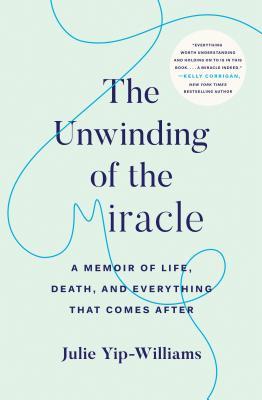 The Unwinding of the Miracle: A Memoir of Life, Death, and Everything That Comes After by Julie Yip-Williams: A lawyer facing late-stage cancer reflects on the happy life she had despite disability and an inauspicious start, and bids farewell to her family. It was miracle enough to have survived her first few years (blindness, a euthanasia attempt, and fleeing Vietnam by boat), but she eventually graduated from Harvard Law School and joined a Wall Street law firm. The author dubs herself “a somewhat ruthless realist.” Early on she vowed she would do nothing desperate or bizarre in her quest for healing, in contravention of what she calls the American “hope industrial complex.” Yet she also left room for spirituality to surprise her. The book resembles a set of journal entries or thematic essays, written at various times over her five years with colon cancer. Some stories are told more than once; an editor might have combined or cut some passages to avoid repetitiveness. Still, this posthumous memoir stands as a testament to a remarkable life of overcoming adversity, asking questions, and appreciating beauty wherever it’s found. (See also my list of other recommended posthumous cancer memoirs.)
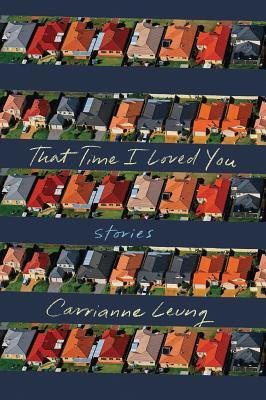 That Time I Loved You: Stories by Carrianne Leung: The residents of a Toronto suburb cope with growing up amid a spate of surprise suicides in the late 1970s and early 1980s. Leung explores different points of view on the same events and changes that take place in a community over several years. Three of the stories are narrated by June, who is 11 years old at the start. Her parents came over from Hong Kong 15 years ago. Other stories fill in a kaleidoscopic view of the neighborhood, showing how lonely the residents are – and how segregated along ethnic lines. Leung returns to June’s perspective at the beginning, middle, and end of the book, so we see her growing up and learning how the world works. Hard lessons are in store for her: people are sometimes punished for their differences, and the older generation doesn’t have it all figured out. Suburbia gets a bad rap, but it’s where so many of us come from, so it’s heartening to see a writer taking it seriously here. (See also my article on linked short story collections, for which I enlisted lots of blogger help via book Twitter.)
Shiny New Books
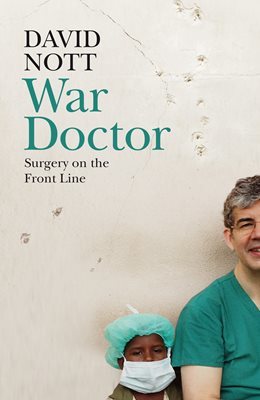 War Doctor: Surgery on the Front Line by David Nott: Welsh surgeon David Nott combines advanced technical skills with extreme altruism: for weeks of every year he takes unpaid leave to volunteer with a medical charity like Médecins sans Frontières or Syria Relief in war zones or disaster areas around the world. The kinds of procedures he has performed in Sarajevo, Kabul and Darfur are a world away from his normal work as an NHS consultant in London: amputations, treating injuries caused by homemade bombs, and delivering the babies of young rape victims. His memoir is mostly structured by countries and/or time periods. There are gripping moments – such as completing a difficult amputation by following instructions texted to him by a London colleague – but also some less fascinating chronology. The book is slow to start and took me weeks to get through. However, it shines when Nott recalls particular patients who have stood out for him. All told, his is an amazing and inspiring story.
As if you haven’t already heard enough about the Wellcome Book Prize from me (!), I also wrote this article for Shiny about the Prize’s history and the range of books that have won or been nominated over the last 10 years, finishing up with some reflections on this year’s shortlist.
Times Literary Supplement
Somehow I seem to have become a TLS regular. The biography editor periodically contacts me with lists of recent memoirs to be reviewed in 400 words for the “In Brief” section, and I’ve been doing about one per month this year.
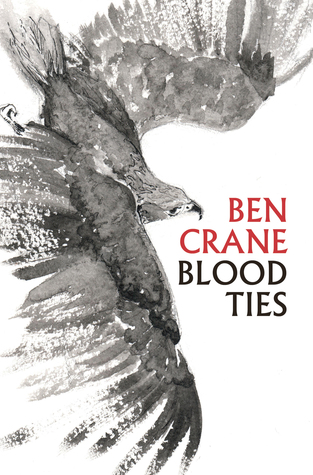 Blood Ties by Ben Crane: Artist Ben Crane has developed a passion for birds of prey, raising hawks and training as a falconer. “I saw that my feelings towards nature, and birds of prey in particular, ran in parallel with my feelings for my son,” he writes. Blood Ties accordingly cuts between the story of rehabilitating a pair of rescued sparrowhawks named Girl and Boy and a parallel story about raising his son as a part-time single father. Together these strands emphasize the common concerns that arise when caring for any creature. Crane’s descriptive language is memorably sharp. Whatever struggles his Asperger’s entails, it seems to heighten his observational skills. Pruning the travel segments would have produced a more focused memoir, but this is a powerful story all the same – of the ties that bind us, both to nature and our own families. (Full review in February 8th issue.)
 Notes for the Everlost: A Field Guide to Grief by Kate Inglis: Inglis, a Nova Scotian photographer and children’s author, has written this delicate, playful handbook – something between a bereavement memoir and a self-help guide – for people who feel they might disappear into grief for ever. In 2007, Inglis’s identical twin sons were born premature, at twenty-seven weeks. Ben lived but Liam died. Every milestone in Ben’s life would serve as a reminder of the brother who should have been growing up alongside him. The unfairness was particularly keen on the day she returned to hospital for two appointments: Ben’s check-up and a report on Liam’s autopsy. Unable to sustain the eye-popping freshness of the prose in the introduction, Inglis resorts to some clichés in what follows. But this kooky, candid book will be valuable to anyone facing bereavement or supporting a loved one through it. (Full review in March 15th issue.)
 Bookish Beck = Rebecca Foster. American transplant to England. Freelance proofreader and book reviewer.
 Bookish Beck