Late Summer Novels (Bamford, Ellis, Hornak, King) & Poetry Collections for the Transition into Autumn (Hurst, McNish, Plath)
It’s been feeling autumnal for a few weeks now with the drizzle, chilly mornings and evenings, honking of geese overhead, and harvesting our last garden apples – though it remains warm and summer only officially ended on Monday. I’ve recently finished off a summer-titled trilogy and the second entry in a seasonal quartet. I’m also throwing in a couple fun novels I bought earlier in the year.
Before and after Tuesday’s autumn equinox, a few poetry collections have been my fitting companions for the start of a new season.
Idle Grounds by Krystelle Bamford (2025)
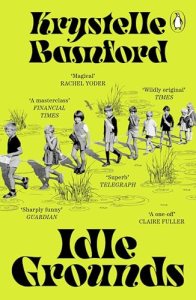 “The following is an account of an afternoon in June in which we sallied forth, and then, for the most part, back.” I was drawn in by the mock-heroic first-person plural voice of a gaggle of cousins at a New England family get-together. It’s 1989 and they’re here for one of the adults’ birthdays, but that’s of no concern to the kids, who are a world unto themselves. In the first chapter, three-year-old Abi goes missing and the rest set out on a quest to rescue her. The shed, the woods, a driveway full of cars, the river: every setting seems to offer adventure, but maybe also danger. And then the oldest boy cousin, Travis, vanishes too. “Intermezzo” chapters offer snippets of family lore – about their grandmother Beezy’s awful novel, The Lilac Swing, and so on – that don’t add much of interest to this meandering novella. To deliver on the promise of the narrative voice, Bamford needed to give her debut a little more: more intrigue, more pivotal scenes, more closeness to a few characters rather than surface descriptions of a bunch, maybe more pages to make something of the not-so-momentous family secrets. As it is, I had to agree with this tongue-in-cheek line on p. 136: “in our depleted state, we thought the very thought you’re thinking now, which is enough already.” (New purchase with voucher – Hungerford Bookshop)
Book 3 of The Summerhouse Trilogy
The Fly in the Ointment by Alice Thomas Ellis (1989)
{BEWARE SPOILERS!}
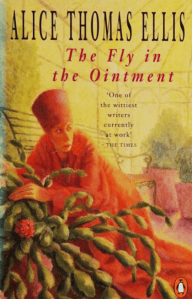 Following The Clothes in the Wardrobe (1987) and The Skeleton in the Cupboard (1988), this novella revisits the run-up to Margaret and Syl’s wedding from Lili’s perspective. It’s the shortest of the three books and adds no new plot details or real character insight, but Lili’s voice is alluring all the same. She’s an incorrigible flirt, or perhaps what we would now call a love (not necessarily sex) addict: “Sometimes I felt I would disappear if I couldn’t see the person opposite falling in love with me. I just wouldn’t be there.” Lili is pivotal to the narrative because of her well-meaning interventions: first, she falsely portrays the coming union as blessed by creating a fake (tissue paper) bloom for the cactus in the summerhouse; then, in agreement with other characters such as Mrs Monro that there shouldn’t be a wedding after all, she decides to sabotage it by ensuring that she and Syl be caught in flagrante in the summerhouse. While this was an interesting project for Ellis to undertake, the first volume was by far my favourite and I didn’t think the second and third wholly necessary. (Secondhand – Regent Books, Wantage)
So Good to See You by Francesca Hornak (2025)
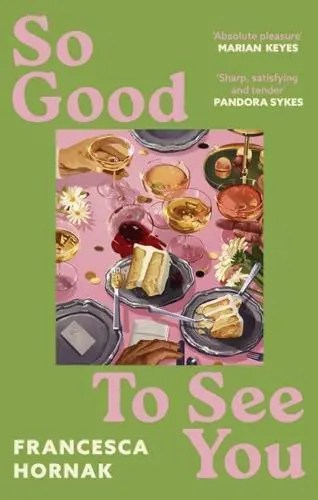 Daniel, Rosie and Serge were good friends at Oxford but since their graduation in 2004 they’ve drifted into indifference and resentment. Daniel is a Hollywood star but still can’t forgive filmmaker Serge for stealing his idea for a biopic of a working-class lad. Serge is on a break from his relationship with Isla, a younger movie makeup artist with whom he has twins. Rosie regrets that her on-again, off-again relationship with Serge meant she wasted prime years. In August 2019, they’re all brought together for Serge’s cousin Caspar’s big gay wedding in Provence. The Campbell cousins come from inherited wealth, but no one knows Serge’s production company is heavily in debt. As best man and “best woman,” Serge and Rosie have to write a joint speech; Daniel has to hide his dependency on alcohol and drugs.
This is a light, Taylor Jenkins Reid-esque soap opera that I swallowed in big gulps. I’d enjoyed Hornak’s Christmas-set debut, Seven Days of Us (2017), but when I looked back at it I realised how identikit the two are: set mostly over a matter of days, with each chapter marked by a precise place and time stamp. I guess she hit on a winning formula and decided to repeat it, but I was disappointed to notice the similarity. In this case, zooming in slows the action and makes the book feel overlong, though it’s perceptive about class, privilege, disappointment, the longing for parenthood, and loyalty among family and friends. (Her previous novel now seems almost prescient with its depiction of a Christmas in quarantine! Perhaps I’ll reread it.) (New purchase with voucher – Hungerford Bookshop) 
Apt Pupil by Stephen King (1982)
(Novella published in Different Seasons under the heading “Summer of Corruption”)
{BEWARE SPOILERS!}
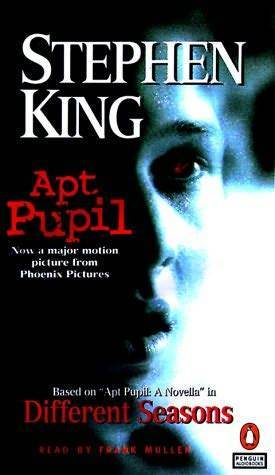 Thirteen-year-old Todd Bowden becomes obsessed with his elderly neighbour, whom he has identified as German concentration camp officer Kurt Dussander, in the summer of 1974. His parents think that he goes over to read to “Mr. Denker,” but in fact he’s extorting sordid war stories out of the old man. When Todd’s grades nosedive, Dussander agrees to impersonate his grandfather at a conference with the school counsellor so his parents remain oblivious. Now each has dirt on the other; blackmail goes both ways. The book suggests Dussander’s ongoing sadism sparks something inexorable in the young man, and both engage in further senseless carnage. I wasn’t sure if it was respectful of King to treat the Holocaust like a contagious sin. As Todd’s (real) grandfather says, “Sometimes the past don’t rest so easy. Why else do people study history?” I don’t think an editor would have let the story stand today. This is not as full-on horror as others I’ve read by King (Misery and Pet Sematary), but still gruesome and – for an animal lover like me – Dussander’s torture of cats and dogs was harder to read about than the murders of unhoused people. A neat connection back to Rita Hayworth and Shawshank Redemption, which I read back in the spring: Dussander mentions that “The banker who bought [the stocks] for me went to jail for murdering his wife a year” later in Maine. (Little Free Library)
Three on a Theme: Autumnal Poetry
Keats described autumn as the season of “mellow fruitfulness,” as I was reminded by Kate Mosse’s Autumn. Fruit and feminism are themes that link these three collections. All:
The Fox’s Wedding by Rebecca Hurst (2022)
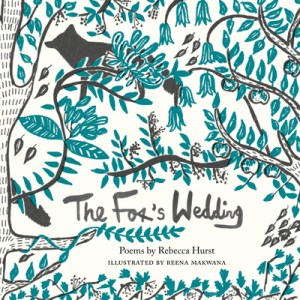 I’ve read Hurst’s debut full-length collection, The Iron Bridge, and jumped at the chance to catch up on her previous chapbook. Its hint of fairy tale menace feels appropriate for early spooky season. A witch turns into a hare and flees in “Familiar.” The girl who will win the hand of “The Frog Prince” spends her evenings “squashing worms and slugs and snails beneath / the crêpe soles of her black school shoes.” Needlecraft recurs: “Once there was a child/ who woke alone in the forest. … S/he took the path of needles / to ask needle-sharp questions.” There are folktale rhythms to “Brothers,” which also mentions gingerbread men. The woods morph with the advance of the year (“let the seasons pleat / folding one year to the next”) and hide creatures real and imagined. “Now it is Michaelmas: the land sun-warm, / fields shorn, blackberries ripe to bursting.” The atmosphere of this pamphlet – defiant, magical, mischievous – casts a spell. (New purchase from The Emma Press)
Plum by Hollie McNish (2017)
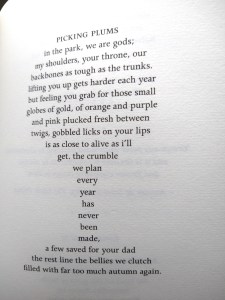
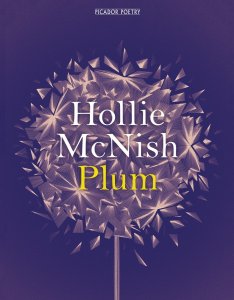 A late tree-shaped poem captures a treasured ritual with her daughter. But if I tell you that “plum” is also the last in a long string of euphemisms for female genitalia in “Voldemort,” that will give a better sense of McNish’s tone, which is often cheeky and snarky. She includes poems she wrote as a child and teenager but also remembers her adolescence from adulthood, pinpointing moments of peer pressure and misogyny that she experienced. She wishes she and her friends had been less obsessed with what boys thought of them and hopes to teach her daughter to stand firm in her own identity. McNish has local roots and is known for her conversational memoirs and her spoken word poetry. Like Harry Baker, Jay Bernard and Kae Tempest’s works, it’s probably not best encountered in print. In performance, fairly simple and repetitive phrasing can come to life. (Secondhand – Library book sale)
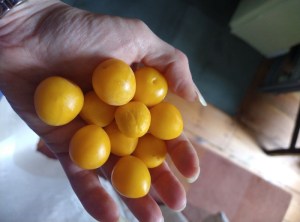
I spend the summer months watching like a hawk for when wild and waste-ground plums ripen and fall so I can scurry around gathering them to eat or freeze for autumn and winter desserts. Our cherry plum tree produced its first fruits this year, too (below).
Crossing the Water by Sylvia Plath (1971)
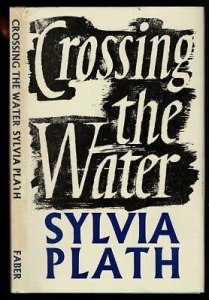 I got less out of this posthumous collection than I did from Ariel and Winter Trees, but there are still striking turns of phrase: “The future is a grey seagull / Tattling in its cat-voice of departure, departure” (from “A Life”) and “At our feet, the weed-moustachioed sea / Exhibits its glaucous silks” (from “Whitsun”). Canada, age, sleep, surgery: the imagery feels a little all over the place. The stand-out poems for me were “Small Hours,” in which marble statues metaphorically watch over the speaker’s troubled insomnia, and “Mirror,” which reflects the unstoppable advance of age and contrasts true self with appearances. Most redolent of autumn were a poem about pheasant hunting and “Blackberrying”:
Nobody in the lane, and nothing, nothing but blackberries,
Blackberries on either side, …
A blackberry alley, going down in hooks, and a sea
Somewhere at the end of it, heaving. Blackberries
Big as the ball of my thumb
The Devon lanes aren’t so empty these days, I can attest! A line from “Last Words” ties in perfectly and is a good resolution for us all: “I should sugar and preserve my days like fruit!” (University library)
I started my preserving late and will not do as much as I have in other years. So far I’ve made apple and tomato chutney and set some rosehip cordial steeping. This afternoon I’m going to attempt rosehip curd – we found a jar of “hagebutten” in a Berlin supermarket this time last year and it was so delicious that we’re going to try to recreate it, though it requires laborious deseeding and mincing plus two boiling stages. More Vitamin C than orange juice, apparently!
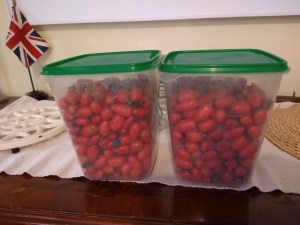
Rosehips ready for preserving!
Paris in July, III: Dundy, Maugham, Sarton Novels; Nonfiction by Durand & Carles, Gopnik
All in all, I’ve reviewed 13 books (a mix of fiction and nonfiction) for #ParisInJuly2026; see also Part I and Part II. It’s been such a fun escapist project for the summer – thanks to Emma of Words and Peace for hosting! I’m squeaking in at the last minute with a final set of five made up of a few obscure classics and two sets of essays that veer between autobiographical reflection and social observation, with a bit of self-help thrown in. A shared theme this time is differences between the USA (or England) and France. Here’s a quick paragraph on each.

Fiction
The Dud Avocado by Elaine Dundy (1958)
“The world is wide, wide, wide and I am young, young, young, and we’re all going to live forever!”
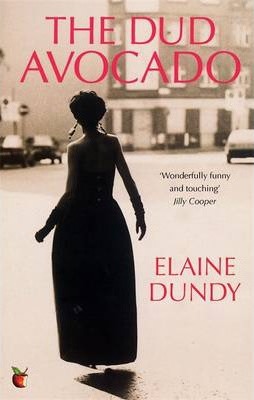 Sally Jay Gorce is determined to live it up in Paris. After all, now that she’s lost her passport, it doesn’t look like she’ll be going back to the States any time soon. With her dyed-pink hair, self-deprecating sense of humour, and heavily notched bedpost, she’s an endearing and impulsive protagonist. She’s always falling in and out of love and embarking on new projects, from acting on stage or as a film extra to posing as a painter’s model. I found her turns of phrase amusing – “To my chagrin, I found all my clothes … splitting themselves resolutely up into three categories: Tyrolean Peasant, Bar Girl, and Dreaded Librarian”; “It was dessert now, and I was deserting” – but did weary a bit of the meandering plot. This work of autofiction seems ahead of its time what with the protagonist’s promiscuity. I’ve always been intrigued about the title and learned that it arises from a love interest’s likening of American girls to avocados (“A hard centre with the tender meat all wrapped up in a shiny casing … so eternally green”) plus his mishearing of Sally Jay’s “dead” for “dud.” Somewhere on a continuum between I Capture the Castle and Nina Stibbe, this comic novel was a pleasant distraction. (Secondhand – Community Furniture Project, Newbury)
A linking passage: “Boy, we met a real nut on the beach today. A skinny young American with a fierce black moustache called Hugo McCarthy. He’d just left the South of France a couple of days ago, where he’d been kicked out of Somerset Maugham’s villa in Cap Ferrat for the third time.”
The Magician by W. Somerset Maugham (1908)
“There’s no place like Paris for meeting queer folk.”
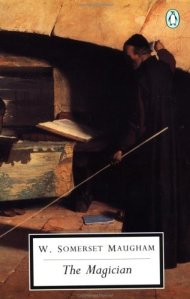 Who knew Maugham tried his hand at supernatural horror? The nearest thing I’d read from him before was Up at the Villa, a suspense novella. An autobiographical fragment preceding the text explains that Oliver Haddo, the villain of the piece, was inspired by a poet Maugham met in Paris, Aleister Crowley, who dabbled in Satanism and the occult. Arthur Burdon, an English surgeon in Paris, is engaged to marry Margaret Dauncey. Margaret’s roommate, Susie Boyd, is fascinated by Haddo, who looms large in personality and body. Margaret, on the other hand, says, “I’ve never met a man who filled me with such loathing.” Arthur and others of their acquaintance don’t know whether to take him seriously or not. This means that they underestimate the threat he poses to their happiness – and perhaps their lives. It’s rare to encounter a story of demon possession these days, and hard to know quite what to make of it. I found this reasonably compelling but melodramatic, plus it felt distasteful how Haddo’s weight increases to match his evil. Do read Maugham if you haven’t yet – he is reliably readable and a number of his works are short – but maybe not this one first. (Secondhand – 2nd & Charles)
Shadow of a Man by May Sarton (1950)
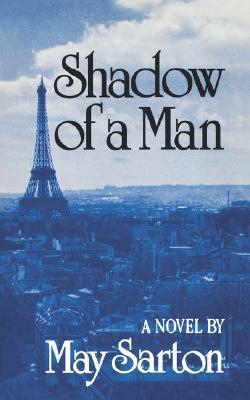 I’d not heard of Sarton’s third novel before I picked it up at random in a used bookstore. For those of us who discovered Sarton through her journals or poetry, I suspect her fiction will always fall short. The psychology of her characters’ relationships tends to lack subtlety, and plotting isn’t always her forté. I enjoyed this one well enough, probably because I could relate to the main character’s feeling of being adrift after his mother’s sudden death. After the funeral is over and done with, twenty-six-year-old Francis Chabrier decides to spend the summer in Paris. He’s half-French and thinks some time away from Boston might do him good. Except when he gets there he promptly falls in love with a family friend, Solange, and that’s complicated because she’s a 45-year-old widow whose late husband was shattered by his time in a concentration camp. It’s clear their romance will be short-lived. Francis’s stepfather, Alan, describes the young man as “a comet on the loose,” and the purpose of the months in Paris seems to be to set him on a more stable course. It grated that Solange is portrayed as almost an old lady (I’m only just over two years off her age now!), and that their affair only serves as a prelude to a more sensible relationship back home. However, the Paris setting (and coastal Maine later on) is delicious, and I marked out plenty of lines about Francis and his mother’s family dynamic. (Secondhand – Wonder Book & Video, Hagerstown)
Nonfiction
Pardon Our French: Parisian Lessons for a Happier Life by Alex Durand and Tom Carles with Allie Kingsley Baker (2026)
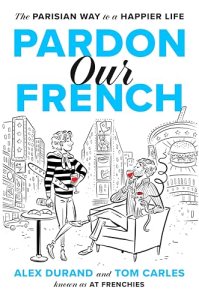 Durand and Carles moved to the USA to play college soccer and went viral on social media for their “AT Frenchies” videos about French language and culture. (I’ve not actually seen any.) Although they’ve come to admire aspects of the American lifestyle, such as ambition and individualism, they still prize traditionally French values of curiosity, privacy and a more relaxed approach to time management. Chapters on romance, food, style, friendships, green living, the arts and rituals bring out the best of what France has to offer. “L’histoire d’Alex” and “L’histoire de Tom” memoir sections alternate with more generic self-help advice. I expect Baker had a lot to do with the vernacular prose, which can be slick and clichéd. Still, it’s a good-natured, chatty book and it’s always worthwhile to be reminded to live in the moment, savour small pleasures, and insist on quality.
To be published by Penguin Life on September 8. (Read via Edelweiss)
Paris to the Moon by Adam Gopnik (2000)
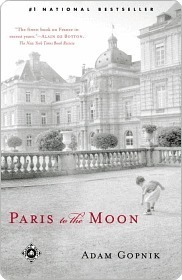 Longtime New Yorker writer Gopnik lived in Paris in 1995–2000 with his wife and young son; their daughter was born just before they left to return to New York City. Like other New Yorker regulars such as Elizabeth Kolbert and Susan Orlean, he is an excellent essayist. His book on French cuisine is a favourite of mine, and on this reread I most appreciated the pieces on food, and the general observations on being an expat:
Fish and plugs are the two great differences, the two things that are never quite alike from country to country. … This can shake you up, this business of things almost but not quite being the same. A pharmacy is not quite a drugstore; a brasserie is not quite a coffee shop
We have a beautiful existence in Paris, but not a full life, and in New York we have a full life and an unbeautiful existence. (= his wife’s conclusion)
everything about moving to France has been wonderful, and everything about emigrating to France difficult.
That summary of French bureaucracy, so at odds with the cultural experience of living in Paris, reminds me of what David Lebovitz has to say on the subject. There is too much about politics and sports in this book for me, but I loved his close attention to his son’s development and the customs they create around Christmas but also in the everyday, such as an ongoing bedtime story about a baseball player (“The Rookie”) and cake and hot chocolate after swimming. (Secondhand – 2nd & Charles)
My original rating (2016): 
My rating now:
Some apt quotes about Paris I encountered this month:
Adam Gopnik: “Paris in July is pretty much left to the tourists and the people who look after them” & “Perhaps in the end this is why Paris is ‘romantic.’ It marries both the voluptuous and restricted.”
David Lebovitz: “Like New Yorkers, Parisians have a complicated relationship to their city. They appreciate the beauty and excitement, but as Romain told me, Paris is dur (hard). That things aren’t easy—l’administration, the neighbors, the brusqueness, the fact that it’s not a perfect place—is what he likes about Paris.”
May Sarton: “I think Paris makes everyone wise … All Americans fall in love with Paris. It’s the coup de foudre.”

Overall favourites: the whole of my first batch!
- Almost Life by Kiran Millwood Hargrave
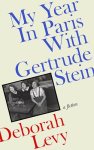
- My Year in Paris with Gertrude Stein & Real Estate by Deborah Levy
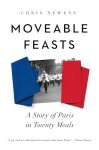
- Moveable Feasts by Chris Newens
Paris in July, II: Beauvais, Brown, Elkin and Lebovitz
July has been one long heat wave here in southern England. Luckily, it’s a bit cooler than it was earlier in the month, and we’re developing strategies for coping with what seems to be the new normal – until it gets worse again. My main tactic has been doing very little on most days apart from sitting on the couch or reclining on a mattress with a stack of books to hand. So it’s been good for one thing (maybe two): finishing books – and watching swifts. Following on from my first set of four Paris reads, I have another four (and five more coming up before the end of the month): a teen novel about overcoming peers’ prejudice, an essay anthology about the enduring appeal of the city for authors, a fragmentary memoir composed on a phone during a bus commute, and a record of a chef’s home renovation journey from hell.
Piglettes by Clémentine Beauvais (2014; 2017)
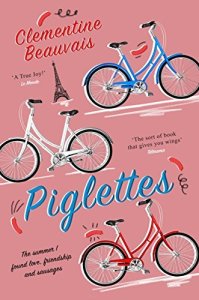 This was my second YA novel by Beauvais (after In Paris with You); she translated both herself and her proficiency in both languages allowed her to include wordplay that might have been lost otherwise (“I finally get what it means to have l’esprit de l’escalier, when I scream to her, from the bottom of the staircase…”). Mireille LaPlanche’s former friend Malo introduced a cruel annual tradition at their high school: a “Pig Pageant” in which classmates pick the fattest, ugliest girls – including her. She decides to team up with two other finalists, Astrid and Hakima, and show their persecutors what they can do. After a period of planning and training, they undertake a week-long cycle ride from their home in Bourg-en-Bresse to Paris, timed so that they’ll arrive on Bastille Day and crash the president’s garden party. Hakima’s older brother, Kader, who lost his legs in the Iraq War and uses a wheelchair, is their chaperone. They’ve dubbed themselves the “Three Little Piglettes” and tow a trailer full of sausages that they cook and sell at each stop. Soon they’re a social media phenomenon. This sweet, funny Cinderella story about defusing fatphobia includes good diversity rep and touches on lots of issues including anxiety, bullying, and unrequited love – all with an unmistakably French enthusiasm for wine, cheese and philosophy. (Edelweiss)
A Paris All Your Own: Bestselling Women Writers on the City of Light, ed. Eleanor Brown (2017)
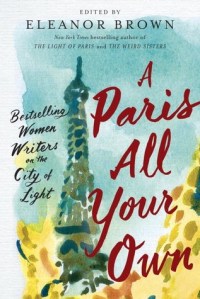 A reread that I started shortly after our trip to Paris in December 2023 but left half-finished on a shelf until this month. The roster of 18 contributors leans very much towards women’s fiction. While I probably most enjoyed the third of the book that was by authors I’d read and liked before – J. Courtney Sullivan, Susan Vreeland, Paula McLain, Julie Powell, Therese Anne Fowler and Maggie Shipstead – all of the pieces are cosy and undemanding. They tell of time spent living, working or travelling in the city. Sometimes it meets expectations; other times, mishaps and faux pas create disillusionment until a future visit grants a second chance. There are favourite foods and language struggles, art treasures and magical spots to discover, and stereotypes to confirm or overturn. The experience of Paris can vary based on who the travel companion is – an enthusiastic child, a needy parent or a soon-to-be ex. Fowler made her research trip before writing a biographical novel about Zelda Fitzgerald, while McLain only saw Hemingway’s haunts after she’d written The Paris Wife. Each essay finishes with a quickfire list of favourite Paris moments, books, sites, songs, etc. Not a bad substitute for being there! (Secondhand – 2nd & Charles)
My original rating (2017):
My rating now:
No. 91/92: Notes on a Parisian Commute by Lauren Elkin (2021)
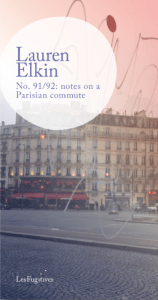 Just imagine keeping a diary of your bus journeys in the Notes app of your phone for seven months and getting a book out of it. Elkin’s mostly unedited observations are based on people-watching and her own swirling thoughts in 2014–15. She covers obnoxious behaviours on public transport (the same the world over, it seems: “Oi. Manspreader. Bouge ton cul”); her teaching work; overheard conversations; and Paris as seen in different seasons. Her mind wanders across history and theory. The bus is a melting pot: She’s thrown into false intimacy with people she’s never seen before and hopes never to encounter again. Nothing much happens until it does. First it’s the Charlie Hebdo attacks. Then she falls pregnant but it’s ectopic and she loses the baby. And, after she’s switched to Métro commuting, the Hypercacher attacks. In the prologue and epilogue, Elkin talks about only understanding major events in retrospect. She also cites lockdown diaries as being a new subgenre her project fit into. But let’s be honest: if she’d not already made a name for herself as a cultural critic, this would never have been published. While it has some value as an in-the-moment historical document, I didn’t find it nearly as profound as, say Deborah Levy’s autobiography. (Secondhand – Awesomebooks.com with SellItBack voucher)
L’appart: The Delights and Disasters of Making My Paris Home by David Lebovitz (2017)
Lebovitz is a San Francisco pastry chef who moved to Paris a couple of decades ago. We get a lot of ideas from his dessert cookbook and extensive blog archive. Like The Sweet Life in Paris, this contains lighthearted musings about cultural differences between France and the US and many tantalizing recipes (most of them sweet but also a few savoury) that I am actually likely to make. But it’s primarily about the several-year saga of buying and restoring an apartment. Lebovitz had a grand plan for the kitchen, especially: a huge space with American-style appliances that would ease his cookbook writing and testing. French bureaucracy made the purchase difficult enough as the property had to be officially reregistered as residential rather than commercial, and the seller and realtor were both antagonistic.
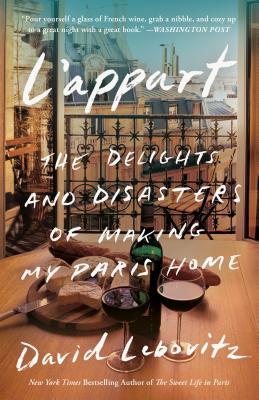 But that was nothing compared to the nightmare of the renovation. To start with, Lebovitz was friendly with his contractor and his workers. In fact, too friendly, his partner, Romain, warned. He called the builders “tu,” brought fresh-baked treats for them, and always paid their bills promptly. They started taking liberties: hardly ever showing up, failing to meet deadlines, replying to every concern with “pas de problème” but never fixing the issues. The shoddiness and incompetence are truly astounding: counters at the wrong height, an unusable faucet, melted fuses, an electricity leak, buckled floorboards, askew windows, an upside-down water softener. Every mistake cost time and money, such that the whole job was three times longer and more expensive than projected. (A lawyer dissuaded Lebovitz from suing because in the French legal system it could take five years and not even go his way.)
Depending on your own experience, this might be cathartic, or too close to home, or a cautionary tale. (We’d already long decided we won’t do any major building projects because we can’t tolerate noise, disruption or strangers and our house is good enough for our needs.) Keep in mind that Lebovitz dealt with all this in a second language and his fortitude is impressive. Scenes at Ikea and conversations with his contractor are amusingly surreal. But I confess I did find this a little overlong and repetitive, and every setback made me cringe for him. I’ll have to bake some frangipane plum-raspberry gratins and try to forget the pain. (Secondhand – Better World Books with Little Free Library voucher)
#ParisInJuly2026, I: Kiran Millwood Hargrave, Deborah Levy & Chris Newens
I wouldn’t want to be in Paris right now – continental Europe is far too hot in high summer and in recent years the UK has been following suit – but I am having such fun travelling there through books. I have a fantastic stack of Paris-set novels and memoirs on the go, perfect for sinking into on long afternoons and evenings while I hide from the second round of the heat wave in our relatively cool lounge. These first four selections were corkers! I mostly read them earlier: in May, or across several years, or started in January but only just finished. And what a treat they all were: an epic yet intimate queer romance, two auto/fiction hybrids about making a life as an unconventional woman, and a tour through Paris food, district by district.
Almost Life by Kiran Millwood Hargrave (2026)
There has been homoerotic content in Hargrave’s previous fiction for adults, but this is a full-blown queer love story that, with its time span (1978 to 2013) and heft, feels momentous, like a future classic. Erica is an earnest 18-year-old tourist experiencing Paris before starting at UEA. She meets Laure, an older, cynical Sorbonne art history student, on the steps of the Sacré-Coeur: drawn to her not just because they’re reading the same book (A Lover’s Discourse by Roland Barthes) but also because Laure looks so perfectly Parisian there in a louche sprawl, smoking a cigarette. Laure is a confirmed lesbian, whereas Erica was previously straight. It’s coup de foudre for sure. Laure has been with many women, including married ones, but what she feels for Erica is different, and Erica leaving at the end of the summer is such a blow that her problem drinking gets out of control.
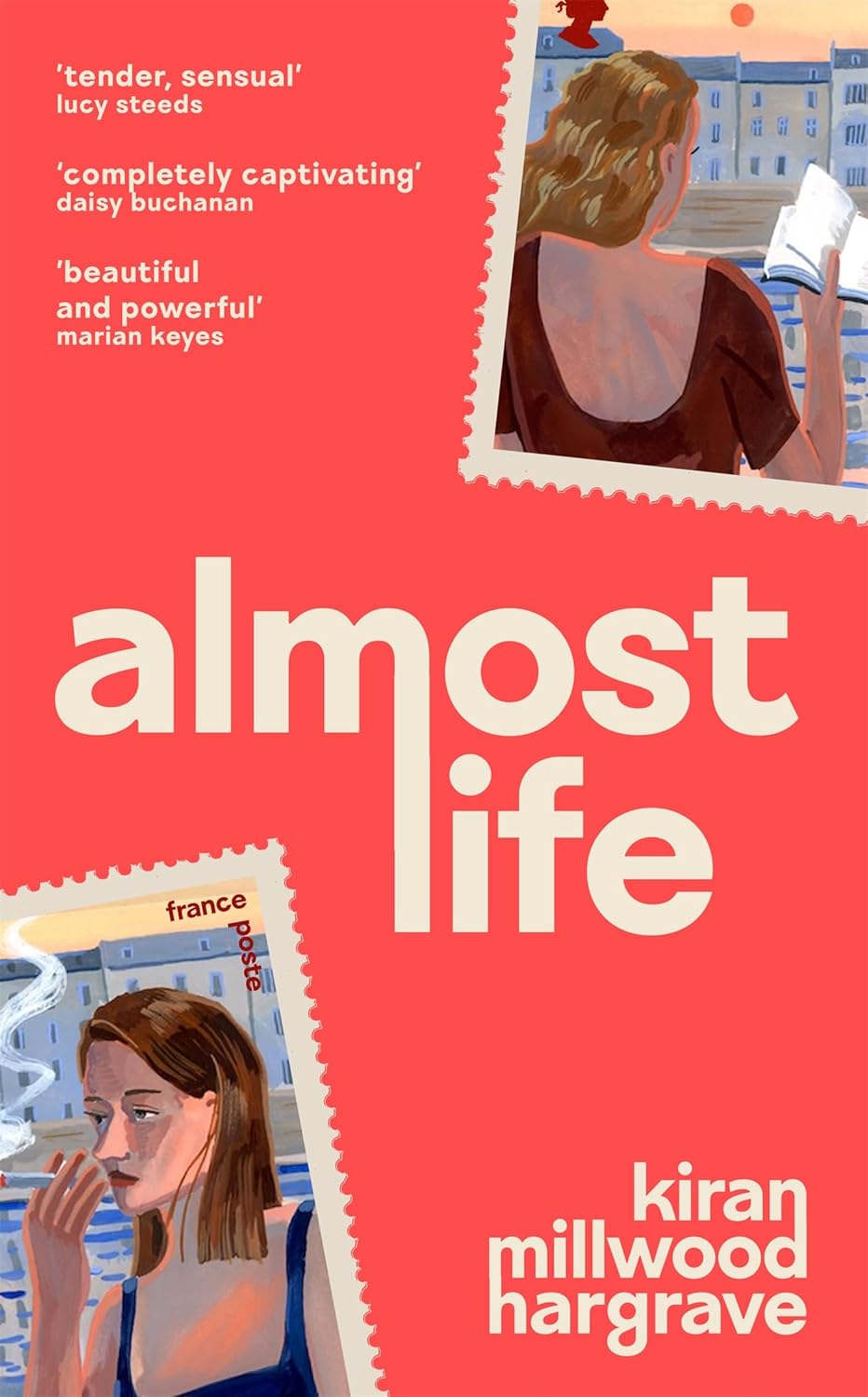
Comparisons with One Day by David Nicholls are inescapable what with the structure of jumping ahead by a few years with each section, although I’d argue that this is more similar to The Versions of Us by Laura Barnett and The Heart’s Invisible Furies by John Boyne. Hargrave’s close third-person narration alternates between her two protagonists and occasionally documents their interactions, though they keep missing their chance to be together. On two occasions Erica doesn’t write or visit when she should; twice they resume their love affair and could have gotten back together, but by then one or both has another partner. (Erica marries a Creative Writing MA classmate and they have two daughters.) The social context is important: they lose a dear friend to the AIDS crisis and Hargrave carefully bookends the action to show an advance in LGBTQ rights: early on, the characters are caught up in an attack on a gay bar in 1978; in the last pages, France legalizes same-sex marriage.
Thirty-five years is a long time in any relationship, but Erica and Laure’s is repeatedly strained by absence and perceived betrayals. They each, separately, go through a lot, including bereavements, addiction, mental health issues, and career disappointments. I thought the novel might have a speculative element, contrasting their potential life together with their divergent trajectories. In fact, only in one brief instance does Hargrave offer an alternative version of how things might have gone. Instead, the focus is on moments when fear or negligence stopped one of them from reaching out. I quibbled with a few seeming anachronisms and errors but overall found this delicious, touching, and even strangely close to home sometimes. Paris itself is a star, its museums, bars, and streets a perfect backdrop; Monet’s gardens and the Norfolk coast are appealing settings, too. This was a sweet, sexy, sobering read I can wholeheartedly recommend. (Public library) 
A linking passage:
“They went together to the Père-Lachaise and Erica pulled a button off her shirt to put on Gertrude Stein’s grave. Laure was amazed she knew Tender Buttons but not that Gertrude Stein had loved a woman. She did not want to be the lesbian prophet to this girl, but she could not help herself.”
My Year in Paris with Gertrude Stein: A Fiction by Deborah Levy (2026)
“Gertrude Stein said that’s enough. (I know that that’s not enough now.)”
~from “Roseability” by Idlewild – enjoy the c. 2000 Scottish punk!
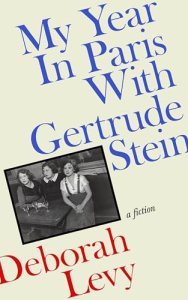
Here’s the good news: You don’t need to know anything – or particularly care – about Gertrude Stein to enjoy this. Even not having read any Stein, just having read about her, it was clear to me that the style is an homage in places (repetition, scant punctuation). But where Stein’s is famously cryptic, Levy’s prose is crystal-clear as usual. There’s a gauzy fictional storyline in which the narrator is wrestling with an inchoate essay about Gertrude Stein. (Rather like Geoff Dyer trying to write about D.H. Lawrence in Out of Sheer Rage.) She has two close friends: Eva is a graphic novelist with an international background, currently separated from a husband back in Seattle; Fanny is a polyamorous French lesbian who works in finance and, no matter the topic, tells it like it is. A mystery of sorts arises in the form of Eva’s lost cat, Bob. Fanny has heard about a cat found drowned in the canal and they later meet a Frenchman whose cat was stolen. (It’s unclear whether it’s all one and the same cat.)

Cute American cover (though the British one is probably more apt).
The narrator alternates between this minor intrigue, biographical fragments about Stein, and her struggle to know how to capture her subject in words. Stein was brought up in a German Jewish household in Pennsylvania and failed her medical school exams at Johns Hopkins. In Paris she lived with Alice B. Toklas as she pleased, without apology: an artist’s muse, intellectual and author inspired by “early psychology and cubism.” Levy clearly admires Stein for pushing the boundaries of literature and of life, paving the way for so many. I wasn’t sure that the ‘story’, such as it is, matters here, or at least not as much as the biography and pastiche. Levy is very much in Ali Smith territory here. In any case, I found it playful, sophisticated and beguiling. There are so many plainly put but brilliant lines:
“Stein put her immense writing energies into making sure she was not understood. This is what interested me most about her writing. She did not believe it is worth having a conversation if everything is understandable.”
“Every century needs an artist to dismantle coherence as we have been taught it and make a space for something new to happen.”
I have a copy of The Autobiography of Alice B. Toklas that I’m going to attempt soon…
(Public library)
Real Estate by Deborah Levy (2021)
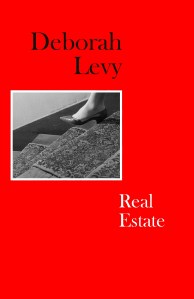 I’m not sure why it took me so long to read the final volume of Levy’s so-called Living Autobiography. I started it in August 2022: perfect timing because that was the year we bought our first house. But I left it part-read on a shelf until April. It’s not my favourite of the trilogy – that’s The Cost of Living, which is perfect – but I appreciated it a lot more than Things I Don’t Want to Know, which felt forced. Levy paints her life as restless, nomadic; to an extent, she likes it that way. She flits between London and Paris, attends a literary festival in India and takes an extended holiday in Greece. At age 60, single and with adult daughters, she doesn’t have to answer to anyone. Yet she longs for a home of her own – a deep sense of fulfilment that perhaps can’t be bought along with a piece of property. Is it a paradox to desire grounding but also freedom? That’s the main question that Levy explores here, and you can see why Stein would become a model for her (Leonora Carrington is another in this book). “It seemed to me all over again that in every phase of living we do not have to conform to the way our life has been written for us, especially by those who are less imaginative than ourselves.” This is incredibly quotable, and really a perfect book for every woman of a certain age as we come to resemble our mothers and ponder how to go on constructing ourselves through words and relationships.
to think and feel and live and love more freely is the point of life
So then, now that I was a sixty-year-old female character, both unwritten and constantly rewriting the script, what did I value, own, discard and bequeath?
Levy has an enviable talent for simplicity and clarity, but simultaneous impact and meaning. I’d be lucky to ever write anything autobiographical that has half as much elegance and power as her work. (New purchase – Amazon?) 
Moveable Feasts: A Story of Paris in Twenty Meals by Chris Newens (2025)
Newens, an English journalist, grew up working in his family bakery and tea rooms, so knew of the hard labour and long, early hours that daily food preparation requires. He’d lived in Paris for a decade when he decided that his strategy for getting a broader understanding of his adopted city would be through its cuisine. Arrondissement by arrondissement, he explores culinary landmarks and famous dishes, choosing one recipe from each to recreate in his kitchen. Some of these are familiar French staples such as croissants, crêpes, macarons, a goat’s cheese salad and tartiflette. Others aren’t so much a recipe as a serving suggestion: fresh oysters, an omelette with no ingredients beyond 3 eggs, pre-packaged escargots. Tourist food can be good or terrible, depending on where you go.
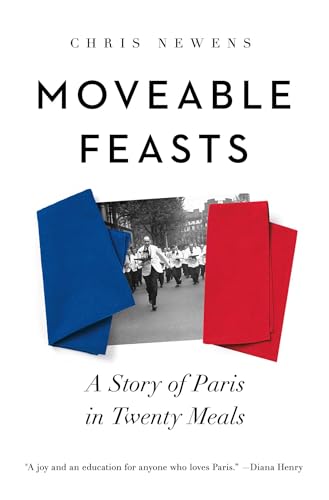 To get beyond clichés and give an accurate portrait of Paris, Newens realized, it’s essential to include ethnic dishes such as banh mi, couscous, falafel, kebabs (made of equal parts lamb belly and turkey thigh meat) and meen puyabaisse (a Tamil-fusion fish stew – A Waiter in Paris taught me that many of the city’s food service workers are from Sri Lanka) to reflect the many immigrant cultures that call Paris home. To mix things up, he sometimes strays from the usual format of meeting with restaurant staff and learning a dish from them. One chapter is an elegy for the family friend through whom he first discovered French food. In others he is surprised by the delicious/awful fare on offer at a Paris soup kitchen/sex club. Ultimately, he concludes that what sets the food in France apart, no matter the cuisine in question, is the quality of the produce, so his final trip is to Rungis, the largest produce market in the world, which supplies most of Paris’s food needs at some times of year. He then ties it all together by hosting a picnic where guests cook one of his 20 recipes to bring.
This is the best sort of armchair travelling, where you get to experience the deliciousness and excitement vicariously and can be relieved that you’ve avoided all the inconvenient or embarrassing realities of interviewing strangers. I also learned a fair bit about the different districts’ personalities and how tradition meets modernity in French food. Food is a daily chance at pleasure and I just love reading about it (even though I don’t cook). Newens won a Jane Grigson Trust Award for New Food and Drink Writers, and with his curiosity and sense of humour it’s easy to see why. (Read via Edelweiss)
20 Books of Summer, 8: Au Revoir, Tristesse by Viv Groskop
This is a substitute I picked out as a potential (now belated) #ParisinJuly2025 contribution. There’s been little time for writing over the past week while we’ve been hosting my sister and brother-in-law. Their whirlwind trip was shortened by a day due to a cancelled flight from the States, but we managed to pack in a lot, including a two-night mini-break down in Devon.

Reminiscent of Something to Declare by Julian Barnes and How Proust Can Change Your Life by Alain de Botton, this is a lighthearted tour through a dozen great works of French literature and the lessons they might offer modern readers on how to live well. Ever since her school days of studying French and spending every family holiday in France, Groskop has been obsessed with the language and culture. In most of the chapters, she undertakes a rereading of a novel she first read as a teenager or Cambridge student, marveling at how much more she gets out of it with greater life experience.
 Although her choices are indisputable classics, she acknowledges they can only ever be an incomplete and biased selection, unfortunately all white and largely male, though she opens with Bonjour Tristesse and also includes Colette and Duras novels. I’d only read three of her dozen, in translation: along with the Sagan, Dangerous Liaisons and Madame Bovary (as well as other books by two of the additional authors), but it didn’t make much difference whether I was familiar with a plot or not. So long as one is not allergic to spoilers, it’s possible to enjoy these miniature essays’ witty combination of literary criticism, biographical information, self-help messaging, and a bit of autobiographical context.
The male writers tended to be syphilitic workaholics – Balzac is reputed to have drunk 50 cups of coffee per day to sustain his output – while the women flouted social conventions by drinking, taking much younger (and/or female) lovers and driving recklessly. While the subtitle promises “Lessons in Happiness,” from Hugo to Camus these are in fact pretty miserable narratives in which, as was especially common in the 19th century, protagonists are punished for ambition or transgressions, or never reach contentment because of self-delusion.
In boiling down each plot to one line of advice for a chapter title, Groskop’s tone alternates between earnest (“Our greatest weaknesses conceal our greatest strengths” = Cyrano de Bergerac) and tongue in cheek (“Social climbing rarely pays off, but you’ll probably want to do it anyway” = Le Rouge et le Noir). She describes the works with genuine affection and clearly believes they are still worth reading, yet isn’t afraid to question those aspects that have aged less well. Controversially, she suggests being selective with Proust’s mammoth oeuvre: “skim-read, rereading the passages you fall in love with and discarding the rest.” She also surveys how the stories live on through adaptations. Of the new-to-me, I’m most drawn to Bel-Ami but also fancy La Cousine Bette. This was a delight I wouldn’t hesitate to recommend to fellow Francophiles. (New purchase – remainder from Hay Cinema Bookshop)

#ReadingtheMeow2025, Part II: Books by Mayo, Reinhold, Taylor and More
This year’s Reading the Meow challenge is drawing to a close. I’m adding to my first set of reviews with these selections: a novelty book about women and cats, an autobiographical sequel about an animal-lover’s menagerie in Provence, and a travel book about Scottish wildcats – plus a one-off essay that drew me in for its title and one more children’s book.

Behind Every Great Woman Is a Great Cat (2019)
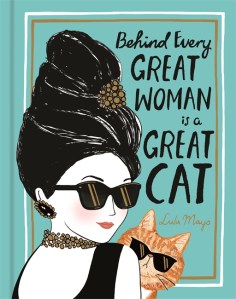 The only name on the cover is Lulu Mayo, who does the illustrations. That’s your clue that the text (by Justine Solomons-Moat) is pretty much incidental; this is basically a YA mini coffee table book. I found it pleasant enough to read bits of at bedtime but it’s not about to win any prizes. (I mean, it prints “prolificate” twice; that ain’t a word. Proliferate is.) Among the famous cat ladies given one-page profiles are Georgia O’Keeffe, Jacinda Ardern, Vivien Leigh, and Anne Frank. I hadn’t heard of the Scottish Fold cat breed, but now I know that they’ve become popular thanks Taylor Swift. The few informational interludes are pretty silly, though I did actually learn that a cat heads straight for the non-cat person in the room (like our friend Steve) because they find eye contact with strangers challenging so find the person who’s ignoring them the least threatening. I liked the end of the piece on Judith Kerr: “To her, cats were symbols of home, sources of inspiration and constant companions. It’s no wonder that she once observed, ‘they’re very interesting people, cats.’” (Christmas gift, secondhand)
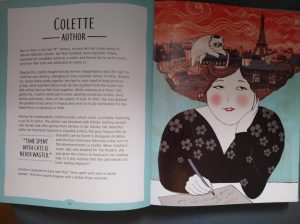
Watchers in the Sun: Life at Mas des Chats by Margaret Reinhold (1994)
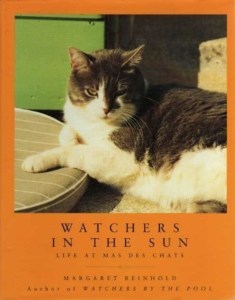 Last year I read the previous book, Sanctuary in the South (also titled Watchers by the Pool) on holiday. This is more of the same: pleasant stories about the personalities and interactions of a rotating cast of cats, some of whom she’d brought with her from England to Provence, others who transformed from strays she fed outdoors to part of the indoor hierarchy. Lily is the grande dame with private quarters upstairs; Monsieur le Gris is the top cat, bullying several younger cats but forming strong bonds with others. Most of the time Reinhold seems to hit a natural limit of nine, but that’s with several dying and being replaced by cats who wandered in or kittens people brought her. She also has two dogs and at one point rescues an old, deaf spaniel from drowning. Her French neighbours seem (to her, and probably us readers) strangely unsentimental about their pets by comparison. I enjoyed this a bit less than the first book because it was so similar – again with the Doreen Tovey-like anecdotes about the local humans – and because with the former I had the benefit of reading it on location in the South of France. The photographs by William Gooddy are a quaint reminder of the days when you shot a roll of film and had no idea how your photos had turned out until you got it developed. Even if some were blurry or underexposed, you used them because that was the best you had! (Secondhand purchase – Awesomebooks.com)
Tracking the Highland Tiger: In Search of Scottish Wildcats by Marianne Taylor (2019)
 A perfect segue from Reading the Meow to our Scotland holiday coming up on Friday. I’d not heard of Taylor although she’s a prolific natural history writer. Such species quest narratives have become very common. The contextual information about the world’s cat species and the difference between Scottish wildcats and domestic cats, including the example of a half-feral cat she adopted, is fairly interesting, but the way she separates it from her trips to Speyside and Ardnamurchan to look for wildcats in 2013–18, which are each given their own chapter, feels odd. A similar book being published today would have blended the travel, research, and autobiographical information better. There’s plenty of habitat in the Scottish mountains for wildcats; the problem they face is hybridization with domestic cats. There’s no such thing as a purebred anymore. Captive breeding and reintroductions are the only way the species is likely to survive. “Timing a trip to look for Scottish wildcats is difficult in a way, but in another way it’s not: no matter what time you go, you’re almost guaranteed not to see one.” (At least she’s self-deprecating about it.) For most of the way through, you’re convinced the author will never find one. But you’ve got to keep hoping…
[I got this from a Little Free Library on Lewis, probably the most remote one I’ve ever frequented. Alas, it’s the only one in the Outer Hebrides and there aren’t any others that we’ll pass by on our travels in the Highlands.]
And a couple of bonus books:
 The Mousehole Cat by Antonia Barber; illus. Nicola Bayley (1990) – The town of Mousehole in Cornwall (the far southwest of England) relies on fishing. Old Tom brings some of his catch home every day for his cat Mowzer; they have a household menu with a different fishy dish for each day of the week. One winter a storm prevents the fishing boats from leaving the cove and the people – and kitties – start to starve. Tom decides he’ll go out in his boat anyway, and Mowzer goes along to sing and tame the Great Storm-Cat. This story of bravery was ever so cute, words and pictures both, and I especially liked how Mowzer considers Tom her pet. (Free from a neighbour)
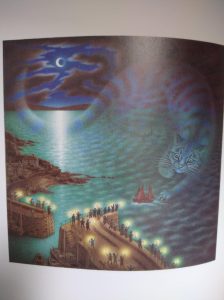
“A Conversation with a Cat” from A Conversation with a Cat and Others by Hilaire Belloc (1931) – I have no idea how I came across this but I had to borrow it for the title. Alas, only the six-page opening story is actually about a cat; the rest is, I suspect, light essays in the vein of Jerome K. Jerome. In the title piece, a man stops for a beer at a railway station bar and a beautiful long-haired cat jumps up onto his lap. “If it be true that nations have the cats they deserve, then the English people deserve well in cats, for there are none so prosperous or friendly in the world,” he thinks. He considers himself chosen and names the cat “Amathea.” He monologues to her about how comforting her presence is (“there is not a man living who knows better than I that the four charms of a cat lie in its closed eyes, its long and lovely hair, its silence, and even its affected love”) and how wonderful it is that she knows nothing of mortality. “You will never leave me. I will respect your sleep and we will sit here together through all uncounted time,” he vows. At which point she, of course, hops down and promptly approaches another patron for attention. Just like a cat. (University library)


I also enjoyed this page from Awkward Family Photos by Mike Bender and Doug Chernack, which I perused from the Little Free Library:

I’ve had such fun with Reading the Meow this year! Thanks again to Mallika for hosting it. My favourite read of the challenge was Poets Square, followed by Mornings without Mii. The Mousehole Cat was great, too. (All are pictured below apart from Mii, which I read on Kindle.)

#ReadingtheMeow2025, Part I: Books by Gustafson, Inaba, Tomlinson and More
It’s the start of the third annual week-long Reading the Meow challenge, hosted by Mallika of Literary Potpourri! For my first set of reviews, I have two lovely memoirs of life with cats, and a few cute children’s books.
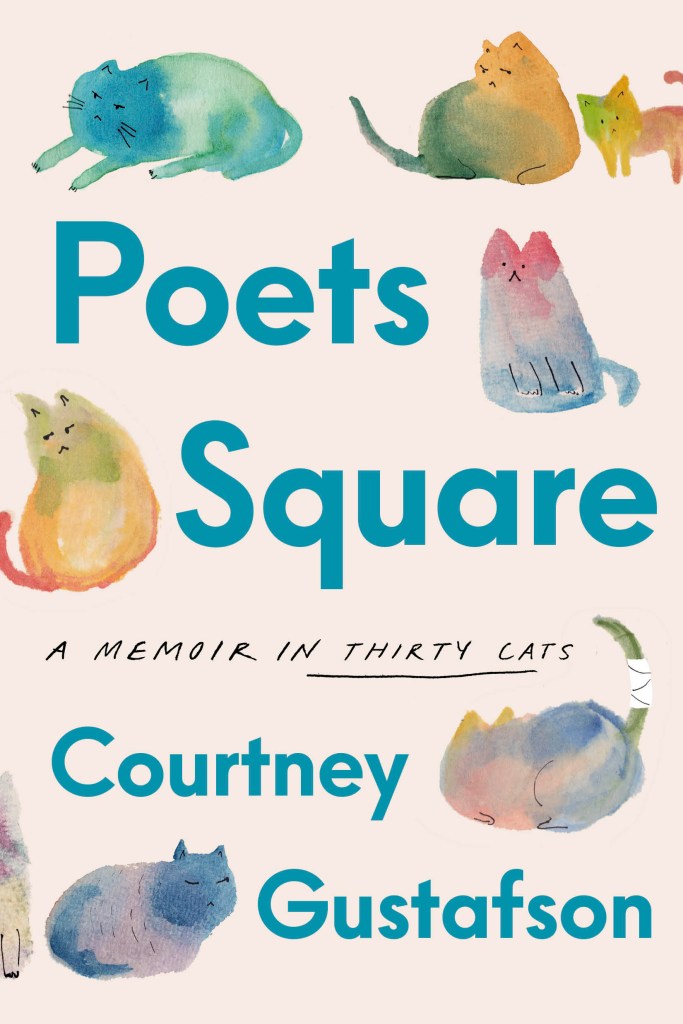
Poets Square: A Memoir in Thirty Cats by Courtney Gustafson (2025)
This was on my Most Anticipated list and surpassed my expectations. Because I’m a snob and knew only that the author was a young influencer, I was pleasantly surprised by the quality of the prose and the depth of the social analysis. After Gustafson left academia, she became trapped in a cycle of dead-end jobs and rising rents. Working for a food bank, she saw firsthand how broken systems and poverty wear people down. She’d recently started feeding and getting veterinary care for the 30 feral cats of a colony in her Poets Square neighbourhood in Tucson, Arizona. They all have unique personalities and interactions, such as Sad Boy and Lola, a loyal bonded pair; and MK, who made Georgie her surrogate baby. Gustafson doled out quirky names and made the cats Instagram stars (@PoetsSquareCats). Soon she also became involved in other local trap, neuter and release initiatives.
That the German translation is titled “Cats and Capitalism” gives an idea of how the themes are linked here: cat colonies tend to crop up where deprivation prevails. Stray cats, who live short and difficult lives, more reliably receive compassion than struggling people for whom the same is true. TNR work takes Gustafson to places where residents are only just clinging on to solvency or where hoarding situations have gotten out of control. I also appreciated a chapter that draws a parallel between how she has been perceived as a young woman and how female cats are deemed “slutty.” (Having a cat spayed so she does not undergo constant pregnancies is a kindness.) She also interrogates the “cat mom” stereotype through an account of her relationship with her mother and her own decision not to have children.
Gustafson knows how lucky she is to have escaped a paycheck-to-paycheck existence. Fame came seemingly out of nowhere when a TikTok video she posted about preparing a mini Thanksgiving dinner for the cats went viral. Social media and cat rescue work helped a shy, often ill person be less lonely, giving her “a community, a sense of rootedness, a purpose outside myself.” (Moreover, her Internet following literally ensured she had a place to live: when her rental house was being sold out from under her, a crowdfunding campaign allowed her to buy the house and save the cats.) However, they have also made her aware of a “constant undercurrent of suffering.” There are multiple cat deaths in the book, as you might expect. The author has become inured over time; she allows herself five minutes to cry, then moves on to help other cats. It’s easy to be overwhelmed or succumb to despair, but she chooses to focus on the “small acts of care by people trying hard” that can reduce suffering.
With its radiant portraits of individual cats and its realistic perspective on personal and collective problems, this is both a cathartic memoir and a probing study of how we build communities of care in times of hardship.
With thanks to Fig Tree (Penguin) for the proof copy for review.
Mornings without Mii by Mayumi Inaba (1999; 2024)
[Translated from Japanese by Ginny Tapley Takemori]
Inaba (1950–2014) was an award-winning novelist and poet. I can’t think why it took 25 years for this to be translated into English but assume it was considered a minor work of hers and was brought out to capitalize on the continuing success of cat-themed Japanese literature from The Guest Cat onward. Interestingly, it’s titled Mornings with Mii in the UK, which shifts the focus and is truer to the contents. Yes, by the end, Inaba is without Mii and dreading the days ahead, but before that she got 20 years of companionship. One day in the summer of 1977, Inaba heard a kitten’s cries on the breeze and finally located it, stuck so high in a school fence that someone must have left her there deliberately. The little fleabitten calico was named after the sound of her cry and ever after was afraid of heights.
 Inaba traces the turning of the seasons and the passing of the years through the changes they brought for her and for Mii. When she separated, moved to a new part of Tokyo, and started devoting her evenings to writing in addition to her full-time job, Mii was her closest friend. The new apartment didn’t have any green space, so instead of wandering in the woods Mii had to get used to exercising in the corridors. There were some scares: a surprise pregnancy nearly killed her, and once she went missing. And then there was the inevitable decline. Mii’s intestinal issues led to incontinence. For four years, Inaba endured her home reeking of urine. Many readers may, like me, be taken aback by how long Inaba kept Mii alive. She manually assisted the cat with elimination for years; 20 days passed between when Mii stopped eating and when she died. On the plus side, she got a “natural” death at home, but her quality of life in these years is somewhat alarming. I cried buckets through these later chapters, thinking of the friendship and intimate communion I had with Alfie. I can understand why Inaba couldn’t bear to say goodbye to Mii any earlier, especially because she’d lived alone since her divorce.
This memoir really captures the mixture of joy and heartache that comes with loving a pet. It’s an emotional connection that can take over your life in a good way but leave you bereft when it’s gone. There is nostalgia for the good days with Mii, but also regret and a heavy sense of responsibility. A number of the chapters end with a poem about Mii, but the prose, too, has haiku-like elegance and simplicity. It’s a beautiful book I can strongly recommend. (Read via Edelweiss)
let’s sleep
So as not to hear your departing footsteps
She won’t be here next year I know
I know we won’t have this time again
On this bright afternoon overcome with an unfathomable sadness
The greenery shines in my cat’s gentle eyes
I didn’t have any particular faith, but the one thing I did believe in was light. Just being in warm light, I could be with the people and the cat I had lost from my life. My mornings without Mii would start tomorrow. … Mii had returned to the light, and I would still be able to meet her there hundreds, thousands of times again.
The Cat Who Wanted to Go Home by Jill Tomlinson (1972)
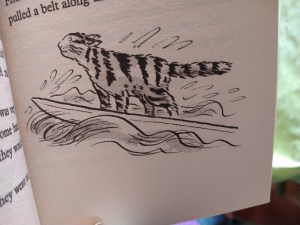
 Suzy the cat lives in a French seaside village with a fisherman and his family of four sons. One day, she curls up to sleep in a basket only to wake up airborne – it’s a hot air balloon, taking her to England! Here the RSPCA place her with old Auntie Jo, who feeds her well, but Suzy longs to get back home. “Chez-moi” is her constant cry, which everyone thinks is an awfully funny way to say miaow (“She purred in French, [too,] but purring sounds the same all over the world”). Each day she hops into the basket of Auntie Jo’s bike for a ride to town to try a new route over the sea: in a kayak, on a surfboard, paddling alongside a Channel swimmer, and so on. Each attempt fails and she returns to her temporary lodgings: shared with a parrot named Biff and comfortable, yet not quite right. Until one day… This is a sweet little story (a 77-page paperback) for new readers to experience along with a parent, with just enough repetition to be soothing and a reassuring message about the benevolence of strangers. Susan Hellard’s illustrations are charming. (Secondhand – local library book sale)
And a couple of other children’s books:
 Mittens for Kittens and Other Rhymes about Cats, ed. Lenore Blegvad; illus. Erik Blegvad (1974) – A selection of traditional English and Scottish nursery rhymes, a few of them true to the nature of cats but most of them just nonsensical. You’ve got to love the drawings, though. (Secondhand – Hay Castle honesty shelves)


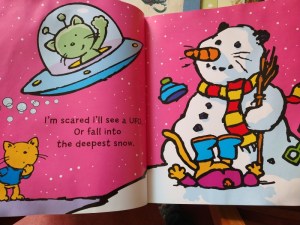
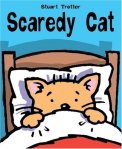 Scaredy Cat by Stuart Trotter (2007) – Rhyming couplets about everyday childhood fears and what makes them better. I thought it unfortunate that the young cat is afraid of other creatures; to be afraid of dogs is understandable, but three pages about not liking invertebrates is the wrong message to be sending. (Little Free Library)
#NovNov24 Catch-Up, I: Comyns, Figes, McEwan, Radcliffe, Thériault
Still more to finish reading and/or belatedly review this week before the Novellas in November link-up closes – another, er, nine books after this, I think! I’ll save the short nonfiction for a couple of other posts. For now I have five novellas that range from black comedy to utter heartbreak and from quotidian detail to magic realism.
The House of Dolls by Barbara Comyns (1989)
 What a fantastic opening line: “Amy Doll, are you telling me that all those old girls upstairs are tarts?” Amy is a respectable widow and single mother to Hetty; no one would guess her boarding house is a brothel where gentlemen of a certain age engage the services of Berti, Evelyn, Ivy and the Señora. When a policeman starts courting Amy, she feels it’s time to address her lodgers’ profession and Hetty’s truancy. The older women disperse: move, marry or seek new employment. Sequences where Berti, who can barely boil an egg, tries to pass as a cook for a highly exacting couple, and Evelyn gets into the gin while babysitting, are hilarious. But there is pathos to the spinsters’ plight as well. “The thing that really upset [Berti] was her hair, long wisps of white with blazing red ends which she kept hidden under a scarf. The fact that she was penniless, and with no prospects, had become too terrible to contemplate.” She and Evelyn take to attending the funerals of strangers for the free buffet and booze. Comyns’ last novel (I’d only previously read Who Was Changed and Who Was Dead) is typically dark, but the wit counteracts the morbid nature. It reminded me of Beryl Bainbridge, late Barbara Pym, Lore Segal, and Muriel Spark. (Passed on by Liz – thank you! Even with the hideous cover.) [156 pages]
Light by Eva Figes (1983)
 I read this as part of my casual ongoing project to read books from my birth year. This was recently reissued and I can see why it is considered a lost classic and was much admired by Figes’ fellow authors. A circadian novel, it presents Claude Monet and his circle of family, friends and servants at home in Giverny. The perspective shifts nimbly between characters and the prose is appropriately painterly: “The water lilies had begun to open, layer upon layer of petals folded back to the sky, revealing a variety of colour. The shadow of the willow lost depth as the sun began to climb, light filtering through a forest of long green fingers. A small white cloud, the first to be seen on this particular morning, drifted across the sky above the lily pond”. There are also neat little hints about the march of time: “‘Telephone poles are ruining my landscapes,’ grumbled Claude”. But this story takes plotlessness to a whole new level, and I lost patience far before the end, despite the low page count, and so skimmed half or more. If you are a lover of lyrical writing and can tolerate stasis, it may well be your cup of tea. (Secondhand – Community Furniture Project?) [91 pages]
On Chesil Beach by Ian McEwan (2007)
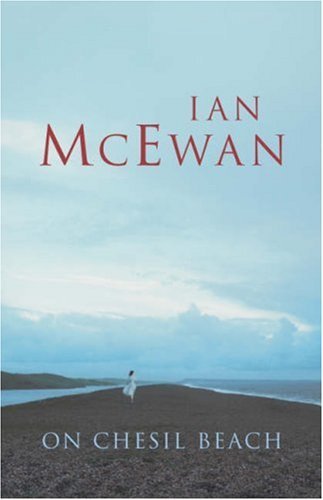 “They were young, educated, and both virgins on this, their wedding night, and they lived in a time when a conversation about sexual difficulties was plainly impossible.” Another stellar opening line to what I think may be a perfect novella. Its core is the night in July 1962 when Edward and Florence attempt to consummate their marriage in a Dorset hotel, but it stretches back to cover everything we need to know about this couple – their family dynamics, how they met, what they want from life – and forward to see their lives diverge. Is love enough? “And what stood in their way? Their personalities and pasts, their ignorance and fear, timidity, squeamishness, lack of entitlement or experience or easy manners, then the tail end of a religious prohibition, their Englishness and class, and history itself. Nothing much at all.” I had forgotten the sources of trauma: Edward’s mother’s brain injury, perhaps a hint that Florence was sexually abused by her father? (But she also says things that would today make us posit asexuality.) I knew when I read this at its release that it was a superior McEwan, but it’s taken the years since – perhaps not coincidentally, the length of my own marriage – to realize just how special. It’s a maturing of the author’s vision: the tragedy is not showy and grotesque like in his early novels and stories, but quiet, hinging on the smallest of actions, or the words not said. This absolutely flayed me emotionally on a reread. (Little Free Library) [166 pages]
The Old Haunts by Allan Radcliffe (2023)
 I was sent this earlier in the year in a parcel containing the 2024 McKitterick Prize shortlist. It’s been instructive to observe the variety just in that set of six (and so much the more in the novels I’m assessing for the longlist now). The short, titled chapters feel almost like linked flash stories that switch between the present day and scenes from art teacher Jamie’s past. Both of his parents having recently died, Jamie and his boyfriend, a mixed-race actor named Alex, get away to remote Scotland. His parents were older when they had him; growing up in the flat above their newsagent’s shop in Edinburgh, Jamie felt the generational gap meant they couldn’t quite understand him or his art. Uni in London was his chance to come out and make supportive friends, but being honest with his parents seemed a step too far. When Alex is called away for an audition, Jamie delves deeper into his memories. Kit, their host at the cottage, has her own story. Some lovely, low-key vignettes and passages (“A smell of soaked fruit. Christmas cake. My mother liked to be organised. She was here, alive, only yesterday.”), but overall a little too soft for the grief theme to truly pierce through. [158 pages]
With thanks to the Society of Authors for the free copy for review.
The Peculiar Life of a Lonely Postman by Denis Thériault (2005; 2008)
[Translated from the French by Liedewy Hawke]
 {BEWARE SPOILERS} Like many, I was drawn in by the quirky title and Japan-evoking cover. To start with, it’s the engaging story of Bilodo, a Montreal postman with a naughty habit of steaming open various people’s mail. He soon becomes obsessed with the haiku exchange between a certain Gaston Grandpré and his pen pal in Guadeloupe, Ségolène. When Grandpré dies a violent death, Bilodo decides to impersonate him and take over the correspondence. He learns to write poetry – as Thériault had to, to write this – and their haiku (“the art of the snapshot, the detail”) and tanka grow increasingly erotic and take over his life, even supplanting his career. But when Ségolène offers to fly to Canada, Bilodo panics. I had two major problems with this: the exoticizing of a Black woman (why did she have to be from Guadeloupe, of all places?), and the bizarre ending, in which Bilodo, who has gradually become more like Grandpré, seems destined for his fate as well. I imagine this was supposed to be a psychological fable, but it was just a little bit silly for me, and the way it’s marketed will probably disappoint readers who are looking for either Harold Fry heart warming or cute Japanese cat/phone box adventures. (Public library) [108 pages]
Which of these catches your eye?
Short Stories in September, II: Willie Davis, Gerald Durrell, Sue Mell and Lore Segal
Four more collections down. Two of them blend fictional and autobiographical modes. Two are set primarily in New York City, with another hanging out in Kentucky and the fourth touring Europe. Three of the authors were new to me and one is an old favourite. I’m borrowing Marcie’s five-sentence review format to keep things simple.
I Can Outdance Jesus by Willie Davis (2024)
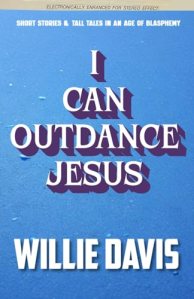 I don’t often take a look at unsolicited review copies, but I couldn’t resist the title of this and I’m glad I gave it a try. Davis’s 10 stories, several of flash length, take place in small-town Kentucky and feature a lovable cast of pranksters, drunks, and spinners of tall tales. The title phrase comes from one of the controversial songs the devil-may-care narrator of “Battle Hymn” writes. My two favourites were “Kid in a Well,” about one-upmanship and storytelling in a local bar, and “The Peddlers,” which has two rogues masquerading as Mormon missionaries. I got vague Denis Johnson vibes from this sassy, gritty but funny collection; Davis is a talent!
Published by Cowboy Jamboree Press. With thanks to publicist Lori Hettler for the free e-copy for review.
The Picnic and Suchlike Pandemonium by Gerald Durrell (1979)
 If you’ve read his autobiographical trilogy or seen The Durrells, you’ll be familiar with the quirky, chaotic family atmosphere that reigns in the first two pieces: “The Picnic,” about a luckless excursion in Dorset, and “The Maiden Voyage,” set on a similarly disastrous sailing in Greece (“Basically, the rule in Greece is to expect everything to go wrong and to try to enjoy it whether it does or not”). No doubt there’s some comic exaggeration at work here, especially in “The Public School Education,” about running into a malapropism-prone ex-girlfriend in Venice, and “The Havoc of Havelock,” in which Durrell, like an agony uncle, lends volumes of the sexologist’s work to curious hotel staff in Bournemouth. The final two France-set stories, however, feel like pure fiction even though they involve the factual framing device of hearing a story from a restaurateur or reading a historical manuscript that friends inherited from a French doctor. “The Michelin Man” is a cheeky foodie one with a surprisingly gruesome ending; “The Entrance” is a full-on dose of horror worthy of R.I.P. I wouldn’t say this is essential reading for Durrell fans, but it was a pleasant way of passing the time. (Secondhand – Lions Bookshop, Alnwick, 2021)
A New Day by Sue Mell (2024)
 Three suites of linked stories focus on young women whose choices in the 1980s have ramifications decades later. Chance meetings, addictions, ill-considered affairs, and random events all take their toll. Emma house-sits and waitresses while hoping in vain for her acting career to take off; “all she felt was a low-grade mourning for what she’d lost and hadn’t attained.” My favourite pair was about Nina, who is a photographer’s assistant in “Single Lens Reflex” and 13 years later, in “Photo Finish,” bumps into the photographer again in Central Park. With wistful character studies and nostalgic snapshots of changing cities, this is a stylish and accomplished collection.
Published by She Writes Press on September 3. With thanks to publicist Caitlin Hamilton Summie for the free e-copy for review.
Ladies’ Lunch and Other Stories by Lore Segal (2023)
 The first section contains nine linked stories about a group of five elderly female friends. Bessie jokes that “wakes and funerals are the cocktail parties of the old,” and Ruth indeed mistakes a shivah for a party and meets a potential beau who never quite successfully invites her on a date. One of their members leaves the City for a nursing home; “Sans Teeth, Sans Taste” is a good example of the morbid sense of humour. A few unrelated stories draw on Segal’s experience being evacuated from Vienna to London by Kindertransport; “Pneumonia Chronicles” is one of several autobiographical essays that bring events right up to the Covid era – closing with the bonus story “Ladies’ Zoom.” The ladies’ stories are quite amusing, but the book as a whole feels like an assortment of minor scraps; it was published when Segal, a New Yorker contributor, was 95. (Secondhand – National Trust bookshop, 2023)
Postscript: Segal died on 7 October 2024, aged 96.
I’ll have a couple more reviews roundups between now and early October.
Currently reading: The Lone-Ranger and Tonto Fistfight in Heaven by Sherman Alexie, The Skeleton in the Cupboard by Lilija Berzinska; The Woman Who Gave Birth to Rabbits by Emma Donoghue; The Best Short Stories 2023: The O. Henry Prize Winners, ed. Lauren Groff; Waltzing the Cat by Pam Houston; Dreams of Dead Women’s Handbags by Shena Mackay; How to Disappear by Tara Masih; The Souvenir Museum by Elizabeth McCracken; Like Life by Lorrie Moore; The Long Swim by Teresa Svoboda; In Love and Trouble by Alice Walker
20 Books of Summer, 17–18: Suzanne Berne and Melissa Febos
Nearly there! I’ll have two more books to review for this challenge as part of roundups tomorrow and Saturday. Today I have a lesser-known novel by a Women’s Prize winner and a set of personal essays about body image and growing up female.
A Perfect Arrangement by Suzanne Berne (2001)
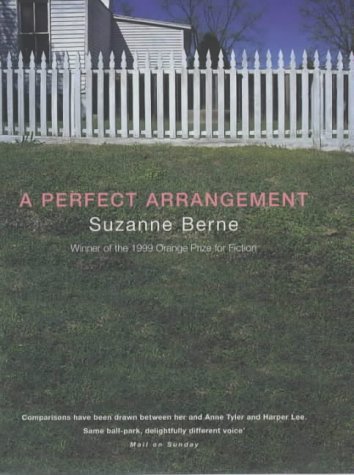 Berne won the Orange (Women’s) Prize for A Crime in the Neighbourhood in 1999. This is another slice of mild suburban suspense. The Boston-area Cook-Goldman household faces increasingly disruptive problems. Architect dad Howard is vilified for a new housing estate he’s planning, plus an affair that he had with a colleague a few years ago comes back to haunt him. Hotshot lawyer Mirella can’t get the work–life balance right, especially when she finds out she’s unexpectedly pregnant with twins at age 41. They hire a new nanny to wrangle their two under-fives, headstrong Pearl and developmentally delayed Jacob. If Randi Gill seems too good to be true, that’s because she’s a pathological liar. But hey, she’s great with kids.
It’s clear some Bad Stuff is going to happen to this family; the only questions are how bad and precisely what. Now, this is pretty much exactly what I want from my “summer reading”: super-readable plot- and character-driven fiction whose stakes are low (e.g., midlife malaise instead of war or genocide or whatever) and that veers more popular than literary and so can be devoured in large chunks. I really should have built more of that into my 20 Books plan! I read this much faster than I normally get through a book, but that meant the foreshadowing felt too prominent and I noticed some repetition, e.g., four or five references to purple loosestrife, which is a bit much even for those of us who like our wildflowers. It seemed a bit odd that the action was set back in the Clinton presidency; the references to the Lewinsky affair and Hillary’s “baking cookies” remark seemed to come out of nowhere. And seriously, why does the dog always have to suffer the consequences of humans’ stupid mistakes?!
This reminded me most of Friends and Strangers by J. Courtney Sullivan and a bit of Breathing Lessons by Anne Tyler, while one late plot turn took me right back to The Senator’s Wife by Sue Miller. While the Goodreads average rating of 2.93 seems pretty harsh, I can also see why fans of A Crime would have been disappointed. I probably won’t seek out any more of Berne’s fiction. (Secondhand – Community Furniture Project, Newbury)
Girlhood by Melissa Febos (2021)
I was deeply impressed by Febos’s Body Work (2022), a practical guide to crafting autobiographical narratives as a way of reckoning with the effects of trauma. Ironically, I engaged rather less with her own personal essays. One issue for me was that her highly sexualized experiences are a world away from mine. I don’t have her sense of always having had to perform for the male gaze, though maybe I’m fooling myself. Another was that it’s over 300 pages and only contains seven essays, so there were several pieces that felt endless. This was especially true of “The Mirror Test” (62 pp.) which is about double standards for girls as they played out in her simultaneous lack of confidence and slutty reputation, but randomly references The House of Mirth quite a lot; and “Thank You for Taking Care of Yourself” (74 pp.), which ponders why Febos has such trouble relaxing at a cuddle party and whether she killed off her ability to give physical consent through her years as a dominatrix.
 “Wild America,” about her first lesbian experience and the way she came to love a perceived defect (freakishly large hands; they look perfectly normal to me in her author photo), and “Intrusions,” about her and other women’s experience with stalkers, worked a bit better. But my two favourites incorporated travel, a specific relationship, and a past versus present structure. “Thesmophoria” opens with her arriving in Rome for a mother–daughter vacation only to realize she told her mother the wrong month. Feeling guilty over the error, she remembers other instances when she valued her mother’s forgiveness, including when she would leave family celebrations to buy drugs. The allusions to Greek myth were neither here nor there for me, but the words about her mother’s unconditional love made me cry.
I also really liked “Les Calanques,” which again draws on her history of heroin addiction, comparing a strung-out college trip to Paris when she scored with a sweet gay boy named Ahmed with the self-disciplined routines and care for her body she’d learned by the time she returns to France for a writing retreat. This felt like a good model for how to write about one’s past self. “I spend so much time with that younger self, her savage despair and fleeting reliefs, that I start to feel as though she is here with me.” The prologue, “Scarification,” is a numbered list of how she got her scars, something Paul Auster also gives in Winter Journal. As if to insist that we can only ever experience life through our bodies.
Although I’d hoped to connect to this more, and ultimately felt it wasn’t really meant for me (and maybe I’m a deficient feminist), I did admire the range of strategies and themes so will keep it on the shelf as a model for approaching the art of the personal essay. I think I would probably prefer a memoir from Febos, but don’t need to read more about her sex work (Whip Smart), so might look into Abandon Me. If bisexuality and questions of consent are of interest, you might also like Another Word for Love by Carvell Wallace, which I reviewed for BookBrowse. (Gift (secondhand) from my Christmas wish list last year)
 Bookish Beck = Rebecca Foster. American transplant to England. Freelance proofreader and book reviewer.
