R.I.P. Reads, Part I: Apostolides, Dahl, Harkness, Kingfisher & Kohda
Ghosts, witches, vampires, creepy underground things: It can only be Readers Imbibing Peril time of year! Here’s my first five reviews.
The Homecoming by Zoë Apostolides (2025)
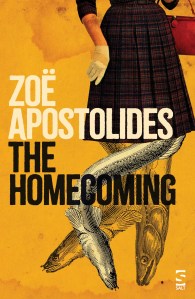 This debut novel dropped through my door as a total surprise: not only was it unsolicited, but I’d not heard about it. In this modern take on the traditional haunted house story, Ellen is a ghostwriter sent from London to Elver House, Northumberland, to work on the memoirs of its octogenarian owner, Catherine Carey. Ellen will stay in the remote manor house for a week and record 20 hours of audio interviews – enough to flesh out an autobiography. Miss Carey isn’t a forthcoming subject, but Ellen manages to learn that her father drowned in the nearby brook and that all Miss Carey did afterwards was meant to please her grieving mother and the strictures of the time. But as strange happenings in the house interfere with her task, Ellen begins to doubt she’ll come away with usable material. I was reminded of The Woman in Black, The Thirteenth Tale, and especially Wakenhyrst what with the local eel legends. The subplot about Ellen drifting apart from her best friend, a new mother, felt unnecessary, though I suppose was intended to bolster the main theme of women’s roles. There’s a twist that more seasoned readers of Gothic fiction and ghost stories might see coming. While I found this very readable and perfectly capably written, I didn’t get a sense of where the author hopes to fit in the literary market; she’s previously published a true crime narrative. Full disclosure: I once collaborated with Zoë on a Stylist assignment.
With thanks to Salt Publishing for the proof copy for review.
The Witches by Roald Dahl (1983)
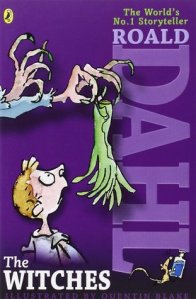 I’m sure I read all of Dahl’s major works when I was a child, though I had no specific memory of this one. After his parents’ death in a car accident, a boy lives in his family home in England with his Norwegian grandmother. She tells him stories from Norway and schools him in how to recognize and avoid witches. They wear wigs and special shoes to hide their baldness and square feet, and with their wide nostrils they sniff out children to turn them into hated creatures like slugs. When Grandmamma falls ill with pneumonia, she and the boy travel to a Bournemouth hotel for her recovery only to stumble upon a convention of witches under the guise of the Royal Society for the Prevention of Cruelty to Children. The Grand High Witch (Anjelica Huston, if you know the movie) has a new concoction that will transform children into mice at enough of a delay to occur the following morning at school. It’s up to the boy and his grandmother to save the day. I really enjoyed this caper, which I interpreted as being – like Tove Jansson’s The Summer Book – about imagination and making the most of one’s time with grandparents. But in the back of my mind was Jen Campbell’s objection to the stereotypical equating of disfigurement with villainy. The Grand High Witch also speaks with a heavy German accent. It would be understandable to dismiss this as dated and clichéd, but I still found it worthwhile. It also fit into my project to read books from my birth year. (Free from a neighbour)
The Black Bird Oracle by Deborah Harkness (2024)
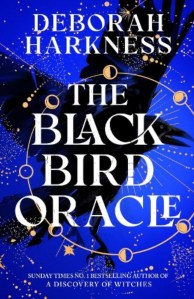 Somehow I’ve read this entire series even though none of the subsequent books lived up to A Discovery of Witches. What I loved about that first novel was how the author drew on her knowledge of the history of science to create a believable backdrop for a story of witches, vampires and other supernatural beings that took place largely in Oxford and its medieval libraries. Each sequel has elaborated further adventures for Diana Bishop, a witch; her vampire husband, Matthew de Clermont; and their family members and other hangers-on. Their twins, especially Becca, have inherited some of Diana’s power. I read the first half of this last year and finally skimmed to the end last week, so I haven’t retained much. Diana is summoned to the ancestral seat of the Bishops in Massachusetts and finds herself part of a community of gossipy, catty witches. (Dahl was right, they’re everywhere!) She has some fun, folksy interactions but things soon get more serious as she girds herself for a showdown with the darker implications of her gift. Overall, this didn’t add much to the ongoing narrative and the love scenes veered too close to romantasy for my liking. (Public library)
What Stalks the Deep by T. Kingfisher [Ursula Vernon] (2025)
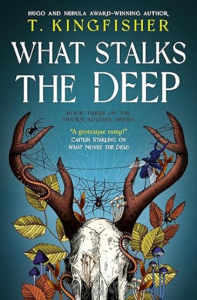 The third in the “Sworn Soldier” series, after What Moves the Dead and What Feasts at Night. Alex Easton is a witty, gender-nonconforming narrator, which is why I persist with these novellas even though I’m underwhelmed by the plots. Denton, the American doctor friend from the first book, begs Easton to come to West Virginia: his cousin Oscar has gone missing in a mine after sending a series of alarming letters about a red light he saw in the depths. Easton and their right-hand man, Angus, soon encounter claustrophobia-inducing cave systems, various kinds of bad air and siphonophore-like marine creatures that can assemble to imitate other beings. (Why aren’t these on the cover, huh?!) In other intriguing matters, Denton seems to have something going on with his friend John Ingold, an Indigenous scientist. Though, as Easton frequently reminds themself, that’s none of our business. There are some great set-pieces and funny, if anachronistic, asides (on learning how to flick a lighter just right: “I used to practice it for hours as a teenager, in hopes of impressing girls. Look, girls were more easily impressed in those days. Shut up.”) But my feeling with all three books is that they’re over before they’ve barely begun, and they never deliver the expected horror. Smart-ass, queer fantasy/horror: these will be some people’s perfect books, just not mine. If you’re intrigued, do at least try the first one, which riffs on Poe. (Read via Edelweiss)
Woman, Eating by Claire Kohda (2022)
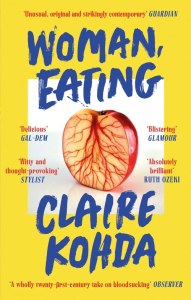 A very different sort of vampire novel. Twenty-three-year-old Lydia is half Japanese and half Malaysian; half human and half vampire. She’s trying to follow in her late father’s footsteps as an artist through an internship at a Battersea gallery, which comes with studio space where she’ll sleep to save money. But she can only drink blood like her mother, who turned her when she was a baby. Mostly she subsists on pig blood – which she can order dried if she can’t buy it fresh from a butcher – though, in one disturbing sequence, she brings home a duck carcass. When she falls for Ben, one of her studio-mates, she imagines what it would be like to be fully human: to make art together, to explore Asian cuisine, to bond over losing their mothers (his is dying of cancer; hers is in a care home with violence-tinged dementia). But Ben is already seeing someone, the internship is predictably dull, and a first attempt at consuming regular food goes badly wrong. There are a lot of promising threads in this debut. It’s fascinating how Lydia can intuit a creature’s whole life story by drinking their blood. She becomes obsessed with the Baba Yaga folk tale (and also mentions Malay vampire legends) and there’s a neat little bit of #MeToo revenge. But overall, it’s half-baked. Really, it’s just a disaster-woman book in disguise. The way Lydia’s identity determines her attitudes towards food and sex feels like a symbol of body dysmorphia. I’ll look out to see if Kohda does something more distinctive in future. (Secondhand – Awesomebooks.com)
More coming up on Halloween (thankfully, including books I liked better on average)!
Some Bookish Pet Peeves
 Happy Feast of the Inauguration!
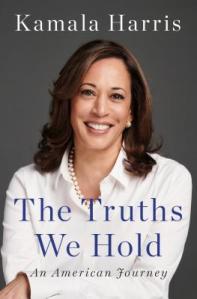
This is a feast day we made up simply because 2021 needs as many excuses for celebration as it can get. (Our next one will be in mid-February: Victoriana Fest, to celebrate the birthdays of a few of our Victorian heroes – Charles Darwin, Charles Dickens, and Abraham Lincoln. Expect traditional, stodgy foods.) Later tonight we’ll be having an all-American menu of veggie burgers, sweet potato fries, random Californian beers we found at Waitrose, and pecan pie with ice cream. And Vice President Kamala Harris’s autobiography is on hold for me at the library to pick up later this month.
Since I still don’t have any new book reviews ready (though I have now finished seven books in 2021, which is something), here’s some more filler content based on annoying book traits I’ve been reminded of recently.
Some of My Bookish Pet Peeves
Long excerpts from other books, in the text or as epigraphs
I often skip these. I am reading this book to hear from you, the author, not the various philosophers and poets you admire. I want to learn from your expertise and thought processes, not someone else’s.
 Exceptions: Tim Dee’s books are good examples since he weaves in copious quotations and allusions while still being eloquent in his own right. Emily Rapp’s The Still Point of the Turning World includes a lot of quotes, especially from poems, but I was okay with that because it was true to her experience of traditional thinking failing her in the face of her son’s impending death. Her two bereavement memoirs are thus almost like commonplace books on grief.
Long passages in italics
I sometimes see these used to indicate flashbacks in historical fiction. They are such a pain to read. I am very likely to skim these sections, or skip them altogether.
An exception: Thus far, the secondary storyline about the mice in The Charmed Wife by Olga Grushin, delivered all in italics, has been more compelling than the main storyline.
Huge jumps forward in time
These generally feel unnatural and sudden. Surely there’s a way to avoid them? And if they are truly necessary, I’d rather they were denoted by a new section with a time/date stamp. I’m not talking about alternating storylines from different time periods, as these are usually well signaled by a change of voice, but, e.g., a chapter picking up 15 years in the future.
Not being upfront about the fact that a book is ghostwritten
I have come to expect ghostwriters for political memoirs (Barack Obama’s being a rare exception), but in the last two years I’ve also come across a botanist’s memoir and a surgeon’s memoir that were ghostwritten but not announced as such – with the former I only found out via the acknowledgments at the end, and with the latter it was hidden away in the copyright information. I’d rather the title page came right out and said “by So and So” with “Ghostwriter Name.” (Anyone know whether Kamala had a ghostwriter?)
Matte covers or dustjackets that show fingerprints
Back in 2017 I wrote a whole post on the physical book features that I love or loathe. It was a good way of eliciting strong opinions from blog readers! (For example, some people hate deckle edge, whereas I love it.)
Something that bothers other readers but doesn’t faze me at all is a lack of speech marks, or the use of alternative indicators like dashes or indented paragraphs. I’m totally used to this in literary fiction. I even kind of like it. I’m also devoted to rarer forms of narration like the second person and the first person plural that might be a turn-off for some.
[Added later]
No, or very few, paragraphs, chapters, or other section breaks
How am I supposed to know where to stop reading and put my bookmark in?!
Whom is dead
Not just in books; in written English in general. And, even if this is inevitable, it still makes me sad.
 Bookish Beck = Rebecca Foster. American transplant to England. Freelance proofreader and book reviewer.
 Bookish Beck