Book Serendipity, Mid-April to Mid-June
I call it “Book Serendipity” when two or more books that I read at the same time or in quick succession have something in common – the more bizarre, the better. This is a regular feature of mine every couple of months. Because I usually have 20–30 books on the go at once, I suppose I’m more prone to such incidents. People frequently ask how I remember all of these coincidences. The answer is: I jot them down on scraps of paper or input them immediately into a file on my PC desktop; otherwise, they would flit away!
The following are in roughly chronological order.
- Raising a wild animal but (mostly) calling it by its species rather than by a pet name (so “Pigeon” and “the leveret/hare”) in We Should All Be Birds by Brian Buckbee and Raising Hare by Chloe Dalton.
- Eating hash cookies in New York City in Women by Chloe Caldwell and How to Be Somebody Else by Miranda Pountney.
- A woman worries she’s left underclothes strewn about a room she’s about to show someone in one story of Single, Carefree, Mellow by Katherine Heiny and Days of Light by Megan Hunter.
 The dialogue is italicized in Women by Chloe Caldwell and Days of Light by Megan Hunter.
- The ‘you know it when you see it’ definition (originally for pornography) is cited in Moderation by Elaine Castillo and Bookish by Lucy Mangan.
- Women (including the protagonist) weightlifting in a gym in Moderation by Elaine Castillo and All Fours by Miranda July.
- Miranda July, whose All Fours I was also reading at the time, was mentioned in Chinese Parents Don’t Say I Love You by Candice Chung.
- A sibling story and a mystical light: late last year into early 2025 I read The Snow Queen by Michael Cunningham, and then I recognized this type of moment in Days of Light by Megan Hunter.
- A lesbian couple with a furniture store in Carol [The Price of Salt] by Patricia Highsmith and one story of Are You Happy? by Lori Ostlund.

- Not being able to see the stars in Las Vegas because of light pollution was mentioned in The Wild Dark by Craig Childs, then in Moderation by Elaine Castillo.
- A gynaecology appointment scene in All Fours by Miranda July and How to Be Somebody Else by Miranda Pountney.
- An awkwardly tall woman in Heartwood by Amity Gaige, How to Be Somebody Else by Miranda Pountney, and Stoner by John Williams.
- The 9/11 memorial lights’ disastrous effect on birds is mentioned in The Wild Dark by Craig Childs and How to Be Somebody Else by Miranda Pountney.
- A car accident precipitated by an encounter with wildlife is key to the denouement in the novellas Women by Chloe Caldwell and Wild Boar by Hannah Lutz.
- The plot is set in motion by the death of an older brother by drowning, and pork chops are served to an unexpected dinner guest, in Bug Hollow by Michelle Huneven and Days of Light by Megan Hunter, both of which I was reading for Shelf Awareness review.
- Kids running around basically feral in a 1970s summer, and driving a box of human ashes around in Case Histories by Kate Atkinson and Bug Hollow by Michelle Huneven.
- A character becomes a nun in Case Histories by Kate Atkinson and Days of Light by Megan Hunter.
- Wrens nesting just outside one’s front door in Lifelines by Julian Hoffman and Little Mercy by Robin Walter.

- ‘The female Woody Allen’ is the name given to a character in Women by Chloe Caldwell and then a description (in a blurb) of French author Nolwenn Le Blevennec.
- A children’s birthday party scene in Single, Carefree, Mellow by Katherine Heiny and Friends and Lovers by Nolwenn Le Blevennec. A children’s party is also mentioned in Case Histories by Kate Atkinson and A Family Matter by Claire Lynch.
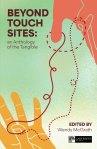
- A man who changes his child’s nappies, unlike his father – evidence of different notions of masculinity in different generations, in Case Histories by Kate Atkinson, What My Father and I Don’t Talk About, edited by Michele Filgate, and one piece in Beyond Touch Sites, edited by Wendy McGrath.
- What’s in a name? Repeated names I came across included Pansy (Case Histories by Kate Atkinson and Days of Light by Megan Hunter), Olivia (Case Histories by Kate Atkinson and A Family Matter by Claire Lynch), Jackson (Case Histories by Kate Atkinson and So Far Gone by Jess Walter), and Elias (Good Girl by Aria Aber and Dream State by Eric Puchner).
- The old wives’ tale that you should run in zigzags to avoid an alligator appeared in Alligator Tears by Edgar Gomez and then in The Girls Who Grow Big by Leila Mottley, both initially set in Florida.
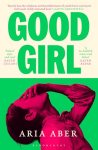
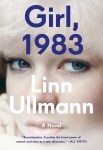
- A teenage girl is groped in a nightclub in Good Girl by Aria Aber and Girl, 1983 by Linn Ullmann.
- Discussion of the extinction of human and animal cultures and languages in both Nature’s Genius by David Farrier and Lifelines by Julian Hoffman, two May 2025 releases I was reading at the same time.
- In Body: My Life in Parts by Nina B. Lichtenstein, she mentions Linn Ullmann – who lived on her street in Oslo and went to the same school (not favourably – the latter ‘stole’ her best friend!); at the same time, I was reading Linn Ullmann’s Girl, 1983! And then, in both books, the narrator recalls getting a severe sunburn.
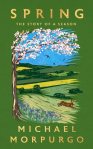 On the same day, I read about otter sightings in Lifelines by Julian Hoffman and Spring by Michael Morpurgo. The next day, I read about nesting swallows in both books.
- The Salish people (Indigenous to North America) are mentioned in Lifelines by Julian Hoffman, Dream State by Eric Puchner (where Salish, the town in Montana, is also a setting), and So Far Gone by Jess Walter.
- Driving into a compound of extremists, and then the car being driven away by someone who’s not the owner, in Dream State by Eric Puchner and So Far Gone by Jess Walter.
- A woman worries about her (neurodivergent) husband saying weird things at a party in The Honesty Box by Lucy Brazier and Normally Weird and Weirdly Normal by Robin Ince.
- Shooting raccoons in Ginseng Roots by Craig Thompson and So Far Gone by Jess Walter. (Raccoons also feature in Dream State by Eric Puchner.)
- A graphic novelist has Hollywood types adding (or at least threatening to add) wholly unsuitable supernatural elements to their plots in Spent by Alison Bechdel and Ginseng Roots by Craig Thompson.
- A novel in which a character named Dawn has to give up her daughter in the early 1980s, one right after the other: A Family Matter by Claire Lynch, followed by Love Forms by Claire Adam.
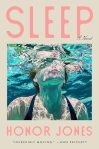
- A girl barricades her bedroom door for fear of her older brother in Love Forms by Claire Adam and Sleep by Honor Jones.
- A scene of an only child learning that her mother had a hysterectomy and so couldn’t have any more children in Dream Count by Chimamanda Ngozi Adichie and Other People’s Mothers by Julie Marie Wade.
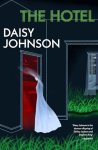
- An African hotel cleaner features in Dream Count by Chimamanda Ngozi Adichie and The Hotel by Daisy Johnson.

- Annie Dillard’s essay “Living Like Weasels” is mentioned in Nature’s Genius by David Farrier and The Dry Season by Melissa Febos.
- A woman assembles an inventory of her former lovers in Dream Count by Chimamanda Ngozi Adichie and The Dry Season by Melissa Febos.
What’s the weirdest reading coincidence you’ve had lately?
Better Late than Never: The Goldfinch
And the painting, above his head, was the still point where it all hinged: dreams and signs, past and future, luck and fate. There wasn’t a single meaning. There were many meanings. It was a riddle expanding out and out and out.
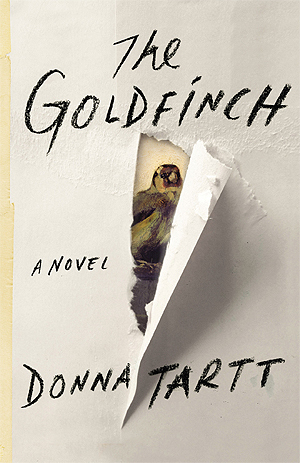 My pristine paperback copy of Donna Tartt’s The Goldfinch cost all of £1 at a used bookshop in Henley. Talk about entertainment value for money! Although it took me nearly a month to read, starting with Christmas week, it was more gripping than that timeframe seems to suggest. I read it under a pair of cats in the bitter-cold first week of a Pennsylvania January, then tucked it under my arm for airport queues (no way would it fit in my overstuffed carry-on bag) and finally finished it during my first week of bouncing back from transatlantic jetlag. Somehow Theo Decker’s fictional travels – from New York to Las Vegas and back; to Amsterdam and home again – blended with my sense of having been on a literal journey with the book to make this one of my most memorable reading experiences in years.
That’s not to say that the book was flawless. In fact, I found the first 200 pages or so pretty slow. You almost certainly know the basics of the plot already, but if not, glance away from the rest of this paragraph. Theo, 13, is separated from his mother during a terrorist attack on a New York City museum. Among the dying he encounters an older man – guardian of the pretty red-haired girl Theo had been checking out just moments before – who gives him a ring and tells him to go to Hobart and Blackwell antiques. But this is not the only souvenir Theo takes from his ordeal; he also steals the little Dutch masterpiece by Fabritius that appears on the book’s cover. Stumbling around the streets of New York, the shell-shocked Theo undoubtedly resembles a 9/11 victim. As the years pass, he is moved from guardian to guardian, but a few things remain constant: his memory of his mother, his obsession with the painting, and his love for Pippa, that red-haired girl who, like him, was among the survivors.
The aftermath of the attack was the most tedious section for me. It felt like it took forever for Theo’s future to be set in motion, and I thought if I heard him complain of how his head was killing him one more time I might just scream. It’s when Theo gets to Vegas, and specifically when he meets Boris, that the book really takes off. Boris is simply a terrific character. He’s lived all over and has a mixed-up accent that’s part Australian with heavy Slavic overtones. Like Theo, he has an unreliable father who is often too drunk to care what his kid is doing. This leaves the two young teens free to do whatever they want, usually something classified as illegal. Indeed, there’s a lot of drug use in this book, described in the kind of detail that makes you wonder what Tartt was up to during her years at Bennington.
As a young man Theo, back in New York, joins Hobie (of Hobart and Blackwell) in selling antiques both genuine and ersatz, and reconnects with an old friend’s family in a surprising manner. The story of what becomes of the painting was in danger of turning into a clichéd crime caper, yet Tartt manages to transform it into a richly philosophical interrogation of the nature of fate. Theo’s intimate first-person narration makes him the heir first of Dickensian orphans and later of the kind of tortured antiheroes you’d find in a nineteenth-century Russian novel: “I had the queasy sense of my own life … as a patternless and transient burst of energy, a fizz of biological static just as random as the street lamps flashing past.”
Similar to my experience with Of Human Bondage, I found that the latter part of the novel was the best. The last 200 pages are not only the most addictive plot-wise but also the most introspective; all my Post-It flags congregate here. It’s also full of the best examples of Tartt’s distinctive prose. The best way I can describe it is to say it’s like brush strokes: especially in the scenes set in Amsterdam, she’s creating a still life with words. Often this is through sentences listing images, in phrases separated by commas. Here’s a few examples:
Floodlit window. Mortuary glow from the cold case. Beyond the fog-condensed glass, trickling with water, winged sprays of orchids quivered in the fan’s draft: ghost-white, lunar, angelic.
Out on the street: holiday splendor and delirium. Reflections danced and shimmered on black water: laced arcades above the street, garlands of light on the canal boats.
Medieval city: crooked streets, lights draped on bridges and shining off rain-peppered canals, melting in the drizzle. Infinity of anonymous shops, twinkling window displays, lingerie and garter belts, kitchen utensils arrayed like surgical instruments, foreign words everywhere…
Such sentence construction shouldn’t work, yet it does. I’ve never been one to fawn over Donna Tartt, but this is writing I can really appreciate.
[I did take issue with some of the punctuation in the novel, though whether that’s down to Tartt, her editor or the UK publication team I couldn’t say. Take, for instance, this description of a station clerk: “a broad, fair, middle aged woman, pillowy at the bosom and impersonally genial like a procuress in a second rate genre painting.” Another solid allusion to Dutch art, but missing two hyphens if you ask me.]
The Goldfinch contains multitudes. It’s the Dickensian coming-of-age tale of a hero much like David Copperfield who’s “possessed of a heart that can’t be trusted.” It’s a realist record of criminal escapades. It’s a story of unrequited love. It’s a convincing first-hand picture of anxiety, addiction and regret. It has a great road trip, an endearing small dog, and a last line that rivals The Great Gatsby’s (I’ll leave you to experience it for yourself). It’s a meditation on time, fate and the purpose of art. It’s not perfect, and yet I – even as someone who pretty much never rereads books – can imagine reading this again in the future and gleaning more with hindsight. That makes it worthy of one of my rare 5-star recommendations.
Caring too much for objects can destroy you. Only—if you care for a thing enough, it takes on a life of its own, doesn’t it? And isn’t the whole point of things—beautiful things—that they connect you to some larger beauty? Those first images that crack your heart wide open and you spend the rest of your life chasing, or trying to recapture, in one way or another?
My rating: 
 Bookish Beck = Rebecca Foster. American transplant to England. Freelance proofreader and book reviewer.
 Bookish Beck