Wendell Berry’s “Why I Am Not Going to Buy a Computer” & Why I Acquired My First Smartphone at Age 40.5
Wendell Berry is an American treasure: the 89-year-old Kentucky farmer is also a philosopher, poet, theologian, and writer of fiction, and many of his pronouncements bear the timeless wisdom of a biblical prophet. I’ve read his work from several genres and was curious to see how this 1987 essay – originally published in Harper’s Magazine and reprinted, along with some letters to the editor in response, plus extra commentary in the form of a 1990 essay, by Penguin in 2018 as the 50th and final entry in their Penguin Modern pamphlet series – might resonate with my own reluctance to adopt current technology.
The title essay is brief, barely filling 4.5 pages of a small-format paperback. It’s so concise that it would be difficult to summarize in many fewer words, but I’ll run through the points he makes across the initial essay, the replies to the correspondence, and a follow-up piece entitled “Feminism, the Body and the Machine” (1989). Berry laments his reliance on energy corporations and wants to limit that as much as possible. He decries consumerism in general; he isn’t going to acquire something just to be ‘keeping up with the times’. He doesn’t believe a computer will make his work better, and it doesn’t meet his criteria for a useful tool (smaller, cheaper and less energy-intensive than what it replaces; sourced locally and easily repaired by a non-specialist). He is perfectly happy with his current arrangement: he writes his work by hand and his wife types it up for him. He is loath to lose this human touch.

The letters to the editor, predictably, accuse him of self-righteousness for depicting his choice as the more virtuous one. The correspondents also felt they had to stand up for Berry’s wife, who might have better things to do than act as her husband’s secretary. This is the only time the author becomes slightly defensive, basically saying, ‘you don’t know anything about me, my wife or my marriage … maybe she wants to!’ He doubles down on the environmental harm caused by technology and consumerism, acknowledging his continued dependence on fossil fuels and vowing to avoid them, and unnecessary purchases, where possible.
If some technology does damage to the world, … then why is it not reasonable, and indeed moral, to try to limit one’s use of that technology?
To the extent that we consume, in our present circumstances, we are guilty. To the extent that we guilty consumers are conservationists, we are absurd. … can we do something directly to solve our share of the problem? … Why then is not my first duty to reduce, so far as I can, my own consumption?
If the use of a computer is a new idea, then a newer one is not to use one.
He even appears to speak prophetically to the rise of artificial intelligence:
My wish simply is to live my life as fully as I can. … And in our time this means that we must save ourselves from the products that we are asked to buy in order, ultimately, to replace ourselves. The danger most immediately to be feared in ‘technological progress’ is the degradation and obsolescence of the body.
Certain of his arguments felt relevant to me as I ponder my own relationship to technology. I compose all my reviews on a 19-year-old personal computer that’s not connected to the Internet. I don’t listen to the radio and have seen maybe three films in the past two years. We’ve been television-free for a decade and I have never regretted it (Berry: “It is easy – it is even a luxury – to deny oneself the use of a television set, and I zealously practice that form of self-denial. Every time I see television (at other people’s houses), I am more inclined to congratulate myself on my deprivation.”).
I find it so hard to adjust to new tech that my reluctance may have shaded into suspicion. I’m certainly no early adopter, but I’d also object to the label “Luddite”: since 2013 I’ve been using e-readers, which are invaluable in my reviewing work. But for 15 years or more I have been looking at other people and their smartphones with disdain. I prided myself on my resistance. Stubbornness seemed like a virtue when the alternative was spending a lot of money on something I didn’t need.

Receiving my first cell phone in July 2004 (with my dad at left; at Dulles airport).
Two months ago, though, I finally gave in and accepted a hand-me-down Motorola Android phone from my father-in-law, after nearly 20 years of using an old-style mobile phone. As we were renegotiating our phone and Internet contract, I got virtually unlimited minutes and data on this device for £6/month, with no initial outlay. Had I been forced to make a purchase, I think I would still be holding out. But I had gotten to the point where refusal was cutting off my nose to spite my face. Why keep martyring myself – saying I couldn’t make important household phone calls because they drained my pay-as-you-go credit; learning complex workarounds to post to Instagram from my PC; taking crap photos on a digital camera held together with a rubber band? Why resist utility just for the sake of it?
To be clear, this was not a matter of saving time. I’m not a busy person. Plus I believe there is value in slowing down and acting deliberately. (See this book-based article I wrote for the Los Angeles Review of Books in 2018 on the benefits of “wasting time.”) Mindless scrolling is as much a temptation on a PC as on a phone, so avoiding social media was not a motive for me; others with addictive tendencies may decide otherwise. Nor did I view convenience as reason enough per se. However, I admit I was attracted to the efficiency of a pocket-sized device that can at once replace a computer, pager, telephone, Rolodex, phonebook, camera, photo album, television screen, music player, camcorder, Dictaphone, stopwatch, calculator, map, satnav, flashlight, encyclopaedia, Kindle library, calendar, diary, Post-It notes, notebook, alarm clock and mirror. (Have I missed anything?) Talk about multi-tasking!

Out with the old, in with the new?
I would still say that I object to tech serving as a status symbol or a basis for self-importance, and I’d be pretty dubious about it ever being a worthwhile hobby. Should this phone fail me in future, I’ll copy my husband’s habit of buying a secondhand handset for £60–80. I wouldn’t acquire something that represented new extraction of rare resources. Treating things (or people) as disposable is anathema to me, something about which I know Berry would agree. I’m naturally parsimonious, obsessive about keeping things going for as long as possible and recycling them responsibly when they reach their end of life.
It’s one reason why I’ve gotten involved in the Repair Café movement. I volunteer for our local branch, which started up in February, on the admin and publicity side of things. The old-fashioned, make-do-and-mend ethos appeals to me. It’s the same spirit evoked in the lyrics of American singer-songwriter Mark Erelli’s “Analog Hero”:
He’s the fix-it man, the fix-it man
If he can’t put it back together, then it was never worth a damn
Maybe he’s crazy for trying to save what’s already gone
Now it ain’t even broken and we’re going for the upgrade
Nobody thinks twice ’bout what we’re really throwing away
It’s out with the old, in with the new…
I can imagine Wendell Berry still pecking out his words on a typewriter on his Kentucky farm. He’s an analogue hero, too. And he doesn’t go nearly as far as Mark Boyle, whose radical life experiment is recounted in The Way Home: Tales from a life without technology, which I reviewed for Shiny New Books in 2019.
I have pretty much made my peace with owning a smartphone. I have few apps and am still more likely to work at my PC or on paper. I’ll concede that I enjoy being able to post to X or Instagram wherever I am, and to keep up with messages on the go. (I used to have to say cryptic things to friends like, “once I leave the house, I will be unavailable except by text.”) Mostly, I’m relieved to have shed the frustrations of outmoded tech. Though I still keep my Nokia brick by my bedside as a trusty alarm clock – and a torch for when the cat wakes me between 2 and 5 each morning.

Ultimately, I feel, a smartphone is a tool like any other. It’s how you use it. Salman Rushdie comes to much the same conclusion about the would-be murder weapon wielded against him: “a knife is a tool, and acquires meaning from the use we make of it. It is morally neutral” (from Knife).
Berry’s argument about overreliance on energy remains a good one, but we are all so complicit in so many ways – even more so than in the late 1980s when he was writing – that avoiding the computer, and now the smartphone, doesn’t seem to hold particular merit. While this pamphlet will be but a quaint curio piece for most readers (rather than a parallel to the battle of wills I’ve conducted with myself), it is engaging and convincing, and the societal issues it considers are still ones to be wrestled with.
My copy was purchased with part of a £30 voucher I received free from Penguin UK for being part of their “Bookmarks” online community – answering polls, surveys, etc.
A Reading Malady, a Book Haul, a Book Launch, and a TBR Challenge
A bit of a miscellany today, as a placeholder until I finally have some more reviews to share.
Stuck in the Middle
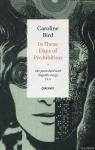 I’ve been reading up a storm in 2021, of course, but I’m having an unusual problem: I can’t seem to finish anything. Okay, I’ve finished three books so far – Intensive Care, my first read and only proper review so far of the year; In These Days of Prohibition by Caroline Bird, a surprising and funny poetry collection about mental illness and the crutches people turn to, including drugs and sex; and one more poetry book, a recent release I’ll round up later in the month – but compare that to January 2020, when I’d finished 11 books within the first 11 days. Half a month gone and I’m way behind on my Goodreads challenge already.
Most of you know that I take multi-reading to an extreme: I currently have nearly 30 books on the go, plus piles of set-aside and occasional-reading titles that I try to reintroduce a few at a time. All in all, that’s nearly 60 books I’m partway through, whether by a mere 10 pages or over 200. These stacks represent thousands of pages read, but no finished books. By the end of this month, I will at least have finished and reviewed the five more January releases, but it’s still an awfully slow start to the year for me. Maybe I’ve spread myself too thin.
Current Stars
I often stretch the definition of “currently reading” in that most days I don’t sit with every book on my stack; instead, I end up spending time with a changing subset of 10‒15. Some books I have barely touched since Christmas. But there are others that consistently hold my attention and that I look forward to reading 20 or more pages in each day. Here are some of the highlights on the pile:
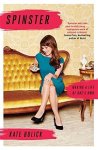 Spinster by Kate Bolick: Written as she was approaching 40, this is a cross between a memoir, a social history of unmarried women (mostly in the USA), and a group biography of five real-life heroines who convinced her it was alright to not want marriage and motherhood. First was Maeve Brennan; now I’m reading about Neith Boyce. The writing is top-notch.
 America Is Not the Heart by Elaine Castillo: Set in the 1990s in the Philippines and in the Filipino immigrant neighborhoods of California, this novel throws you into an unfamiliar culture and history right at the deep end. The characters shine and the story is complex and confident – I’m reminded especially of Chimamanda Ngozi Adichie’s work.
 Some Body to Love by Alexandra Heminsley: Finally pregnant after a grueling IVF process, Heminsley thought her family was perfect. But then her husband began transitioning. This is not just a memoir of queer family-making, but, as the title hints, a story of getting back in touch with her body after an assault and Instagram’s obsession with exercise perfection.
 The Light Years by Elizabeth Jane Howard: We’re reading the first volume of The Cazalet Chronicles for a supplementary book club meeting. I can hardly believe it was published in 1990; it’s such a detailed, convincing picture of 1937‒8 for a large, wealthy family in London and Sussex as war approaches. It’s so Downton Abbey; I love it and will continue the series.
 Outlawed by Anna North: After Reese Witherspoon chose it for her book club, there’s no chance you haven’t heard about this one. I requested it because I’m a huge fan of North’s previous novel, The Life and Death of Sophie Stark, but I’m also enjoying this alternative history/speculative take on the Western. It’s very Handmaid’s, with a fun medical slant.
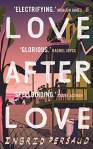 Love After Love by Ingrid Persaud: It was already on my TBR after the Faber Live Fiction Showcase in November, but my interest was redoubled by this recently winning the Costa First Novel Award. Set in Trinidad, it’s narrated, delightfully, in turn by Betty, a young widow; Solo, her teenage son; and Mr. Chetan, their lodger. Perfect for fans of Mr Loverman.
Acquiring More
Last week I ordered 21 books in one day. (In my defense, only 18 of them were for me.) It started like this: “Ah, must find a clearance 2021 calendar. Waterstones had a good selection last year…” And indeed, I found the perfect calendar, for half price. But then I continued browsing the online sale items and before I knew it there were also seven books in my basket. While I was at it, I went onto Awesomebooks.com and put together an order of secondhand books by authors I’ve been wanting to try or read more by. Add to that a couple more review books coming through the door and a couple of giveaways from neighbors (the Nicolson in the first photo, and Stoner for me to reread) and it’s been a big week for book acquisitions.


Attending a Book Launch
My fifth book launch since March 2020; my first to take place on Instagram. Hosted by Damian Barr, who runs a literary salon, it was for one I’ve already mentioned, Some Body to Love by Alexandra Heminsley, which came out on the 14th. (Barr and his husband are the book’s dedicatees.) “I am not ashamed of what happened,” she said about how her family has changed, adding that writing about such recent events has been a way of solidifying how she felt about them. Her ex has not read the book but wrote to Chatto & Windus saying she completely trusted Heminsley and consented to the publication. Some of her offers were for a more mass-market memoir about the marriage, whereas the book ended up being more diffuse, including other medical experiences and challenges to self-belief. It was amusing to hear that after the BLM movement her manuscript went through a “Karen edit” to make sure she hadn’t taken her privilege for granted.
A New TBR Challenge
“Hands. Face. Space.” is a current UK public health campaign slogan. It inspired me to trawl through my TBR shelves for appropriate covers and titles. I don’t know if I’m actually serious about reading these particular books I selected (I could have chosen any of dozens for the Face covers), but it was fun to put together the photo shoot. I had two replies from people on Twitter who came up with their own trio of titles.


And to cap off this miscellany, something non-book-related…
Top 5 albums from 2020
I originally wrote this little note for Facebook.
 Banana Skin Shoes, Badly Drawn Boy – His best since his annus mirabilis of 2002. Funky pop gems we’ve been caught dancing to by people walking past the living room window … oops! A track to try: “Is This a Dream?” (psychedelic music video)!
 Where the World Is Thin, Kris Drever – You may know him from Lau. Top musicianship and the most distinctive voice in folk. Nine folk-pop winners, including a lockdown anthem. A track to try: “I’ll Always Leave the Light On.”
 Henry Martin, Edgelarks – Mention traditional folk and I’ll usually run a mile. But the musical skill and new arrangements, along with Hannah Martin’s rich alto, hit the spot. A track to try: “Bird in a Cage.”
 Blindsided, Mark Erelli – We saw him perform the whole of his new folk-Americana album live in lockdown. Love the Motown and Elvis influences; his voice is at a peak. A track to try: “Rose-Colored Rearview.”
 American Foursquare, Denison Witmer – A gorgeous ode to family life in small-town Pennsylvania from a singer-songwriter whose career we’ve been following for upwards of 15 years. A track to try: “Birds of Virginia.”
How is your 2021 reading going?
August Thoughts (via Song Lyrics and Book Quotes)
Can’t believe I let the summer slip away again
Like watermelon juice dripping down my chin
It might be light enough for one last swim
If we hurry on down to the shore
A fool would ask for more
A fool would ask for more
~from “August” by Mark Erelli
Summer is winding down here in southern England. The chilly nights and mornings and the huge ripe blackberries tell us autumn will be here soon. Did I make enough of the summer? Or did I so ardently escape the heat, here and in America, that I didn’t let myself enjoy it?
 We didn’t end up making a summer pudding this year. It’s an old-fashioned, grown-up dessert made of almost nothing but white bread and fresh berries, but if you want to taste July in a bowl this is it. Sweetness from strawberries and raspberries; only just palatable sharpness from currants; smoothness from a generous pouring of cream. As my husband says each year, who knows how many more annual summer puddings we’ll get? Food traditions are as important a way of marking the passing of time and the seasons’ gifts as anything else.
~
I’ve had “August” by Mark Erelli, a New England folk singer/songwriter we discovered through The Darwin Song Project, in my head for weeks and weeks. It presents scenes from a languid summer evening that appeal to my nostalgia for my American childhood. More than that, though, its recurring line – “A fool would ask for more” – encourages me to be grateful for what I have and to appreciate these ordinary, fleeting moments.
“You’re one of those people who wants everything but what they have.” So Ruth, dying of breast cancer, skewers her best friend Ann, the narrator of Talk before Sleep by Elizabeth Berg. That line stung a little, because I fear it’s true of me. When I’m in America I’m silently contemptuous of the lavish lifestyle and the can-do attitude; as soon as I’m back in England I stew in my cluttered house and my shabby little life. I envy friends with design magazine-worthy homes (but I don’t want the hassle of owning a house), sweet kids (but I don’t want to have children), stable careers (but I don’t want a regular job), and comfortable habits not needled by environmental and ethical dilemmas (but once you know you can’t go back).
~
My five-year freelancing anniversary passed quietly at the end of July. Being a freelancer has all the perks you’d expect – no boss or co-workers, at least not in the traditional sense; no commute; flexibility; variety – but also some downsides you might not realize. In my case, it means I virtually never leave my house, and I’m sedentary and sitting most of the time. I don’t get vacation time or sick pay, I have to muddle through my taxes in two countries, and I put hours and hours of work into assignments that pay insultingly little.
When asked recently for advice about freelance writing, I warned that it is extremely difficult to make money from writing about books – so if you want to do it, be sure you’re just doing it for the love of books, and secure another source of income. For me that’s proofreading science journal articles. It’s something I’m good at and find just challenging enough to keep me stimulated, but if I’m honest I don’t really care about this work. It’s just a paycheck.
To put it simply, I’m bored. Some of my writing gigs have spanned the full five years, and I’m still doing exactly the same things. I’ve had a couple small pay rises, but I’m not earning significantly more than I was in 2013, even though I was recently named an associate editor at one of the magazines (an honorary title, alas). I feel restless and like I’m just waiting for the smallest signal to tell me I can drop everything. It would be a relief to let it all go. Julia Cameron captures this feeling in The Artist’s Way: “Restive in our lives, we yearn for more, we wish, we chafe. … We want to do something but we think it needs to be the right something, by which we mean something important.”
So really what I should be doing is aiming higher. I’m now a member of the National Book Critics Circle and have access to a document listing the pay rates for big-name venues, places that pay hundreds of dollars for book reviews and $1+/word for literary articles. But it often takes me months to get up the courage to pitch to a new publication, if I ever do it at all.
In Help Me! (out on September 6th), freelance journalist Marianne Power took on a different self-help book each month for a year to see if she could change her life for the better. One particularly rough month was all about Rejection Therapy. “I should have been constantly sending ideas to different publications but I didn’t. … I didn’t want to get rejected because I would take that as a confirmation of all the insecurities I had in my head – that I was a rubbish writer, that I had been lucky to get even this far, that I would never work again.”
That passage certainly resonated for me. No matter how many hundreds of reviews I write, I still barely trust myself to write another successful one. Temporary triumphs fade fast. Getting a pitch accepted at Literary Hub had been one of the highlights of my year, but pretty much as soon as the article was published on the website I felt deflated. It was a flash in the pan; a few comments and retweets and then it was forgotten before you know it.
I didn’t think I was a flighty person who needed a lot of novelty in my life. But Beryl Markham – lion hunter, horse trainer, aviatrix – has been reminding me that even if you have a good life that many would admire, even if you’d be a fool to ask for more, sometimes you still need a change. Here’s a passage from the formidable adventurer’s West with the Night: “I wonder if I should have a change – a year in Europe this time – something new, something better, perhaps. A life has to move or it stagnates. Even this life, I think. … it is no good anticipating regrets. Every tomorrow ought not to resemble every yesterday.”
My 35th birthday is coming up this autumn. It feels like time for a rethink. What do I want every tomorrow to look like? It’s all too easy to stick with what feels like a sure thing instead of launching into something new.
 Bookish Beck = Rebecca Foster. American transplant to England. Freelance proofreader and book reviewer.
 Bookish Beck