Three for the First Day of Spring: Renkl, Sukegawa and Tucker
I suppose the best kind of spring morning is the best weather God has to offer.
~I Capture the Castle by Dodie Smith
Happy spring! (Although the blossom is fading and, going by the temperature the past few days, you might think it was early summer here.) When I borrowed the psychological thriller The First Day of Spring from the library, I decided to consider that my built-in review deadline. As is my wont, I’ve turned it into a trio with two books more laterally related to spring: a lovely book of miniature autobiographical essays about interactions with family and the natural world, and a short Japanese novel about misfits who find belonging at a pancake restaurant.
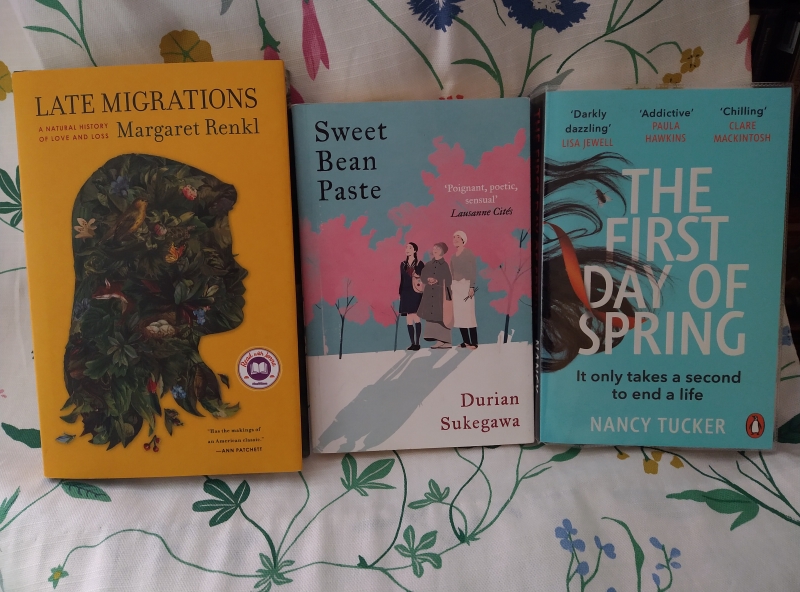
Late Migrations: A Natural History of Love and Loss by Margaret Renkl (2019)
My favorite season is spring—until fall arrives, and then my favorite season is fall: the seasons of change, the seasons that tell me to wake up, to remember that every passing moment of every careening day is always the last moment, always the very last time, always the only instant I will ever take that precise breath or watch that exact cloud scud across that particular blue of the sky.
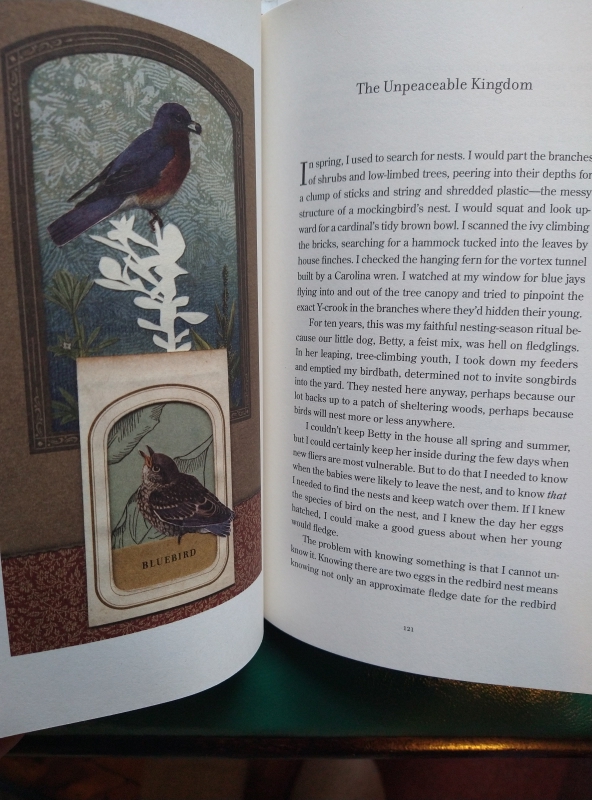
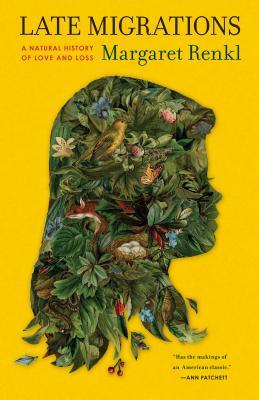 The memoir in flash essays is one of my favourite niche forms. (Beth-Ann Fennelly and Abigail Thomas also do it exceptionally well.) It took me a long time to promote this book from occasional bedside reading pile to daytime stack, but at a certain point it became impossible to let it out of my hands for very long. I had to smell it and browse her brother Billy’s collage artworks. Each piece is somewhere between a paragraph and several pages long, and they make up a rough chronology of a life, from her grandmother’s memories of the 1930s onward (the passages in italics are interview transcripts) through to the present day.
Renkl grew up in Alabama in the 1960s–70s, in the sort of mildly dysfunctional family that most of us probably have. She contrasts what she knew as a child with what she didn’t. It was a happy childhood but. (Her mother’s recurring mental health problems and racial tensions in the South would be two ways to finish that sentence.) There were hounds and porch seats and three kids in the backseat on vacations. There were funerals and old love songs and Bible verses and playing in the woods. Grandmother tells of births and deaths, and Renkl remembers life’s transitions: getting her first period, being so homesick that she couldn’t finish college in Philadelphia, adjusting to early motherhood and then to an empty nest – an appropriate metaphor because many of the essays are about birds Renkl watches feeding and nesting. She isn’t naïve; she knows nature is cruel. Not every fledgling will survive and majestic hawks will kill equally beautiful songbirds. She realizes how dire the situation is for monarch butterflies, too, but keeps planting milkweed at her Nashville home.
This balancing of appreciation for life and acceptance of death is at its finest in the late pieces on her parents’ death. Her mother, like mine, died suddenly after a stroke, and her words on that loss are exquisite as well as painful. Still, she asserts, “Human beings are creatures made for joy. Against all evidence, we tell ourselves that grief and loneliness and despair are tragedies, unwelcome variations from the pleasure and calm and safety that in the right way of the world would form the firm ground of our being.”
Like Ross Gay and Aimee Nezhukumatathil, Renkl brings a poet’s eye for language and an amateur’s awe at the natural world to her micro-essays. She calls a cedar waxwing “An operatic aria of a bird. A flying jungle flower. A weightless coalescence of air and light and animation.” This is a book to cherish and learn from and reread. (Birthday gift from my sister from my wish list) 
{SPOILERS IN THESE NEXT TWO REVIEWS}
Sweet Bean Paste by Durian Sukegawa (2013; 2017)
[Translated from Japanese by Alison Watts]
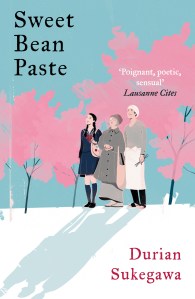 It was the colours (especially that wash of cherry-blossom pink) that first attracted me to this book, and the foodie theme that kept me reading. Sentaro manages a small shop on Cherry Blossom Street, Doraharu, which sells dorayaki – pancakes filled with sweet bean paste (“during cherry-blossom season petals sometimes drifted in, falling into the pancakes as they cooked”). He takes little pride in the work; it’s just a way to keep busy and pay off his debts from the time he was in prison for drug-dealing. When an elderly woman named Tokue offers to make the sweet bean paste for a pittance, he decides to give her a trial even though he usually orders it in bulk. Tokue’s homemade is so much better that the shop is soon making record profits. She trains Sentaro up in the art of making the perfect paste, which to her is a mystical process that involves listening to the beans. Not only does Tokue have new ideas for the menu, but she also makes troubled teenage customers such as Wakana welcome with friendly conversation. Along with Marvy the canary, these three form a fragile little family.
But then rumours start spreading about Tokue and her health, and Doraharu’s owner threatens to shut the place down if Sentaro doesn’t let her go. It turns out that she had Hansen’s disease (the preferred term for leprosy) and lives in a sanatorium. Even though she has long since been cured, there is still a stigma, and when she was young she could only find love and community among her fellow patients. In an Author’s Note, Sukegawa explains that the legislation keeping Hansen’s patients isolated was only repealed in 1996. His philosophy, made explicit in the letters Tokue writes to Sentaro after leaving the shop, is that one doesn’t have to be useful to have a meaningful life; simply being alive and observing is enough. I found Tokue saccharine: too wise, good and all-forgiving. This is easy reading, yet the dialogue felt stiff, the characterization thin, the letters unsubtle, and the detail of confectionery-making too technical. Secondhand – public library book sale) 
The First Day of Spring by Nancy Tucker (2021)
I’d very much admired Tucker’s first two books – The Time in Between, a memoir of her childhood anorexia; and especially That Was When People Started to Worry, case studies of young women’s mental health – so asked my library to purchase her debut novel. Tucker is a trainee clinical psychiatrist. The psychological insight she’s developed professionally and through writing about herself and others served her well in crafting this portrait of a deprived girl who murders other children. I could have included it in my Mother’s Day post because, as in the similarly dark Like Mother (by Jenny Diski), it’s the lack of a mother’s love that leaves the protagonist numb and unsure of how to bring up her own daughter.
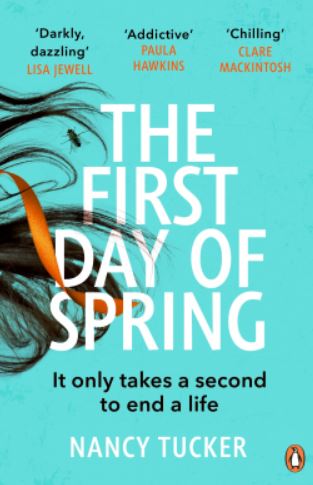 It’s no whodunit because eight-year-old Chrissie admits in the novel’s first line, “I killed a little boy today.” The mystery is why, and how she’s ultimately caught. It’s the first day of spring when she commits that first murder, of a toddler who lives on the same rough housing estate. Her house isn’t much of a home with no money for electricity, no food in the cupboards, an emotionally absent mother and a father who comes and goes without warning. Chrissie is always hungry, always craving. She couldn’t stand that Steven was loved and coddled while she had nothing. Harbouring “a delicious secret” gives her a “belly-fizzing feeling … like sherbet exploding in my guts. … That was all it took for me to feel like I had all the power in the world.” She wants to tell people what she’s done, but knows she mustn’t.
It’s also the first day of spring when five-year-old Molly falls from a seawall and breaks her wrist. Her mum, Julia, panics when she gets a call from child social services. It becomes clear by the second chapter that Julia is the new name Chrissie was given when she left the residential home for child offenders to start a new life. Sure that they’ll blame her and take Molly away, she gets on a train back to her old neighbourhood to see Mam and her childhood best friend, Linda. “I remembered this in Mam – the pull and push, cling and reject.” The subject matter might have become unbearable had Tucker emphasized the salacious details. Instead, she casts a compassionate eye on generational patterns of neglect and incompetence – patterns that can be broken through hard work. It’s riveting reading, and Julia’s love for Molly and Linda’s enduring friendship brought tears to my eyes. (Public library) 
The Best Books from the First Half of 2025
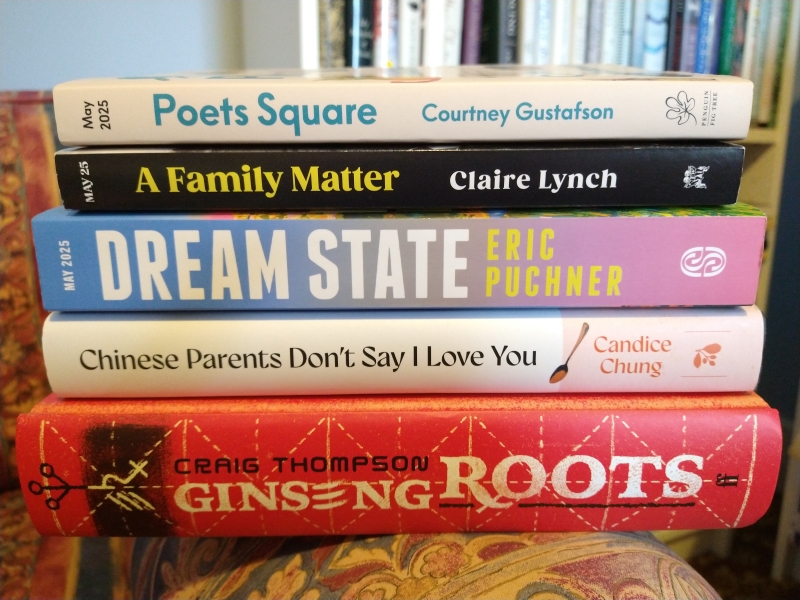
Hard to believe it, but it’s that time of year already. It’s the ninth year in a row that I’ve been making a first-half superlatives list. It remains to be seen how many of these will make it onto my overall best-of year rundown, but for now, these are my 16 favourite 2025 releases that I’ve read so far (representing the top ~21% of my current-year reading). Pictured below are the ones I read in print; all the others were e-copies. Links are to my full reviews.
Fiction
 Spent: A Comic Novel by Alison Bechdel: Alison has writer’s block and is consumed with anxiety about the state of the world. “Who can draw when the world is burning?” Then she has an idea for a book – or maybe a reality TV series – called $UM that will wean people off of capitalism. That creative journey is mirrored here. Through Alison’s ageing hippie friends and their kids, Bechdel showcases alternative ways of living. Even the throwaway phrases are hilarious. It’s a gleeful and zeitgeist-y satire, yet draws to a touching close.
 Sleep by Honor Jones: A breathtaking character study of a woman raising young daughters and facing memories of childhood abuse. Margaret’s 1990s New Jersey upbringing seems idyllic, but upper-middle-class suburbia conceals the perils of a dysfunctional family headed by a narcissistic, controlling mother. Jones crafts unforgettable, crystalline scenes. There are subtle echoes throughout as the past threatens to repeat. Reminiscent of Sarah Moss and Evie Wyld, and astonishing for its psychological acuity, this promises great things from Jones.
 Save Me, Stranger by Erika Krouse: Twelve first-person narratives voiced by people in crisis, for whom encounters with strangers tender the possibility of transformation. In the title story, the narrator is taken hostage in a convenience store hold-up. Others are set in Thailand and Japan as well as various U.S. states. Krouse focuses on young women presented with dilemmas and often eschews tidy endings, leaving characters on the brink and allowing readers to draw inferences. Fans of Danielle Evans and Lauren Groff have a treat in store.
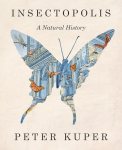 Insectopolis: A Natural History by Peter Kuper: “If insects were to vanish, the environment would collapse into chaos.” (E. O. Wilson) After an unspecified apocalypse, only insects remain. Group by group, they guide readers through an empty New York Public Library exhibit, interacting within and across species. It’s a sly blend of science, history, stories and silliness. There are interludes about insects in literature and unsung heroines of entomology. Informative and entertaining at once; what could be better? Welcome our insect overlords!
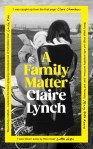 A Family Matter by Claire Lynch: In her research into UK divorce cases in the 1980s, Lynch learned that 90% of lesbian mothers lost custody of their children. Her earnest, delicate debut novel, which bounces between 2022 and 1982, imagines such a situation through close portraits of three family members. Maggie knew only that her mother, Dawn, abandoned her when she was little. Lynch’s compassion is equal for all three characters. This confident, tender story of changing mores and steadfast love is the new Carol for our times.
 Are You Happy? by Lori Ostlund: Nine short fictions form a stunning investigation into how violence and family dysfunction reverberate. “The Peeping Toms” and “The Stalker” are a knockout pair featuring Albuquerque lesbian couples under threat by male acquaintances. Characters are haunted by loss and grapple with moral dilemmas. Each story has the complexity and emotional depth of a novel. Freedom versus safety for queer people is a resonant theme in an engrossing collection ideal for Alice Munro and Edward St. Aubyn fans.
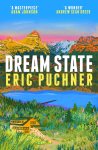 Dream State by Eric Puchner: It starts as a glistening romantic comedy about t Charlie and Cece’s chaotic wedding at a Montana lake house in summer 2004. First half the wedding party falls ill with norovirus, then the best man, Garrett, falls in love with the bride. The rest examines the fallout of this uneasy love triangle as it stretches towards 2050 and imagines a Western USA smothered in smoke from near-constant forest fires. Still, there are funny set-pieces and warm family interactions. Cross Jonathan Franzen and Maggie Shipstead.
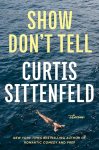 Show Don’t Tell by Curtis Sittenfeld: Sittenfeld’s second collection features characters negotiating principles and privilege in midlife. Split equally between first- and third-person perspectives, the 12 contemporary storylines spotlight everyday marital and parenting challenges. Dual timelines offer opportunities for hindsight on the events of decades ago. Nostalgic yet clear-eyed, these witty stories exploring how decisions determine the future are perfect for fans of Rebecca Makkai, Kiley Reid, and Emma Straub.
Nonfiction
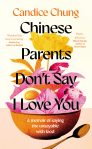 Chinese Parents Don’t Say I Love You: A memoir of saying the unsayable with food by Candice Chung: A vibrant essay collection spotlighting food and family. Chung reconnects with her semi-estranged parents by taking them along on restaurant review gigs for a Sydney newspaper. Fresh from a 13-year relationship with “the psychic reader,” she starts dating again and quickly falls in deep with “the geographer.” The essays range in time and style, delicately contrasting past and present, singleness and being partneredr.
 Poets Square: A Memoir in 30 Cats by Courtney Gustafson: Working for a food bank, trapped in a cycle of dead-end jobs and rising rents: Gustafson saw firsthand how broken systems and poverty wear people down. She’d recently started feeding and getting veterinary care for a feral cat colony in her Tucson, Arizona neighbourhood. With its radiant portraits of individual cats and its realistic perspective on personal and collective problems, this is a cathartic memoir and a probing study of building communities of care in times of hardship.
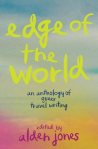 Edge of the World: An Anthology of Queer Travel Writing, ed. Alden Jones: Sixteen authors of diverse sexual orientations and genders contrast here and there and then and now as they narrate sensory memories and personal epiphanies. In these pieces, time abroad sparks clarity. There’s power in queer solidarity, whether one is in Berlin or Key West. Alex Marzano-Lesnevich’s piece is the highlight. A stellar anthology of miniature travelogues that are as illuminating about identity as they are about the places they feature.
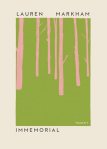 Immemorial by Lauren Markham: An outstanding book-length essay that compares language, memorials, and rituals as strategies for coping with climate anxiety and grief. The dichotomies of the physical versus the abstract and the permanent versus the ephemeral are explored. Forthright, wistful, and determined, the book treats grief as a positive, as “fuel” or a “portal.” Hope is not theoretical in this setup, but solidified in action. This is an elegant meditation on memory and impermanence in an age of climate crisis.
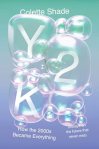 Y2K: How the 2000s Became Everything (Essays on the Future that Never Was) by Colette Shade: Shade’s debut collection contains 10 perceptive essays that contrast the promise and political pitfalls of “the Y2K Era” (1997–2008). The author recalls the thrill of early Internet use and celebrity culture. Consumerism was a fundamental doctrine but the financial crash prompted a loss of faith in progress. Outer space motifs, reality television, Smashmouth lyrics: it’s a feast of millennial nostalgia. Yet this hard-hitting work of cultural criticism, recommended to Jia Tolentino fans, reminisces only to burst bubbles.
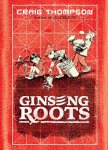 Ginseng Roots by Craig Thompson: A book about everything, by way of ginseng. It begins with Thompson’s childhood summers working on American ginseng farms with his siblings in Marathon, Wisconsin. As an adult, he travels first to Midwest ginseng farms and festivals and then through China and Korea to learn about the plant’s history, cultivation, lore, and medicinal uses. Roots are symbolic of a family story that unfolds in parallel. Both expansive and intimate, this is a surprising gem from one of the best long-form graphic storytellers.
Poetry
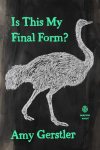 Is This My Final Form? by Amy Gerstler: This delightfully odd collection amazes with its range of voices and techniques. It leaps from surrealism to elegy as it ponders life’s unpredictability. The language of transformation is integrated throughout. Aging and the seasons are examples of everyday changes. Elsewhere, speakers fall in love with the bride of Frankenstein or turn to dinosaur urine for a wellness regimen. Monologues and sonnets recur. Alliteration plus internal and end rhymes create satisfying resonance.
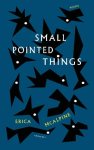 Small Pointed Things by Erica McAlpine: McAlpine’s second collection is full of flora and fauna imagery. The title phrase comes from the opening poem, “Bats and Swallows” – in the “gloaming,” it’s hard to tell the difference between the flying creatures. The verse is bursting with alliteration and end rhymes. She expands the view through conversations, theories and travel. What-ifs, consequences and regrets; mythical allusions, elegies and the concerns of motherhood. Just my sort of poetry: sweet on the ear, rooted in nature and the everyday.
Which of these grab your attention? What other 2025 releases should I catch up on?
Reading Ireland Month, Part II: Barrett, More Donoghue, O’Farrell x 2
My second set of contributions to Cathy’s Reading Ireland Month. Emma Donoghue also appeared in my first instalment of reviews. Today I’m featuring her latest novel, published just a couple of weeks ago, and taking a quick look at a few other Irish books I’ve read recently: a light-hearted debut featuring small-town criminals, and two by Maggie O’Farrell: a reread of her only nonfiction work to date (for book club), and her newest children’s book.
Wild Houses by Colin Barrett (2024)
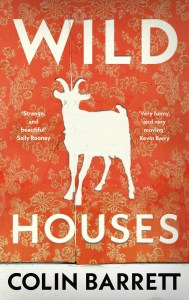 When Doll English is kidnapped by the Ferdia brothers in revenge for a huge loss on a drug deal, his girlfriend, mother and brother must go to unexpected lengths to set him free. There’s plenty of cursing and violence in this small-town crime caper, yet Barrett has a light touch; the dialogue, especially, is funny. The dialect is easy enough to decipher. Nicky, Doll’s girlfriend, lost both parents young and works in a hotel bar. She’s a strong character reminiscent of the protagonist in Trespasses. Overall, I felt that this was nicely written but that Barrett’s talent was somewhat wasted on a thin story. I’ve encountered similar plots in better books by Paul Murray and Donal Ryan. (Free from the publisher)
The Paris Express by Emma Donoghue
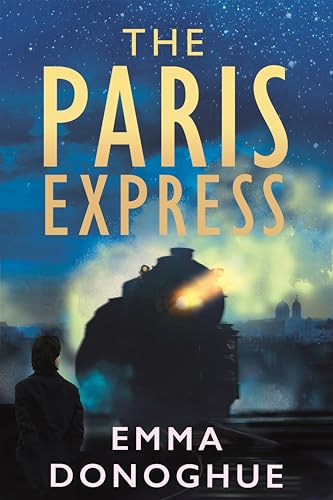 Inspired by a real-life disaster involving a train on the approach to Paris’s Montparnasse station in 1895. The Author’s Note at the end reveals the blend of characters included: people known to have been on that particular train, whether as crew or passengers; those who might have journeyed on it because they spent time in Paris at around that period (such as Irish playwright John Millington Synge); and those made up from scratch. It’s a who’s-who of historical figures, many of whom represent different movements or social issues, such as a woman medical student and an African American painter who can pass as white in certain circumstances. Donoghue clearly intends to encompass the entire social hierarchy, from a maid to a politician with a private carriage. She also crafts a couple of queer encounters.
The premise is appealing: a train hurtling toward catastrophe is in a sense a locked room, seeding much drama and intrigue. A young female radical is on board with a bomb, so all along you speculate about whether she’ll set it off and when. While I found the general thrust engaging, it was harder to develop interest in the large cast of characters. I also found the passages personifying the train (she “carries death in her belly”) hokey and thought that, as has sometimes been the case with Donoghue’s historical work, there’s too much research that’s there just for the sake of it, because she came across a fact she found fascinating and couldn’t bear to leave out (“These days every public building has three rubbish bins—one for the reclaiming of paper and cloth, the next for glass, ceramics, and oyster shells, and the last for perishables, which is where she drops the handkerchief.”). So this was enjoyable enough but not among her best.
With thanks to Picador for the proof copy for review.
I Am, I Am, I Am: Seventeen Brushes with Death by Maggie O’Farrell (2017)
 This was a reread for book club, and oh how brilliant it is. I’m more convinced than ever that the memoir-in-essays is a highly effective form because it focuses on themes or moments of great intensity and doesn’t worry about accounting for all the boring intermediate material. A few of these pieces feel throwaway, but together they form a vibrant picture of a life and also inspire awe at what the human body can withstand. No doubt on Wednesday we will each pick out different essays that resonated the most with us, perhaps because they run very close to our own experience. I imagine our discussion will start there – and with sharing our own NDEs. Stylistically, the book has a lot in common with O’Farrell’s fiction, which often employs the present tense and a complicated chronology. The present tense and a smattering of second person make the work immediate and invite readers to feel their way into her situations. Otherwise, my thoughts are as before – the last two essays are the pinnacle.
My original review from 2018:
We are, all of us, wandering about in a state of oblivion, borrowing our time, seizing our days, escaping our fates, slipping through loopholes, unaware of when the axe may fall.
O’Farrell captures fragments of her life through 17 essays on life-threatening illnesses and other narrow escapes she’s experienced. The pieces aren’t in chronological order and aren’t intended to be comprehensive. Instead, they crystallize the fear and pain of particular moments in time, and are rendered with the detail you’d expect from a scene in one of her novels. (Indeed, you can spot a lot of the real-life influences on her fiction, particularly This Must Be the Place – travels in China and Chile; eczema and stammering.)
She’s been mugged at machete point, has nearly drowned several times, had a risky first labour, and was almost the victim of a serial killer. (My life feels awfully uneventful by comparison!) But the best section of the book is its final quarter: an essay about her childhood encephalitis and its lasting effects, followed by another about her daughter’s extreme allergies. Only now, as a mother, can she understand how terrifying it must have been for her parents to wait at her side during days when she might not have survived. O’Farrell depicts parenthood better than any other author I can think of – letting those of us who haven’t experienced it do so vicariously. (Gift from my wish list)
My original rating (2018): 
My rating now: 
When the Stammer Came to Stay by Maggie O’Farrell (2024)
 This is actually her third children’s book, after Where Snow Angels Go (2020) and The Boy Who Lost His Spark (2022). All are illustrated by Daniela Jaglenka Terrazzini, who has a richly colourful and slightly old-fashioned style; she makes kids look as dignified as adults. The books are intended for slightly older children in that they’re on the longer side, have more words than pictures, and are more serious than average. They all weave in gentle magic as a way of understanding and coping with illness, a mental health challenge, or a disability.
When the Stammer Came to Stay is a perfect follow-on to I Am, I Am, I Am because it, too, draws on O’Farrell’s personal struggles. It’s the fable-like story of two sisters, Bea and Min, who share an attic room. The one is perfectly tidy; the other is a messy tomboy. When the stammer, pictured as a blob of silver ectoplasm above the shoulder, starts stealing Min’s words, they gather advice from their parents and the lodgers about how she can accept her new reality instead of fighting it or closing herself off by not speaking at all. The mycologist’s symbiosis metaphor is perhaps a bit too neat, but it contrasts with the impish connotations of the dibbuk, another useful parallel the girls discover. With this I’ve now read O’Farrell’s complete published works!
 Bookish Beck = Rebecca Foster. American transplant to England. Freelance proofreader and book reviewer.
 Bookish Beck