Love Your Library: August 2026
Thanks to Eleanor, Marcie, and Skai for posting about their library borrowing and reading!
This month marks six years that I’ve been volunteering in my local public library. I’m perversely nostalgic for those early days in summer 2020, when we were closed to the public and staff and volunteers socially distanced around an otherwise empty library.
In a normal year, I always forget just how busy the library gets during the school holidays. The children’s shelves, especially, look ransacked and the number of reservation requests shoots up as kids (and some adults) work towards the Summer Reading Challenge. I look forward to things quieting down again.
My library recently acquired the Wainwright Prize shortlists, so I’m taking advantage of the opportunity to read most of the Conservation titles (whereas the Nature writing titles mostly struck me as samey). I’m hoping it will also buy more from the Booker Prize longlist – besides the Harrison and Perry, which I’m waiting for. You can see I’ve also been stocking up on short story collections for Short Story September, which starts tomorrow!
My library use over the last month:
(links are to any book reviews not already featured on the blog)
READ
- Our Spoons Came from Woolworths by Barbara Comyns (for Classics book club)

- I Feel Bad about My Neck by Nora Ephron

- One Ukrainian Summer by Viv Groskop
- The Shock of the Light by Lori Inglis Hall
- Kakigori Summer by Emily Itami
- The New Carthaginians by Nick Makoha

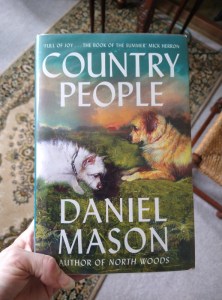
- Country People by Daniel Mason
- The Heartstopper Yearbook by Alice Oseman
- Heartstopper: Volume 6 by Alice Oseman
- The Land and Its People by David Sedaris
+
Women in Translation Month reads:
(All originally published in French, though Valckx is Dutch?)
 The Years by Annie Ernaux [transl. Alison L. Strayer]: This was a buddy read with Marcie of Buried in Print, though she quickly zoomed ahead! I preferred it to some of Ernaux’s other short memoirs (Happening, I Remain in Darkness, A Woman’s Story) precisely because it is not a memoir but a portrait of her life and times, mostly delivered in the first-person plural with some third person – in the late pages she herself calls it an “impersonal autobiography.” I was most wowed by the opening and closing litanies of the random memories lost whenever any individual ceases to exist. Elsewhere, when not used to depict her actual experiences (via scenes or photographs), the approach does tend toward the generic, yet it gives a good sense of social fads and political trends all the same. Education and consumerism seem like routes out of poverty, whereas novelty and technology offer false promise. Reading something like this would be a good way for younger generations to summon up some sympathy for Boomers.
Favourite lines: “Our parents and the middle-aged were from another time” / “She does not feel any particular age, though certainly feels a young woman’s arrogance vis-a-vis older women, a condescension towards the post-menopausal. It is unlikely she will ever be one of them herself.”
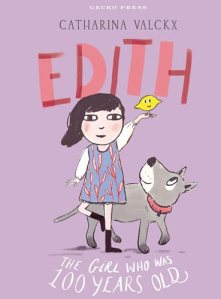 Edith: The Girl Who Was 100 Years Old by Catharina Valckx [transl. Antony Shugaar]: Speaking of never growing old… This is a charming middle-grade fantasy about a girl given two blessings by fairies: the ability to animate objects, and the gift of eternal childhood. The former is good fun, allowing her to have a sentient grandfather clock and a pet lemon named Squirt; the latter comes to seem like more of a curse, though. Edith has long outlived her parents and starts to think her condition is “eternal boredom.” She, Squirt and Bolster the dog set out to find the original fairy, now herself an old lady, and see if the spell can be reversed so Edith can experience life in all its stages. Somehow I can’t see this message catching on in the USA! I loved the illustrations and the whimsy but wanted it to go further, Moomins-like, into Edith’s losses and longing.
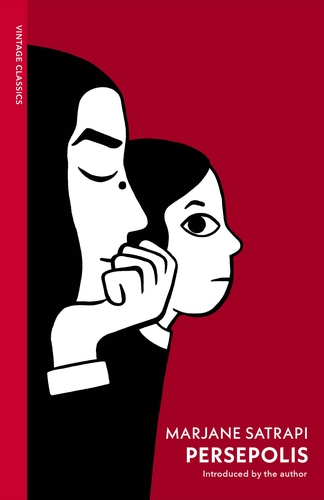 Persepolis by Marjane Satrapi [transl. L’Association / Anjali Singh]: This was one of the first graphic memoirs I ever read (along with Fun Home), a classic of the genre. I wanted to reread it because it has, unfortunately, taken on renewed relevance because of war in Iran and the author’s death earlier this year. Her memoir of growing up in the 1980s and 1990s illuminates what it’s like to live under an authoritarian religious regime in a time of war, and likely planted the seeds for novels such as Martyr! and The Persians.
Satrapi’s parents had secular values but, after the 1979 Islamic Revolution, everyone had to fall in line: she wore the veil whenever she left her house, and though her family made wine they were ready to dump it down the toilet at a minute’s notice. On the one hand, she and her friends were normal Westernized adolescents interested in pop music and trendy clothing; on the other, there were shortages, bombings, and rumours of relatives and neighbours being disappeared for voicing revolutionary ideas. A missile exploded in her neighbourhood, narrowly missing her building but killing their Jewish acquaintances.
Volume 2, “The Story of a Return,” has Satrapi attending school in Austria and encountering a whole new world of drugs and sex. “The harder I tried to assimilate, the more I had the feeling that I was distancing myself from my culture, betraying my parents and my origins”. She returned to Iran four years later to find a country that was still repressive but beginning to be rebuilt after war. Art school (with fully clothed life models) and a brief marriage in her early twenties followed, but she had to leave Iran for good to find a life of creative fulfilment.
Her father’s wise words: “As long as there is oil in the Middle East we will never have peace”; “We Iranians, we’re crushed not only by the government but by the weight of our traditions.”


CURRENTLY READING
- Taking Pictures by Anne Enright
- I Remember Nothing and Other Reflections by Nora Ephron
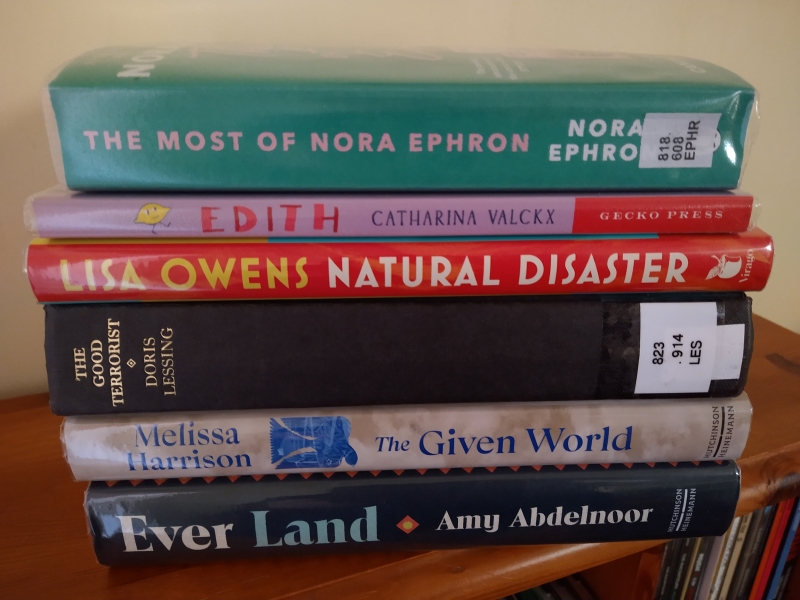
- The Given World by Melissa Harrison
- Night, Neon and Other Stories of Suspense by Joyce Carol Oates
- Natural Disaster by Lisa Owens
- Hum by Helen Phillips (a buddy read with Marcie of Buried in Print)
- Crossing the Water by Sylvia Plath (from university library)
- The Original by Nell Stevens
- The Queen’s Gambit by Walter S. Tevis
SKIMMED
- Come What May: Life-Changing Lessons for Coping with Crisis by Lucy Easthope
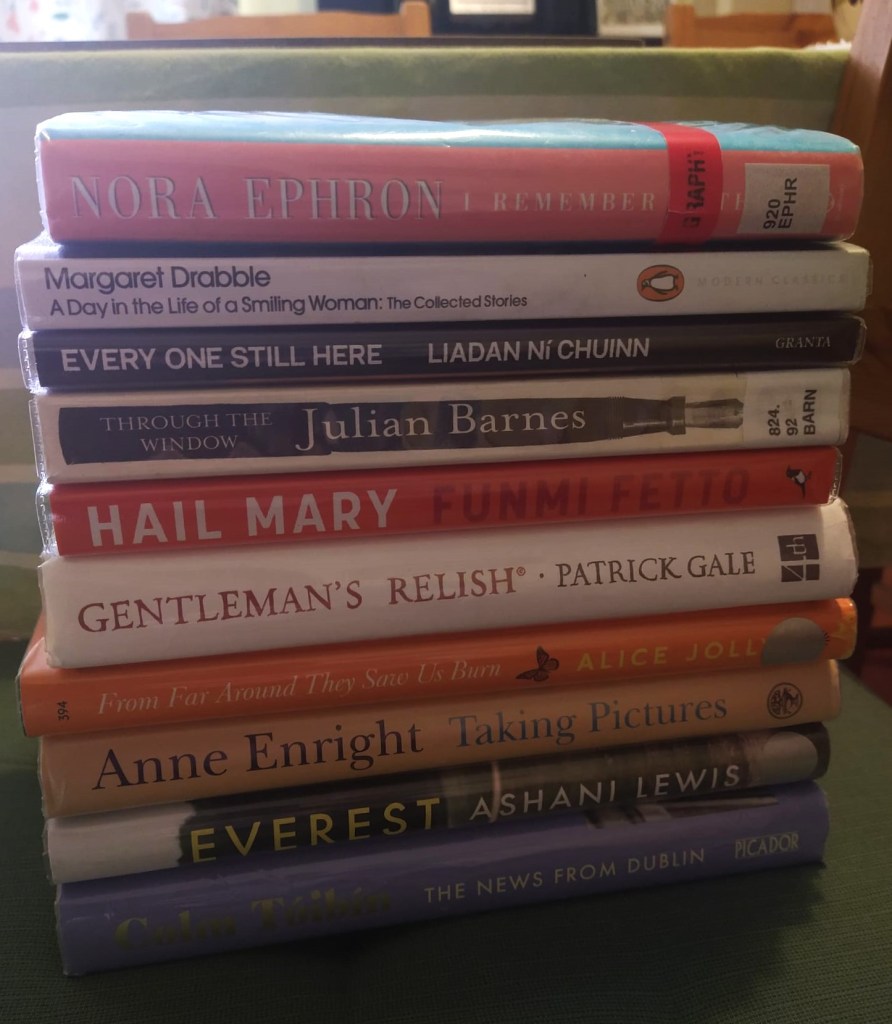
CHECKED OUT, TO BE READ
- Ever Land by Amy Abdelnoor
- Through the Window by Julian Barnes (to reread)
- A Day in the Life of a Smiling Woman: The Collected Stories by Margaret Drabble
- The Most of Nora Ephron – I’m on an Ephron kick at the moment!
- Hail Mary by Funmi Fetto
- Gentleman’s Relish by Patrick Gale
- From Far Around They Saw Us Burn by Alice Jolly
- The Good Terrorist by Doris Lessing (from university library, for Classics book club)
- Everest by Ashani Lewis
- The News from Dublin by Colm Tóibín
ON HOLD, TO BE COLLECTED
- In Meadowlight by Sussie Anie
- The Savage Landscape by Cal Flyn
- The Leveret by Anna Goldreich
- Eat the Planet Well: How to Fix Our Toxic Food System – One Meal at a Time by Dave Goulson
- The End of Everything by M. John Harrison
- When the Forest Breathes: Renewal and Resilience in the Natural World by Suzanne Simard
- Fiesta: A Journey through Festivity by Daniel Stables
IN THE RESERVATION QUEUE
- The Strangers by Naomi Alderman
- Stop All the Clocks: Poems of Love and Loss by W.H. Auden
- Dodge City by Patrick deWitt
- Honour & Other People’s Children by Helen Garner
- Every Last Fish by Rose George
- Neurodivergent by Nature by Joe Harkness
- Hag: Forgotten Folktales Retold by Daisy Johnson et al.
- How to Be Hopeful by Caitlin Moran
- The Winter Guest by Sarah Moss
- Autumn by Kate Mosse
- Sunrise by Téa Obreht
- May We Feed the King by Rebecca Perry
- Green Crime by Julia Shaw
- The Housekeeper by Rose Tremain
RETURNED UNREAD
- Every One Still Here by Liadan Ní Chuinn – It takes a lot for me to overcome my groundless antipathy to stories about The Troubles.
What have you been reading or reviewing from the library recently?

Share a link to your own post in the comments. Feel free to use the above image. The hashtag is #LoveYourLibrary.
Book Serendipity, June to July
Life can have odd confluences. Esme will not say serendipity: she loathes the word. But sometimes she thinks there must be something at work, some impulse, some collision of forces, some kinks in chronology.
~The Vanishing Act of Esme Lennox by Maggie O’Farrell
Unlike Esme Lennox, I love the word serendipity! You probably know by now that I call it “Book Serendipity” when two or more books that I read at the same time or in quick succession have something in common – the more bizarre, the better. This is a regular feature of mine every couple of months. Because I usually have 20–30 books on the go at once, I suppose I’m more prone to such incidents. People frequently ask how I remember all of these coincidences. The answer is: I jot them down on scraps of paper or input them immediately into a file on my PC desktop; otherwise, they would flit away!
Thanks to Kay for posting about her own book serendipity moments here!
The following are in roughly chronological order.
- A woman gets on a flight even though she’s technically too pregnant to do so in one poem of Family Lines (ed. Armitage and Bower) and Commencement by J. Courtney Sullivan.
- A mention of a Spanish cat in one poem of Family Lines (ed. Armitage and Bower) and Tsi-Tsa by George Mikes.
- Rum and coke is mentioned in I Sing to the Greenhearts by Maggie Harris and Our Father Who Art in the Tree by Judy Pascoe.
- A character named Gladys in Blonde by Joyce Carol Oates and Our Father Who Art in the Tree by Judy Pascoe.
- A character named Celia in The Seven Husbands of Evelyn Hugo by Taylor Jenkins Reid and Commencement by J. Courtney Sullivan.
- A girl holds her breath until she faints in Lost Lambs by Madeline Cash and Our Father Who Art in the Tree by Judy Pascoe.
 Samuel Taylor Coleridge’s performance as a father appears in one poem of Family Lines (ed. Armitage and Bower) and one essay of Frog by Anne Fadiman.
- A cat scratches a tatami mat in Letters of Note: Cats (ed. Shaun Usher) and I Am a Cat by Natsume Sōseki.
- A Freudian explanation of the collector’s obsessive impulse in The Madman’s Guide to Stamp Collecting by Robert Irwin and The Butterfly Season by Lea Korsgaard.
- A book/other arts coincidence, this: I first saw the actress Anya Taylor-Joy in The Menu, which I watched on my sister’s TV streaming system in the US, and then realized she’s pictured on the Netflix tie-in cover of a book I borrowed from the library, The Queen’s Gambit by Walter Tevis.
- Manhattans are drunk in Furnishing Eternity by David Giffels and The Seven Husbands of Evelyn Hugo by Taylor Jenkins Reid.
- A main character has a history of living in an orphanage in Blonde by Joyce Carol Oates, Buckeye by Patrick Ryan, and The Queen’s Gambit by Walter Tevis; and in children’s homes in Hunger and Thirst by Claire Fuller.
- An in-law named Fran(cesca) in The Vanishing Act of Esme Lennox by Maggie O’Farrell and The Things We Never Say by Elizabeth Strout.
- A scene of visiting one’s grandmother in a dementia ward in The Vanishing Act of Esme Lennox by Maggie O’Farrell and Black Lake by Emily Skaja.
- Eating spoons of sugar straight from the jar/box in Depression Cooking by Sonali Menezes and The Things We Never Say by Elizabeth Strout.
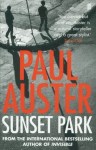
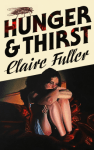
- Young people living in a squat in Sunset Park by Paul Auster and then Hunger and Thirst by Claire Fuller.
- A people-trafficking plot in Lost Lambs by Madeline Cash and The Singer’s Gun by Emily St. John Mandel.
- Someone who doesn’t want to be recognized says “I don’t know what you’re talking about” / “I have no idea what you’re talking about” when someone identifies them in Apt Pupil by Stephen King and The Seven Husbands of Evelyn Hugo by Taylor Jenkins Reid.
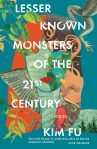
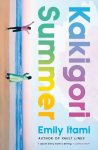
- A woman suffers from insomnia despite having done all the ‘right’ things, sleep hygiene-wise, in one story of Lesser-Known Monsters of the 21st Century by Kim Fu and Kakigori Summer by Emily Itami.
- A future blonde bombshell actress gets married off at age 15 in Blonde by Joyce Carol Oates and The Seven Husbands of Evelyn Hugo by Taylor Jenkins Reid.
- A homosexual encounter takes place in a public bathroom in What Belongs to You by Garth Greenwell and The Seven Husbands of Evelyn Hugo by Taylor Jenkins Reid. (Plus heterosexual ones in a private shower in Partita by Barbara Kingsolver.)
- A reference to Emerson’s “transparent eyeball” in The Secret to Superhuman Strength by Alison Bechdel and Black Lake by Emily Skaja.
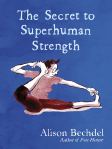
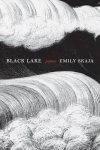
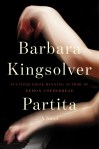
- A character named Manny in Dominion by Addie E. Citchens, Partita by Barbara Kingsolver, and one story of The Typing Lady by Ruth Ozeki.
- A female character named Mick(ie) in The Heart Is a Lonely Hunter by Carson McCullers and Partita by Barbara Kingsolver. (There’s also a male Mick in Few and Far Between by Jan Carson.)
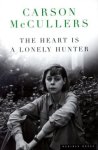
- Shoplifting takes place in Receipts from the Bookshop by Katie Clapham, The Singer’s Gun by Emily St. John Mandel, The Heart Is a Lonely Hunter by Carson McCullers, one story of The Typing Lady by Ruth Ozeki, and The Things We Never Say by Elizabeth Strout.
- The medical necessity of ironing all one’s clothing, especially nappies/underwear, is mentioned in L’Appart by David Lebovitz (a Greek person told him that) and Don’t Let’s Go to the Dogs Tonight by Alexandra Fuller (de rigueur in 1970s Rhodesia).
 Remarking on how quiet/noisy a French dishwasher is in Paris to the Moon by Adam Gopnik/L’Appart by David Lebovitz and a mention of one’s good fortune in getting a store to accept a returned appliance.
- A mention of Ludwig Bemelmans’ Madeline in Receipts from the Bookshop by Katie Clapham and Brother, I’m Dying by Edwidge Danticat.
- Characters are robbed in a motel room in Dominion by Addie E. Citchens and The New People by Andrea Uptmor.
- Living in the space above a garage in one story of The Typing Lady by Ruth Ozeki and The New People by Andrea Uptmor.
- Scenes of a woman/girl reassembling a gun, and a gun amnesty, in one story of Lesser-Known Monsters of the 21st Century by Kim Fu and Don’t Let’s Go to the Dogs Tonight by Alexandra Fuller.
- The use of a typewriter in Brother, I’m Dying by Edwidge Danticat, Apt Pupil by Stephen King, A Long Game by Elizabeth McCracken, one story of Night, Neon by Joyce Carol Oates, and The Typing Lady by Ruth Ozeki.
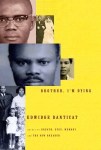
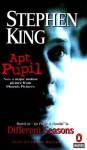
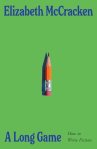
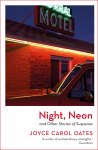
- Thousands of dollars being stored in/under a mattress in Brother, I’m Dying by Edwidge Danticat and The New People by Andrea Uptmor.
 The smell of vetiver: a cologne in Year of the Drought by Roland Buti and fabric softener in Brother, I’m Dying by Edwidge Danticat.
- I encountered sections on the sense of smell at about the same time in Life in Five Senses by Gretchen Rubin and Wearing God by Lauren Winner.
- A person bites someone else’s finger in Don’t Let’s Go to the Dogs Tonight by Alexandra Fuller, one story of The Typing Lady by Ruth Ozeki, and The New People by Andrea Uptmor. (And an ear in The Dud Avocado by Elaine Dundy.)
- Eating an omelette in a Paris café in The Dud Avocado by Elaine Dundy, Paris to the Moon by Adam Gopnik, and Moveable Feasts by Chris Newens. (I suppose these things will happen if I read multiple Paris-set books at once!)
- The fact that “Pas mal” (“not bad”) is high praise in French is explained in Pardon Our French by Alex Durand and Tom Carles and L’Appart by David Lebovitz.
 An insistence that the soles of a woman’s feet not be shown in A Rough Guide to the Heart by Pam Houston (etiquette in Bhutan) and Blonde by Joyce Carol Oates (when Norma Jeane Baker, aka Marilyn Monroe, is having early nude photos taken).
- A nude photo shoot takes place in The Singer’s Gun by Emily St. John Mandel and Blonde by Joyce Carol Oates. There are also nude portrait sittings in The Dud Avocado by Elaine Dundy and The Original by Nell Stevens.
- A man has glass embedded in his face in Few and Far Between by Jan Carson and The Singer’s Gun by Emily St. John Mandel.
- The idea that one will be cursed for touching a stranger’s grave appears in Don’t Let’s Go to the Dogs Tonight by Alexandra Fuller and Kakigori Summer by Emily Itami.
- I find myself rereading two childhood memoirs of wartime life at the same time: Don’t Let’s Go to the Dogs Tonight by Alexandra Fuller and Persepolis by Marjane Satrapi.
What’s the weirdest reading coincidence you’ve had lately?
June Releases by Fiona Mozley, Heather Sellers & Myfanwy Tristram
This month I have a fiction–poetry–nonfiction trio covers fake memories, Florida’s beauty and weirdness, and the past 50 years of protests in the UK. I also excerpt my reviews of five June releases I read in advance for Shelf Awareness, including one that’s in the running for my Book of the Year.
Awake Awake by Fiona Mozley
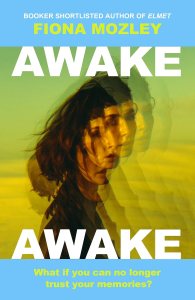 When writer Mary Mooney dives into her memories during appointments with her therapist, Sita, most of what comes up is the everyday stuff of her childhood in York: mild shenanigans with her younger brother, Jos; her friends Amelia and Eve plus Eric, a newcomer from New York City; and their wider circle. Early on, though, she warns readers that she’s untrustworthy. “In recent years, I have had difficulties with my memory,” she confesses. “It was not a sickness of forgetting. I did not have too few memories, but too many,” some of which couldn’t possibly be real – the best example being her conviction that her grandfather assassinated Hitler. She also tells Sita of a hotel fire and her rudeness to a couple of right-wing writers and journalists – things one does in dreams but not generally in real life.
The focus is on Mary and her peers’ formative teen years around the start of the Iraq War. In the final chapter, she offers a where-are-they-now for her closest friends. “Most of this is a verifiable journey through a life I really lived,” she notes, but “from hereon the fabrications begin.” This should have been an exciting revisiting of recent history in the company of an unreliable narrator, but everything about the novel is so dull that it was impossible to stay interested. It feels like pedestrian autofiction (insomuch as Mozley is from York and came of age in the same period as Mary, who is nominated for a major award for her first novel) drawing on a Blair-years upbringing. Mozley’s Elmet, which was shortlisted for the Booker Prize and the Sunday Times Young Writer of the Year Award, is one of my favourite debut novels of the last decade, so it’s a real shame that her subsequent work hasn’t lived up to that potential. Hot Stew (2021) was a DNF for me, a caricature-heavy London state-of-the-nation novel, and Awake Awake reads like a half-baked debut, not a world-class novelist’s third. Unless I hear rave reviews about a return to form in future, that’s it for me with Mozley.
With thanks to John Murray Publishers for the free copy for review.
Women in Tampa Talking about Alligators by Heather Sellers
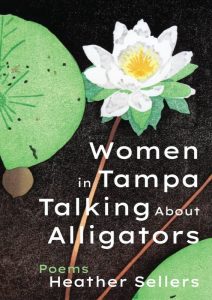 With such a title, how could you not want to read it?! In her fifth poetry collection, Sellers, a Florida native, recounts conversations with her neighbours, backyard sightings, and boat trips through swamp country. An appreciation of beauty rubs shoulders with awareness that it is threatened by climate breakdown and the state’s existential identity crisis. She describes Florida as “the thumbs-down thumb”; it “hangs on, for now, bobbing, / as she lowers into the dull warm blue sea.” Lovely poems about birds spin delightfully unexpected imagery: “watching the great white egret / stiletto across the jasmine fence, / black patent legs shining”. But they also contain barbs about the polluting influence of modern life (spot the alliteration and internal and slant rhymes):
Someone’s silvery phone gleaming underwater.
A fleet of rays flew between our little boats, skin kites on roller skates.
We discovered the things slung around the channel marker
was not a bird, just a plastic sack: the common, grey Florida Wal-Mart bag.
Cormorants dove into the chests of mangrove.
High above, paragraphs of frigates cursive-d land, land, land.
As winter and summer swap, the advantages and downsides of living in an identikit suburb mostly inhabited by retirees from elsewhere become clear. Nature is red in tooth and claw even in her garden, where crows prey on baby mockingbirds. Alligators are everywhere, and when “removed” for being a “nuisance” – in other words, interfering with human activity – their end reveals our inhumane priorities. “No? Seriously? They are euthanized? Euthanized for what, for living?” This is a terrific free verse collection at the intersection of the edenic and the diminished everyday. I would definitely read more by Sellers.
Published by Lynx House Press. With thanks to publicist Jeffrey Yamaguchi for the free e-copy for review.
Noisy Valley: The Art of Protest by Myfanwy Tristram
This is not a comprehensive history of protest but a snapshot of it over the past half-century or so, focussing on the Rhondda Valley in South Wales (not far from Cardiff), where a surprising number originated. The frame story is an exhibit of Tristram’s protest drawings at the Workers Gallery in Ynyshir, where she meets those featured. Each story is then expounded in turn, based on interviews with someone who led the protest or participated in it. We learn of miners’ strikes, a protest against a hospital closure, outrage over toxic runoff from a landfill, and a campaign to save Northern Meadows. One impetus was the worrying trend in the UK (and elsewhere) of governments cracking down on peaceful protests with overly harsh punishments.
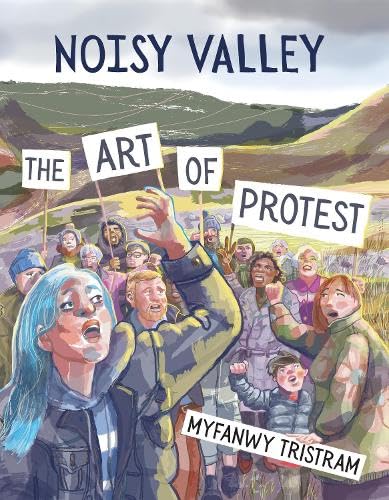
I was surprised to find that two of the chapters had local relevance for me: the Greenham Common women’s peace camp and the Aldermaston marches (part of the Campaign for Nuclear Disarmament). I was additionally taken aback to spot Martyn Joseph, a Welsh singer-songwriter we’re familiar with from Greenbelt Festival, turning up to sing a new bespoke version of “This Land Is Your Land” for a protest. I’m not fond of the talking heads approach to graphic nonfiction (also seen in Sexuality: A Graphic Guide and Trans History) or of the particular style here – monochrome in the main text with a few full-colour pages plus in the asides on the history of protest and changing regulations. I preferred the spreads focusing on landscapes. However, this is a worthwhile project and I particularly appreciated the below quote, which captures my feeling about the environmental marches I’ve been on in London.
You might find this a bit weird, but I never really thought that protest ever achieves its purpose. We still have nuclear weapons, you know. But it is worthwhile. My feeling is that protest is wonderful because it brings people together as a social group. The meeting of hearts and minds. I would argue that’s very positive.
~David Hurn, Aldermaston photographer
With thanks to SelfMadeHero for the free copy for review.
Reviewed for Shelf Awareness:
 The Daffodil Days by Helen Bain: A remarkable debut novel about the last years of Sylvia Plath’s life. I’ve already discussed it here.
 Catching Sight: How a Guide Dog Helped Me See Myself by Deni Elliott with Graham Buck: Elliott was diagnosed as legally blind as an adult, though she’d always had limited vision. She explores her relationships with five very different dogs and introduces the process of training guide dogs in this heartwarming story of human–animal connection and resilience.
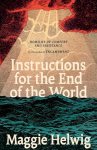 Instructions for the End of the World: Homilies of Comfort and Resistance by Maggie Helwig: Helwig is the rector of inner-city Toronto’s St. Stephen-in-the-Fields. Her stirring sermons espouse a practical, progressive theology and affirm the power of solidarity and the commitment to social justice in turbulent times (including the pandemic years).
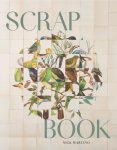 Scrap Book by Nick Martino: Martino’s formally inventive debut poetry collection draws on his mother’s journals and 1980s Polaroids to capture a Midwestern family dynamic overshadowed by divorce and his father’s incarceration.
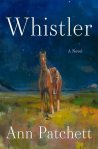 Whistler by Ann Patchett: Patchett is a master on the subject of family dysfunction, and her tenth novel, a stepdaughter–stepfather love story, is as wise as ever on secrets, traumatic memories, and storytelling. This is one of my top three books of 2026 so far, along with Brawler and John of John.
Which of these June releases have you read, or will you seek out now? What am I missing out on?
Three on a Theme: Works of (Auto)biography by Susie Boyt, Sarah Laing and Jenn Shapland
“If biography is peering through the windows of someone’s house and describing what you see … [then] memoir is peeking into the windows of your own life. A voyeurism of the self. An interior looting.”
~Jenn Shapland
This thematic trio has been in the works for an awfully long time: I read the Laing in 2022 and also started the Shapland that year but took an inexplicable pause and didn’t finish it until a couple of days ago. All three are about understanding the self by way of an obsession with a particular woman from history. Sometimes it’s also a matter of coming to terms with one’s sexuality. In each case, the premise is biographical but the pursuit and reflections end up being equally autobiographical. These are beautifully introspective works with such an appealing approach that they made me ponder who I would pinpoint as my (auto)biographical muse. All: 
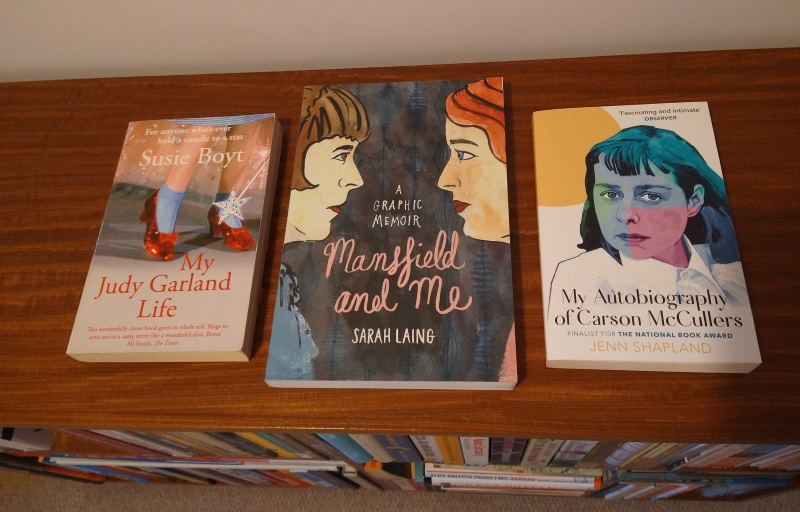
My Judy Garland Life by Susie Boyt (2008)
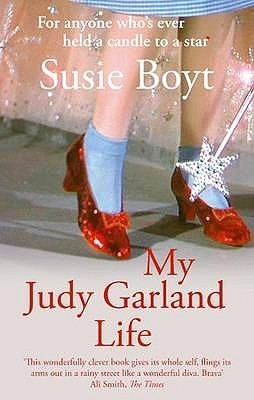 After discovering Boyt through her brilliant latest novel, Loved and Missed, I was keen to try more from her. This Ackerley Prize-shortlisted memoir was just as fascinating as it sounded. Seeing The Wizard of Oz turned Boyt into a Garland mega-fan.
A daughter of Lucian Freud raised by a single mother, Boyt was a sensitive, earnest and lonely child who harboured hopeless dreams of being on the stage herself. She admires Garland’s talent, pluck, hard work and grit. After all, Garland remained the ‘world’s greatest entertainer’ despite struggling with mental illness and prescription drug dependency for three decades.
When I begin to listen to Judy Garland there is no joy or wound from the story of my life that isn’t with me. … Her central credo, and it always always comes to me as her voice begins to swell, is that to be the person with the strongest feelings in life is to be the best. This is an instinct I am quite sure I was born with.
Boyt meets fellow Garland mega-fans in person and online, and visits her hero’s Birthplace Home and Museum (in Grand Rapids, Minnesota) and mausoleum (then in Hartsdale, New York). She draws distinctions between “bad fans” with a morbid eye to Garland’s struggles (they memorise her suicide notes, for instance), “good fans” like herself who acknowledge she was no saint but choose to focus on her successes, and the “crazy-good fans” who won’t hear a word said against her. It’s reassuring that Boyt recognises ambiguity.
“I don’t claim to know Judy Garland, of this I am sure. I feel very close to her, I love her, but I don’t understand. Perhaps I never will. I accept there are layers and layers of things.”
I don’t retain a lot of the detail of this book after over a year (and no notes, silly me!), but I do remember that I felt it blends biography and memoir skilfully and incorporates illuminating discussions of addiction, mental health, celebrity, fandom and the search for love – Garland married five times. (Secondhand – Awesomebooks.com)
Mansfield and Me: A Graphic Memoir by Sarah Laing (2016)
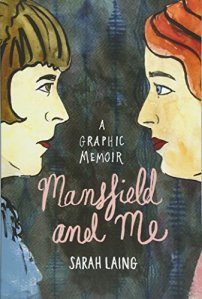 (I’ve added a few lines to my original review from 2022.) Growing up in Aotearoa New Zealand an aspiring writer, Laing looked to Katherine Mansfield as one of her idols. Here she alternates between vignettes from her own past in vivid colour and scenes from Mansfield’s short life in black and white. The Mansfield material is drawn from her letters and notebooks as well as various biographies. Mansfield was friendly with the Bloomsbury Group and lost a brother in the First World War. Laing uses a few Mansfield story titles as chapter headings, has Mansfield’s ghost turn up to comment on her authorial choices, and compares and contrasts their careers and love lives. Laing published her first short story collection at 34 – the age at which Mansfield died of tuberculosis. They share a bisexual identity. Mansfield married twice and miscarried her only pregnancy by a lover; by the end of this book Laing is married and a mother of three. This made me want to read more of Mansfield’s stories; I’ve only read a few thus far. “Katherine’s stories were full of … little lamps – moments of illumination, flashes of truth. I don’t need to be famous, but I would like someone to really see me,” Laing concludes. I’ve also reviewed her Let Me Be Frank. (New purchase – Waterstones sale)


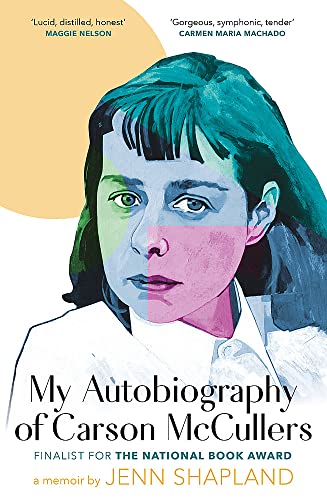
My Autobiography of Carson McCullers by Jenn Shapland (2020)
When Shapland was an intern at the Harry Ransom Center of the University of Texas, Austin (a famous literary archive), someone requested the letters sent by Annemarie Clarac-Schwarzenbach to the writer Carson McCullers. To Shapland’s surprise, these were basically love letters. “I had received letters like these,” she writes. “I had written letters like these to the women I’d loved. It was very little to go on, and yet I felt an utter certainty: Carson McCullers had loved women.” The discovery sparked a quest to know all there was to know about McCullers (she archived the writer’s clothing as part of the internship, too). It also, somehow, liberated Shapland to fully accept her lesbian identity. She was, by this point, in her mid-twenties and had been dating a fellow female student for six years, yet had been semi-closeted the whole time. The letters were, she acknowledges, “a turning point.”
Shapland later spent a month in McCullers’s childhood home in Columbus, Georgia* and worked through her archive at the state university there. Annemarie was by no means the only same-sex entanglement; Shapland lists another 21 possible girlfriends, with McCullers’s correspondence with her therapist, Dr. Mary Mercer, being particularly suggestive. But Shapland had hardly found some lesbian role model: McCullers married the same man, Reeves McCullers, twice, and called her special women “imaginary friends.” (Not to mention that she was an alcoholic, and struggled with chronic illness until her death at age 50.)
Dogged in her own search for evidence, Shapland nonetheless decries unjust expectations: “Historians demand proof from queer love stories that they never require of straight relationships.” How to prove happiness? she wonders. “Love … lives in the mundane, the moment-to-moment exchanges, and can so easily become invisible after the people who shared it are no longer alive. But, of course, it leaves traces.” I thought Shapland was perhaps too insistent on the word “lesbian” – only once entertaining the possibility that McCullers was bisexual, and never seriously considering fluidity or a change of sexuality. “I prefer the idea that we are all part lesbian, that we are lesbian to one degree or another,” she insists. “Is this semantics?” True to her dual vocation as author and archivist, Shapland continually interrogates how language and objects don’t just reflect reality, but create it. I was impressed by her willingness to call herself out on how she might be “shellacking, setting [McCullers] on my terms despite my desire to give her space in her own words.”
This debut work, a Lambda Literary Award winner and finalist for the National Book Award, is in titled sections that range in length from one paragraph to several pages. Shapland drifts back and forth in time and between her own life and McCullers’s, following thought and memory in loose loops but still conveying the sense of a chronological investigation. She doesn’t devote a lot of space to McCullers’s oeuvre– this is definitely not a work of literary appreciation or criticism – but I’m intrigued enough by the writer’s life and even a bare outline of the recurring themes and elements in her fiction to try her soon. Meanwhile, I have Shapland’s second book, the essay collection Thin Skin, on my e-reader. Her final plea for queer visibility here may be more for her own sake than for the historical McCullers, but either way it persuaded me. “Call it love.”
*I’ve not read McCullers but have always meant to, not least because my father is from Columbus, Georgia. His wasn’t a bookish family and I was never aware of the McCullers connection, though when I mentioned this book to my dad a few years ago he did know her name.
With thanks to Virago for the free copy for review.
The 2026 Releases I’ve Read So Far
I happen to have read a number of pre-release books, generally for paid reviews for Foreword and Shelf Awareness. (I already previewed six upcoming novellas here.) Most of my reviews haven’t been published yet, so I’ll just give brief excerpts and ratings here to pique the interest. I link to the few that have been published already, then list the 2026 books I’m currently reading. Soon I’ll follow up with a list of my Most Anticipated titles.


 Simple Heart by Cho Haejin (trans. from Korean by Jamie Chang) [Other Press, Feb. 3]: A transnational adoptee returns to Korea to investigate her roots through a documentary film. A poignant novel that explores questions of abandonment and belonging through stories of motherhood.
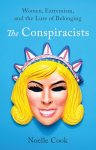 The Conspiracists: Women, Extremism, and the Lure of Belonging by Noelle Cook [Broadleaf Books, Jan. 6]: An in-depth, empathetic study of “conspirituality” (a philosophy that blends conspiracy theories and New Age beliefs), filtered through the outlook of two women involved in storming the Capitol on January 6, 2021.

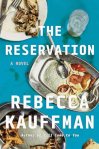 The Reservation by Rebecca Kauffman [Counterpoint, Feb. 24]: The staff members of a fine-dining restaurant each have a moment in the spotlight during the investigation of a theft. Linked short stories depict character interactions and backstories with aplomb. Big-hearted; for J. Ryan Stradal fans.


 Taking Flight by Kashmira Sheth (illus. Nicolo Carozzi) [Dial Press, April 21]: A touching story of the journeys of three refugee children who might be from Tibet, Syria and Ukraine. The drawing style reminded me of Chris Van Allsburg’s. This left a tear in my eye.
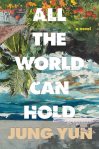

Currently reading:
(Blurb excerpts from Goodreads; all are e-copies apart from Evensong)
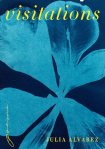 Visitations: Poems by Julia Alvarez [Knopf, April 7]: “Alvarez traces her life [via] memories of her childhood in the Dominican Republic … and the sisters who forged her, her move to America …, the search for mental health and beauty, redemption, and success.”
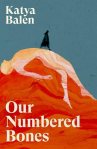 Our Numbered Bones by Katya Balen [Canongate, 12 Feb. / HarperVia, Feb. 17]: Her “adult debut [is] about a grieving author who heads to rural England for a writer’s retreat, only to stumble upon an incredible historical find” – a bog body!
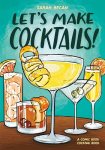 Let’s Make Cocktails!: A Comic Book Cocktail Book by Sarah Becan [Ten Speed Press, April 7]: “With vivid, easy-to-follow graphics, Becan guides readers through basic techniques such as shaking, stirring, muddling, and more. With all recipes organized by spirit for easy access, readers will delight in the panelized step-by-step comic instructions.”
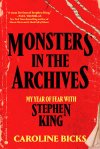 Monsters in the Archives: My Year of Fear with Stephen King by Caroline Bicks [Hogarth/Hodder & Stoughton, April 21]: “A fascinating, first of its kind exploration of Stephen King and his … iconic early books, based on … research and interviews with King … conducted by the first scholar … given … access to his private archives.”
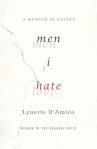 Men I Hate: A Memoir in Essays by Lynette D’Amico [Mad Creek Books, Feb. 17]: “Can a lesbian who loves a trans man still call herself a lesbian? As D’Amico tries to engage more deeply with the man she is married to, she looks at all the men—historical figures, politicians, men in her family—in search of clear dividing lines”.
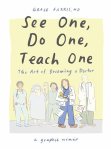 See One, Do One, Teach One: The Art of Becoming a Doctor: A Graphic Memoir by Grace Farris [W. W. Norton & Company, March 24]: “In her graphic memoir debut, Grace looks back on her journey through medical school and residency.”
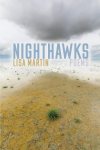 Nighthawks by Lisa Martin [University of Alberta Press, April 2]: “These poems parse aspects of human embodiment—emotion, relationship, mortality—and reflect on how to live through moments of intense personal and political upheaval.”
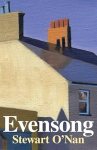 Evensong by Stewart O’Nan [published in USA in November 2025; Grove Press UK, 1 Jan.]: “An intimate, moving novel that follows The Humpty Dumpty Club, a group of women of a certain age who band together to help one another and their circle of friends in Pittsburgh.”
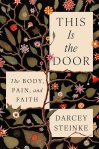 This Is the Door: The Body, Pain, and Faith by Darcey Steinke [HarperOne, Feb. 24]: “In chapters that trace the body—The Spine, The Heart, The Knees, and more—[Steinke] introduces sufferers to new and ancient understandings of pain through history, philosophy, religion, pop culture, and reported human experience.”
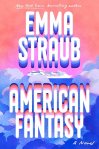 American Fantasy by Emma Straub [Riverhead, April 7 / Michael Joseph (Penguin), 14 May]: “When the American Fantasy cruise ship sets sail for a four-day themed voyage, aboard are all five members of a famous 1990s boyband, and three thousand screaming women who have worshipped them for thirty years.”
Additional pre-release review books on my shelf:
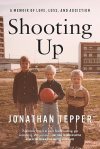 Shooting Up by Jonathan Tepper [Constable, 19 Feb.]: “Born into a family of American missionaries driven by unwavering faith … Jonathan’s home became a sanctuary for society’s most broken … AIDS hit Spain a few years after it exploded in New York and, like an invisible plague, … claimed countless lives – including those … in the family rehabilitation centre.”
 Elizabeth and Ruth by Livi Michael [Salt Publishing, 9 Feb.]: “Based on the real correspondence between Elizabeth Gaskell and Charles Dickens … [Gaskell] visits a young Irish prostitute in Manchester’s New Bailey prison. … [A] story of hypocrisy and suppression, and how Elizabeth navigates the … prejudice of the day to help the young girl”.
Will you look out for one or more of these?
Any other 2026 reads you can recommend?
Best Books of 2025
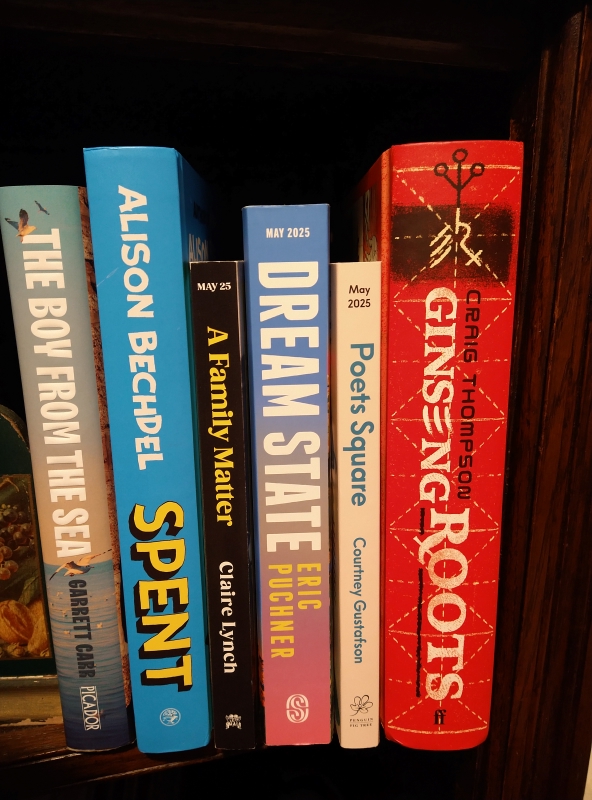
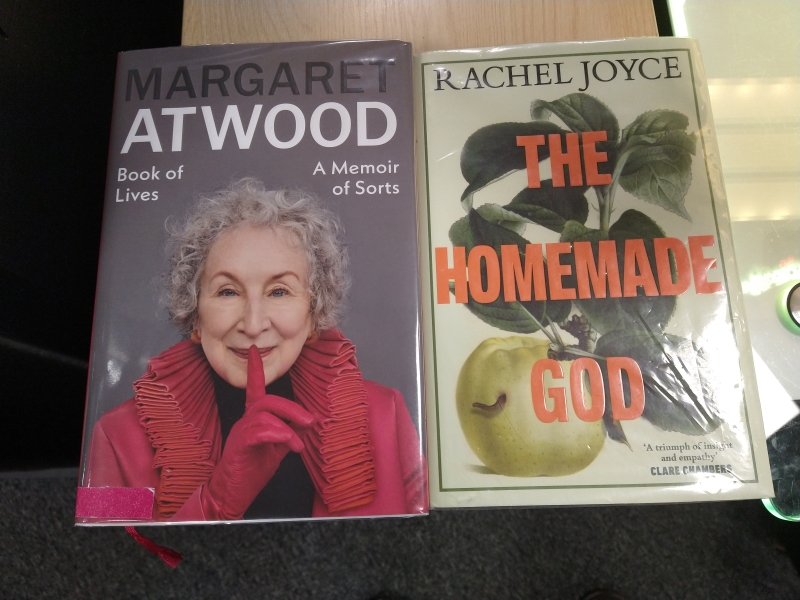
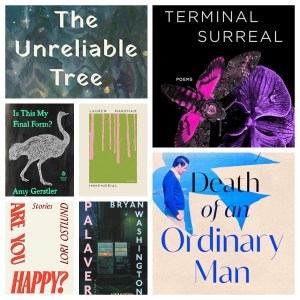
Without further ado, I present my 15 favourite releases from 2025. (With the 15 runners-up I chose yesterday, these represent about the top 9.5% of my current-year reading.) Pictured below are the ones I read in print; all the others were e-copies or library books I couldn’t get my hands on for a photo shoot. Links are to my full reviews where available.
Fiction
 Spent: A Comic Novel by Alison Bechdel: Alison has writer’s block and is consumed with anxiety about the state of the world. “Who can draw when the world is burning?” Then she has an idea for a book – or a reality TV series – called $UM to wean people off of capitalism. That creative journey is mirrored here. Through Alison’s ageing hippie friends and their kids, Bechdel showcases alternative ways of living. Even the throwaway phrases are hilarious. It’s a gleeful and zeitgeist-y satire, yet draws to a touching close. So great, I read it twice.
 The Boy from the Sea by Garrett Carr: I was entranced by this story of an Irish family in the 1970s–80s: Ambrose, a fisherman left behind by technology; his wife Christine, walked all over by her belligerent father and sister; their son Declan, a budding foodie; and the title character, Brendan, a foundling they adopt and raise. Narrated by a chorus of village voices, this debut has the heart of Claire Keegan and the humour of Paul Murray. It reimagines biblical narratives, too: Cain and Abel, Jacob and Esau (brotherly rivalry!); Job and more.
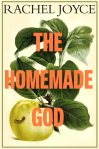 The Homemade God by Rachel Joyce: The story of four siblings initially drawn together (in Italy) and then dramatically blown apart by their father’s remarriage and death. Despite weighty themes including alcoholism and depression, there is an overall lightness of tone and style that made this a pleasure to read. Joyce has really upped her game: it’s more expansive, elegant and empathetic than her previous seven books. You can tell she got her start in theatre, too: she’s so good at scenes, dialogue, and moving groups of people around.
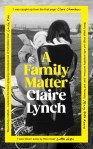 A Family Matter by Claire Lynch: In her research into UK divorce cases in the 1980s, Lynch learned that 90% of lesbian mothers lost custody of their children. Her earnest, delicate debut novel, which bounces between 2022 and 1982, imagines such a situation through close portraits of three family members. Maggie knew only that her mother, Dawn, abandoned her when she was little. Lynch’s compassion is equal for all three characters. This confident, tender story of changing mores and steadfast love is the new Carol for our times.
 Are You Happy? by Lori Ostlund: Nine short fictions form a stunning investigation into how violence and family dysfunction reverberate. “The Peeping Toms” and “The Stalker” are a knockout pair featuring Albuquerque lesbian couples under threat by male acquaintances. Characters are haunted by loss and grapple with moral dilemmas. Each story has the complexity and emotional depth of a novel. Freedom versus safety for queer people is a resonant theme in an engrossing collection ideal for Alice Munro and Edward St. Aubyn fans.
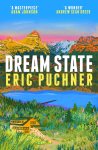 Dream State by Eric Puchner: It starts as a glistening romantic comedy about t Charlie and Cece’s chaotic wedding at a Montana lake house in summer 2004. First half the wedding party falls ill with norovirus, then the best man, Garrett, falls in love with the bride. The rest examines the fallout of this uneasy love triangle as it stretches towards 2050 and imagines a Western USA smothered in smoke from near-constant forest fires. Still, there are funny set-pieces and warm family interactions. Jonathan Franzen meets Maggie Shipstead.
 Palaver by Bryan Washington: Washington’s emotionally complex third novel explores the strained bond between a mother and her queer son – and their support systems of friends and lovers – when she visits him in Tokyo. The low-key plot builds through memories and interactions: the son’s with his students or hook-ups; the mother’s with restaurateurs as she gains confidence exploring Japan. Through words and black-and-white photographs, the author brings settings to life vibrantly. This is his best and most moving work yet.
Nonfiction
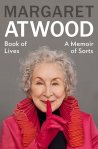 Book of Lives: A Memoir of Sorts by Margaret Atwood: For diehard fans, this companion to her oeuvre is a trove of stories and photographs. The context on each book is illuminating and made me want to reread lots of her work. I was reminded how often she’s been ahead of her time. The title feels literal in that Atwood has been wilderness kid, literary ingénue, family and career woman, philanthropist and elder stateswoman. She doesn’t try to pull all her incarnations into one, instead leaving the threads trailing into the beyond.
 Poets Square: A Memoir in 30 Cats by Courtney Gustafson: Working for a food bank, trapped in a cycle of dead-end jobs and rising rents: Gustafson saw first hand how broken systems and poverty wear people down. She’d recently started feeding and getting veterinary care for a feral cat colony in her Tucson, Arizona neighbourhood. With its radiant portraits of individual cats and its realistic perspective on personal and collective problems, this is a cathartic memoir and a probing study of building communities of care in times of hardship.
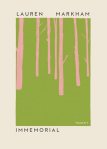 Immemorial by Lauren Markham: An outstanding book-length essay that compares language, memorials, and rituals as strategies for coping with climate anxiety and grief. The dichotomies of the physical versus the abstract and the permanent versus the ephemeral are explored. Forthright, wistful, and determined, the book treats grief as a positive, as “fuel” or a “portal.” Hope is not theoretical in this setup, but solidified in action. This is an elegant meditation on memory and impermanence in an age of climate crisis.
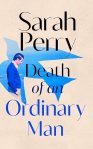 Death of an Ordinary Man by Sarah Perry: Perry recognises what a sacred privilege it was to witness her father-in-law’s death nine days after his diagnosis with oesophageal cancer. David’s end was as peaceful as could be hoped: in his late seventies, at home and looked after by his son and daughter-in-law, with mental capacity and minimal pain or distress. The beauty of this direct but tender memoir is its patient, clear-eyed unfolding of every stage of dying, a natural and inexorable process that in other centuries would have been familiar to all.
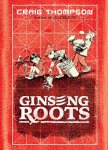 Ginseng Roots by Craig Thompson: A book about everything, by way of ginseng. It begins with Thompson’s childhood summers working on American ginseng farms with his siblings in Marathon, Wisconsin. As an adult, he travels first to Midwest ginseng farms and festivals and then through China and Korea to learn about the plant’s history, cultivation, lore, and medicinal uses. Roots are symbolic of a family story that unfolds in parallel. Both expansive and intimate, this is a surprising gem from one of the best long-form graphic storytellers.
Poetry
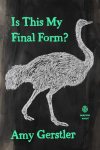 Is This My Final Form? by Amy Gerstler: This delightfully odd collection amazes with its range of voices and techniques. It leaps from surrealism to elegy as it ponders life’s randomness. The language of transformation is integrated throughout. Aging and the seasons are examples of everyday changes. Elsewhere, speakers fall in love with the bride of Frankenstein or turn to dinosaur urine for a wellness regimen. Monologues and sonnets recur. Alliteration plus internal and end rhymes create satisfying resonance.
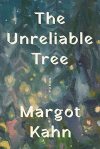 The Unreliable Tree by Margot Kahn: Kahn’s radiant first collection ponders how traumatic events interrupt everyday life. Poles of loss and abundance structure delicate poems infused with family history and food imagery. The title phrase describes literal harvests but is also a metaphor for the vicissitudes of long relationships. California’s wildfires, Covid-19, a mass shooting, and health crises – an emergency surgery and a friend’s cancer – serve as reminders of life’s unpredictability. Disaster is random and inescapable.
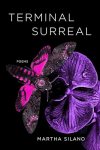 Terminal Surreal by Martha Silano: Silano’s posthumous collection (her eighth) focuses on nature and relationships as she commemorates the joys and ironies of her last years with ALS. The shock of a terminal diagnosis was eased by the quotidian pleasures of observing Pacific Northwest nature, especially birds. Fascination with science recurs, too. Most pieces are free form and alliteration and wordplay enliven the register. Her winsome philosophical work is a gift. “What doesn’t die? / The closest I’ve come to an answer / is poetry.”
If I had to pick one from each genre? Well, like last year, I find that the books that have stuck with me most are the ones that play around with the telling of life stories. This time, all by women. So it’s Spent, Book of Lives and Is This My Final Form?


What 2025 releases should I catch up on?
Last Love Your Library of 2025 & Another for #DoorstoppersInDecember
Thanks to Eleanor, Margaret and Skai for writing about their recent library reading! Marcie also joined in with a post about completing Toronto Public Library’s 2025 Reading Challenge with books by Indigenous authors.
I managed to fit in a few more 2025 releases before Christmas. My plan for January is to focus on reading from my own shelves (which includes McKitterick Prize submissions and perhaps also review copies to catch up on), so expect next month to be a lighter one.
My recent reading has featured many mentions of how much libraries mean, particularly to young women.
 In her autobiographical poetry collection Visitations (coming out in April), Julia Alvarez writes of how her family’s world changed when they moved to New York City from the Dominican Republic in the 1960s. “Waiting for My Father to Pick Me Up at the Library” adopts the tropes of Alice in Wonderland: as her future expands, her father’s life shrinks.
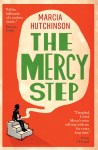 In The Mercy Step by Marcia Hutchinson, the public library is a haven for Mercy, growing up in Bradford in the 1960s. She can hardly believe it’s free for everyone to use, even Black people. Greek mythology is her escape from an upbringing that involves domestic violence and molestation. “It’s peaceful and quiet in the Library. No one shouts or throws things or hits anyone. If anyone talks, the Librarian puts a finger to her mouth and tells them to shush.”
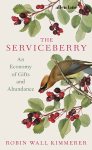 The Serviceberry by Robin Wall Kimmerer affirms the social benefits of libraries: “I love bookstores for many reasons but revere both the idea and the practice of public libraries. To me, they embody the civic-scale practice of a gift economy and the notion of common property. … We don’t each have to own everything. The books at the library belong to everyone, serving the public with free books”.
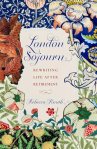 After Rebecca Knuth retired from an academic career in library and information science, she moved to London for a master’s degree in creative nonfiction and joined the London Library as well as the public library. But in her memoir London Sojourn (coming out in January), she recalls that she caught the library bug early: “Each weekday, I bused to school and, afterward, trudged to the library and then rode home with my geologist father. … Mostly, I read.”
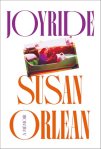 And in Joyride, Susan Orlean recounts the writing of each of her books, including The Library Book, which is about the 1986 arson at the Los Angeles Central Library but also, more widely, about what libraries have to offer and the oddballs often connected with them.
My library use over the last month:
(links are to any reviews of books not already covered on the blog)
READ
- Mum’s Busy Work by Jacinda Ardern; illus. Ruby Jones
- Book of Lives: A Memoir of Sorts by Margaret Atwood

- Storm-Cat by Magenta Fox
- The Robin & the Fir Tree by Jason Jameson
- I Love You Just the Same by Keira Knightley – Proof that celebrities should not be writing children’s books. I would say the story and drawings were pretty good … if she were a college student.

- Winter by Val McDermid
- The Search for the Giant Arctic Jellyfish, The Search for Carmella, & The Search for Our Cosmic Neighbours by Chloe Savage
- Weirdo Goes Wild by Zadie Smith and Nick Laird; illustrated by Magenta Fox
- Murder Most Unladylike by Robin Stevens


+ A final contribution to #DoorstoppersInDecember
Do Admit: The Mitford Sisters and Me by Mimi Pond
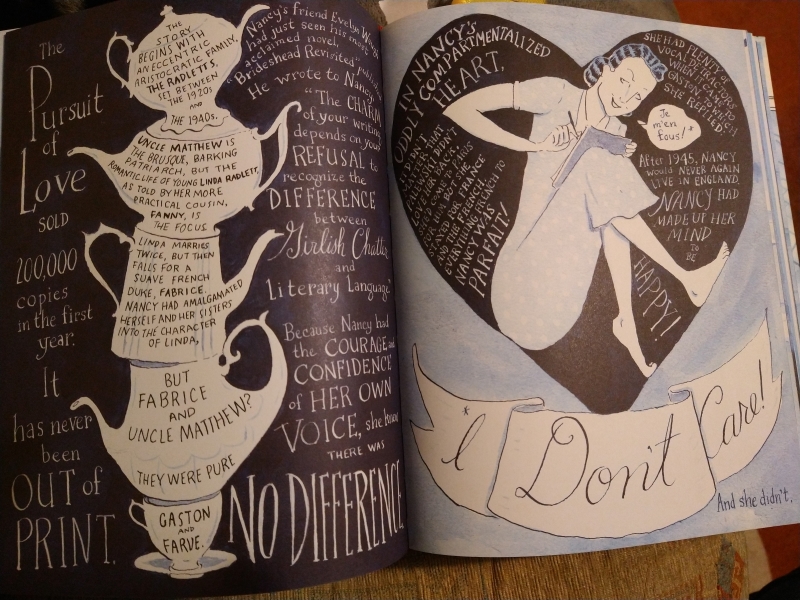
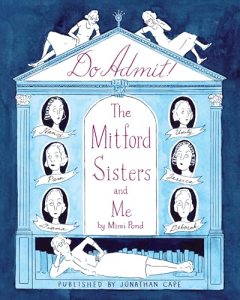 Truth really is stranger than fiction. Of the six Mitford sisters, two were fascists (Diana and Unity) and one was a communist (Jessica). Two became popular authors (Nancy and Jessica). One (Unity) was pals with Hitler and shot herself in the head when Britain went to war with Germany; she didn’t die then but nine years later of an infection from the bullet still stuck in her brain. This is all rich fodder for a biographer – the batshit lives of the rich and famous are always going to fascinate us peons – and Pond’s comics treatment is a great way of keeping history from being one boring event after another. Although she uses the same Prussian blue tones throughout, she mixes up the format, sometimes employing 3–5 panes but often choosing to create one- or two-page spreads focusing on a face, a particular setting or a montage. No two pages are exactly alike and information is conveyed through dialogue, documents and quotations. If just straight narrative, there are different typefaces or text colours and it is interspersed with the pictures in a novel way. Whether or not you know a thing about the Mitfords, the book intrigues with its themes of family dynamics, grief, political divisions, wealth and class. My only misgiving, really, was about the “and Me” part of the title; Pond appears in maybe 5% of the book, and the only personal connections I gleaned were that she wished she had sisters, wanted to escape, and envied privilege and pageantry. [444 pages]
CURRENTLY READING
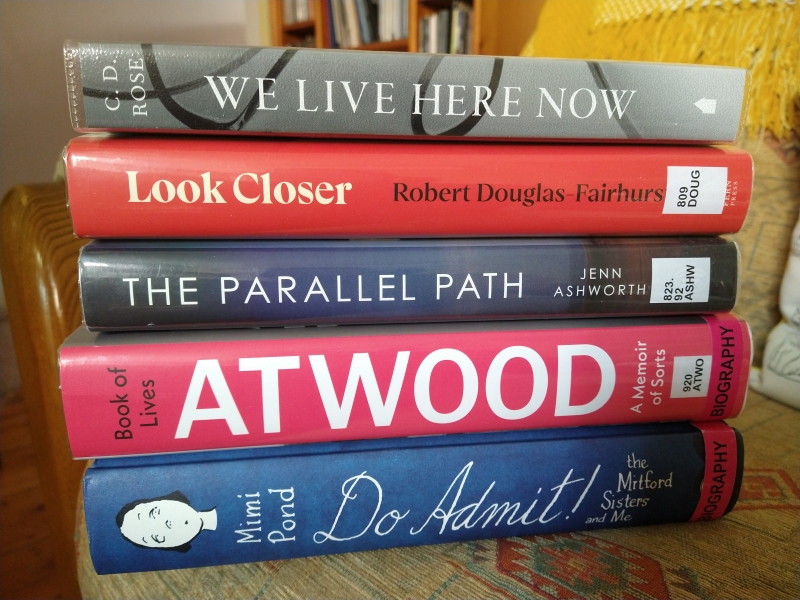
- The Parallel Path: Love, Grit and Walking the North by Jenn Ashworth
- The Honesty Box by Lucy Brazier
- Of Thorn & Briar: A Year with the West Country Hedgelayer by Paul Lamb
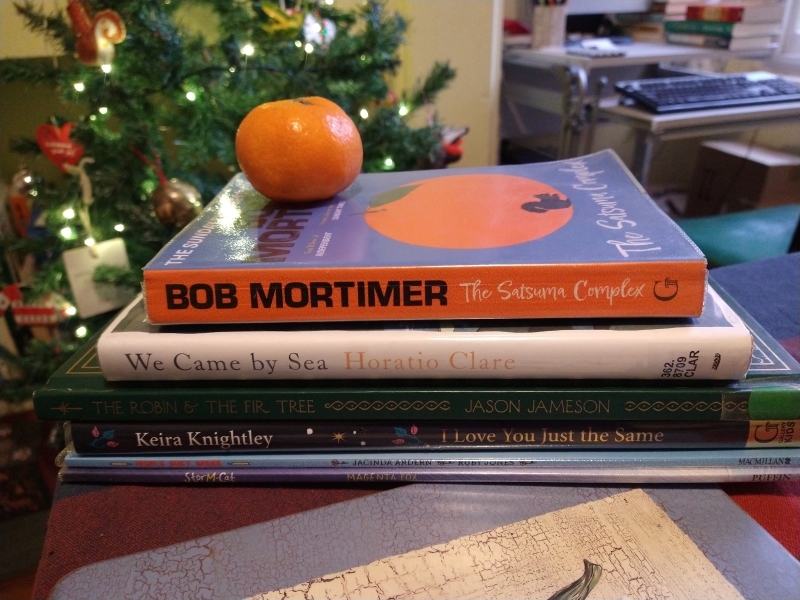
- The Satsuma Complex by Bob Mortimer (for book club in January; I’m grumpy about it because I didn’t vote for this one, had no idea who the author [a TV comedian in the UK] was, and the writing is shaky at best)
- We Live Here Now by C.D. Rose
SKIMMED
- Look Closer: How to Get More out of Reading by Robert Douglas-Fairhurst
CHECKED OUT, TO BE READ
- It’s Not a Bloody Trend: Understanding Life as an ADHD Adult by Kat Brown
- We Came by Sea by Horatio Clare
ON HOLD, TO BE COLLECTED
- The Two Faces of January by Patricia Highsmith
- Arsenic for Tea by Robin Stevens
IN THE RESERVATION QUEUE
- Honour & Other People’s Children by Helen Garner
- Snegurochka by Judith Heneghan
- Ultra-Processed People by Dr. Chris van Tulleken (for book club in February)
RETURNED UNFINISHED
- Night Life: Walking Britain’s Wild Landscapes after Dark by John Lewis-Stempel
What have you been reading or reviewing from the library recently?
Share a link to your own post in the comments. Feel free to use the above image. The hashtag is #LoveYourLibrary.
The Best Books from the First Half of 2025
Hard to believe it, but it’s that time of year already. It’s the ninth year in a row that I’ve been making a first-half superlatives list. It remains to be seen how many of these will make it onto my overall best-of year rundown, but for now, these are my 16 favourite 2025 releases that I’ve read so far (representing the top ~21% of my current-year reading). Pictured below are the ones I read in print; all the others were e-copies. Links are to my full reviews.
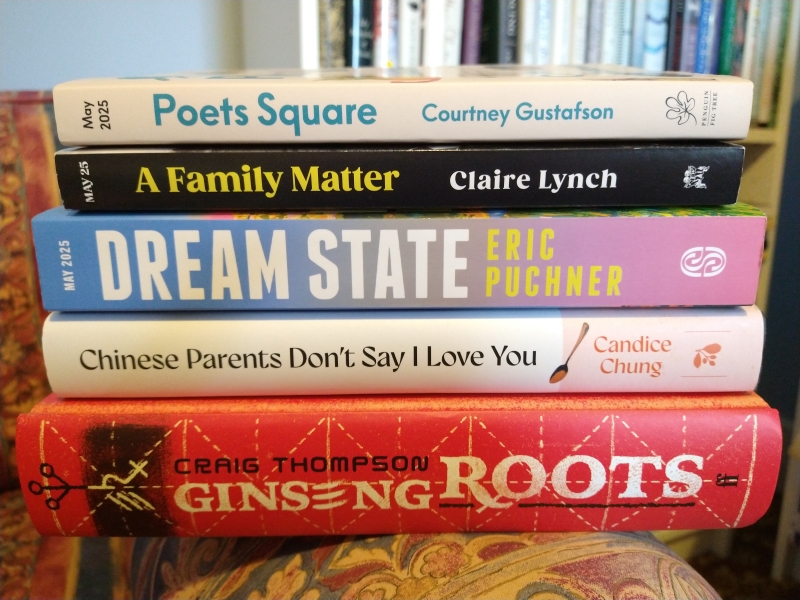
Fiction
Spent: A Comic Novel by Alison Bechdel: Alison has writer’s block and is consumed with anxiety about the state of the world. “Who can draw when the world is burning?” Then she has an idea for a book – or maybe a reality TV series – called $UM that will wean people off of capitalism. That creative journey is mirrored here. Through Alison’s ageing hippie friends and their kids, Bechdel showcases alternative ways of living. Even the throwaway phrases are hilarious. It’s a gleeful and zeitgeist-y satire, yet draws to a touching close.
 Sleep by Honor Jones: A breathtaking character study of a woman raising young daughters and facing memories of childhood abuse. Margaret’s 1990s New Jersey upbringing seems idyllic, but upper-middle-class suburbia conceals the perils of a dysfunctional family headed by a narcissistic, controlling mother. Jones crafts unforgettable, crystalline scenes. There are subtle echoes throughout as the past threatens to repeat. Reminiscent of Sarah Moss and Evie Wyld, and astonishing for its psychological acuity, this promises great things from Jones.
 Save Me, Stranger by Erika Krouse: Twelve first-person narratives voiced by people in crisis, for whom encounters with strangers tender the possibility of transformation. In the title story, the narrator is taken hostage in a convenience store hold-up. Others are set in Thailand and Japan as well as various U.S. states. Krouse focuses on young women presented with dilemmas and often eschews tidy endings, leaving characters on the brink and allowing readers to draw inferences. Fans of Danielle Evans and Lauren Groff have a treat in store.
 Insectopolis: A Natural History by Peter Kuper: “If insects were to vanish, the environment would collapse into chaos.” (E. O. Wilson) After an unspecified apocalypse, only insects remain. Group by group, they guide readers through an empty New York Public Library exhibit, interacting within and across species. It’s a sly blend of science, history, stories and silliness. There are interludes about insects in literature and unsung heroines of entomology. Informative and entertaining at once; what could be better? Welcome our insect overlords!
A Family Matter by Claire Lynch: In her research into UK divorce cases in the 1980s, Lynch learned that 90% of lesbian mothers lost custody of their children. Her earnest, delicate debut novel, which bounces between 2022 and 1982, imagines such a situation through close portraits of three family members. Maggie knew only that her mother, Dawn, abandoned her when she was little. Lynch’s compassion is equal for all three characters. This confident, tender story of changing mores and steadfast love is the new Carol for our times.
Are You Happy? by Lori Ostlund: Nine short fictions form a stunning investigation into how violence and family dysfunction reverberate. “The Peeping Toms” and “The Stalker” are a knockout pair featuring Albuquerque lesbian couples under threat by male acquaintances. Characters are haunted by loss and grapple with moral dilemmas. Each story has the complexity and emotional depth of a novel. Freedom versus safety for queer people is a resonant theme in an engrossing collection ideal for Alice Munro and Edward St. Aubyn fans.
Dream State by Eric Puchner: It starts as a glistening romantic comedy about t Charlie and Cece’s chaotic wedding at a Montana lake house in summer 2004. First half the wedding party falls ill with norovirus, then the best man, Garrett, falls in love with the bride. The rest examines the fallout of this uneasy love triangle as it stretches towards 2050 and imagines a Western USA smothered in smoke from near-constant forest fires. Still, there are funny set-pieces and warm family interactions. Cross Jonathan Franzen and Maggie Shipstead.
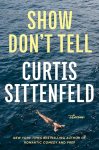 Show Don’t Tell by Curtis Sittenfeld: Sittenfeld’s second collection features characters negotiating principles and privilege in midlife. Split equally between first- and third-person perspectives, the 12 contemporary storylines spotlight everyday marital and parenting challenges. Dual timelines offer opportunities for hindsight on the events of decades ago. Nostalgic yet clear-eyed, these witty stories exploring how decisions determine the future are perfect for fans of Rebecca Makkai, Kiley Reid, and Emma Straub.
Nonfiction
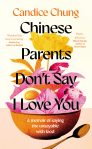 Chinese Parents Don’t Say I Love You: A memoir of saying the unsayable with food by Candice Chung: A vibrant essay collection spotlighting food and family. Chung reconnects with her semi-estranged parents by taking them along on restaurant review gigs for a Sydney newspaper. Fresh from a 13-year relationship with “the psychic reader,” she starts dating again and quickly falls in deep with “the geographer.” The essays range in time and style, delicately contrasting past and present, singleness and being partneredr.
Poets Square: A Memoir in 30 Cats by Courtney Gustafson: Working for a food bank, trapped in a cycle of dead-end jobs and rising rents: Gustafson saw firsthand how broken systems and poverty wear people down. She’d recently started feeding and getting veterinary care for a feral cat colony in her Tucson, Arizona neighbourhood. With its radiant portraits of individual cats and its realistic perspective on personal and collective problems, this is a cathartic memoir and a probing study of building communities of care in times of hardship.
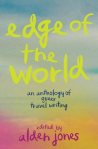 Edge of the World: An Anthology of Queer Travel Writing, ed. Alden Jones: Sixteen authors of diverse sexual orientations and genders contrast here and there and then and now as they narrate sensory memories and personal epiphanies. In these pieces, time abroad sparks clarity. There’s power in queer solidarity, whether one is in Berlin or Key West. Alex Marzano-Lesnevich’s piece is the highlight. A stellar anthology of miniature travelogues that are as illuminating about identity as they are about the places they feature.
Immemorial by Lauren Markham: An outstanding book-length essay that compares language, memorials, and rituals as strategies for coping with climate anxiety and grief. The dichotomies of the physical versus the abstract and the permanent versus the ephemeral are explored. Forthright, wistful, and determined, the book treats grief as a positive, as “fuel” or a “portal.” Hope is not theoretical in this setup, but solidified in action. This is an elegant meditation on memory and impermanence in an age of climate crisis.
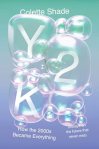 Y2K: How the 2000s Became Everything (Essays on the Future that Never Was) by Colette Shade: Shade’s debut collection contains 10 perceptive essays that contrast the promise and political pitfalls of “the Y2K Era” (1997–2008). The author recalls the thrill of early Internet use and celebrity culture. Consumerism was a fundamental doctrine but the financial crash prompted a loss of faith in progress. Outer space motifs, reality television, Smashmouth lyrics: it’s a feast of millennial nostalgia. Yet this hard-hitting work of cultural criticism, recommended to Jia Tolentino fans, reminisces only to burst bubbles.
Ginseng Roots by Craig Thompson: A book about everything, by way of ginseng. It begins with Thompson’s childhood summers working on American ginseng farms with his siblings in Marathon, Wisconsin. As an adult, he travels first to Midwest ginseng farms and festivals and then through China and Korea to learn about the plant’s history, cultivation, lore, and medicinal uses. Roots are symbolic of a family story that unfolds in parallel. Both expansive and intimate, this is a surprising gem from one of the best long-form graphic storytellers.
Poetry
Is This My Final Form? by Amy Gerstler: This delightfully odd collection amazes with its range of voices and techniques. It leaps from surrealism to elegy as it ponders life’s unpredictability. The language of transformation is integrated throughout. Aging and the seasons are examples of everyday changes. Elsewhere, speakers fall in love with the bride of Frankenstein or turn to dinosaur urine for a wellness regimen. Monologues and sonnets recur. Alliteration plus internal and end rhymes create satisfying resonance.
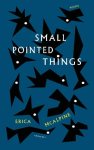 Small Pointed Things by Erica McAlpine: McAlpine’s second collection is full of flora and fauna imagery. The title phrase comes from the opening poem, “Bats and Swallows” – in the “gloaming,” it’s hard to tell the difference between the flying creatures. The verse is bursting with alliteration and end rhymes. She expands the view through conversations, theories and travel. What-ifs, consequences and regrets; mythical allusions, elegies and the concerns of motherhood. Just my sort of poetry: sweet on the ear, rooted in nature and the everyday.
Which of these grab your attention? What other 2025 releases should I catch up on?
May Graphic Novels by Alison Bechdel, Peter Kuper & Craig Thompson
May has been chock-full of new releases for me! For this first batch of reviews, I’m featuring three fantastic graphic novels that have made it onto my Best of 2025 (so far) list. I don’t read graphic books as often as I’d like to – my library tends to major on superhero comics and manga, which aren’t my cup of tea – but I sometimes get a chance to access them for paid review purposes. (The first two below are ones I was sent for potential Shelf Awareness reviews, but I missed the deadlines.) Reading these took me back to the early 2010s when I worked for a university library in South London and would walk to Lambeth Library on my lunch breaks to borrow huge piles of books, mostly taking advantage of their excellent graphic novel selection. That was where my education and fascination began.
Spent: A Comic Novel by Alison Bechdel
 I’ve read all but one of Bechdel’s works now. Fun Home was among the first graphic books I read and is a great choice if you’re new to this form of storytelling. It’s a family memoir about her father’s funeral home business and closeted lifestyle, which emerged shortly after her own coming-out – and shortly before his accidental death. In Spent, Alison and her handy wife Holly live on a Vermont pygmy goat farm. Alison has writer’s block and is struggling financially despite her famous memoir about her taxidermist father having been made into a successful TV series, Death & Taxidermy. Mostly, she’s consumed with anxiety about the state of the world, what with the ongoing pandemic, her sister’s right-wing opinions, and the litany of awful headlines. “Who can draw when the world is burning?” she exclaims.
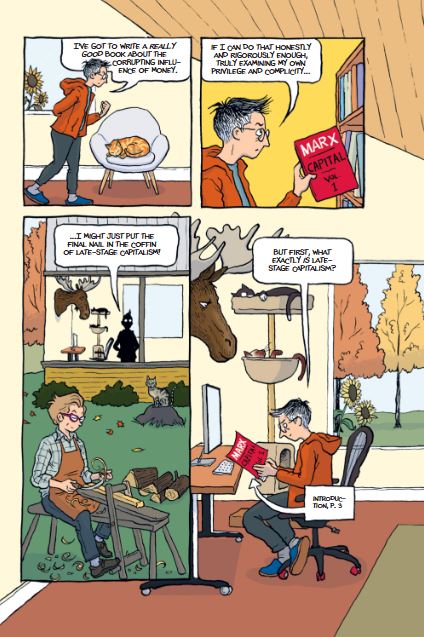
Then Alison has an idea for a book – or maybe a reality TV series – called $UM that will wean people off of capitalism. That creative journey is mirrored in Spent, which is composed of 12 “episodes” titled after Marxist terminology. Through Alison’s ageing hippie friends and their kids, Bechdel showcases alternative ways of living: a commune, a throuple, nonbinary identity, unpaid internships, Just Stop Oil demos, and the influencer lifestyle versus rejection of technology. It’s (auto)fiction exaggerated to the brink of absurdity, with details changed enough to mock but not enough to hide (e.g., she’s published by “Megalopub,” the hardware store is “Home Despot,” her show airs on “Schmamazon”).

Tiny details in the drawings reward close attention, such as Alison and Holly’s five cats’ antics during their morning routine, and a stuffed moose head rolling its eyes. It’s the funniest I can remember Bechdel being, with much broad humour derived from the outrageous screen mangling of her book – cannibalism, volcanoes and dragons come out of nowhere – and her middle-class friends’ hand-wringing over their liberal credentials. Even the throwaway phrases are hilarious. It’s a gleeful and zeitgeist-y satire, yet draws to a touching close as Alison has the epiphany that she can’t fix everything herself so must simply do what she can, “with a little help from her annoying, tender-hearted, and utterly luminous friends.”
Accessed as an e-book from Mariner Books. Published in the UK by Jonathan Cape (Penguin).
Insectopolis: A Natural History by Peter Kuper
 Nearly a decade ago, I reviewed Peter Kuper’s Ruins, which features monarch migration and has as protagonist a laid-off Natural History Museum entomologist. Here insects have even more of a starring role. The E. O. Wilson epigraph sets the stage: “If all mankind were to disappear, the world would regenerate back to the rich state of equilibrium that existed ten thousand years ago. If insects were to vanish, the environment would collapse into chaos.” We follow an African American brother-and-sister pair, the one dubious and the other eager, as they walk downtown to the New York Public Library. The sister, who holds a PhD in entomology, promises that its exhibition on insects is going to be amazing. But just before they reach the building, a red alert flashes up on every smartphone and sirens start blaring. A week later, the city is a ruin of overturned cabs and debris. Only insects remain and, group by group, they guide readers through the empty exhibit, interacting within and across species.


It’s a sly blend of science, history, stories and silliness. I loved the scenes of mosquitoes and ants railing against how they’ve been depicted as villainous, and dignified dung beetles resisting scatological jokes and standing up for their importance in ecosystems. There are interesting interludes about insects in literature (not just Kafka and Nabokov, but the Japanese graphic novel The Book of Human Insects by Osamu Tezuka), and unsung heroines of entomology get their moment in the sun. The pages in which Margaret Collins, an African American termite researcher in the 1950s, and Rachel Carson appear to a dragonfly as ghosts and tell their stories of being dismissed by male researchers were among my favourites. Informative and entertaining at once; what could be better? Welcome our insect overlords!
Accessed as an e-book from W. W. Norton & Company.
Ginseng Roots by Craig Thompson
 I’d read several of Thompson’s works and especially enjoyed his previous graphic memoir, Blankets, about his first love and loss of faith. When I read this blurb, I worried the niche subject couldn’t possibly sustain my attention for nearly 450 pages. But I was wrong; this is a vital book about everything, by way of ginseng. It begins with childhood summers working on American ginseng farms with his siblings in Marathon, Wisconsin. Theirs was a blue collar and highly religious family, but Thompson and his little brother Phil were allowed to spend their earnings from the back-breaking labour of weeding and picking rocks as they pleased. Each hour, each dollar, meant a new comic from the pharmacy. “Comics helped me survive my childhood. But what will help me survive my adulthood?” Thompson asks.

Together with Phil, he travels first to Midwest ginseng farms and festivals and then through China and Korea to learn about the plant’s history, cultivation practices, lore, and medicinal uses. As he meets producers – including a Hmong man whose early life mirrors his own – he feels sheepish about how he makes a living: “I carry this working-class guilt – what I do isn’t real work.” When his livelihood is threatened by worsening autoimmune conditions, he tries everything from acupuncture to psychotherapy to save his hands and his creativity.
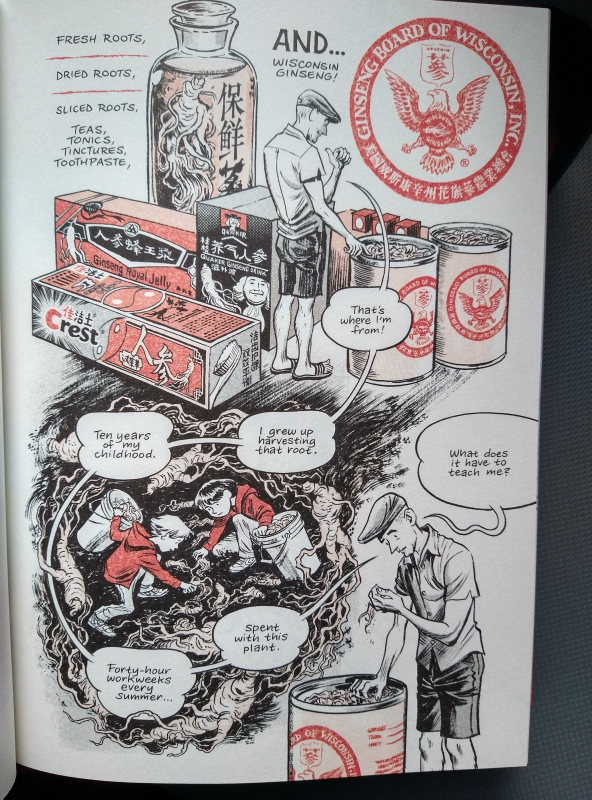
This chunky book has an appealing earth-tones palette and shifts smoothly between locations and styles, memories and research. When interviewing growers and Chinese medicine practitioners, the depictions are almost photorealistic, but there are also superhero pastiche panels and a cute ginseng mascot who pops up throughout the book. Like Spent, this pulls in class and economic issues in a lighthearted way and also explores its own composition process.
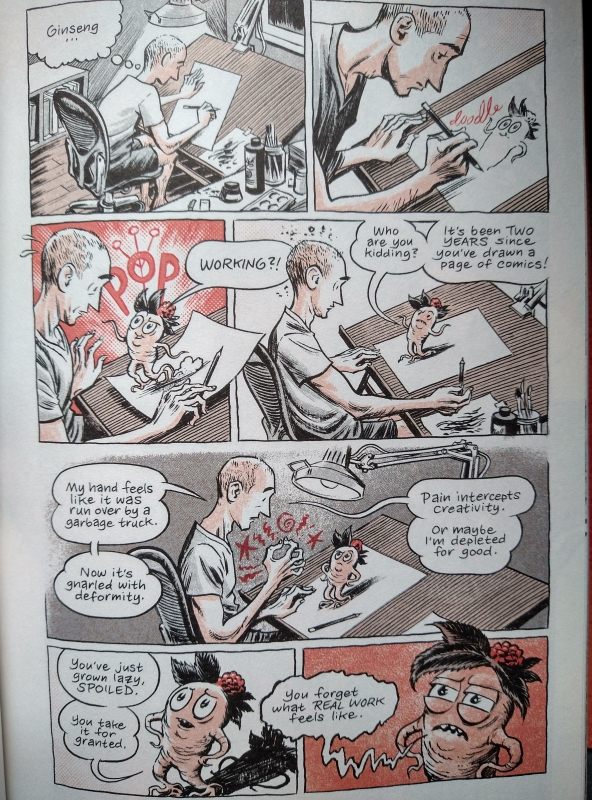
The story of ginseng is often sobering, involving the exploitation of immigrants (in the Notes, Thompson regrets that he was unable to speak with any of the Mexican migrant workers on whom the American ginseng harvest now depends), soil degradation, and pesticide pollution. The roots of the title are both literal and symbolic of the family story that unfolds in parallel. Both strands are captivating, but especially the autobiographical material: Thompson’s relationship with Phil, his new understanding but ongoing frustration with his parents, and the way all three siblings exhibit the damage of their upbringing – Phil’s marriage is crumbling; their sister Sarah, who has moved 26 times as an adult, wonders what she’s running from. A conversation with a Chinese herbal pharmacist gets to the heart of the matter: “I learned home is not WHERE I am. Home is HOW I am.”
Both expansive and intimate, this is a surprising gem from one of the best long-form graphic storytellers out there.
With thanks to Faber for the free copy for review. Published in the USA by Pantheon (Penguin).
Most Anticipated Books of the First Half of 2025
As I said the other week, I sometimes wonder if designating a book as “Most Anticipated” is a curse – if the chosen books are doomed to fail to meet my expectations. Nonetheless, I can’t resist compiling such a list at least once each year.
Also on my radar: fiction by Claire Adam, Amy Bloom, Emma Donoghue, Sarah Hall, Michelle Huneven, Eowyn Ivey, Rachel Joyce, Heather Parry and Torrey Peters; nonfiction by Melissa Febos, Robert Macfarlane, Lucy Mangan, Suzanne O’Sullivan and Sophie Pavelle. (Further ahead, I’ll seek out I Want to Burn This Place Down: Essays by Maris Kreizman and The Girls Who Grew Big by Leila Mottley in July, The Savage Landscape by Cal Flyn in Oct. and Tigers between Empires by Jonathan C. Slaght in Nov.)
However, below I’ve narrowed it down to the 25 books I’m most looking forward to for the first half of 2025, 15 fiction and 10 nonfiction. I’m impressed that 4 are in translation! And 22/25 are by women (all the fiction is). In release date order, with UK publication info given first if available. The blurbs are adapted from Goodreads. I’ve taken the liberty of using whichever cover is my favourite (almost always the U.S. one).

Fiction
 Live Fast by Brigitte Giraud (trans. from the French by Cory Stockwell) [Feb. 11, Ecco]: I found out about this autofiction novella via an early Shelf Awareness review. It “follows one woman’s quest to comprehend the motorcycle accident that took the life of her partner Claude at age 41. The narrator … recounts the chain of events that led up to the fateful accident, tracing the tiny, maddening twists of fate that might have prevented its tragic outcome. Each chapter asks the rhetorical question, ‘what if’ … A sensitive elegy to her husband”.
 The Unworthy by Agustina Bazterrica (trans. from the Spanish by Sarah Moses) [13 Feb., Pushkin; March 4, Scribner]: I wasn’t enamoured of the Argentinian author’s short stories, but Tender Is the Flesh was awesome. This is a short dystopian horror set in a convent. “In the House of the Sacred Sisterhood, the unworthy live in fear of the Superior Sister’s whip. … Risking her life, one of the unworthy keeps a diary in secret. Slowly, memories surface from a time before the world collapsed, before the Sacred Sisterhood became the only refuge. Then Lucía arrives.” (PDF copy for Shelf Awareness review)
 Victorian Psycho by Virginia Feito [13 Feb., Fourth Estate; Feb. 4, Liveright]: Feito’s debut, Mrs March, was deliciously odd, and I love the (U.S.) cover for this one. It sounds like a bonkers horror take on Henry James’s The Turn of the Screw, “a gruesome and gleeful new novel that probes the psyche of a bloodthirsty governess. Winifred Notty arrives at Ensor House prepared to play the perfect Victorian governess—she’ll dutifully tutor her charges, Drusilla and Andrew, tell them bedtime stories, and only joke about eating children.”

Three Days in June by Anne Tyler [13 Feb., Chatto & Windus (Penguin) / Feb. 11, Knopf]: I’m not a Tyler completist, but she’s reliable and this is a novella! “It’s the day before her daughter’s wedding and things are not going well for Gail Baines. First …, she loses her job … Then her ex-husband Max turns up at her door expecting to stay for the festivities. He doesn’t even have a suit. Instead, he’s brought memories, a shared sense of humour – and a cat looking for a new home. … [And] daughter Debbie discovers her groom has been keeping a secret.” Susan vouches for this. (Edelweiss download / on order from library)
 The Swell by Kat Gordon [27 Feb., Manilla Press (Bonnier Books UK)]: I got vague The Mercies (Kiran Millwood Hargrave) vibes from the blurb. “Iceland, 1910. In the middle of a severe storm two sisters, Freyja and Gudrun, rescue a mysterious, charismatic man from a shipwreck near their remote farm. Sixty-five years later, a young woman, Sigga, is spending time with her grandmother when they learn a body has been discovered on a mountainside near Reykjavik, perfectly preserved in ice.” (NetGalley download)
 Dream Count by Chimamanda Ngozi Adichie [4 March, Fourth Estate/Knopf]: This is THE book I’m most looking forward to; I’ve read everything Adichie has published and Americanah was a 5-star read for me. So I did something I’ve never done before and pre-ordered the signed independent bookshop edition from my local indie, Hungerford Bookshop. “Chiamaka is a Nigerian travel writer living in America. Alone in the midst of the pandemic, she recalls her past lovers and grapples with her choices and regrets.” The focus is on four Nigerian American women “and their loves, longings, and desires.” (New purchase)
 Kate & Frida by Kim Fay [March 11, G.P. Putnam’s Sons]: “Frida Rodriguez arrives in Paris in 1991 … But then she writes to a bookshop in Seattle … A friendship begins that will redefine the person she wants to become. Seattle bookseller Kate Fair is transformed by Frida’s free spirit … [A] love letter to bookshops and booksellers, to the passion we bring to life in our twenties”. Sounds like a cross between The Paris Novel and 84 Charing Cross Road – could be fab; could be twee. We shall see! (Edelweiss download)
 The Antidote by Karen Russell [13 March, Chatto & Windus (Penguin) / March 11, Knopf]: I love Russell’s Swamplandia! but haven’t gotten on with her other work I’ve tried, so I’m only tentatively enthusiastic about the odd Wizard of Oz-inspired blurb: “a historic dust storm ravages the fictional town of Uz, Nebraska. But Uz is already collapsing—not just under the weight of the Great Depression … but beneath its own violent histories. The Antidote follows a ‘Prairie Witch,’ … a Polish wheat farmer …; his orphan niece, a … witch’s apprentice …; a voluble scarecrow; and a New Deal photographer”. (Requested from publisher)
 Elegy, Southwest by Madeleine Watts [13 March, ONE (Pushkin) / Feb. 18, Simon & Schuster]: Watts’s debut, The Inland Sea, was a hidden gem. Given the news from L.A., this seems all the more potent: “In November 2018, Eloise and Lewis rent a car in Las Vegas and take off on a two-week road trip across the American southwest … [w]hile wildfires rage. … Lewis, an artist working for a prominent land art foundation, is grieving the recent death of his mother, while Eloise is an academic researching the past and future of the Colorado River … [and] beginning to suspect she might be pregnant”. (Edelweiss download)
 O Sinners! by Nicole Cuffy [March 18, One World (Random House)]: Cuffy’s Dances, which was longlisted for the Carol Shields Prize, was very good. The length of this sophomore novel (464 pages) gives me pause, but I do generally gravitate towards stories of cults. “Faruq Zaidi, a young journalist reeling from the recent death of his father, a devout Muslim, takes the opportunity to embed in a cult called The Nameless [b]ased in the California redwoods and shepherded by an enigmatic [Black] Vietnam War veteran.”
 The Accidentals: Stories by Guadalupe Nettel (trans. from the Spanish by Rosalind Harvey) [10 April, Fitzcarraldo Editions / April 29, Bloomsbury]: I really enjoyed Nettel’s International Booker-shortlisted novel Still Born. “When an albatross strays too far from its home, or loses its bearings, it becomes an ‘accidental’, an unmoored wanderer. The protagonists of these eight stories each find the ordinary courses of their lives disrupted by an unexpected event. … Deft and disquieting, oscillating between the real and the fantastical”. (PDF copy for Shelf Awareness review)
 Ordinary Saints by Niamh Ni Mhaoileoin [24 April, Manilla Press (Bonnier Books UK)]: “Brought up in a devout household in Ireland, Jay is now living in London with her girlfriend, determined to live day to day and not think too much about either the future or the past. But when she learns that her beloved older brother, who died in a terrible accident, may be made into a Catholic saint, she realises she must at last confront her family, her childhood and herself.” Winner of the inaugural PFD Queer Fiction Prize and shortlisted for the Women’s Prize Discoveries Award.
 Heartwood by Amity Gaige [1 May, Fleet / April 1, Simon & Schuster]: I loved Gaige’s Sea Wife. “In the heart of the Maine woods, an experienced Appalachian Trail hiker goes missing. She is forty-two-year-old Valerie Gillis, who has vanished 200 miles from her final destination. … At the centre of the search is Beverly, the determined Maine State Game Warden tasked with finding Valerie, who is managing the search on the ground. While Beverly is searching, Lena, a seventy-six-year-old birdwatcher in a retirement community, becomes an unexpected armchair detective.”
Are You Happy?: Stories by Lori Ostlund [May 6, Astra House]: Ostlund is not so well known, especially outside the USA, but I enjoyed her debut novel, After the Parade, back in 2015. “Nine masterful stories that explore class, desire, identity, and the specter of violence in America–and in American families–against women and the LGBTQ+ community. … [W]e watch Ostlund’s characters as they try—and often fail—to make peace with their pasts while navigating their present relationships and responsibilities.” (Edelweiss download)
 Ripeness by Sarah Moss [22 May, Picador / Sept. 9, Farrar, Straus and Giroux]: Though I was disappointed by her last two novels, I’ll read anything Moss publishes and hope for a return to form. “It is the [19]60s and … Edith finds herself travelling to rural Italy … to see her sister, ballet dancer Lydia, through the final weeks of her pregnancy, help at the birth and then make a phone call which will seal this baby’s fate, and his mother’s.” Promises to be “about migration and new beginnings, and about what it is to have somewhere to belong.”
Nonfiction
 The Forgotten Sense: The New Science of Smell by Jonas Olofsson [Out now! 7 Jan., William Collins / Mariner]: Part of a planned deep dive into the senses. “Smell is … one of our most sensitive and refined senses; few other mammals surpass our ability to perceive scents in the animal kingdom. Yet, as the millions of people who lost their sense of smell during the COVID-19 pandemic can attest, we too often overlook its role in our overall health. … For readers of Bill Bryson and Steven Pinker”. (On order from library)
 Bread and Milk by Karolina Ramqvist (trans. from the Swedish by Saskia Vogel) [13 Feb., Bonnier Books / Feb. 11, Coach House Books]: I think I first found about this via the early Foreword review. “Bread and Milk traces a life through food, from carefully restricted low-fat margarine to a bag of tangerines devoured in one sitting to the luxury of a grandmother’s rice pudding. In this radiant memoir from one of Northern Europe’s most notable literary stylists, we follow several generations of women and their daughters as they struggle with financial and emotional vulnerability, independence, and motherhood.”
 My Mother in Havana: A Memoir of Magic & Miracle by Rebe Huntman [Feb. 18, Monkfish]: I found out about this from Rebecca Moon Ruark and by the time the publisher offered it to me I’d already downloaded it. The themes of bereavement and religion are right up my street. “As she explores the memory of her own mother, interlacing it with her search for the sacred feminine, Huntman leads us into a world of séance and sacrifice, pilgrimage and sacred dance, which resurrect her mother and bring Huntman face to face with a larger version of herself.” (Edelweiss download)
 Mother Animal by Helen Jukes [27 Feb., Elliott & Thompson]: This may be the 2025 release I’ve known about for the longest. I remember expressing interest the first time the author tweeted about it; it’s bound to be a good follow-up to Lucy Jones’s Matrescence. “When Helen Jukes falls pregnant, … she widens her frame of reference, looking beyond humans to ask what motherhood looks like in other species. … As she enters the sleeplessness, chaos and intimate discoveries of life with a newborn, these animal stories become … companions and guides.” (Requested from publisher)
 Alive: An Alternative Anatomy by Gabriel Weston [6 March, Vintage (Penguin) / March 4, David R. Godine]: I’ve read Weston’s Direct Red and appreciate her perspective. “As she became a surgeon, a mother, and ultimately a patient herself, Weston found herself grappling with the gap between scientific knowledge and unfathomable complexity of human experience. … Focusing on our individual organs, not just under the intense spotlight of the operating theatre, but in the central role they play in the stories of our lives.”
 The Lost Trees of Willow Avenue: A Story of Climate and Hope on One American Street by Mike Tidwell [March 25, St. Martin’s Press]: A must-read for me because it’s set in Takoma Park, Maryland, where I was born. “A love letter to the magnificent oaks and other trees dying from record heat waves and bizarre rain, [activist] Tidwell’s story depicts the neighborhood’s battle to save the trees and combat climate change. … Tidwell chronicles people on his block sick with Lyme disease, a church struggling with floods, and young people anguishing over whether to have kids, … against the global backdrop of 2023’s record heat domes and raging wildfires and hurricanes.”
 Breasts: A Relatively Brief Relationship by Jean Hannah Edelstein [3 April, Phoenix (W&N)]: I loved Edelstein’s 2018 memoir This Really Isn’t About You, and I regularly read her Substack. “As [Edelstein] comes of age, she learns that breasts are a source of both shame and power. In early motherhood, she sees her breasts transform into a source of sustenance and a locus of pain. And then, all too soon, she is faced with a diagnosis and forced to confront what it means to lose and rebuild an essential part of yourself.”
Poets Square: A Memoir in Thirty Cats by Courtney Gustafson [8 May, Fig Tree (Penguin) / April 29, Crown]: Gustafson became an Instagram and TikTok hit with her posts about looking after a feral cat colony in Tucson, Arizona. The money she raised via social media allowed her to buy her home and continue caring for animals. “[Gustafson] had no idea about the grief and hardship of animal rescue, the staggering size of the problem in neighborhoods across the country. And she couldn’t have imagined how that struggle … would help pierce a personal darkness she’d wrestled for with much of her life.” (Proof copy from publisher)
 Lifelines: Searching for Home in the Mountains of Greece by Julian Hoffman [15 May, Elliott & Thompson]: Hoffman’s Irreplaceable was my book of 2019. “In the summer of 2000, Julian Hoffman and his wife Julia found themselves disillusioned with city life. Overwhelmed by long commutes, they stumbled upon a book about Prespa, Greece – a remote corner of Europe filled with stone villages, snow-capped mountains and wildlife. What began as curiosity soon transformed into a life-changing decision: to make Prespa their home.” I know next to nothing about Greece and this is a part of it that doesn’t fit the clichés.
Spent: A Comic Novel by Alison Bechdel [22 May, Jonathan Cape (Penguin) / May 20, Mariner Books]: Bechdel’s Fun Home is an absolute classic of the graphic memoir. I’ve lost track of her career a bit but like the sound of this one. “A cartoonist named Alison Bechdel, running a pygmy goat sanctuary in Vermont, is existentially irked by a climate-challenged world and a citizenry on the brink of civil war.” After her partner’s wood-chopping video goes viral, she decides to create her own ethical-living reality TV show. Features cameos from some characters from her Dykes to Watch Out For series.
Other lists of anticipated books:
Clare – we overlap on a couple of our picks
Kate – one pick in common, plus I’ve already read a couple of her others
Laura – we overlap on a couple of our picks
Paul (mostly science and nature)
What catches your eye here? What other 2025 titles do I need to know about?
 Bookish Beck = Rebecca Foster. American transplant to England. Freelance proofreader and book reviewer.
