Reading from the Wainwright Prize Longlists
Another day, another prize longlist! This year the Wainwright Prize has split into two awards for writing on 1) UK nature and 2) global conservation themes. Tomorrow (July 30th), they will be whittled down to shortlists. I happen to have read and reviewed 10 of the nominees already. I took the opportunity to experience a few more before the shortlist announcement. I give a paragraph on each below (forgive me for, in some cases, repeating the excerpts that appeared in my reviews roundups and best-of lists).
From the UK nature writing longlist:

 Dark, Salt, Clear: Life in a Cornish Fishing Town by Lamorna Ash: In her early 20s, Ash made multiple trips from London to stay in Newlyn: walking to the cove that bears her name, going out on fishing trawlers, and getting accepted into the small community. Gruelling and lonely, the fishermen’s way of life is fading away. The book goes deeper into Cornish history than non-locals need, but I enjoyed the literary allusions – the title is from Elizabeth Bishop. I liked the writing, but this was requested after me at the library, so I could only skim it.
 Wild Child: Coming Home to Nature by Patrick Barkham: Childhood has moved indoors over the course of three generations, the Guardian journalist observes. Highlighting activities that will engage budding naturalists in every season and accompanying his three children to outdoor nursery, he suggests how connection with nature can be part of everyday life. An engaging narrative not just for parents and educators but for anyone who has a stake in future generations’ resolve to conserve the natural world – which is to say, all of us. (Reviewed for Shiny New Books)
 Bird Therapy by Joe Harkness: In 2013, Harkness was in such a bad place that he attempted suicide. Although he’s continued to struggle with OCD and depression in the years since then, birdwatching has given him a new lease on life. Avoiding the hobby’s more obsessive, competitive aspects (like listing and twitching), he focuses on the benefits of outdoor exercise and mindfulness. He can be lyrical when describing his Norfolk patch and some of his most magical sightings, but the writing is weak. (My husband helped crowdfund the book via Unbound.)
 Dancing with Bees: A Journey Back to Nature by Brigit Strawbridge Howard: Bees were the author’s gateway into a general appreciation of nature, something she lost for a time in midlife because of the rat race and family complications. Allotment gardening gives her opportunities to observe bee behaviour and marvel at their various lookalikes (like hoverflies), identify plants, work on herbal remedies, and photograph her finds. She delights in discovery and is devoted to lifelong learning in a book characterized by curiosity and warmth. (On my runners-up of 2019 list)
 Surfacing by Kathleen Jamie: Jamie has a particular interest in birds, islands, archaeology and the oddities of the human body. The bulk of the book is three long pieces set in Alaska, Orkney and Tibet. Neolithic sites lead her to think about deep time – a necessary corrective to short-term thinking that has gotten us into environmental crisis. I connected with the few-page pieces on experiencing a cave, spotting an eagle or getting lost in a forest. Beautiful nature writing and relatable words on the human condition. (My #9 nonfiction book of 2019)
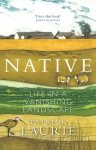 Native: Life in a Vanishing Landscape by Patrick Laurie: Galloway may be the forgotten corner of Scotland, but this third-generation cattle farmer can’t imagine living anywhere else. In his year-long nature diary, each month brings rewards as well as challenges as he strives to manage the land in a manner beneficial to wildlife. I’m lucky to have visited Wigtown and the surrounding area. You needn’t have been in person, though, to appreciate this pensive account rich with the sense of place and balanced between solastalgia and practicality. (Reviewed for Shiny New Books)
 Wintering by Katherine May: May’s sympathetic memoir considers winter not only as a literal season, but also as an emotional state. Although “depression” could be substituted for “wintering” in most instances, the book gets much metaphorical mileage out of the seasonal reference as she recounts how she attempted to embrace rather than resist the gloom and chill through rituals such as a candlelit St. Lucia service and an early morning solstice gathering at Stonehenge. Wintering alternates travel and research, mind and body. (Reviewed for TLS)
 Diary of a Young Naturalist by Dara McAnulty: McAnulty is the UK’s answer to Greta Thunberg: a leader in the youth environmental movement and an impassioned speaker on the love of nature. This is a wonderfully observant and introspective account of his fifteenth year: of disruptions – moving house and school, of outrage at the state of the world and at individual and political indifference, of the complications of being autistic, but also of the joys of everyday encounters with wildlife. Impressive perspective and lyricism. (Reviewed for Shiny New Books; on my Best of 2020 so far list.)
 Wanderland: A Search for Magic in the Landscape by Jini Reddy: Reddy has often felt like a nomad and an outsider. Through a year of travelling to holy sites, she seeks to be rooted in the country she has come to call home. The quest takes her all over the British Isles, creating an accessible introduction to its sacred spots. Recovering a sense of reverence for nature can only help in the long-term mission to preserve it. Reddy is the first person of colour nominated for the Wainwright Prize in its seven-year history. (Reviewed for Shiny New Books)
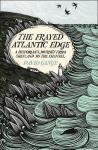 I think this year’s is an especially appealing longlist. It’s great to see small presses and debut authors getting recognition. I’ve now read 8 out of 13 (and skimmed one), and am interested in the rest, too, especially The Frayed Atlantic Edge by David Gange. The final three, all combining nature and (auto)biographical writing, are On the Red Hill by Mike Parker, The Well-Gardened Mind by Sue Stuart-Smith, and Rootbound: Rewilding a Life by Alice Vincent.
From the writing on global conservation longlist:

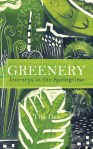 Greenery: Journeys in Springtime by Tim Dee: From the Cape of Good Hope to the Arctic Circle, Dee tracks the spring as it travels north. From first glimpse to last gasp, moving between his homes in two hemispheres, he makes the season last nearly half the year. His main harbingers are migrating birds, starting with swallows. The book is steeped in allusions and profound thinking about deep time and what it means to be alive in an era when nature’s rhythms are becoming distorted. A fresh, masterful model of how to write about nature. (Review reprinted at Shiny New Books; on my Best of 2020 so far list.)
 Irreplaceable: The Fight to Save Our Wild Places by Julian Hoffman: Species and habitat loss are hard to comprehend even when we know the facts. This exquisitely written book is about taking stock, taking responsibility, and going beyond the numbers to tell the stories of front-line conservation work. Irreplaceable is an elegy of sorts, but, more importantly, it’s a call to arms. It places environmentalism in the hands of laypeople and offers hope that in working together in the spirit of defiance we can achieve great things. (Reviewed for Shiny New Books; my #1 nonfiction book of 2019)
 Losing Eden: Why Our Minds Need the Wild by Lucy Jones: While nature’s positive effect on human mental health is something we know intuitively and can explain anecdotally, Jones wanted to investigate the scientific mechanism behind it. She makes an empirical enquiry but also attests to the personal benefits nature has. Losing Eden is full of common sense and passion, cramming masses of information into 200 pages yet never losing sight of the big picture. Like Silent Spring, on which it is patterned, I can see this leading to real change. (Reviewed for Shiny New Books; on my Best of 2020 so far list.)
 Notes from an Apocalypse: A Personal Journey to the End of the World and Back by Mark O’Connell: The same satirical outlook that made O’Connell’s first book so funny is perfect for approaches to the end of the world, especially in the early chapter about preppers. Preparing = retreating, so he travels to South Dakota bunkers; a Mars Society Conference in Los Angeles; New Zealand, where billionaires plan to take refuge; and the wilderness of the Scottish Highlands. While pessimism strikes him as the only rational attitude, he decides constant anxiety is no way to live. (More extended thoughts here.)
The other book from this longlist that I’m interested in reading is Rebirding by Benedict Macdonald. I DNFed Bloom (all you ever wanted to know about algae!) last year; the other five seem too similar to other things I’ve read.
My predictions-cum-wish lists:
UK nature writing:
- The Frayed Atlantic Edge by David Gange
- Surfacing by Kathleen Jamie*
- On the Red Hill by Mike Parker
- Diary of a Young Naturalist by Dara McAnulty
- Wanderland by Jini Reddy
- Rootbound: Rewilding a Life by Alice Vincent
Writing on global conservation:
- Greenery by Tim Dee
- What We Need to Do Now for a Zero Carbon Future by Chris Goodall
- Irreplaceable by Julian Hoffman*
- Losing Eden by Lucy Jones
- Bloom by Ruth Kassinger
- Harvest: The Hidden Histories of Seven Natural Objects by Edward Posnett
*Predicted overall winners.
Have you read anything from the Wainwright Prize longlists? Do any of these books interest you?
Recent Writing for BookBrowse, Shiny New Books and the TLS
A peek at the bylines I’ve had elsewhere so far this year.
BookBrowse
 A Good Neighborhood by Therese Anne Fowler: In Fowler’s sixth novel, issues of race and privilege undermine a teen romance and lead to tragedy in a seemingly idyllic North Carolina neighborhood. A Good Neighborhood is an up-to-the-minute story packed with complex issues including celebrity culture, casual racism, sexual exploitation, and environmental degradation. It is narrated in a first-person plural voice, much like the Greek chorus of a classical tragedy. If you loved Tayari Jones’s An American Marriage, this needs to be next on your to-read list. It is a book that will make you think, and a book that will make you angry; I recommend it to socially engaged readers and book clubs alike.
 Pew by Catherine Lacey: Lacey’s third novel is a mysterious fable about a stranger showing up in a Southern town in the week before an annual ritual. Pew’s narrator, homeless, mute and amnesiac, wakes up one Sunday in the middle of a church service, observing everything like an alien anthropologist. The stranger’s gender, race, and age are entirely unclear, so the Reverend suggests the name “Pew”. The drama over deciphering Pew’s identity plays out against the preparations for the enigmatic Forgiveness Festival and increasing unrest over racially motivated disappearances. Troubling but strangely compelling; recommended to fans of Shirley Jackson and Flannery O’Connor. [U.S. publication pushed back to July 21st]
Shiny New Books
 Losing Eden: Why Our Minds Need the Wild by Lucy Jones: While nature’s positive effect on human mental health is something we know intuitively and can explain anecdotally, Jones was determined to investigate the scientific mechanism behind it. She set out to make an empirical enquiry and discovered plenty of evidence in the scientific literature, but also attests to the personal benefits that nature has for her and explores the spiritual connection that many have found. Losing Eden is full of both common sense and passion, cramming masses of information into 200 pages yet never losing sight of the big picture. Just as Silent Spring led to real societal change, let’s hope Jones’s work inspires steps in the right direction.
[+ Reviews of 4 more Wainwright Prize (for nature writing) longlistees on the way!]
 The Bass Rock by Evie Wyld: While it ranges across the centuries, the novel always sticks close to the title location. Just as the louring rock is inescapable in the distance if you look out from the Edinburgh hills, there’s no avoiding violence for the women and children of the novel. It’s a sobering theme, certainly, but Wyld convinced me that hers is an accurate vision and a necessary mission. The novel cycles through its three strands in an ebb and flow pattern that seems appropriate to the coastal setting and creates a sense of time’s fluidity. The best 2020 novel I’ve read, memorable for its elegant, time-blending structure as well as its unrelenting course – and set against that perfect backdrop of an indifferent monolith.
Times Literary Supplement
 I Am an Island by Tamsin Calidas: A record of a demoralizing journey into extreme loneliness on a Scottish island, this offers slivers of hope that mystical connection with the natural world can restore a sense of self. In places the narrative is a litany of tragedies and bad news. The story’s cathartic potential relies on its audience’s willingness to stick with a book that can be – to be blunt –depressing. The writing often tends towards the poetic, but is occasionally marred by platitudes and New Age sentiments. As with Educated, it’s impossible not to marvel at all the author has survived. Admiring Calidas’s toughness, though, doesn’t preclude relief at reaching the final page. (Full review in May 29th issue.)
 We Swim to the Shark: Overcoming fear one fish at a time by Georgie Codd: Codd’s offbeat debut memoir chronicles her quest to conquer a phobia of sea creatures. Inspired by a friend’s experience of cognitive behavioral therapy to cure arachnophobia, she crafted a program of controlled exposure. She learned to scuba dive before a trip to New Zealand, returning via Thailand with an ultimate challenge in mind: her quarry was the whale shark, a creature even Jacques Cousteau only managed to sight twice. The book has a jolly, self-deprecating tone despite its exploration of danger and dread. A more directionless second half leads to diminished curiosity about whether that elusive whale shark will make an appearance. (Full review in a forthcoming issue.)
 Dottoressa: An American Doctor in Rome by Susan Levenstein: In the late 1970s, Levenstein moved from New York City to Rome with her Italian husband and set up a private medical practice catering to English-speaking expatriates. Her light-hearted yet trenchant memoir highlights the myriad contrasts between the United States and Italy revealed by their health care systems. Italy has a generous national health service, but it is perennially underfunded and plagued by corruption and inefficiency. The tone is conversational and even-handed. In the pandemic aftermath, though, Italian sloppiness and shortages no longer seem like harmless matters to shake one’s head over. (Full review coming up in June 19th issue.)
Do any of these books (all by women, coincidentally) interest you?
Spring Reading 2020, Part I
What a beautiful spring we’ve been having here. And, as usual, I’ve been reading with the seasons: some nature books about birdsong, flowers, etc., as well as a few books with “Spring” in the title. I have several more on the go that I’ll write up next month.
A Cold Spring by Elizabeth Bishop (1955)
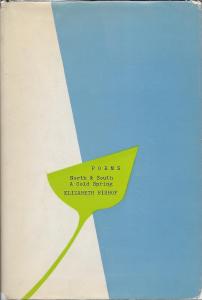 The second of Bishop’s four published collections, this mostly dwells on contrasts between city (e.g. “View of the Capitol from the Library of Congress,” “Varick Street” and “Letter to N.Y.”) and coastal locations (e.g. “The Bight,” “At the Fishhouses” and “Cape Breton”). The three most memorable poems for me were the title one, which opens the book; “The Prodigal,” a retelling of the Prodigal Son parable; and “Invitation to Miss Marianne Moore” (“From Brooklyn, over the Brooklyn Bridge, on this fine morning, please come flying,” with those last three words recurring at the end of each successive stanza; also note the sandpipers – one of her most famous poems was “Sandpiper,” from 1965’s Questions of Travel). I find that I love particular lines or images from Bishop’s poetry but not her overall style.
Favorite lines:
A cold spring:
the violet was flawed on the lawn.
For two weeks or more the trees hesitated;
the little leaves waited
(from “A Cold Spring”)
Spring: A Folio Anthology, edited by Sue Bradbury (2017)
 As a seasonal anthology, this falls short by comparison to the Wildlife Trust’s Spring. There are too many letters or journal entries that only happen to be set in March to May and don’t in any way evoke the season. The selection of poems and passages is fairly predictable, and closing with an ominous extract from Rachel Carson’s Silent Spring (see below) makes for rather a downbeat conclusion. Highlights: the preface by Paul Evans, Parson Woodforde’s pigs getting drunk on the dregs of some beer (1778), Elizabeth David rhapsodizing about a wild asparagus risotto she had in Italy, and Angus Buchanan coming upon an idyllic setting in Wildlife in Canada. The gorgeous cover, the slightly ornate font that liaises s or c with t, and the three two-page green-dominated illustrations somewhat make up for the lackluster contents.
Silent Spring by Rachel Carson (1962)
 When I saw Lucy Jones speak at an event in Hungerford in support of her new book, Losing Eden, early last month, I was intrigued to hear her say that her work was consciously patterned on Silent Spring – right down to the same number of chapters. This prompted me to finally pick up the copy of Carson’s classic that I got free during a cull at the library where I used to work and have a skim through.
Both books are forthright explications of the environmental problems we face, backed up by volumes of irrefutable evidence, and suggest some potential solutions. Both open, though, with a dystopian scene: Carson’s first chapter imagines an American town where things die because nature stops working as it should. Her main target was insecticides that were known to kill birds and had presumed negative effects on human health through the food chain and environmental exposure. Although the details may feel dated, the literary style and the general cautions against submitting nature to a “chemical barrage” remain potent. 
A Country Year: Living the Questions by Sue Hubbell (1986)
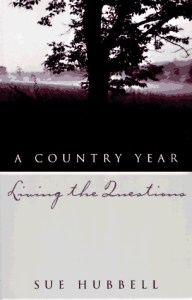 A seasonal diary that runs from one spring to the next, this is a peaceful book about living alone yet finding community with wildlife and fellow country folk. I took nine months over reading it, keeping it as a bedside book.
At her farm in southern Missouri’s Ozark Mountains, Hubbell had a small beekeeping and honey production business, “a shaky, marginal sort of affair that never quite leaves me free of money worries but which allows me to live in these hills that I love.” After her 30-year marriage ended, she found herself alone in “the afternoon of my life,” facing “the work of building a new kind of order, a structure on which a fifty-year-old woman can live”. In few-page essays she reflects on the weather, her interactions with wildlife (from bats and black rat snakes to a fawn caught in a fence), and country events like a hog roast.
I love introspective books like this one that balance solitude with nature and company and that showcase older women’s wisdom (Joan Anderson, May Sarton and Barbara J. Scot also write/wrote in this vein). Hubbell, who died at age 83 in late 2018, wrote broader scientific narratives about evolution and genetic engineering, as well as detailed books about bees and other insects. I’ll look out for more of her work.
A Sweet, Wild Note: What We Hear when the Birds Sing by Richard Smyth (2017)
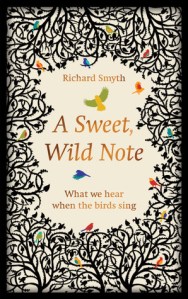 Despite being a birdwatcher since childhood, Smyth had always been ambivalent about birdsong. He certainly wasn’t one of those whizzes who can identify any bird by its call; in fact, he needed convincing that bird vocalizations are inherently beautiful. So he set off to answer a few questions: Why do birds sing? How can we recognize them by their songs? And how have these songs played into the human‒bird relationship throughout history? Ranging from bird anatomy to poetry, his historical survey is lighthearted reading that was perfect for the early days of spring. There are also chapters on captive birds, the use of birdsong in classical music, and the contribution birds make to the British soundscape. A final section, more subdued and premonitory in the vein of Silent Spring, imagines a world without birdsong and “the diminution that we all suffer. … Our lives become less rich.” (The title phrase is how Gilbert White described the blackcap’s song, Smyth’s favorite.)
Favorite lines:
when everything around you seems to be moving at a gallop, a bird’s song reminds you that some things stay the same … that you really can go home again.
in many ways the whole point of birdsong is that it’s beyond our grasp. It’s fleeting, evanescent; you might as well try to take a fistful of morning mist. But that hasn’t stopped us trying.
 Bookish Beck = Rebecca Foster. American transplant to England. Freelance proofreader and book reviewer.
 Bookish Beck