R.I.P. Reads: Dahl, Le Guin, Lessing, Paver
This is my second year participating in R.I.P. – Readers Imbibing Peril, now in its 14th year. I assembled a lovely pile of magical or spooky reads to last me through October and noticed they were almost all by women, so I decided to make it an all-female challenge (yes, even with a Dahl title – see below) this year. I’m in the middle of another book and have a few more awaiting me, but with just two weeks left in the month I don’t know if I’ll manage to follow up this post with a Part II. At any rate, these first four were solid selections: classic ghost stories, children’s fantasy, a horror novella about an evil child, and an Arctic chiller.
Fear: Tales of Terror and Suspense (selected by Roald Dahl) (2017)
“Spookiness is, after all, the real purpose of the ghost story. It should give you the creeps and disturb your thoughts.”
I was sent this selection of Dahl-curated ghost stories as part of a book bundle in advance of a blog tour for Roald Dahl Day last year. For now I’ve read just the five stories by women, and will polish off the rest next year.
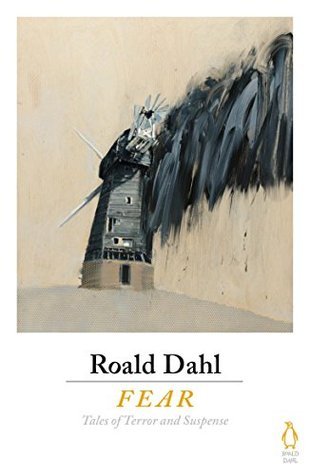 This collection originated from a television series on ghost stories that Dahl proposed for the American market in 1958 (the pilot was poorly received and it never got made). For his research he read nearly 750 ghost stories and whittled them down to the top 24. Women authors dominated early on in the selection process, but by the end the genders came out nearly even, with 13 men and 11 women. It’s disappointing, then, that only five of the 14 stories included here are by women – one of whom gets two entries, so there’s just four female authors recognized. And this even though Dahl claims that, when it comes to ghost stories, “it is the women who have written some of the very best ones.”
Any road, these are the five stories I read, all of which I found suitably creepy, though the Wharton is overlong. Each one pivots on a moment when the narrator realizes that a character they have been interacting with is actually dead. Even if you’ve seen the twist coming, there’s still a little clench of the heart when you have it confirmed by a third party. 
“Harry” and “Christmas Meeting” by Rosemary Timperley: A little girl who survived a murder attempt is reclaimed by her late brother; a woman meets a century-dead author one lonely holiday – I liked that in this one each character penetrates the other’s time period.
“The Corner Shop” by Cynthia Asquith: An inviting antique shop is run by two young women during the day, but by a somber old man in the evenings. He likes to give his customers a good deal to atone for his miserly actions of the past.
“The Telephone” by Mary Treadgold: A man continues communicating with his dead ex-wife via the phone line.
“Afterward” by Edith Wharton: An American couple settles in a home in Dorset, and the husband disappears, after a dodgy business deal, in the company of a mysterious stranger.
A Wizard of Earthsea by Ursula K. Le Guin (1968)
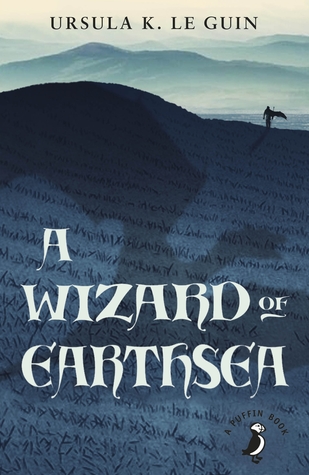 This was my second attempt with the late Le Guin, who would be turning 90 on the 21st; I didn’t get far at all with a buddy read of The Left Hand of Darkness last year. I enjoyed this a fair bit more, perhaps because it’s meant for children – I reckon I would have liked it most when I was ages nine to 11 and obsessed with various series of fantasy novels featuring dragons.
Long before Harry Potter was a glimmer, this was the archetypal story of a boy wizard learning magic at school. Ged meets many cryptic mentors and realizes that naming a thing gives you power over it. In his rivalry with the other boys, he accidentally releases a shadow beast and has to try to gain back control of it. It’s slightly difficult to keep on top of all the names and places (Le Guin created a whole archipelago, which you can see in the opening map) and I found my interest waning after the halfway point, but I did love the scene of Ged fighting with a dragon. 
A favorite passage: “But you must not change one thing, one pebble, one grain of sand, until you know what good and evil will follow on the act. … A wizard’s power of Changing and of Summoning can shake the balance of the world.”
The Fifth Child by Doris Lessing (1988)
Shelve this alongside We Need to Talk about Kevin as a book to make you rethink having kids. Harriet and David Lovatt buy a large Victorian house within commuting distance of London and dream of filling it with children – six, eight; however many. Their first four children are all they’d hoped for, if not spaced out as much as they intended. The Lovatts enjoy hosting the extended family at Easter and Christmas and during the summer holidays. Although there are good-natured jokes about the couple’s fertility, everyone enjoys the cozy, bustling atmosphere. “The Lovatts were a happy family. It was what they had chosen and what they deserved.”
[MILD SPOILERS ENSUE]
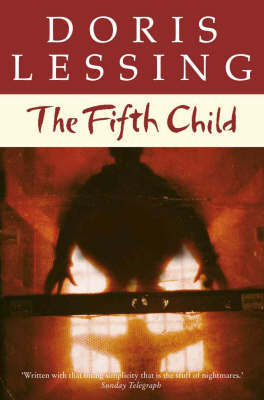 Everything changes with pregnancy #5, which is different right from the off. This “savage thing inside her” is kicking Harriet black and blue from the inside and grown to full term by eight months. When Ben is born Harriet thinks, “He’s like a troll, or a goblin.” Like a succubus, he sucks her dry, biting her nipples black and blue; he screams and thrashes non-stop; he’s freakishly strong and insatiably hungry. He strangles house pets and eats a raw chicken with his bare hands. Although he learns basic language and social skills from watching his older siblings and mimicking his idols from a motorcycle gang, something in him is not human. Yet Harriet cannot bear to leave Ben to rot in an institution.
At first I wondered if this was a picture of an extremely autistic child, but Lessing makes the supernatural element clear. “We are being punished,” Harriet says to David. “For presuming … we could be happy.” I think I was waiting for a few more horrific moments and a climactic ending, whereas Lessing almost normalizes Ben, making him part of a gang of half-feral youths who rampage around late-1980s Britain (and she took up his story in a sequel, Ben in the World). But I raced through this in just a few days and enjoyed the way dread overlays the fable-like simplicity of the family’s early life. 
Dark Matter: A Ghost Story by Michelle Paver (2010)
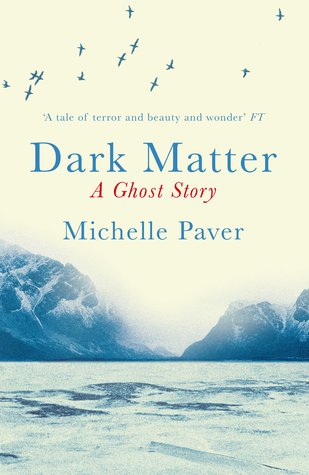 I read Paver’s Thin Air as part of last year’s R.I.P. challenge and it was very similar: a 1930s setting, an all-male adventure, an extreme climate (in that case: the Himalayas). Most of Dark Matter is presented as a journal written by Jack Miller, a lower-class lad who wanted to become a physicist but had to make a living as a clerk instead. He feels he doesn’t truly belong among the wealthier chaps on this Arctic expedition, but decides this is his big chance and he’s not going to give it up.
Even as the others drop out due to bereavement and illness, he stays the course, continuing to gather meteorological data and radio it back to England from this bleak settlement in the far north of Norway. For weeks his only company is a pack of sled dogs, and his grasp on reality becomes shaky as he begins to be visited by the ghost of a trapper who was tortured to death nearby – “the one who walks again.” Paver’s historical thrillers are extremely readable. I tore through this, yet never really found it scary.
Note: This book is the subject of the Bookshop Band song “Steady On” (video here).
And, alas, three DNFs:
 The Wych Elm by Tana French – French writes really fluid prose and inhabits the mind of a young man with admirable imagination. I read the first 100 pages and skimmed another 50 and STILL hadn’t gotten to the main event the blurb heralds: finding a skull in the wych elm in the garden at Ivy House. I kept thinking, “Can we get on with it? Let’s cut to the chase!” I have had French’s work highly recommended so may well try her again.
 The Hoarder by Jess Kidd – Things in Jars was terrific; I thought Kidd’s back catalogue couldn’t fail to draw me in. This was entertaining enough that I made it to page 152, if far too similar to Jars (vice versa, really, as this came first; ghosts/saints only the main character sees; a transgender landlady/housekeeper); I then found that picking it back up didn’t appeal at all. Maud Drennan is a carer to a grumpy giant of a man named Cathal Flood whose home is chock-a-block with stuff. What happened to his wife? And to Maud’s sister? Who cares!
 The Silent Companions by Laura Purcell – Purcell is now on her third Gothic novel in three years. I had a stab at her first and it was distinctly okay. I read the first 24 pages and skimmed to p. 87. Reminiscent of The Shadow Hour, The Familiars, etc.
Have you been reading anything fantastical or spooky this October?
Continuing the Story: Why I’m Wary of Sequels and Series, with Some Exceptions
Most of the time, if I learn that a book has a sequel or is the first in a series, my automatic reaction is to groan. Why can’t a story just have a tidy ending? Why does it need to sprawl further, creating a sense of obligation in its readers? Further adventures with The Hundred-Year-Old Man Who Climbed Out the Window? Returning to the world of The Handmaid’s Tale? No, thank you.
It was different when I was a kid. I couldn’t get enough of series: the Little House on the Prairie books, Encyclopedia Brown, Nancy Drew, the Saddle Club, Redwall, the Baby-Sitters Club, various dragon series, Lilian Jackson Braun’s Cat Who mysteries, the Anne of Green Gables books… You name it, I read it. I think children, especially, gravitate towards series because they’re guaranteed more of what they know they like. It’s a dependable mold. These days, though, I’m famous for trying one or two books from a series and leaving the rest unfinished (Harry Potter: 1.5 books; Discworld: 2 books at random; Jim Butcher’s Dresden Files: 1 book; the first book of crime series by M.J. Carter, Judith Flanders and William Shaw).
But, like any reader, I break my own rules all the time – even if I sometimes come to regret it. I recently finished reading a sequel and I’m now halfway through another. I’ve even read a few high-profile sci fi/fantasy trilogies over the last eight years, even though with all of them I liked each sequel less than the book that went before (Margaret Atwood’s MaddAddam books, Chris Beckett’s Dark Eden series and Deborah Harkness’s All Souls Trilogy).
A later book in a series can go either way for me – surpass the original, or fail to live up to it. Nonfiction sequels seem more reliable than fiction ones, though: if I discover that a memoirist has written a follow-up volume, I will generally rush to read it.
So, what would induce me to pick up a sequel?
I want to know what happens next.
WINNERS:
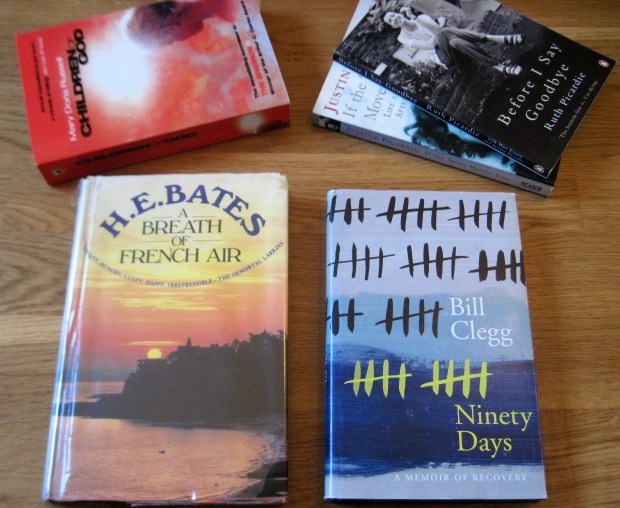
After reading Ruth Picardie’s Before I Say Goodbye, I was eager to hear from her bereaved sister, Justine Picardie. Ruth died of breast cancer in 1997; Justine writes a journal covering 2000 to 2001, asking herself whether death is really the end and if there is any possibility of communicating with her sister and other loved ones she’s recently lost. If the Spirit Moves You: Life and Love after Death is desperately sad, but also compelling.
 Graeme Simsion’s Rosie series has a wonderfully quirky narrator. When we first meet him, Don Tillman is a 39-year-old Melbourne genetics professor who’s decided it’s time to find a wife. Book 2 has him and Rosie expecting a baby in New York City. I’m halfway through Book 3, in which in their son is 11 and they’re back in Australia. Though not as enjoyable as the first, it’s still a funny look through the eyes of someone on the autistic spectrum.
Edward St. Aubyn’s Never Mind, the first Patrick Melrose book, left a nasty aftertaste, but I was glad I tried again with Bad News, a blackly comic two days in the life of a drug addict.
LOSERS:
Joan Anderson’s two sequels to A Year by the Sea are less engaging, and her books have too much overlap with each other.
Perhaps inevitably, Bill Clegg’s Ninety Days, about getting clean, feels subdued compared to his flashy account of the heights of his drug addiction, Portrait of an Addict as a Young Man.
 Patrick Leigh Fermor’s Between the Woods and the Water was an awfully wordy slog compared to A Time of Gifts.
Mary Doria Russell’s The Sparrow was one of my favorite backlist reads last year. I only read the first 60 pages of Children of God, though. It was a recent DNF after leaving it languishing on my pile for many months. While I was, of course, intrigued to learn that (SPOILER) a character we thought had died is still alive, and it was nice to see broken priest Emilio Sandoz getting a chance at happiness back on Earth, I couldn’t get interested in the political machinations of the alien races. Without the quest setup and terrific ensemble cast of the first book, this didn’t grab me.
I want to spend more time with these characters.
WINNERS:
Simon Armitage’s travel narrative Walking Away is even funnier than Walking Home.
 I’m as leery of child narrators as I am of sequels, yet I read all 10 Flavia de Luce novels by Alan Bradley: quaint mysteries set in 1950s England and starring an eleven-year-old who performs madcap chemistry experiments and solves small-town murders. The Dead in Their Vaulted Arches (#6) was the best, followed by Thrice the Brinded Cat Hath Mew’d (#8).
Roald Dahl’s Going Solo is almost as good as Boy.
Alexandra Fuller’s Leaving Before the Rains Come is even better than Don’t Let’s Go to the Dogs Tonight.
Likewise, Sarah Moss’s Signs for Lost Children, about a female doctor in the 1880s, is even better than Bodies of Light.
Doreen Tovey’s Cats in May is just as good as Cats in the Belfry.
LOSERS:
H. E. Bates’s A Breath of French Air revisits the Larkins, the indomitably cheery hedonists introduced in The Darling Buds of May, as they spend a month abroad in the late 1950s. France shows off its worst weather and mostly inedible cuisine; even the booze is barely tolerable. Like a lot of comedy, this feels slightly dated, and maybe also a touch xenophobic.
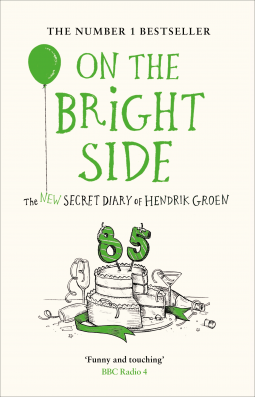 The first Hendrik Groen diary, about an octogenarian and his Old-But-Not-Dead club of Amsterdam nursing home buddies, was a joy, but the sequel felt like it would never end.
I loved Marilynne Robinson’s Gilead; I didn’t need the two subsequent books.
The Shakespeare Requirement, Julie Schumacher’s sequel to Dear Committee Members, a hilarious epistolary novel about an English professor on a Midwest college campus, was only mildly amusing; I didn’t even get halfway through it.
I finished Jane Smiley’s Last Hundred Years trilogy because I felt invested in the central family, but as with the SFF series above, the later books, especially the third one, were a letdown.
What next? I’m still unsure about whether to try the other H. E. Bates and Edward St. Aubyn sequels. I’m thinking yes to Melrose but no to the Larkins. Olive Kitteridge, which I’ve been slowly working my way through, is so good that I might make yet another exception and seek out Olive, Again in the autumn.
Sequels: yea or nay?
Other 2018 Superlatives and Some Early 2019 Recommendations
My Best Discoveries of the Year: Neil Ansell, James Baldwin, Janet Frame, Rohinton Mistry, Blake Morrison, Dani Shapiro, Sarah Vowell; Roald Dahl’s work for adults
The Author I Read the Most By: Anne Tyler (four novels)
 My Proudest Reading Achievement: Getting through a whole Rachel Cusk book (it was my third attempt to read her).
The 2018 Books Everybody Else Loved but I Didn’t: Melmoth by Sarah Perry and Normal People by Sally Rooney
The Year’s Biggest Disappointments: The Travelling Cat Chronicles by Hiro Arikawa and Sabrina by Nick Drnaso
 The Funniest Books I Read This Year: Fox 8 by George Saunders and Calypso by David Sedaris
Books that Made Me Cry: Leaving Before the Rains Come by Alexandra Fuller and The Long Goodbye by Meghan O’Rourke
 The Downright Strangest Books I Read This Year: The Bus on Thursday by Sheila Barrett, The Pisces by Melissa Broder and I Love Dick by Chris Kraus
The Debut Authors Whose Next Work I’m Most Looking Forward To: Julie Buntin, Lisa Ko and R.O. Kwon
The Best First Line of the Year: “Dust and ashes though I am, I sleep the sleep of angels.” (from The Western Wind by Samantha Harvey)
Some Early 2019 Recommendations
(in release date order)
 Book Love by Debbie Tung: Bookworms will get a real kick out of these cartoons, which capture everyday moments in the life of a book-obsessed young woman (perpetually in hoodie and ponytail). She reads anything, anytime, anywhere. Even though she has piles of books staring her in the face everywhere she looks, she can never resist a trip to the bookstore or library. The very idea of culling her books or finding herself short of reading material makes her panic, and she makes a friend sign a written agreement before he can borrow one of her books. Her partner and friends think she’s batty, but she doesn’t care. I found the content a little bit repetitive and the drawing style not particularly distinguished, but Tung gets the bibliophile’s psyche just right. (Out January 1.)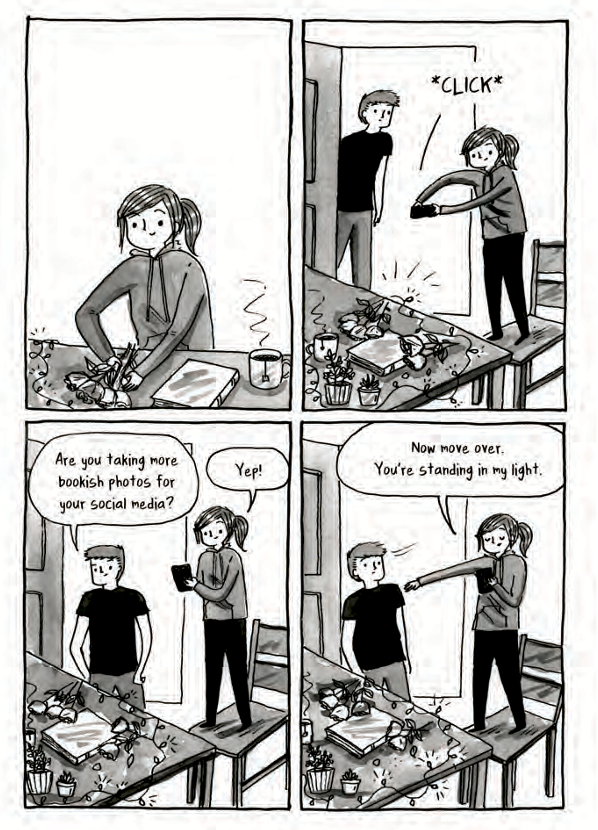
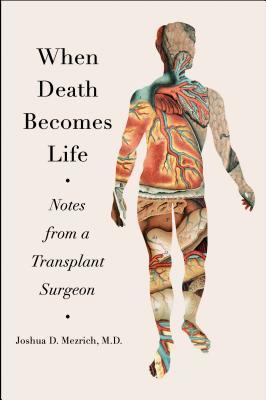 When Death Becomes Life: Notes from a Transplant Surgeon by Joshua D. Mezrich: In this debut memoir a surgeon surveys the history of organ transplantation, recalling his own medical education and the special patients he’s met along the way. In the 1940s and 1950s patient after patient was lost to rejection of the transplanted organ, post-surgery infection, or hemorrhaging. Mezrich marvels at how few decades passed between transplantation seeming like something out of a science-fiction future and becoming a commonplace procedure. His aim is to never lose his sense of wonder at the life-saving possibilities of organ donation, and he conveys that awe to readers through his descriptions of a typical procedure. One day I will likely need a donated kidney to save my life. How grateful I am to live at a time when this is a possibility. (Out January 15.)
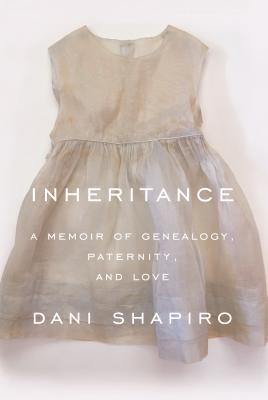 Inheritance: A Memoir of Genealogy, Paternity, and Love by Dani Shapiro: Shapiro was used to strangers’ comments about her blond hair and blue eyes. How could it be that she was an Orthodox Jew? people wondered. It never occurred to her that there was any truth to these hurtful jokes. On a whim, in her fifties, she joined her husband in sending off a DNA test kit. It came back with alarming results. Within 36 hours of starting research into her origins, Shapiro had found her biological father, a sperm donor whom she calls Dr. Ben Walden, and in the year that followed, their families carefully built up a relationship. The whole experience was memoirist’s gold, for sure. This is a moving account of her emotional state as she pondered her identity and what her sense of family would be in the future. (Out January 15.)

 Constellations: Reflections from Life by Sinéad Gleeson: Perfect for fans of I Am, I Am, I Am by Maggie O’Farrell, this is a set of trenchant autobiographical essays about being in a female body, especially one wracked by pain. As a child Gleeson had arthritis that weakened her hip bones, and eventually she had to have a total hip replacement. She ranges from the seemingly trivial to life-and-death matters as she writes about hairstyles, blood types, pregnancy, the abortion debate in Ireland and having a rare type of leukemia. In the tradition of Virginia Woolf, Frida Kahlo and Susan Sontag, Gleeson turns pain into art, particularly in a set of 20 poems based on the McGill Pain Index. The book feels timely and is inventive in how it brings together disparate topics to explore the possibilities and limitations of women’s bodies. (Out April 4.)
 The Hot Young Widows Club: Lessons on Survival from the Front Lines of Grief by Nora McInerny: In June 2016 I read It’s Okay to Laugh (Crying Is Cool Too), McInerny’s memoir about losing her father and her husband to cancer and her second child to a miscarriage – all within a few weeks – when she was 31. In this short book, an expansion of her TED talk, she argues that we are all incompetent when it comes to grief. There’s no rule book for how to do it well or how to help other people who are experiencing a bereavement, and comparing one loss to another doesn’t help anyone. I especially appreciated her rundown of the difference between pity and true empathy. “Pity keeps our hearts closed up, locked away. Empathy opens our heart up to the possibility that the pain of others could one day be our own pain.” (Out April 30.)
Coming tomorrow: Library Checkout & Final statistics for the year
Have you read any 2019 releases you can recommend?
Best Backlist Reads of 2018
Like a lot of book bloggers, I’m irresistibly drawn to the shiny new books released each year. However, I’ve noticed recently that many of my most memorable reads were published years or even decades ago. In 2018 I even came across a handful of books that are for me among the very best representatives of their genre, whether that’s nature, travel, family memoir, historical fiction or science fiction. The below selections are in alphabetical order by author name, and account for all the rest of my 4.5- and 5-star ratings of the year (another 27!).

My best backlist reads of the year (most of the ones I own in print, anyway).
Fiction
 March by Geraldine Brooks (2005): The best Civil War novel I’ve read. The best slavery novel I’ve read. One of the best historical novels I’ve ever read, period. Brooks’s second novel uses Little Women as its jumping-off point but is very much its own story. The whole is a perfect mixture of what’s familiar from history and literature and what Brooks has imagined.
 Marlena by Julie Buntin (2017): The northern Michigan setting pairs perfectly with the novel’s tone of foreboding: you have a sense of these troubled teens being isolated in their clearing in the woods, and from one frigid winter through a steamy summer and into the chill of the impending autumn, they have to figure out what in the world they are going to do with their terrifying freedom. It’s basically a flawless debut, one I can’t recommend too highly.
 Reading in the Dark by Seamus Deane (1996): Ireland’s internecine violence is the sinister backdrop to this family’s everyday sorrows, including the death of a child and the mother’s shaky mental health. The book captures all the magic, uncertainty and heartache of being a child, in crisp scenes I saw playing out in my mind.
 The Life and Loves of Lena Gaunt by Tracy Farr (2013): Lena Gaunt: early theremin player, grande dame of electronic music, and opium addict. I loved how Farr evokes the strangeness and energy of theremin music, and how sound waves find a metaphorical echo in the ocean’s waves – swimming is Lena’s other great passion.
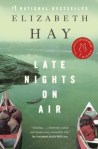 Late Nights on Air by Elizabeth Hay (2007): A tight-knit cast gathers around the local radio station in Yellowknife, a small city in Canada’s Northwest Territories: Harry and Gwen, refugees from Ontario starting new lives; Dido, an alluring Dutch newsreader; Ralph, the freelance book reviewer; menacing Eddie; and pious Eleanor. This is a marvellous story of quiet striving and dislocation; I saw bits of myself in each of the characters, and I loved the extreme setting, both mosquito-ridden summer and bitter winter.
 The Leavers by Lisa Ko (2017): An ambitious and satisfying novel set in New York and China, with major themes of illegal immigration, searching for a mother and a sense of belonging, and deciding what to take with you from your past. This was hand-picked by Barbara Kingsolver for the 2016 PEN/Bellwether Prize for Socially Engaged Fiction.
 The Invisible Bridge by Julie Orringer (2010): Hungarian Jew Andras Lévi travels from Budapest to Paris to study architecture, falls in love with an older woman who runs a ballet school, and – along with his parents, brothers, and friends – has to adjust to the increasingly strict constraints on Jews across Europe in 1937–45. It’s all too easy to burn out on World War II narratives these days, but this is among the very best I’ve read.
 The Sparrow by Mary Doria Russell (1996): For someone like me who struggles with sci-fi at the best of times, this is just right: the alien beings are just different enough from humans for Russell to make fascinating points about gender roles, commerce and art, but not so peculiar that you have trouble believing in their existence. All of the crew members are wonderful, distinctive characters, and the novel leaves you with so much to think about: unrequited love, destiny, faith, despair, and the meaning to be found in life.
 Salt Creek by Lucy Treloar (2015): Hester Finch is looking back from the 1870s – when she is a widowed teacher settled in England – to the eight ill-fated years her family spent at Salt Creek, a small (fictional) outpost in South Australia, in the 1850s–60s. This is one of the very best works of historical fiction I’ve read; it’s hard to believe it’s Treloar’s debut novel.
 Christmas Days: 12 Stories and 12 Feasts for 12 Days by Jeanette Winterson (2016): I treated myself to this new paperback edition with part of my birthday book token and it was a perfect read for the week leading up to Christmas. The stories are often fable-like, some spooky and some funny. Most have fantastical elements and meaningful rhetorical questions. Winterson takes the theology of Christmas seriously. A gorgeous book I’ll return to year after year.
Poetry
 Available Light by Marge Piercy (1988): The subjects are diverse: travels in Europe, menstruation, identifying as a Jew as well as a feminist, scattering her father’s ashes, the stresses of daily life, and being in love. Some of my favorites were about selectively adhering to the lessons her mother taught her, how difficult it is for a workaholic to be idle, and wrestling the deity for words.
Nonfiction
 Deep Country: Five Years in the Welsh Hills by Neil Ansell (2011): One of the most memorable nature/travel books I’ve ever read; a modern-day Walden. Ansell’s memoir is packed with beautiful lines as well as philosophical reflections on the nature of the self and the difference between isolation and loneliness.
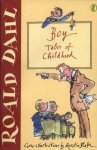 Boy by Roald Dahl (1984): Pranks and larks and holidays: these are all here; so is crushing homesickness and a bitter sense of injustice at being at the mercy of sadistic adults. Nearly 60 years later, Dahl could use memory and imagination to fully inhabit his childhood self and give a charming survey of the notable events of his life up to age 20.
 This Cold Heaven: Seven Seasons in Greenland by Gretel Ehrlich (2001): I thoroughly enjoyed my armchair trek across a frigid island nation in the company of Gretel Ehrlich, who traveled here repeatedly between 1995 and 2001 and intersperses her journeys with those of her historical model, Inuit–Danish explorer Knud Rasmussen, whose seven Arctic expeditions took in the west coast of Greenland and the far north of the North American continent. Every time she finds a fresh way to write about ice and sun glare and frigid temperatures.
 Ali: A Life by Jonathan Eig (2017): It’s a riveting account of outliving segregation and developing a personal style and world-beating confidence; it’s a sobering tale of facing consequences and having your own body fail you. I’m the furthest thing from a sports fan you could imagine, but I approached this as a book about a cultural icon and read it with a spirit of curiosity about how Eig would shape this life story and separate the facts from the legend. I loved it.
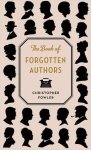 The Book of Forgotten Authors by Christopher Fowler (2017): A charming introduction to 99 more or less obscure writers. Each profile is a perfectly formed mini-biography with a survey of the author’s major work: in just two or three pages, Fowler is able to convey all a writer’s eccentricities and why their output is still worth remembering.
 To the Is-Land: An Autobiography by Janet Frame (1982): This is some of the best writing about childhood and memory that I’ve ever read, infused with music, magic and mystery. The prose alternates between dreamy and matter-of-fact as Frame describes growing up in New Zealand one of five children in the Depression and interwar years.
 Leaving Before the Rains Come by Alexandra Fuller (2015): This poignant sequel to Don’t Let’s Go to the Dogs Tonight is a portrait of Fuller’s two-decade marriage, from its hopeful beginnings to its acrimonious end. What I most appreciated about the book was Fuller’s sense of being displaced: she no longer feels African, but nor does she feel American.
 West With the Night by Beryl Markham (1942): Markham writes so vividly about the many adventures of her life in Africa: hunting lions, training race horses, and becoming one of the continent’s first freelance pilots, delivering mail and locating elephant herds. Whether she’s reflecting on the many faces of Africa or the peculiar solitude of night flights, the prose is just stellar.
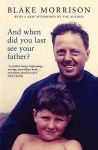 And When Did You Last See Your Father? by Blake Morrison (1993): An extraordinary memoir based around the author’s relationship with his father. Alternating chapters give glimpses into earlier family life and narrate Morrison’s father’s decline and death from cancer. This is simply marvelously written, not a bad line in the whole thing.
 The Seabird’s Cry: The Lives and Loves of Puffins, Gannets and Other Ocean Voyagers by Adam Nicolson (2017): This is an extraordinarily well-written and -researched book (a worthy Wainwright Prize winner) about the behavior, cultural importance, and current plight of the world’s seabirds. Each chapter takes up a different species and dives deep into everything from its anatomy to the legends surrounding it, simultaneously conveying the playful, intimate real lives of the birds and their complete otherness.
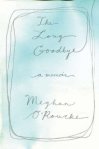 The Long Goodbye: A Memoir of Grief by Meghan O’Rourke (2011): I read a whole lot of bereavement memoirs; this has been one of the very best. O’Rourke tells her story with absolute clarity – a robust, plain-speaking style that matches her emotional transparency. The heart of the book is her mother’s death from colorectal cancer on Christmas Day 2008, but we also get a full picture of the family life that preceded it and the first couple of years of aftermath.
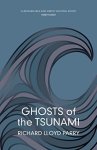 Ghosts of the Tsunami: Death and Life in Japan’s Disaster Zone by Richard Lloyd Parry (2017): Eighteen and a half thousand people died in the earthquake and tsunami that hit Japan in March 2011. It’s not really possible to get your head around a tragedy on that scale so, wisely, Parry focuses on a smaller story within the story: 74 died at Okawa primary school because the administration didn’t have a sufficient disaster plan in place. This is a stunning portrait of a resilient people, but also a universal story of the human spirit facing the worst.
 Lots of Candles, Plenty of Cake by Anna Quindlen (2012): A splendid memoir-in-essays that dwells on aging, parenting and female friendship. Some of its specific themes are marriage, solitude, the randomness of life, the process of growing into your own identity, and the special challenges her generation (roughly my mother’s) faced in seeking a work–life balance. Her words are witty and reassuring, and cut right to the heart of the matter in every case.
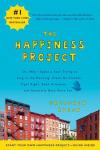 The Happiness Project: Or, Why I Spent a Year Trying to Sing in the Morning, Clean My Closets, Fight Right, Read Aristotle, and Generally Have More Fun by Gretchen Rubin (2009): Probably the best self-help book I’ve read; dense (in the best possible way) with philosophy, experience and advice. What I appreciated most is that her approach is not about undertaking extreme actions to try to achieve happiness, but about finding contentment in the life you already have by adding or tweaking small habits – especially useful for pessimists like me.
 In the Days of Rain: A daughter. A father. A cult by Rebecca Stott (2017): This was a perfect book for my interests, and just the kind of thing I would love to write someday. It’s a bereavement memoir that opens with Stott’s father succumbing to pancreatic cancer and eliciting her promise to help finish his languishing memoir; it’s a family memoir that tracks generations through England, Scotland and Australia; and it’s a story of faith and doubt, of the absolute certainty experienced inside the Exclusive Brethren (a Christian sect that numbers 45,000 worldwide) and how that cracked until there was no choice but to leave.
 Writers & Company by Eleanor Wachtel (1993): Erudite and fascinating author interviews from Wachtel’s weekly Canadian Broadcasting Corporation radio program. Whether I’d read anything by these authors (or even heard of them) or not, I found each Q&A chock-full of priceless nuggets of wisdom about creativity, mothers and daughters, drawing on autobiographical material, the writing process, and much more.
And if I really had to limit myself to just two books – my very best fiction and nonfiction reads of the year – they would be March by Geraldine Brooks and And When Did You Last See Your Father? by Blake Morrison.

What were your best backlist reads this year?
Novellas in November Wrap-Up, with Mini-Reviews
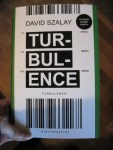 Novellas in November was a great success, helping me to finish more books in one month than I possibly ever have before. David Szalay’s Turbulence – a linked short story collection of tantalizing novella length – just arrived yesterday; I’ve started it but will be finishing it in December. The slim volume Fox 8 by George Saunders is also waiting for me at the library and I should be able to read it soon.
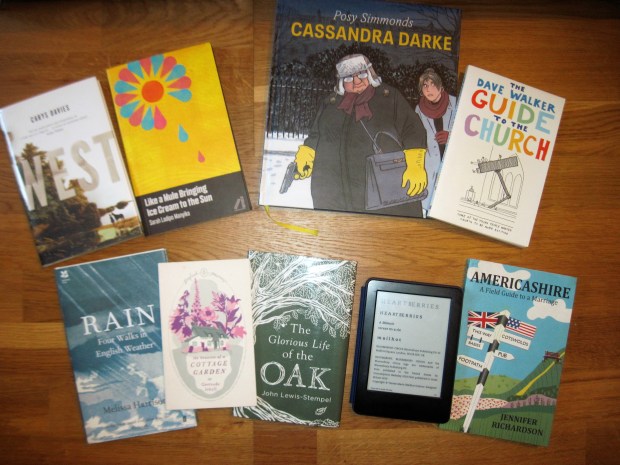
For this final installment I have 10 small books to feed back on: a mixture of fiction, graphic novels, nature books and memoirs.
Fiction:
West by Carys Davies (2018)
[149 pages]
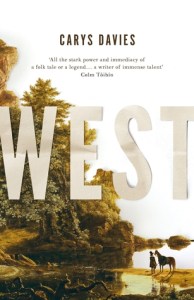 A gritty piece of historical fiction about a widowed mule breeder, Cyrus Bellman, who sets out from Pennsylvania to find traces of the giant creatures whose bones he hears have been discovered in Kentucky. He leaves his 10-year-old daughter, Bess, in the care of his sister, knowing he’ll be gone at least two years and may never return. Chapters cut between Cy’s harrowing journey in the company of a Native American guide, Old Woman From A Distance, and Bess’s home life, threatened by the unwanted attentions of their ranch hand neighbor and the town librarian. I don’t usually mind dark stories, but this was so bleak that I found it pretty unpleasant. The deus ex machina ending saved it somewhat.
Like a Mule Bringing Ice Cream to the Sun by Sarah Ladipo Manyika (2016)
[118 pages]
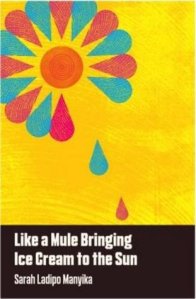 Morayo Da Silva is an unlikely heroine: soon to turn 75, she’s a former English professor from Nigeria who hopped between countries with her ambassador husband but now lives alone in San Francisco. The first-person narration switches around to give the perspectives of peripheral figures like a shopkeeper, a homeless woman, and Sunshine, the young friend who helps Morayo get her affairs in order after she has a fall and goes into a care home temporarily. These shifts in point of view can be abrupt, even mid-chapter, and are a little confusing. However, Morayo is a wonderful character, inspiring in her determination to live flamboyantly. I also sympathized with her love of books. I would happily have read twice as many pages about her adventures.
Graphic Novels:
Cassandra Darke by Posy Simmonds (2018)
[94 pages]
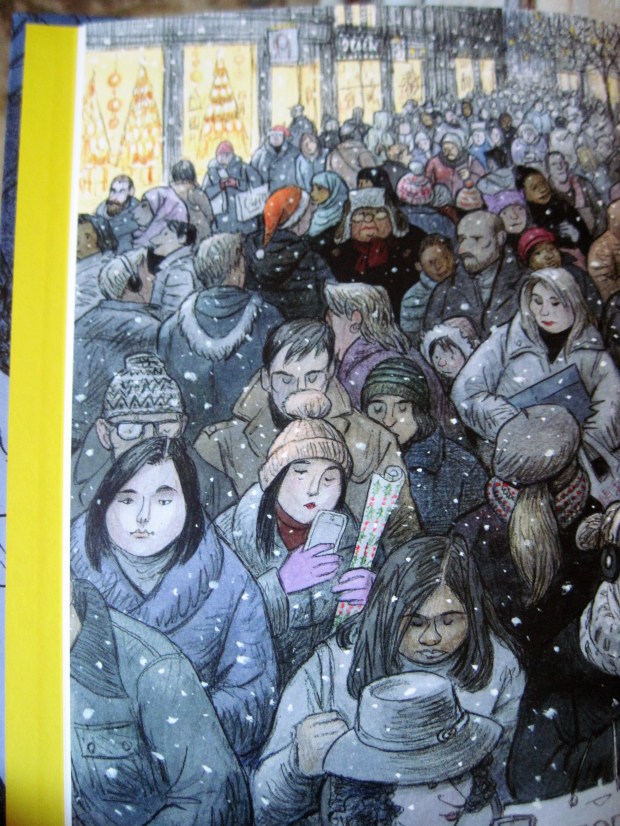
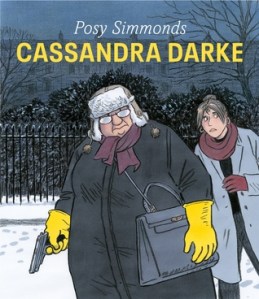 Simmonds would be great for graphic novel newbies: she writes proper, full-length stories, often loosely based on a classic plot, with lots of narration and dialogue alongside the pictures. Cassandra Darke is a 71-year-old art dealer who’s laid low by fraud allegations and then blindsided by a case of mistaken identity that brings her into contact with a couple of criminal rings. To start with she’s a Scrooge-like curmudgeon who doesn’t understand the big fuss about Christmas, but she gradually grows compassionate, especially after her own brief brush with poverty. Luckily, Simmonds doesn’t overdo the Christmas Carol comparisons. Much of the book is in appropriately somber colors, with occasional brightness, including the yellow endpapers and built-in bookmark.
The Dave Walker Guide to the Church by Dave Walker (2006)
[88 pages]
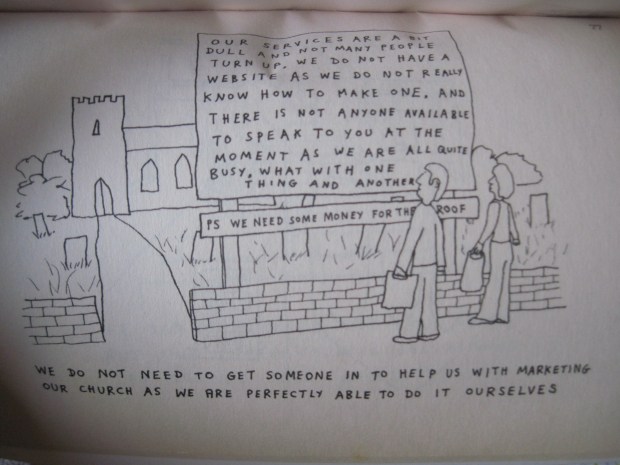
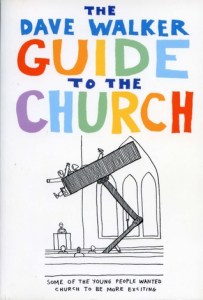 Most of these comics originally appeared in the Church Times, the official newspaper of the Church of England. No doubt you’ll get the most out of it if you’re familiar with Anglican churches or the like (Episcopalian or even Roman Catholic). My mother-in-law is a C of E vicar and we’ve attended a High Anglican church for the last two years, so I got many a good snort out of the book. Walker pokes fun at bureaucracy, silly traditions, closed-mindedness, and the oddities of church buildings and parishioners’ habits. My favorite spreads compare choirs and music groups on criteria like “ability to process in” and liken different church members to chess pieces to explain church politics.
Nature Books:
Rain: Four Walks in English Weather by Melissa Harrison (2016)
[100 pages]
 In the course of a year Harrison took four rainy walks, in different seasons and different parts of England. She intersperses her observations with facts and legends about the rain, quotes from historical weather guides and poems. It has the occasional nice line, but is overall an understated nature/travel book. A noteworthy moment is when she remembers scattering her mother’s ashes on a Dartmoor tor. I most liked the argument that it’s important to not just go out in good weather, but to adapt to nature in all its moods: “I can choose now to overcome the impulse for comfort and convenience that insulates us not only from the bad in life but from much of the good. I think we need the weather, in all its forms, to feel fully human.”
The Beauties of a Cottage Garden by Gertrude Jekyll (2009)
[88 pages]
 This mini-volume from Penguin’s English Journeys series feels like a bit of a cheat because it’s extracted from Wood and Garden (1899). Oh well. In short chapters Jekyll praises the variety of colors, smells and designs you’ll find in the average country garden, no matter how modest its size. She speaks of gardening as a lifelong learning process, humbly acknowledging that she’s no expert. “I hold that the best purpose of a garden is to give delight and to give refreshment of mind, to soothe, to refine, and to lift up the heart in a spirit of praise and thankfulness. … a garden is a grand teacher. It teaches patience and careful watchfulness; it teaches industry and thrift; above all, it teaches entire trust.”
The Glorious Life of the Oak by John Lewis-Stempel (2018)
[87 pages]
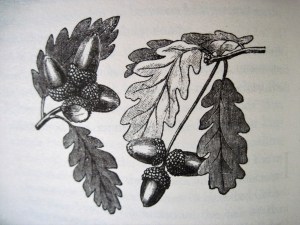 I didn’t enjoy this as much as the other Lewis-Stempel book I read this month, The Secret Life of the Owl. There’s a lot here about the role the oak has played in British history, such as in warships and cathedral roofs. Other topics are the oak’s appearance and function in different seasons, the use of acorns and oak leaves in cooking, and the myths and legends associated with the trees. I felt there was too much minimally relevant material added in to make up the page count, such as a list of Britain’s famous named oaks and long poems from the likes of John Clare and William Cowper. While Lewis-Stempel always has a piercing eye, I wonder if he shouldn’t be saving up his energies to write more substantial books.
General Nonfiction / Memoirs:
My Year by Roald Dahl (1993)
[64 pages]
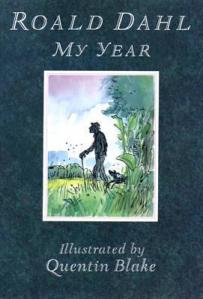 I spotted a copy in our Stamford Airbnb bedroom and read it over our two nights there. These short month-by-month essays were composed in the last year of Dahl’s life. Writing with children in mind, he remarks on what schoolkids will experience, whether a vacation or a holiday like Guy Fawkes night. But mostly he’s led by the seasons: the birds, trees and other natural phenomena he observed year after year from his home in Buckinghamshire. Dahl points out that he never lived in a city, so he chose to mark the passing of time chiefly by changes in the countryside. This is only really for diehard fans, but it’s a nice little book to have at the bedside. (Illustrated, as always, with whimsical Quentin Blake sketches.)
Heart Berries by Terese Marie Mailhot (2018)
[178 pages]
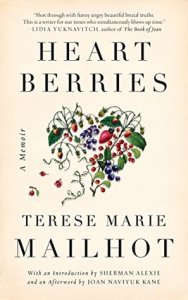 Mailhot was raised on a First Nation reservation on an island off of British Columbia. She is wary of equating her family with Native stereotypes, but there’s no denying that her father was a drunk and ended up murdered. After a childhood of abuse and foster homes, Mailhot committed herself to a mental hospital for PTSD, bipolar II and an eating disorder. It was there that she started writing her story. Much of the book is addressed in the second person to her partner, who helped her move past a broken marriage and the loss of her older son to his father’s custody. Though I highlighted lots of aphoristic pronouncements, I had trouble connecting with the book as a whole: the way imprecise scenes blend into each other makes it hard to find a story line in the murk of miserable circumstances. A more accurate title would have been “Indian Condition” or “Indian Sick” (both used as chapter titles).
Americashire: A Field Guide to a Marriage by Jennifer Richardson (2013)
[151 pages]
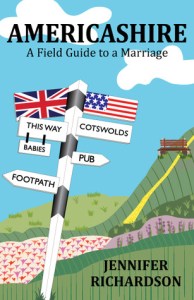 A memoir by an American woman married to a Brit and adjusting to English village life was always going to appeal to me. If you approach this as a set of comic essays on the annual rituals of rich toffs (summer fairs, auctions, horse racing, a hunt ball, a cattle market, etc.), it’s enjoyable enough. It’s when Richardson tries to be more serious, discussing her husband’s depression, their uncertainty over having children, and her possible MS, that the book falters. You can tell her editors kept badgering her to give the book a hook, and decided the maybe-baby theme was strongest. But I never sensed any real wrestling with the question. Not a bad book, but it lacks a clear enough idea of what it wants to be.
Total number of novellas read this month: 26
[not reviewed: In the Space between Moments: Finding Joy and Meaning in Medicine by Pranay Sinha – ]
A few that didn’t take: The Optician of Lampedusa by Emma Jane Kirby, The Mussel Feast by Birgit Vanderbeke, Sea of Ink by Richard Weihe
 My overall favorite: The Gifts of the Body by Rebecca Brown
Runners-up: Surfacing by Margaret Atwood, How to See Nature by Paul Evans, Bodies of Water by V. H. Leslie, and Ghost Wall by Sarah Moss
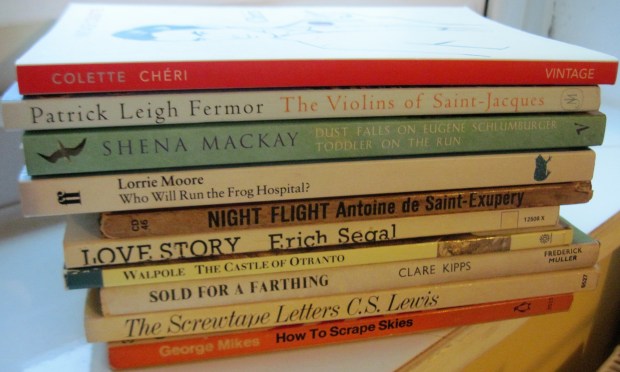
The ones that got away from me:
There’s always next year!
What’s the best novella you’ve read recently? Do you like the sound of any of the ones I read?
Roald Dahl Day Blog Tour: “Boy” & More
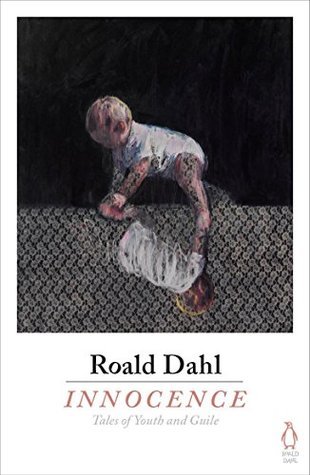 Like so many children on both sides of the Atlantic, I grew up with Roald Dahl’s classic tales: James and the Giant Peach, Charlie and the Chocolate Factory, and Matilda. I was aware that he had published work for adults, too, but hadn’t experienced any of it until I was asked to join this blog tour in advance of Roald Dahl Day on September 13th.
Last year Penguin brought out an eight-volume paperback set of Dahl’s short stories, grouped thematically. I focused on Innocence: Tales of Youth and Guile, which opens with a reprint of Boy (1984), the closest thing to an autobiography that Dahl wrote. That’s in spite of his prefatory disclaimer:
An autobiography is a book a person writes about his own life and it is usually full of all sorts of boring details. This is not an autobiography. … throughout my young days at school and just afterwards a number of things happened to me that I have never forgotten. … Some are funny. Some are painful. … All are true.
Dahl’s father was a one-armed shipbroker who’d moved from Norway to Wales for the coal. His mother, Harald’s second wife, was also from Norway, so Dahl was a full-blooded Norwegian. After his father’s early death he attended Llandaff Cathedral School and then boarding school and public school in England. Sofie Dahl, quietly tough, tended her brood of six children and stepchildren, giving them magical summers on a Norwegian island and keeping her cool during the car accident in which Dahl’s nose was almost severed.
Any time they were separated, Dahl wrote to his mother once a week, without fail. The book includes facsimile excerpts from some of these letters, along with black-and-white family photographs and drawings. This is more of a scrapbook than a straightforward chronological memoir, especially in the way that it moves between playful and disturbing vignettes from Dahl’s school days. It’s particularly delightful to spot incidents that inspired his children’s books, such as a plot to plant a dead mouse in the mean sweet shop lady’s gobstopper jar and the boxes of new-recipe Cadbury’s chocolates that would arrive at Repton School for testing by eager boys.
Pranks and larks and holidays: these are all here. But so is crushing homesickness and a bitter sense of injustice at being at the mercy of sadistic adults. Dahl had his adenoids removed without anesthesia, and at school he received and witnessed many a vicious caning. Aware that such scenes are accumulating uncomfortably, he addresses the topic directly:
By now I am sure you will be wondering why I lay so much emphasis upon school beatings in these pages. The answer is that I cannot help it. All through my school life I was appalled by the fact that masters and senior boys were allowed literally to wound other boys, and sometimes quite severely. I couldn’t get over it. I never have got over it.
When he graduated, instead of going to Oxford or Cambridge, he wanted to see the world and have adventures, so he spent the summer of 1934 exploring Newfoundland and joined the Shell Company at age 18. His first placement was to East Africa for three years; soon afterwards he would become a fighter pilot in the Second World War. In the short years he spent as a London commuter, he realized how easy a 9-to-5 office job is compared to making a living as a writer. (I could sympathize.)
The life of a writer is absolute hell compared with the life of a businessman. The writer has to force himself to work. He has to make his own hours and if he doesn’t go to his desk at all there is nobody to scold him. If he is a writer of fiction he lives in a world of fear. Each new day demands new ideas and he can never be sure whether he is going to come up with them or not. … A person is a fool to become a writer. His only compensation is absolute freedom. He has no master except his own soul.
I don’t often like reading books from a child’s perspective (particularly novels with a child narrator) because I find that the voice can ring false. Not so here. Nearly 60 years later, Dahl could use memory and imagination to fully inhabit his childhood self and give a charming survey of the notable events of his life up to age 20. I’d highly recommend Boy to fiction and nonfiction readers alike.
My rating: 
 I also dipped into Trickery: Tales of Deceit and Cunning and particularly liked “The Wish,” in which a boy imagines a carpet is a snakepit and then falls into it, and “Princess Mammalia,” a Princess Bride-style black comedy about a royal who decides to wrest power from her father but gets her mischief turned right back on her. I’ll also pick up Fear, Dahl’s curated set of ghost stories by other authors, during October for the R.I.P. challenge.
My thanks to the publisher for free copies of four volumes of the tales.
Blog Tour: Foxes Unearthed by Lucy Jones
Cold, delicately as the dark snow
A fox’s nose touches twig, leaf;
[…]
Across clearings, an eye,
A widening deepening greenness,
Brilliantly, concentratedly,
Coming about its own business
~Ted Hughes, “The Thought-Fox” (1957)
Foxes Unearthed, freelance journalist Lucy Jones’s first book, won a Society of Authors’ Roger Deakin Award for nature writing. If you’re familiar with Patrick Barkham’s Badgerlands, you’ll recognize this as a book with a comparable breadth and a similar aim: clearing the reputation of an often unfairly reviled British mammal. Jones ranges from history to science and from mythology to children’s literature in her search for the truth about foxes. Given the media’s obsession with fox attacks, this is a noble and worthwhile undertaking.
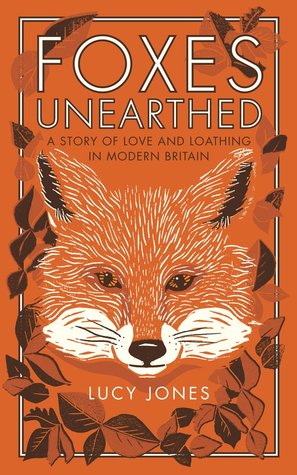 The book proper opens with a visit to Roald Dahl’s house, now a Buckinghamshire museum, where he wrote Fantastic Mr. Fox. Still one of the best-known representations of foxes in British literature, Dahl’s Mr. Fox is a Robin Hood-like hero, outsmarting a trio of mean-spirited farmers to provide a feast for his family. Foxes’ seemingly innate wiliness prompts ambivalent reactions, though; we admire it, but we also view it as a threat or an annoyance. As Jones puts it, the fox of fables and traditional stories is “a villain we cheer for.”
Not everyone cheers, of course. Under Henry VIII, the Vermin Acts of 1532 (not repealed until the 1750s) promised a reward to anyone who killed foxes, then considered a nuisance animal. Fox hunting and the cruel sport of “tossing” have a long history that eventually came up against the movement towards animal welfare, starting with Jeremy Bentham in the 1740s and codified by the 1911 Protection of Animals Act. Meanwhile, Jones notes, children’s books advocating compassion for animals, such as Anna Sewell’s Black Beauty (1877), ensured that the message made it out of the legislative chamber and into everyday life.
The second chapter is a useful survey of fox behavior. Foxes are omnivores, and in recent decades have started to move into Britain’s cities, where they find plenty of food to scavenge. In rural settings, foxes are still the subject of farmers’ loathing even though they rarely take lambs and actually help keep rabbit numbers in check. Still, the stereotype of foxes killing for fun instead of for hunger persists, whereas they in fact cache their surplus food. Chapter 3 asks whether fox numbers have reached pest status and considers various control strategies, from straightforward culling to the non-lethal methods supported by conservationists.
I enjoyed Jones’s meetings with figures from both sides of the debate. She goes along on a fox hunt, but also meets or quotes animal rights activists, academics, and high-profile nature promoters like Chris Packham. All told, though, I felt the book could have been closer to 200 pages than 300. Most chapters are very long, and some could easily be combined and/or shortened. For instance, Chapter 1 relays the amount of information about fox hunting that most readers will be prepared to absorb, yet it’s then the subject of two more chapters.

At the British Wildlife Centre in Surrey. Photo by Chris Foster.
This is an important book for correcting misconceptions, but your enjoyment of it may be in proportion to your personal interest in the subject. In terms of fonts and cover design, though, you’re unlikely to come across a more gorgeous book this year.
Foxes Unearthed was published in paperback by Elliott & Thompson on March 16th. Thanks to Alison Menzies for arranging my free copy for review.
To encounter foxes in fiction, try the following:
- Glow by Ned Beauman
- The Many Selves of Katherine North by Emma Geen
- Midwinter by Fiona Melrose
- The Soho Leopard by Ruth Padel (a poetry book with a sequence on urban foxes)
& the forthcoming How to Be Human by Paula Cocozza (April 6th).
 Bookish Beck = Rebecca Foster. American transplant to England. Freelance proofreader and book reviewer.
