Get Ready for Novellas in November! (#NovNov26)
Novellas: “all killer, no filler”
~Joe Hill
Hard to believe it’s nearly that time again. For the SEVENTH year in a row, Cathy of 746 Books and I are co-hosting Novellas in November as a month-long blogging and social media challenge celebrating the art of the short book (we include nonfiction, too). A novella technically contains 20,000 to 40,000 words, but to keep things simple we define it as any work under 200 pages.
This year’s buddy read is a 2024 novella translated from the Japanese last year:
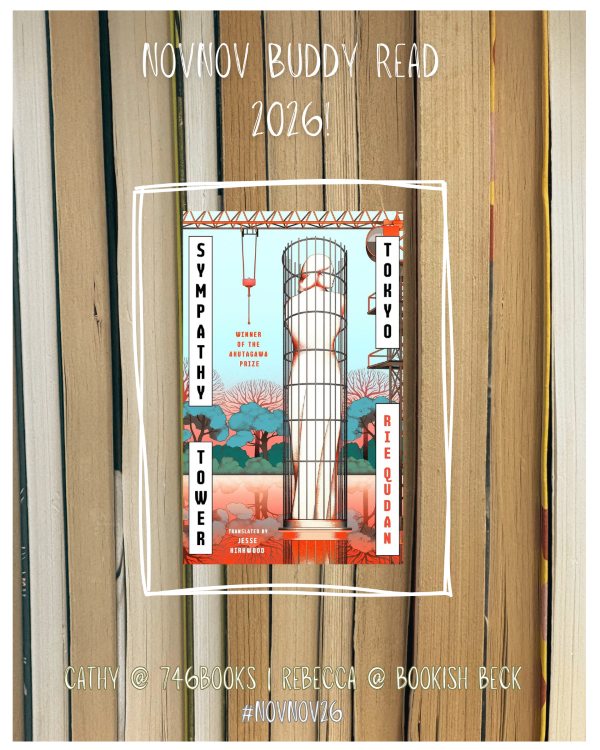
Sympathy Tower Tokyo by Rie Qudan [translated by Jesse Kirkwood] is the author’s fourth novel and won the Akutagawa Prize. An architect named Sara Machina is assigned to design a city skyscraper meant to house criminals in comfort. While trying to navigate a middle way between compassion and recrimination – complicated by her own past victimhood – she converses with an AI chatbot. This engaging exploration of language, creativity and conformity comes with high praise from writers ranging from Helen Phillips to Bryan Washington. (134 pages)
Please join us in reading this any time between now and the end of November!
You might like to start off the month with a My Year in Novellas retrospective looking at any novellas you have read since last year’s NovNov and finish with a New to My TBR list based on what short books others have tempted you with.
It’s always a busy month in the blogging world with Nonfiction November, German Literature Month, Margaret Atwood Reading Month and SciFi Month. Why not search your shelves and/or local library for novellas that could count towards multiple challenges?
From 19 October a link-up post will be pinned at the top of my site so you can add your planning posts and book lists. Keep in touch via Bluesky (@bookishbeck.bsky.social / @cathybrown746.bsky.social) and Instagram (@bookishbeck / @cathy_746books) and feel free to use the terrific feature images Cathy has made plus our new hashtag, #NovNov26.
Late Summer Novels (Bamford, Ellis, Hornak, King) & Poetry Collections for the Transition into Autumn (Hurst, McNish, Plath)
It’s been feeling autumnal for a few weeks now with the drizzle, chilly mornings and evenings, honking of geese overhead, and harvesting our last garden apples – though it remains warm and summer only officially ended on Monday. I’ve recently finished off a summer-titled trilogy and the second entry in a seasonal quartet. I’m also throwing in a couple fun novels I bought earlier in the year.
Before and after Tuesday’s autumn equinox, a few poetry collections have been my fitting companions for the start of a new season.
Idle Grounds by Krystelle Bamford (2025)
 “The following is an account of an afternoon in June in which we sallied forth, and then, for the most part, back.” I was drawn in by the mock-heroic first-person plural voice of a gaggle of cousins at a New England family get-together. It’s 1989 and they’re here for one of the adults’ birthdays, but that’s of no concern to the kids, who are a world unto themselves. In the first chapter, three-year-old Abi goes missing and the rest set out on a quest to rescue her. The shed, the woods, a driveway full of cars, the river: every setting seems to offer adventure, but maybe also danger. And then the oldest boy cousin, Travis, vanishes too. “Intermezzo” chapters offer snippets of family lore – about their grandmother Beezy’s awful novel, The Lilac Swing, and so on – that don’t add much of interest to this meandering novella. To deliver on the promise of the narrative voice, Bamford needed to give her debut a little more: more intrigue, more pivotal scenes, more closeness to a few characters rather than surface descriptions of a bunch, maybe more pages to make something of the not-so-momentous family secrets. As it is, I had to agree with this tongue-in-cheek line on p. 136: “in our depleted state, we thought the very thought you’re thinking now, which is enough already.” (New purchase with voucher – Hungerford Bookshop)
Book 3 of The Summerhouse Trilogy
The Fly in the Ointment by Alice Thomas Ellis (1989)
{BEWARE SPOILERS!}
 Following The Clothes in the Wardrobe (1987) and The Skeleton in the Cupboard (1988), this novella revisits the run-up to Margaret and Syl’s wedding from Lili’s perspective. It’s the shortest of the three books and adds no new plot details or real character insight, but Lili’s voice is alluring all the same. She’s an incorrigible flirt, or perhaps what we would now call a love (not necessarily sex) addict: “Sometimes I felt I would disappear if I couldn’t see the person opposite falling in love with me. I just wouldn’t be there.” Lili is pivotal to the narrative because of her well-meaning interventions: first, she falsely portrays the coming union as blessed by creating a fake (tissue paper) bloom for the cactus in the summerhouse; then, in agreement with other characters such as Mrs Monro that there shouldn’t be a wedding after all, she decides to sabotage it by ensuring that she and Syl be caught in flagrante in the summerhouse. While this was an interesting project for Ellis to undertake, the first volume was by far my favourite and I didn’t think the second and third wholly necessary. (Secondhand – Regent Books, Wantage)
So Good to See You by Francesca Hornak (2025)
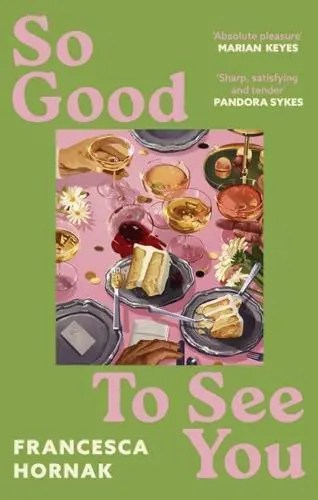 Daniel, Rosie and Serge were good friends at Oxford but since their graduation in 2004 they’ve drifted into indifference and resentment. Daniel is a Hollywood star but still can’t forgive filmmaker Serge for stealing his idea for a biopic of a working-class lad. Serge is on a break from his relationship with Isla, a younger movie makeup artist with whom he has twins. Rosie regrets that her on-again, off-again relationship with Serge meant she wasted prime years. In August 2019, they’re all brought together for Serge’s cousin Caspar’s big gay wedding in Provence. The Campbell cousins come from inherited wealth, but no one knows Serge’s production company is heavily in debt. As best man and “best woman,” Serge and Rosie have to write a joint speech; Daniel has to hide his dependency on alcohol and drugs.
This is a light, Taylor Jenkins Reid-esque soap opera that I swallowed in big gulps. I’d enjoyed Hornak’s Christmas-set debut, Seven Days of Us (2017), but when I looked back at it I realised how identikit the two are: set mostly over a matter of days, with each chapter marked by a precise place and time stamp. I guess she hit on a winning formula and decided to repeat it, but I was disappointed to notice the similarity. In this case, zooming in slows the action and makes the book feel overlong, though it’s perceptive about class, privilege, disappointment, the longing for parenthood, and loyalty among family and friends. (Her previous novel now seems almost prescient with its depiction of a Christmas in quarantine! Perhaps I’ll reread it.) (New purchase with voucher – Hungerford Bookshop) 
Apt Pupil by Stephen King (1982)
(Novella published in Different Seasons under the heading “Summer of Corruption”)
{BEWARE SPOILERS!}
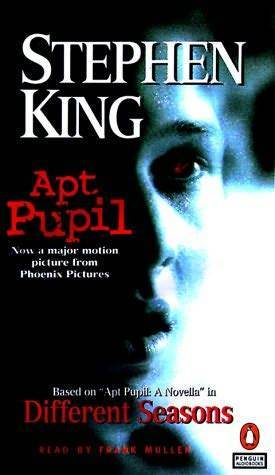 Thirteen-year-old Todd Bowden becomes obsessed with his elderly neighbour, whom he has identified as German concentration camp officer Kurt Dussander, in the summer of 1974. His parents think that he goes over to read to “Mr. Denker,” but in fact he’s extorting sordid war stories out of the old man. When Todd’s grades nosedive, Dussander agrees to impersonate his grandfather at a conference with the school counsellor so his parents remain oblivious. Now each has dirt on the other; blackmail goes both ways. The book suggests Dussander’s ongoing sadism sparks something inexorable in the young man, and both engage in further senseless carnage. I wasn’t sure if it was respectful of King to treat the Holocaust like a contagious sin. As Todd’s (real) grandfather says, “Sometimes the past don’t rest so easy. Why else do people study history?” I don’t think an editor would have let the story stand today. This is not as full-on horror as others I’ve read by King (Misery and Pet Sematary), but still gruesome and – for an animal lover like me – Dussander’s torture of cats and dogs was harder to read about than the murders of unhoused people. A neat connection back to Rita Hayworth and Shawshank Redemption, which I read back in the spring: Dussander mentions that “The banker who bought [the stocks] for me went to jail for murdering his wife a year” later in Maine. (Little Free Library)
Three on a Theme: Autumnal Poetry
Keats described autumn as the season of “mellow fruitfulness,” as I was reminded by Kate Mosse’s Autumn. Fruit and feminism are themes that link these three collections. All:
The Fox’s Wedding by Rebecca Hurst (2022)
 I’ve read Hurst’s debut full-length collection, The Iron Bridge, and jumped at the chance to catch up on her previous chapbook. Its hint of fairy tale menace feels appropriate for early spooky season. A witch turns into a hare and flees in “Familiar.” The girl who will win the hand of “The Frog Prince” spends her evenings “squashing worms and slugs and snails beneath / the crêpe soles of her black school shoes.” Needlecraft recurs: “Once there was a child/ who woke alone in the forest. … S/he took the path of needles / to ask needle-sharp questions.” There are folktale rhythms to “Brothers,” which also mentions gingerbread men. The woods morph with the advance of the year (“let the seasons pleat / folding one year to the next”) and hide creatures real and imagined. “Now it is Michaelmas: the land sun-warm, / fields shorn, blackberries ripe to bursting.” The atmosphere of this pamphlet – defiant, magical, mischievous – casts a spell. (New purchase from The Emma Press)
Plum by Hollie McNish (2017)
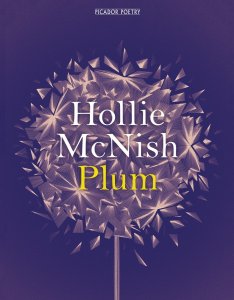 A late tree-shaped poem captures a treasured ritual with her daughter. But if I tell you that “plum” is also the last in a long string of euphemisms for female genitalia in “Voldemort,” that will give a better sense of McNish’s tone, which is often cheeky and snarky. She includes poems she wrote as a child and teenager but also remembers her adolescence from adulthood, pinpointing moments of peer pressure and misogyny that she experienced. She wishes she and her friends had been less obsessed with what boys thought of them and hopes to teach her daughter to stand firm in her own identity. McNish has local roots and is known for her conversational memoirs and her spoken word poetry. Like Harry Baker, Jay Bernard and Kae Tempest’s works, it’s probably not best encountered in print. In performance, fairly simple and repetitive phrasing can come to life. (Secondhand – Library book sale)
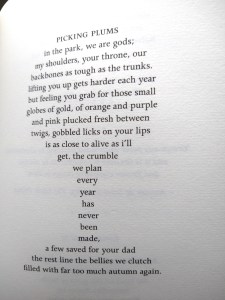
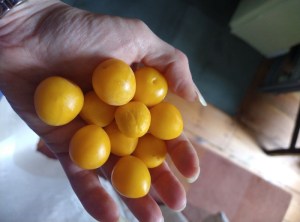
I spend the summer months watching like a hawk for when wild and waste-ground plums ripen and fall so I can scurry around gathering them to eat or freeze for autumn and winter desserts. Our cherry plum tree produced its first fruits this year, too (below).
Crossing the Water by Sylvia Plath (1971)
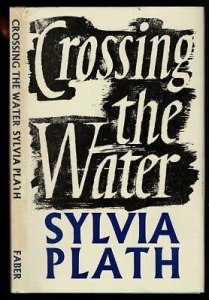 I got less out of this posthumous collection than I did from Ariel and Winter Trees, but there are still striking turns of phrase: “The future is a grey seagull / Tattling in its cat-voice of departure, departure” (from “A Life”) and “At our feet, the weed-moustachioed sea / Exhibits its glaucous silks” (from “Whitsun”). Canada, age, sleep, surgery: the imagery feels a little all over the place. The stand-out poems for me were “Small Hours,” in which marble statues metaphorically watch over the speaker’s troubled insomnia, and “Mirror,” which reflects the unstoppable advance of age and contrasts true self with appearances. Most redolent of autumn were a poem about pheasant hunting and “Blackberrying”:
Nobody in the lane, and nothing, nothing but blackberries,
Blackberries on either side, …
A blackberry alley, going down in hooks, and a sea
Somewhere at the end of it, heaving. Blackberries
Big as the ball of my thumb
The Devon lanes aren’t so empty these days, I can attest! A line from “Last Words” ties in perfectly and is a good resolution for us all: “I should sugar and preserve my days like fruit!” (University library)
I started my preserving late and will not do as much as I have in other years. So far I’ve made apple and tomato chutney and set some rosehip cordial steeping. This afternoon I’m going to attempt rosehip curd – we found a jar of “hagebutten” in a Berlin supermarket this time last year and it was so delicious that we’re going to try to recreate it, though it requires laborious deseeding and mincing plus two boiling stages. More Vitamin C than orange juice, apparently!
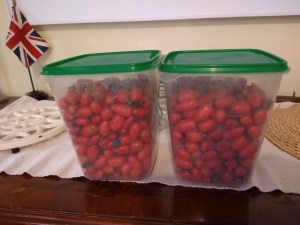
Rosehips ready for preserving!
20 Books of Summer, 14–16: Danticat, Ravn (#WITMonth) & Woolf
Today I have a tender Haitian American bereavement memoir, a shocking slice of Danish sci-fi about humans and robot hybrids aboard a spacecraft, and a reread of a delightful and rather overlooked classic. I’ll spend the rest of the weekend scrambling to finish my last few books to review on Monday!
Brother, I’m Dying by Edwidge Danticat (2007)
But isn’t death, no matter how or when it takes place, always solitary?
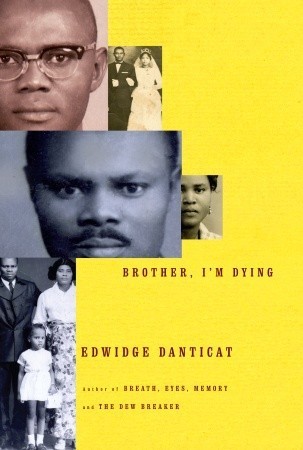 I’d read and enjoyed a novel and a short story collection by Danticat, so when I learned there was a bereavement memoir in her back catalogue I knew I had to have it. It opens with, and continues in the vein of, the conjunction of life and death: on the same day in 2004, Danticat found out she was pregnant with her daughter and her father was diagnosed with end-stage pulmonary fibrosis. She spent a year moving between her home in Miami and her parents’ in New York City. At the same time, her uncle, a pastor who raised her and her brothers for eight years back in Haiti after her parents left to set up the family’s new life in America, was in crisis. Gang warfare was rife in his neighbourhood and there had been threats against his church and against him personally. Aged 81, he flew to Miami, confident he would be accepted as a political refugee because his life was in danger. Instead, he was taken to a detention centre and denied his medications; he subsequently fell ill and died in a local hospital. All this happened in a few days. Danticat’s father outlived his brother, but only long enough to meet his granddaughter and namesake, Mira. I got a bit lost in details of family history and military coups, while my interest was piqued in her uncle’s earlier trip to the US for throat cancer treatment (thereafter his Kreol came through an electronic voicebox). This is an understated work that lets the awful facts speak for themselves. Ron Charles says of her new novel, Dèy, which takes on U.S. gun violence, that it exhibits the same “tempered outrage” as much of her work; maybe too mild for me. (Secondhand – gift from my wish list)
The Employees: a workplace novel of the 22nd century by Olga Ravn (2018; 2020)
[Translated from Danish by Martin Aitken]
Maybe the humans are that very element of chaos that keeps the world alive.
 I knew about this from its International Booker Prize shortlisting. It took me nearly a third of the book to figure out what was going on because I’d avoided reading the blurb, but once I got it I was hooked into something like a sharper, horror-tinged version of Orbital. The novella is structured as a series of 100+ statements, in semi-random order, collected as part of an 18-month workplace tribunal. Each is about a page in length. All are voiced by crew members of the Six-Thousand Ship. Part of Statement 067 reads: “There’s humans, and then there’s humanoids. Those who were born and those who were made. Those who are going to die and those who aren’t.” It’s not always clear who is who. A trove of “objects” (I never quite decided what these are) the spacecraft takes on at a planet stop prompts musings about memory and emotions, loyalty and freedom. The humanoids, grown in a two-year process, are perfect workers from day 1. It’s their “responsibility to make sure the human section of the crew don’t buckle under to nostalgia and become catatonic” – like those who only want to spend time with holograms of their children. The humanoids have had longings implanted in them, to “move in with someone, get married, bake cookies, push a pram, learn to play an instrument, dance a waltz. I think I’ve seen all this in your educational material, is that right? What are cookies?” There’s humour here, but also a growing air of menace. When violence breaks out, it doesn’t just derail the mission, but threatens the whole future. My jaw dropped at the dark turn of events and the bleak but profound phrases it engenders:
I don’t think we as a category are going to survive.
I got the strong feeling that we have failed, and that our time is over.
How can we live with the knowledge that none of these days will be remembered by anyone, not even ourselves?
With the lines so blurred, we’re forced to ask what is essential to humanity. Mysterious and sobering, this is both a meditation on identity and autonomy and an elegy for life on Earth. (Secondhand – Hungerford Bookshop) 
Flush: A Biography by Virginia Woolf (1933)
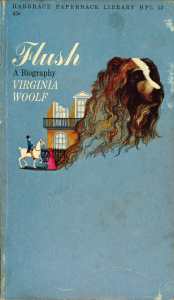 Woolf’s novels are so demanding that it’s good to be reminded she also knew how to have fun. Flush is a cheeky short ‘biography’ of Elizabeth Barrett Browning’s cocker spaniel, spanning the dog’s whole life but even (in a few prologue-like pages) dipping back into prehistory when his ancestors hunted rabbits in Spain. I was tickled to discover that Flush’s first owner was Mary Russell Mitford of Three Mile Cross near Reading – I know of her as a local author and have a copy of her book Our Village. Only because the Mitfords were desperate for money was she willing to sell him to her invalid friend, Miss Barrett. And so in 1842, Flush, used to chasing pheasants in the countryside, has to adjust to life as a city lapdog. He witnesses Miss Barrett’s compulsive letter-writing (“she would lie hour after hour passing her hand over a white page with a black stick”), Robert Browning’s courtship, and their preparations for moving to Italy and welcoming a baby with a mixture of ignorance and alarm. His dignity comes under attack by fleas, and by thieves who hold him to ransom for five days in a London slum – a thrilling central chapter in an otherwise serene narrative. As in Mitz by Sigrid Nunez, which is an homage to Flush, there is dramatic irony between what readers understand and a pet cannot. He mostly experiences the world through the senses, and there are lovely passages where Woolf rhapsodizes about what Flush smells and feels: “He knew Florence in its marmoreal smoothness and in its gritty and cobbled roughness.” Whether you’re a Woolf (or Barrett/Browning) fan, or dog lover, or not, this is an offbeat charmer. (Secondhand – Wonder Book and Video)
My original rating (2013):
My rating now:
20 Books of Summer, 12–13: Strange Weather in Tokyo (#WITMonth) & Mitz
Two terrific novellas I’m belatedly writing up today, one my first selection for Women in Translation month and the other a contribution to Virago’s “Summer of Sigrid.” Both:
Strange Weather in Tokyo by Hiromi Kawakami (2001; 2012)
[Translated from Japanese by Allison Markin Powell]
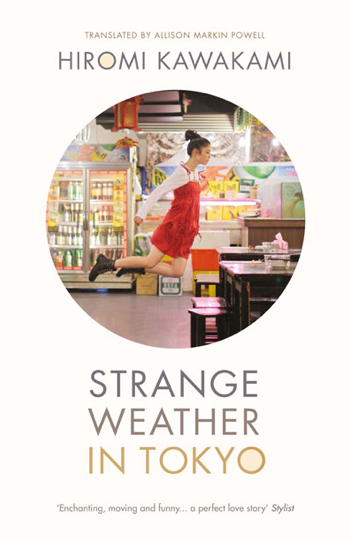 Tsukiko is a lonely barfly in her late thirties when she bumps into her secondary school Japanese teacher, Harutsuna Matsumoto, again. She calls him simply “Sensei,” and they start meeting up for low-key adventures: sharing tofu and saké at Satoru’s bar, marking annual holidays, and leaving the city to forage for mushrooms and visit his late wife’s island grave. Sensei quotes poetry and, ever the teacher, gently corrects his former pupil’s language. Tsukiko is an impassive young woman who never seemed to grow up (“I … still might not be considered a proper adult. … I just wasn’t able to ally myself with time”) and is prone to drinking too much, but finally starts to get a grip on her emotions thanks to this new connection.
Each chapter is discrete, building into a linked short story collection. The erratic (non)use of speech marks somehow didn’t bother me as it seems to suit Tsukiko’s slight disorientation. Kawakami infuses the book with attention to the seasons’ changes and everyday sensual pleasures like food. A drunk at the bar speaks for us readers when he asks the main characters, “You two, just what are you?” The nature of their bond is hard to pin down. Tsukiko is also courted by Kojima, a more age-appropriate boyfriend, but she feels nothing for him. Instead, a May–December relationship unfolds like cherry blossom, ever so gradually, from friendship into something deeper. Powell manages to fit some wordplay into her translation, as in this gently erotic passage:
At some point, sitting beside Sensei, I began to notice the heat that radiated from his body. Through his starched shirt, there came a sense of Sensei. A feeling of nostalgia. This sense of Sensei retained the shape of him. It was dignified, yet tender, like Sensei.
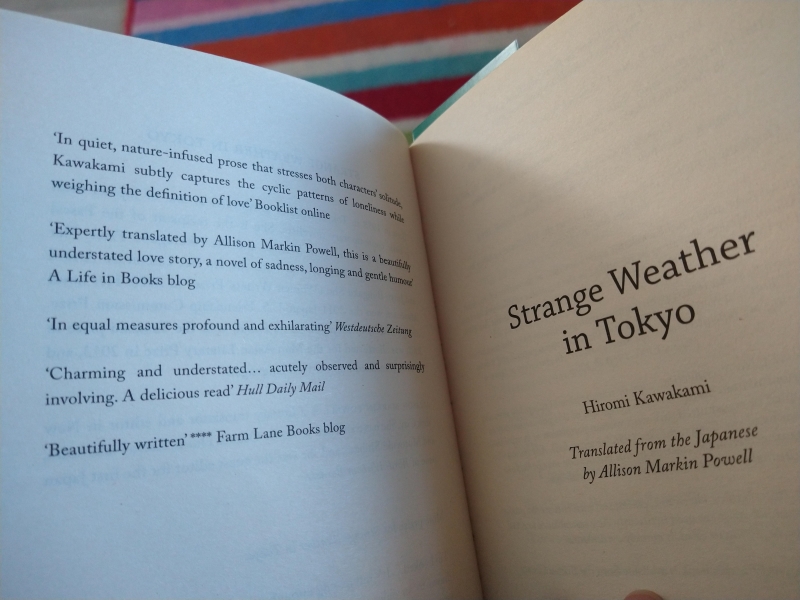
From the title and cover image, I might have expected the magic realism so common to Japanese literature, but this is something different: a lovely, subtle romance. It’s a reminder that it doesn’t have to be torrid passion to be true love. “Even a chance meeting is the result of a karmic connection,” as Sensei quotes. Susan (A life in books), whose review is excerpted in my paperback copy, is quite right. Kawakami was a great new discovery and I’ve got my eye on several more of her books: The Nakano Thrift Shop from the library and Record of a Night Too Brief and Far from Everywhere (forthcoming in February) on my e-reader. (Secondhand – Community Furniture Project, Newbury)
Mitz: The Marmoset of Bloomsbury by Sigrid Nunez (1998)
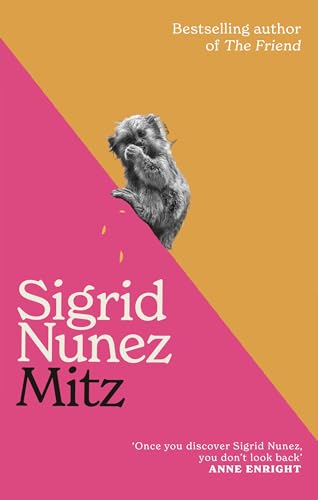 What a fun little book from Nunez’s back catalogue! On the one hand, a fictional mini-biography of the Woolfs by way of their pet marmoset might seem like a random choice of topic; on the other hand, you can see the seeds of her future autofiction in which human–animal connection is a starting point for wide-ranging meditations on life and death (a dog in The Friend; a parrot in The Vulnerables; and even, to a lesser extent, the cat in What Are You Going Through).
Mitz is a small monkey who induces strong, conflicting reactions: “You looked at her and thought, How grotesque. And the very next instant, How adorable. And then, How grotesque, again.” She takes a shine to Leonard on a visit the Woolfs pay to their friends the Rothschilds in 1934, and before long they’ve offered to take Mitz home to share their London and Sussex life, along with Pinka and Sally, the spaniels they had in succession. Mitz’s favourite spot thereafter was sat on Leonard’s shoulders, or napping on his feet. She accompanied the couple on their travels, too, so distracting people in Germany that Virginia would write in a letter that “the marmoset saved us from Hitler” (Leonard was Jewish). Visitors were less enamoured, thinking Mitz dirty and bad-tempered.
In any case, the creature was a lucky accessory to genius, and Nunez makes her our eyewitness to the composition of works such as Roger Fry and The Years:
From a distance, then, Mitz observed Virginia. And she saw how this mysterious activity that could bring such a flush to Virginia’s cheek could also have quite the opposite effect: Virginia was as white as her own writing paper. She scribbled and slashed; she muttered and she groaned and she cursed. She jumped up from the chair and wandered in circles about the room.
How much Mitz understands of ageing, death, and conflict, can never be known. These were tumultuous pre-war years, during which Virginia lost a nephew and fascism loomed large. Nunez sets personal cataclysms against international ones, imagining Mitz’s journey from a Brazilian forest, via a hellish ship, to the London junk shop where she was made to sit in a draughty window to drum up business. That she spent her last five years so loved and cosseted was a stroke of good fortune. Her death ends up feeling like a more general omen, as in the book’s final line: “It was Christmas Day, the last year of peace.”
I was reminded of the complications of keeping an exotic pet in My Animals and Other Family by Julia Blackburn, in which she buys Congo the bushbaby from Harrods (and there is also a family spaniel). As part of the backmatter of this reissue, a thank-you letter from Nigel Nicolson to Nunez and a 2019 afterword by Peter Cameron note the undeniable inspiration of Virginia Woolf’s Flush, a playful short biography of Elizabeth Barrett Browning’s cocker spaniel (for whom Pinka, a gift from Vita Sackville-West, was a model). I fancied rereading Flush so have picked that up as one of my substitute Books of Summer and am enjoying discovering the connections between it and Mitz. More anon.
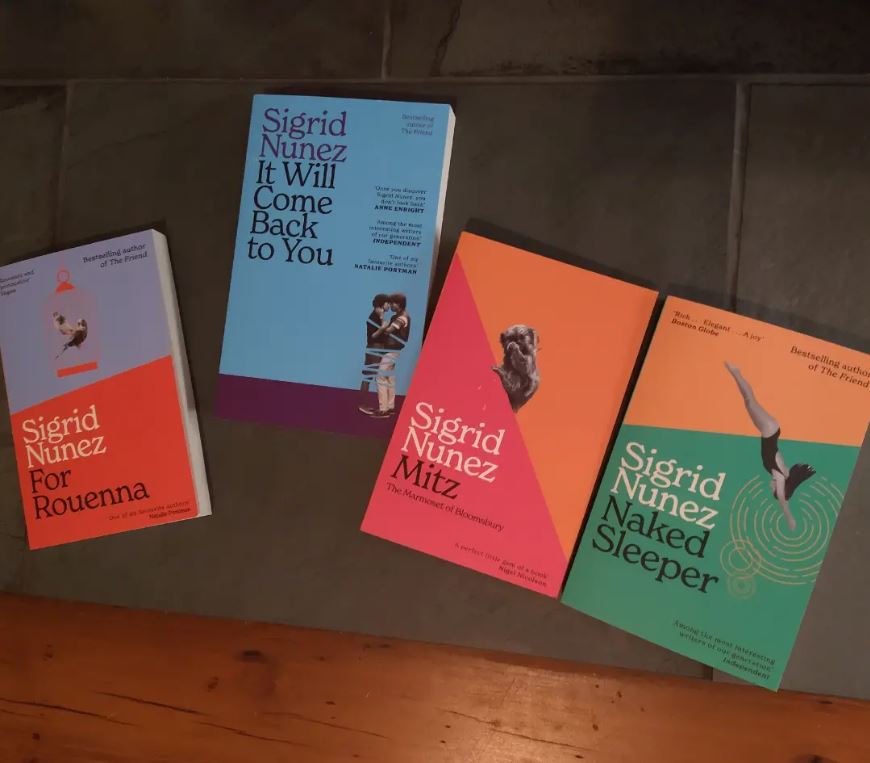
With thanks to Virago for the free copy for review, one of several matching reissues they sent me as part of their “Summer of Sigrid.”
#ReadingtheMeow2026, Part II: George Mikes & Louise Ross Memoirs; Letters of Note: Cats
I’m a few days late with this second batch (after my first post on some Chinese and Japanese cat books). Thanks again to Mallika of Literary Potpourri for hosting the annual Reading the Meow challenge, which is always a great excuse for me to get to a handful of the many cat books on my shelves and e-readers.
Tsi-Tsa by George Mikes; illus. Nicholas Bentley (1978)
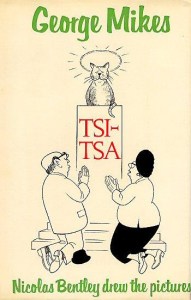 Mikes wasn’t an animal lover at all, but when Tsi-Tsa (from the Hungarian cica, which means pussycat) started turning up in his London house, he finally got it. “A man who had made fun of British cat-worship for several decades, I fell for Tsi-Tsa in the grand way – at first without even noticing it,” he writes. She was actually Sooty, his neighbour’s cat, but so determinedly adopted Mikes – sleeping on his chest, with her right paw on his left shoulder – that her owner told him he could have the cat. His transformation into an ailurophile was soon complete: “The days when I thought that all cats were alike – that a cat was a cat was a cat – have long passed. … By now I am fully aware that cats differ from one another as significantly – and are as much individuals – as humans, or more so.”
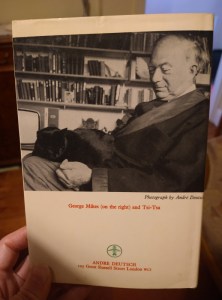 Most of the book is devoted to two crises: his diagnosis of impending blindness, and Tsi-Tsa going missing. If you’re wary of cat memoirs because the pet tends to die at the end, you needn’t worry. This ‘biography’ of Tsi-Tsa ends with her very much alive, having learned to adjust to her physical limitations after being hit by a car. I’ve read several of Mikes’s books, including the trilogy of satirical expat advice books that make up How to Be a Brit. This is similarly light-hearted, if a little insubstantial. If you’ve enjoyed books by Derek Tangye and Doreen Tovey, you’ll find it comparable. (Secondhand – Addymans bargain alley, Hay-on-Wye)
And another novella-length memoir about a black cat that makes itself at home and becomes part of the family!
Slow Blink: A Memoir by Louise Ross (2026)
A 1927 book found on her elderly father’s bookshelf, the poetry collection archy and mehitabel by Don Marquis, sparked Ross’s journey into memory for a look at two very special cats. In Marquis’ book, Archy the cockroach was a human poet in a previous life, while Mehitabel the alley cat was Cleopatra. Ross’s family thus gave to one of their cats the noble name of Mehitabel, and she became the girl’s best buddy as she was growing up in Australia. It became a nightly ritual: her mother would put the cat outside, Mehitabel cried underneath Ross’s window, which she opened to let the cat sneak in and share her bed. In the morning, back out Mehitabel would hop, dashing round to the laundry room yard to pretend she’d been outside all night. Boarding school, early career and travels drove the friends apart somewhat before Mehitabel died at the venerable age of 22.
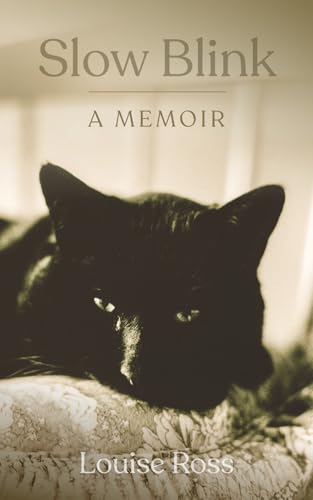 Eight years later, Ross was living in Colorado with her husband and struck up a friendship with a stray black cat who hung out by the bins of their townhouse complex. Eventually he came to trust her and even to shelter indoors from harsh winter weather. What name to give him? Archy, of course. He survived their landlord’s laying down of the law as well as a period of being lost miles away before dying of feline leukaemia. It was only a yearlong relationship in the end, but it had a lasting effect, not least because Ross continued to see Archy after his death. Future losses only reinforced for her the idea that something continues beyond death. “He taught me that some experiences can’t be explained, and that love persists in ways we don’t understand but can, if we’re open and willing, receive.”
While not all pet owners will have experience of such a literal enduring relationship, we can all affirm the strength of the bond with animals, and I also appreciated Ross’s brief (95-page) memoir for its marveling at life’s twists and turns – she now lives in Portugal and has published two volumes of interviews with fellow expatriates and immigrants living there.
With thanks to the author for the free e-copy for review.
Letters of Note: Cats, ed. Shaun Usher (2020)
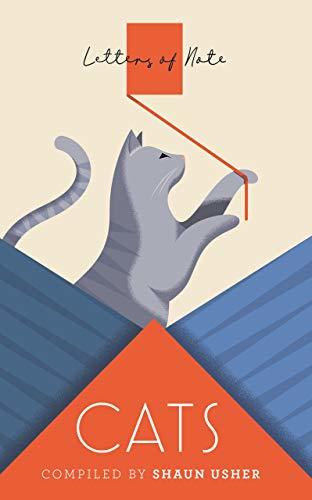 Canongate’s series of short thematic letters anthologies launched in 2013, arising from the website lettersofnote.com. There’s a variety of encounters and experiences here, and the tone ranges from forlorn or silly to outraged. Elizabeth Taylor mourns her missing cat and Jack Kerouac’s mother informs him of the death of his pet. T.S. Eliot tries out the cat-themed nonsense verse he’d become famous for in a birthday note to his godson. Jack Lemmon proposes a cat ranch to his pal Walter Matthau; Erasmus Darwin (grandfather of Charles) and poet Anna Seward exchange slightly saucy ‘love letters’ written in the voices of their cats. Charles Dickens and Jane Carlyle both recount cats’ vendettas against pet canaries.
Some letters are more interesting than others, as you’d expect. There are nice glimpses of cats’ oddities – a reminder that, in many ways, they’re the same across centuries and countries. I was most struck by two entries. One was Adlai Stevenson’s official objection to an Illinois Senate bill proposing owners restrain cats on leashes so they can’t kill birds. “The problem of cat versus bird is as old as time,” he rightly observes, but I can personally attest that leash training works and means our little hunter only kills spiders and houseflies instead of … everything that moves. This environmentalist bill would have been ahead of its time for 1949. The most affecting piece was an open letter by Guy Davenport to the drivers of Lexington, Kentucky, one of whom ran over his cat. It’s a brilliant miniature polemic. This was intermittent entertainment; fun to browse or sample. (Secondhand – hospital book sale)
Spring Reading, Part II: Helen Bain, Stephen King & Ivan Turgenev
When I posted for the first day of spring, I noted that it was already like early summer in the UK. Today it feels like summer is here to stay. After an April with just 18% of normal rainfall, our pond is looking half-empty. It was a surprisingly chilly mid-May, but really hot weather (low 30s C / high 80s F) is moving in just in time for the bank holiday weekend. Myriad insects find a haven in our lush, unmowed garden full of trees, wildflowers and so-called weeds. Benny is closely supervised on his three or four daily walks in this garden jungle. I love to see swifts wheeling through the sky, but I’d happily sacrifice the sun to get some more rain.
My three selections for this batch of seasonal reading are an excellent forthcoming novel about Sylvia Plath, a historical novella that’s become well known through the movie version, and obscure Russian classics about infatuations that end in heartbreak.
The Daffodil Days by Helen Bain
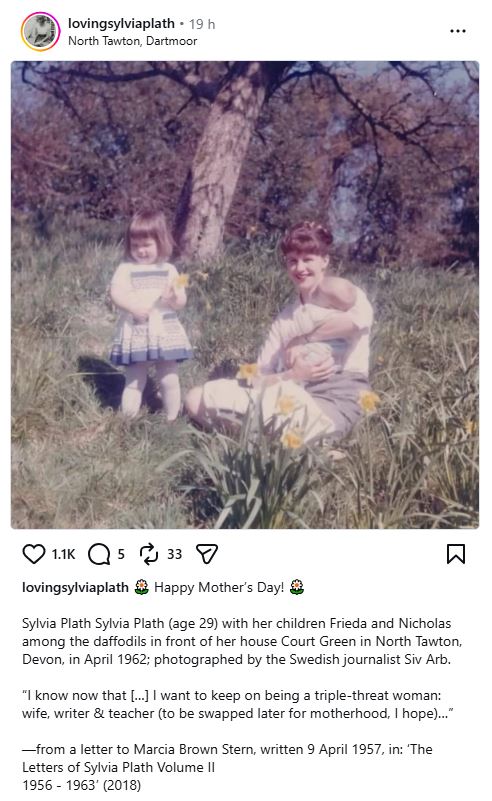
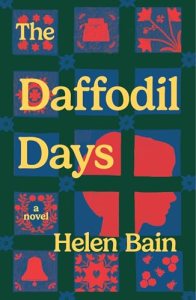 (A quick preview as my full review will be published on Shelf Awareness next month.) A bit of background: Ted Hughes and Sylvia Plath moved from London to Court Green, a thatched house with two and a half acres of land in North Tawton, Devon (southwest England) in August 1961. They had separated and each moved into lodgings in London – her with their two children – by December 1962, with Plath vowing to return to her beloved house and garden in the spring. Instead, she died by suicide in February 1963. This debut novel covers much of the last 18 months of Plath’s life, but in an inventive way: 16 linked short stories – each from the perspective of a different writer friend, family member, or local acquaintance – illuminate Plath’s personality and state of mind through the interactions they have with her. It’s everyone from her midwife to a washing machine salesman. We learn not just about Plath but also the norms of the time, e.g. through young women she meets at a dress shop and in a BBC recording studio. There are also glimpses into her literary milieu through a visit from Al Alvarez and reminiscences from the Kanes and Merwins. The title refers to her garden’s daffodils, so bountiful that she sells them, which strikes her neighbours as a typically American act of crass gumption. The really genius thing about this structure is that the vignettes go backward in time, so we aren’t approaching her inevitable end but anticipating her prime. Bain’s prose reminds me of Tessa Hadley and Andrew Miller. (Edelweiss)
Rita Hayworth and Shawshank Redemption by Stephen King (1982)
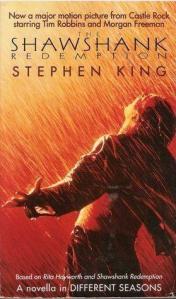 This novella was published in Different Seasons under the heading “Hope Springs Eternal.” You probably know the story better through the 1994 film The Shawshank Redemption.
“They found him guilty, and brother, if Maine had the death penalty, he would have done the airdance before that spring’s crocuses poked their heads out of the dirt.”
Andy Dufresne was wrongfully imprisoned for the murder of his wife and her lover in 1947. While he bides his time until the workings of justice or his own spectacular efforts can get him free, he makes himself useful as the prison librarian and an unofficial financial advisor (he was a banker back in the real world). He fights back against attempted sexual assaults, too. The narrator, Red, can get anyone anything on the black market, and Andy has made two very specific requests over the years: a rock hammer to continue his geology hobby, and a poster of Rita Hayworth to hang in his cell – replaced in turn, as years stretch into nearly three decades, by Marilyn Monroe, Jayne Mansfield, Raquel Welch, and Linda Ronstadt. All along, the hope of there being a life away from this place keeps Andy, and Red, going. Even though I knew what happened thanks to the movie, this was a quick, amusing, and heartening read. I’ll probably go on to read the other three in the omnibus. (Little Free Library)
The Torrents of Spring (& First Love & “Mumu”) by Ivan Turgenev (1871; 1860; 1854)
[Translated from Russian by Constance Garnett]
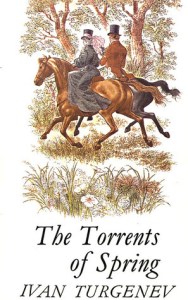 I’ve found Turgenev to be a particularly readable Russian master whose novels are short and accessible enough as to not be daunting (unlike Dostoevsky, Tolstoy and the like, who I’ve never attempted). I had a bit of confusion over this on, not realising my download included the novella First Love and the short story “Mumu” as well, so The Torrents of Spring ended sooner than I expected. It’s said to be highly autobiographical, but I haven’t looked into the links with Turgenev’s life. Twenty-two-year-old landowner Dimitri Sanin is in Frankfurt as part of a world tour. By chance, he rescues young Emil from a swoon and meets his family of Italian confectioners. Captivated by Emil’s sister Gemma’s simple beauty, he fights a duel to defend her honour and gets her to give up her tedious German fiancé for him. His plan is to stay and remotely sell his estate (complete with serfs) to a fellow Russian abroad – the wife of Polozov, a man he happens to know from childhood. But, as in Dangerous Liaisons, Maria Nikolaevna is a seductive schemer who steals his gaze away from Gemma just because she can. This was a gently Hardyesque tragicomedy about what’s fated versus the decisions and weaknesses that change everything. Turgenev explores what happens when money, love and lust don’t align, and leaves us with the aura of inevitable regret.
 The other two stories share that theme of capricious women. In First Love, sixteen-year-old Vladimir Petrovich is one of many suitors vying for the affections of his next-door neighbour, the young princess Zinaïda. He’s so smitten that when she says jump, he basically asks how high (and it ends up being 15 feet down from a wall). There’s an unexpected twist in this one that makes you question the young man’s family dynamic. The message can be summed up by the advice he’s given by another suitor: “The great thing is to lead a normal life, and not be the slave of your passions.” I was interested to note in both novellas that French is spoken as a marker of the upper classes.
 “Mumu” started off promising, but I should know by now that when an animal is a central character in a classic work, it’s not going to go well. Mumu is a spaniel rescued by Gerasim, a giant deaf-mute man who labours on an old woman’s estate. His mistress observes that he’s sweet on Tatiana the laundress and quashes that budding relationship, at which point Mumu enters his life as a sort of replacement. Mumu is utterly devoted to him and suspicious of anyone else – including the mistress, who soon makes it her mission to silence the barking dog. It’s all disappointingly conventional and I wished it could have been otherwise, but I guess Turgenev, like so many other 19th-century authors – Dickens, Flaubert – felt duty-bound to keep women and peasants in their place.
  (Project Gutenberg)
Three for #ReadingWales26: Tishani Doshi, Gwyneth Lewis & Jan Morris
As well as Reading Ireland Month, it’s Reading Wales Month, hosted by Karen of BookerTalk and Kath of Nut Press. I read three relevant books by women – my ideal trio of a novel, a poetry collection and a memoir – and also experienced some additional poetry via a special church service.
Fountainville by Tishani Doshi (2013)
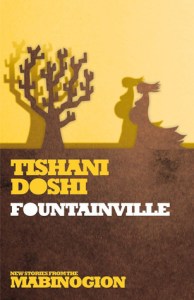 This is part of a Seren series retelling the medieval Welsh legends in the Mabinogion. Doshi has Welsh and Indian parentage; here she blends her knowledge of both countries and their stories. Luna, the narrator, works as an assistant to Begum, the Lady of the Fountain. Begum and her husband Kedar, a gangster, operate a shady surrogacy clinic. Then Owain Knight comes to town and makes Luna a proposition and things get complicated. Though this is novella length, it took me ages to slog through it. My lack of familiarity with the source text felt like a problem – I’d rather it had been summarized in a foreword rather than an afterword – and Doshi’s narrative is insipid despite the soap opera-ready content; I saw none of the spark and originality I’ve found in her excellent poetry. On this evidence I’m unlikely to pick up any more of her fiction. In any case, it was appropriate that I bought an ex-Swansea Libraries copy from Richard Booth’s Bookshop in Hay-on-Wye. (Secondhand purchase)
First Rain in Paradise by Gwyneth Lewis (2025)
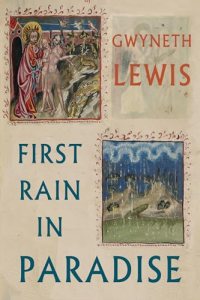 I’ve read a couple of Lewis’s poetry collections before (e.g. Parables and Faxes), as well as her memoir of depression and her travel book about sailing with her husband. She was Wales’s first poet laureate in 2005–6 and this is her sixth collection in English. The first section about her childhood with an emotionally abusive mother envisions her mother as a spider. The rest of the book traces the effects of that early trauma into chronic illness and mental health struggles. There is a sense of lost time. “Late Blackberries” opens “Where was I during the glut? I missed / the first sweetness, alluring and glossy // black as a dormouse’s eye, when pickings / were easy. A decade lost being ill tastes // bitter.” The imagery is drawn from physics, the countryside, medieval religious art, and the discovery of mummies. The two most quintessentially Welsh poems are “Red Waistcoat,” about coming across a dead ewe in a field, and “Under,” commemorating a fatal 2011 mining accident. Forasmuch as the book’s themes seemed perfectly assembled to appeal to me, I never felt they’d been brought to life in the language. (Secondhand purchase – Exeter charity shop)
A Writer’s House in Wales by Jan Morris (2002)
“My house is so absolutely of its setting, is rooted so profoundly not just in the soil, but in the very idea of Wales, that anywhere else it would lose all charisma.”
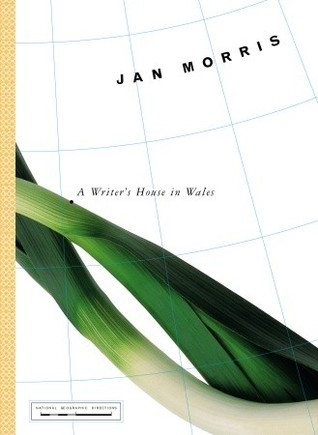 Although Jan Morris was famous for travelling the world and writing all about it, she equally loved being able to retreat to Trefan Morys, “for me … a summation, a metaphor, a paradigm, a microcosm, an examplar, a multum in parvo, a demonstration, a solidification, an essence, a regular epitome of all that I love about my country.” That excerpt from the first paragraph is a typical example of her effusive overwriting. This short book was clearly written for people (Americans) who know nothing about Wales, not even where on earth it is. I love her cosy evocation of her home – actually the renovated 18th-century stable block of the former family home, ample for her and Elizabeth in their dotage – and its bookshelves and animal life, whether domestic (Ibsen the Norwegian forest cat) or wild (bats in the attic!).
However, this was a reread and I found it indulgent as well as quaint this time around. It reminded me most of her diaries (the first volume was In My Mind’s Eye) and would be ideal for reading in tandem with those. Morris writes, “I am emotionally in thrall to Welshness.” I couldn’t help but think of biographer Sara Wheeler’s words about Morris’s contradictions: “she was a famous chronicler of the British Empire (some say an apologist for it) and a card-carrying Welsh nationalist. She was singular and contrary”. Wheeler slept in this house, in Morris’s bed, after her death while working through the papers.
I’ve always meant to source more from this National Geographic Directions series of brief travel books in which authors celebrate a beloved place. The only other I’ve read is Land’s End, Michael Cunningham’s book on Provincetown. (Free from The Book Thing of Baltimore)
For Advent last year and Lent this year, my church put on special evening compline services that combine liturgy and folk-inspired music my husband helped with. Earlier this month we had an extraordinary R.S. Thomas-themed service with some poems read aloud from the pulpit and others set to avant-garde music (a theremin was ruled out, but a harmonium, melodeon and glockenspiel featured, as well as a mandolin, banjo, toy piano and electric guitar). I was mostly unfamiliar with Thomas, who was a priest as well as a poet, and was gobsmacked by the commingling of scientific and theological vocabulary and the tolerance of doubt. Here are some extracts.
It is this great absence
that is like a presence,
that compels me to address it without hope
of a reply.
You speak
all languages and none,
answering our most complex
prayers with the simplicity
of a flower, confronting
us, when we would domesticate you
to our uses, with the rioting
viruses under our lens.
You have made God small,
setting him astride
a pipette
And all this in a carefully assembled pamphlet that I’ve kept as a souvenir.
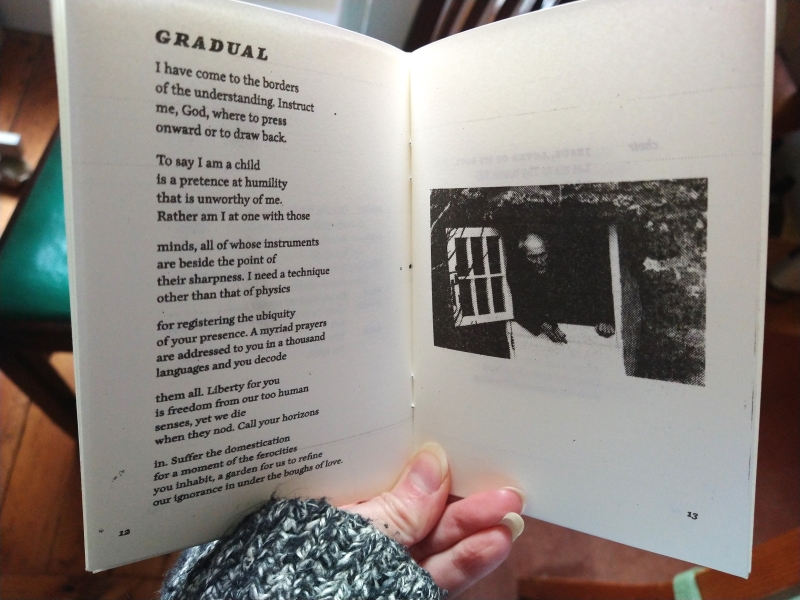
I might not have chosen the best books this year, but I’m still feeling well disposed towards the Welsh. A nice link is that Thomas lived just a few miles from Morris. In her book she calls him “perhaps the greatest Welsh poet writing in English since George Herbert.” She describes him thus: “I last set eyes on R. S. Thomas standing all alone beside our coastal road gazing silently into an adjacent wood, as though communing with the crows and blackbirds in its branches … Whenever I recall him at the roadside that day, looking silently into the trees as though the answer to all things was to be found among them, the memory gives me a sense of calm and liberation, as Wales itself does”.
Three on a Theme for Mother’s Day: Baker, Diski and Sampson
It’s Mothering Sunday in the UK today, so, like last year, I’m featuring three very different books about mothers and motherhood: a memoir, a novel and a poetry anthology. There are complex emotions at play in the first two due to grief, abuse and disability. The poems are cheerier (thankfully) and reflect on the experience of motherhood but also of being mothered. On that last point, I’ve added my response to a relevant short story I happened to read today.
Reading My Mother Back: A memoir in childhood animal stories by Timothy C. Baker (2022)
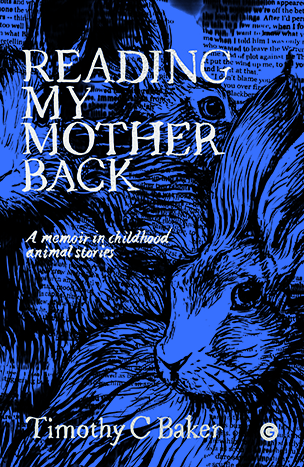 Baker is a lecturer in Scottish literature at the University of Aberdeen. His first non-academic publication is a curiously beguiling novella-length reappraisal of favourite children’s books. “To misquote Heraclitus, you cannot read the same book twice.” While he’s sheepish about including so many 19th- and early-20th-century white male authors, he can’t do otherwise as these are the texts that first taught him about death, loneliness and friendship: Charlotte’s Web, The Wind in the Willows, The Magician’s Nephew and Watership Down. (Also The Secret Garden.) Baker grew up in Maryland and Vermont, lonesome and closeted, with parents who briefly joined a cult. In his memory, his mother (who had been abused) always suffered with chronic illness and pain. In each chapter, he weaves together a discussion of a plot with stories from his early life and critical opinion on the value of rereading. It helped that I was familiar with six of the nine books Baker features (and others by Gallico, though not The Man Who Was Magic); I’d not even heard of Merle the High Flying Squirrel or The Book of the Dun Cow.
I spotted this in the Wigtown Festival Shop* on our 2023 visit to Scotland’s Book Town and could hardly believe it existed because it seemed so perfectly suited to me: I loved animal books, especially Watership Down, as a child; I’ll read any bereavement memoir going; I grew up 30 miles from Baltimore, where Baker spent his early life; he and I both had strict religious upbringings; and his mother experienced kidney failure (after eating a foxglove??), a link to my family’s history of kidney disease. There are plentiful differences, too, of course, but Baker emphasises connection. “If reading these books has taught me anything,” he concludes, “it is that all of my stories are individual, and all of them are universal. What we share is the unshareability of our grief … [but also] the joy of knowing that we have loved.” And for such a seemingly niche book (from Goldsmiths Press), I have actually found myself mentioning it to two blogger friends in recent days, so that’s proof he was right.
[*As to how the book finally came into my possession: I added it to my wishlist and an acquaintance (a former mayor of Newbury, in fact) bought it for me for my 40th birthday. However, he forgot to bring the gift to our joint party and it took another 2+ years to extract it from him – through explicit reminders when we invited him to join us on a quiz team.]
Like Mother by Jenny Diski (1988)
I’ve enjoyed the late Jenny Diski’s travel memoirs (Skating to Antarctica and Stranger on a Train) and essays (On Trying to Keep Still). This novella was my first taste of her fiction and, while it’s dark as hell, I admired the psychological acuity and playfulness with narration. Occasional chapters introduce a dialogue between Nony and an imaginary interlocutor whose role is to listen to the story of her mother, Frances, a former dancer. That family history is the substance of the rest of the book, which is in an omniscient third person. The artificiality of the setup is blatant, though; Nony can neither think nor speak, having been born without a brain (hydranencephaly). Nony’s full name, Nonentity, is thus Frances’s cruel joke.
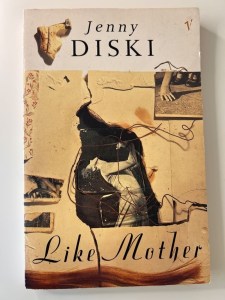
By necessity, the story stretches back to Frances’s parents, Ivy and Gerald, whose postwar optimism soon ceded to the reality of addiction, adultery and the attrition of love. A semiferal Frances escaped her unhappy home for the streets of London and engaged in sex play with Stuart on a bombsite. This went on for years. For Stuart, it blossomed into genuine love, but the numb Frances could never return his feelings and only used him. There are some really painful scenes here, such as Stuart stealing ether from the chemistry supply cupboard so she can huff herself into temporary oblivion, and a drunk Ivy molesting adolescent Frances. “Like mother, like daughter” is a bitter confirmation of inherited trauma. Nony might well be a symbolic manifestation of Frances’s desire to cultivate nothingness. To the extent that she is a literal baby – I’m really not sure – Frances does seem to love her and care for her physical needs, even as she’s grateful that the relationship will be short-lived.
Diski draws attention to the falsity of her narrative technique at the very end. It’s a disturbing yet intriguing novel that I think must be trying to make a wider point about postwar disillusionment. (Enough to make one question one’s growing antipathy towards Boomers?) I was reminded faintly of Nutshell by Ian McEwan, which is from the perspective of a fetus, and I Am Clarence by Elaine Kraf, a troubling story of a mentally ill mother and her disabled son. I have another novella plus a short story collection by Diski on the shelf, and I daresay after those I’ll have to seek out everything else she wrote. (University library) 
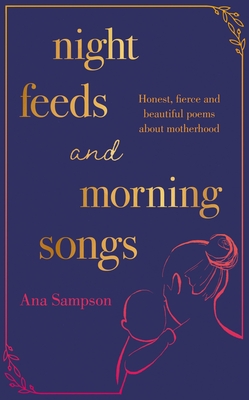
Night Feeds and Morning Songs, ed. Ana Sampson (2021)
“I crossed the border into the Republic of Motherhood
and found it a queendom, a wild queendom.”
~Liz Berry
It would have been easy to make such an anthology samey and sentimental, so kudos to Sampson for curating a solid mix of contemporary and period work. The poems are grouped into loose categories covering pregnancy, the sleepless nights of early motherhood, the power of womanly solidarity, the legacy (or absence) of one’s own mother, and the milestones of life as a child grows up and moves away. (Jackie Kay marvels that her baby boy is now a 6-foot-2 world traveller.) However, there are almost as many emotional approaches and poetic forms as there are contributors. Exhilaration meets exhaustion; guilt and grief threaten to overwhelm the good times. Sometimes the infant is addressed directly. The tone might be sombre, outraged or satirical. A few excerpts:
from “Labour Ward Prayer” by Vicky Thomas
Give us this day our daily miracle.
Exchange our offering of sweat and tears
and, most of all, of blood,
for new life, crumpled as a new leaf bud.
 from “The Visitor” by Idra Novey
…more dragon
than spaniel, more flammable
than fluid …
All wet mattress to my analysis,
he’s stayed the loudest and longest
of any houseguest
from “What My Kids Will Write about Me in Their Future Tell-All Book” by January Gill O’Neil
They will say that no was my favourite word,
More than stop, or eat, or love.
That some morning, I’d rather stay in bed,
laptop on lap, instead of making breakfast
…
They will say they have seen me naked.
Front side, back side – none of which
were my good side.
I enjoyed re-encountering work by some personal favourite poets such as Caroline Bird, though most entries were new to me. Sampson’s section introductions aren’t particularly illuminating and often reference poems that aren’t actually in the part in question. Some of the 19th-century and earlier material is quaintly twee, but I did love discovering Christina Rossetti’s “To My First Love, My Mother.” This is the poem that made me cry, though:
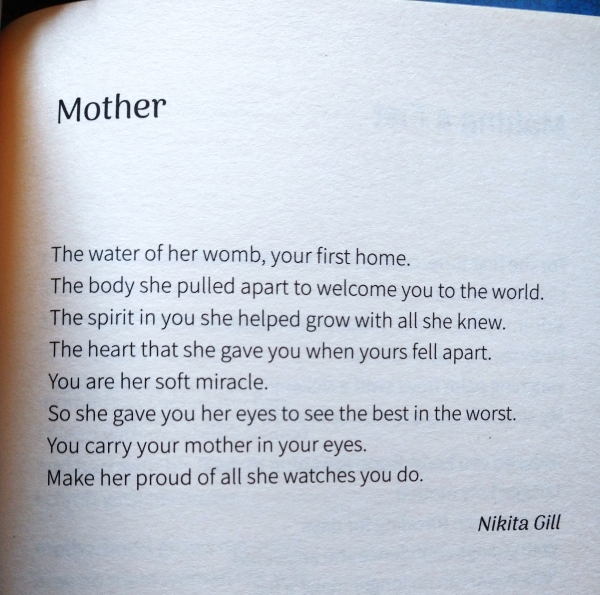
(Little Free Library)
And a bonus short story:
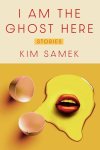 “Egg Mother” by Kim Samek (from I Am the Ghost Here): I’m two stories into Samek’s gently surreal collection. This second story combines the themes of parenting and grief prevalent above. Her openings are knockout: “At thirty-six I turn into a scrambled egg. It happens a few months after I give birth.” In therapy, the narrator discovers that she’s been repressing her grief over her mother, who died of cancer when the narrator was 13. The therapist suggests that she and her husband hold a joint ‘funeral’ for her mother and her younger self in a graveyard. But even after the ritual, she doesn’t return to herself. It’s a sobering but realistic message: some things one just doesn’t get over.
“Every story that I read becomes the story of my mother.”
~Timothy C. Baker
Last night, we saw Brooklyn expat singer-songwriter Annie Dressner (and Sean Duggan of Steady Habits) in concert at a church hall. I was mostly underwhelmed by her quirky confessional songs and little-girl voice, but a couple of songs stood out for me. One, “I Just Realized,” includes the line “And I hope that I can be just like my mother.”
Today was a more emotional day than I was expecting. I got a sweet posy from church, but having a whole service focussed on mothers and mothering was hard for me. I had to mostly switch off to get through it.
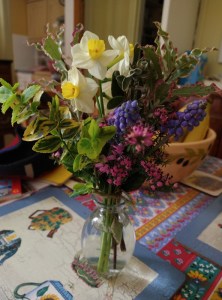
Just in my current stack, there are so many books about mothers or mothering…
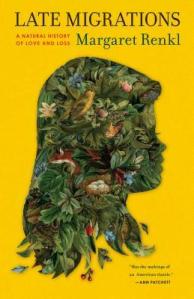 the loss of a mother (Eva Luna by Isabel Allende; The Memory of Borrowed Books by Meg Anderson; The Curious Incident of the Dog in the Night-Time by Mark Haddon; Late Migrations by Margaret Renkl; I Capture the Castle by Dodie Smith) – so common an element in novels that I have to think it’s shorthand for a character who has to pluckily rely on their own psychological resources
- mothers’ protective instinct (The Benefactors by Wendy Erskine)
- emotional distance from an unstable mother (Carrie by Stephen King; First Rain in Paradise by Gwyneth Lewis; Blonde by Joyce Carol Oates; The First Day of Spring by Nancy Tucker, which also includes the struggle to be a good mother in turn)
- mixed feelings about the inability to have a child (Mare by Emily Haworth-Booth)
- a mother’s grief at the loss of a child (Ordinary Saints by Niamh Ni Mhaoileoin)
I know it’s a subject I’ll be reading and thinking about for the rest of my life.
Weatherglass Novella Prize 2026
Following up on the shortlist news I shared in November: Ali Smith has chosen two winners for the second annual Weatherglass Novella Prize. Both of these have changed title since they were submitted as manuscripts (From the Smallest Things to The Hyena’s Daughter; Shoganai to Pink Soap). I’m particularly interested in Jones’s novel about Mary Shelley and her sister and stepsister. And the Gaston has a brilliant cover!
Here’s what Ali Smith had to say about the winning books, courtesy of the Weatherglass Substack:
The Hyena’s Daughter by Jupiter Jones
(to be published in April 2026)
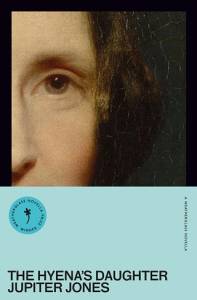 “This novella tells the far-too-untold story of a c19th sisterhood, that of the daughters of Mary Wollstonecraft: Fanny Imlay and Mary Shelley, the famed writer of Frankenstein, plus their step[-]sister Claire Clairmont. Are they the three graces? The fates? They’re women, as alive and breathing and rebellious and analytical as you and me, and well aware and critical of the hemmed-in nature they’re expected to accept as women of their time, a time of ‘a new way of thinking, a new-world independence, a revolutionary world.’
“It features their connection to Percy Bysshe Shelley – ‘how could we not love him, with his lofty ethics and words that flew like birds?’ – and many of the other contemporary poets and thinkers of the time. Pacy and assured, it turns its history to life from fragment to sensuous fragment. If the dead brought to life is to be Mary Shelley’s theme, this novella asks what the real source of life spirit is, the vital spark. This novella, full of detail and richesse, is a piece of vitality in itself.”
Pink Soap by Anju Gaston
(to be published in June 2026)
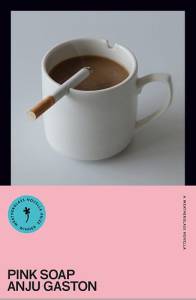 “‘I ask the internet the difference between something being too close to the bone and something being too close to home.’ This funny and terrifying book is a study of what and how things mean, and don’t, in our latest machine age. In it something unforgivable has happened. The main character in this novella, seemingly numbed but bristling with blade-sharp understanding, is only just holding things together and trying to work out how to heal. So she travels to Japan in a search for the other half of a fragmented family. Or is it the world itself that has fragmented?
“Pink Soap examines the massive everyday pressures we’re all under with real wit and style. It is pristine, brilliant, smart beyond belief. I sense it becoming as much a classic for now as Plath’s The Bell Jar has been for the decades behind us.”
Submissions have already opened for the 2027 Prize. More information is here.
#NovNov25 Final Statistics & Some 2026 Novellas to Look Out For (Chapman, Fennelly, Gremaud, Miles, Netherclift & Saunders)
Novellas in November 2025 was a roaring success: In total, we had 50 bloggers contributing 216 posts covering at least 207 books! The buddy read(s) had 14 participants. If you want to take a look back at the link parties, they’re all here. It was our best year yet – thank you.
*For those who are curious, our most reviewed book was The Wax Child by Olga Ravn (4 reviews), followed by The Most by Jessica Anthony (3). Authors covered three times: Franz Kafka and Christian Kracht. Authors with work(s) reviewed twice: Margaret Atwood, Nora Ephron, Hermann Hesse, Claire Keegan, Irmgard Keun, Thomas Mann, Patrick Modiano, Edna O’Brien, Clare O’Dea, Max Porter, Brigitte Reimann, Ivana Sajko, Georges Simenon, Colm Tóibín and Stefan Zweig.*

I read and reviewed 21 novellas in November. I happen to have already read six with 2026 release dates, some of them within November and others a bit earlier for paid reviews. I’ll give a quick preview of each so you’ll know which ones you want to look out for.
The Pass by Katriona Chapman
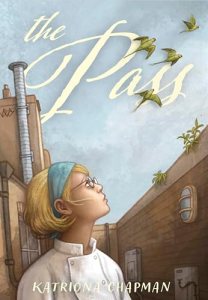 Claudia Grace is a rising star in the London restaurant world: in her early thirties, she’s head chef at Alley. But she and her small team, including sous chef Lisa, her best friend from culinary school; and Ben, the innovative Black bartender, face challenges. Lisa has a young son and disabled husband, while Ben is torn between his love of gardening and his commitment to Alley. Claudia is more stressed than ever as she prepares for a competition. All three struggle with their parents’ expectations. A financial crisis comes out of nowhere, but the greater threat is related to motivation. I was drawn to this graphic novel for the restaurant setting, but it’s more about families and romantic relationships than food. Several characters look too alike or much younger or older than they’re supposed to, while there’s a sudden ending that suggests a sequel might follow. (Fantagraphics, Jan. 20) [184 pages] (Read via Edelweiss)
The Irish Goodbye: Micro-Memoirs by Beth Ann Fennelly
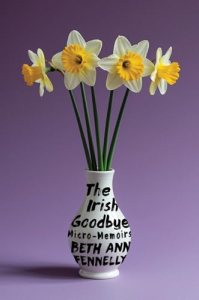 I’ve also read Fennelly’s previous collection of miniature autobiographical essays, Heating & Cooling. She takes the same approach as in flash fiction: some of these 45 pieces are as short as one sentence, remarking on life’s irony, poignancy or brevity. Again and again she loops back to her sister’s untimely death (the title reference: “without farewells, you slipped out the back door of the party of your life”); other major topics are her mother’s worsening dementia, her happy marriage, her continuing 28-year-old friendships with her college roommates, the pandemic, and her ageing body. Every so often, Fennelly experiments with third- or second-person narration, as when she recalls making a perfect gin and tonic for Tim O’Brien. One of the most in-depth pieces revisits a lonely stint teaching in Czechoslovakia in the early 1990s. Returning to the town recently, she is astounded that so many recognize her and that a time she experienced as bleak is the stuff of others’ fond memories. I also loved the long piece that closes the collection, “Dear Viewer of My Naked Body,” about being one of the 12 people in Oxford, Mississippi to pose nude for a painter in oils. Brilliant last phrase: “Enjoy the bunions.” (W.W. Norton & Company, Feb. 24) [144 pages] (Read via Edelweiss)
Generator by Rinny Gremaud (2023; 2026)
[Trans. from French by Holly James]
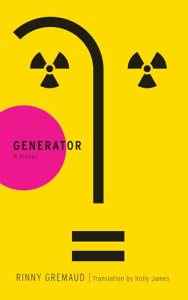 “I was born in 1977 at a nuclear power plant in the south of South Korea,” the unnamed narrator opens. She and her mother then moved to Switzerland with her stepfather. In 2017, news of Korea’s plans to decommission the Kori 1 reactor prompts her to trace her birth father, who was a Welsh engineer on the project. As a way of “walking my hypotheses,” she travels to Wales, Taiwan (where he had a wife and family), Korea, and Michigan, his last known abode. In parallel, she researches the history of nuclear power. By riffing on the possible definitions of generation, this lyrical autofiction comments on creation and legacy. Full Foreword review forthcoming. (Schaffner Press, Jan. 7) [197 pages] (PDF review copy)
Eradication: A Fable by Jonathan Miles
 This taut, powerful fable pits an Everyman against seemingly insurmountable environmental and personal problems. Who wouldn’t take a job that involves “saving the world”? Adi, the antihero of Jonathan Miles’s fourth novel, is drawn to the listing not just for the noble mission but also for the chance at five weeks alone on a Pacific island. Santa Flora once teemed with endemic birds and reptiles, but many species have gone extinct because of the ballooning population of goats. He’s never fired a gun, but the mysterious “foundation” was so desperate it hired him anyway. It’s a taut parable reminiscent of T.C. Boyle’s When the Killing’s Done. My full Shelf Awareness review is here. (riverrun, 5 Feb. / Doubleday, Feb. 10) [176 pages] (Read via Edelweiss)
Vessel: The shape of absent bodies by Dani Netherclift
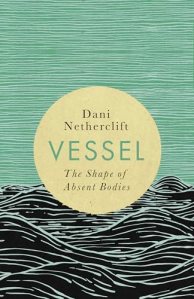 One scorching afternoon in 1993, the author’s father and brother drowned while swimming in an irrigation channel near their Australia home. A joint closed-casket funeral took place six days later. Eighteen at the time, Netherclift witnessed her relatives’ disappearance but didn’t see their bodies. Must one see the corpse to have closure? she wonders. “The presence of absence” is an overarching paradox. There are lacunae everywhere: in her police statement from the fateful day; in her journal and letters from that summer. The contradictions and ironies of the situation defy resolution. Full Foreword review forthcoming. (Assembly Press, Jan. 13) [184 pages] (PDF review copy)
Vigil by George Saunders
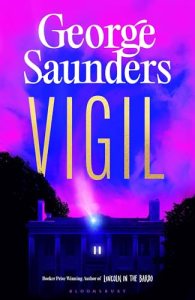 Impossible not to set this against the exceptional Lincoln in the Bardo, focused as both are on the threshold between life and death. Unfortunately, the comparison is not favourable to Vigil. A host of the restive dead visit the dying to offer comfort at the end. Jill Blaine’s life was cut short when she was murdered by a car bomb in a case of mistaken identity. Her latest “charge” is K.J. Boone, a Texas oil tycoon who not only contributed directly to climate breakdown but also deliberately spread anti-environmentalist propaganda through speeches and a documentary. As he lies dying of cancer in his mansion, he’s visited by, among others, the spirits of the repentant Frenchman who invented the engine and an Indian man whose family perished in a natural disaster. I expected a Christmas Carol-type reckoning with climate past and future; in resisting such a formula, Saunders avoids moralizing – oblivion comes for the just and the unjust. However, he instead subjects readers to a slog of repetitive, half-baked comedic monologues. I remain unsure what he hoped to achieve with the combination of an irredeemable character and an inexorable situation. All this does is reinforce randomness and hopelessness, whereas the few other Saunders works I’ve read have at least reassured with the sparkle of human ingenuity. YMMV. (Bloomsbury / Random House, 27 Jan.) [192 pages] (Read via NetGalley)
 Bookish Beck = Rebecca Foster. American transplant to England. Freelance proofreader and book reviewer.
