Two Bellwether Prize Winners by Heidi Durrow and Hillary Jordan
I conceived of the idea to read all of the Bellwether Prize winners because I loved Lisa Ko’s The Leavers so much. The PEN/Bellwether Prize for Socially Engaged Fiction is a biennial award given since 2000 by PEN America and Barbara Kingsolver, who created and funds the prize, “to a U.S. citizen for a previously unpublished work of fiction that addresses issues of social justice.” (More information can be found here.) Earlier this year, I found secondhand or cheap new copies of two of the winners and tried another one from the library.
The Girl Who Fell from the Sky by Heidi W. Durrow (2010)
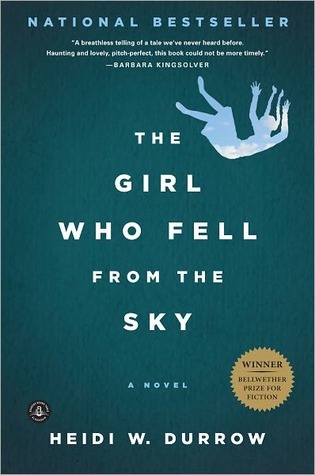 This review is ALL SPOILER because there isn’t really a way to discuss the book otherwise, so skip onwards if you think you might want to read this someday. Durrow was inspired by her own family history – she is biracial, her father a Black serviceman and her mother from Denmark – and by a newspaper story about a woman who jumped off the top of a multi-story building with her small children. Only one daughter survived the fall. Durrow was captivated by that girl’s story and wanted to imagine what her life would be like in the wake of tragedy.
In 1982, Rachel has come to live with her father’s mother in Portland, Oregon. She’s starting a new life there after a long time in the hospital. She survived her mother Nella’s leap from their Chicago apartment building because she landed on the top of the heap of three siblings. As her teen years unfold, she struggles to incorporate her European heritage with her African American identity and turns to promiscuity. Details of what happened that day in Chicago unfold gradually.
The secondary characters are more interesting than Rachel herself, even though she narrates, and I felt more sympathy for her when she was a child. I would have liked more of the mother’s journal entries, showing how her depression and alcoholism developed. The coincidence of the one eyewitness to the jump ending up in Portland was too much for me. Overall, this was fairly dismal and didn’t make enough of its compelling premise. It was an easy read, but had it been much longer than 260 pages I would likely have DNFed.
My rating: 
Mudbound by Hillary Jordan (2008)
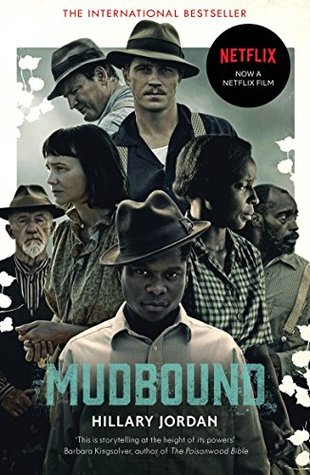 1946: Two servicemen return from fighting in Europe, headed to the same Mississippi farm. Jamie McAllan was a fighter pilot and Ronsel Jackson was part of a tank division. Both are dependent on alcohol to help them cope with the memories of what they have seen and done. But Jamie can get away with drunk driving and carousing with local women, knowing that his big brother, Henry, will take him back in no matter what. Ronsel, though, has to keep his head down and be on his guard at every moment: war hero or not, no one in Mississippi is going to let a Black man walk in through the front door of a store or get a lift home in a white man’s truck. His sharecropping family’s position at the McAllan farm, Mudbound, is precarious, with the weather and the social hierarchy always working against them.
This story of love, betrayal, and the obsession with land is told through rotating first-person narration from six key players, three McAllans and three Jacksons. Each voice is distinct and perfectly captures the character’s personality and level of education. Jordan uses this kaleidoscope view to explore how fateful decisions bind the two families together. I particularly loved the two female voices: Laura, Henry’s wife; and Florence, Ronsel’s mother. Though they’re often stuck inside cooking and delivering babies, they still play their roles in the farm’s drama. The novel opens with a burial scene, but readers get faked out not once but twice about how the character died. I raced through the last three-quarters, and the final 50–100 pages are a real doozy. This feels like a modern classic of the segregated South and I’d recommend it for those looking for a follow-up to The Vanishing Half.
My rating: 
And a DNF:
Running the Rift by Naomi Benaron (2010)
I read 25 pages and didn’t feel drawn into the characters’ story. When the main characters are from a persecuted ethnic minority and one boy is a star runner, you sort of know where things are heading. (I’m also perhaps too familiar with Rwandan history from We Wish to Inform You that Tomorrow We Will Be Killed with Our Families by Philip Gourevitch.)
Remaining Bellwether Prize winners:
 2019 Katherine Seligman, If You Knew [retitled At the Edge of the Haight – publication forthcoming in January 2021]
2014 Ron Childress, And West Is West
2012 Susan Nussbaum, Good Kings Bad Kings
2004 Marjorie Kowalski Cole, Correcting the Landscape
2002 Gayle Brandeis, The Book of Dead Birds
2000 Donna Gershten, Kissing the Virgin’s Mouth
Have you read one of these winners? Do any tempt you?
Six Degrees of Separation: From Rodham to The Shadow in the Garden
This month we’re all starting with Rodham. I reviewed this Marmite novel as part of the UK blog tour and was fully engaged in its blend of historical and fictional material. Ultimately, it doesn’t work as well as American Wife because we all know too much about Hillary Clinton, but it was a lot of fun for summer binge reading and is a must for any diehard Curtis Sittenfeld fan.
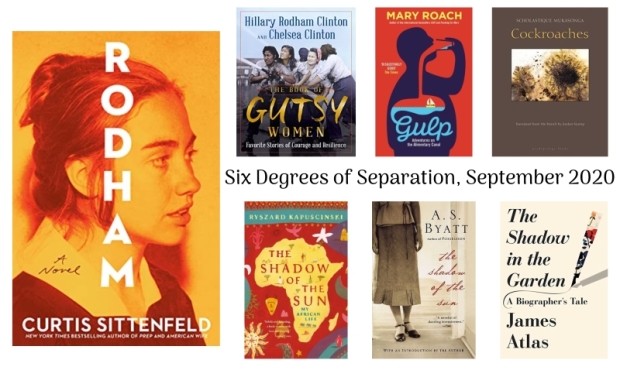
#1 Late last year I was sent an e-copy of The Book of Gutsy Women by Hillary and Chelsea Clinton for a potential review. I didn’t end up reading it at the time, but I still have it on my Kindle so might get to it someday. Like many, many books that have come out over the last few years, it’s full of mini-biographies of praiseworthy women from history. It seems a bit superfluous and overlong, but if the writing is up to snuff it might still be one to skim.
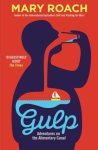
#2 Speaking of guts, earlier in the year I took perverse glee in reading Gulp by Mary Roach, a tour through the body’s digestive and excretory systems. Here’s a quick question to help you gauge whether the book is for you: does the prospect of three chapters on flatulence make you go “Yesssss!” or “Ew, no. Why?!” I’m in the former camp so, for the most part, found it fascinating. Footnotes on bizarre scientific studies are particularly hilarious.
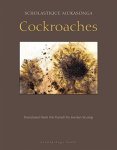
#3 I’ve read two novels with “Roach” in the title; I didn’t want to use Ian McEwan as a link two months in a row, so I went with the other one: Cockroaches by Scholastique Mukasonga, which is also a good follow-on from #WITMonth as it was originally written in French. I reviewed this harrowing memoir of her Tutsi family’s slaughter during the Rwandan genocide of the 1990s for Wasafiri literary magazine in early 2018.
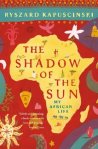
#4 One of the sunny/summer reads I featured last week was The Shadow of the Sun by Ryszard Kapuściński. One essay from the middle of the book is called “A Lecture on Rwanda,” which locates the seeds of the 1990s conflict in the independence struggle and peasant revolt of the late 1950s and early 1960s: the Hutu majority caste (85%) was composed of tenant farmers who rebelled against the cattle-owning Tutsi minority (14%).
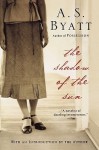
#5 I’ve read another book by the title The Shadow of the Sun, this one a weak early novel by A.S. Byatt. It’s about a young woman struggling to get out from under the expectations and example of her father, a literary lion.
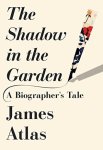
#6 Staying in the shadows … my top nonfiction read of 2017 was James Atlas’s memoir of the biographer’s profession, The Shadow in the Garden. The book deals with the nitty-gritty of archival research and how technology has changed it; story-telling strategies and the challenge of impartiality; and how we look for patterns in a life that might explain what, besides genius, accounts for a writer’s skill. Even though I knew little about his two main subjects, poet Delmore Schwartz and Saul Bellow, I found the book thoroughly enthralling.
Join us for #6Degrees of Separation if you haven’t already! (Hosted the first Saturday of each month by Kate W. of Books Are My Favourite and Best; see her intro post.)
Have you read any of my selections?
Are you tempted by any you didn’t know before?
 Bookish Beck = Rebecca Foster. American transplant to England. Freelance proofreader and book reviewer.
 Bookish Beck