20 Books of Summer, 19–20: Emily St. James and Abraham Verghese
Going out on a high! My last three books for the challenge (also including Beautiful Ruins) were particularly great, just the sort of absorbing and rewarding reading that I wish I could guarantee for all of my summer selections.
Woodworking by Emily St. James (2025)
Colloquially, “woodworking” is disappearing in plain sight; doing all you can to fade into the woodwork. Erica has only just admitted her identity to herself, and over the autumn of 2016 begins telling others she’s a woman – starting with her ex-wife Constance, who is now pregnant by her fiancé, John. To everyone else, Erica is still Mr. Skyberg, a 35-year-old English teacher at Mitchell High involved in local amateur dramatics. When Erica realizes that not only is there another trans woman in her small South Dakota town but that it’s one of her students, Abigail Hawkes, she lights up. Abigail may be half her age but is further along in her transition journey and has sassy confidence. But this foul-mouthed new mentor has problems of her own, starting with parents who refuse to refer to her by her chosen name. Abigail lives with her adult sister instead, and gains an unexpected surrogate family via her boyfriend Caleb, a Korean adoptee whose mother, Brooke Daniels, is directing Our Town. Brooke is surprisingly supportive given that she attends Isaiah Rose’s megachurch.
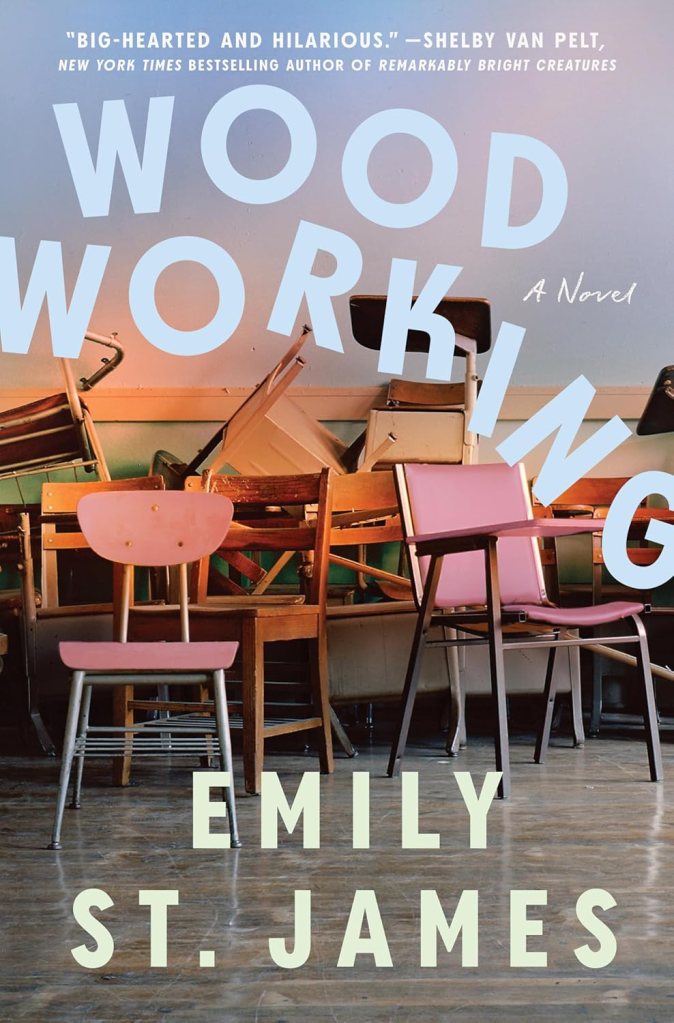
As Trump/Pence signs proliferate, a local election is heating up, too: Pastor Rose is running for State Congress on the Republican ticket, opposed by Helen Swee. Erica befriends Helen and becomes faculty advisor for the school’s Democrat club (which has all of two members: Abigail and her Leslie Knope-like friend Megan). The plot swings naturally between the personal and political, emphasizing how the personal business of 1% of the population has been made into a political football. Chapters alternate between Abigail in first person and Erica in third. The characters feel utterly real and the dialogue is as genuine as the narrative voices. The support group Erica and Abigail attend presents a range of trans experiences based on when one came of age. Some are still deep undercover. There’s a big reveal I couldn’t quite accept, though I can see its purpose. It’s particularly effective how St. James lets second- and third-person narration shade into first as characters accept their selves. Grey rectangles cover up deadnames all but once, making the point that even allies can get it wrong.
This was pure page-turning enjoyment with an important message to convey. It reminded me a lot of Under the Rainbow by Celia Laskey but also had the flavour of classic Tom Perrotta (Election). In the Author’s Note, St. James writes, “They say the single greatest determinant of whether someone will support and affirm trans people is if they know a trans person.” I feel lucky to count three trans people among my friends. It’s impossible to make detached pronouncements about bathrooms and slippery slopes if you care about people whose rights and very existence are being undermined. We should all be reading books by and about trans women. (New purchase from Bookshop.org) 
The Covenant of Water by Abraham Verghese (2023)
All too often, I shy away from doorstoppers because they seem like too much of a time commitment. Why read 715 pages in one novel when I could read 3.5 of 200 pages each? Yet there’s something special about being lost in the middle of a great big book and trusting that wherever the story goes will be worthwhile. I let this review copy languish on the shelf for over TWO YEARS when I should have known that the author of the amazing Cutting for Stone couldn’t possibly let me down. Verghese’s second novel is very much in the same vein: a family saga that spans decades and in every generation focuses on medical issues. Verghese is a practicing doctor as well as a Stanford professor and you can tell he glories in the details of hand and brain surgeries, disability and rare diseases – and luckily, so do I.
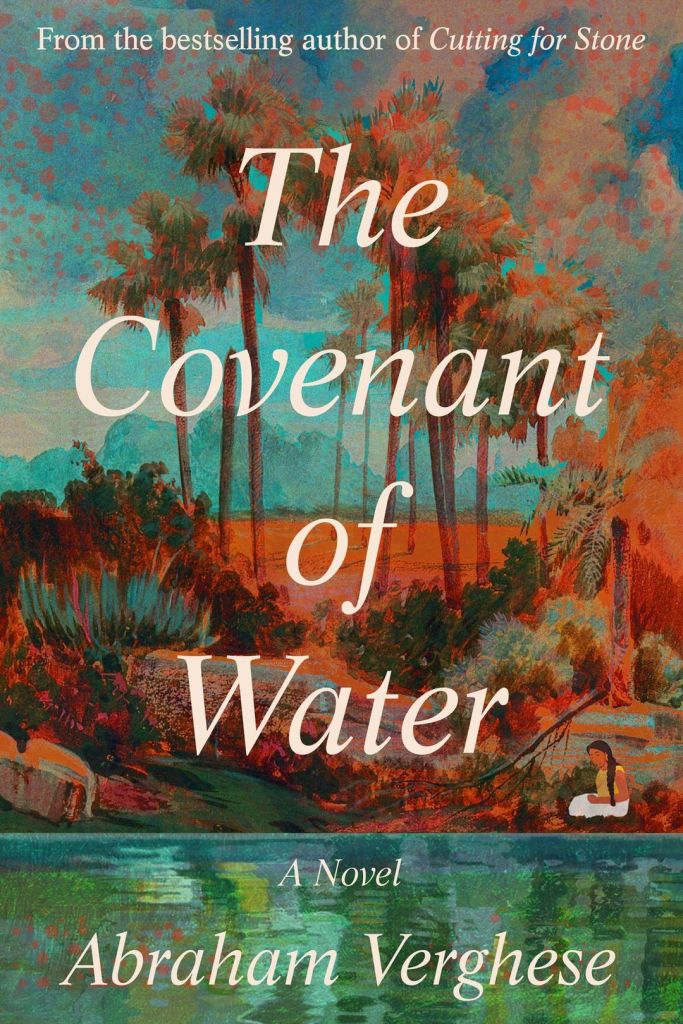
Wider events play out in the background (wars, partition, the fall of the caste system), but the focus is always on one family in Kerala, starting in 1900 when a 12-year-old girl is brought to the Parambil estate for her arranged marriage to a 40-year-old widower. One day she will be Big Ammachi, the matriarch of a family with a mysterious Condition: In every generation, someone drowns. As a result, they all avoid water, even if it requires going hours out of their way. Her son Philipose longs to be a scholar, but is so hard of hearing that his formal education is cut short. He becomes a columnist in a local newspaper and marries Elsie, a spirited artist. Their daughter, Mariamma, trains as a doctor. In parallel, we follow the story of Digby Kilgour, a Glaswegian surgeon whose career takes him to India. Through Digby and Mariamma’s interactions with colleagues, we watch colonial incompetence and sexism play out. Addiction and suicide recur across the years. Destiny and choice lock horns. I enjoyed the window onto the small community of St. Thomas Christians and felt fond of all the characters, including Damodaran the elephant. It’s also really clever how Verghese makes the Condition a cross between a mystical curse and a diagnosable ailment. An intellectual soap opera that makes you think about storytelling, purpose and inheritance, this is extraordinary. 
With thanks to Atlantic Books for the proof copy for review.

I read 10 of the books I selected in my initial planning post. I’m pleased that I picked off a couple of long-neglected review copies and several recent purchases. The rest were substituted at whim. There were two duds, but the overall quality was high, with 10 books I rated 4 stars or higher! Along with the above and Beautiful Ruins, Pet Sematary and Storm Pegs were overall highlights. I also managed to complete a row on the Bingo card, a fun add-on. And, bonus: I cleared 7 books from my shelves by reselling or giving them away after I read them.
“Being the Expert” on Women’s Religious Memoirs Again: Unfollow & Leaving the Witness
 I’ve fallen behind on the weekly prompts for Nonfiction November, but wanted to post a follow-up to my 2018 list of a baker’s dozen of memoirs I’ve read that explore women’s religious experiences. I’ve read a couple more this year that are worth adding to the list; in addition to their themes of doubt and making a new life outside the church, they also share an interesting detail: it’s an online friend that goads each author into questioning her beliefs. Even if you aren’t typically interested in this subgenre, you’ve likely heard of Unfollow because of the high-profile story behind it. (This week is hosted by Katie of Doing Dewey.)
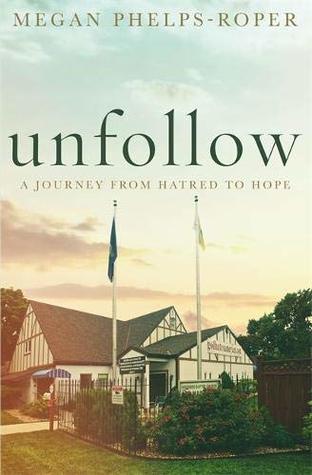
Unfollow: A Journey from Hatred to Hope, Leaving the Westboro Baptist Church by Megan Phelps-Roper
“God hates f*gs.” If you know one thing about Westboro Baptist Church of Topeka, Kansas, it’s that this slogan plastered their signs and was part of their armory of in-your-face chants at nationwide protests.

Fred Phelps in 2002. (User Rudolf 1922 on sv.wikipedia.)
Megan Phelps-Roper grew up in the Church, which was founded by her grandfather, Fred Phelps, and made up mostly of her extended family: Phelps had 13 children, and Phelps-Roper is one of 11. In 1989 Phelps learned that nearby Gage Park was a gay cruising spot and wrote in disgust to the mayor and other city officials. In a sense, he never got over it. The anti-homosexuality message would become Westboro’s trademark, at least until the church started its picketing of military funerals after the Iraq War – which, like 9/11, was interpreted as being God’s just punishment of American immorality.
By portraying it from the inside and recreating her shifting perspective from early childhood onwards, Phelps-Roper initially makes her extreme upbringing seem normal. After all, it’s the only thing she knew, and it never would have occurred to her that her family could be wrong. The Phelpses were fiercely intelligent and also ran a law firm, so it’s impossible to just dismiss them as redneck idiots. Frequent passages from the King James Bible appear in italics to echo the justifications the Church cited for its beliefs and actions.
 Only gradually did doubts start to creep in for the author as various uncles and brothers left the church. Phelps-Roper was even the voice of Westboro on Twitter, but defending funeral protests became increasingly difficult for her. Two things brought her to a breaking point. First, in something of a coup, the Church appointed a new body of elders – all male, of course – who instituted ever more draconian rules, such as a dress code for women, and effectively removed her mother from leadership. (Ultimately, they would kick the dying Fred Phelps himself out of the church.) Secondly, the Church started to spread fake news via doctored photos. For example, they claimed to be protesting a royal wedding in London, when in fact Westboro members never go anywhere the First Amendment can’t protect them.
All along, Phelps-Roper had been corresponding with “C.G.,” an online acquaintance with whom she played Words with Friends. Chad gently encouraged her to ask why Westboro believed as it did, and to unpick rather than ignore any doctrines that didn’t make sense. “What if we’re wrong? What if this isn’t The Place led by God Himself? What if we’re just people?” she wondered. In November 2012, she and her sister Grace left the Church and the family home, where she’d lived until age 26, and retreated to a Deadwood, South Dakota Airbnb to hike, read and think about what they’d left behind and what came next. I’d had just about enough of Westboro and its infighting by that point in the book – the chapter about her leaving gets a little melodramatic – so, like the author, I was glad to move on to another setting, and this interlude ended up being my favorite section.

Westboro Baptist Church demonstration outside the Virginia Holocaust Museum, March 2010. (JCWilmore [CC BY 3.0 (https://creativecommons.org/licenses/by/3.0)%5D.)
Note: Westboro was the subject of a Louis Theroux documentary in 2006, and in a nice full-circle moment, he’s now interviewing Phelps-Roper on some of her UK book tour spots. And, in another lovely aside, she married C.G.
My rating: 
With thanks to riverrun for the free copy for review.
Leaving the Witness: Exiting a Religion and Finding a Life by Amber Scorah
Like In the Days of Rain by Rebecca Stott, this is the story of growing up in a cult and what happens when, as an adult, a woman has to build a new life free from the constraints – but also unmoored from the comforting framework – of a previously unquestioned belief system. Scorah grew up in Vancouver’s community of Jehovah’s Witnesses and, although she was temporarily disfellowshipped as a teenager for having premarital sex, the faith was her home and gave her a sense of purpose. Witnesses are discouraged from attending university or pursuing careers; without exception, they’re expected to preach and win converts – the only task worth engaging in given that the world is headed towards Armageddon.
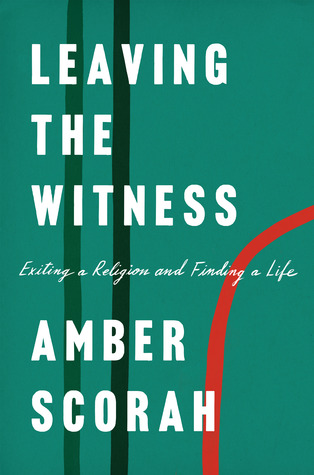 Scorah and her husband went to China as clandestine JW missionaries. Her Mandarin skills were good enough that she could become friends with her English-language pupils and then start to talk to them about religion. In the meantime, she became an early podcast host with the program “Dear Amber,” which offered advice on the Chinese language and culture. She embarked on a flirtatious correspondence with one of her regular listeners, Jonathan from Los Angeles, who goaded her into rethinking everything she’d been taught to believe. “I was questioning with a mind that had been trained not to. It was highly uncomfortable.”
As her marriage and faith simultaneously crumbled, Scorah had to decide what was left to form the foundation of a new life on her own in New York City. “My eye-glazing peace, unquestioning contentment, and eternal life were gone, and the time ahead of me was filled with people I didn’t yet know, uncertainty about the future, and, one day, death.” I was absorbed in the bittersweet outworkings of this before and after: a process of losing faith and deciding what’s next.
The final chapter is a whirlwind tour through her first years in NYC, including the tragic death of her infant son, Karl. This makes for something of an abrupt end to the book; I might have liked to get as much detail on all this as we got about the time in China. But it was clearly a deliberate decision to present such life and death matters from a hard-won secular perspective, without the false balm of a religion that promises she’ll see her son again. There’s a lot of secrecy about the Jehovah’s Witnesses, so this is a rare insider’s view as well as a wrenching account of loss and starting over.
My rating: 
Full disclosure: Amber Scorah offered me a copy through a Facebook group we are both a part of.
Thanks to her and Viking for sending a free copy for review.
Can you see yourself reading either of these books?
“All to Do with the Moon”: Four Books with Moon in the Title
I happened to read two books with the word moon in their titles within a couple of weeks in September, which prompted me to ransack my shelves and find two more. While these four are in completely different genres – one women’s fiction, one poetry, one memoir and one Booker-winning literary novel – they are all by women (naturally more in touch with the moon?) and all worth reading. In the weeks that I was undertaking this mini reading project, I couldn’t get Krista Detor’s song “All to Do with the Moon” out of my head (on this video, a live recording of the entire “Night Light” suite of three songs, it starts at about 6:15). She’s one of our favorite singer-songwriters, though, so this was no problem.
The Pull of the Moon by Elizabeth Berg (1996)
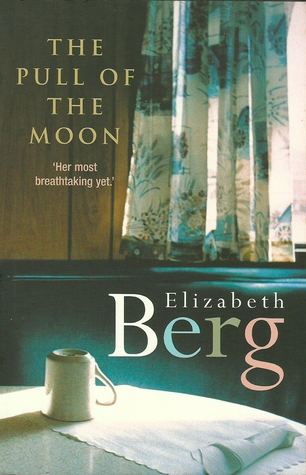 This is my second contemporary novel from Berg. I find her work effortlessly readable. She’s comparable to those other Elizabeths, McCracken and Strout, but also to Alice Hoffman and Anne Tyler. This one reminded me most of Tyler’s Ladder of Years in that both are about a middle-aged woman who takes a break from her marriage to figure out what she wants from life. Nan, “a fifty-year-old runaway,” takes off from her suburban Boston home and drives west, stopping at motels and cabins, eating at diners, and meeting the locals; eventually she gets as far as South Dakota. Her narration is in the form of letters to her husband, Martin, alternated with italicized passages from her journal. She reflects on everything that has made up her life – her upbringing, her marriage and other sexual encounters, raising her daughter, Ruthie – as well as on the small-town folk she meets in Iowa and Minnesota. The moon is a symbol of the femininity Nan fears she’s losing through menopause and hopes to reclaim on this journey.
The Moon Is Almost Full by Chana Bloch (2017)
 This was a lucky find in the clearance section at Blackwell’s on my Oxford day with Annabel. It’s a beautifully produced book from Autumn House, the small Pittsburgh press that released my favorite poetic work of last year: The Small Door of Your Death by Sheryl St. Germain. This was Bloch’s sixth and final book of poetry, published in the year of her death. She writes in the awareness that this cancer will be her end and doesn’t gloss over losses of function and dignity, but still finds delight in life through her family, writing and Jewish rituals: “Never forget / you were put on earth to gather joy // with melancholy hands” (from “Instructions for the Bridegroom”). A favorite poem was “The Will,” in which she imagines how the physical and intangible relics of her life will be distributed (“My plans and projects I hereby bequeath to the air / of which they were conceived. … Let the doctors pack up my heart / and keep it humming for the right customer.”).
Off-topic note: This was typeset in Mrs Eaves, which may well be one of my favorite fonts.
To the Moon and Back: A Childhood under the Influence by Lisa Kohn (2018)
 My special interest in women’s religious memoirs led me to list this among my most anticipated titles of 2018. I had it on my wish list for quite a while and then, when I saw it available for a bargain price online, snapped it up for myself. Lisa Kohn grew up in the New York City environs, the child of hippie parents she called Mimi and Danny rather than Mom and Dad. After their parents divorced, she and her brother lived in New Jersey with their mother and went into the City to visit their father, who was very lax about things like drugs. By the time Kohn was 10, her mother had gotten caught up in Reverend Moon’s Unification Church.
I knew next to nothing about the “Moonies,” so I found it fascinating to learn about this cult led by a South Korean reverend who let it be assumed that he was the new incarnation of Jesus Christ and the flourishing of his family on Earth would usher in God’s Kingdom. The Church became Kohn’s whole life until internal questioning set in during high school, and by the time she went to college she was adrift and into drugs instead. The book recreates scenes and dialogue well, but I found myself losing interest once the cult itself stopped being the main focus. 
Readalikes: Small Fry by Lisa Brennan-Jobs and In the Days of Rain by Rebecca Stott
Moon Tiger by Penelope Lively (1987)
 Seventy-six-year-old Claudia Hampton, on her deathbed in a nursing home, determines to write a history of the world – or at least, the world as she’s seen it. She’s been an author of popular history books (one of which, on Mexico, was made into a film), but she’s also been a daughter, a sister, a lover and a mother. As the book shifts between the first person and the third person, the present and the past, we learn volumes about Claudia and how her memory has preserved the layers of her personal history. There are a couple of big reveals, about her relationship with her brother Gordon and her time as a Second World War correspondent in Egypt, but what’s more impressive than these plot surprises is how Lively packs the whole sweep of a life into just 200 pages, all with such rich, wry commentary on how what we remember constructs our reality.
I made the fine choice to start reading this on holiday at the Jurassic coast in Dorset, which was fitting because Claudia grew up in Dorset and uses ammonites and rock strata as recurring metaphors. This won a well-deserved Booker Prize and is the best of the five Lively books I’ve read. I wasn’t particularly taken with the first couple I read by her, so I’m glad I tried again this year (with Heat Wave and then this). It’s just a shame that the copy I found in the free bookshop where I volunteer has such a dreadfully inappropriate cover, making it look like contemporary chick lit rather than serious literature. 
Some favorite lines:
“Argument, of course, is the whole point of history. Disagreement; my word against yours; this evidence against that. If there were such a thing as absolute truth the debate would lose its lustre. I, for one, would no longer be interested.”
“In life as in history the unexpected lies waiting, grinning from around corners. Only with hindsight are we wise about cause and effect.”
“Once it is all written down we know what really happened.”
A note on the title: From the context, it seems that a moon tiger was a special inflammatory device, maybe like a citronella candle, used to repel mosquitoes and other insects.
 Other ‘Moon’ books I have happened to review:
Crossing the Moon by Paulette Bates Alden
The Moon and Sixpence by W. Somerset Maugham
 Bookish Beck = Rebecca Foster. American transplant to England. Freelance proofreader and book reviewer.
 Bookish Beck