The Violet Hour by Katie Roiphe
I don’t believe that you can learn how to die, or gain wisdom, or prepare, and the work I have done on this book has, if anything, confirmed that suspicion, but I do think you can look at a death and be less afraid.
 The subtitle – “Great Writers at the End” – gives you a hint of what to expect from this erudite, elegiac work of literary biography. In a larger sense, it is about coming to terms with the fear of death, one of the last enduring Western phobias.
Roiphe was a sickly, morbid child. After a serious, extended case of something like pneumonia, she had half a lung removed, and her chosen reading was books about Armenian genocide. Although she was convinced she was going to die at 12, it was only a blip; her next significant encounter with death was her father’s cardiac arrest at age 82. Once again, she was utterly unprepared. In investigating six great authors’ deaths, Roiphe is not so much looking for sage tour guides to the underworld as asking how one faces and narrates death.
To start with I was skeptical about Roiphe’s set of chosen writers. Between Susan Sontag, Sigmund Freud, John Updike, Dylan Thomas, Maurice Sendak and James Salter there’s no class or racial diversity, and the gender balance is poor. Yet as I read on I set these quibbles aside. There are literally hundreds, maybe thousands of subjects Roiphe could have chosen, so in a sense the particular authors discussed here are arbitrary. She’s eschewed more obvious candidates like Christopher Hitchens, probably because he wrote enough about his own impending mortality himself. The criteria were probably as plain as this: an author who meant something to Roiphe, left a lot of documentary evidence, preferably had some living descendants and colleagues to interview, and whose death was drawn out enough that s/he had time to wrestle with the thought of it in writing.
Starting each chapter with the vigil at an author’s deathbed in a hospital room or at home, Roiphe skips back and forth in time to pinpoint where illness and death cropped up in that author’s life and work. For Susan Sontag, dying at New York’s Sloan Kettering in 2004, it was her third bout with cancer. A final extreme intervention, a bone marrow transplant at Seattle, had recently failed. Still Sontag shirked the notion of death, refusing even to talk about it. Work was how she had always transcended the specter of death – by writing books like Illness as Metaphor and inserting scenes of false death into her fiction – and now it was all that kept her going. Perhaps, Roiphe theorizes, there was a kind of solipsism at the heart of Sontag’s denial of death: she just could not believe that anything would continue existing without her. Well before her first experience of cancer in the 1970s, she wrote in a notebook: “Too abstract: death. Too concrete: me.”

Susan Sontag’s grave at the Cimetière du Montparnasse, Paris. (By Wikimedia Commons / Mu (Own work), via Wikimedia Commons.)
One might expect Freud to have been more disciplined about the business of dying, what with his theory of Thanatos (the death drive) and his frequently professed acceptance. However, as Roiphe emphasizes, it is one thing to say you accept death, and quite another thing to actually accept it. In Freud’s case, his refusal to give up cigars despite painful throat cancer and 33 oral surgeries flew in the face of his otherwise rational methods. Cigars were his only vice, he shrugged. Is a cigar just a cigar, or are there overt sexual connotations? For Updike, sex was like Freud’s cigars: sensual evidence that life goes on. Adultery, a frequent theme in his fiction, was perhaps an unconscious strategy for ‘cheating’ death. It was only after his diagnosis with lung cancer that death replaced sex as the central obsession of his work. His last book, like his first, would be poetry: Endpoint, one last valiant effort before death.
![Freud with one of his beloved cigars, 1922. Max Halberstadt [Public domain], via Wikimedia Commons.](https://commons.wikimedia.org/wiki/File:Sigmund_Freud_LIFE.jpg)
Freud with one of his beloved cigars, 1922. Max Halberstadt [Public domain], via Wikimedia Commons.
Each chapter is its own microcosm. The author herself only appears in the prologue and epilogue; in between, although she obviously interviewed survivors (and Salter, who died before he could read the finished book), she edits herself out so we can be right there with the subject. There’s no distance at all. That sense of intimacy is clearest in the chapter-heading photographs of the authors’ (posthumously?) empty studies. These are haunting images. Look at Sendak’s desk covered in paints and drawings, slippers carefully waiting underneath; a cardigan on the back of the chair – there’s such a sense of life. The life continues in the work.
None of these authors got death perfectly right. Several of them fought it right to the end; several of them veered towards faith despite a lifelong antipathy to religion; several of them were ultimately taken aback by the simple realization that they, too, were mortal. Roiphe discovers no magic formula for how a writer should do death. Despite their contradictory approaches, though, all her subjects had the same destination:
here’s what I learned from the deaths in this book: You work. You don’t work. You resist. You don’t resist. You exert the consummate control. You surrender. You deny. You accept. You pray. You don’t pray. You read. You work. You take as many painkillers as you can. You refuse painkillers. You rage against death. You run headlong toward it.
In the end the deaths are the same. They all die. The world releases them.
This would be an ideal book for fans of Olivia Laing (see my review of The Lonely City) or Julian Barnes’s Nothing to Be Frightened of. What Roiphe observes of Sendak’s habit of drawing the dead and dying could equally be applied to The Violet Hour: it’s about seeing the beauty in what terrifies you. One of my top few nonfiction reads of 2016 so far.
With thanks to Grace Vincent of Virago for sending a review copy. The Violet Hour releases today in the UK; it was published on March 8th in the States by The Dial Press.
My rating: 
Bloxham Festival of Faith and Literature
Bloxham Festival of Faith and Literature, “a literary festival with a theological slant,” has been running since 2011, but this past weekend marked the first time I managed to attend a few Saturday sessions. It was held at Oxfordshire’s very posh Bloxham School (sample course schedule: Mandarin, riding, and Shakespeare on Film). The theme for this year being “All the World’s a Stage,” all the events were given Shakespeare lines as titles. Hey, even the free chocolate bars from the Meaningful Chocolate Company were tailored to the Shakespeare theme!
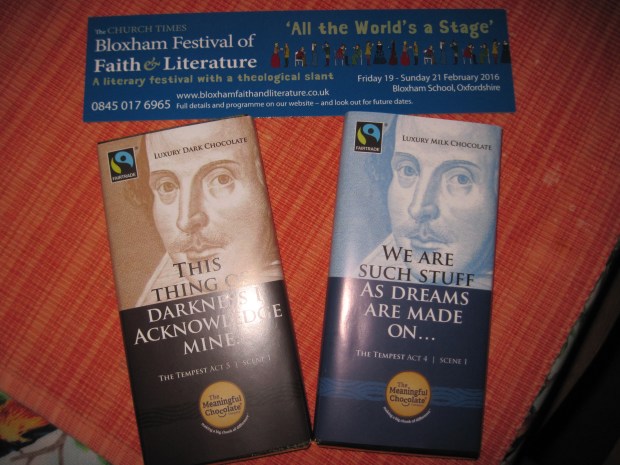
The morning began with an interview with Sarah Perry. Now, I have to admit that I didn’t really get on with her first novel, After Me Comes the Flood. Still, I was intrigued by how she incorporates biblical themes and her religious background in her fiction, so I thought I’d give it a go. Perry herself wasn’t at all as I expected her to be. I’d only ever seen one tiny press photo, in which she had a somewhat tomboyish haircut and had a demurely downcast gaze. So I was pleasantly surprised to find she was voluble, learned, and confident; in a black lacey dress and with loosely pinned hair, she resembled a modern Gibson Girl with a Gothic twist.
Interviewed by the editor of the Church Times newspaper, Perry spoke a bit about her upcoming novel, The Essex Serpent (to be published in the UK by Serpent’s Tail on June 18th), set in 1890s London and an invented village on the Essex marshes. In keeping with the talk’s title, “I would not wish any companion in the world but you,” the book is about friendship, specifically that between a vicar and a widowed amateur naturalist. Inspired by her own relationship with her (male) best friend and by intimate ‘love letters’ she found that passed between friends (like St. Paul to the Philippians and D.H. Lawrence to Jack Murray, or Montaigne writing about his best friend), the novel seeks the goodness in its characters.
The two readings Perry gave were lush, Dickensian descriptions of the City under rain and a drunken man going for a dip in the marsh and seeing what appears to be a sea creature. Perry was surprised when her debut novel was described as Gothic, but she’s embraced the label now: her third book, currently in progress, is full-on Gothic horror. What links all of her work, she thinks, is the Gothic notion of the thing lurking over the shoulder. For Perry, that ever-present threat is Reformation theology: the idea that man is born in sin and deserves damnation. During her Strict Baptist upbringing (which she, not coincidentally, describes as being like living in the 1890s), she was cut off from contemporary culture and influenced primarily by the King James Bible and Foxe’s Book of Martyrs.
Perry spent a short time as a missionary in the Philippines and was a biblical fundamentalist until age 25, when she and her husband (whom she met at 13 and married at 20) left the church. Stepping outside of that limiting community was the impetus she needed to start writing; although she had had stories looping around her head since the age of four, she had rarely written anything down. She completed a creative writing MA and PhD, all while working full time at the Inns of Court.
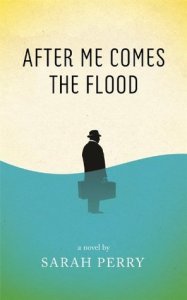 After Me Comes the Flood was rejected by 14 publishers; even her viva examiners, who passed her without corrections, were “ungracious,” she remarked. What it comes down to, she thinks, is simply that no one liked the book or knew what to make of it. It seemed unmarketable because it didn’t fit into a particular genre. At this point I was sheepishly keeping my head down, glad that Perry couldn’t possibly know about my largely unfavorable review in Third Way magazine. I confess that my reaction was roughly similar to the general consensus: “Not quite an allegory, [the book] still suffers from that genre’s pitfalls, such as one-dimensional characters,” I wrote.
A glowing Guardian review from poet John Burnside was enough to give Perry confidence to keep going as a novelist, and – having taken forever over writing her first book, an experience she likens to like pulling teeth because she had no idea what she was doing and could rarely overcome her natural laziness – she went on to write The Essex Serpent within just 10 months. And I’m glad she did, because this new book sounds right up my alley.
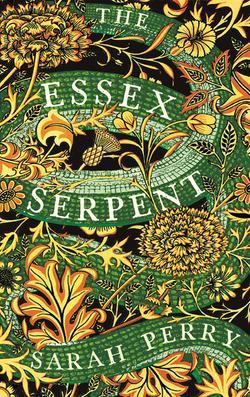 It will be interesting to see how she imagines a platonic friendship between the sexes in a historical setting, and the Dickensian and Gothic touches, even from the little taster I got, were delicious. I was especially intrigued to learn about her research into the friendship ‘triangle’ (betrayal! early death! forgiveness!) between William Ewart Gladstone, Alfred Tennyson, and Arthur Henry Hallam. Perry said she thinks the tide may be turning, that friendships rather than romantic love could be starting to dominate fiction; perhaps Hanya Yanagihara’s A Little Life from last year would be a good example.
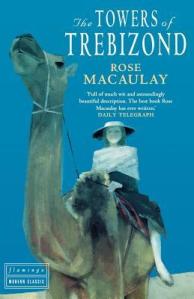
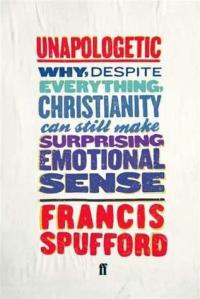 In the other sessions I attended, a group of clergy revealed the shortlist for the £10,000 Michael Ramsey Prize for theology (to my surprise, I’d read one of the nominees, Unapologetic by Francis Spufford) and panelists introduced a forthcoming anthology of essays on Anglican women novelists from Charlotte Brontë onwards (to be published by Bloomsbury in January 2018). Jane Williams, wife of former archbishop Rowan Williams, will contribute a chapter on Barbara Pym, who obviously loved the Church but also sits at an anthropological distance to poke gentle fun at it. Her novels sound like great fun. Judith Maltby, one of the editors, convinced me that I need to read Rose Macauley’s The Towers of Trebizond (1956), while co-editor Alison Shell made the case for P.D. James’s late inclusion.
 Chaired by contemporary Anglican novelist Catherine Fox, the panel noted two common threads in many of the featured novelists: detective fiction and humor. The striking number of crime novelists (including Dorothy L. Sayers and Ellis Peters), Shell suggested, one might attribute to an Anglican license to moralize or a preoccupation with ‘last things’. Humor, meanwhile, seems to arise from the little hypocrisies inherent to religious life and to the fact that liturgical seriousness can often tilt into comedy. Other repeated themes include the sacraments, the role of the spinster, and class – the clergy are often educated but poor. I came away with a list of authors to try; many of their works are available through Virago reprints.
All in all, it was a terrific, thought-provoking experience for me – a perfect mixture of literature and theology, and a great way to spend a blustery February Saturday.
 Bookish Beck = Rebecca Foster. American transplant to England. Freelance proofreader and book reviewer.
