These two sensual, campus-set queer novels were perfect additional reading for Pride Month. As a bonus, I read a recently reissued postcolonial poetry collection.
Mrs S by K Patrick
Like Tom Crewe’s The New Life, this was one of the Guardian’s 2023 debuts to look out for, and both are seriously sexy. Patrick’s unnamed narrator is an early-twenties Australian, shunned by her family, who has come to England to be a matron at a girls’ boarding school. No other characters are named, either, with The Girls discussed in aggregate and the whole institution – a tradition-bound place that issues a classical education – in thrall to the memory of “the dead author,” an Emily Brontë-like figure whose genius is both inspiration and burden.
The narrator is butch and wears a binder, and in fact, we soon learn, is not the only lesbian on staff. She and the Housemistress become drinking buddies, even venturing into the nearest large town to frequent a gay bar. But there’s also Mrs S, the headmaster’s wife, perhaps 20 years her senior, whose attention initially seems maternal – as they tend the rose garden, lead an art lesson together and fill in for a play performance – but gradually becomes more erotic when they go wild swimming and meet in the kitchen during a dinner party.
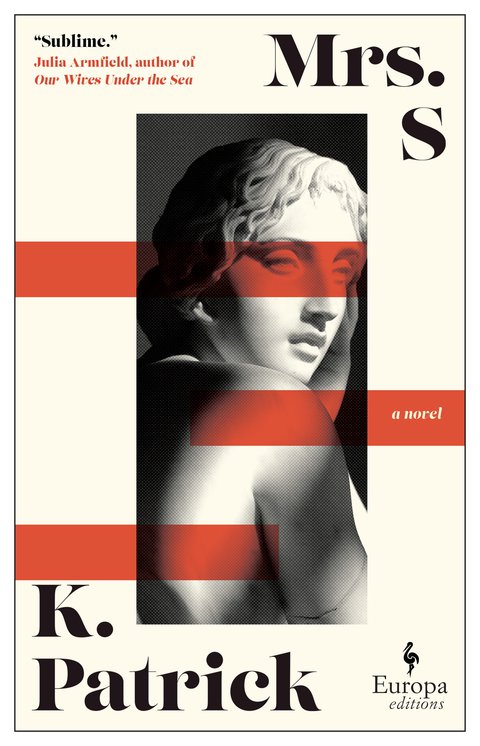
A heat wave gives the novel a sultry atmosphere as hints give way to explicit scenes. The Girls’ little dramas (one punches a boy and breaks his nose at a campus party; one group gets drunk while another gets high on mushrooms) pale in comparison to the steamy secrets. Summer romances can never last, but their intensity is legendary, and this feels like an instant standard of the type. Given the pre-Internet clues, it likely dates to the 1990s, and Mrs S and the narrator are on different pages about gender roles; had it been today, the narrator would surely have been frankly nonbinary like Patrick.
Her heterosexuality, public-facing. Its cosy violence. Who does she want to be? If I ask her that, she might fall apart. If I ask her that, I must be willing to live through the answer. … She is trying to be two people, I am not. Maybe I was. Not anymore.
The author takes the no-speech-marks thing to another level, the dialogue all in paragraph form with no new lines for each speaker. That and the under-punctuation are deliberate choices that make this somehow hyper-contemporary and a throwback to the Bloomsbury modernists all at once – what with the metaphors of propagating roses and garden fecundity, I couldn’t help but think of Virginia Woolf and Vita Sackville-West. Mrs S isn’t your average coming-of-age story, seduction narrative, or cougar stereotype. It’s a new queer classic.
With thanks to Europa Editions for the free copy for review. Released in the UK by Fourth Estate.
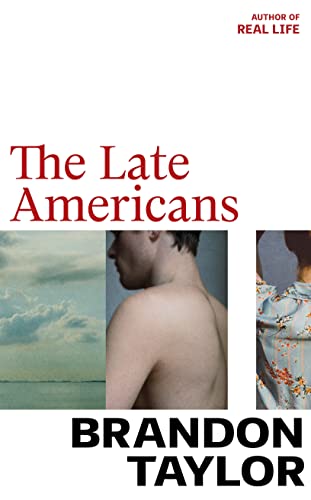
The Late Americans by Brandon Taylor
I was a huge fan of Taylor’s debut novel, the Booker-shortlisted Real Life, and also admired his follow-up linked story collection, Filthy Animals. This third book falls somewhere between the two in style. Although it’s been marketed as a novel, the nine close third person chapters are so discrete as to be more like short stories, all orbiting a group of students at the University of Iowa: many BIPOC, most gay; lots of them current or former ballet dancers.
 Seamus is the subject of the opening title story and “Gorgon’s Head,” so he felt to me like the core of the novel and I would happily have had him as the protagonist throughout. He’s a spiky would-be poet who ends up offending his classmates with his snobby opinions (“her poems were, in the words of a fictional Robert Lowell in an Elizabeth Bishop biopic, ‘observations broken into lines’ … she lacked a poetic intelligence”) and funds his studies by working in the kitchen at a hospice, where he meets a rough local named Bert and they have a sexual encounter that shades into cruelty.
Other characters include on-again, off-again homosexual couples Fyodor and Timo, and Ivan and Goran. Their fundamental differences account for why they so often spar: Fyodor works in a meat-packing plant, while Timo is vegetarian; Goran lives off family wealth, whereas Ivan has to get by on his own, and starts making amateur pornography for money. Noah, too, has the misfortune to get involved with Bert; most of the men, in fact, sleep with one or more of the other men. It’s hard to believe in the durability of this incestuous group. They’re all facing transitions as their studies come to an end, looking for jobs or internships, sometimes switching fields and deciding whether to leave relationships behind. Two late chapters from the perspectives of women, Noah’s neighbour Bea and dancer Fatima, who experiences sexualized shaming, were refreshing. Overall, I’m torn: Taylor’s writing can be stunning:
Iowa was a kind of cultural winter—they had all come to this speck of a city in the middle of a middle state in order to study art, to hone themselves and their ideas like perfect, terrifying weapons, and in the monastic kind of deprivation they found here, they turned to one another. Every dying species sought its own kind of comfort.
They were all posturing all the time. Everything they did was a posture, defensive or offensive, meant to demonstrate something to the outside world, perhaps that they were worthy or good or all right, perhaps to imply that they were in on the joke, that they were nothing and all they had were these crude choreographies of the self.
But it can also be laughable:
There was a resinous, burning taste in Noah’s mouth, and he wondered if it was from the semen or the cigarette or the pepper on the trout at dinner.
And even when it’s sublime, it feels a bit wasted on repetitive stories of meaningless hook-ups, assault, and resentment. This ended up being something of a disappointment from my Most Anticipated list. After three books about angsty homosexuals at midwestern universities, the author is in real danger of being perceived as a one-trick pony. I hope he’ll stretch himself and try something different with his next book.
With thanks to Jonathan Cape for the proof copy for review. Released in the USA by Riverhead.
And a bonus:
The Fat Black Woman’s Poems by Grace Nichols (1984)
 I discovered Grace Nichols a few years ago when I reviewed Passport to Here and There for Wasafiri. One of “Five Gold Reads” to mark Virago’s 50th anniversary, this was the Guyanese-British poet’s second collection (the reissue also includes a few poems from her first book, I Is a Long-Memoried Woman).
The title character is a woman of pleasures, jovial and sensual, but not without cliches (“Come up and see me sometime // My breasts are huge exciting / amnions of watermelon”). I preferred the later sections of the book about childhood memories and the expat’s dilemma: what you miss haunts you, even if what you gained in leaving was objectively better.
In London
every now and then
I get this craving
for my mother’s food
I leave art galleries
in search of plantains
These islands
not picture postcards
for unravelling tourist
you know
…
Poverty is the price we pay for the sun
The patois reminded me of work I’ve read by Bernardine Evaristo and Jackie Kay, and I might recommend the collection as a whole to readers of Fire Rush or Cane, Corn & Gully. But it didn’t spark much for me compared with Nichols’ more recent poetry.
With thanks to Virago for the free copy for review.
 Bookish Beck = Rebecca Foster. American transplant to England. Freelance proofreader and book reviewer.
 Bookish Beck
Your first choice sounds intriguing, but I may not investigate the other two, though I’ve had good experiences with some of Nichol’s writing.
LikeLiked by 1 person
I can highly recommend her Passport to Here and There, but I’d like to try others.
LikeLiked by 1 person
Noted. Thanks.
LikeLike
Ah I’m not sure if either of these are for me! I was really put off Mrs S by Fatma’s review (despite the praise from Julia Armfield) and after reading Real Life I agree, I don’t think I want to read another book from Taylor about the same thing.
LikeLiked by 1 person
You’d be welcome to my proof of Mrs S if you still want to give it a try. I didn’t realize Patrick is a Glasgow author and I went there just after finishing the book.
LikeLiked by 1 person
Thanks so much but I think I’ll give it a miss 🙂
LikeLike
I’ve heard good things about Mrs S from elsewhere (where? Poss New Statesman or something). I feel like I’ve missed the Taylor bus somehow even though I do like a campus novel …
LikeLiked by 1 person
I can’t imagine you liking Taylor — his stuff is textbook MA course product, which I know you don’t appreciate.
LikeLike
Aha, thank you – yup!
LikeLike
We had very different reactions to the Taylor which I enjoyed far more than Real Life! Having recently worked my way through an (excellent) novel with no paragraphs or speech marks, I think I’ll be leaving Mrs S for a while.
LikeLiked by 1 person
I’ll catch up on your review which came out while I was away.
I’m fine without speech marks once I get used to it, but it did take a little adjustment when both speakers were in the same paragraph with no designation.
LikeLiked by 1 person
Same with the novel I read. It makes for exhausting reading which in this case was appropriate.
LikeLike
I’m sorry to hear that the Taylor was a bit of a disappointment. I also loved Real Life but had mixed feeilngs about Filthy Animals. I’m definitely going to read The Late Americans, though – we shall see!
LikeLiked by 1 person
I’ll be interested to see which of his previous books you think it’s more like.
LikeLiked by 1 person
[…] to the same themes and settings). Before this year I would have said Taylor had the edge, but The Late Americans was so disappointingly similar to his previous work that Washington has taken the lead. I just hope […]
LikeLike
[…] Mrs S by K Patrick: Patrick’s unnamed narrator is an early-twenties Australian butch lesbian who has come to England to be a matron at a girls’ boarding school. Mrs S is the headmaster’s wife, perhaps 20 years her senior. A heat wave gives a sultry atmosphere as hints of attraction between them give way to explicit scenes. Summer romances never last, but their intensity is legendary, and this feels like an instant standard. Not your average coming-of-age story, seduction narrative or cougar stereotype. It’s a new queer classic. […]
LikeLike