I call it “Book Serendipity” when two or more books that I read at the same time or in quick succession have something in common – the more bizarre, the better. This is a regular feature of mine every couple of months. Because I usually have 20–30 books on the go at once, I suppose I’m more prone to such incidents. The following are in roughly chronological order.
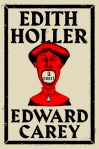
- A woman turns into a spider in Edith Holler by Edward Carey and The Human Origins of Beatrice Porter and Other Essential Ghosts by Soraya Palmer.

- Expulsion from Eden scenes (one literal, after the Masaccio painting; another more figurative by association) in Conversation Among Stones by Willie Lin and North Woods by Daniel Mason.
- Reading my second 2023 release featuring a theatre fire (after The House Is on Fire by Rachel Beanland, which I actually read last year): Edith Holler by Edward Carey.
- The protagonist cuts their foot in The Rituals by Rebecca Roberts and The Last House on Needless Street by Catriona Ward.


- On the same evening, I started two novels where the protagonist’s parents both died in a car crash: The Witches by Roald Dahl and Family Meal by Bryan Washington. This is something I encounter ALL THE TIME in fiction (versus extremely rarely in life) and it’s one of my major pet peeves. I can excuse it more in the children’s book as the orphan trope allows for adventures, but for the most part it just seems lazy to me. The author has decided they don’t want to delve into a relationship with parents at all, so they cut it out in the quickest and easiest possible way.
- A presumed honour killing in Behind You Is the Sea by Susan Muaddi Darraj and The Hundred and Ninety-Nine Steps by Michel Faber.


- A Houston, Texas setting in The Only Way Through Is Out by Suzette Mullen and Family Meal by Bryan Washington.
- Daniel Clowes, whose graphic novel Monica I was also in the middle of at the time, was mentioned in Robin Ince’s Bibliomaniac.
- The author/speaker warns the squeamish reader to look away for a paragraph in Robin Ince’s Bibliomaniac (recounting details of a gross-out horror plot) and one chapter of Daniel Mason’s North Woods.


- A mentally ill man who lives at the end of a lane in Daniel Mason’s North Woods and The Last House on Needless Street by Catriona Ward.
- Reading Last House before the Mountain by Monika Helfer and The Last House on Needless Street by Catriona Ward at the same time.
- The Daedalus myth (via Aeschylus or Brueghel, or just in general) is mentioned in Last House before the Mountain by Monika Helfer, The Ghost Orchid by Michael Longley, and Absolutely and Forever by Rose Tremain.
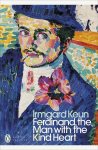
- A character goes to live with their aunt and uncle in Western Lane by Chetna Maroo and The House of Doors by Tan Twan Eng (both Booker-longlisted), but also The Woman in Black by Susan Hill, Train Dreams by Denis Johnson, and The Story Girl by L.M. Montgomery. I came across all five instances within a few days! Later I also encountered a brief mention of this in Ferdinand by Irmgard Keun. How can this situation be so uncommon in life but so common in fiction?!


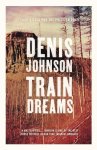

- The outdated terms “Chinaman” and “coolie” appear frequently in Train Dreams by Denis Johnson and The House of Doors by Tan Twan Eng.
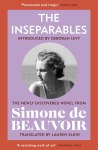
- A 15-year-old declares true love in The Inseparables by Simone de Beauvoir and Absolutely and Forever by Rose Tremain.
- A French character named Pascal in The Inseparables by Simone de Beauvoir and The Garrick Year by Margaret Drabble.

- A minor character called Mrs Biggs in Harriet Said… by Beryl Bainbridge and The House of Doors by Tan Twan Eng.
- The Chinese zither (guzheng) is mentioned in Dear Chrysanthemums by Fiona Sze-Lorrain, which I read earlier in the year, and The House of Doors by Tan Twan Eng.
- Oscar Wilde’s trial is mentioned in The House of Doors by Tan Twan Eng, as it was in The New Life by Tom Crewe, which I read earlier in the year – in both it was a cautionary case for older homosexual characters (based on real people: W. Somerset Maugham vs. John Addington Symonds) who were married to women but had a live-in male secretary generally known to be their lover. At the same time as I was reading The House of Doors, I was rereading Wilde’s De Profundis, which was written from prison.


- In Fifty Days of Solitude Doris Grumbach mentions reading Bear by Marian Engel. I read both during Novellas in November.
- Living funerals are mentioned in Ferdinand by Irmgard Keun and The Ritual Effect by Michael Norton.
- A character insists that lilac not be included in a bouquet in In the Sweep of the Bay by Cath Barton and Bright Young Women by Jessica Knoll.


- A woman has a lover named Frances in Bright Young Women by Jessica Knoll and The Cancer Journals by Audre Lorde.
- The final word of the Fanny Howe poem in Raised by Wolves (the forthcoming 50th anniversary poetry anthology from Graywolf Press) is “theophanies.” At the same time, I was reading the upcoming poetry collection Theophanies by Sarah Ghazal Ali.


- The Cancer Journals by Audre Lorde, which I’d read the month before, was a major influence on the cancer memoir All In by Caitlin Breedlove.
- Two foodie memoirs I read during our city break, A Waiter in Paris by Edward Chisholm and The Sweet Life in Paris by David Lebovitz, both likened a group of young men to a Dolce & Gabbana ad. (Chisholm initially lived at Porte des Lilas, the next Metro stop up from where we stayed in Mairie des Lilas.)
- A French slang term for penis, “verge,” is mentioned in both The Sweet Life in Paris by David Lebovitz and Learning to Drive by Katha Pollitt.


What’s the weirdest reading coincidence you’ve had lately?
 Bookish Beck = Rebecca Foster. American transplant to England. Freelance proofreader and book reviewer.
 Bookish Beck
None as usual, for me. But 2 women turning into spiders is weird indeed! Happy Christmas Rebecca, and happy reading.
LikeLiked by 1 person
Happy Christmas!
LikeLiked by 1 person
Now fascinated to think about the convergence of the dead-in-a-car-crash trope and the living-with-aunt-and-uncle trope. (Both present and correct in Harry Potter, although the former is debunked within three chapters and the latter rarely takes up page space after book two.) I suppose there aren’t many “reasonable” circumstances in which *both* a child’s parents would be killed together, and without the child. The only other one I can think of would basically only apply in America, and that’s something like a mass shooting at a shopping mall/restaurant/sports event, which would be a much heavier topic for any book to deal with. Everything else (avalanche/skiing accident? hit by lightning? industrial mishap?) seems either too outré or too unlikely to kill both parents outright. Meanwhile, I wonder if the aunt-and-uncle thing originates in an era when people were more likely to have large extended families (and also when those large extended families were quite likely to need extra help around the house) and has simply continued to lurk in our culture’s literary toolbox since then. Or, possibly, if it’s the stepmother effect? (Lots of the “evil stepmother” stories were actually just “evil mother” stories; Perrault and the Grimms sanitised when they edited, unwilling to threaten nascent French and German patriotism by suggesting that the nation’s mothers, of all people, were untrustworthy.)
LikeLiked by 2 people
Now, I have actually encountered this phenomenon once: one of the substitute teachers at my high school, whose son was a year ahead of me, died along with her husband in a car accident when the boy was a senior. But literally, to have only heard of this happening once, to a distant acquaintance, in all my 40 years … whereas it feels like it happens all the time in fiction, just as a convenient way of getting rid of the parents so the protagonist is forced to live by their wits. (I have in the back of my mind that I also encountered parents dying in a boating accident in China earlier this year, but in which book??) Do you remember hearing that Rachel Hullett’s (pace amore libri) parents survived a shooting at a movie theater?
LikeLike
Good God. That’s terrifying. It wasn’t the shooting at the Batman showing in Colorado?
LikeLike
I believe she said it was before she was born, so before the constant spate inaugurated by Columbine et al.
LikeLike
I forever love that Roald Dahl saw this pattern and went ‘nope, they were both stampeded by a rhinocerous’
LikeLiked by 2 people
YES. Trust Dahl to gleefully choose the path of the outré.
LikeLiked by 2 people
Excellent ones! I’ve mentioned all mine with a link to your latest set as I’ve gone along as always. I love the lilac in a bouquet, very niche!
LikeLiked by 1 person
I do love when they’re as specific as that!
LikeLike
Two books where a woman turns into a spider!! I have North Woods on my pile, and that came up on several of your items. I can’t wait to read it.
LikeLiked by 1 person
Hope you enjoy it! I had mixed feelings, but it was certainly inventive.
LikeLiked by 1 person
LM Montgomery’s characters seem to exclusively live with their aunts… To be fair to her, probably a bit more common in an age where parents were more likely to die before their children reached adulthood.
LikeLike
True, and then the historical date or setting of all the others (barring Western Lane, where the characters were from a traditional Indian culture) probably explains it.
LikeLiked by 1 person
Women turning into spiders would definitely have caught my attention.
LikeLiked by 1 person
That seems to be the one that struck a chord this time 🙂
LikeLike
[…] late Bookish Beck serendipity moment: this book is full of comments about how the rural poor are not represented in American […]
LikeLike
I was just reading about sonnets in a poetry book (the technical details, spec’s and terms, etc.) and then read the first Shields’s story “Segue” which features a sonnet-writing protagonist. And I immediately made a note to tell you about it when you next posted about this…thankfully I did not have time to lose my note yet!
(I’ve lost track of the number of times I’ve heard about people IRL whose parents were both killed in a car accident. It’s a thing.)
LikeLiked by 1 person
Ah, you started with her final story! Whereas I’m leaving it for last.
LikeLike
I have a very hard time not reading short story collections in order; even if I’d known that you weren’t going to read it first, I’m not sure I’d’ve been able to help myself because it’d’ve been THERE. But, having said that, I think it would be even more rewarding to read it at the end. (I wonder why they put it first. I’ll ponder that.)
LikeLiked by 1 person
I like the idea of reading her stories in strict chronological order. As I was starting with the only collection I own separately anyway, I just picked that up rather than the omnibus.
LikeLike
[…] island where the cattle have reverted to a wilder way. I personally had some great (appropriate) Bookish Beck Serendipity Moments with this book; at one point, I ended up with two cow skulls within 12 hours in this book and […]
LikeLike
[…] for Bookish Beck’s Book Serendipity collection: this was the second book I read in a week that was the first published prose work of […]
LikeLike