Book Serendipity, June to July
Life can have odd confluences. Esme will not say serendipity: she loathes the word. But sometimes she thinks there must be something at work, some impulse, some collision of forces, some kinks in chronology.
~The Vanishing Act of Esme Lennox by Maggie O’Farrell
Unlike Esme Lennox, I love the word serendipity! You probably know by now that I call it “Book Serendipity” when two or more books that I read at the same time or in quick succession have something in common – the more bizarre, the better. This is a regular feature of mine every couple of months. Because I usually have 20–30 books on the go at once, I suppose I’m more prone to such incidents. People frequently ask how I remember all of these coincidences. The answer is: I jot them down on scraps of paper or input them immediately into a file on my PC desktop; otherwise, they would flit away!
Thanks to Kay for posting about her own book serendipity moments here!
The following are in roughly chronological order.
- A woman gets on a flight even though she’s technically too pregnant to do so in one poem of Family Lines (ed. Armitage and Bower) and Commencement by J. Courtney Sullivan.
- A mention of a Spanish cat in one poem of Family Lines (ed. Armitage and Bower) and Tsi-Tsa by George Mikes.
- Rum and coke is mentioned in I Sing to the Greenhearts by Maggie Harris and Our Father Who Art in the Tree by Judy Pascoe.
- A character named Gladys in Blonde by Joyce Carol Oates and Our Father Who Art in the Tree by Judy Pascoe.
- A character named Celia in The Seven Husbands of Evelyn Hugo by Taylor Jenkins Reid and Commencement by J. Courtney Sullivan.
- A girl holds her breath until she faints in Lost Lambs by Madeline Cash and Our Father Who Art in the Tree by Judy Pascoe.
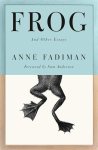 Samuel Taylor Coleridge’s performance as a father appears in one poem of Family Lines (ed. Armitage and Bower) and one essay of Frog by Anne Fadiman.
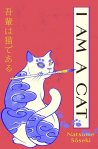
- A cat scratches a tatami mat in Letters of Note: Cats (ed. Shaun Usher) and I Am a Cat by Natsume Sōseki.
- A Freudian explanation of the collector’s obsessive impulse in The Madman’s Guide to Stamp Collecting by Robert Irwin and The Butterfly Season by Lea Korsgaard.
- A book/other arts coincidence, this: I first saw the actress Anya Taylor-Joy in The Menu, which I watched on my sister’s TV streaming system in the US, and then realized she’s pictured on the Netflix tie-in cover of a book I borrowed from the library, The Queen’s Gambit by Walter Tevis.
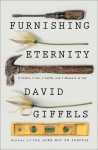
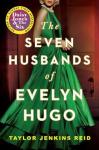
- Manhattans are drunk in Furnishing Eternity by David Giffels and The Seven Husbands of Evelyn Hugo by Taylor Jenkins Reid.
- A main character has a history of living in an orphanage in Blonde by Joyce Carol Oates, Buckeye by Patrick Ryan, and The Queen’s Gambit by Walter Tevis; and in children’s homes in Hunger and Thirst by Claire Fuller.
- An in-law named Fran(cesca) in The Vanishing Act of Esme Lennox by Maggie O’Farrell and The Things We Never Say by Elizabeth Strout.
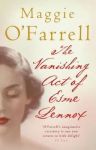
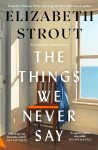
- A scene of visiting one’s grandmother in a dementia ward in The Vanishing Act of Esme Lennox by Maggie O’Farrell and Black Lake by Emily Skaja.
- Eating spoons of sugar straight from the jar/box in Depression Cooking by Sonali Menezes and The Things We Never Say by Elizabeth Strout.
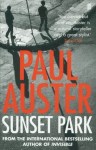
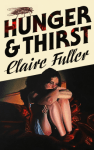
- Young people living in a squat in Sunset Park by Paul Auster and then Hunger and Thirst by Claire Fuller.
- A people-trafficking plot in Lost Lambs by Madeline Cash and The Singer’s Gun by Emily St. John Mandel.
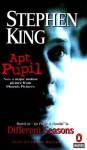
- Someone who doesn’t want to be recognized says “I don’t know what you’re talking about” / “I have no idea what you’re talking about” when someone identifies them in Apt Pupil by Stephen King and The Seven Husbands of Evelyn Hugo by Taylor Jenkins Reid.
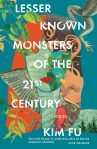
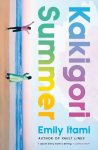
- A woman suffers from insomnia despite having done all the ‘right’ things, sleep hygiene-wise, in one story of Lesser-Known Monsters of the 21st Century by Kim Fu and Kakigori Summer by Emily Itami.
- A future blonde bombshell actress gets married off at age 15 in Blonde by Joyce Carol Oates and The Seven Husbands of Evelyn Hugo by Taylor Jenkins Reid.
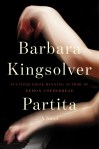
- A homosexual encounter takes place in a public bathroom in What Belongs to You by Garth Greenwell and The Seven Husbands of Evelyn Hugo by Taylor Jenkins Reid. (Plus heterosexual ones in a private shower in Partita by Barbara Kingsolver.)
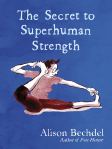
- A reference to Emerson’s “transparent eyeball” in The Secret to Superhuman Strength by Alison Bechdel and Black Lake by Emily Skaja.

- A character named Manny in Dominion by Addie E. Citchens, Partita by Barbara Kingsolver, and one story of The Typing Lady by Ruth Ozeki.
- A female character named Mick(ie) in The Heart Is a Lonely Hunter by Carson McCullers and Partita by Barbara Kingsolver. (There’s also a male Mick in Few and Far Between by Jan Carson.)
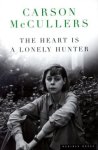
- Shoplifting takes place in Receipts from the Bookshop by Katie Clapham, The Singer’s Gun by Emily St. John Mandel, The Heart Is a Lonely Hunter by Carson McCullers, one story of The Typing Lady by Ruth Ozeki, and The Things We Never Say by Elizabeth Strout.
- The medical necessity of ironing all one’s clothing, especially nappies/underwear, is mentioned in L’Appart by David Lebovitz (a Greek person told him that) and Don’t Let’s Go to the Dogs Tonight by Alexandra Fuller (de rigueur in 1970s Rhodesia).

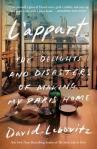 Remarking on how quiet/noisy a French dishwasher is in Paris to the Moon by Adam Gopnik/L’Appart by David Lebovitz and a mention of one’s good fortune in getting a store to accept a returned appliance.
- A mention of Ludwig Bemelmans’ Madeline in Receipts from the Bookshop by Katie Clapham and Brother, I’m Dying by Edwidge Danticat.
- Characters are robbed in a motel room in Dominion by Addie E. Citchens and The New People by Andrea Uptmor.
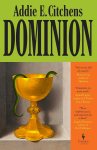

- Living in the space above a garage in one story of The Typing Lady by Ruth Ozeki and The New People by Andrea Uptmor.
- Scenes of a woman/girl reassembling a gun, and a gun amnesty, in one story of Lesser-Known Monsters of the 21st Century by Kim Fu and Don’t Let’s Go to the Dogs Tonight by Alexandra Fuller.
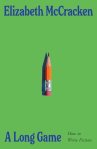
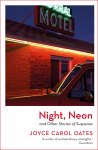
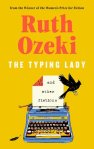
- The use of a typewriter in Brother, I’m Dying by Edwidge Danticat, Apt Pupil by Stephen King, A Long Game by Elizabeth McCracken, one story of Night, Neon by Joyce Carol Oates, and The Typing Lady by Ruth Ozeki.
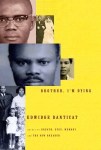
- Thousands of dollars being stored in/under a mattress in Brother, I’m Dying by Edwidge Danticat and The New People by Andrea Uptmor.
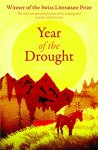 The smell of vetiver: a cologne in Year of the Drought by Roland Buti and fabric softener in Brother, I’m Dying by Edwidge Danticat.
- I encountered sections on the sense of smell at about the same time in Life in Five Senses by Gretchen Rubin and Wearing God by Lauren Winner.
- A person bites someone else’s finger in Don’t Let’s Go to the Dogs Tonight by Alexandra Fuller, one story of The Typing Lady by Ruth Ozeki, and The New People by Andrea Uptmor. (And an ear in The Dud Avocado by Elaine Dundy.)
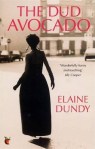
- Eating an omelette in a Paris café in The Dud Avocado by Elaine Dundy, Paris to the Moon by Adam Gopnik, and Moveable Feasts by Chris Newens. (I suppose these things will happen if I read multiple Paris-set books at once!)
- The fact that “Pas mal” (“not bad”) is high praise in French is explained in Pardon Our French by Alex Durand and Tom Carles and L’Appart by David Lebovitz.
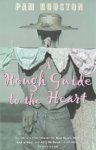 An insistence that the soles of a woman’s feet not be shown in A Rough Guide to the Heart by Pam Houston (etiquette in Bhutan) and Blonde by Joyce Carol Oates (when Norma Jeane Baker, aka Marilyn Monroe, is having early nude photos taken).
- A nude photo shoot takes place in The Singer’s Gun by Emily St. John Mandel and Blonde by Joyce Carol Oates. There are also nude portrait sittings in The Dud Avocado by Elaine Dundy and The Original by Nell Stevens.

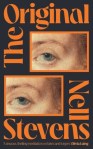
- A man has glass embedded in his face in Few and Far Between by Jan Carson and The Singer’s Gun by Emily St. John Mandel.
- The idea that one will be cursed for touching a stranger’s grave appears in Don’t Let’s Go to the Dogs Tonight by Alexandra Fuller and Kakigori Summer by Emily Itami.
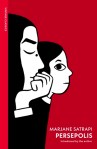
- I find myself rereading two childhood memoirs of wartime life at the same time: Don’t Let’s Go to the Dogs Tonight by Alexandra Fuller and Persepolis by Marjane Satrapi.
What’s the weirdest reading coincidence you’ve had lately?
Paris in July, II: Beauvais, Brown, Elkin and Lebovitz
July has been one long heat wave here in southern England. Luckily, it’s a bit cooler than it was earlier in the month, and we’re developing strategies for coping with what seems to be the new normal – until it gets worse again. My main tactic has been doing very little on most days apart from sitting on the couch or reclining on a mattress with a stack of books to hand. So it’s been good for one thing (maybe two): finishing books – and watching swifts. Following on from my first set of four Paris reads, I have another four (and five more coming up before the end of the month): a teen novel about overcoming peers’ prejudice, an essay anthology about the enduring appeal of the city for authors, a fragmentary memoir composed on a phone during a bus commute, and a record of a chef’s home renovation journey from hell.

Piglettes by Clémentine Beauvais (2014; 2017)
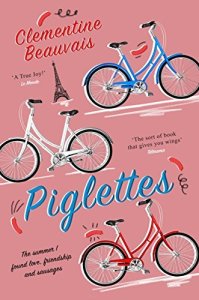 This was my second YA novel by Beauvais (after In Paris with You); she translated both herself and her proficiency in both languages allowed her to include wordplay that might have been lost otherwise (“I finally get what it means to have l’esprit de l’escalier, when I scream to her, from the bottom of the staircase…”). Mireille LaPlanche’s former friend Malo introduced a cruel annual tradition at their high school: a “Pig Pageant” in which classmates pick the fattest, ugliest girls – including her. She decides to team up with two other finalists, Astrid and Hakima, and show their persecutors what they can do. After a period of planning and training, they undertake a week-long cycle ride from their home in Bourg-en-Bresse to Paris, timed so that they’ll arrive on Bastille Day and crash the president’s garden party. Hakima’s older brother, Kader, who lost his legs in the Iraq War and uses a wheelchair, is their chaperone. They’ve dubbed themselves the “Three Little Piglettes” and tow a trailer full of sausages that they cook and sell at each stop. Soon they’re a social media phenomenon. This sweet, funny Cinderella story about defusing fatphobia includes good diversity rep and touches on lots of issues including anxiety, bullying, and unrequited love – all with an unmistakably French enthusiasm for wine, cheese and philosophy. (Edelweiss)
A Paris All Your Own: Bestselling Women Writers on the City of Light, ed. Eleanor Brown (2017)
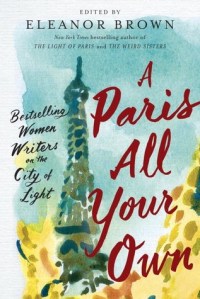 A reread that I started shortly after our trip to Paris in December 2023 but left half-finished on a shelf until this month. The roster of 18 contributors leans very much towards women’s fiction. While I probably most enjoyed the third of the book that was by authors I’d read and liked before – J. Courtney Sullivan, Susan Vreeland, Paula McLain, Julie Powell, Therese Anne Fowler and Maggie Shipstead – all of the pieces are cosy and undemanding. They tell of time spent living, working or travelling in the city. Sometimes it meets expectations; other times, mishaps and faux pas create disillusionment until a future visit grants a second chance. There are favourite foods and language struggles, art treasures and magical spots to discover, and stereotypes to confirm or overturn. The experience of Paris can vary based on who the travel companion is – an enthusiastic child, a needy parent or a soon-to-be ex. Fowler made her research trip before writing a biographical novel about Zelda Fitzgerald, while McLain only saw Hemingway’s haunts after she’d written The Paris Wife. Each essay finishes with a quickfire list of favourite Paris moments, books, sites, songs, etc. Not a bad substitute for being there! (Secondhand – 2nd & Charles)
My original rating (2017): 
My rating now:
No. 91/92: Notes on a Parisian Commute by Lauren Elkin (2021)
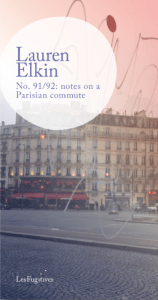 Just imagine keeping a diary of your bus journeys in the Notes app of your phone for seven months and getting a book out of it. Elkin’s mostly unedited observations are based on people-watching and her own swirling thoughts in 2014–15. She covers obnoxious behaviours on public transport (the same the world over, it seems: “Oi. Manspreader. Bouge ton cul”); her teaching work; overheard conversations; and Paris as seen in different seasons. Her mind wanders across history and theory. The bus is a melting pot: She’s thrown into false intimacy with people she’s never seen before and hopes never to encounter again. Nothing much happens until it does. First it’s the Charlie Hebdo attacks. Then she falls pregnant but it’s ectopic and she loses the baby. And, after she’s switched to Métro commuting, the Hypercacher attacks. In the prologue and epilogue, Elkin talks about only understanding major events in retrospect. She also cites lockdown diaries as being a new subgenre her project fit into. But let’s be honest: if she’d not already made a name for herself as a cultural critic, this would never have been published. While it has some value as an in-the-moment historical document, I didn’t find it nearly as profound as, say Deborah Levy’s autobiography. (Secondhand – Awesomebooks.com with SellItBack voucher)
L’appart: The Delights and Disasters of Making My Paris Home by David Lebovitz (2017)
Lebovitz is a San Francisco pastry chef who moved to Paris a couple of decades ago. We get a lot of ideas from his dessert cookbook and extensive blog archive. Like The Sweet Life in Paris, this contains lighthearted musings about cultural differences between France and the US and many tantalizing recipes (most of them sweet but also a few savoury) that I am actually likely to make. But it’s primarily about the several-year saga of buying and restoring an apartment. Lebovitz had a grand plan for the kitchen, especially: a huge space with American-style appliances that would ease his cookbook writing and testing. French bureaucracy made the purchase difficult enough as the property had to be officially reregistered as residential rather than commercial, and the seller and realtor were both antagonistic.
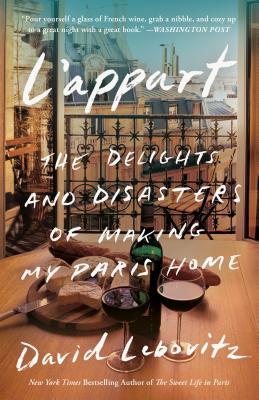 But that was nothing compared to the nightmare of the renovation. To start with, Lebovitz was friendly with his contractor and his workers. In fact, too friendly, his partner, Romain, warned. He called the builders “tu,” brought fresh-baked treats for them, and always paid their bills promptly. They started taking liberties: hardly ever showing up, failing to meet deadlines, replying to every concern with “pas de problème” but never fixing the issues. The shoddiness and incompetence are truly astounding: counters at the wrong height, an unusable faucet, melted fuses, an electricity leak, buckled floorboards, askew windows, an upside-down water softener. Every mistake cost time and money, such that the whole job was three times longer and more expensive than projected. (A lawyer dissuaded Lebovitz from suing because in the French legal system it could take five years and not even go his way.)
Depending on your own experience, this might be cathartic, or too close to home, or a cautionary tale. (We’d already long decided we won’t do any major building projects because we can’t tolerate noise, disruption or strangers and our house is good enough for our needs.) Keep in mind that Lebovitz dealt with all this in a second language and his fortitude is impressive. Scenes at Ikea and conversations with his contractor are amusingly surreal. But I confess I did find this a little overlong and repetitive, and every setback made me cringe for him. I’ll have to bake some frangipane plum-raspberry gratins and try to forget the pain. (Secondhand – Better World Books with Little Free Library voucher)
Book Serendipity, October to December 2023
I call it “Book Serendipity” when two or more books that I read at the same time or in quick succession have something in common – the more bizarre, the better. This is a regular feature of mine every couple of months. Because I usually have 20–30 books on the go at once, I suppose I’m more prone to such incidents. The following are in roughly chronological order.
- A woman turns into a spider in Edith Holler by Edward Carey and The Human Origins of Beatrice Porter and Other Essential Ghosts by Soraya Palmer.


- Expulsion from Eden scenes (one literal, after the Masaccio painting; another more figurative by association) in Conversation Among Stones by Willie Lin and North Woods by Daniel Mason.
- Reading my second 2023 release featuring a theatre fire (after The House Is on Fire by Rachel Beanland, which I actually read last year): Edith Holler by Edward Carey.
- The protagonist cuts their foot in The Rituals by Rebecca Roberts and The Last House on Needless Street by Catriona Ward.


- On the same evening, I started two novels where the protagonist’s parents both died in a car crash: The Witches by Roald Dahl and Family Meal by Bryan Washington. This is something I encounter ALL THE TIME in fiction (versus extremely rarely in life) and it’s one of my major pet peeves. I can excuse it more in the children’s book as the orphan trope allows for adventures, but for the most part it just seems lazy to me. The author has decided they don’t want to delve into a relationship with parents at all, so they cut it out in the quickest and easiest possible way.
- A presumed honour killing in Behind You Is the Sea by Susan Muaddi Darraj and The Hundred and Ninety-Nine Steps by Michel Faber.


- A Houston, Texas setting in The Only Way Through Is Out by Suzette Mullen and Family Meal by Bryan Washington.
- Daniel Clowes, whose graphic novel Monica I was also in the middle of at the time, was mentioned in Robin Ince’s Bibliomaniac.
- The author/speaker warns the squeamish reader to look away for a paragraph in Robin Ince’s Bibliomaniac (recounting details of a gross-out horror plot) and one chapter of Daniel Mason’s North Woods.


- A mentally ill man who lives at the end of a lane in Daniel Mason’s North Woods and The Last House on Needless Street by Catriona Ward.
- Reading Last House before the Mountain by Monika Helfer and The Last House on Needless Street by Catriona Ward at the same time.
- The Daedalus myth (via Aeschylus or Brueghel, or just in general) is mentioned in Last House before the Mountain by Monika Helfer, The Ghost Orchid by Michael Longley, and Absolutely and Forever by Rose Tremain.
- A character goes to live with their aunt and uncle in Western Lane by Chetna Maroo and The House of Doors by Tan Twan Eng (both Booker-longlisted), but also The Woman in Black by Susan Hill, Train Dreams by Denis Johnson, and The Story Girl by L.M. Montgomery. I came across all five instances within a few days! Later I also encountered a brief mention of this in Ferdinand by Irmgard Keun. How can this situation be so uncommon in life but so common in fiction?!



- The outdated terms “Chinaman” and “coolie” appear frequently in Train Dreams by Denis Johnson and The House of Doors by Tan Twan Eng.
- A 15-year-old declares true love in The Inseparables by Simone de Beauvoir and Absolutely and Forever by Rose Tremain.
- A French character named Pascal in The Inseparables by Simone de Beauvoir and The Garrick Year by Margaret Drabble.

- A minor character called Mrs Biggs in Harriet Said… by Beryl Bainbridge and The House of Doors by Tan Twan Eng.
- The Chinese zither (guzheng) is mentioned in Dear Chrysanthemums by Fiona Sze-Lorrain, which I read earlier in the year, and The House of Doors by Tan Twan Eng.
- Oscar Wilde’s trial is mentioned in The House of Doors by Tan Twan Eng, as it was in The New Life by Tom Crewe, which I read earlier in the year – in both it was a cautionary case for older homosexual characters (based on real people: W. Somerset Maugham vs. John Addington Symonds) who were married to women but had a live-in male secretary generally known to be their lover. At the same time as I was reading The House of Doors, I was rereading Wilde’s De Profundis, which was written from prison.


- In Fifty Days of Solitude Doris Grumbach mentions reading Bear by Marian Engel. I read both during Novellas in November.
- Living funerals are mentioned in Ferdinand by Irmgard Keun and The Ritual Effect by Michael Norton.
- A character insists that lilac not be included in a bouquet in In the Sweep of the Bay by Cath Barton and Bright Young Women by Jessica Knoll.


- A woman has a lover named Frances in Bright Young Women by Jessica Knoll and The Cancer Journals by Audre Lorde.
- The final word of the Fanny Howe poem in Raised by Wolves (the forthcoming 50th anniversary poetry anthology from Graywolf Press) is “theophanies.” At the same time, I was reading the upcoming poetry collection Theophanies by Sarah Ghazal Ali.


- The Cancer Journals by Audre Lorde, which I’d read the month before, was a major influence on the cancer memoir All In by Caitlin Breedlove.
- Two foodie memoirs I read during our city break, A Waiter in Paris by Edward Chisholm and The Sweet Life in Paris by David Lebovitz, both likened a group of young men to a Dolce & Gabbana ad. (Chisholm initially lived at Porte des Lilas, the next Metro stop up from where we stayed in Mairie des Lilas.)
- A French slang term for penis, “verge,” is mentioned in both The Sweet Life in Paris by David Lebovitz and Learning to Drive by Katha Pollitt.


What’s the weirdest reading coincidence you’ve had lately?
Three Days in Paris and What I Read
My husband’s belated 40th birthday treat was a short city break in Paris earlier this week. No sooner had I gotten home on Tuesday than I was sealing up my suitcase to fly to the States the following afternoon. It’s been quite the whirlwind week (make that few months), but now that things have quieted down a little, I have a chance to look back on the long weekend’s eating, sightseeing and reading. I’d been to Paris twice before: once just for an overnight en route to Milan in 2019, while my first and only proper trip was in early 2004.
That time I did all the touristy things like the Eiffel Tower, the Musée d’Orsay (though not the Louvre), Notre Dame and the site of the Bastille. A sign of how times have changed: nearly 20 years ago when I was at Père Lachaise cemetery, you could go right up to Oscar Wilde’s grave and add your lip-print to the many kisses on it. (There’s a photo of me and my study abroad friend doing just that; I wish I’d had time to go dig it out of an album.) Today it’s walled off by Perspex with a note explaining that the family pay all the cleaning costs. To think that there are descendants of Wilde’s out there in the world! Still, a tiny letdown when it was such a cute ritual. We also visited Chopin and Balzac and took in the views.


The most touristy things we did this time around were Sainte-Chapelle, a marvel of medieval stained glass, and Shakespeare and Company, the famous English-language haunt of expats over the decades. Notre Dame is still closed for its extensive post-fire restoration (it’s due to reopen next year) but you can read some signboards about the reconstruction outside and sit on the bleachers to soak in the atmosphere. Our other destinations included the Hotel de Ville, lit up at night with a Christmas market to advertise the 2024 Olympics, and the Jardin des Plantes and its museum of paleontology and comparative anatomy – old-fashioned in just the way we like it, with row upon row of skeletons and lots of hand-inked original labels.


We were mostly in the city to eat, and eat we did. Many of our recommendations for boulangeries and patisseries came from American chef David Lebovitz’s blog. Although we did buy traditional baguettes and croissants, we were mostly on the lookout for unusual treats, such as hay-flavoured custard-filled choux buns and a famous maple syrup tart. We had one bistro meal and another at a creperie, this one incorporating Breton-Japanese fusion dishes such as my Breizh rolls, cut from a buckwheat galette filled with artichoke hearts, seaweed, scrambled egg and Comté cheese: a cross between a crêpe and sushi.
We enjoyed riding the Métro and by the time we left felt like pros at it. Speaking French to shopkeepers and waitstaff had also started to become second nature (I even managed to query errors in our order/bill twice at restaurants). The weather was showery and colder than expected, but never enough to spoil our experience, and we stole some good glimpses of the Tower from around the city.
But the highlight of the trip was something we stumbled upon and joined in on a whim. At Shakespeare and Company on our first full day, we spotted a sign for a free event they were hosting the next night: the recording of a podcast by comedian Greg Proops, followed by mince pies, mulled wine and carol singing.

We had never heard of Proops but thought we’d take a chance, so made our way back the next evening and got two of the last seats left in the back of the upstairs space. His monologue was funnier than expected, mostly a stringing together of in-jokes about national stereotypes of the English, Americans and French – but as we all know, clichés are amusing precisely because they contain grains of truth. He also had a few long anecdotes about getting eye surgery and running into a famous old film director in Paris. It sounds like this bookshop event is an annual tradition for him.


Best of all, afterwards the shop was technically closed but we were allowed to stay in – lock-in at the bookshop! They don’t normally allow photographs inside, but my husband managed to sneak a few plus some video of the carol singing. The mince pies, gingerbread and mulled wine were all tasty. Professor Lex Paulson at the piano led us in a marathon of 22 songs ranging from ancient traditionals (“O Come O Come Emmanuel” and “The Coventry Carol”) to recent pop (“Last Christmas” and “All I Want for Christmas Is You”); it must be said that there was more general enthusiasm for the latter, while my husband and I were among the few raring for “The Holly and the Ivy” and suchlike. A truly unforgettable evening.
 I’d read one memoir of working and living in Shakespeare and Company, Books, Baguettes and Bedbugs by Jeremy Mercer (original title: Time Was Soft There), back in 2017. I don’t remember it being particularly special as bookish memoirs go, but if you want an insider’s look at the bookshop that’s one option. Founder Sylvia Beach herself also wrote a memoir. The best part of any trip is preparing what books to take and read. I had had hardly any time to plan what else to pack, and ended up unprepared for the cold, but I had my shelf of potential reads ready weeks in advance. I took The Elegance of the Hedgehog by Muriel Barbery and read the first 88 pages before giving up. This story of several residents of the same apartment building, their families and sadness and thoughts, was reminiscent of Sophie’s World and didn’t grip me. But here’s what I did read, in chronological order (all:
  ):
):
Broderies by Marjane Satrapi (2003)
The fifth-floor Airbnb apartment where we stayed in the suburb of Mairie des Lilas overlooked a school and housed an amazing collection of graphic novels in French. I picked this one up to flick through because I remember enjoying Persepolis, but to my surprise I could understand just about every line bar a very few vocabulary words that I skipped over or grasped in context, so I read the whole thing over a couple of breakfasts and evening glasses of wine.
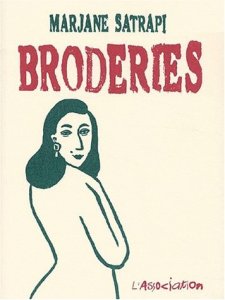 After a dinner party, Marji helps her grandmother serve tea from a samovar to their female family friends, and the eight Iranian women swap stories about their love lives. These are sometimes funny, but mostly sad and slightly shocking tales about arranged marriages, betrayals, and going to great lengths to entrap or keep a man. They range from a woman who has birthed four children but never seen a penis to a mistress who tried to use mild witchcraft to get a marriage proposal. What is most striking is how standards of beauty and purity have endured in this culture, leading women to despair over their loss of youth and virginity.
I think the title may have some slang meaning relating to the hymen? But in English translation it is Embroideries, referring to the way these women stitch together their life stories and their relationships. All the scenes are in black and white with a readable cursive handwriting for the plentiful text. It was a more talky graphic novel than I tend to prefer, but I learned a lot of good phrases from it, and found it a real joy to read. It must be the first book I have read in French since my university days!
The Sweet Life in Paris by David Lebovitz (2009)
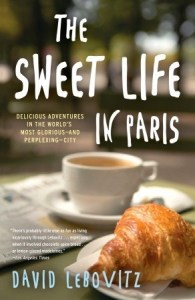 We both read this, keeping two bookmarks in and trading it off on Metro journeys. The short thematic chapters, interspersed with recipes, were perfect for short bursts of reading, and the places and meals he described often presaged what we experienced. His observations on the French, too, rang true for us. Why no shower curtains? Why so much barging and cutting in line? Parisians are notoriously rude and selfish, and France’s bureaucracy is something I’ve read about in multiple places this year, including John Lewis-Stempel’s La Vie.
Lebovitz has happily called the city home for two decades now, and performs culinary feats (testing the recipes for his dessert cookbooks) in a tiny apartment kitchen. There are sections here on fish, cheese, chocolate, and so on, but also on particular shopping areas and typically French incidents, such as everyone being on strike at the same time. One chapter was a hymn to G. Detou (a play on words meaning “I have it all”), a food emporium my husband was especially excited to visit. This was breezy and affectionate, a perfect travel companion.
A Waiter in Paris by Edward Chisholm (2022)
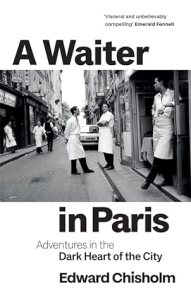 This was consciously based on George Orwell’s Down and Out in Paris and London, but more so than an exposé of working-class poverty and abuses of power in the restaurant world, it is a rollicking narrative of living hand to mouth and trying to gain acceptance as a waiter. I enjoyed it in much the same way that I did Kitchen Confidential by Anthony Bourdain and Sweetbitter by Stephanie Danler: this is a high-stress, macho world I would never want to be a part of myself, but reading about it is intriguing. After Chisholm broke up with his girlfriend, he lived in a bedbug-ridden garret and often did 14-hour shifts as a runner at the “Bistrot de la Seine,” which packed in hundreds of tables and served thousands of meals daily. As “l’Anglais,” with no proper contract or social security, Chisholm was overlooked but determined to become a waiter. Though he felt fraternity with his colleagues, day-to-day life was brutal. He survived on coffee, cigarettes, and stolen rolls, and caught few-hour naps in the toilets of upscale restaurants. The waiters were cut-throat in their competition for tips, and the chefs, mostly Tamil, worked in a basement inferno. His pen portraits of these characters are particularly Orwellian. The account is as vivid and engrossing as a novel.
 I forgot to start it while I was there, but did soon afterwards: The Paris Novel by Ruth Reichl, forthcoming in early 2024. When Stella’s elegant, aloof mother Celia dies, she leaves her $8,000 – and instructions to go to Paris and not return to New York until she’s spent it all. At 2nd & Charles yesterday, I also picked up a clearance copy of A Paris All Your Own, an autobiographical essay collection edited by Eleanor Brown, to reread. I like to keep the spirit of a vacation alive a little longer, and books are one of the best ways to do that.
Another Birthday & An “Overhaul” of Previous Years’ Gifted Books
I thought a Wednesday would be a crummy day to have a birthday on, but actually it was great – the celebrations have extended from the weekend before to the weekend after, giving me a whole week of treats. Last Saturday we planned a last-minute trip to Oxford when I won a pair of free tickets to the Oxford Playhouse’s comedy club, their first live event since March. It featured three acts plus a compere and was headlined by Flo & Joan, a musical sister act we’d seen before at Greenbelt 2018. Beforehand, we had excellent pizzas at Franco Manca. Oxford felt busy, but we wore masks to queue at the restaurant and for the whole time in the Playhouse, where there were several seats left between parties plus every other row was empty.

My husband was able to work from home on the day itself, even though he’s been having a manically busy couple of weeks of in-person teaching and labs on campus, so we got to share a few meals: a leisurely pancake breakfast; fresh-baked maple, walnut and pear upside-down cake, a David Lebovitz recipe from Ready for Dessert (recreated here); and a French-influenced dinner at The Blackbird, a local pub we’d not tried before. In between I did some reading (of course), helped hunt in the garden for invertebrates for the labs, and did a video chat with my mom and sister in the States.


Today, since he had a bit more time free, he has made me Mexican food, one of my favorite cuisines and something I don’t get to have very often, plus a second cake from a Lebovitz recipe (luckily, the remnants of the last one had already gone in the freezer), this time a flourless chocolate cake topped with cacao nibs.
Just three books came in as gifts this year, though I might buy a few more with birthday money and vouchers. (A proof copy of Claire Fuller’s new novel, forthcoming in January, happened to arrive on my birthday, so I’ll call that four books as presents!) I also received chocolate, posh local drink, and the latest Alanis album.


An Overhaul of Previous Years’ Gifted Books
For a bit of fun, I thought I’d go back through the previous birthday book hauls I’ve posted about and see how many of the books I’ve read: 2015, 2016, 2017, 2018 and 2019.
Simon of Stuck in a Book runs a regular blog feature he calls “The Overhaul,” where he revisits a book haul from some time ago and takes stock of what he’s read, what he still owns, etc. (here’s the most recent one). With permission, I’ve borrowed the title and format.
Date of haul: October 2015
Number of books purchased: 7 [the bottom 3 pictured were bought for other people]
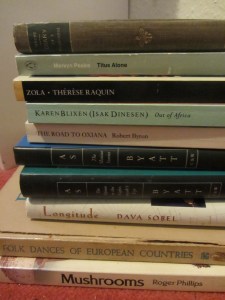
Had already read: 2 (the Byatt story collections, one of which I reread earlier this year)
Read since: 2 (reviews of the Jerome and Zola appeared on the blog)
Still to read: 3 – It’s high time I got around to the Byron and Dinesen books after five years sat on my shelves! I DNFed the first Gormenghast book, though, so may end up jettisoning the whole trilogy.
Date of haul: October 2016
Number of books purchased/received: 6
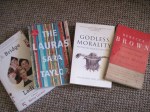
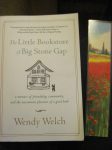
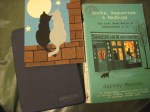
Read: ALL 6! I am so proud about this. Reviews of the Brown, Taylor, and Welch have appeared on the blog.
Still own: Just 2 – I resold the Brown and Holloway after reading them, gave the Mercer to a friend, and donated the Taylor proof.
Date of haul: October 2017
Number of books received: 11

Read: 4 (reviews of the Cox, Hay, and Hoffman appeared on the blog)
DNFed and resold: 2
Still to read: 5
Date of haul: October 2018
Number of books received: 10

Read: 8! Another fine showing; only the Giffels and Winner remain to be read. Reviews of the Groff, one L’Engle, and Manyika & Richardson appeared on the blog.
Still own: 8 – I resold the Hood and Petit after reading them.
Date of haul: October 2019
Number of books received: 14
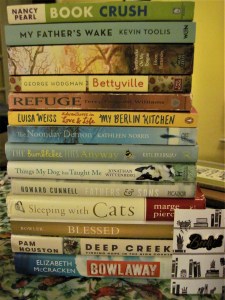
Read: Only 2. Hmm. (I reviewed the Weiss, and the Houston appeared on my Best of 2019 runners-up list.)
Currently reading/skimming, or set aside temporarily: 4
DNFed and resold: 3. D’oh.
Still to read: 5
Are you good about reading gifted books quickly?
What catches your eye from my stacks?
Birthday Goings-on & Booker Prize Predictions
For a low-key early birthday outing we went to The Living Rainforest, a local tourist attraction run by a conservation charity. It’s on the small side, but our tickets got us free annual entry, so we’ll likely come back with family and friends with kids. Along with the tropical plants (including various fig trees I sought out especially!), there are birds both free-roaming and in cages, marmosets and monkeys, fish and turtles, an armadillo, and an elusive sloth we didn’t manage to see. Afterwards we went around the corner for cappuccinos and generous slabs of cake at the Hampstead Norreys community shop café.


My birthday itself was a gloomy day, but I didn’t mind at all; I filled it with reading and feasting, plus listening to music, working on a jigsaw puzzle, and having the cat on my lap. Each year my husband happily takes on impressive cooking and baking projects of my choice. This year we had acorn squash and black bean enchiladas with homemade salsa and guacamole, followed by Mexican rice pudding flavored with cinnamon and lime. In the afternoon with presents we’d had David Lebovitz’s Banana Cake with Mocha Frosting and Salted Candied Peanuts from Ready for Dessert. A delicious and decadent grown-up cake.


I got chocolate, notebooks, Lush shampoo, a bunch of llama/alpaca stuff, and 10 books as gifts (I suspect there might be more books to come, though). Looking back at my birthday book hauls from 2016 and 2017, I can see that I’ve had mixed success with getting through the acquisitions in a timely fashion: I’ve now read 9 out of 12 of 2016’s, but only 4 out of 11 of 2017’s. Though I’m very excited about some of my new books – I marked them as high priority on my wish list, after all – that doesn’t always translate into reading them soon. However, I’ve added two of them to my novellas pile for November, and I’ll read the first L’Engle journal in December as it starts around Christmastime.
Tomorrow the Man Booker Prize will be announced. Although I’ve only read one and a third books from the shortlist, I’m going to have a go at making predictions anyway. Here are the six nominees in what I think is their likelihood of winning:
 #1: I fully expect Richard Powers to win for The Overstory. This is the one I’m partway through; I started reading a library copy on Friday. I’m so impressed by the novel’s expansive nature. It seems to have everything: love, war, history, nature, politics, technology, small-town life, family drama, illness, accidents, death. And all of human life is overshadowed and put into perspective by the ancientness of trees, whose power we disregard at a cost. I’m reminded of the work of Jonathan Franzen (Freedom + Purity), as well as Barbara Kingsolver’s latest, Unsheltered – though Powers is prophetic where she’s polemic.
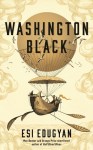 #2: Washington Black by Esi Edugyan is a good old-fashioned adventure story about a slave who gets the chance to leave his Barbados sugar plantation behind when he becomes an assistant to an abolitionist inventor, Christopher “Titch” Wilde. Wash discovers a talent for drawing and a love for marine life and pursues these joint interests in the disparate places where life takes him. Part One was much my favorite; none of what followed quite matched it in depth or pace. Still, I enjoyed following along on Wash’s escapades, and I wouldn’t mind seeing this take the prize – it would be great to see a woman of color win.
 #3: The Mars Room by Rachel Kushner: Kushner is well respected, though I’ve failed to get on with her fiction before. An inside look at the prison system, this could be sufficiently weighty and well-timed to win.
 #4: Everything Under by Daisy Johnson: A myth-infused debut novel about a mother and daughter. On my library stack to read next, and the remaining title from the shortlist I’m most keen to read.
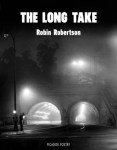 #5: The Long Take by Robin Robertson: A novel, largely in verse, about the aftermath of war service. Also on my library stack. Somewhat experimental forms like this grab Booker attention, but this might be too under-the-radar to win.
 #6: Milkman by Anna Burns: Set in Belfast during the Troubles or a dystopian future? From my Goodreads friends’ reviews this sounds wooden and overwritten. Like the Kushner, I’d consider reading it if it wins but probably not otherwise.
Do you follow the Booker Prize? Which novel do you expect to win?
Out and About in Edinburgh
After going to Wigtown in April, I never expected I’d be back in Scotland this year. This was a fairly last-minute trip we booked so that my husband could attend a short rewilding workshop for PhD students. They all met up in Edinburgh and proceeded by bus into the Cairngorms to see sites of habitat restoration and potential future wildlife releases. I stayed behind at our Airbnb flat and kept up a reduced work load while enjoying the city break.
Day 1, Wednesday the 19th: A travel day. Our journey – two train rides plus a short walk at either end – should have taken just over 7 hours. Instead, it took 14. Recent storms had taken down wires at Durham and left debris on the line, so our original train was terminated at York. We managed to get a connection to Newcastle, queued outside for two hours for rail replacement buses that never came, and finally got a very delayed train through to Edinburgh. Our poor Airbnb hostess’s parents had to wait up for us until 12:40 a.m.
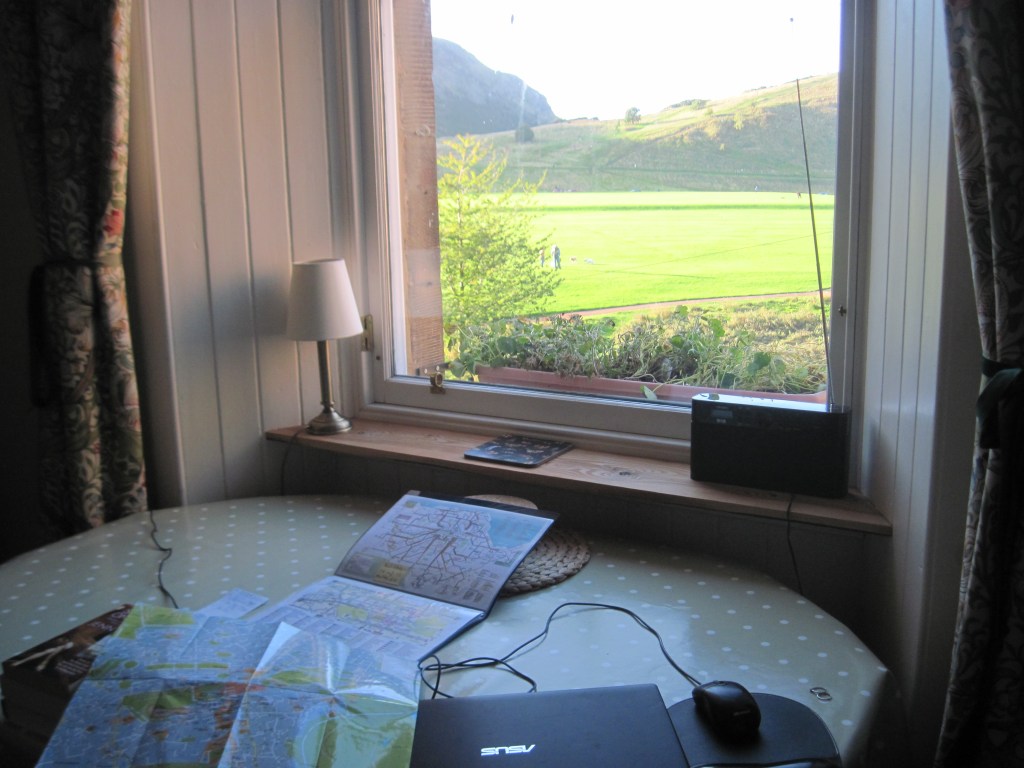
Day 2, Thursday the 20th: After just a few hours of sleep, we were up early so that Chris could leave by 7:15 for his meet-up on the Edinburgh campus. The props and sketches scattered about suggest that the flat owner is a theatre costume and set designer. The view overlooking Holyrood Park and Arthur’s Seat is spectacular – a great place to put in a few hours of proofreading before heading out to town after lunch.


On Clare’s recommendation I started with the Surgeons’ Hall Museums on the Royal College of Surgeons campus. They have several collections covering the history of surgery, dentistry, and pathology specimens. Many of the names and developments were familiar to me from Lindsey Fitzharris’s The Butchering Art. Joseph Lister’s frock coat is on display, and in one corner rare video footage plays of Sir Arthur Conan Doyle (who was initially a practicing physician) explaining how he based Sherlock Holmes on his university mentor, Joseph Bell.
 It’s not a place for the squeamish as there are mummified skeletons, details about Burke and Hare’s grave-robbing, surgical tools, and tumors and other anatomical deformities in jars everywhere. I found it all fascinating and spent a good two hours poking around. My favorite bits were the case full of foreign bodies removed from noses, stomachs and intestines and the temporary exhibition, “A Quest for Healing” by Zhang Yanzi, who had a residency at the museums in the summer of 2017. Her pieces included a 2D mountain made of pill packets, a cotton and gauze sculpture bristling with acupuncture needles, a matching hanging sculpture of capillaries, two surgical beds, and various silk screen panels.
The pathology museum, spread across two floors, was a little overwhelming and almost distressingly faceless – so many human beings reduced to the conditions that had defined and perhaps killed them. The most striking specimen for me, then, was one that actually included a face. I think it was a First World War soldier whose nose had been sewn back together, and what was so remarkable was that you could see his ginger whiskers and eyebrows, and his eyes were closed as if he was just taking a nap. (For ever. In a museum case.)

The sculpture outside is From Here Health by Denys Mitchell (1994).
There are only explanatory panels about a select few samples, so it can be hard to spot just what’s wrong with the organs unless you have specialist medical knowledge. I appreciated the few places where notes have been added along the lines of “see your doctor if…” There were four polycystic kidneys on display in various cases, so including mine there were at least six present in the building that day. “More lives would be saved if more people carried kidney donor cards,” one caption read. Amen.
Clare also recommended the university area for its charity shops. I had a good trawl around Nicolson Street and bought one book, but a lot of the shops are geared towards vintage and High Street fashion. I had better luck at the Salvation Army store on Forrest Road (near the National Museum), where I found three books and two classical CDs.


On to the Writers’ Museum, which commemorates Robert Burns, Sir Walter Scott and Robert Louis Stevenson. I was most interested in the Stevenson material, including memorabilia from his later life on Samoa, especially as I’m currently reading a novel about his relationship with the American divorcee Fanny Osbourne. By now I was museum-ed out and headed back to the flat for a leftovers dinner and some reading before an early bedtime.


Day 3, Friday the 21st: Another morning of work followed by an afternoon of wandering on foot between free attractions and charity shops and avoiding the drizzle. I visited the unusual Scottish Parliament building (which cost a cool £414 million) and saw inside the debating chamber. Four books from the Lothian Cat Rescue charity shop; quick jaunts around the Museum of Childhood, the Museum of Edinburgh, Canongate Kirk, the Music Museum, and the Central Library. When it came to it I couldn’t be bothered to pay £14 to go around Holyrood Palace, but I enjoyed a reasonably priced cappuccino and carrot cake at their café. Chris was back in the evening for a dinner of frozen pizza with local beer and cider.


Day 4, Saturday the 22nd: Our one full day in the City together. We weren’t feeling up to the Arthur’s Seat walk, so we did a gentle stroll up the Salisbury Crags and back instead. Then we caught a bus out to the Stockbridge area for more charity shopping (two more books) and a scrumptious brunch at The Pantry. This was a recommendation on chef David Lebovitz’s food blog and it more than lived up to expectations. It’s no wonder we had to wait half an hour for a table. I could have eaten anything on the menu, but in the end I had smoked salmon eggs Benedict followed by a cherry and Nutella brownie.


After a brief browse at Golden Hare Books, we went on along the Water of Leith to the lovely Royal Botanic Garden. It’s free to walk around, but we also paid to tour the Glasshouses, which recreate the flora of 10 different climates. The RBG is also home to the National Memorial for Organ and Tissue Donors, a peaceful circular space set back in the woods and marked out by a few benches and stone monuments. As I have organ donors to thank for the continued life and health of my mother and several other relatives, it was well worth a visit.


Back into town for gelato (I had a delicious poached plum and cinnamon sorbet) at Mary’s Milk Bar, which is on Grassmarket across from the Castle and was another Lebovitz recommendation. A quick circuit of the animal hall at the National Museum before it closed, a stroll along the Royal Mile, and a rest with tea and books back at the flat before going back out for a veggie curry.

Airbnb bedroom reading nook
Day 5, Sunday the 23rd: Return travel day. No major issues, but still enough of a delay to apply for compensation – refunds from LNER and my husband’s work will have made the journey very cheap indeed.
I was sad to leave Edinburgh this time. I loved our Airbnb flat and felt very at home in it. If I had a bicycle to get into town a little faster, I could easily live there. The tourists would probably drive me mad, but Edinburgh is a wonderful place with so much to see and do and such incredible scenery within a short drive.
Thank you to everyone who offered suggestions of what to see and do. I managed to fit in most of what you recommended!
What I read:
The bulk of Unsheltered, Barbara Kingsolver’s bold new novel about distrust and displacement in America then (the 1870s) and now (during the rise of Trump), and Come to Me by Amy Bloom, a wonderful story collection about people who love who they shouldn’t love. More about this one in my upcoming round-up of short stories I’ve read this month.
 A Ladder to the Sky by John Boyne is a delicious piece of literary suspense with a Tom Ripley-like hero you’ll love to hate: Maurice Swift, who wants nothing more than to be a writer but doesn’t have any ideas of his own, so steals them from other people. I loved how we see this character from several outside points of view – first Erich Ackerman, whose Nazi-era history provides the basis for Maurice’s first novel; then Gore Vidal, to whose Italian home Maurice pays a visit with his new mentor; and finally Maurice’s wife Edith, a celebrated author in her own right – before getting Maurice’s own perspective. By this point we know enough about him to understand just how unreliable a narrator he is. My one criticism is that I would have binned the whole subplot about Edith’s sister and brother-in-law. (A nice touch: at one point Maurice buys a reprint copy of Maude Avery’s Like to the Lark, which should ring a bell from The Heart’s Invisible Furies.)
 I also read over half of Jenny Diski’s Stranger on a Train, a memoir about two long train journeys she took across America in the late 1990s that also incorporates memories from a troubled adolescence – she started smoking at 14 and was in and out of mental hospitals at 15 – in which she loved nothing more than to read while riding the Circle line all day long. I’m a quarter of the way through both Nancy Horan’s Under the Wide and Starry Sky, about Stevenson and his wife, and Peter Hill’s Stargazing, a memoir about dropping out of art school to become a Scottish lighthouse keeper in 1973; he started on Pladda, a tiny island off of Arran. And on my Nook I read a good bit of All You Can Ever Know, Nicole Chung’s forthcoming memoir about being raised by adoptive white parents in Oregon and meeting members of her Korean family in her mid-twenties, just as she became a mother herself.
Literary Connections in Whitby
This past weekend marked my second trip to Whitby in North Yorkshire, more than 10 years after my first. It was, appropriately, on the occasion of a 10-year anniversary – namely, of the existence of Emmanuel Café Church, an informal group based at the University of Leeds chaplaincy center that I was involved in during my master’s year in 2005–6. I was there for the very first year and it was a welcome source of friendship during a tough year of loneliness and homesickness, so it’s gratifying that it’s still going nearly 11 years later (but also scary that it’s all quite that long ago). The reunion was held at Sneaton Castle, a lovely venue with a resident order of Anglican nuns that’s about a half-hour walk from central Whitby.

Sneaton Castle and grounds

Whitby harbor, with St. Mary’s Church on the hill.
The more I think about it, Leeds was a fine place to do a Victorian Literature degree – it’s not too far from Haworth, the home of the Brontës, or Whitby, a setting used in Bram Stoker’s Dracula. Two of my classmates and I made our own pilgrimages to both sites in 2006. The Whitby Abbey ruins rising above the churchyard of St. Mary’s certainly create a suitably creepy atmosphere. No wonder Whitby is enduringly popular with Goths and at Halloween.

Another resident of Victorian Whitby, unknown to me until I saw a plaque designating her cottage on the walk from Sneaton into town, was Mary Linskill (1840–91), who wrote short stories and novels including Between the Heather and the Northern Sea (1884), The Haven under the Hill (1886) and In Exchange for a Soul (1887). I checked Project Gutenberg and couldn’t find a trace of her work, but the University of Reading holds a copy of her Tales of the North Riding in their off-site store. Perhaps I’ll have a gander!

 There are other connections to be made with Whitby, too. For one thing, it has a long maritime history: it was home to William Scoresby (“Whaler, Arctic Voyager and Inventor of the Crow’s Nest,” as the plaque outside his house reads), and Captain James Cook grew up 30 miles away and served an apprenticeship in the town. There’s a statue of Cook plus a big whalebone arch on the hill the other side of the harbor from the church and abbey. It felt particularly fitting that I’ve been reading A.N. Wilson’s forthcoming novel Resolution, about the naturalists who sailed on Captain Cook’s second major expedition in the 1770s.
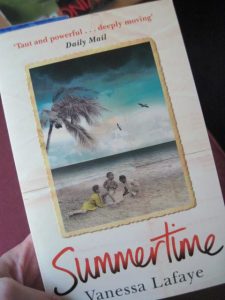
(My other apt reading for the sunny August weekend was Vanessa Lafaye’s Summertime.)
On our Sunday afternoon browse of Whitby’s town center we couldn’t resist a stop into a bargain bookshop, where my husband bought a cheap copy of David Lebovitz’s all-desserts cookbook; I picked up a classy magnetic bookmark and a novel I’d never heard of for a grand total of £1.09. I know nothing about Dirk Wittenborn’s Pharmakon, but this 10 pence paperback comes with high praise from Lionel Shriver, Bret Easton Ellis and the Guardian, so I’ll give it a try and let you know how it works out in terms of literary value for money!

 Bookish Beck = Rebecca Foster. American transplant to England. Freelance proofreader and book reviewer.
