{SPOILERS IN THIS REVIEW!}
Canadian author Karma Brown’s fifth novel features two female protagonists who lived in the same house in different decades. The dual timeline, which plays out in alternating chapters, contrasts the mid-1950s and late 2010s to ask 1) whether the situation of women has really improved and 2) if marriage is always and inevitably an oppressive force.
Nellie Murdoch loves cooking and gardening – great skills for a mid-twentieth-century housewife – but can’t stay pregnant, which provokes the anger of her abusive husband, Richard. To start with, Alice Hale can’t cook or garden for toffee and isn’t sure she wants a baby at all, but as she reads through Nellie’s unsent letters and recipes, interspersed with Ladies’ Home Journal issues in the boxes in the basement, she starts to not just admire Nellie but emulate her. She’s keeping several things from her husband Nate: she was fired from her publicist job after a pre-#MeToo scandal involving a handsy male author, she’s had an IUD fitted, and she’s made zero progress on the novel she’s supposed to be writing. But Nellie’s correspondence reveals secrets that inspire Alice to compose Recipe for a Perfect Wife.
The chapter epigraphs, mostly from period etiquette and relationship guides for young wives, provide ironic commentary on this pair of not-so-perfect marriages. Brown has us wondering how closely Alice will mirror Nellie’s trajectory (aborting her pregnancy? poisoning her husband?). There were clichéd elements, such as Richard’s adultery, glitzy New York City publishing events, Alice’s quirky-funny friend, and each woman having a kindly elderly (maternal) neighbour who looks out for her and gives her valuable advice. I felt uncomfortable with how Nellie’s mother’s suicide makes it seem like Nellie’s radical acts are borne out of inherited mental illness rather than a determination to make her own path.
Often, I felt Brown was “phoning it in,” if that phrase means anything to you. In other words, playing it safe and taking an easy and previously well-trodden path. Parallel stories like this can be clever, or can seem too simple and coincidental. However, I can affirm that the novel is highly readable and has vintage charm. I always enjoy epistolary inclusions like letters and recipes, and it was intriguing to see how Nellie uses her garden herbs and flowers for pharmaceutical uses. Our first foxglove just came into flower – eek! (Kindle purchase) 
The main question we ask about the books we read for Literary Wives is:
What does this book say about wives or about the experience of being a wife?
- Being a wife does not have to mean being a housewife. (It also doesn’t have to mean being a mother, if you don’t want to be one.)
- Secrets can be lethal to a marriage. Even if they aren’t literally so, they’re a really bad idea.
This was, overall, a very bleak picture of marriage. In the 1950s strand there is a scene of marital rape – one of two I’ve read recently, and I find these particularly difficult to take. Alice’s marriage might not have blown up as dramatically, but still doesn’t appear healthy. She forced Nate to choose between her and the baby, and his job promotion in California. The fallout from that ultimatum is not going to make for a happy relationship. I almost thought that Nellie wields more power. However, both women get ahead through deception and manipulation. I think we are meant to cheer for what they achieve, and I did for Nellie’s revenge at Richard’s vileness, but Alice I found brattish and calculating.
See Kate’s, Kay’s and Naomi’s reviews, too!
Coming up next, in September: Their Eyes Were Watching God by Zora Neale Hurston.
 Bookish Beck = Rebecca Foster. American transplant to England. Freelance proofreader and book reviewer.
 Bookish Beck
There’s been a couple books recently that focus on women living in the same house in different decades! (though this obviously precedes them). I’m thinking Kate Murray-Browne’s One Girl Began and Lauren Elkin’s Scaffolding. Shame about the phoning it in as I like the conceit.
LikeLiked by 1 person
I was wracking my brain for comps but couldn’t come up with any, so thanks for those. I’ve not read them but they sound good — I’ve read Elkin in other contexts. I was a little disappointed with the book because it had a strong premise but its message and delivery were nothing special.
LikeLiked by 1 person
Ana Menendez’s The Apartment, too: linked stories (which I really loved).
LikeLiked by 1 person
[…] Rebecca’s, Kay’s and Naomi’s reviews, […]
LikeLike
I didn’t get the feeling that Nellie was suffering from mental illness like her mother – it felt to me like she didn’t want to end up a mother with no support like her own mother did, so was trying to take control of her own life.
I don’t know which way to think about Alice. I think she felt like she was being taken for granted by Nate when she learned he had made the decision to take the promotion without consulting her, like he assumed it was a no-brainer. So she went too far the other way with her ultimatum, which kind of flipped the script on who was in control of their marriage. Both scenarios bad, of course.
I liked how Alice became suspicious of Nate just because she herself was keeping secrets, making the point that secrets can be harmful in more than just the obvious way.
I also like the way you sum up the answer to our question in those two quick points. Both so true!
LikeLiked by 1 person
Neither picture of marriage or potential motherhood seemed very hopeful to me! That’s a good point that Nellie, having been raised by an unhappy single mother, didn’t want to find herself in a similar situation.
LikeLiked by 1 person
I’m glad you thought that Brown was phoning it in at times, because I thought this was a very average book in many ways. I didn’t really think about the mental illness angle, but I didn’t take the inference from it that you did. I also didn’t think that Nellie’s only solution was the one she took, though.
One of my blogging friends told me she thought the book was “slyly funny.” I also didn’t get that at all. Did anyone else?
LikeLiked by 1 person
Ok, I guess I was reading too much into it about her mental health. She does seem in control of the story she’s telling to Richard and to others. The only thing that didn’t quite ring true for me was the content of her letters to her mother. If she knew they were never going to be seen by anyone, why was she still sometimes coy in them? She should have felt free to be completely honest.
No, I wouldn’t say I found it humorous!
LikeLiked by 1 person
Hmm, I didn’t think about that.
LikeLike
I didn’t find it funny, either.
LikeLiked by 1 person
Well, I’m glad. Sometimes I think I’m missing something, because my sense of humor isn’t the same as others. I was thinking, what was funny about that?
LikeLiked by 1 person
Hm, not one I’ll rush to, and I might have, so thank you. It’s a foxglovey kind of year, I think – we have eight where we usually have two – or maybe our rubbish garden is doing well at something for once, so it’s probably not some grim sign that yours came out along with you reading the book!!!
LikeLiked by 1 person
Ours just went in late last year, so we’re delighted the winter didn’t kill them!
LikeLiked by 1 person
Agree about the ‘phoning it in’. Years ago I heard an author (Rosalie Ham) and she mentioned that she never reads novels while she is writing one – the reason being, she becomes highly attuned to structure and spots plot tricks everywhere. She used the example of a novel beginning with a husband making mention that he loves his wife – Ham’s first thought is “Well, she’ll be dead by the end of this book!” Since hearing that, I often apply the ‘Ham test’ to books that have a mystery or crime angle. Needless to say, I applied the Ham test lots of times in the first few chapters of this book – there were clues everywhere! (the most obvious being the garden).
And as for Alice’s ultimatum… well, ultimatums never end well.
LikeLiked by 1 person
That’s too funny! I don’t often read crime so maybe I’m not used to looking out for the clues.
LikeLike
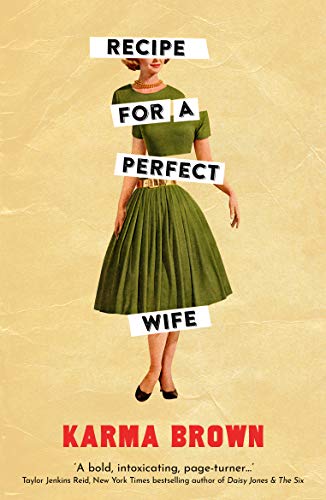
I like the cover on your edition pictured here. A nice play on the Canadian (red cover, one of the two Naomi included) that I’ve seen so often. Sometimes a predictable and familiar story really does the trick but, when you’re in the mood for another kind of story, you can feel a bit short-changed, eh?
LikeLiked by 1 person
I probably wanted more subtlety about the connections between these two women and how their secrets were revealed. Is Karma Brown well known in Canada? None of her other books are familiar to me.
LikeLike
Yes, she’s well-known. I’m struggling to think of a comparable UK writer. Maybe Marian Keyes-ish, but just a few books into her career? Something like the TodayShow or GoodMorningAmerica picks, maybe: popular and accessible and entertaining?
LikeLike
Huh. Yeah, I didn’t know her name so I didn’t have any associations at all. It’s probably best that I didn’t or negative expectations may have caused me to think even less highly of it!
LikeLike
As I said in Naomi’s comment box, I feel like the 1950s storyline would stress me out too much!
LikeLike
It was depressing how limited her life could have been and how much her husband might have gotten away with had Nellie not taken matters into her own hands.
LikeLiked by 1 person